Category Archives: Photography 1 – Identity and Place

On Delaroche, Analogue and Digital

“From today, painting is dead!”

Paul Delaroche, c1840.

In the introduction to Part 1, we are introduced to the quote that is often attributed to French painter Paul Delaroche sometime in the early 1840s. He had apparently seen an early Daguerreotype image and declared that photography spelled the end for portrait painting from that day forward. Dageurre had invented and developed what is considered the first publicly available photographic process that would preserve the image observed by a camera. While it definitely turned the ancient phenomenon of the camera obscura, which had been around for centuries previously [1] into a practical application, it was certainly not the end of portrait painting as Delaroche predicted. Instead photography continued to evolve along a more scientific route than perhaps Delaroche was aware. The very first photograph was taken in 1826 by Joseph Nicéphore Niépce [2], an inventor whose fascination with the art of lithography led him to experiment with ways of improving his skills in creating these intricate artworks. Realising that he lacked the precision of technique to be any good, Niépce experimented with photosensitive materials and methods for fixing the image onto a pewter plate, some 14 years before Dageurre unveiled his process. Niépce started to work with Dageurre before his death in 1833, undoubtedly inspiring the latter’s eventual development of a stable process and ultimately himself being acknowledged as the inventor of photography. Deguerre himself wasn’t an artist either, but a chemist who like many, was interested in the science behind preserving an image as a recording. During this time, an English inventor called Henry Fox Talbot was also working on preserving the photographic image, but on paper instead of the polished metal used by Dageurre. Fox Talbot’s work was the basis for future evolution of photographic film and papers. In Fox Talbot’s case, he was interested in creating accurate pictures of flora and fauna, but lacked the skill to draw his subjects. He, like Niépce was trying to make up for the lack of artistic skill with the use of science to create faithful reproductions.

It stands to reason that when Delaroche first saw this new technology used for traditional portraiture, he would have thought it was going to make painting redundant. The early portraits by Dageurre although fairly primitive, must have looked like a more faithful representation than was possible by the portrait painters of the time. As the notes indicate, in actual fact the balance between traditional and new took a while to establish itself and painting as art remained popular way of representing a portraiture subject. When we look at the early portraits made using photography, we see the technique more the focus than the subject. Early photographs required long exposures for the process to work, so subjects needed to sit perfectly still for the picture to be sharp. Any real creativity was limited to the use of costume and background, which was often just whatever was contemporary. These photographs were highly constructed and any suggestion of personality came from the subject rather than the photographer. In Context and Narrative, I looked at the work of Wendy Red Star [3] who incorporated photographs of tribal elders of the indigenous Crow tribe (her ancestors) who were invited to Washington in a farcical summit which resulted in them having their lands taken by the modern American government. The photographs were staged by a famous photographer of the age who had a reputation for taking cold, distant portraits. It was believed that this way of representing the elders would show the people of Washington how alien they were to the emerging culture of the US. What resulted though was a series of images that achieved the opposite. Instead of distant and uninteresting, the elders appear proud, dignified and complex (owing in part to their full traditional dress).
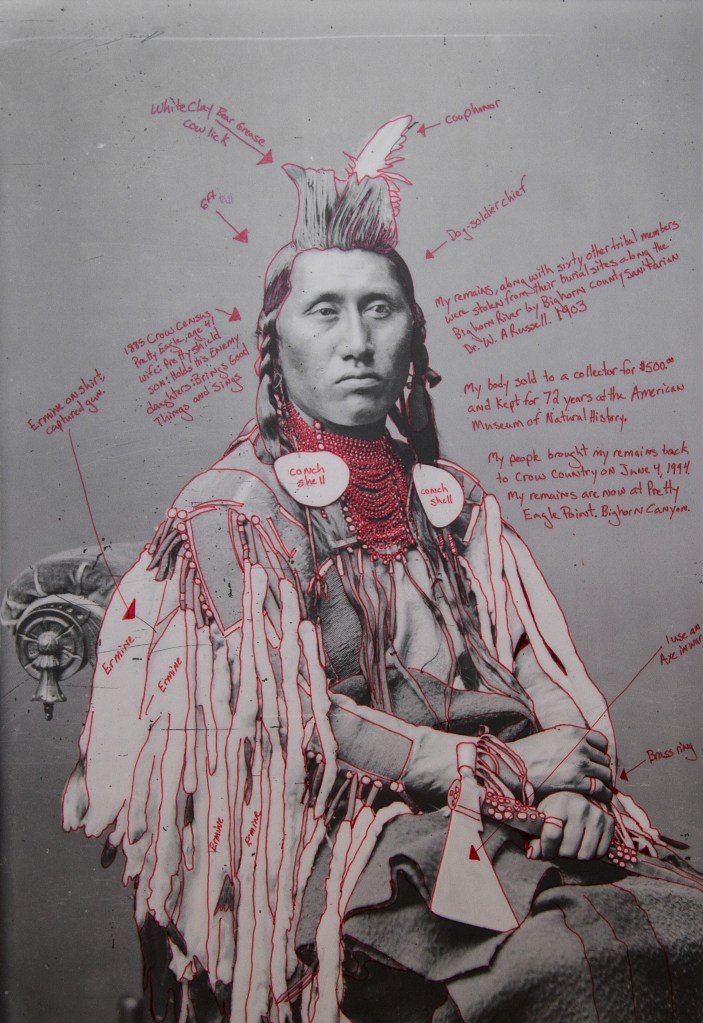
Déaxitchish / Pretty Eagle from the series 1880 Crow Peace Delegation, 2014, by Wendy Red Star

Portraiture using photography differed from traditional painting in that the subject had more control over the finished piece. When we think about what Delaroche was famous for, we can see that painting still had its place in creating art that was flattering, or fantastical. Delaroche’s fascination with depicting the historical executions of key figures in history, his most famous being The Execution of Lady Jane Grey [4], is an example of the fantastical representations that were possible through the imagination and skill of a painter.
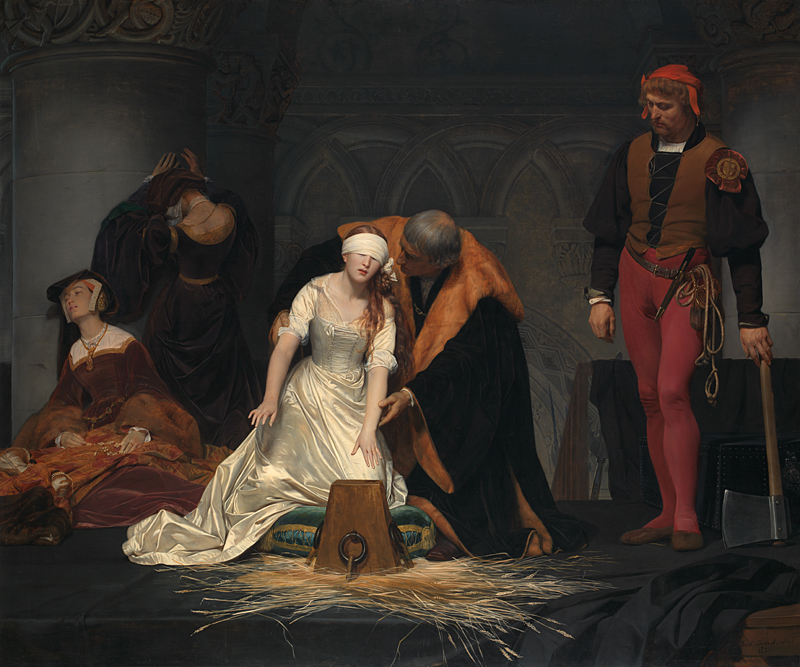
Paul Delaroche The Execution of Lady Jane Grey 1833 Oil on canvas, 246 × 297 cm Bequeathed by the Second Lord Cheylesmore, 1902 NG1909 https://www.nationalgallery.org.uk/paintings/NG1909 [4]

This particular tableau painting was derived from the many accounts of the execution but Delaroche placed the scene in an elaborate indoor setting that looks more like a church than a scaffold. In reality, Grey’s execution took place outside in the Tower of London grounds with a small crowd in attendance. With this artistic licence Delaroche is perhaps saying that the tragic killing of a teenage girl, who is now recognised as a manipulated innocent in the political instability of Tudor England, was akin to taking the life of an angel before the judgement of God. Whatever his motivation, Delaroche wasn’t present at the execution so could play with the aesthetics and details as much as he liked. The same couldn’t be said for photography until the subsequent development of the materials, equipments and techniques that allowed for the photographer to be more creative.

A modern equivalent of painting vs. photography can be seen in the advances of digital technology, which is present in every genre including portraiture. The notes refer to how photographers and the general public moved away from traditional film to digital imaging, which is a discussion that is often found in social media groups. As a film shooter, my view is that the advances in digital are not having the same impact as those that Delaroche was worried about. In his case, accurate reproductions created by the camera required a different set of skills that in some ways rivalled the painters of the age. Skills were still needed though, as photography was a complex technical process involving mechanical tools and chemistry. Painting still had the edge in terms of creativity and artistic licence, but developments in cameras, films, lighting and processing techniques addressed some of those shortfalls. With the latest advances, I would argue that the skill has almost been eliminated from portraiture with the rise of the selfie. People can now shoot portraits and rely on electronics and software to be creative to a point. No other photographic skills are required until the shooter wants to take more control. I was discussing this phenomenon with a fellow photographer and teacher who at one point decried the use of mobile phones with onboard processing and is now, because of demand, teaching mobile phone photography as part of his business. This also perhaps explains the resurgence in analogue film , where novel and expired film emulsions are making people who are new to photography want to experiment with different aesthetics. I recently met someone who has discovered film by buying point and shoot film cameras in junk shops and shooting expired film in them. His images take on a totally different meaning because of the way the film reacts to the light, even thought his candid portraits are similar to many other contemporaries.

Conclusion

I was interested in the introductory statement in the course notes so decided to dig a little deeper. I was glad to have done so as the evolution of photography, with all of its perceived truthfulness and accuracy, has not destroyed other art forms as feared by Delaroche, but instead been an enabler for them to be regarded for what they are. For example, the Royal Family still commissions painted portraits regularly as well as photographs. The former continues a traditional portrayal of them that complements historical representations while ‘telling a story’ to tie in with the contemporary view of them. The photographs create a different narrative; one of normality and relatability that also showcases the artist as much as the subject. People still enjoy both forms of portraiture in equal measure. As the talkshow and car enthusiast Jay Leno once said of the evolution of the automobile,

“Back then, horses were the primary means of motive power, pulling heavy carts and carrying people. Sadly, they would drop dead in the streets from sheer exhaustion or abuse. And mounds of manure befouled Chicago, New York and other big cities, spreading nasty diseases like dysentery. Suddenly, the automobile came along and people said, “Oh look, there’s just a little blue smoke! How nice.” Soon, horses were no longer misused as draft animals and the amount of droppings lying around was significantly reduced. Everyone was happy.”

Jay Leno, talking about the evolution of the car

People still enjoy cars and horses but for different reasons, the latter being recreational instead of industrial. My view of the evolution of portrait photography is that it serves a different purpose analogous to painting but it was never going to replace it.

References

[1] Unknown, 2021, “Camera Obscura History – Who Invented the Camera obscura?”, Photography History Facts Website, http://www.photographyhistoryfacts.com/photography-development-history/camera-obscura-history/

[2]Unknown, “The Niepce Heliograph”, Image Resource, Harry Ransom Center, https://www.hrc.utexas.edu/niepce-heliograph/

[3] Fletcher R, 2020, “Post Assignment 4 Feedback”, OCA Blog Post, https://richardfletcherphotography.photo.blog/2020/12/04/post-assignment-4-feedback/

[4] Delaroche P, 1833, “The Execution of Lady Jane Grey 1833 Oil on canvas, 246 × 297 cm Bequeathed by the Second Lord Cheylesmore, 1902 NG1909”, The National Gallery, https://www.nationalgallery.org.uk/paintings/NG1909

Initial Meeting with My Tutor

Introduction

I’ve just had my first video meeting with my tutor for Identity and Place, during which we discussed the usual aspects of studying with OCA.  As this was the third time I had discussed these, the focus of the conversation was more a get-to-know and to establish how we were going to engage throughout this unit.  During the call I raised the fact that I had briefly read some of the course materials and in particular, was interested in the first assignment.  I pointed out that the brief for Assignment 1 filled me with dread as it required shooting portraits of people that are strangers to me.  I recalled being incredibly uncomfortable during Assignment 3 of EYV, for which my approach was to blend street photography with the humour found in Martin Parr’s work.  During the shooting, I became overly sensitive to the idea of pointing my camera at people.  It was made worse because my DSLR was so conspicuous – I likened it to having a Howitzer aimed at oneself.  Eventually I took a break from trying to shoot the assignment and went for a relaxing walk around my town with my wife.  When I stopped thinking about the anxiety, the photographs started to present themselves  and I finished with a collection of images that I was really happy with.

Assignment 1 in this course is calling for us to take 5 portraits of complete strangers. Sounds simple enough, but the portraits need be insightful in some way, so the recommendation in the brief is to spend some time getting to know the subjects before trying to take their portrait.  This immediately raised some questions that I wanted to attempt to answer before beginning the unit and re-visit once I’ve completed the assignment.

Questions raised about photographing strangers

What causes me to be anxious?

The anxiety of approaching someone to take their picture comes, I believe, from the fear of a negative reaction that could range from simple rudeness to aggression.  The worst experience that I’ve had in this regard was while visiting Morocco a few years ago.  I already knew that the people of Marrakesh were divided on the subject of photography and that as a mainly Muslim country, their issue with it was rooted in the belief that the act of capturing their likeness takes part of their soul.  When I arrived in the city on a photography trip, I immediately started to get incredibly negative reactions to my camera even when I wasn’t taking pictures.  The most memorable were an elderly gentleman who was sitting in the main square in the medina.  I was looking around at the sights of the people packing up their market stalls at the end of the day and how beautiful these sights were as the sun started to set.  At that point my camera was slung over my shoulder and clearly not about to be used, but this elderly gent made the effort to catch my eye so that he could utter one of the few insults that he knew the English words for.   It would have appeared that his outrage was at what might happen rather than what was actually happening.  My reaction was equally angry and my fellow photographers had to move us on before I said something potentially regretful to him.  The second incident was in the seaside town of Essaouira and was similar in many ways to the previous.  A line of women sat on the steps in the harbour and each of them flipped me the middle finger almost in unison.  My initial thought was that this would make a great photograph, but the one at the back of the line had attracted the attention of one of the fishermen who was gutting fish on the dock with a very large knife.  His subsequently threatening demeanour was enough to put me off my train of thought.  I believe that these experiences alone would be enough to put me off, but thinking about it on both occasions I did not approach them for a photograph.  Without the deliberate act of asking for the portrait, this does not explain my anxiety about taking pictures of strangers. 

Does starting a conversation help?

I started to consider whether it was my lack of engagement with the people who had reacted so negatively in Morocco was causing my to take a certain view of their behaviour based on my interpretion.  Two other encounters in the city at the time made me think that perhaps the personal connection between photographer and subject was a very important aspect of portraiture, particularly when not specifically planned.  The first encounter was when one of our party took a shot of a man with his son sitting on a moped.  I had shot the same picture moments before when the man was distracted by something and he did not see me.  However, when my friend took the shot his reaction was similar to what I had encountered previously.  He shouted at her, but perhaps my presence dissuaded him from becoming aggressive.  His parting comment as he left interested me – he shouted “We are not animals in a zoo!”.  Perhaps the voyeuristic nature of our presence as tourists was causing a reaction more than simple religious sensitivity.  The people of Marrakesh are generally fairly poor, despite the tourism and recent formation of very affluent districts.  The medina is culturally rich but most people work very hard for a living.  I wondered whether an offer of money might have changed the man’s view of my friend shooting her picture.  Maybe portraiture requires some form of transaction when it comes to working with complete strangers.

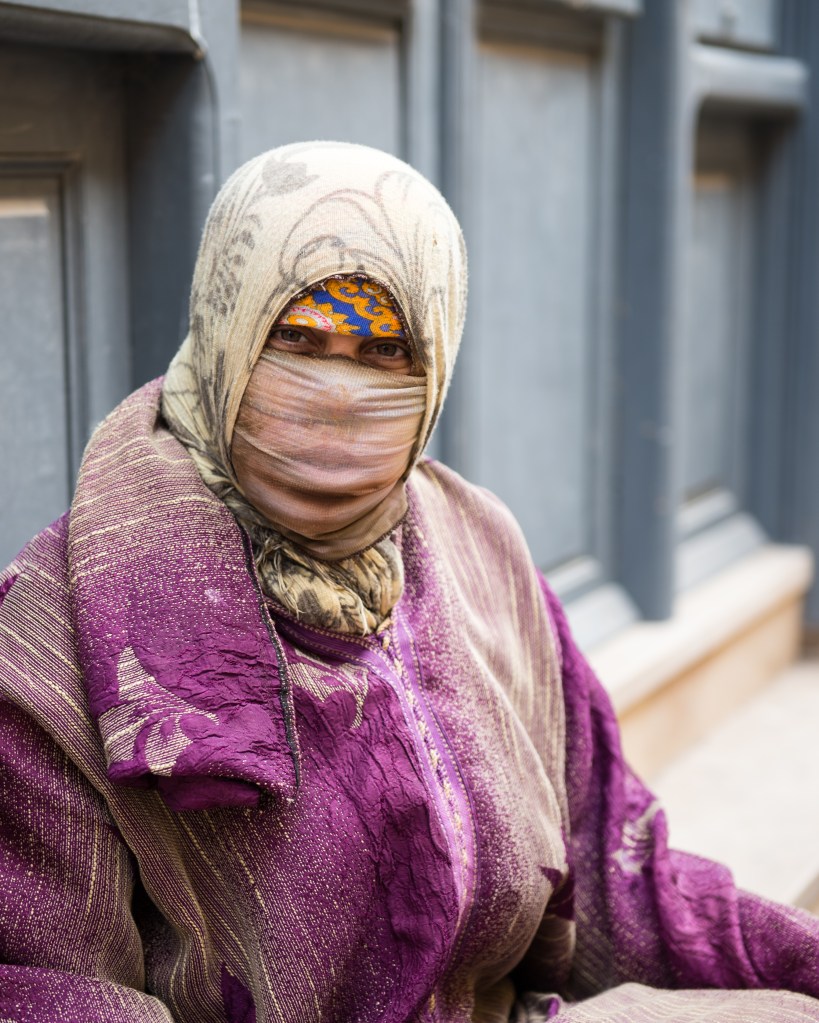
The other experience that I had was when walking through the old Jewish district of the city.  I encountered a homeless woman sitting at the side of the road who was begging for money.  I was struck be the faded state of her clothing and her sad demeanour, so I first gave her the small amount of money in my pocket.  I then gestured to the camera and to my surprise she was more than happy to be photographed.  The shot (below) was my favourite picture from the trip as even though it was a transaction that made it possible, it captures her in a natural way.  At the time, I was happy that I had captured something about the woman’s personality, her current circumstances told through the sadness in her eyes and clothing.  However, I didn’t have any kind of dialogue with her. Our encounter was an ice-breaker but not a conversation.  My experiences to date hadn’t actually explored what would happen if there had been some time spent getting to know my portrait subjects. 

A homeless woman in Morocco who agreed to have her portrait taken in exchange for a small amount of money. Any sadness I had disolved as she posed for this shot. What amazing dignity.

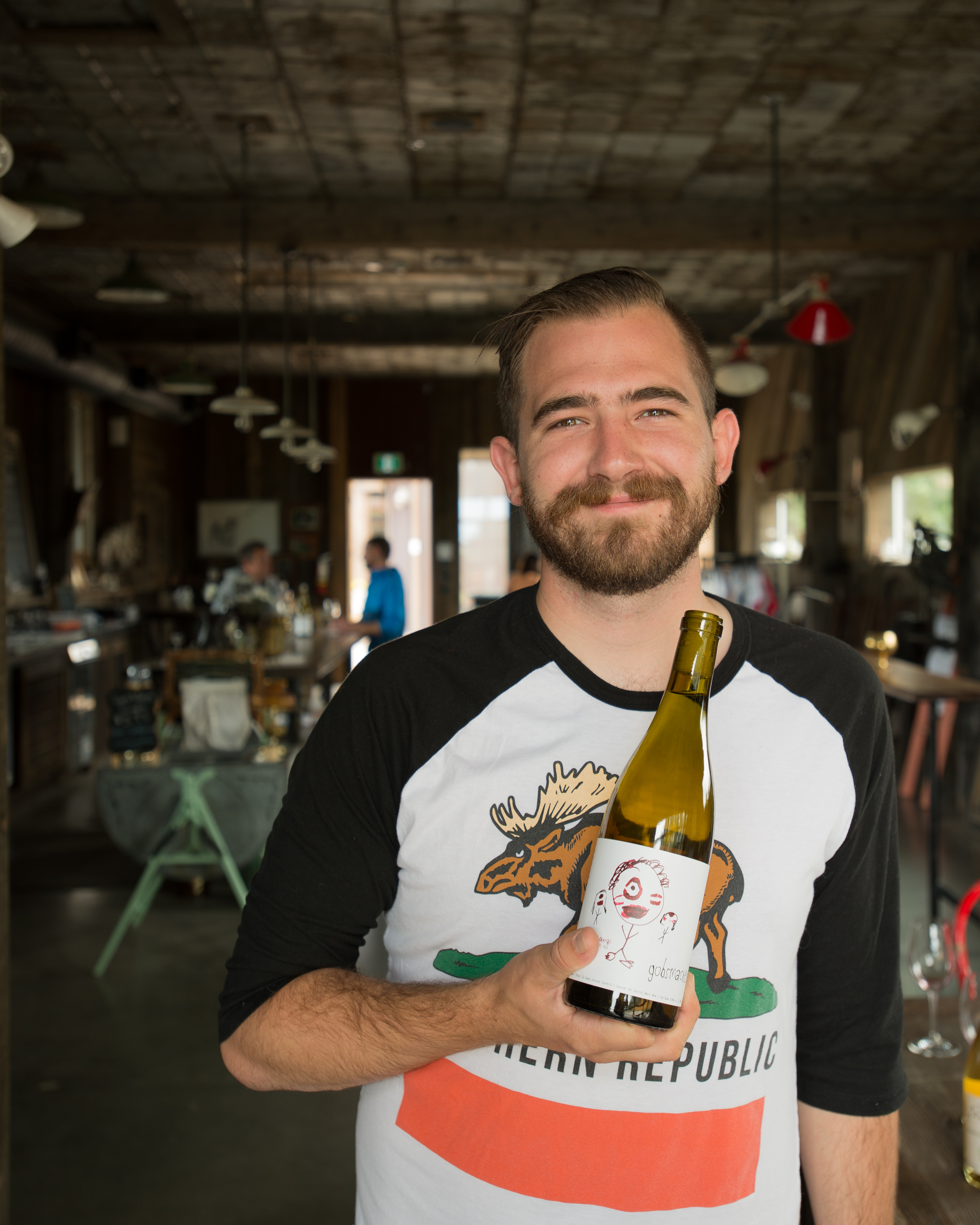
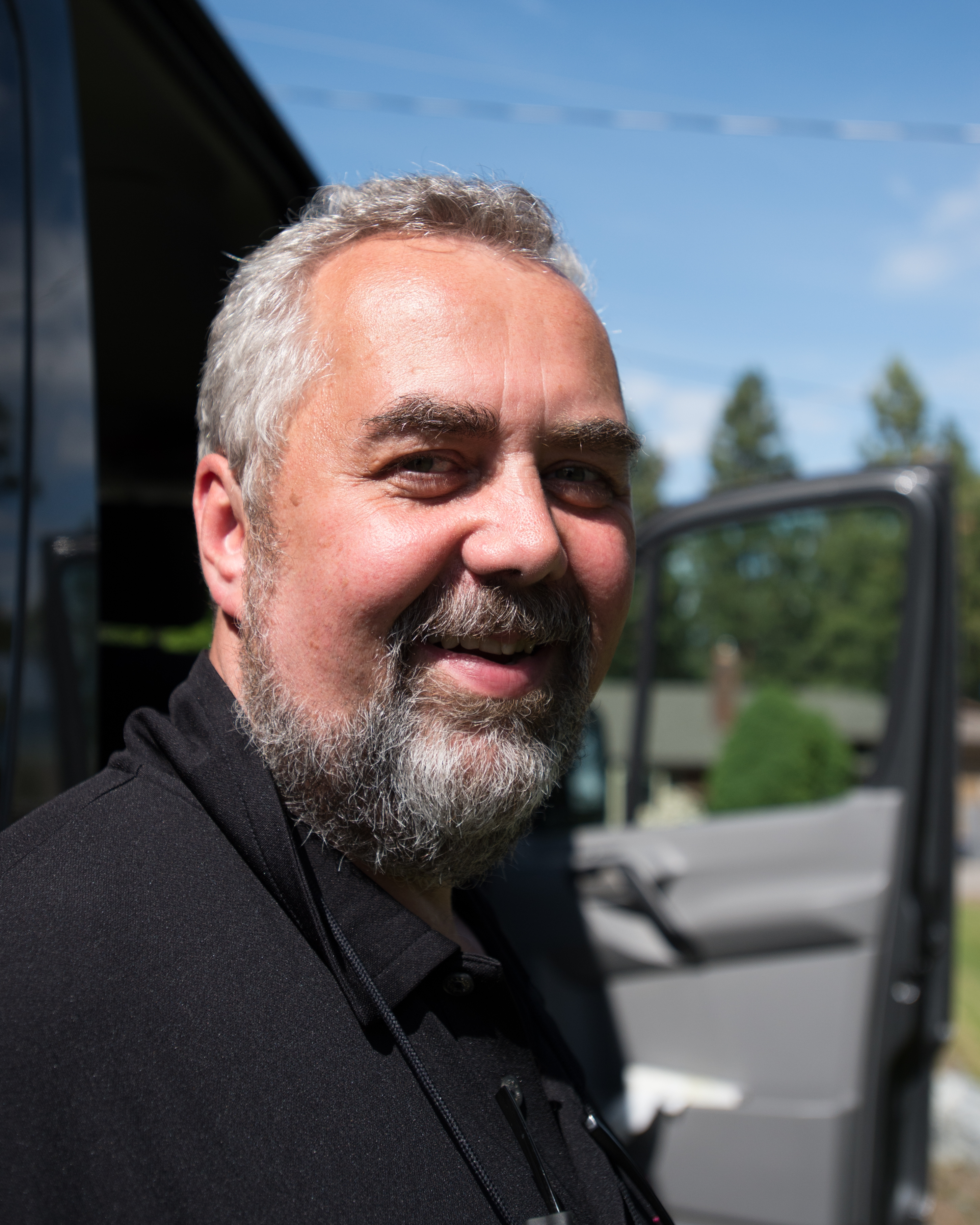
I then remembered that I had asked strangers for portraits while on holiday in Canada the following year.  We were out for the day on a local vineyard and wine tasting tour and I took my camera to document the day.  After the first vineyard and the obligatory shots of vines and bottles, I decided I was more interested in the people involved in the businesses rather than straight documentary.  As each vineyard passed, I asked the person who took the tour if I could shoot their portrait.  The reactions I got ranged from enthusiastic to reluctant, but at no time was there an uncomfortable exchange between us.   I remember one lady, Terry who asked why I wanted to take a picture of ‘this old face’.  The answer was that she had striking blue eyes that lit up her face – her portrait is as interesting to me now as it was when I shot it because of her eyes.  By the end of the day (and having sampled a fair amount of wine), I had gotten into the swing of engaging, chatting and then shooting my subjects.  The whole experience became easier as my confidence grew.

The Portraits

Larry (Quail’s Gate)
Unknown (The Hatch Winery)
Karin (Mt. Boucherie)
Terry (Tantalus)
Grant (Kitsch)
Dave (Wine Guru)

Ideas on how to approach strangers

My concerns had clearly come from having never really tried to shoot portraits of people I didn’t know until the wine tour in Canada.  Knowing that I could overcome my discomfort if I wanted to, I started to consider some ideas for approaching people in Assignment 1.

  • Cameras – Over the past few years, I have been collecting and shooting film cameras of a variety of ages and formats.  This hobby has often led to me being stopped in the street by a passerby who is interested in the camera I am using.  It strikes me that when there is a something of interest, complete strangers will talk to each other about it.  I’ve observed the same with people who own dogs.
  • Please Help with my Project” – perhaps the simplest way to engage with people would be to advertise that I am looking for help with this assignment.   By giving people the option to engage with me on something that might interest them, the discomfort of my starting the conversation would be greatly reduced.  The subsequent conversation would still be natural and the resulting photographs would not be staged with prior knowledge of the subject.
  • Friends of friends – another way of engaging with complete strangers would be to gain the support of friends to facilitate introductions with their friends.  As above, this separates the discomfort of the initial engagement while preserving the separation.  
  • Shop Owners – a number of other students on Identity and Place had approached the assignment by going into shops or businesses and asking for a portrait of the proprieter.   This offers separation as well as lots of visual context and a structure to the shoot.  One of the key learnings from Context and Narrative was to have some consistency in the approach to making work.  In my case, the first time I successfully achieved this was during the self-portraiture assignment, where I had a consistent way of generating the words to be projected on my face and also to the technical shoot itself.

Conclusion

In conclusion, the meeting with my tutor was very helpful in guiding my thoughts on Assignment 1.  Naturally, I have a lot of work to complete in Part 1 before I need to shoot it.  At the time of writing, my thoughts are revolving around my portrait series being about life in the current pandemic.  People are naturally cautious about being close to others and in the current lockdown situation, we are all supposed to be at home with the exception of exercise and vital journeys – this doesn’t fit well with the assignment.  However, by the time I reach that stage in the course, there is some optimism about relaxation of some of the rules we are living under.  I am hoping that because of the way our lives have been restricted that people will actually be more amenable to being approached for a chat – we have all missed human contact.  I will be revisiting this post and its assumptions when I reach that point in the coursework.