Research Task: Critical Thinking and Analysis

You have been developing your skills and confidence in critical thinking and analysis throughout all the projects in this unit (and previous units on the degree). The learning outcomes for this unit include showing your abilities to ‘examine… compare and contrast… outline your understanding… and critique. The project 6 exercises and Critical Review assignment support further honing your critical skills. 

Take a moment to reflect on your confidence and understanding of what is meant by critical analysis and review. Familiarise yourself with the library resources and guides available to support skills in Critical Thinking. Post a reflective note on your learning log and on the Ethics and Representation Forum about using writing and speaking. 

Reflection

Before my studies on this degree course, I spent over 30 years in engineering, with a long period of that time being both a scientific researcher and electronics engineer. One of the key attributes of that profession is the need to not take anything at face value. If a assumption is made, it must always be verified through some form of testing and the acquisition of data to support a conclusion. That has always made sense to me, but until the past couple of units on this course I hadn’t considered the application of this style of thinking to the creative arts. Critical thinking ideas that have been learned here mirror those concepts in engineering, where an assertion or argument is assessed using supporting and contradicting information. The creative world is entirely subjective, and I have learned that in many cases, particularly regarding photography, that subjectivity is categorised or classified as a result of critical thinking that identifies commonality or consistency in a series of works. A good example of this is the coining of the term ‘Documentary’, which is used to describe photography as a medium for capturing and representing an event, cultural trend or some other pattern of life. Photography was used to carry out this kind of work for decades before John Grierson started to use the expression to describe moving picture documentary, resulting is a retrofitting to the earlier work of photographers like Lewis Hine, Alice Hughes and Walker Evans. In learning about photographic genre and codes in the previous unit, I was able to further relate analysis to photographs with established ideas as the basis for a critical review. My essay last year asked the question about when a photograph does not comply with the usual visual codes of a genre, using Mohamed Bourouissa’s series about Paris’ Le Périphique, a ring road that divides regions of Paris with different social issues. I saw the image that I chose as documentary, while there was an assertion that it was landscape. By looking at the claim, investigating the corroborating and conflicting evidence, assessing against the widely-held ideas of the genres, I was able to draw own conclusions about the work. The evidence was more akin to established practice and historical art than the tested, measured data of my previous career, but I could see how the two uses of critical review could be applied in the same logical way.

In this unit, we have considered questions that point to whether a photograph should be taken or published from the perspective of whether it is ethical or not, and whether it represents the subject faithfully and respectfully. Key to this learning has been the application of critical analysis to my own practice. By being able to assess the work of other artists and a their ethical standards or otherwise, I’ve been able to ask those same questions of myself. Factored into the thinking is time as context, because those questions are here and now, but often compared with decisions made during a different era. For example, the famous image of Kim Phuc, known as Napalm Girl, could be considered as historically important because anecdotally it helped change the US people’s perspective on the Vietnam war. Ethically, the photographer was doing his job, but the subsequent actions of his editorial in identifying the girl and beginning a spectrum of problems from the shy embarrassment of her nakedness to her use as a propaganda tool, that followed her as she grew up. Contrast this image with Steve McCurry’s Afghan Girl (1984), which depicts a young girl staring directly at the photographer. This image was shot by another photojournalist, but it doesn’t specifically depict the horrors of the ongoing Soviet-Afghan war beyond the identification of her as an Afghan refugee. It’s a striking image, but more as a portrait of a girl showing both defiance and vulnerability in her aesthetically beautiful eyes. What happened after the picture was taken echoes the experience of Kim Phuc, although the girl wasn’t made aware of the image’s existence until 28 years after it was taken. In 2019, The Wire reported that the girl, named Sharbat Gula was angry when she was first asked about how she felt about the image (You’ll Never See the Iconic Photo of the ‘Afghan Girl’ the Same Way Again, s.d.). She went on to describe being coerced into showing her face to this total stranger, which for a muslim woman is considered sinful. The article goes on to question how McCurry and the publisher didn’t know or appreciate this at the time. For me, there is a vast difference between documenting a war and manipulating its victims into being photographed.

In terms of representation, we have looked at how to build relationships and earn trust with subjects ranging from complete strangers to vulnerable people, which may not appear at first to form part of critical analysis. However, by learning about our subject’s story in their own words, we are gathering evidence that may support or contradict our initial pre-conceptions. Working collaboratively moves us to a position where we avoid ethical issues such as harm or embarrassment, but also helps us avoid fixating on a single part of their identity. In the case of my planned SDP, achieving a balance between telling a story about the problems faced by LGBTQ+ and representing them as who they are: people who are not defined by their gender identity or sexuality. I recently wrote a post on my personal blog about unconscious bias and the danger it poses to our being able to see the real story.

https://www.richperspective.co.uk/blog/2023/10/check-your-bias-at-the-door

Conclusion

If critical analysis is defined as a lifecycle of description, analysis and evaluation, we have demonstrated its application to both works and behaviours in the context of ethics and representation. The benefits of reasoned argument, comparing and contrasting other practicitioners’ takes on a similar situation and supported by the clear and concise way that the thinking can be communicated. I asked one of my SDP subjects to consider how he wanted to be represented as a man, and as a gay man, before our shoot. When I arrived at his house, it was clear that he had conduced his own critical thinking on my question, because he identified three ways in which he believed people saw him. He asked himself whether he was subconsciously playing three different parts and to what extent these were defined by events in his life. Once he was able to articulate this, we were able to shoot images that represented all three. Critical thinking is a life skill, not limited to photography or engineering, and this unit has helped to reinforce this crucial point.

References

You’ll Never See the Iconic Photo of the ‘Afghan Girl’ the Same Way Again (s.d.) At: https://thewire.in/media/afghan-girl-steve-mccurry-national-geographic (Accessed 17/10/2023).
Project 6, Exercise 1: The Case of Kim Phuc (Review)

We looked at this photograph at the very start of this course. Let’s consider it again. Please revisit your very first learning log entry for this course. Read what you have written.

Write another short (200 word) response to your original entry. 

Has your opinion on this photograph changed or stayed the same? 

What have we covered in this course that has shaped how you think about this image?

The Photograph

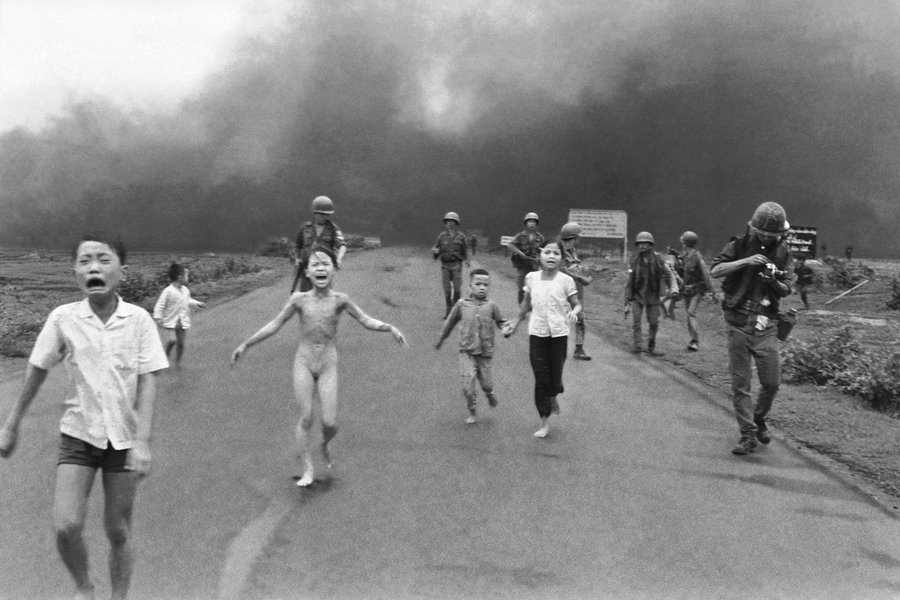
Nick Ut (Huỳnh Công Út) The Terror of War, children in flight from a napalm bombing during the Vietnam War, 1973: in Batchen et al (2012) Nick Ut, Accidental Napalm Attack (1972) Pg 146

Original Response

Review

My views on the ethics of taking the picture are unchanged.  Ut had a responsibility to capture the war, and this photograph epitomises the suffering of victims of napalm attacks, with the emphasis on children.  However, the image does not tell the story of the event itself, being a friendly fire incident, rather focuses on Vietnamese children as victims of general atrocity which, while correct, is a single story only.  Ethically, the photographer behaved honourably in saving Phuc’s life after taking the picture, but in editorial, she was not protected as a vulnerable person.  As soon as she was revealed to have survived, her identity should have been withheld.  Instead, she was turned into a propaganda tool, which undoubtedly made a difference to public sentiment regarding the war.  Although the image has been a positive influence in Phuc’s later life as a campaigner, nobody could have forseen that at the time.  Retrospectively applying an ethical approach to the image, might lead to the conclusion that it should never have been taken.  However, retrospectively applying the same standards to editorial reveals issues of Duty of Care, as well as singular narratives that could have been given more consideration.

Supporting Reflective Notes for Assignment 5

Introduction

Project 5 has taken the idea of socially responsible documentary on from photographing people that might be unfamiliar, but from a similar culture, through to those historically termed ‘the others’. We have seen how cultures have been both actively and passively appropriated over time, and how contemporary artists are seeking to address these historical issues in their work. Most of the artists included in Project 5 were connected directly with the communities or cultures they were representing in their work, e.g. Ryan Christopher Jones with both his Mexican and American heritage, but what happens when the photographer is a total stranger to the ‘others’ they are trying to represent?

This assignment calls for a review of Assignment 2, in which we engaged with and photographed a community we were not part of, and I had chosen the Malvern Hills Trust volunteers. Reflecting on that work, I question whether the group could be considered as ‘the others’, given my connections to the town. Consider the questions posed by the brief:

What assumptions did you have about that community before you started the project?

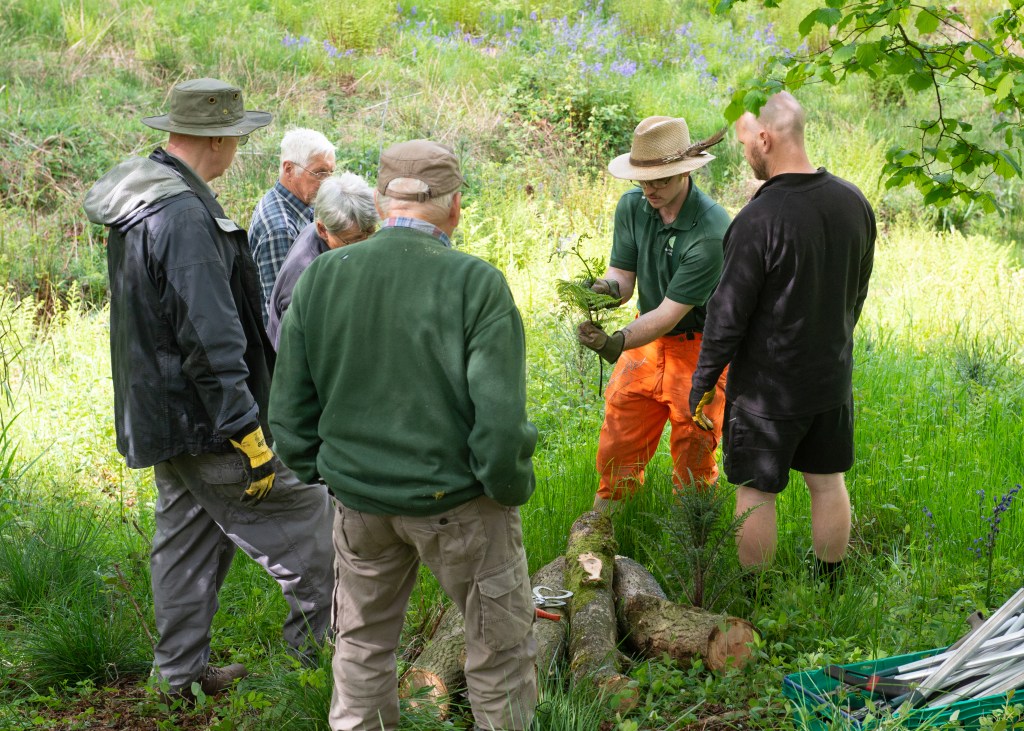
Malvern is a largely white community, with only small number of Eastern European and Middle Eastern making up the general populous. It is also largely known as a retirement town, with many retirement homes and complexes in the area. These two pieces of knowledge led me to assume that the volunteers would be older white people who had retired and had the time to carry out this type of work. When I attended the shoot, my assumptions were largely correct, with the exception of the group leader (employed by the MHT) and Giles, a man in his early 30s.

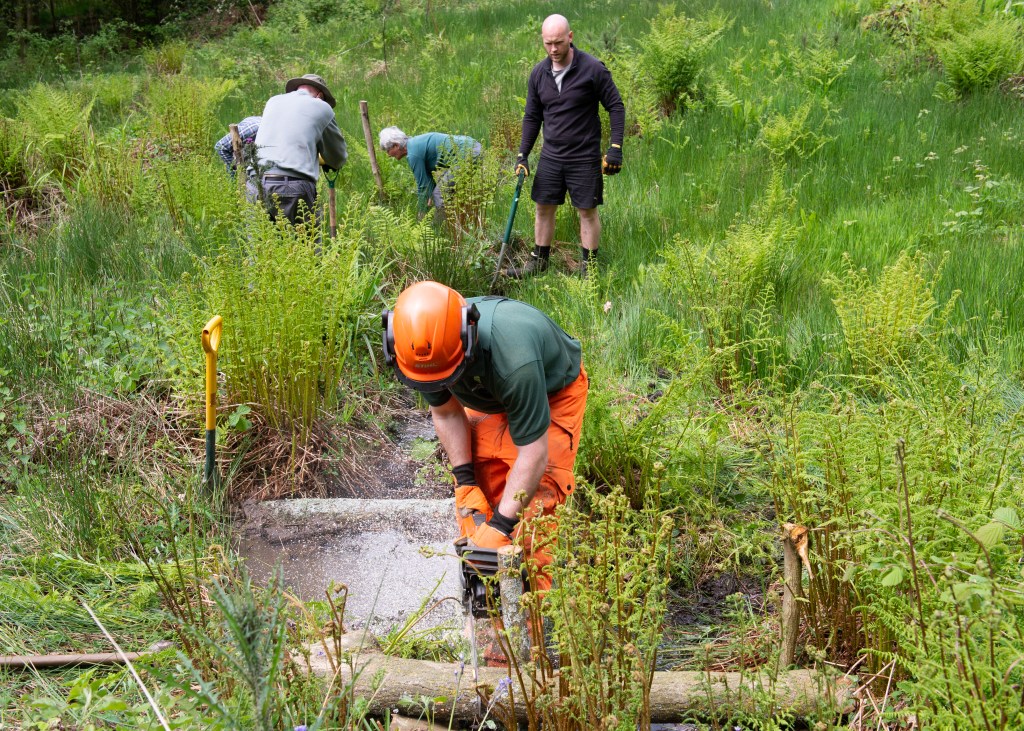
The leader Ben with Giles in the background, both much younger than the other volunteers

Looking back at your project now, how did your assumptions shape the photographs you took? What stereotypes or visual tropes did you replicate?

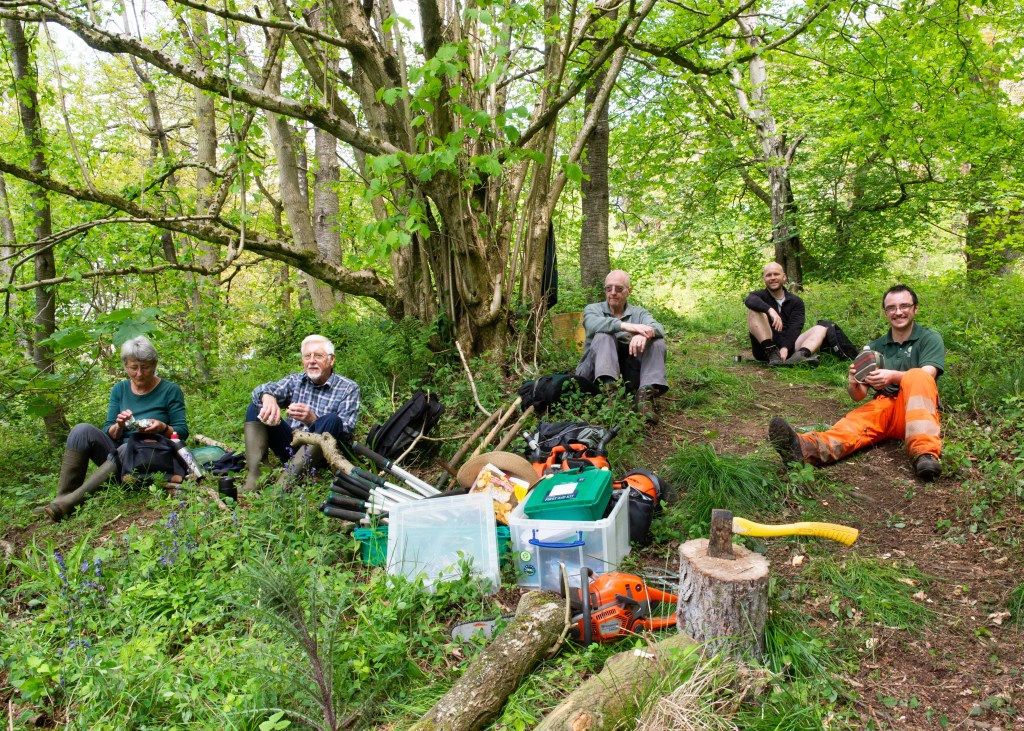
My assumptions guided my thinking on composition in the opposite way to the stereotypes of older people being somehow slower or frailer than younger people. The work they were doing was manual, gruelling, and required the use of tools, which is what I wanted to represent in the series. In the picture above, I show the leader of the group, Ben, operating a chainsaw with Giles just behind him. Although only Ben was trained and insured to use the chainsaw, the image visually conforms to the older people stereotype; the youngster uses the heavy equipment. I put this down to my own unconscious bias that is created by my being middle-age. In the rest of the series, only the images of the tea break conformed to a visual stereotype of British people in that tea breaks are very much part of our working culture.

Everything stops for tea

The fact that everyone was white was considered almost a given because I had no control over the group that I was engaged with. The other assumptions that I made were about the scenic nature of the work. Malvern is known to be a beautiful landscape, and my images visually represent this with the shots all being of the work and where it was situated. The dominant colours are derived from the greenery and the sky, and the light being typical of British summer.

Did making that work challenge your assumptions? How else have you learned to challenge your assumptions?

The only assumption challenged in the work is that the older generation cannot do physically demanding work. I was consciously seeking to reveal this about them after we first met. Aside from that, I don’t believe that I did enough to represent their passion for their own environment, focusing on the work more than the people. At this point in the course, we had been introduced to the ideas of getting to know the subjects, and I did spend time with each of them to do so. However, we had yet to encounter artists like Anthony Luvera and Margaret Mitchell, who had made their projects over many years, inviting more collaboration from them. This is something I am currently addressing in my SDP, having spent hours interviewing my subjects and exploring how they represent themselves before considering the context and balance of future series about the LGBTQ+ community. Ryan Jones’ work made me think about how an intended story can change as the work progresses and assumptions are disproved, with the idea of documenting housing issues in New York becoming a commentary on the inversion of the ideas of US prosperity and Mexican destitution.

If you were to re-do this project, how would you approach the project differently? 

Approaching this project again, I would consider starting from a different place, as with Chimamanda Ngozi Adichie’s TED talk. Perhaps the series should have started with the need for the maintenance work and the efforts of MHT and its role in the community. Exploring the way MHT raises the profile of the environmental needs of the Malvern Hills could anchor the series in the socio-political landscape where climate change is a continuing worry. The call to arms nature of what the Trust’s volunteers could set the starting position for a documentary series about the work that introduces the people without any predisposed bias. It’s clear, as with Jones’s project, that the story could evolve to be more about the people involved the work and their motivations for being involved. I think this approach would reduce the risk of dwelling on stereotypes related to age.

With regard to my Self-directed Project

While there are a few stereotypes relating to Assignment 2, this reflection is probably more appropriate to my planned SDP. We learned that colonisation doesn’t only relate to race or culture, but also gender and sexuality. In Authority Collective (2020). The Photographers Guide to Inclusive Photography”, two authors gave advice on socially responsible photography of gender and, more specifically, the LGBTQAI community. As my project is about that community, its struggles and the continuing need for Pride, the latter of the articles resonated with me. In particular, I was drawn to the dangers of seeing the community as a curiosity and photographing the people as if they were some kind of show. The article makes the point that sexuality makes up only a small part of our identity, which is something I’ve observed in my interviews with my SDP subjects. We don’t walk around with a label that states our sexuality or gender identity, but for some reason people who are LGBTQAI are given labels and judged on the basis of them. One of the themes I want to explore is why straight people feel the need to label and categorise people who have one aspect of their identity that is different. With catagorisation comes stereotyping; all gay men are flamboyant and camp, all lesbian women are either classically glamorous or somehow masculine, etc. My subjects have universally raised the idea of referring to them as a community, as if they were some kind of social group, where the opposite is in fact the truth. From my perspective as a straight man who is an ally to LGBTQAI, I have to find away of staying clear of these stereotypes and the dangers of telling only one story about people that I have built relationships with, that have so far revealed interesting and complex lives behind identity.

Assignment 4: Framing Your Family

The Brief

Create a series of 4-8 images exploring family, drawing from the writing and contemporary practitioners discussed in this project. 

Family as defined here is not limited to any traditional sense of the word and you are encouraged to define ‘family’ on your own terms in your written reflection.

Please remember to gain written consent from family members if they feature in the work. You may wish to refer back to the terms of engagement in collaborative practices discussed in Project 2. You may choose to share these photographs in the unit forum or privately with your tutor (asynchronously). 

Write a reflection in your learning log (around 500 words). Use this as an opportunity to reflect on the activity. Describe the context, your approach, your ethics, any challenges you faced, and how your family members feel about the images that you have produced. 

Introduction

The concept and preparatory work for this assignment can be seen in the sketchbook:

https://oca.padlet.org/richard5198861/assignment-4-sketchbook-nypzni0hc0phvi51: Assignment 4: Framing Your Family

The Series

Reflection

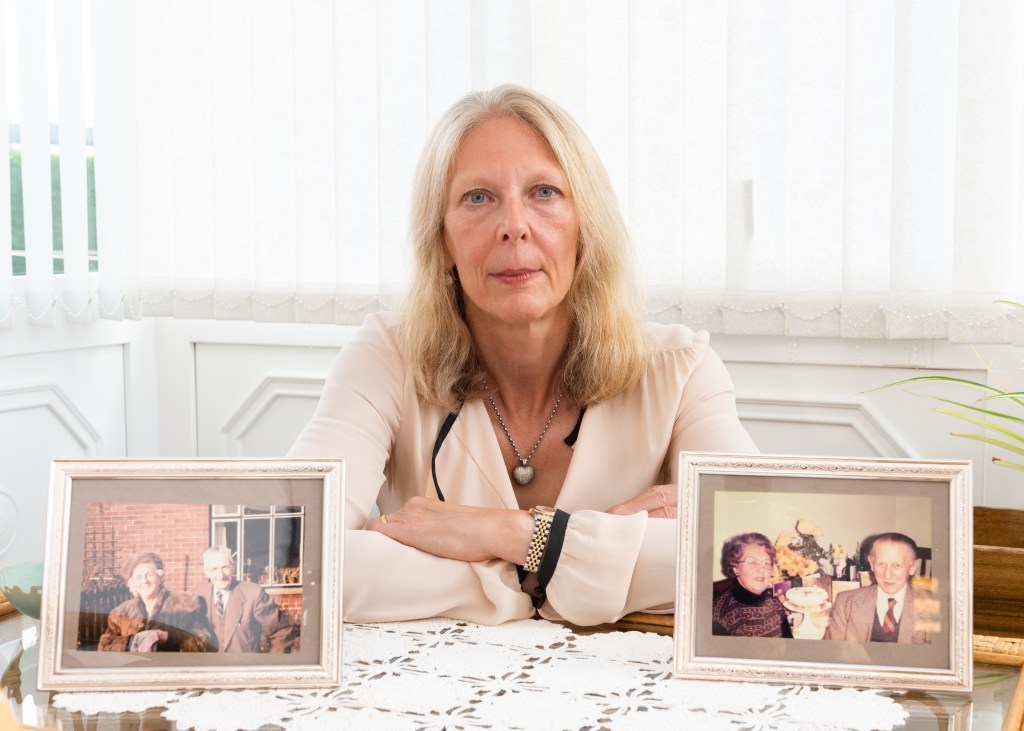
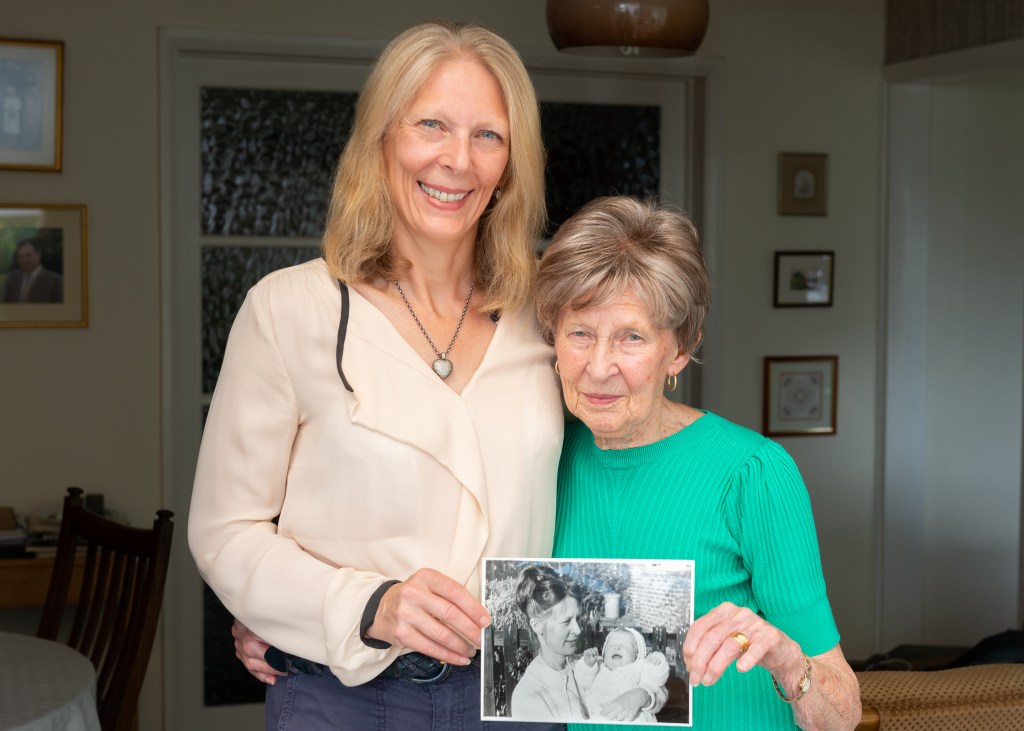
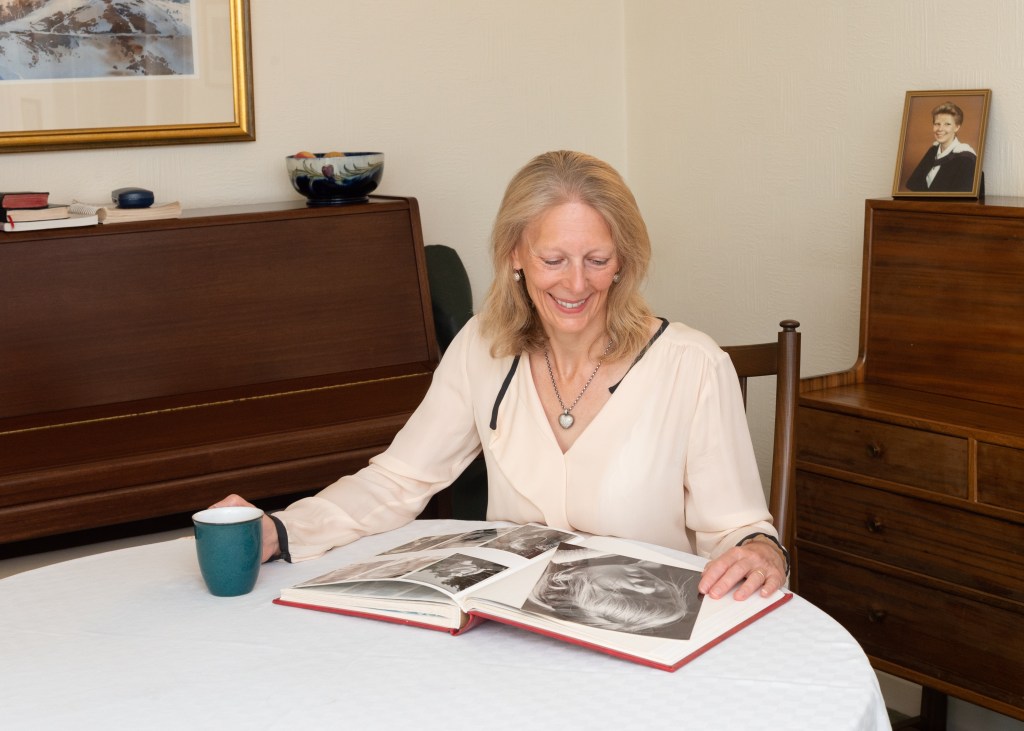
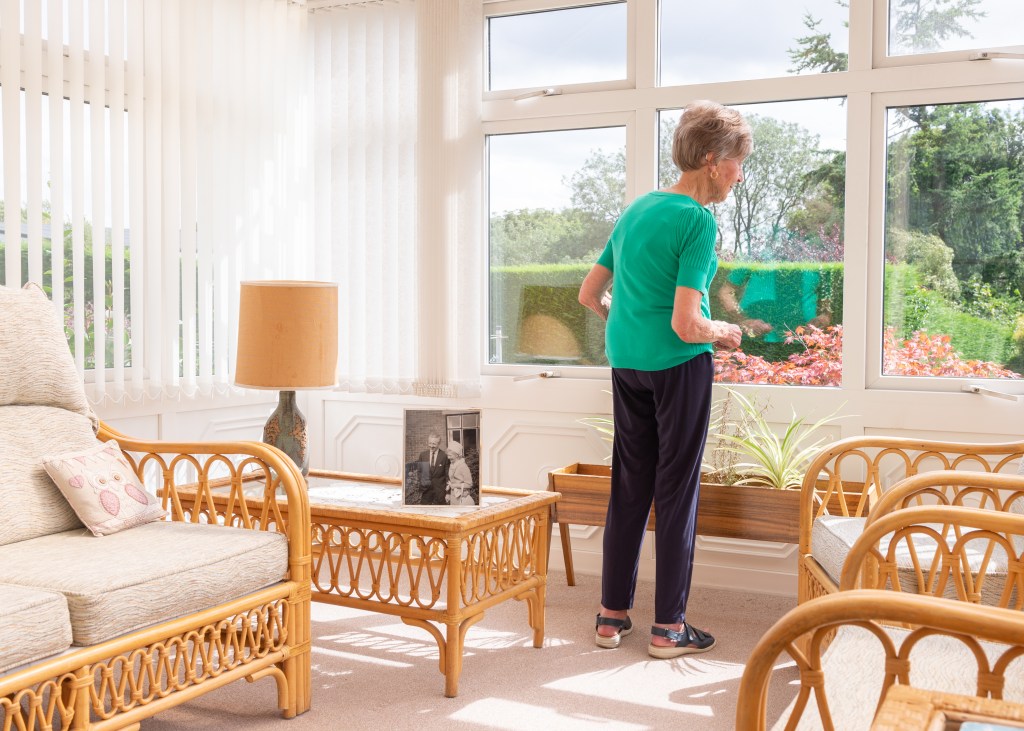
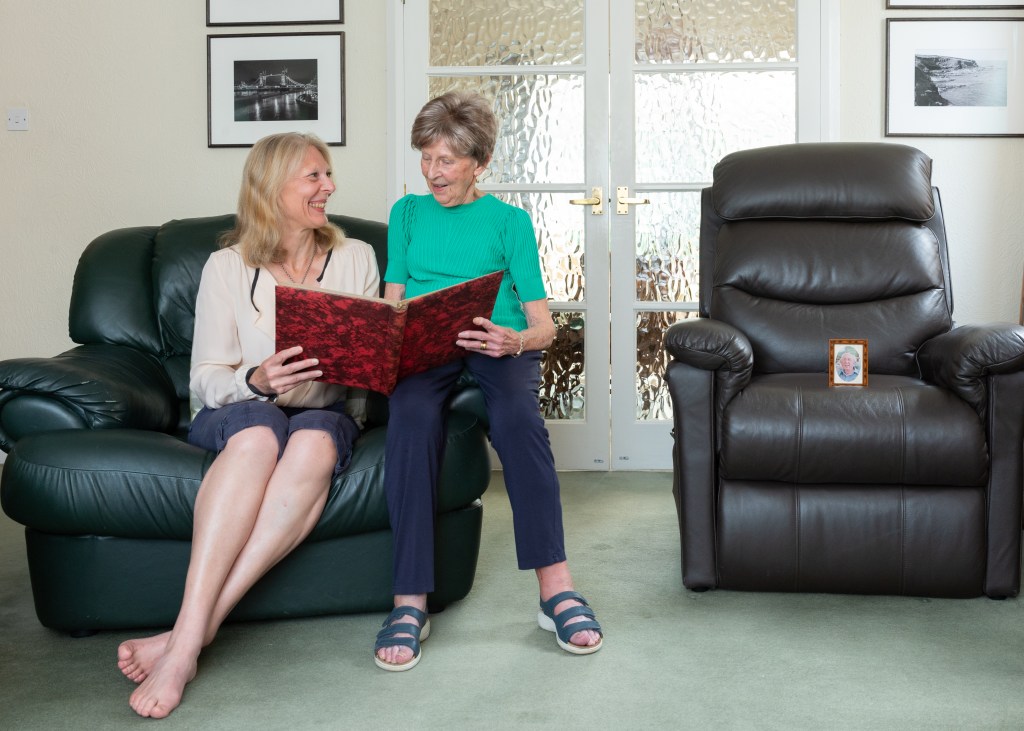
I chose my wife Jayne’s family as my subject because when we met, there were just three close relatives, her parents and uncle.  The family is now just Jayne, her mum Hazel and me. The audio interviews recorded by my father-in-law with his parents started me thinking about familial relationships and visual similarities that photographs document over time. 

My approach was to talk through my idea with Jayne and Hazel ahead of a visit in August.  I suggested spending an afternoon looking through the family albums to find pictures that could be incorporated in the compositions ,and then shooting the following day.  The images weren’t a collaboration in the same way as in part 3, as we had a relatively short period of time for the work.  Seeing the old photographs invoked emotional reactions in them, which led to them being distracted. This needed to be carefully managed.  They had both volunteered to support me with this, which led to my not pushing for any decisions or answers on a particular idea, choosing instead to let that first afternoon flow.  When it came to the shoot, the first challenge was their preference to be directed.  I found that I had to just throw out ideas as alternative to instruction, as I wanted their poses and interactions to be as natural as possible.  Secondly, Hazel wasn’t feeling all that well, and it was obvious at the start that she only had limited patience for the shoot, being in discomfort.  I understood the need to keep the shoot moving along so that she could rest in between compositions.  

Overall, the shoot was successful as I believe the images represent what I set out to reveal.  The working dynamic was interesting, as both women are used my camera.  Although this made consent easy to acquire, Jayne pointed out a nervousness of committing to it formally.  Perhaps that highlights the difference between perceptions of the role of family member and photographer.  There was definite trust that was brought to the session, firstly that the images would be aesthetically respectful, and secondly that I would discuss any deviation in the intent for the work.  For example, I didn’t want to represent Hazel as a stereotypical widow but to make the point that Bryan was no longer with us.  The last two images involved open discussion about that intent.  Interestingly, I have yet to share the work beyond the OCA group, my reluctance being about inviting the public into my family circle.  As a private person, balancing the role of documentarist and proxy subject was definitely a challenge. 

The work in part 4 has influenced the way I’m thinking about my SDP, in particular Mitchells’ subject interviews and the idea of dynamic ‘agency’; the review and re-work process that needs a strong connection between photographer and subject to be successful.  My SDP has already built fledgling relationships with my portraiture subjects, which are yielding a greater understanding of what the LGBTQ+ community struggles with every day.  

EAR Self Directed Project Notes: An ethical conflict

Context

My current idea for my SDP is a documentary series about Malvern Pride, and event that I photographed in a professional capacity in 2022, and will be repeating this year. In preparation for the event, I met with the organising committee and volunteers to discuss the practical details of the day. I had the opportunity to talk to the assembled group, most of whom are part of the LGBTQ+ community, about my social documentary project, and in particular the ‘socially engaged’ element. I told them that I wanted my work to be from the perspective of people within the community, rather than as seen by an outsider like myself. It would require voluntary interviews and collaborative portraits of the individuals. There were many people who were interested in taking part.

The Group for Mature Lesbians

One of the committee members said that she wanted to be part of the project, but I might want to talk to a group that she belonged to that was founded by a friend of hers. It was formed to support lesbian women living in Malvern, acting as a social network because the founder felt that her demographic was under-represented in the town. She thought that I could tell the story of the group and its members as part of my project. I reflected on whether this could be the total focus of my SDP as an alternative to Pride, but said that I was interested in meeting with them to discuss further.

The Difficult Conversation

During this discussion, we were joined by another woman in her 60s who said that she’d only recently moved to Malvern and was volunteering for the first time. She asked me about the project and why I wanted to do it, which I explained. During my description, I used the terms positive and negative to describe the two sides of the meaning of Pride, the positive being the celebration of the LGBTQ+ community, and the negative being the ongoing protest against prejudice and the demand for equality and respect. Her reaction was instantly anger, which made me quickly realise my blunder. She demanded to know why protest was ‘negative’, which I answered by immediately apologising for my clumsy use of language. The other woman jumped to my defence, pointing out what she saw as the meaning of what I’d said. She suggested that the lady was overreacting, which didn’t pacify her. I continued to apologise and explain what I meant in a couple of alternative ways, until she calmed down and we moved on. I believed that things were now ok and we continued to discuss Pride and its importance to the town.

Aftermath

About a week later, I bumped into the committee member in the street, and our conversation soon turned to the group that she was a member of. She informed me that she didn’t think it would work, because the woman from the meeting, who was a member of the group, had mentioned me to the others. The content of the discussion wasn’t clear, but the result was that the members were now anxious about engaging with me. While the committee member was going to talk to the founder privately, she didn’t think the damage could be undone.

Reflection and Learning Points

  • It was clearly a disappointing outcome that occurred because of my carelessness with the language. In the follow-up discusson, my friend suggested that it wasn’t a big deal, but clearly it angered the woman.
  • Ethically, it’s my responsibility to navigate the sensitivities around a subject where a subconscious bias might be at play. I genuinely don’t see protest or campaigning for rights as ‘negative’, but I can imagine that many straight people do. Protest is a basic human right in this country, but as we see in the media coverage of disruptor protests such as Extinction Rebellion and Just Stop Oil, the wider public finds the methods to be frustrating and problematic. Ironically, that’s the point of their methods. In my case, I represent to the woman, a middle-aged, middle-class, white heterosexual male, who is most likely the demographic responsible for categorising LGBTQ+ people to suit their own ends.
  • I acted appropriately and did my best to recover the situation. I later learned in another encounter with her that she is just a generally angry person. It wasn’t aimed at me personally, but it was sufficient for her to have (allegedly) spoiled a potential constructive relationship with an interesting group of people. I learned to quickly move on and look for alternative subjects and ideas.
  • While it’s an important learning point, it’s also set in a much wider context of the project, which isn’t focused on a particular gender or sexuality group within the LGBTQ+ community. I have alternative options, so am not dwelling on what is a fairly small incident.

Project 4, Reading Task: Case Study of Family Consent

The Brief

Read the article by C. McKinney: “Leibovitz and Sontag: picturing an ethics of queer domesticity.” Shift Journal [online]. 

Reflect on and summarise the ethical considerations of the case study (150 words) andpost this to your learning log.

Reflection

McKinney raises the problematic nature of photographing outwardly private people, against a backdrop of homophobic perspectives on domestic life, perpetuated by Sontag’s blood family.  We see how consent, first implied in the posed portraits, is questioned when Sontag became perceivably too ill to comprehend being photographed.  All evidence points to her tacit understanding of pictures having distribution as their primary purpose, so how do modern sensitivities around privacy and respect for the dead influence our view of art? A point is made that family see themselves as the owner of a loved-one’s posthumous representation above all others, this case including Sontag’s 15 year romantic partner. Core themes of ‘disrespect’ run through criticism of Liebowitz, possibly because her photographic craft often transgresses perceived decency, but also because of her gender and sexuality.  The piece highlights the strength of family influence, and how this must be considered in the context of gaining, and maintaining, consent.

Assignment 3: Collaborative Design

The Brief

Think about the images that you made for the Assignment of Project 2 and redesign your approach as a collaborative project. How could you re-photograph that community, but collaboratively? 

  • Write out a 2 page project description and, using the headings outlined in the ‘Terms of Engagement in Collaborative Practice’ section as a guide, design a plan to approach this collaborative project.

Include consideration for the ethical questions raised in this section. 

Spend some time reading how others have adapted projects to be collaborative.

Introduction and Overview

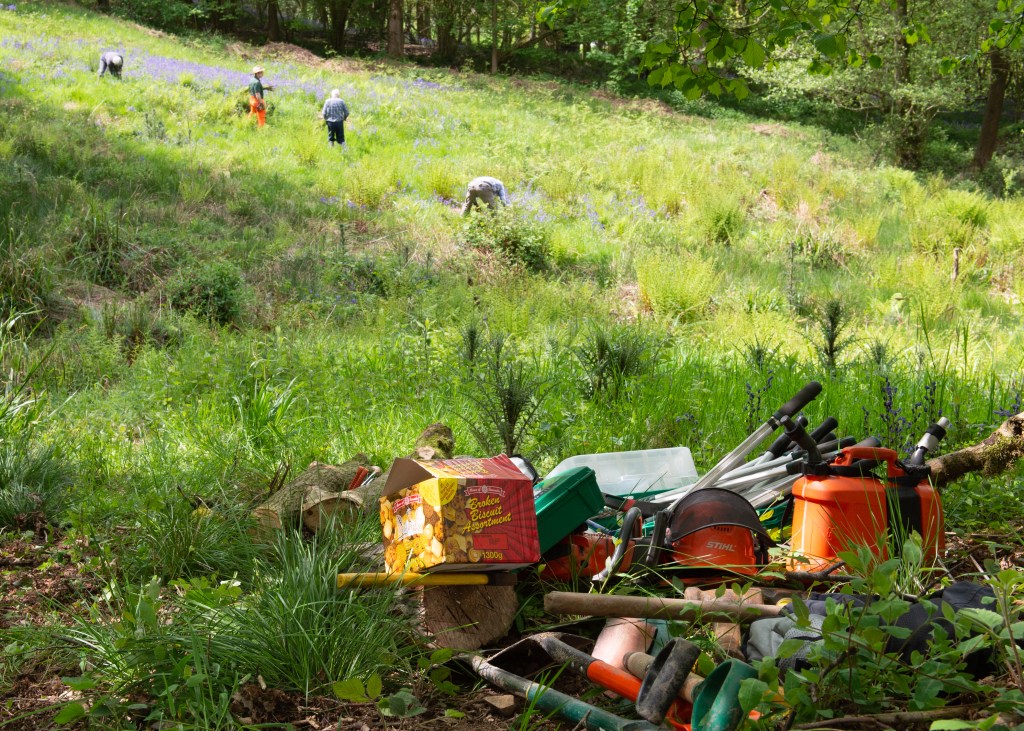
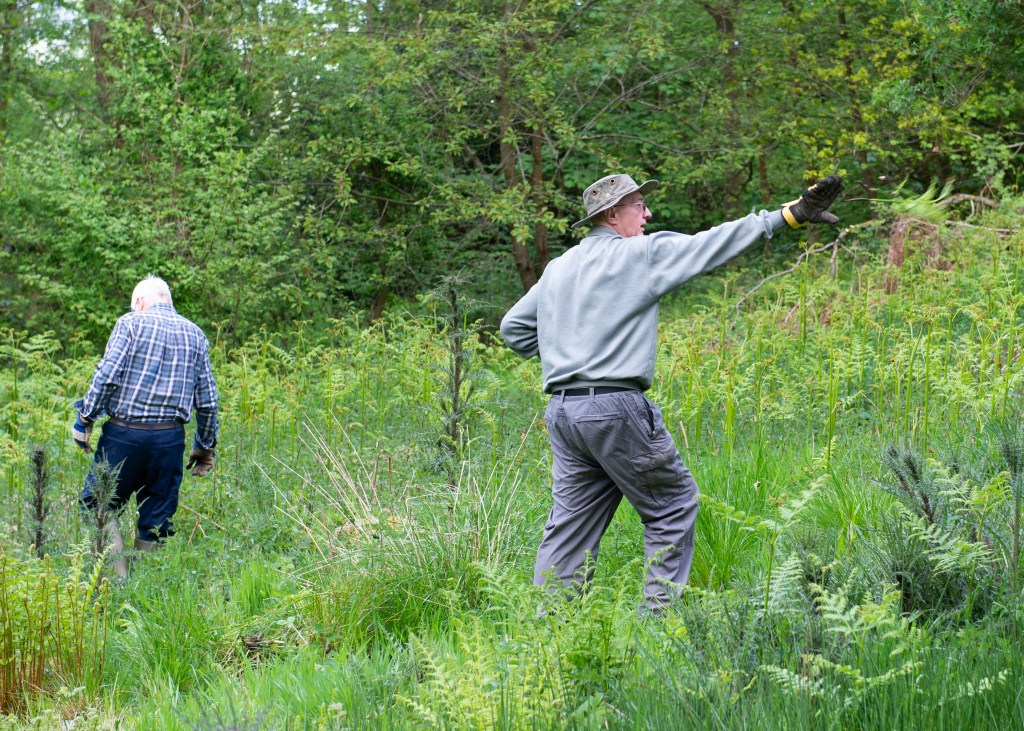
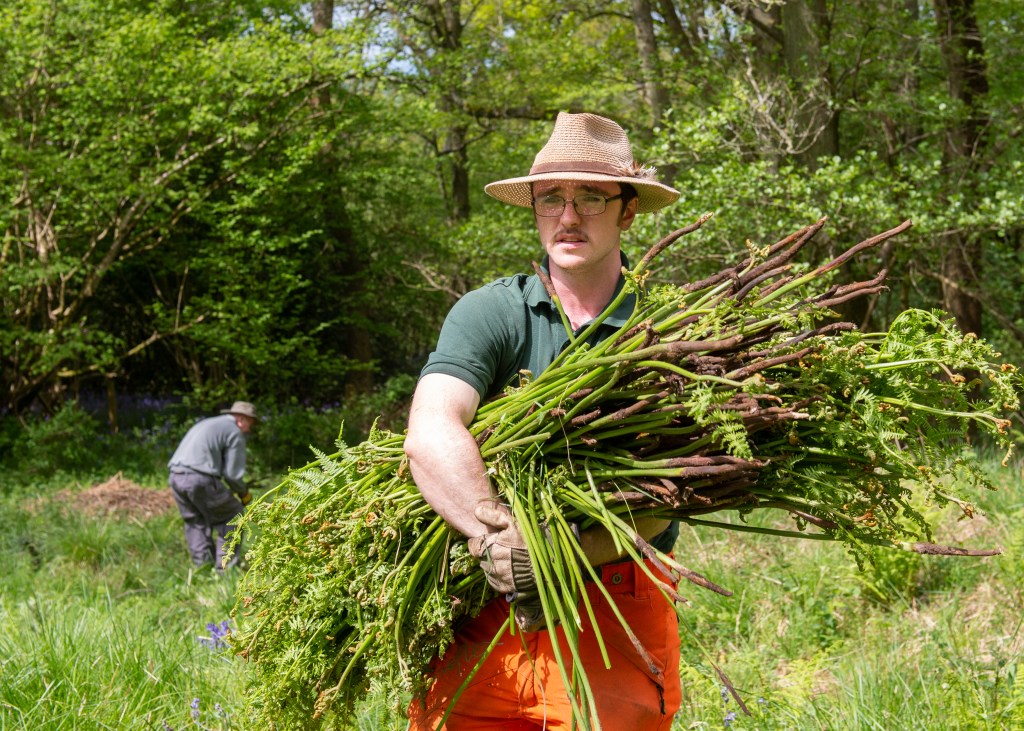
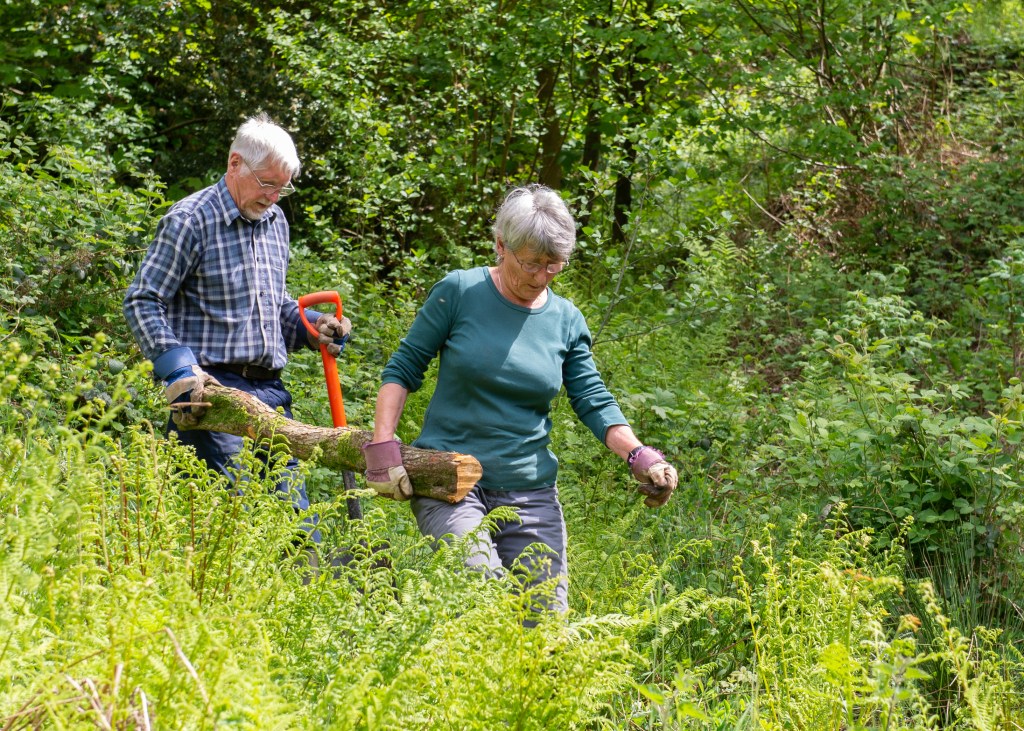
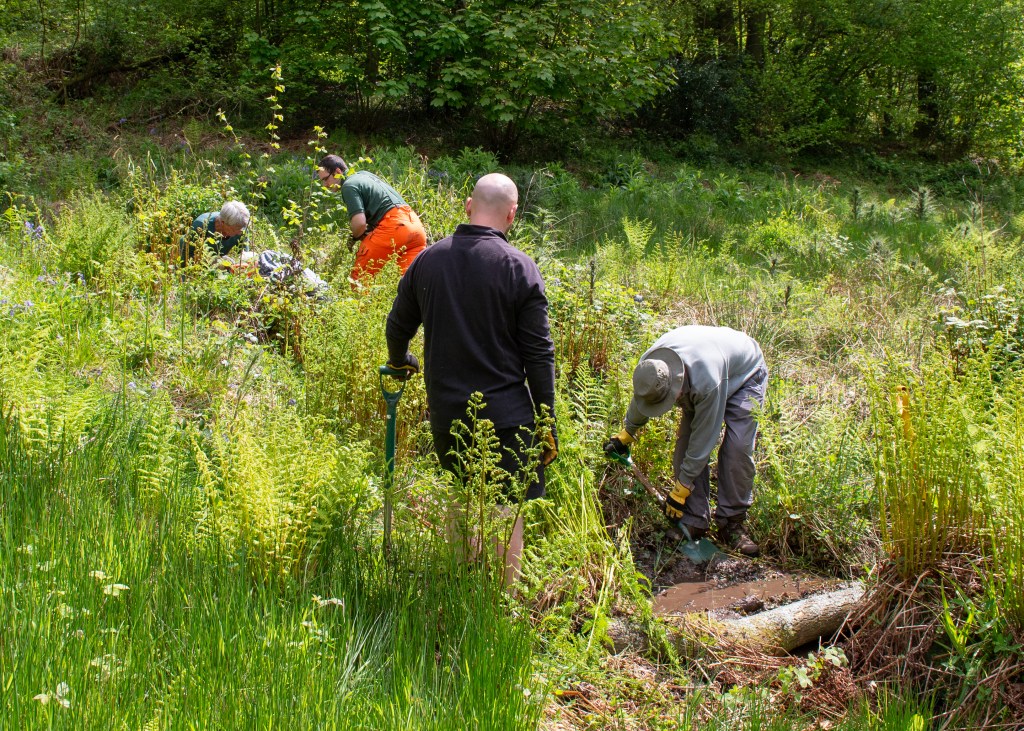
For.Assignment 2, I photographed a community of volunteers that carry out landscape maintenance for the Malvern Hills Trust, whose aim is to preserve the natural beauty and wildlife habitats within the area. The volunteers generally meet every week, depending on the nature of the work that needs doing. The attendees vary both in number and attendance, depending on their availability. I attended a session of bracken clearing and dam building during early summer.

I concluded at the end of Project 3 that the shoot was not at all participatory in nature, beyond gaining consent. The resulting series was aesthetically ‘observational’, in a street photography style. The subjects were aware of my presence, but didn’t engage with me the camera at all. It was my intention to document the work that they collectively did, rather than tell individual stories, so perhaps it isn’t a surprise that their level of input to the work was limited to simply ‘being my subjects’. I spent time briefing them about my intention to document the work of the Trust and ensured that they were comfortable with my shooting the project, and I spent time chatting with each of them during the shoot. These conversations were aimed at making them more comfortable and gaining an understanding of what motivated them to volunteer.

Intention and Benefit 

In collaborating, the intention would first have to evolve to be more about the contributors and their motivations for volunteering for the Trust. All of the artists in Project 3 spent long periods of time with their participants, building trust and getting them interested in telling their stories. The first change to my project would be to attend multiple sessions talking to them and listening for the details that may be the basis of the project. Unlike the work of artists like Luvera, Houston, Lixenburg etc, I would not be representing a part of society that is mis-represented or persecuted in some way. They are underrepresented though, with most Malvernians not being aware or appreciating the contribution that they make. I would focus the benefits on the celebration of the volunteers themselves, as well as publicity to attract more volunteers to their cause.

Equipment

I’m drawn to Luvera’s use of a mixture of disposable cameras and loaned equipment with the participants in their projects. As the group only generally comes together for the volunteer days, the use of the former or a similar technology could be limited to that timeframe and wouldn’t include much context beyond, in contrast with Luvera. I would consider getting them to wear high resolution video cameras (if they could be borrowed), to film their work in a ‘found footage’ style. The series would also benefit from particpatory portraits, which could be shot during breaks in the work. Success would depend on the level of co-operation.

Agency and Co-operation

The subjects didn’t see themselves as being the subject represented, instead being part of the story of the Trust volunteers. To include the participatory element, the conversations would need to focus on the individual and their place in the group. They all shared the love of being outdoors, so this would be the starting point of discussing representation. They were mostly retired people, so we would address the stereotyping of retired people within our culture; holidaying, playing bowls, spending time with family. I would establish whether or not they wanted to challenge these ideas through their very physical volunteer work. As Houston and Luvera did, some form of review at the end of each shoot would help steer the direction of the pictures.

Ownership and Consent

Consent was covered well in the work for Assignment 2, but I believe a longer term project gives the participants more time to consider their position on consent. During our discussions, they all wanted to know what specifically I was gaining from the shoot. In this context, ownership would need be reconsidered particularly if participatory portraits are created. My consent form calls for the subjects to waive their rights over the images, which would clearly have to be updated.

Co-authorship and Credit

Similar to the topic of ownership, the shared credit for the series would also change. If I’d published the previous work outside of of the context of my studies, I would have credited the Malvern Hills Trust as the organisation I was working with. However, participatory work could introduce the contributions of the volunteers as co-authors, requiring an update to my consent form.

Outcomes and Audience

I think the outcomes for the work change in step with the stories being told. For example, a counter to the traditional ideas of retirement would incorporate the physicality of the work, while a ‘recruitment drive’ for the volunteers would major on the sense of achievement and the visual signs of familiar geography, landscape genre and the natural world. What I would definitely consider is the audience. The original intent was to highlight the work of the volunteers, so exhibiting the work as posters around the town, or a published article in a local magazine (Cotswold Life, Worcestershire Life etc) might be more appropriate than a formal exhibition. These formats would support my initial ideas of how to represent the team and the individuals.

Aesthetics

As with Luvera’s work with the homeless, I would include multiple formats for the images to include more formal portaiture and landscape styles. I would still work in a street style because I think it lends itself to representing activity. I would also combine quotations from our conversations with the images, to add further identity context. I probably wouldn’t pursue multimodal research as with Luvera and the Calais project, because of where I would present the finished work.

Reflection

The key takeaways from Project 3 are the emphasis on balancing the power of the camera with the power of the subject, and to invest the time with the subject(s) before a single image is made, to better understand what their story or representation might be.  Photographers bring their own preconceptions to a project, which in straight documentary terms, shapes the narratives within a social, political, or cultural context.  However, here we are bringing the subjects into positions of creative power, to help challenge misrepresentation and offer alternative narratives.  Photographers such as Anthony Luvera and Scott Houston make the point that the work put into research, gaining feedback, and building trust is as important as the resulting images.  This is a long way from merely asking someone if they consent to being photographed by a third party, who has some ideas of their own what the story might be or how it should be told.  For this assignment, I had many ideas about how it could be more collaborative, but the main element that was missing was time.  I would need many sessions with the community from Assignment 2 to adopt such an approach.  Luvera and Houston approached their subjects as social and cultural outsiders respectively but put the work into validating their initial assumptions with the direct help from their subjects. Luvera’s approach of encouraging them to make pictures with him, first teaching them photographic skills, shows a non-judgemental of his homeless subjects, which brings them into the work.  Houston’s editing sessions at the end of each shooting day, where the people of the community help edit and guide the sequencing, shares the sense of ownership with them, again gaining high levels of trust.  Both approaches build on the community photography movements of the 1970s, which sought to represent under or misrepresented communities within the mass media.  I’m already adopting the ideas of actively listening, developing ideas, sharing and accepting feedback in my SDP, and have already run into issues that make a collaborative approach vital to its success. A member of the community group that I’m interested in has deliberately warned off other members, because she fears my intentions for the project.  That fear has caused reluctance to even engage in the initial discussions of how we might collaborate.  How I approach the engagement will be crucial in moving forward, so Project 3 has come at a fortuitous time.

Assignment 2: Photographing Communities

The Brief

Create a series of 6-8 images of individuals from one particular community that you are not connected to or part of. 

Keep in mind that “community” can be interpreted in a variety of ways, for this assignment the community you choose to photograph should reflect an experience and/or perspective that is different to yours. For example, they may be shop owners in a particular neighbourhood, or members of a particular club, or a group of individuals that work in the same trade or organisation. You may also decide to photograph people who belong to a different ethnic group or religious tradition from yourself. 

Don’t forget to implement your model release or consent form, and gain written consent from the individuals featured in the work. You may choose to share these photographs in the Ethics and Representation Forum or privately (e.g. via a private learning log link) with your tutor.

Think carefully about the visual language of your photographs – how you compose your images should reflect something about the individual and the community they are part of. What might your position be? What might you need to be aware of going into a community to which you are an ‘outsider’? How did you approach these exercises and what did you learn from them? Would you make any changes to your process for any future work?

Supporting Padlet

For more details on how I approached this assignment, please see the below Padlet:

https://oca.padlet.org/richard5198861/assignment-2-supporting-padlet-wzxjktx1o3po65be

The Series

Reflection

On reflection, my choice of community suited this assignment.  I approached the group in advance, explaining my intentions, the idea of informed consent etc and gained agreement from the leadership to proceed.  On the day, I used a personal experience of not being asked for consent to give context to the discussion and gain their trust.  During the session, I talked to them about their individual reasons for volunteering, concluding that the series shouldn’t be about them as individuals, but as a team.  This informed how I curated the final series, majoring on the collaborative nature of their work, while including visual references to their reasons for being there.  I struggled with the consent form, because when I first met them, we were outside getting ready for their work.  If I’d sent it in advance, the initial conversation we had would have been circumvented by formality.  I sent the form after the fact, which was good for them as I followed up on my ‘promises’.  However, it wasn’t helpful in my ability to use the images if, say, I’d been on paid assignment.  I conclude that securing informed consent to shoot is easy if you build a rapport, but closing the second loop, the use of images, is more ethically challenging in terms of when the form is produced.   Ethically, my concern was being respectful, documenting the work but not photographing people stumbling or wearing expressions that could embarrass them.  As the series was an outside perspective, built purely on my observation of something I wasn’t part of, it didn’t feel like a transaction that needed the legal formality of the form.  I suspect this is more an assumption of needing to protect from a threat, which I didn’t see during this shoot.  I didn’t have to work that hard to gain their trust.  I think the form works well for more formal photography, perhaps more transactional than this event. However, I will explore this further as I consider my SDP, which will contain both ‘street’ style observations and formal portraiture.   

Project 2, Exercise 3: Exploring Approaches

Introduction

The research part of this exercise can be found here:-https://oca.padlet.org/richard5198861/project-2-exercise-3-exploring-approaches-epuck7e6y0kmy983

The final part of the brief for this exercise calls for an analysis of works by two of the photographers from the lecture[1]. I chose Handsworth Self-Portraits (1979) by Bishton, Homer and Reardon, and Imperial Courts (1993 – 2015) by Dana Lixenberg for this part.

Comparative Analysis (450 words)

The first, observation about these works is that they are both traditional ‘documentary’, namely they are recording the lives of two communities. These communities share common themes too, with Lixenberg’s subjects being marginalised African-Americans living in a  prosperous US city, and the Handsworth project being a multicultural district in Birmingham with similar challenges and tensions.  Their approaches differ, with Lixenberg seeking to be both insider and outsider simultaneously (DANA LIXENBERG – Interview 2017 – YouTube, s.d.) in a semi-directional style, as demonstrated in the photograph below.  


Fresh, Real, Flave and 4Doe (Real Fresh Crew), from the series “Imperial Courts”, 2008 (Dana Lixenberg, s.d.)

Here a group of young men clearly posing for her portrait.  In 2017 interview, Lixenberg tells of the boys wanting to flash their gang signs. After discussion and the showing of Polaroid test images, she got them to understand that the work wasn’t explicitly about their gang, but their place in the wider community.  The result is a collaboration between photographer and subject, established over time. 

From the exhibition Handsworth Self Portrait: 40 Years On by Derek Bishton, Brian Homer and John Reardon (Smyth, 2019)

By contrast, the second image from Handsworth, shows the subjects taking complete control over their representation.  The photographers have set up the camera given them the camera trigger, allowing them to engage with the camera as much or as little as they want.  Rosler dicusses the camera’s ‘power’ as seen by the subject and the effect it has on their reaction.  We see a different reaction to the instrument when the photographer is directly involved.  Bishton et al democratise this power by conceding the ‘moment’, while Lixenberg dilutes it through continual dialogue.  Neither image is more ‘truthful’ than the other, as all the subjects play ‘characters’ of themselves.  However, where Handsworth removes environmental distractions, the decaying infrastructure, evidence of intolerance etc, by using a plain background, Lixenberg supplements her work with carefully selected backgrounds, landscape, and still-life images.  With the former, we gain a knowledge of the people and their cultural and personal differences, and the latter, a narrative about the place as well as the community.  Other similarties include both artists engaging with their subjects in a transactional way to build trust, either through the giving of Polaroids (Lixenberg) or the offer of prints (Bishton et al). They built a reputation with their subjects that encouraged even the most reluctant take part in the work and avoid the pure spectator approach described by Bey (Bey D, 2019) or the ‘super tourism’ postulate by Sontag (Solomon-Godeau A, 1994) by living or working within the community.  In doing so, their approaches challenging the concept of ‘binarism’.

The viewer recognises in both, the humanity of people and a hint of what their lives are like, even without any real knowledge beyond judgmental media portrayal.  Both series achieve this via different routes, but the effect remains very similar. 

Bibliography

Martha Rosler, Post Documentary, Post Photography? — Are.na (2018) At: https://www.are.na/block/1791938 (Accessed 02/06/2023).


Bey, D. (2019) On Photographing People and Communities. The Photography Workshop Series. Aperture Foundation. pp 26-75.

Solomon-Godeau, A. (1994) “Inside/Out.” In: San Francisco Museum of Modern Art. Public Information: Desire, Disaster, Document, Part 1. pp. 49-61.

Figures

Smyth, D. (2019) Handsworth Self Portrait: 40 Years On. At: https://www.1854.photography/2019/03/handsworth-self-portrait/ (Accessed 01/06/2023).

Dana Lixenberg (s.d.) At: https://www.deutscheboersephotographyfoundation.org/en/collect/artists/dana-lixenberg.php(Accessed 02/06/2023).

Project 2: Reading Task: Relating to your “subject”

The Brief

Read these two articles:

Cohen, A. (2018) “What Do Photographers Owe Their Subjects? Four Photographers Weigh In.” Artsy [online].

Molitor, A. (2017) “Every Photo Comes with Built-In Debt, or: The Ethics of Photograph.” Petapixel [online].

Reflecting on your experiences in photography so far, describe how you feel about your relationships with the people in your images. What kind of relationships do you have with them – if any at all? What responsibilities do you feel towards them? Have these articles prompted you to think differently?

Reflection

The first article discussed what the photographers owe in terms of a specific debt to their subjects, and introduced some cases that resonated with my own experiences. I’ve long been interested in the work of Philip-Lorca diCorcia, in particular his portraiture and advertising work, because of his use of the constructed tableau. His Hustlers series, which is discussed in the article, incorporates a fantastical scene in which a male prostitute is seen. In terms of representation, the scene conflicts with the title of each image, which is restricted to the model’s name, age, location and fee. diCorcia uses the fact that they were paid their usual fee for sex as payment for their image to anchor the pictures in a common aesthetic that is associated with sex work. Reflecting on previous learning in this degree, we know that accompanying text like a title can dramatically alter the meaning of a picture. In this case, a strong narrative thread is created for a series of images that could simply just be portraits of young men. Ethically, the payment made to the models also influences the way they react to the photographer, potentially responding more to direction because of the ‘contract’ between them. The NPPA, which I looked at in part 1, has declared the payment of subjects in photojournalism to be unethical, which is understandable in the pursuit of so-called ‘truth’. Perhaps diCorcia’s earlier career as a fashion photographer distinguishes his work in Hustlers from the traditional photojournalist. Whatever the reason, there is a thought that the subjects were essentially ‘for hire’ and that perhaps any characterisation of them within the circulation of the images is perhaps less damaging than their choice of profession. I don’t think this excuses any disrespectful representation of them, however, which arguably this series is from an ethical perspective. I’m facing a similar ethical question this summer with the photographing of Malvern Pride (discussed in Part 1), because this year I am being paid to do it. Does this make a difference? Previously, I volunteered to document the day as I saw it, which as a straight man was somewhat biased towards the significance of Malvern holding the ‘party’. The committee were very happy with the work, but with this year being the third event there is a pressure to reinforce the messages of equality. If I am being paid to shoot the event, ethically I need to carry out the assignment as the committee wants it, but as an artist my own interpretation of the meaning of the event is also important, since objectivity doesn’t really exist in photography. I am going to have to discuss the needs of the community and the organisers carefully in order to help me make the work. This relates to the experiences of Gillian Laub, whose Southern Rites series depicts the newly integrated school proms. Her work with the organiser of the ‘whites only’ prom was intended to be an honest representation of the individual’s role. She had expressed the desire for the series to not depict her as racist, which is how Laub approached the shots. However, when the images were viewed by the public, racism was a significant reaction, which caused the subject to suffer online abuse. Ethically, the artist had done their best to represent them respectfully, despite disagreeing with her views. In my case, I am part of the Malvern community, but not the LGBT+ community, so while I will do my best to respectfully represent the celebration and the campaign for equality (I wholeheartedly support their position), I am aware that, despite my efforts, there will be some sections of the public that are triggered by the series.

My conclusion from the first article isn’t really a surprise as Respect was one of my key ethical values in Project 1. Our responsibility to the subject and how they are represented comes down to a ‘best effort’. The focus on the first article is on collaboration, the relationships between the photographer and their subject, with some examples being directional (diCorcia and Laub) and some that depend much more on ideas from both parties (Dubois).

In the second article, we are introduced to an ethically unsound use of context. The image that LensCulture used to advertise their competition was taken out of the context of highlighting child sex trafficking, which was the artist’s original aim for the project. For me, the direct contrast between the intent and subsequent use causes two major issues. The first is that the public reaction to the advert, which is entirely justified, demonises both the image and the artist, without understanding the context of the work. The artist specifically asked LensCulture to not use that particular image, but instead to use another from the series. We can make the argument that he relinquished his ethical debt to the subject rather too easily, but also that he’d transferred it to the editorial at LensCulture. The article explains the artist’s position on his own work, citing the subject of the picture as having asked him to photograph her (a little hard to believe from a Western cultural perspective) and that this constituted ‘consent’. My takeaway from the article as that the subject may well be abhorrent and shocking as in this case, the artist’s attitude may come across as being arrogant or misguided, but from an ethical point of view, did he represent his subject faithfully and respectfully? I am definitely in the camp of be disturbed by the idea of documenting abuse of children, but have to accept that the artist is behaving loosely in line with my perspective of photographic ethics. It also reinforces the idea that ethics are defined personally and are not a set of rules that everyone works within. The best we can do is to understand why people have different reactions to the work. Art is defined as being a creative medium that invokes a response in the viewer and the kind of work definitely achieves this. For their part, LensCulture subverted the meaning of the image by using it for a commercial advertisement. I would say that they failed in their responsibilities in respect of the subject, the artist and its readership. In my own experience, I’ve had images stolen by others and repurposed for other uses without my permission or control. However, the difference has been that the thief has been the subject of the picture themselves. In this scenario, there is no harm to them and the situation is easily remedied by setting more rigid terms and conditions and pursuing transgressors.

Conclusion

These two articles were interesting in that they introduced the concept of ‘debt’ within the idea of ethics. There are different approaches to representation that involve directional or collaborative, but when a photograph is of a person, there is a responsibility that the photographer has to that subject. In some cases, this debt can be transferred, as in the example of editorial, but it must be discharged ethically (respectfully and with the intent to do no harm). In my own work, I’ve become acutely aware of these points. I’ve recently had a highly constructive discussion with a client, which resulted in my perspective on ethics influencing his thinking about the series that he’s after. What I mean here is not a manipulation of his requirement, rather providing new ideas for him to consider. I’m interested to see how this course continues to influence my approach.