Category Archives: Photography 1 – Context and Narrative

Exercise 3: Public Order

The Brief

Look at some more images from this series on the artist’s website

  • How do Pickering’s images make you feel?
  • Is Public Order an effective use of documentary or misleading?


Sarah Pickering’s series Public Order does something different again to Seawright’s.  This time we are presented with images of a deserted town that could be anywhere.  When I look at them, I am reminded of the run-down areas of industrial West Yorkshire, where my wife is from.  Boarded up businesses and seedy looking night clubs like the one in the notes are commonplace.  While areas of the town are recovering from the socio-economic problems related to the decline of the steel and textile industries, there are areas where those problems are still obvious. The collection moves through the desolate town-scape leaving me with a sense of sadness more than fear because of my relationship with those areas.  I was actually disappointed at the feeling of being deceived as the collection becomes more obviously ‘not real’.  The compositions themselves use leading lines, shapes and textures beautifully, but I couldn’t initially see what the artist was trying to say.    While Flicks Night Club caused me to create a narrative about deserted streets, something very relevant to the current Coronavirus pandemic, the complementary image Behind Flicks Night Club says nothing to me apart from a pleasing matching of shape and colour.   I started to think more about what Pickering was looking for when she shot the series and in a video interview with Aperture [1], she describes the relationship she has with rules and authority.  She talks of her father being very much a fan of rules, so perhaps she was saying that beneath the surface there is a fabrication or fantasy.  The pictures that contain evidence of the ‘riot’ damage caused by the police training that takes place in the town, suggest that it’s ok to rebel authority, real or otherwise.

For me, as an art collection Public Order works well as each image connects with the other sand they are aesthetically pleasing.  However, unlike Seawright’s Sectarian Murder the context is all within the image i.e. without the key information that this is a police training ground, so the narrative is vague for me.  I confess that I don’t personally like the work as much as Seawright’s as the impact is less powerful on me.  Do I think it’s a misleading use of documentary?  I would say that it’s not more misleading that any of the work I’ve looked at so far.  The police do deal with riots and towns like this do exist, even if the details are embellished.

References

[1] Aperture Foundation, 2018, “Sarah Pickering on Public Order & Explosion series Excerpt, https://www.youtube.com/watch?v=oQRAW_cPvfY&list=PLvAytXgNgEllIfZ7aw0pinYQjYVqqPDXq&index=34&t=0s

Project 4: The Gallery Wall – Documentary as Art

Research Task – Paul Seawright’s “Sectarian Murders”

Introduction

When first looking at the series Sectarion Murders, I naturally read the accompanying narratives taken from the press and then looked at the photographs.  Seawright’s use of text taken from news reports of sectarian murders is powerful in its own right.  He removed any reference to which side of the Northern Ireland conflict was being held responsible for the killings, instead leaving just the flat, sadness of the facts.  With each image, the backdrop of the text is then used by the viewer to allow them to create their own narrative.

The first shot in the series has the text:

‘The sixteen year old youth was standing at the corner of Dandy Street talking, when a motorcycle with two youths on it drove by.  The pillion passenger was carrying a Sterling sub-machine gun and opened fire on the group.  The boy fell dying in a hail of bullets’

 The text starts by factually reporting the incident as if it were a police record; the use of the word ‘youth’ and the detailed identification of the weapon used.  Towards the end, the piece introduces the tragedy element with ‘the boy fell dying in a hail of bullets’.  This single sentence introduces the more human element, connecting the age at the start of the piece with the fact that this was a 16 year old child.  The extremely violent nature of his death is further emphasised by the ‘hail of bullets’.  I found the building horror of the text to be interesting even before viewing Seawright’s accompanying picture.

The image itself depicts a street corner, assumed to be the place where the shooting took place.  The bleak environment has a couple of streat signs and a small caravan parked on the corner.  The image is shot with a flash that picks out the stop sign and a reflective stripe on the motorcyclist passing in the background.  When I viewed the image, I was first struck by the emptiness of the frame which created a bleak view.  The large areas of ground and sky have little interest in them beyond being either sunrise or sunset.  The approaching bike is small in the frame and while the context is all about the murder being a drive-by shooting, it creates a sense of unseen and unexpected.  I look at the small caravan and think ‘few witnesses, if any’.  The final element of the bright ‘Stop’ sign is to me a narrative of the horror of the killing of a child, suggesting that this kind of act cannot continue.   All of these narrative elements in my interpretation come from having read the contextual text first. Without it, the scene is an early morning or late evening bike ride at first glance. The context is critical to the narrative.

The Video Interview

In the video [1], Seawright comments on the extremes of having too loose a context and being too prescriptive, citing the former to be having little obvious meaning and the latter being journalistic.  Looking at his series, I understand what he means here.  The images themselves are interesting from a composition and lighting perspective but they only had an impact on me with the accompanying context.  Seawright moves us away from the vague, but does not add so much context to make the image too easy to navigate.  He talks about the viewer creating the narrative rather than him and that in order to do that, they need the space and time to do so.  I was reminded of a previous piece of research that I did for EYV where Nan Goldin was talking to an audience about how she feels about the Instagram generation [2].  She talked about being in a conversation with a social media manager about some paintings that she had done.  When that person looked at them on her phone, she swiped through the collection very quickly.  Goldin challenged her that she hadn’t looked at them, only to be told “I saw them”.  Goldin’s realisation that this is how the world looks at images led her to dislike the platform.   The same is true here.  As Seawright states that a journalistic image needs only the briefest of glances to understand what is going on, art needs space and time for the viewer to appreciate the image as they create the narrative internally.  I agree with this sentiment as I’ve had feedback from people viewing my own photographs where I’ve not tried to be too vague or obvious about the meaning.  In terms of whether we can re-classify documentary as a piece of art with or without changing the meaning, I believe that to be dependent on the image’s internal context.  Looking at Seawright’s collection, there are no internal contexts that point to sectarian murder.  In several of the images in the collection, Seawright draws us into the frame with traditional techniques and  elements that are often playful and seemingly innocuous.  He challenges the seemingly idyllic with the horror of the external context, leaving the viewer re-considering how they originally felt about the picture.  For me, that challenge is very much key to art.

Sarah Pickering – Public Order (from Exercise 3)

Sarah Pickering’s series Public Order does something different again to Seawright’s.  This time we are presented with images of a deserted town that could be anywhere.  When I look at them, I am reminded of the run-down areas of industrial West Yorkshire, where my wife is from.  Boarded up businesses and seedy looking night clubs like the one in the notes are commonplace.  While areas of the town are recovering from the socio-economic problems related to the decline of the steel and textile industries, there are areas where those problems are still obvious. The collection moves through the desolate town-scape leaving me with a sense of sadness more than fear because of my relationship with those areas.  I was actually disappointed at the feeling of being deceived as the collection becomes more obviously ‘not real’.  The compositions themselves use leading lines, shapes and textures beautifully, but I couldn’t initially see what the artist was trying to say.    While Flicks Night Club caused me to create a narrative about deserted streets, something very relevant to the current Coronavirus pandemic, the complementary image Behind Flicks Night Club says nothing to me apart from a pleasing matching of shape and colour.   I started to think more about what Pickering was looking for when she shot the series and in a video interview with Aperture [3], she describes the relationship she has with rules and authority.  She talks of her father being very much a fan of rules, so perhaps she was saying that beneath the surface there is a fabrication or fantasy.  The pictures that contain evidence of the ‘riot’ damage caused by the police training that takes place in the town, suggest that it’s ok to rebel authority, real or otherwise.

For me, as an art collection Public Order works well as each image connects with the other sand they are aesthetically pleasing.  However, unlike Seawright’s Sectarian Murder the context is all within the image i.e. without the key information that this is a police training ground, so the narrative is vague for me.  I confess that I don’t personally like the work as much as Seawright’s as the impact is less powerful on me.  Do I think it’s a misleading use of documentary?  I would say that it’s not more misleading that any of the work I’ve looked at so far.  The police do deal with riots and towns like this do exist, even if the details are embellished.

Assesandra Sanguinetti. The Adventures of Guille and Belinda and The Enigmatic Meaning of Their Dreams

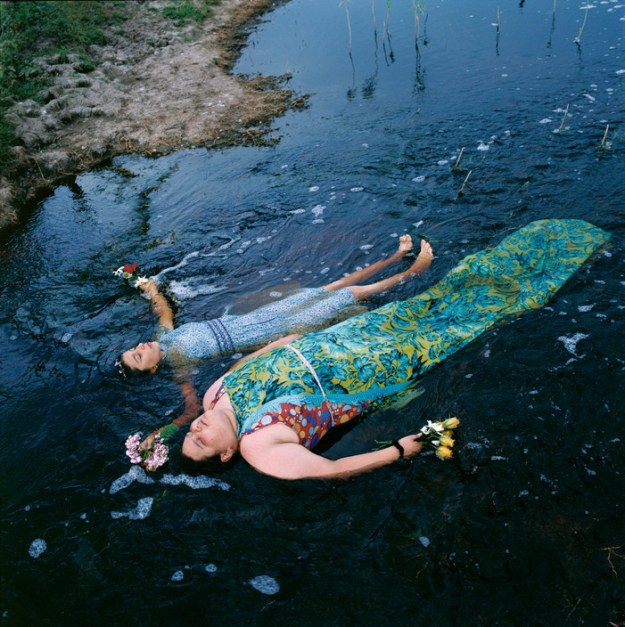
Here we have a series about two young cousins growing up in rural Buenos Aires.  Sanguinetti observed the clear differences in appearance between the two girls, one larger and more mature looking than the other.  When set against the backdrop of their lives, the series could have simply documented their growing up within a particular way of life.  Instead, Sanguinetti adds another layer to her work, by documenting the way the girls play. Their imaginations and depictions of events from dreams moves straight documentary with context, to something more impossible or fantastical.  Consider the example below:

ARGENTINA. Buenos Aires. 2001. Ophelias.


Ophelias, by Alessandra Sanguinetti, 2001[4]

Here we have the classical depiction of Ophelia from Hamlet.  She is the tragic potential wife of Prince Hamlet who descends into madness during the events of the play, ultimately drowning in a river in a suspected suicide.  The fact that the cousins act out this scene is interesting.  Ophelia was described in the play as a great beauty, which the girls could well be aspiring to.  Their physical differences are noticeable, yet hidden by their fine clothing and the way they are posed for this shot.  Sanguinetti uses the famous painting by John Everett Millais as inspiration for the composition, which depicts Ophelia at peace in the water. The girls in turn look peaceful and their appearance has a sense of equality to it.  A darker interpretation of the image could be that they long for any kind of escape from rural Brazil, even if it means death.  By incorporating multiple contexts within the frame, Sanguinetti leaves plenty of room for the narrative to be created.  Other images in the series deal with fantasies of beauty, divinity and death, but at the core of all of them are two little girls spending time with each other.

For me, this sums up the variability of documentary photography and its intent.  It can be both truth-teller and storyteller.  It can describe factual events without actually showing them as well as associating patterns and textures with the mood of the photographer.  Too prescriptive and it can be a brief news item and too vague leaves any interpretation possible.  When I look at this series, I see a story built from many fantastical layers, with the only real ‘fact’ that is documented being two little girls who like dressing up.  It’s a fascinating and compelling art collection.

References

[1] 2014, “Catalyst:Paul Seawright”, https://vimeo.com/76940827

[2] Tattersall, L, 2018, “Nan Goldin in Conversation with Lanka Tattersall”, MOCA, https://www.youtube.com/watch?v=b2XrWPdJIBg

[3] Aperture Foundation, 2018, “Sarah Pickering on Public Order & Explosion series Excerpt, https://www.youtube.com/watch?v=oQRAW_cPvfY&list=PLvAytXgNgEllIfZ7aw0pinYQjYVqqPDXq&index=34&t=0s

[4] Sanguinetti, A, 1999 -2001, “The Adventures of Guille and Belinda and the Enigmatic Meaning of their Dreams”. Magnum Photos Portfolio, https://pro.magnumphotos.com/C.aspx?VP3=SearchResult&ALID=2K7O3RHJ7TOL

Exercise 5: Critical Analysis

The Brief

Read the section entitled ‘The Real and the Digital’. in Wells, L (ed.) (2015) Photography: a critical introduction (Fifth Edition) London [England]; New York, New York, Routledge. pp 92-95.

Does digital photography change how we see photography as the truth?

Consider both sides of the argument and make some notes in your learning log.

The Arguments

The article puts a number of arguments forwards about the rise of digital media and its impact on what is ‘real’.  Broadly speaking, it is argued first that far from being a technical curiosity that seeks to mimic traditional photographic method, the advance of digital techniques will eventually evolve into a medium in its own right; imagery claiming to be real having being created entirely from scratch.  This evolution makes it virtually impossible to seek out the truth in an image.  The argument that truth is found by the connection of the image to the trace of an event (Barthes) is challenged by this ability to create from nothing.  The counter argument is made that perhaps it isn’t necessary for a photograph to be single-handedly based in truth as the evolution of visual media as a whole has transformed how traditional documentary is achieved.  Buadrillard and Campany support the lack of a point to representing the reality of an event when the story is much wider than what is happening.  The latter going on to say that photography has never been self-governing or reliant on technological factors, more how it is used and to what end.  The rise of the ‘citizen journalist’ with their handheld devices places the ‘photographer’ firmly in the action, making it appear a more honest and real report.  This has replaced the level of separation present in traditional documentary photography between subject, editor and the public but achieves a similar goal.  Citizen photographers publish to the world via social media platforms and to some extent, control the audience for their images.  News outlets pick up this media via the same technology and so, the evolution of this style of documentary is argued to be spelling the end of traditional documentary as we know it.

Analysis

The first and possibly most obvious argument about the rise of digital photography techniques is one that I can directly relate to, being relatively inexperienced at using editing and manipulation software.  What I have learned has been entirely self-taught, using online video tutorials on YouTube.  Like many, I started with wanting to know something specific and have experimented in the margins around that particular topic.  What has been clear to me over the years is the rate of change.  Adobe Photoshop used to be a single program, updated every year or two to bring enhanced feature sets to its devoted users.  In recent years however, the software has moved to a subscription platform where now it appears that updates and functions are added much more frequently.  Whenever I use the software now, I’m acutely aware of the distance between its limitations and my own capabilities.  Far from mimicking what could be done in the darkroom with paper, chemicals, toning, tinting, Photoshop allows for the creation of fantastical images with relative ease.  In Exercise **, I created a composite image of my face blended with a phrenology bust and the result was haunting in appearance but had that element of truth that Barthes referred to in his assertion about the trace of an event.  In the photograph, my eyes and hair are very real, but the glassy surface of my new skin with its virtual tattoos of the areas of the head are clearly not.  The alignment of both images is sufficiently accurate to leave the viewer wondering what I am.  Is this the face of a doll or some experiment in robotics that one might find being reported in some science and technology publication?  What digital media has created then is an image that our first instinct is to believe and second is to question.   As Baudrillard stated though, the event itself isn’t the story but the factors that surround it and the sensationalism or enthusiasm at how it is being reported that tells the truth of it.  In the case of my photograph, its not that clear a connection to draw.  However, the Victorian ghost photography that was created with the similar but more primitive technique of double exposure, had a different cultural meaning.  The Victorians were a superstitious and spiritual generation that wanted desperately to believe their loved ones went onto another place after death.  They treated their dead in a way intended to be as normal as possible, including photographing their corpse in a living scene (below) and many of the traditions we have today with regard wakes and funerals trace back to their time.

_89874322_yong-ldy

Two Victorian death photographs.  On the left, the dead woman is posed with her parents and appears sharp during the long exposure compared to the living.  On the right, a more conventional documentary tribute [1]

Imagine the shock and joy of discovering that photography could capture the spirits of the departed.  As photography was a serious technical endeavour, its use (Campany) was never questioned by the unsuspecting public.  If they had done, they would have uncovered the fraud being committed by the photographers who deliberately sold them images that were manufactured in the darkroom.  In this case, the social clamour for photography to be truthful outweighs the event being captured, with manipulation being a method to achieve an intended goal.

The other argument being made is that the evolution of digital media alongside photography has lent truth to stories that we wouldn’t ordinarily believe or want to focus on.  With citizen photography placing the ability to document an event in the hands of everyone with a mobile phone, the news is captured and made accessible every minute of every day.  This bombardment of news via social media and through the online presences of traditional news outlets, makes it difficult to see what is real and what is not.  Now we have Barthes’ traces of the event, combined with the availability of high resolution video in the hands of the masses and also the socio-political temperature stoked by social media and 24hr news.  The phrase ‘truth and consequences’ perhaps more than ever, has a relevance in modern documentary.  An example of this happened in my region in 2016.  A photograph was shared on social media of a man sitting in a pub garden, wearing a very offensive t-shirt that mocked the deaths of the 96 victims of the Hillsborough tragedy in 1989.  The edited image is shown below:

Hillsborough-t-shirt-pixelated

This image of the man first appeared on social media.  The text was pixellated by the news outlet reporting that he’d been charged with a public order offence [2]

The image was shared as a statement of the horrific poor taste of the t-shirt that the wearer claimed was ‘banter’ at the time of the incident.  However, the strength of feeling in the UK about the Hillsborough tragedy meant that it was circulated widely and quickly at the same time that the police were investigating the man for a public order offence.  The impact of this viral explosion was that the man was quickly identified by people who were present at the pub and soon after that, he was tracked down via social media and made the target of hate campaign.  When the case came to court, the man was fined for the offence but he stated in court that the incident had cost him his job, home, relationship and friends.  He spoke of his remorse for what he had seen as fairly harmless and accepted that the punishments fitted the ‘crime’.    In the context of the crime committed, it is difficult to see its severity but in the context of society and the pain caused by Hillsborough that is still felt 30 years later, the incident was hugely offensive to a great many people.   What interested me about the coverage when I was looking for the photograph for this essay was that the mainstream media outlets all elected to pixellate the text on the t-shirt so as to not cause further offence.  However, some online news sources were not so accommodating.  For me, this plays to the traditional model of the editorial defining how the story is told, despite being of the modern era.

The final point made in the source material was that traditional magazine photojournalism has been in decline for many years because of the way that events are recorded using mixed media.  This makes sense as many magazines have had to move their focus online as this is how many people consume their content.  The need for high-quality, carefully photographed subjects is still there when it comes to lifestyle, travel and the review of art.  However, there is a move towards the authentic experience particularly in travel, which is becoming increasingly satisfied by travelogs and Instagram rather than the traditional glossy publication.  I am reminded of a training course that I taught at work where we explored entrepreneurship in the 21st Century. I would tell the story of having to flick through glossy travel brochures where the hotels were shot sympathetically to emphasise their scale or in some cases hide building works.  The imagery was always oversaturated, shot in ideal weather and generally made to look like somewhere we would want to visit.  Now, of course with the invention of the travel review sites like Trip Advisor in the early part of the century, we want to know what people really think.  The power to make or break a holiday offering now sits with the people as part of the media revolution we’ve all had to adapt to.

Conclusion and Reflection on Part 1

In conclusion, the argument that photography can be used to create a false truth is something that I accept both as an engineer and as someone trying to develop their own creativity.  However, I strongly believe that people make their own mind up what is real and what isn’t.  The photograph needs to have a trace element to something believable as Barthes asserted, but that trace can be miniscule.  The contextual elements in a photograph on their own might lead the viewer to reach the ‘truth’ of the image, but it is more likely that their personal experiences and what is happening around them influence the conclusion that they reach.  The rise of digital and social media mean that people associate truth with the ‘herd’ mentality.  To that end, digital media has changed the way we see the truth in photography.  With the Gulf War example that Baudrillard controversially stated ‘didn’t happen’, our perception of the politics that took a previously supported dictator in Saddam Hussein into an invasion of a neighbouring country, shaped the way we saw the news of the conflict untold.  Instead of describing something that backed up our assumed knowledge, we should think of what truth there is in Baudrillard’s comment about the conflict rather than dismissing it.

At the start of this unit, I assumed documentary photography to be a straight capturing of the event at hand.  In a similar way that at first glance, the decisive moment is seen as an accurate slice of time, I believed that documentary was the no-frills view of what is happening.  However, we know that the decisive moment says little about the pattern of life, the events leading up to and immediately following the snapshot, so why is it such a departure to question the truthfulness of documentary?  Documentary for me is a perspective on an event that we are encouraged to believe, e.g. the FSA images of American migrants.   It blends the reportage of showing only what is needed and seeks to tell the story in either a single frame or series (Cartier Bresson, Lixenburg).  The concepts of being part of the story and being an observer were new to me.  When comparing the works of Arbus and Goldin, I could clearly see how their differing  viewpoints of trans-sexual people provoked different emotions in me.  While Arbus’ observations appeared to focus on the strangeness and unrecognisable, Goldin’s work is warm and affectionate towards the people who were her dearest friends.  Lixenburg achieved the same sense of belonging by becoming part of the community that she was photographing, while still not entirely relating to their plight.

I also learned that when the frame or series contains space for interpretation, we start to move into the realms of documentary art (Seawright, Pickering).  Too little context and the viewer creates their own fantastical narrative.  Too much and the viewer is signposted to the point of the image.  Seawright’s Sectarian Murders collection struck a chord with me as each image takes on greater meaning with the external text as context. Overall, I would say that my understanding of documentary has shifted significantly in Part One with a focus on challenging my interpretation of the image, while not getting hung up on the truth.

References

[1]  Bell, B, 2016, “Taken from life: The unsettling art of death photography, BBC News Article, https://www.bbc.co.uk/news/uk-england-36389581

[2] Stewart, G, 2016. “Man charged over offensive Hillsborough T-shirt”, The Liverpool Echo, https://www.liverpoolecho.co.uk/news/liverpool-news/man-charged-over-offensive-hillsborough-11403422

Exercise 2: Street Photography

The Brief

1) Find a street that particularly interests you – it may be local or further afield.  Shoot 30 colour images and 30 black and white images in a street photography style.

2) In your learning log, comment on the differences between the two formats.

3) What difference does colour make?  Which set do you prefer and why?

Introduction

For this exercise, I chose Tewkesbury High Street which is reasonably local to me.  It interests me because of its history and the fact that my family’s origins can be traced back around 250 years or so.  For the shoot, I decided to use film as the colour and black and white images would be correctly represented, as opposed to performing a conversion in Lightroom.  I shot one roll of Kodak Portra 400 colour and one of Kodak TMax 400 black and white in my Nikon F6 and had them both developed professionally.  After selection, the total images for each type were not quite 30, but I was able to review enough shots to answer the questions set by the brief.

The Colour Images

Throughout my photographic learning, colour has always been the ‘normal’ in pictures.  What I mean by this is that even its most basic in terms of light, composition and interest, colour images represent what we remember how the scene looked when we shot it.  As a child, I randomly shot whatever interested me without any consideration of how the colours balanced or impacted a scene. As I’ve got older, the learning has been around ensuring that colour doesn’t distract from the subject of the photograph.  Finally, with my interest in shooting film in the past few years, I’ve learned that colour can be used to draw attention to a subject, set it within a colour environment that makes it appealing and as a visual frame.  Including elements of colour that complement the subject can help support the story being told just as contrasting colour can distract from it.

For my street photographs in Tewkesbury, I was shooting on a sunny day with intermittent clouds which meant that I also had the colour of the light to work with.

A few examples of my colour images can be seen below:

Ex120200313_12270898_0054-2

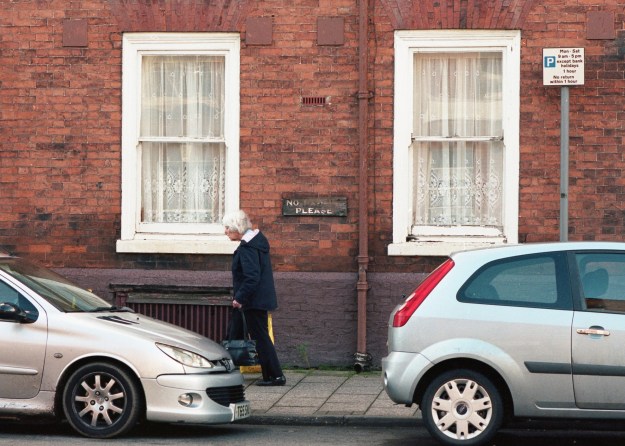
In the first shot, I spotted the No Parking sign that had seen better days with two silver cars parked seemingly in violation of the instruction.  My first thought when I took this photograph was that the cars were the same colour (if silver can be considered a colour).  What I didn’t realise until the film was developed was the sense of balance in the frame.  The red brick and the white window frames introduce a symmetry against which the key components contrast.  The signs are both clearly visible but the contrast between their messages is more obvious because of the colour.  A happy accident, but this image works in colour because of the way the frame is filled with a subtle, muted palette.

Ex120200313_12255222_0052-2

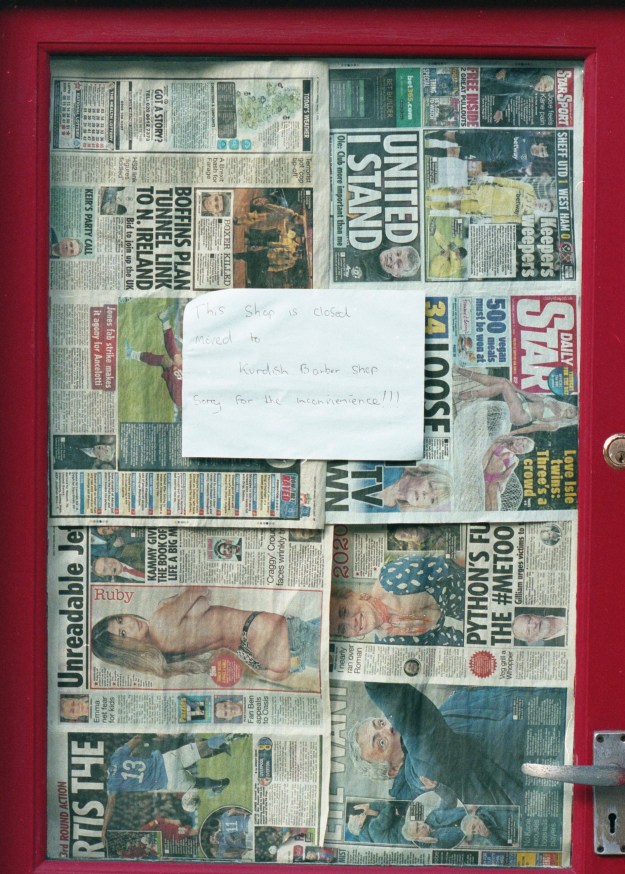
The second image was something I noticed as I walked past an old barber’s shop.  The first thing that I saw was their use of tabloid newspapers to screen the windows of the now-empty shop door.  As I looked at the door, I then noticed its bold colour which frames the window.  I think that this image works because of the additional interest introduced by the paper and the door frame.  They create a playful feel to the image, which belies the fact that the door leads into a shop that is now empty.

Ex120200313_12513040_0069-2

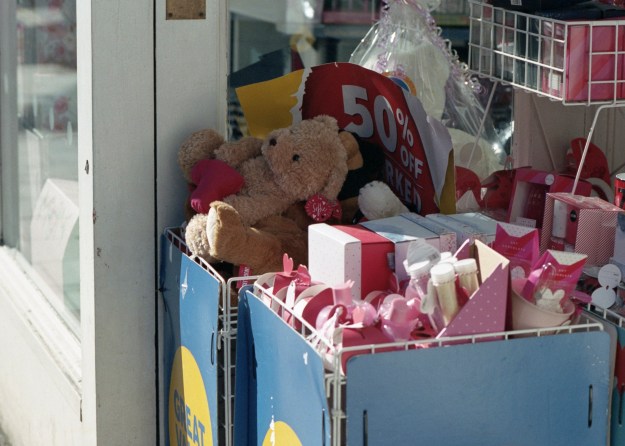
The third image selected here is of a bargain basket of Valentine’s Day gifts that I spotted outside a shop.  The Valentine’s theme of pink runs through the whole picture and reinforces the message of the celebration being about love.  The reason I took this photograph was to highlight the sadness of such celebrations, that have become highly commercialised, coming to an end.  I am trying to show the wasteful throw-away culture of our lives with this shot, which I think is enhanced by the impactful colour.

The Black and White Images


Ex120200313_11404149_0002

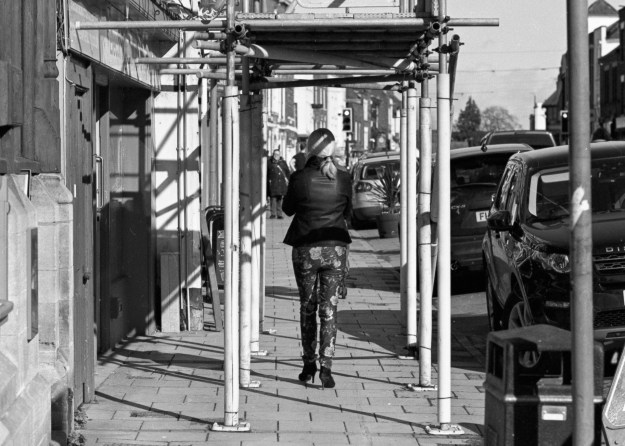
The first of the black and white images was of a woman walking away from me in some highly colourful trousers.  I was struck by the boldness of this lady’s style and how she confidently down the street.  In order to capture that confidence, I could have shot the picture in colour to highlight the drama of her clothes.  However, I had the black and white film in the camera at this point.  When I look at this photograph, I still see the confidence but I also note the visual clutter of the building works capture in the frame.  The brightly coloured warning foam on the scaffolding and the roadworks sigh would, on reflection, been a clash with the subject.   I think black and white works here because the drama is captured without distraction.

Ex120200313_11582705_0021


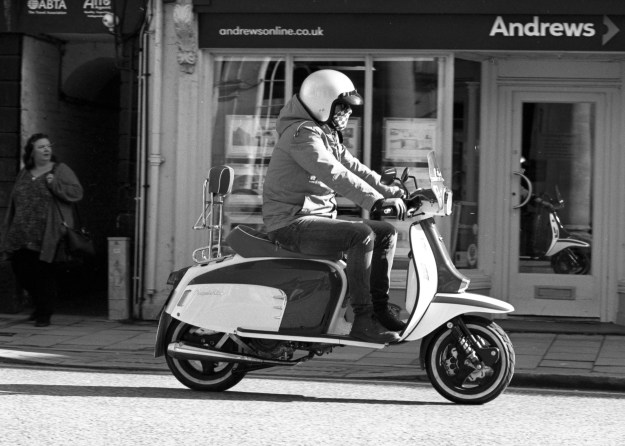
The second image is of a scooter rider in the high street.  The weather was turning at the point that I shot this image, with the sun emerging from the clouds. What I think works with this being black and white is the contrast of the tones on the scooter.  Black and white can be very punchy when the light works with the reflectance of the subject and this is a good example of this.  The lower contrast background doesn’t distract or dampen the mood of the image.

Ex120200313_11435365_0006

The third image is of a book shop window.  Tewkesbury has a strong Campaign for Real Ale presence in the town and part of it is a celebration of the history of pubs and brewing. It’s common to see these signs declaring a now-closed pub.  What struck me about this one was sadness at the statement ‘for unknown reasons’.  I shot this in black and white because I wanted to show this feeling of sadness, even though it closed long before I was born and the building still serves the public as a bookshop.  The building itself, typical of Tewkesbury, is from the 1600s and I think the timber frame that is visible in the image is best represented in black and white because it connects with the early photography of this buildings which were all that way.

Conclusion – What are the differences?

If documentary photography is used to tell a story and be used by the photographer to emphasise an element of it, then the differences between colour and black and white can be significant.  In reviewing them, I conclude:

  • Colour can be a distraction. When a scene has many elements, but the story is about one of them, clashing colours can take away from the story.  In my first black and white shot, the subject would have been lost with the addition of colour.
  • Colour can add to the story when it reveals something about subject. My example of the Valentine’s sale has more impact because of the pink theme running through it.
  • In both formats, balance is essential. Too much contrast or colour can distract from the story.  In the examples of No Parking and Scooter, they work because there are no extremes.  The colours are muted and link together in the former and the contrast separates the scooter from the background in the latter.

My personal preference has always been black and white.  When reflecting on why that is, I considered the fact that the images look recognisable but somehow different to how we see the world.  In the days when there was only black and white, we accepted that we couldn’t see the subject as we would if we were looking at it because there was no alternative.  With the advent of colour, the images became more like our observation.  Early pioneers of street photography, such as Meyerowitz and Winogrand saw the progression from black and white to colour as perfectly natural because of that distinction, but they experienced a snobbery from the art world who believed black and white to be higher quality.  For me, I love the way that light can be represented in black and white tones and the punch that can be achieved with it.  However, I also believe that in the hands of a skilled street artist colour can be the differentiator between a good image and one that has impact.  Perhaps it is my own limited experience with the genre that steers me away from it.

Contact Sheets

Project 3 – Reportage

What is Reportage?

In attempting to answer this question, I took the approach that most start with, a Google search.  The answers were particularly puzzling.  Most, including the dictionary definition refer to reporting an event in some form of broadcast media:

reportage

noun [ U ]   formal

UK  /ˌrep.ɔːˈtɑːʒ/ US  /rɪˈpɔːr.t̬ɪdʒ/

the activity of, or style of, reporting events in newspapers or broadcasting them on television or radio

from the Cambridge English Dictionary [1]

The ambiguity in defining the level of objectivity or subjectivity in photography was not really a surprise, given the work so far in Part 1.  The photographer has the power to tell a story that looks like the truth, but from their point of view.  The concept of inside/outside can grant the photographer a form of credibility which they can use to draw attention to the key elements of the story.  This level of manipulation of the viewer, while very clever and often subtle, still needs the elements in the image to make it work.   In the case of the post-event ‘late’ photography the element of time is removed but the juxtaposition of the subject and background, along with the supporting external narrative tells the story.   Intriguingly, the first image in Project 3 is one where an event isn’t occurring at all.   Edgar Martins’ image [2] is of a large empty room, lit from the opposite end to the viewer by French windows.  The only details in the room itself are the elegant architecture, the wooden floor with leaves strewn across it.

05-Conneticut-New-England

A room at 14 Baldwin Farms South, Greenwich Conn., 2009 by Edgar Martins [2]

Why is this image considered to be reportage?  The answer as I see it is that it is a document of the room.  The image shows the elegance of the space that is not in a state of decay but appears to be well looked after. The ‘neglect’ in the image comes from the emptiness and the leaves, suggesting that the room has been abandoned, albeit recently.  The image, for me tells a story in one frame but that story has no supporting context to steer the viewer in any way.  When we consider the series that the image came from, we see a story of the collapse of the American economy following the sub-prime mortgage scandal of 2008.  Power messages of houses in a state of decay or being reclaimed by nature make the series a compelling one.  What was shocking was that the photographs were digitally manipulated by Martins without the knowledge of the commissioning body, The New York Times.  In the image we have, close inspection reveals cloning of the leaves on the floor and of the light switches in the wooden panelling [3].  The outrage caused by Martins’ seemingly distorting the truth about the subject was dismissed by the artist as being a misunderstanding [4]

“It is crucial that both the commissioning entity and the photographer can articulate their goals and parameters clearly. In this specific case there was a clear misunderstanding concerning the values and rights associated with the creative process that led a renowned publication like the New York Times Magazine to commission an artist, such as myself, to depict a very specific view of reality without taking all the necessary measures to ensure that I was fully aware of its journalistic parameters and limits.”

What he was saying was that he didn’t appreciate the newspaper’s intention to limit his creativeness to tell a truthful story.  For me, this lack of expectation management reveals how photography itself can be manipulated to suit a single purpose.

When considering the decisive moment, where the events are unfolding in real time, I see a similarity to modern citizen journalism.  Cartier-Bresson was sensitive to all of the elements in the frame as opposed to the subject matter alone, which allowed him to tell the story through a single moment in time.  Optimal placement of the elements, no matter how subtle can tell a much broader story as with the image in the notes.

Bresson’s Dessau shows a Gestapo spy being shown to the crowd she was trying to hide in.  The elements that make up the frame are compelling as they contain multiple expressions of anger and disgust on the faces of the crowd and the woman who is detaining her.  The prisoner has an expression of shame as the person she is brought before reviews her papers.  It’s little wonder that this image told the tale of the turning tide of the war in a single frame.  The Gestapo were a feared Nazi secret police force who were known for turning citizens into spies and informants within the ranks of ordinary people and resistance fighters alike.  The image of one being captured is about as good a piece of propaganda for the allies as there is, but as with all decisive moment imagery, we interpret what happened immediately before and after the shot by the elements in this single snapshot of time.  Objectivity is not really anywhere to be seen.

References

[1] 2020, Unknown author, ‘Dictionary Definition of Reportage’. Cambridge English Dictionary, https://dictionary.cambridge.org/dictionary/english/reportage

[2] Martins, E, 2008, “This is not a House”, Artist website, http://www.edgarmartins.com/work/this-is-not-a-house/?show=photographs

[3] Various, 2009, “Truthy lies: photographers speak out on Edgar Martins”, Critical Terrain Blog Post, https://criticalterrain.wordpress.com/2009/07/23/truthy-lies-photographers-speak-out-on-edgar-martins/

[4] Beesley, R, 2012, “This is not a House”, Aesthetica Magazine, https://aestheticamagazine.com/this-is-not-a-house/

Documentary and Social Reform


The depression-era  Farm Security Administration (FSA) and it’s approach to documentary is a great example of using photography to bring a national catastrophe to the consciences of people who’s lives were less affected.  Formed in 1935, the FSA sought to use the power of photography to drive socioeconomic change in the period following the Great Depression.   This use of photography was very contrived in the way that the photographers were instructed to look for certain types of images to support the message.  Looking at the story of the FSA, I’m immediately struck by the uneasy conflict of something that undoubtedly was a force for good and the propaganda nature of the imagery itself.   Dorothea Lange complained that the preconception of the photographs meant that they were limited by the photographer’s own preconceptions of the subject.  Pre-vision in photography is a well-known concept with famous artists like Ansel Adams meticulously planning and visualising the photograph he wanted to make.  I’ve always viewed Adams as a hugely skilled technical photographer who’s creativity centred more on emphasising the beauty of the natural world than bringing a message to his photographs.  I guess that is how I became interested in photography as it lent itself to my technical interests more than creative vision.  What’s interesting about the photographs from the FSA era is that it produced what are now considered to be iconic artworks.

Migrant Mother, Dorothea Lange (1936)

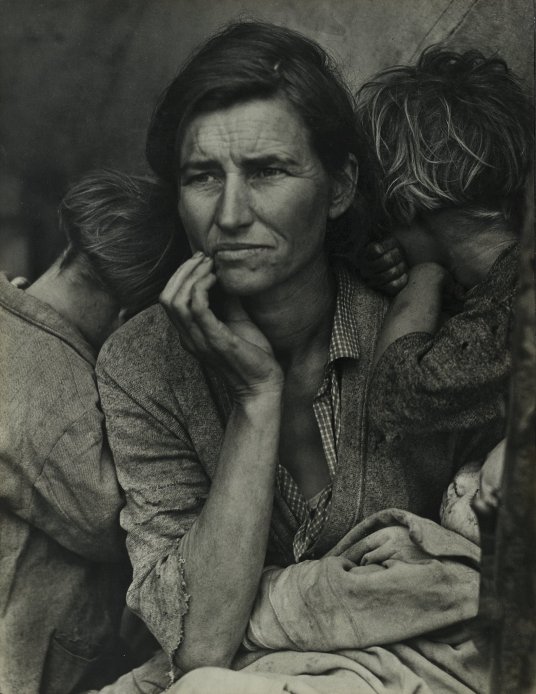
Perhaps the most famous is Lange’s Migrant Mother.  When we think about migrants nowadays, we are immediately drawn to the images of people either fleeing persecution in their home country or seeking opportunities somewhere new.  However, migrants in the context of the Great Depression were Americans from the poverty-stricken rural areas of the US.  The first thing I notice when I look at this image is that we are looking at a seemingly Caucasian family, which during the 1930s must have had the desired shock factor when viewed in the context of politics of the time.  This family, comprising a mother and her two children could be anyone’s family.  The clear suffering of the family is told by her distant stare, the way the children look away from the camera and the general poor state of their clothing.  The other element that strikes me is the absence of the father in the image.  Was Lange looking to increase the impact of her suffering by suggesting that it was something she had to do alone?  For me, this missing element also creates a sense of protection and love through the composition that the course notes refer to in the comparison with imagery of the Madonna with Child.

28Lange1-superJumbo

Migrant Mother by Dorothea Lange, 1936 [1]

Further review of the story behind the image reveals a different perspective on the picture.  The mother, Florence Owens Thompson was in fact a Native American Cherokee, which isn’t revealed in photograph itself. When interviewed later many years later [2], Thompson decried the fact that Lange did not talk to her about her situation and even claimed that she promised that the photographs she took would not be published.  Thompson was offered no form of payment or compensation at the time or subsequently when the image became famous, which led to her regretting ever being part of Lange’s document.  Lange took a number of images of Thompson and her children during their brief encounter, and when we look at them we see both carer and sufferer brought out across the series.  Perhaps then, Lange saw this single image being the one that represented both in equal measure.

References

[1] Estrin, J, 2018, ‘Unraveling the Mysteries of Dorothea Lange’s ‘Migrant Mother’, The New York Times, https://wordpress.com/post/richardfletcherphotography.photo.blog/2010

[2] Dotson, B, 1979, “Interview with Florence Owens Thompson, the Mona Lisa of the Dust Bowl, NBC News Broadcast, https://www.nbclearn.com/makeitmemorable/cuecard/1526

Aftermath and Aesthetics

In regard to Campany’s essay ‘Safety in Numbness’

Introduction

Campany’s essay was in response to the post-911 photography project by Joel Meyerowitz, the only photographer given access to the ruins of the World Trade Center towers during the recovery operation.  His assertion is that images shot after an event that capture only traces of what has happened are an aid to memory of it, rather than a document of it.  The stillness created by an image of aftermath is more about the photographer’s skill in creating an aesthetic rather than the impact of the event itself.

My consideration of the essay

When I read this essay, I was already looking at it defensively.  Meyerowitz is arguably my favourite photographer and I initially felt that this was a patronising look at what was a well-intended project to record the tragedy of 911 for the American people.  However as with most challenging material, when we look beyond initial perceptions or even predjudice we can identify with some of the key messages.

I found Campany’s comments about the role of photography with the development of moving picture technology interesting.  In the days before mass print journalism, photography provided the single moment of an event to inform the public of something relating to it.  The lack of real-time information didn’t really matter because there was not alternative at the time.  With the advances in print media, photography became the way of emphasising the impact of an event or series of events, e.g. the great depression of the 1930s.   It was later criticised for being narrow in its perspective when bringing the general hell of war to the people.  However, Campany adds that photography ceased to be used as the primary documentary tool for war zones after Vietnam.  I was a teenager when the first Gulf War took place and hadn’t really appreciated until reading Campany that video and moving imagery were the primary ways for us to understand the conflict.  I remember the first still images (that weren’t freeze frames from video) being after the allies had gone into Kuwait after the Iraqi surrender.  The still nature of those images are, as Campany describes, horrific but numbing.

In terms of he comment on Meyerowitz, I can see the point being made that despite the photographer asserting that the subject ‘told him how to shoot it’, his skill means that the images take on a certain beauty that is almost counter to the idea of documentation. I have the photographs in Meyerowitz’s collected works book ‘Taking my Time’ and they no longer remind me of how tragic 911 was.  Instead, they serve as a collection in the canon of one of my favourite artists.

Project 2: Photojournalism

Considering the three viewpoints, Charity, Compassion Fatigue and Inside/Out

Martha Rosler

Rosler’s assertion that the use of photography by social-conscience photographers increased the gap between social classes is an interesting one.  Her essay ‘The Bowery in two inadequate descriptive systems’ looks at the photographers who documented the Bowery slums during the Depression era.  Her view was that the use of photography to highlight the plight of the poor and the homeless was considered an attempt to bring their world into that of the higher classes to affect change.  While on the surface it looks like a noble effort, Rosler stated that the effect of pointing out that ‘you have much better lives than them’ merely galvanised the class structure.  For me, the criticism of the sentiment is harsh.  As with the work of the FSA, the intention was to effect change by ensuring that the wealthy did not forget the problems of the poorer classes.  In the case of the photographers working for the Farm Security Administration, the scale of the geography involved could only really be reported through photographs as many of the upper classes were not centred in rural America.  Was it pushing a socalist agenda?  Undoubtedly so, but when considering the imagery in a non-photographic review, I admire what they were trying to do.  Where I agree with Rosler is the exploitative nature of the work in the Bowery slums.  Here the photographers were capturing images of people who had little in terms of voice or in some cases, even consciousness.  Alcohol and drug abuse was rife at the time, so many of the subjects would not have even been aware of the context the photographers were looking for.  Some may have not registered that they were being photographed at all.   I immediately saw the connection with Mendel’s Dzhangal, where the people themselves didn’t want to be photographed.  By using their possessions without them being part of the project, Mendel essentially avoids any counter discussion about the lives of the people at the camp.  The other connection I drew was when people photograph wild cats.  Most access to wild cats is via a zoo or rescue centre, where an animal has limited ability to be as it would in the wild.  Like many photographers who have shot these sort of pictures, I have waited for long periods to capture what I think is the behaviour of the cats and what I want the people who view my photographs to see.  In fact, if I really wanted to document a lion or tiger as it should be seen, I’d have to go on a safari.  Here, the constraints of environment are removed which allows the subject to act entirely naturally.  Friends who have shot in these conditions say that there are many more opportunities to observe the animals when not trying to control them. When I read Rosler’s paper, I concluded that the Bowery and the social circumstances were the constraints and the people were effectively being watched for certain patterns of behaviour.  I concluded then that this use of documentary photography is exploitative, even if that wasn’t the original intention.

In terms of its ability to effect change, I believe that photography is a powerful addition to wider perspective, either written or spoken.  The irony of the socially conscious image that seeks to change, is that the only way it becomes well known is for it to be distributed.  Distribution usually involves some form of financial benefit, whether through purchase or enhanced exposure.  With the advances in social media and camera technology, that benefit is more widely acquired, but for me the expectation of some form of altruism in return is a naïve one.  With Lange’s famous image ‘Migrant Mother’, the subject complained that she never benefited from the success of the photograph despite the photographer having done so.  I suppose the thought was that the impact of the work of the FSA would outweigh any royalties, but nevertheless Rosler’s theory that the divide between rich and poor increases, is validated by the apparent lack of support.

Over the decades, we have seen examples of imagery provoking action in people, from Live Aid to Climate Change.  In some cases, the appeal is for help while others seek to shock.  The sheer volume of photographs that are taken of a single subject is, in my view, having a greater impact because of the perception that they statistically support the argument.  For example, the bombardment of the suffering of animals due to habitat loss through climate change, provokes a sensibility in many (particular in the UK, where people are considered animal lovers) that sparks people into action.  This plays somewhat into Sontag’s argument about compassion fatigue, but it’s demonstrably successful with animal charities being among the most supported in the UK.

Susan Sontag

Compassion Fatigue is a feeling that I regularly get when viewing photographs.  Last year, I visited Tate Britain to see Don McCullin’s major exhibition.  The collection contained some 270 photographs spanning McCullin’s time as a war photographer.  The imagery was naturally harrowing but because there was so much of it, I found myself beginning to look at the way the photographs were shot rather than at the subject itself.  I had become disinterested in the horrors of the images and even applied the same disengaged fatigue to his lighter landscape work towards the end of the exhibition. I think the shock value of war photography starts by making the viewer feel like it’s something real to them, but as the number of images increases, the sensation moves to one of normalisation.  With that normalisation comes a sense of ‘it’s not real to me’.  In my experience during the McCullin exhibition, I found that my sense of empathy toward the subjects dulled with the increasing number of photographs, but also my ability to reset my perspective when it came to less harrowing imagery.  McCullin’s landscape photographs of the flood water on the Somerset Levels in late 1990s were bleak in the way they were photographed.   As the majority of the other work was war or conflict, my natural tendency was to see the destruction of the flood water, rather than the dramatic power of nature.  Similar to Mendel’s images of people in flood water, there is both resignation in the expressions of the subjects as well as a sense of comfort in a few of them.  How can we tell the difference in the photographer’s intention?

Abigail Solomon-Godeau

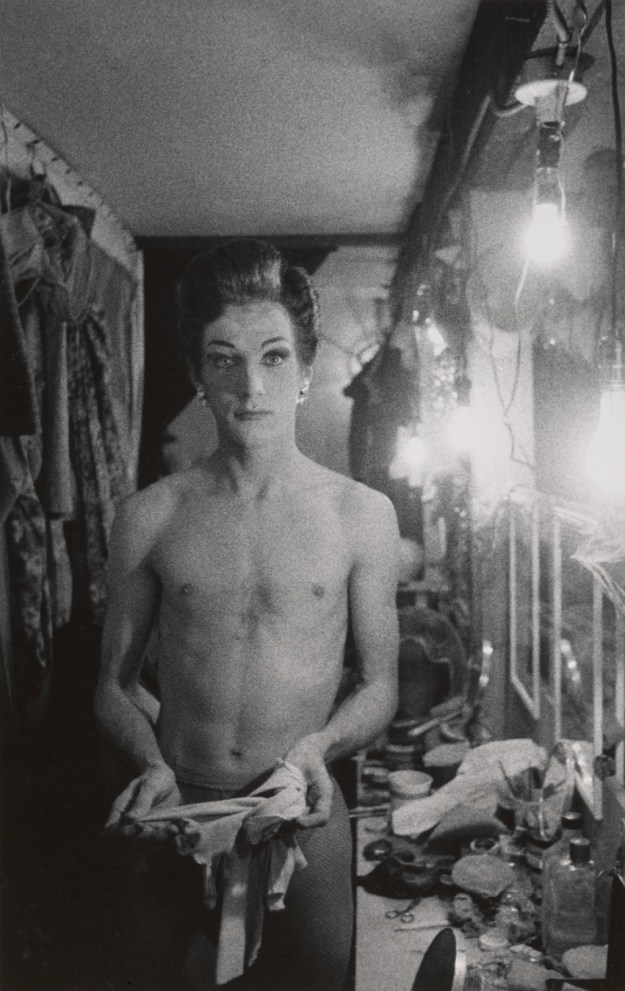
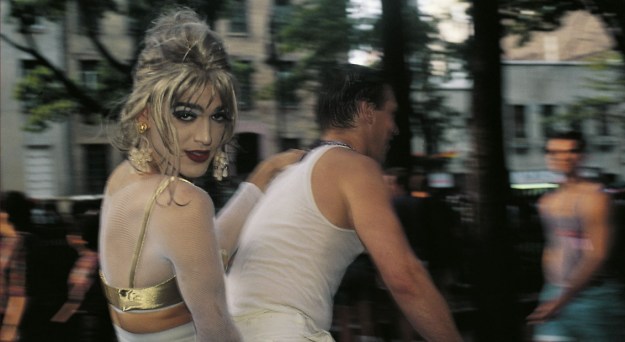
The answer to my last question comes from the essay by Abigail Solomon-Godeau.  The concept of being an insider vs a spectator perhaps offers the explanation of the flood images.  In Mendel’s images, the flood victims have let him into their lives to capture what are very clearly posed photographs. In the case of the photograph of the woman in her hallway that I described at the start of this course, the sense of being inside is even stronger because the photographer lives in the UK and is very much part of the society devastated by the weather of that time.  In the case of his photographs from India, that connection is missing which for me turns him (and us) into the tourists described by Sontag.  For me, then, the difference is around how we relate the image to our own lives or supporting context, in this case what we know about the artist’s body of work.  During Expressing Your Vision, I looked at Nan Goldin’s work “The Ballad of Sexual Dependency” that is referenced by Solomon-Godeau in her essay.  My research took in a number of interviews with Goldin[1] where she talked about her years living in what others called the fringe society in New York.  Her subjects often lived with her and as a consequence, Goldin’s photographs in that piece often show her friends in everyday relationship situations, some good and some bad.  Goldin shows her subjects from a viewpoint of a clear closeness that can only really be achieved by being an insider.  When I visited the Diane Arbus exhibition in London in spring 2019, I was struck by her early work photographing circus performers.  As Sontag postulated, Arbus’ photographs were more of an impassioned look at her subjects and we really get that sense of ‘look at how different this person is?’ when we look a them.  An example from each photographer can be seen below.

2015.136

Female impersonator holding long gloves, Hempstead, L.I. by Diane Arbus, 1959 [2]

HERO_NAN_GOLDIN_THE_OTHER_SIDE_5-1132x620-1573142125

Jimmy Paulette on David’s Bike, NYC,  by Nan Goldin, 1991 [3]

Solomon-Godeau also makes the point that no matter what the intention, there is a risk simply by looking at a photograph that the subject becomes objectified.  In the example of transvestites, whether inside or out the photograph itself merely shows someone’s sexuality or way of life.  Without any other contextual information in the photograph, the interpretation becomes determined by the viewer’s own perspective on sexuality or gender irrespective of the intention.  Goldin stated many times that her and her friends didn’t see themselves as on the fringes of society, but clearly most people viewing her images are not from her world so we can expect interpretations to be different.  Solomon-Godeau’s view of Rosler’s Bowery images was something that interested me.  Removing the people from the photographs creates a sense of representation without turning the people themselves into a spectacle.  It connects neatly back to Mendel’s Dzanghal where lives were described without the people themselves.

In terms of what makes a successful documentary project, I am left with the thought that it very much depends on what the photographer believes to be their viewing audience to be and the nature of the subject itself. I’m currently working on a personal project to document the decline of the high street in my town.  I’m visiting and revisiting the town centre as part of my daily walk and trying, without bias to capture the changes.  When I started the work, I hadn’t begun this course and in terms of reflection I realise that I am both inside and outside.  I am passionate about my home town after living here for 20 years and the fact that I have friends who own businesses here makes me an insider.  However, I’m not a business owner by profession and so don’t fully appreciate or connect with their struggle, which in turn makes me an outsider.  I’m also conscious of the glimmers of optimism that are around the town which I am photographing in equal measure, trying to maintain a balance.  All of my photographs to date have been devoid of people, but trying to capture the essence of the business that was there before. I guess I have been subconsciously trying to work more like Rosler.  The long term nature of the project means that this may evolve as things change around me. In conclusion, I believe that balance of subject, empathy and perspective of the photographer is the compromise to achieving as objective document within a single photograph or series.  I’ll revisit these thoughts are the project progresses.

References

[1] Reeves, E, 2017, “On the Ballad of Sexual Dependency”, MOCA, https://www.youtube.com/watch?v=iDSvD0yhjWQ

[2] O’Regan, K, 2019, “Diane Arbus’ unflinching portraits of outcasts are more impactful now than ever”, Sleek Magazine, https://www.sleek-mag.com/article/diane-arbus-hayward/

[3] Finn, B, 2019, “A new book documenting Nan Goldin’s journey through drag”, HERO magazine,  http://hero-magazine.com/article/159524/a-new-book-documenting-nan-goldins-journey-through-drag/

Case Study 1: Dzanghal – Gideon Mendel

Overview

Gideon Mendel’s exhibition called Dzhangal presented a mixture of photographic and object art as a portrait of the lives of the refugees who lived in the now-closed camp at Calais.  He recovered personal and environmental items from the camp and sought to create a document of the chaos of life as a refugee, by trying to apply some form of order to what he saw.

My analysis

Mendel was interviewed during the installation of his exhibition at the Autograph Gallery in London and described the way his original concept for his work had not been successful.  He had originally put the emphasis on photographing the refugees themselves, placing himself in their world.  He wanted to tell the world about their plight but ran into the seemingly obvious issue of them not wanting to be photographed for reasons of possible identification and the potential consequences thereof.  By shifting his emphasis to the trace elements of their existence, he created an equally powerful picture of life for the people of the camp.  I was particularly drawn to the mix of items in the exhibition.  For a photographer, Mendel’s exhibition contained a relatively small number of photographs compared to the physical items.  My initial conclusion was that Mendel didn’t want to use photography as a pseudo-objective way of telling the story, presumably because of the potential for criticism of bias. With the shifting political mood around the acceptance of immigrants into the UK at the time, the collection could be seen as an anti-policy statement being made by a non-UK artist.  As ridiculous as that might seem, the use of items collected from the camp as part of the exhibition does suggest objectivity.  As well as the curiosity of the items, such as the collection of toothbrushes that had Mendel wondering about the traces of DNA from their owners, the police tear gas canisters were also included.  The latter factually states that there were conflicts between the refugees and the authorities, whether we chose to acknowledge it or not.  It was when I watched the documentary [1] that I realised that even the objects themselves were chosen to emphasise that narrative.  The inclusion of the twisted bicycle pointed to a deliberate destructive act, but it could just have easily been damaged in the clearance of the camp.  Mendel’s own family were refugees that fled the holocaust, so it’s not really a surprise that he wanted to push the hardships suffered by the people of the camp.  When considering that context, the photographs in the collection actually focus more on the everyday life of the people rather than their experiences.  It isn’t lost on me that my perception of the exhibition changed with research, as external context can frequently shift the way we think about what we see, even by a tiny amount.

References

[1] 2017, “Calais Jungle Artist Gideon Mendel: ‘Nigel Farage would despise this exhibition’, Evening Standard Interview, https://www.youtube.com/watch?v=SVrn0XqfnBs


Assignment 1: Two sides of the story

The Brief

Create at least two sets of photographs telling different versions of the same story.  The aim of the assignment is to help you explore the convincing nature of documentary, even thought what the viewer thinks they see may not in fact be true.  Try to make both sets equally convincing so that it is impossible to tell which version of the images is ‘true’

Choose a theme and aim form 5 to 7 images for each set, depending on your idea.

Send your images to your tutor by the method you’ve agreed.  Include an introduction of 300 words outlining what you set out to do and how you went about it.  Also, send the relevant pages of your learning log or your blog url.

Introduction

I started thinking about this assignment shortly after reading through the course notes for the first time.  I had been working on a long-term project which would document the decline, battle for survival and beginnings of rebirth of the high street in my home town of Malvern.  Over the 20 years I have lived here, there have been huge changes to the retail and recreational landscape of this old town, whose roots were established during the Victorian era.  The changes from that time were significant as Malvern was then considered a destination for health and wellbeing.  The Victorians believed that the spring water from its hills was a cure for common ailments, so along with the desire to walk in the countryside that inspired Elgar, people flocked to the town to ‘get well’.   The more recent changes though, have been as a result of the shift from traditional high street footfall to the online shopping model and an age where everything can be purchased in one giant supermarket.  The town had become a place where only national chain cafes, restaurants and charity shops are the only places that could survive; the latter benefitting from vastly reduced rents.  However, there are some signs of revival, with independent specialist shops opening up to serve niche markets.  This evolution is slow and gradual, which meant that my project was probably not going to work for this assignment because of how long it would take to complete.

When I came to actually plan for the assignment, the world had been plunged into a crisis, the like of which hadn’t been seen since the Second World War.  Coronavirus originated in China towards the end of 2019 and by the beginning of March 2020 had taken hold in almost every country on Earth.  Life had changed immeasurably during that period, with most countries introducing strict lockdown measures that restricted the movements of their citizens.  Every way of life has been affected and businesses have had to react quickly to survive.  In my own company, all personnel that can work from home are now doing so, which presents its challenges, anxieties and impacts on family life.   My team of 25 comprises families, single people, those with physical and mental health vulnerabilities. My daily challenge with the team has been navigating the fear and anxiety that the virus has created, focussing on what is important to them while maintaining control over the business.  During our daily calls, we talk about the news coverage, the panic-buying and social distancing that have become everyday life for all of us.  This got me thinking about my how the current situation has more than one side to the story.  For every tale of the speed of the virus spreading and how people are acting irresponsibly, there are numerous stories of positivity, gratitude and solidarity during what is an unprecedented, horrific time.

My Theme

I decided to choose a statement the describes, perhaps controversially my perspective on the experience of the coronavirus lockdown.  My first set would support the statement and the second present the counter argument.  I was inspired by the work of both Gideon Mendel and Paul Seawright as two things resonated with me during the work in Part 1.  The first was Mendel’s use of traces of the event in his work in the immigrant camps [1].  His use of possessions to tell a story about the owners without them actually being present was documentary in the way that we could relate to the objects, but built around a specific context that resonated with the artist.  Seawright’s Sectarian Murders [2] was hugely powerful to me as the context was layered with news reports, themselves steering us towards a particular narrative.  Yes, the blame wasn’t specifically apportioned in the works, but the documentary of the horror without historical context (the causes behind each event) leaves the viewer with their own take on the Northern Ireland conflict.  As Seawright said in an interview, using too few contextual points leaves too much room for narrative and too many leaves the viewer with nowhere to go. For my series then, I would not be using anything that specifically referred to the virus or the lockdown, only imagery that includes the context and space to allow the viewer to create their own narrative.  My take on the brief is that the two sets of photographs will have a sense of duality about them, making it difficult to understand what is happening or determine if the ‘truth’ is being told.

For my theme, the statement is “Coronavirus is changing society for the better”

Ground Rules

I set out with some simple ground rules for the images for this assignment and how they would be presented.  They were as follows:-

  1. There would be no visual references to Coronavirus or COVID-19 in the images.  As with Mendel’s work [1], the contextual details in the image would only suggest that something has happened/is happening.
  2. I would include people, but not exclusively.  As this theme was a take on the changes to society, it would be easy to simply depict people in their new environment.
  3. I would present them as a jumbled collection with no external context applied to begin with.  This is how I viewed Seawright’s work and was startled by how the addition of the simple contextual paragraph changed my perception of them.  I would not give them names or numbers at this point.
  4. I would then add a two word context to each image to split them into their supporting and contradicting stories and review how effective they are as a document of these unusual times.
  5. Each image would be the colour and the same crop.  Since I believed in Exercise 3 that black and white was able to actively assign a mood to the images, I would avoid its use. I naturally tend towards landscape format with an 8×10 crop, probably because of my connection to film.  Making them all the same would avoid any distracting elements that steered the viewer one way or another.

The Unordered Images

Initial thoughts

Since starting this degree course, I’ve noticed a need that I’ve developed for making sure that the elements in a photograph work with each other.  If something is superfluous and doesn’t connect with my vision of how I want the photograph to look, I generally discard and reshoot if possible.  Of the images here, only one of them is staged, while the rest were observations during my government-sanctioned daily walks. I’m happy that the set contains no distractions or jarring compositions to begin with.  As we’ve been blessed with glorious weather during this work, I don’t believe there to be any context created by differences in the light either.

Applying the Context

Here are the images again, presented individually with two word context added in the form of a title.

Now we have some clearer ideas about the intended message behind this photographs.  From this, they can be grouped into their supporting and contradicting sets:

In support of…

Contradicting…

Review – Intent vs. Alternative Meaning

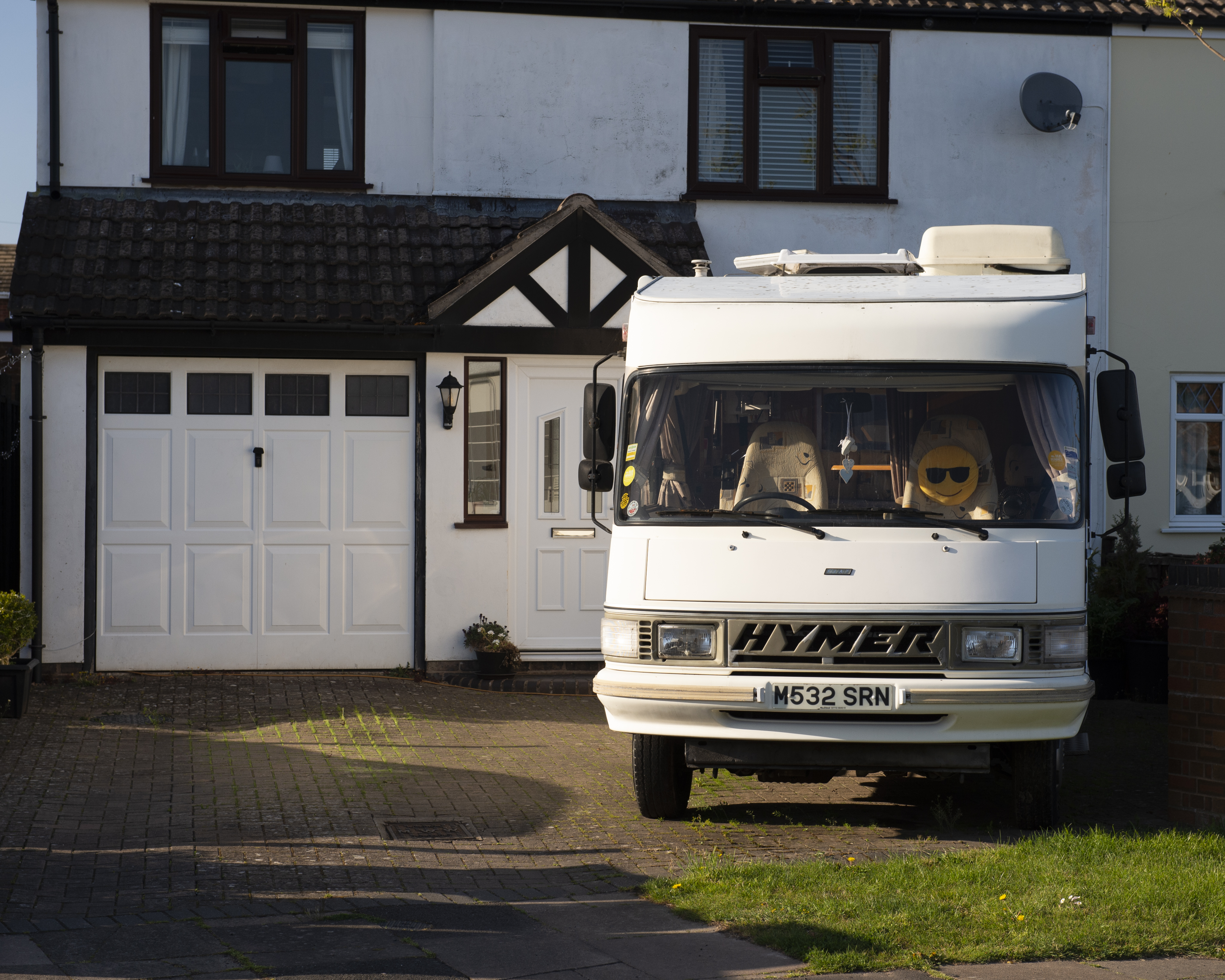
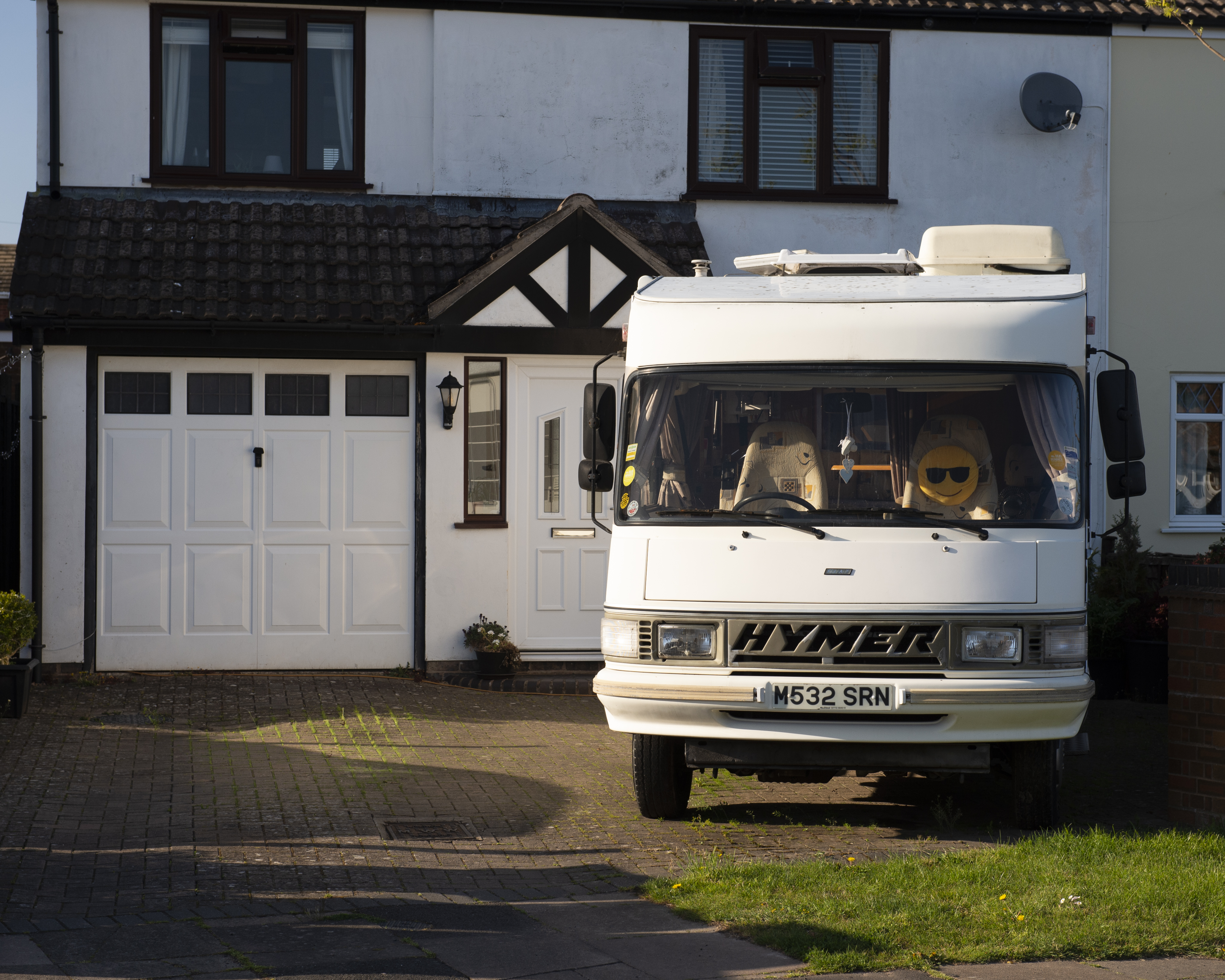
Smile, People – We saw this camper van on the driveway of a house in a less affluent part of the town one evening.  The whole street had put out smilie face and Jolly Roger flags in their gardens to cheer up any passers by.  This simple smile gesture certainly made me smile, even though there is a sadness to the van that is going nowhere while we are in lockdown.

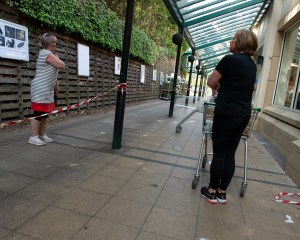
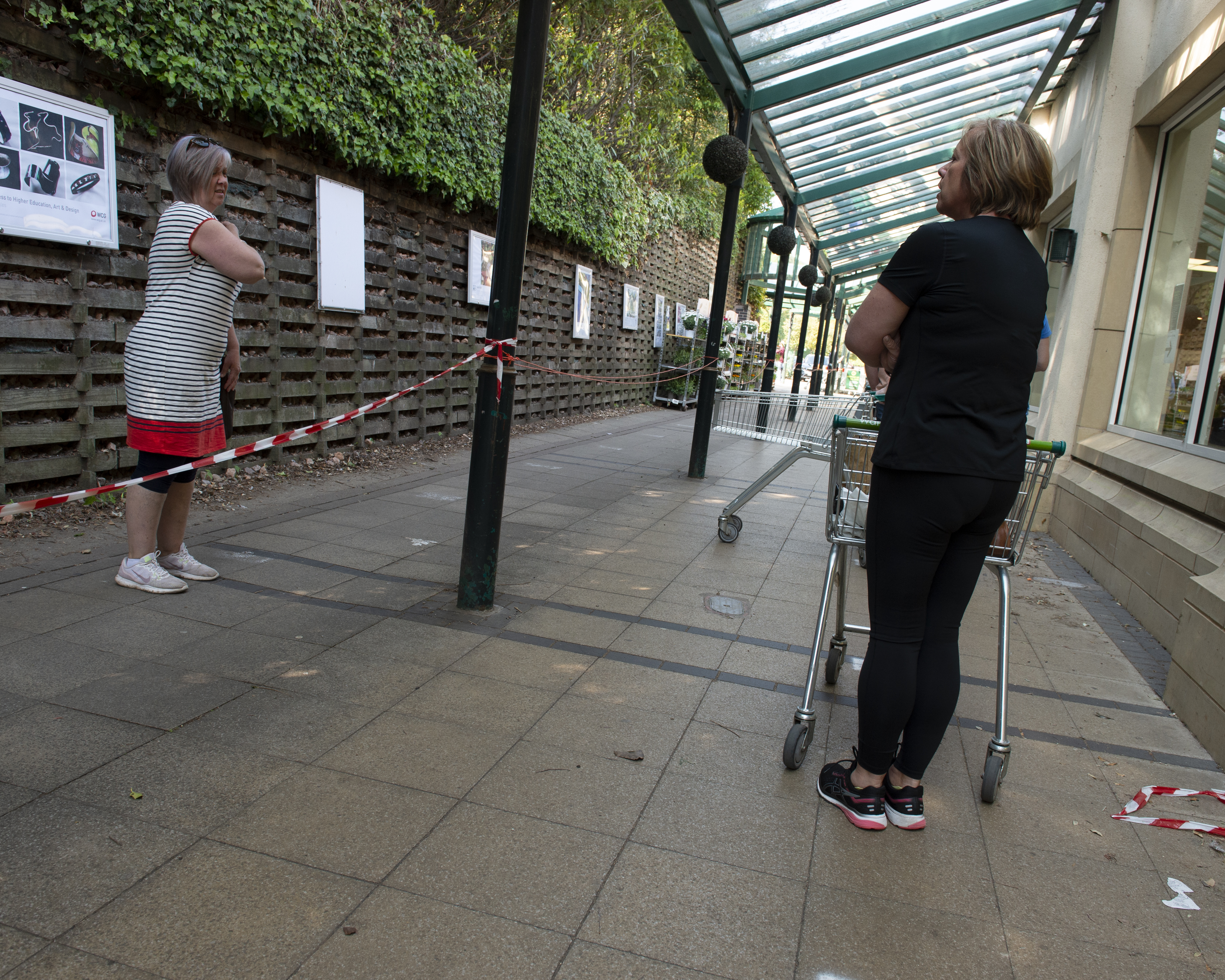
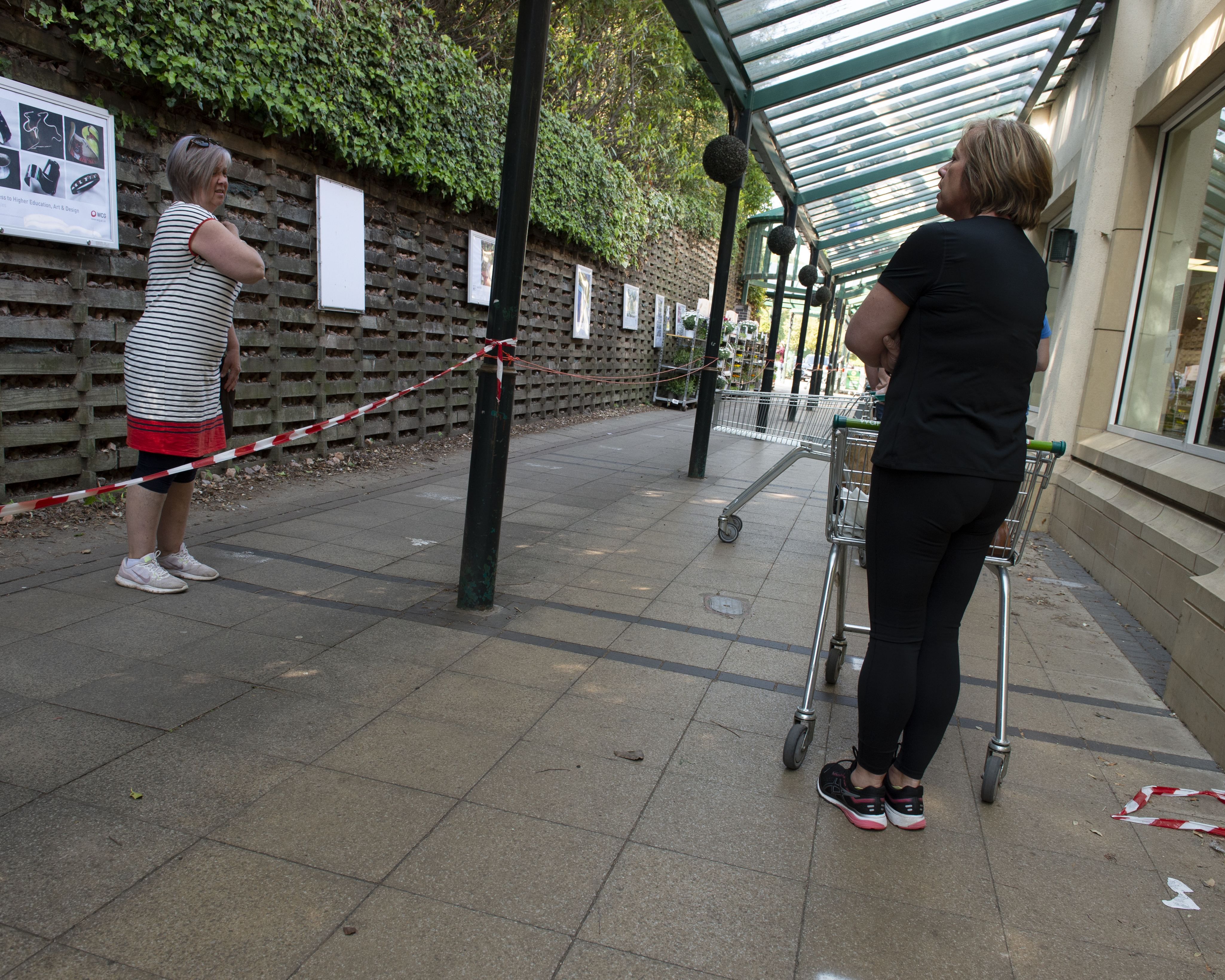
You ok? – One of the many negative things about COVID-19 is the queueing for food, which at the start of the crisis was further characterised by panic buying and stockpiling essential items.  Standing in this orderly queue for the supermarket, the lady in from started a conversation with a friend she hadn’t seen since lockdown.  They had their conversation over the barrier at a safe distance from each other.

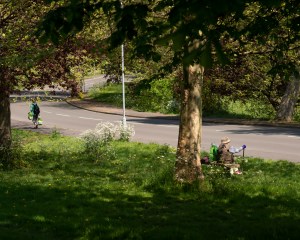
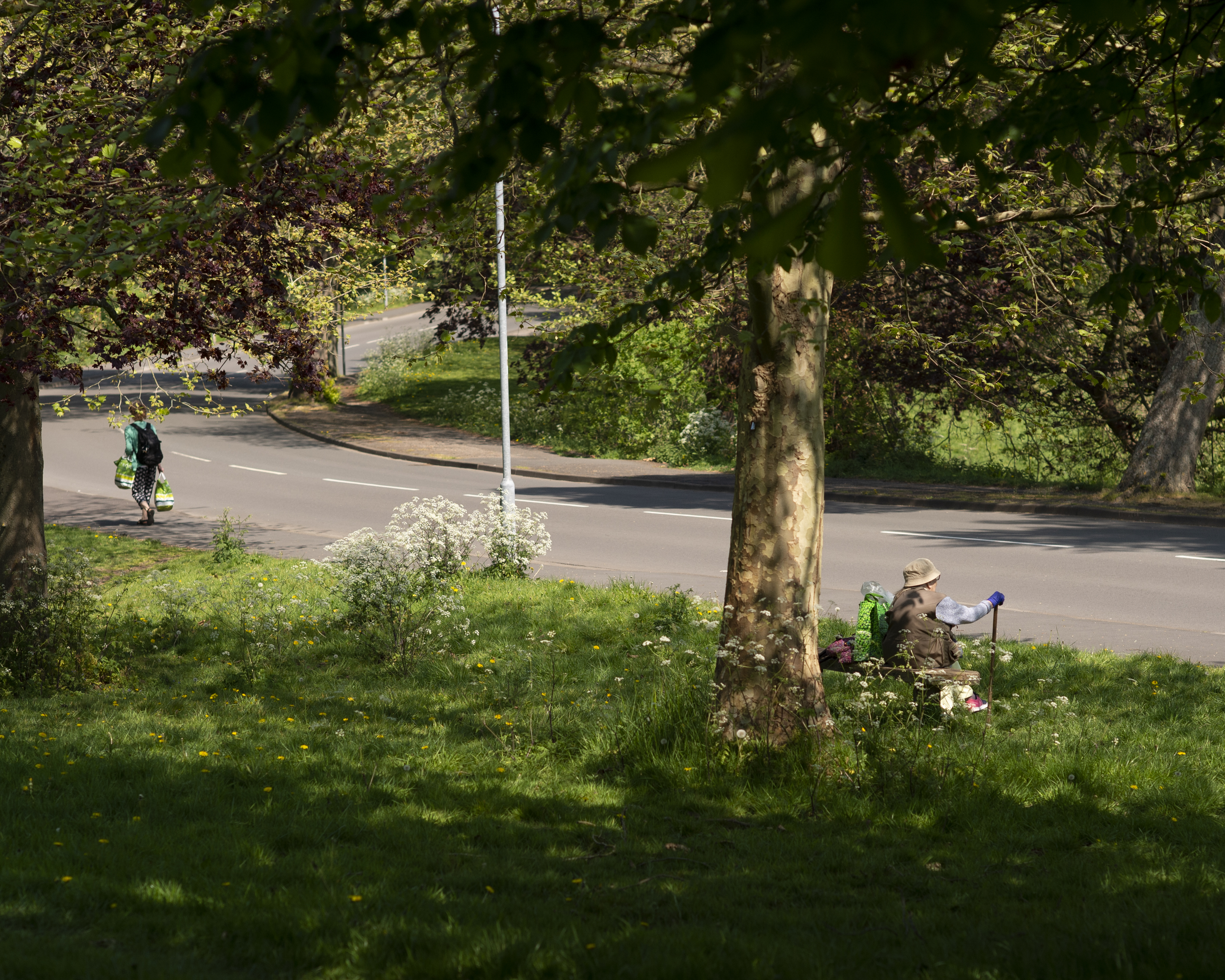
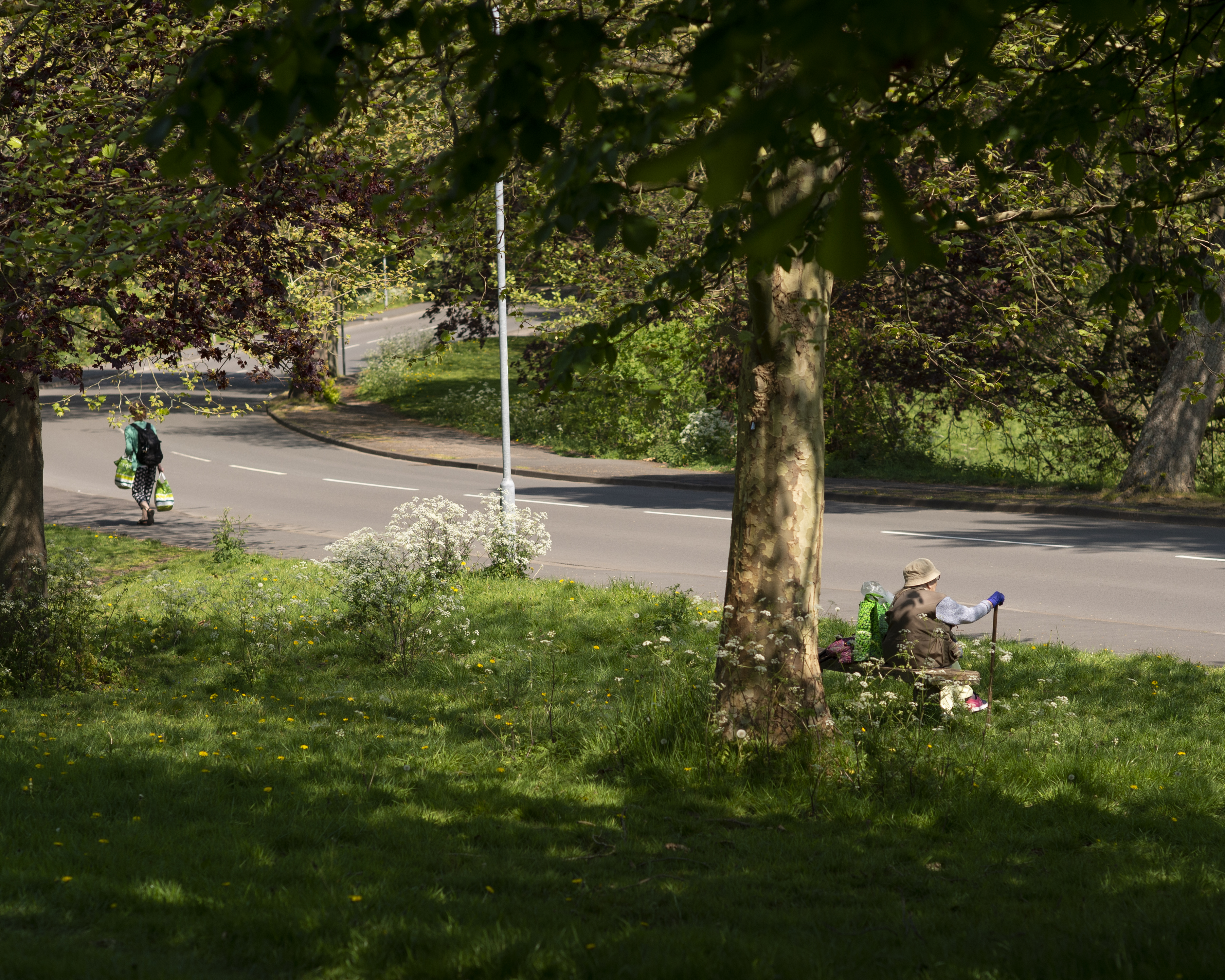
Great Outdoors –  I came across this scene of an elderly and young woman out in the sunshine carrying their shopping home.  One of the positive elements of the lockdown is the encouragement of people to get some daily exercise following the government guidelines.  Here we have two people of very different age groups combining exercise with the necessity of shopping.   This could equally be a statement about isolation and vulnerability with the younger woman not obviously helping out the old lady.

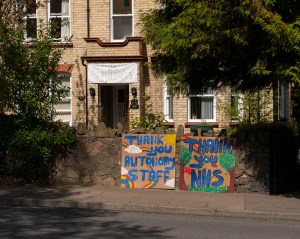
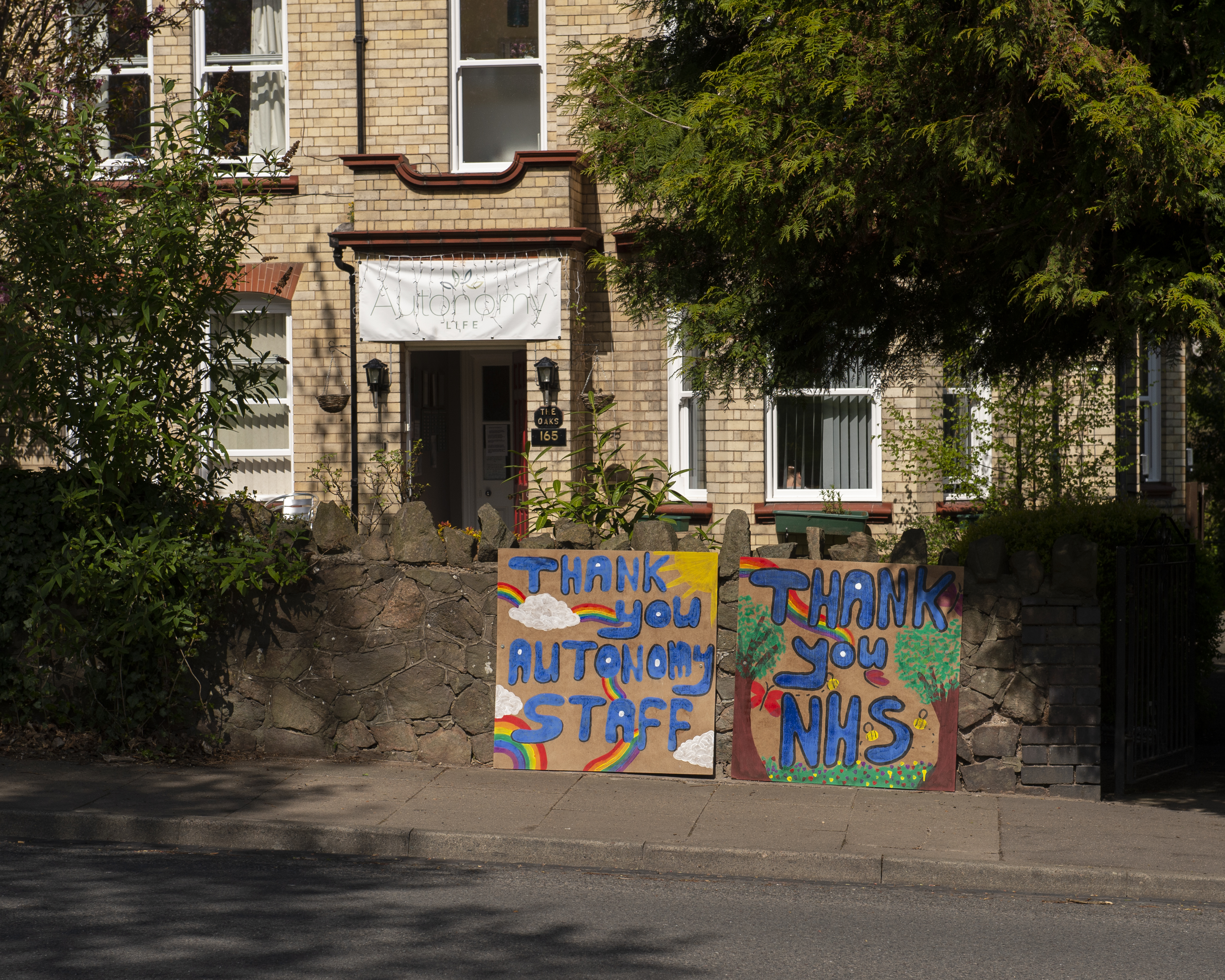
Grateful Patients – Positive messages in support of the NHS have been everywhere, with weekly clapping and painted signs like this one saying thanks to the key workers.  While not limited to the NHS staff, they have been the biggest target of affection.  Here, the patients of a local care home are also thanking their carers.  This could equally have been a comment about being locked down in a care home and just wanting to communicate with the outside world.

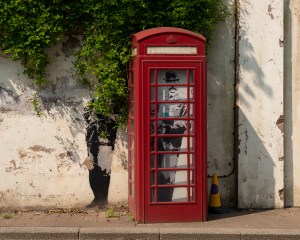
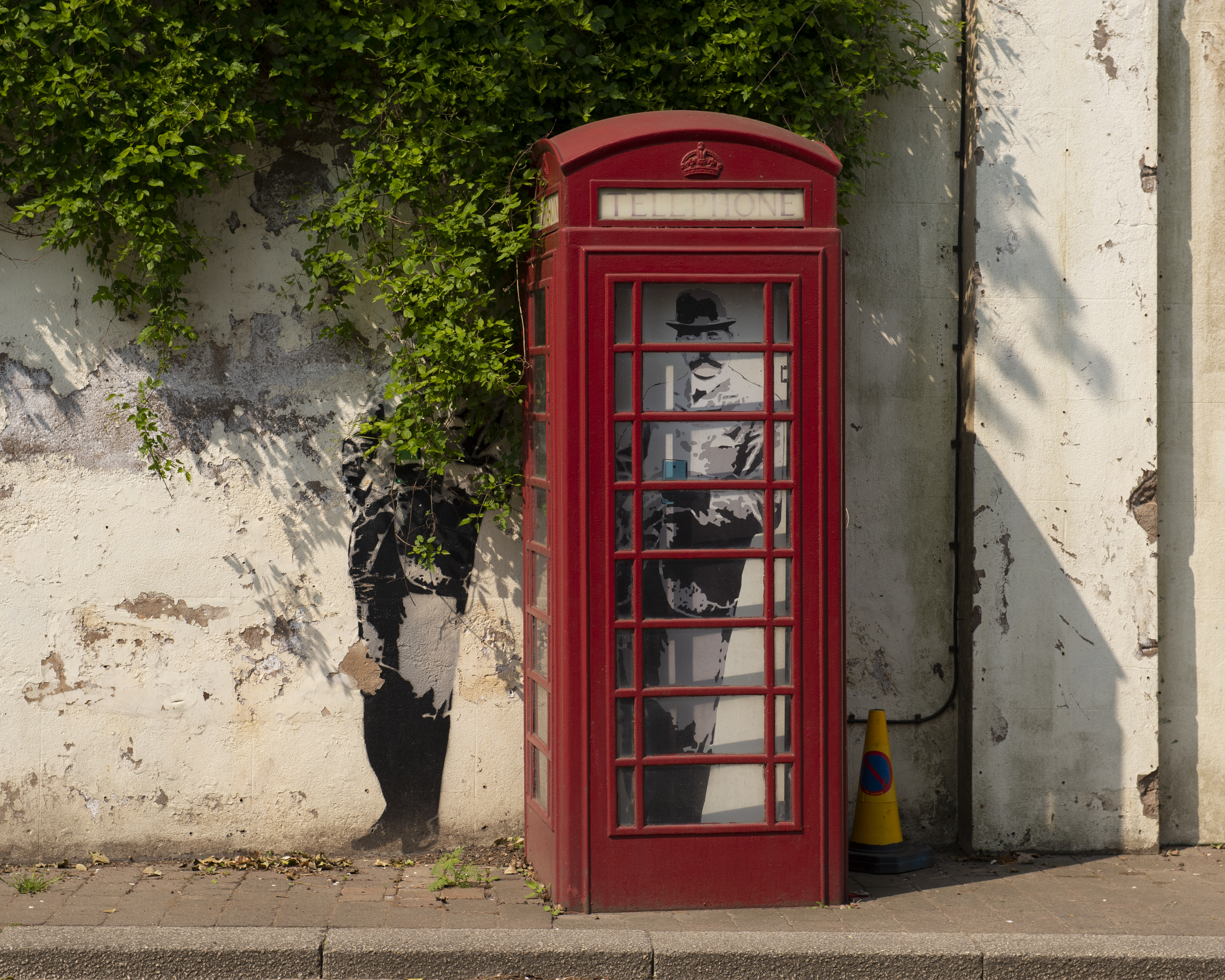
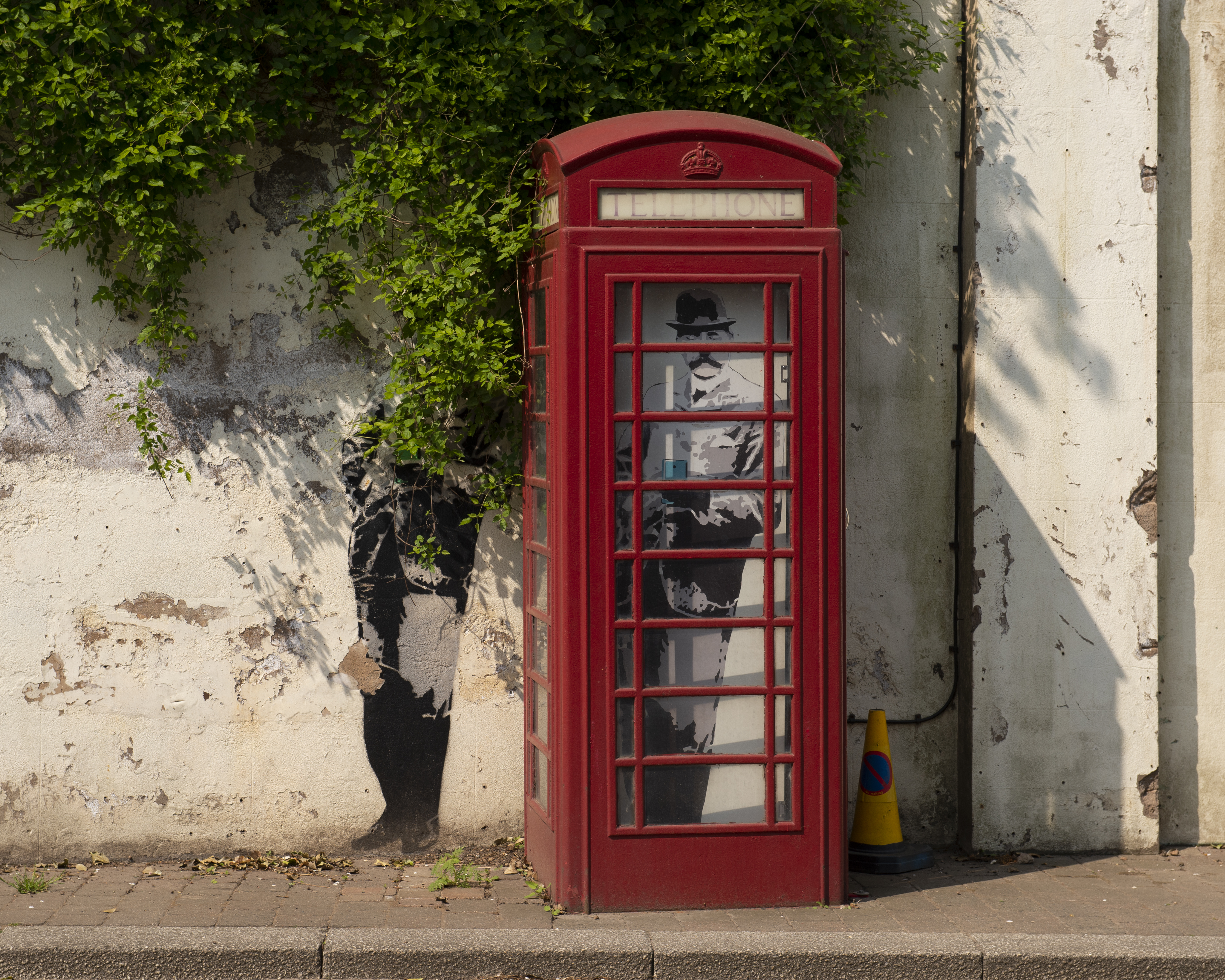
Nature Reclaims – With no non-essential work being carried out, Malvern’s own street art is being reclaimed by nature.  Another positive impact of the virus has been the effect on nature, both wildlife and the wider drop in pollution.  This could also have been about a lack of attention to the town; letting it get scruffy through lack of maintenance.

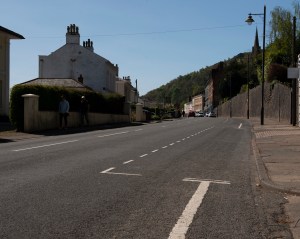
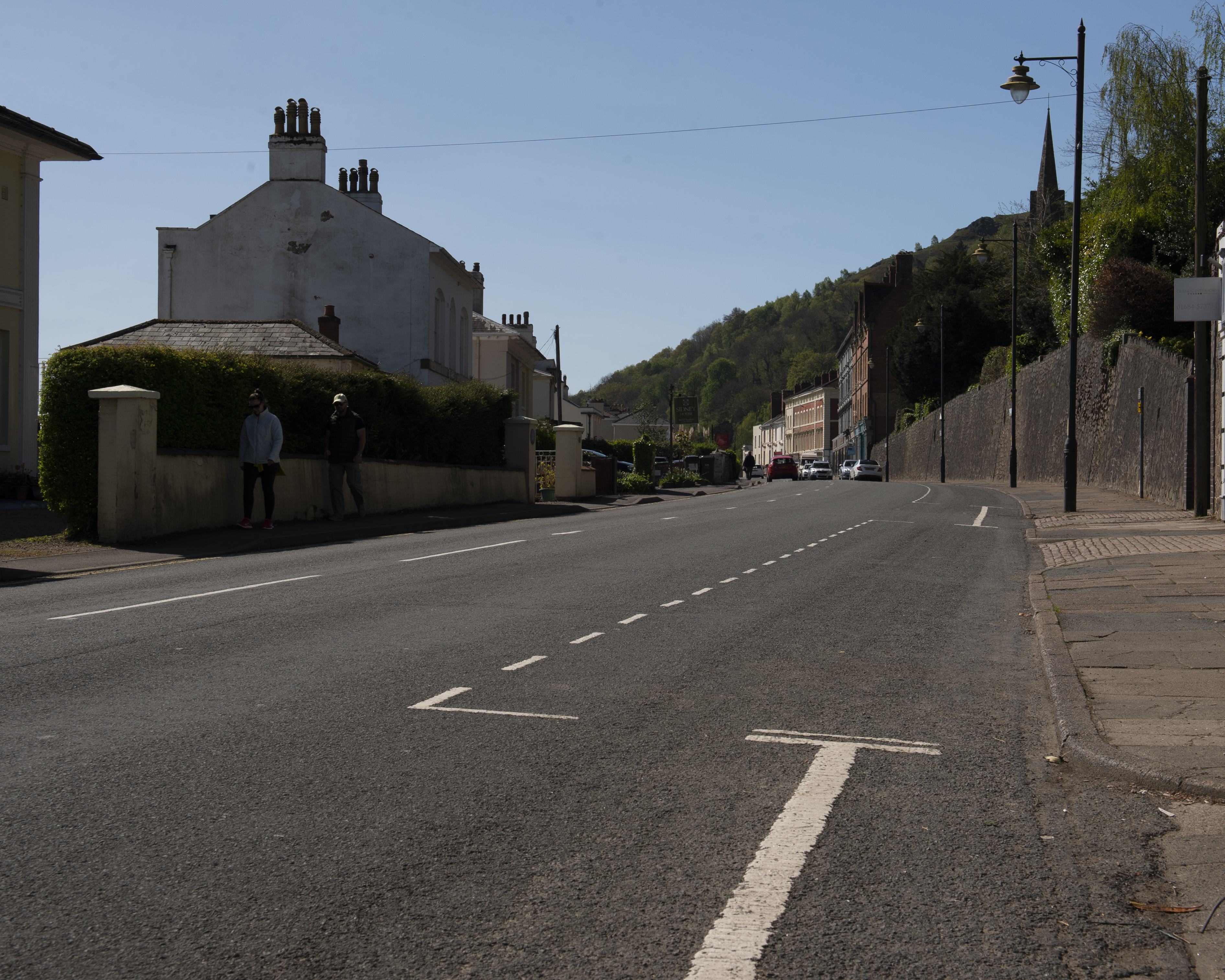
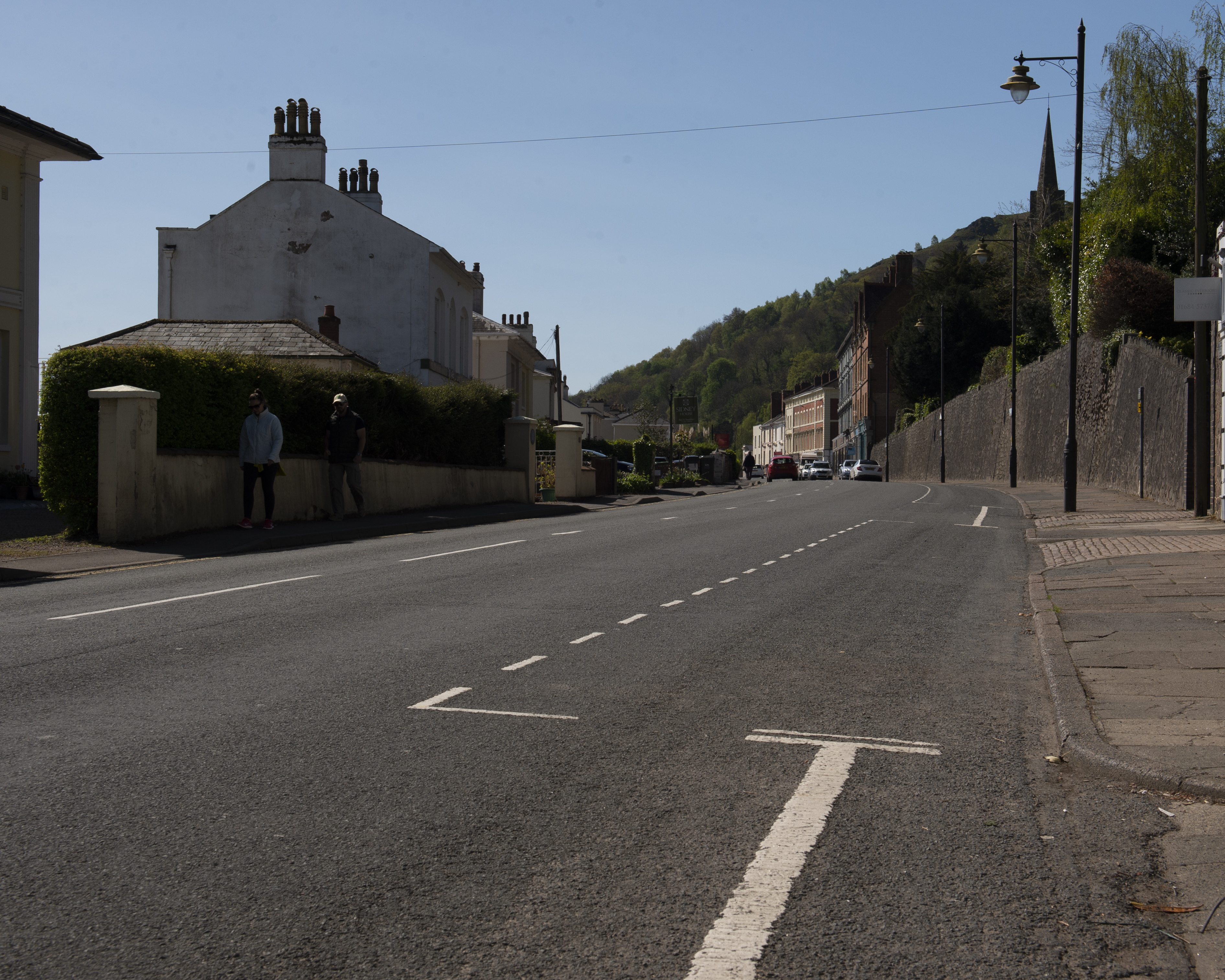
Peaceful Parking –  This stretch of parking spaces is generally never empty.  The effect of less people out in town is that the whole place takes on a peace that is only normally witnessed at night.  It could also have been about the crippling impact of the virus on the local economy.

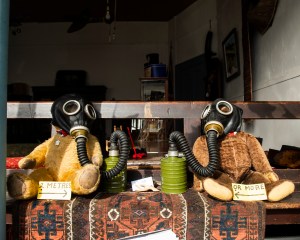
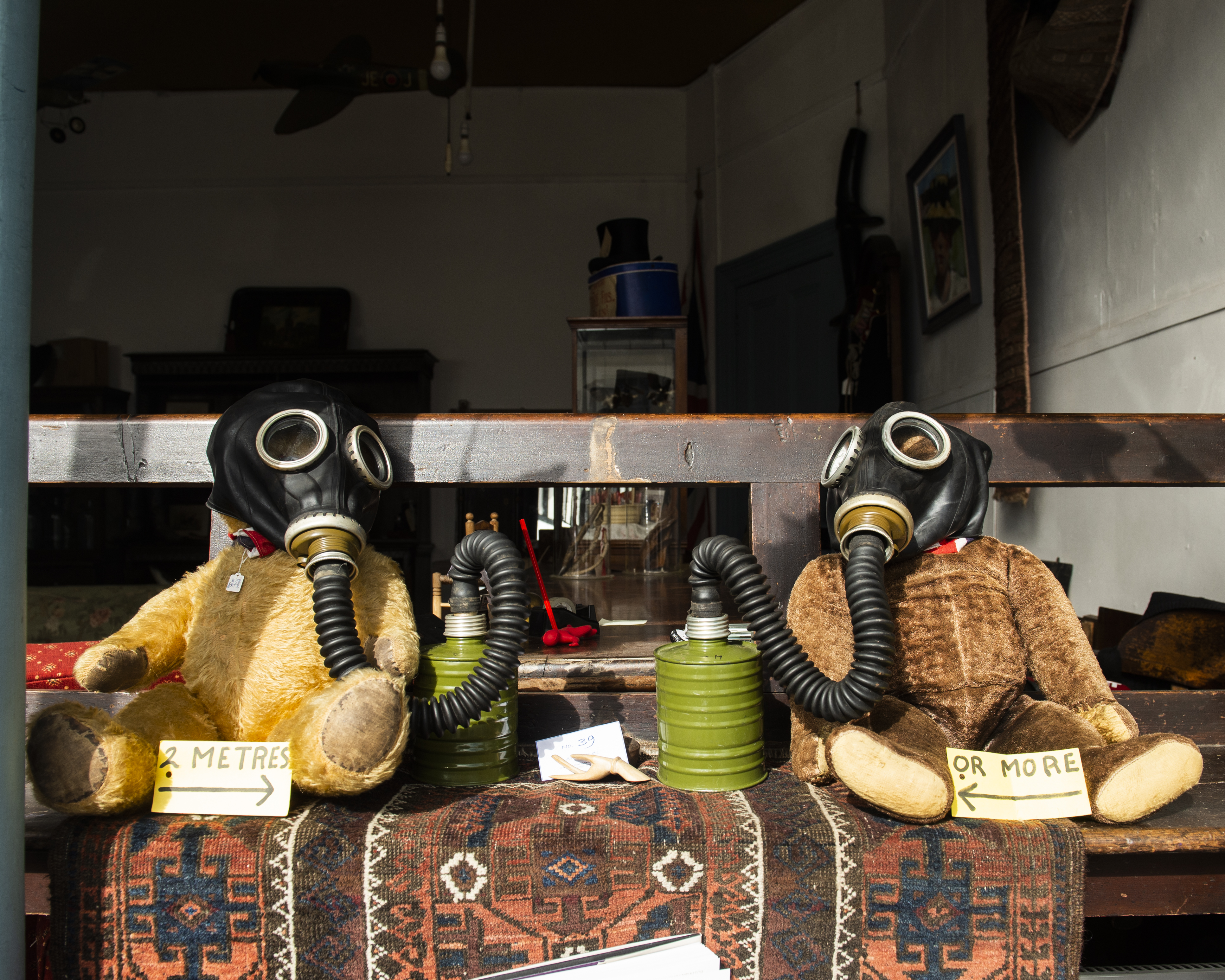
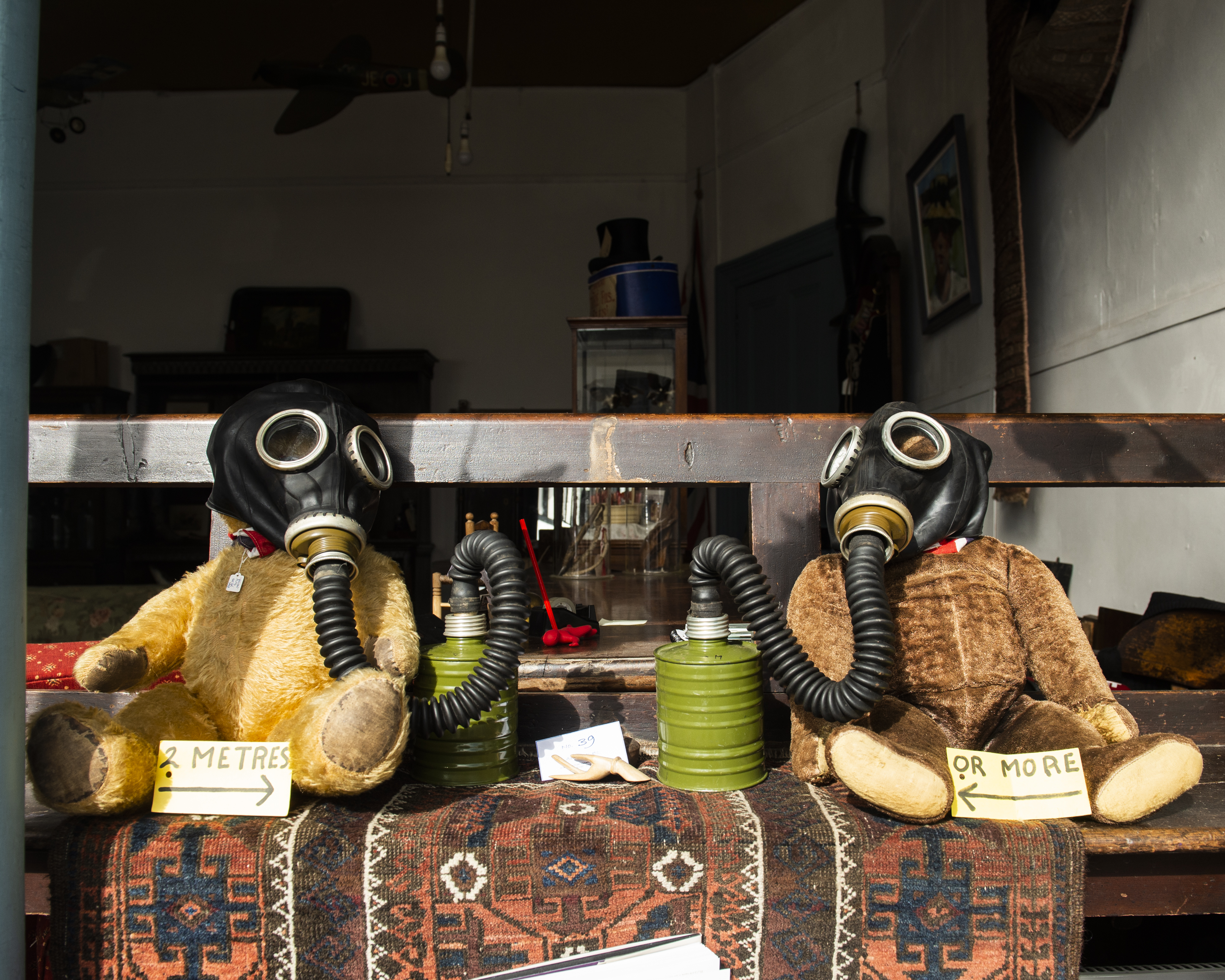
Typically British – One of the town’s many shops showed its sense of humour with the socially distancing bears.  They started out 2 metres apart and then moved closer together with the addition of some fetching wartime gas masks.  The masks themselves have a sinister appearance, which could be interpreted as part of the fear around the virus and the way that it has taken hold.

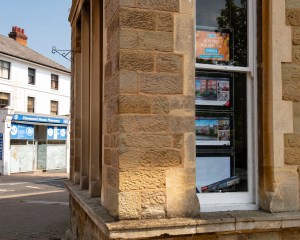
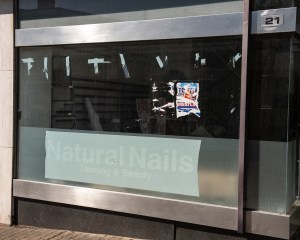
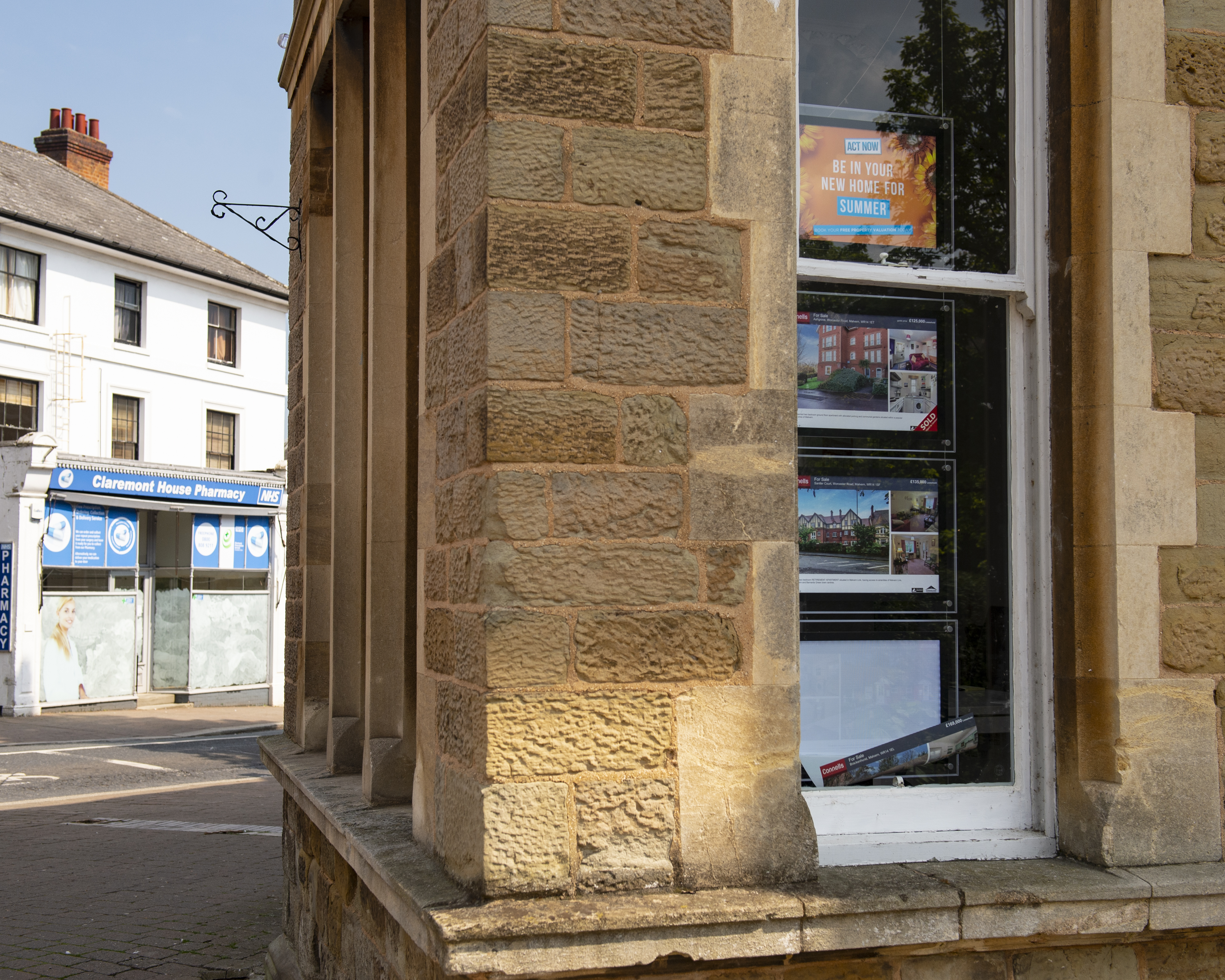
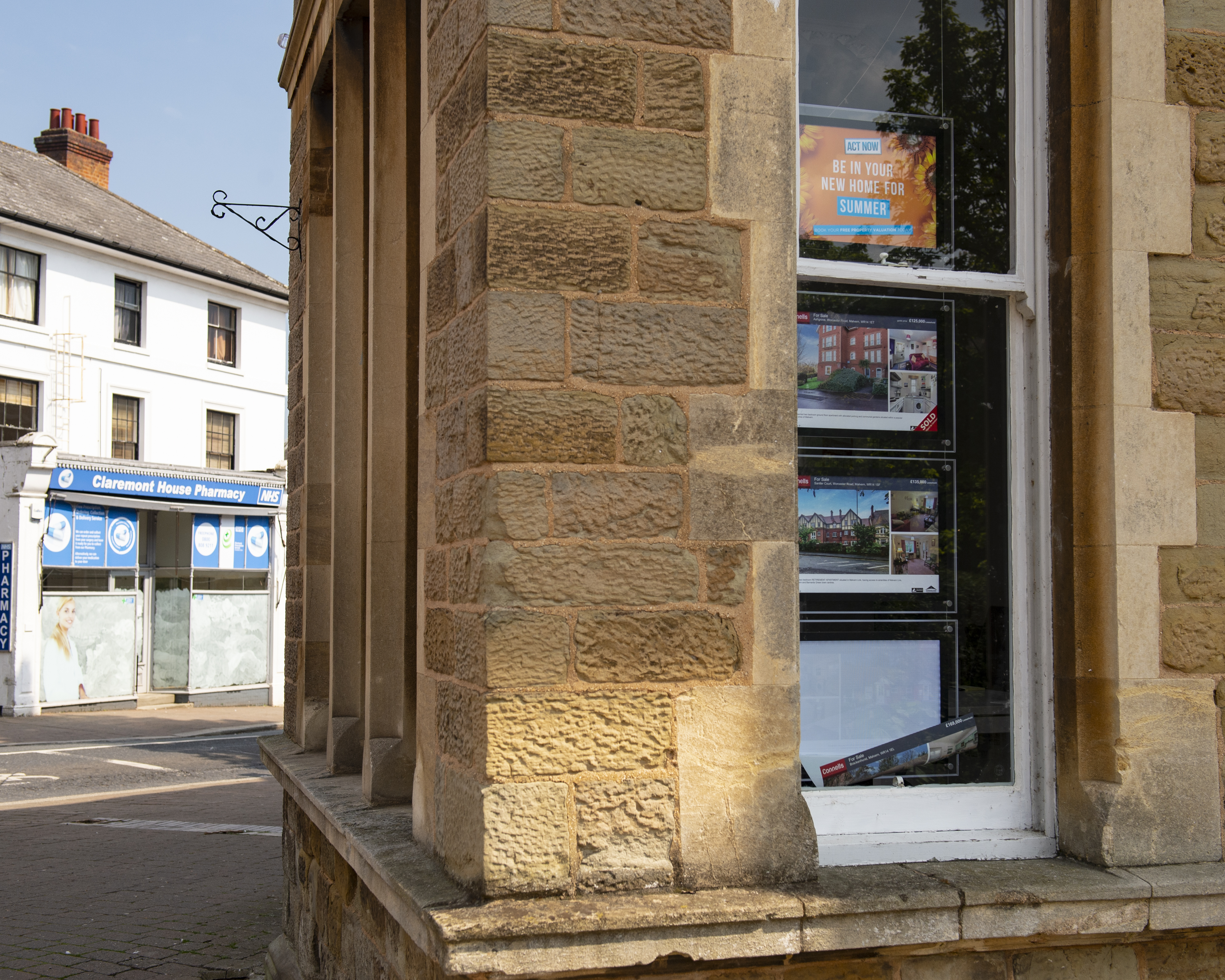
A Promise? – I shot this photograph because I noticed the juxtaposition of the advertisement that has slipped from its mount and the promise of being able to move in the summer.  I wanted to capture the interrupted good intentions of the window display where clearly nobody was at work in the building to fix the broken advert.  The pharmacy in the background actually relocated to another building before COVID-19 struck, but in this image it reinforces the impact of the virus on key businesses.  The duality of this image is that its possible that the advert hadn’t been noticed by the staff and the combination of the good weather and the promise could be read as resilience in the face of the virus instead.

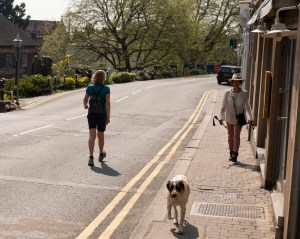
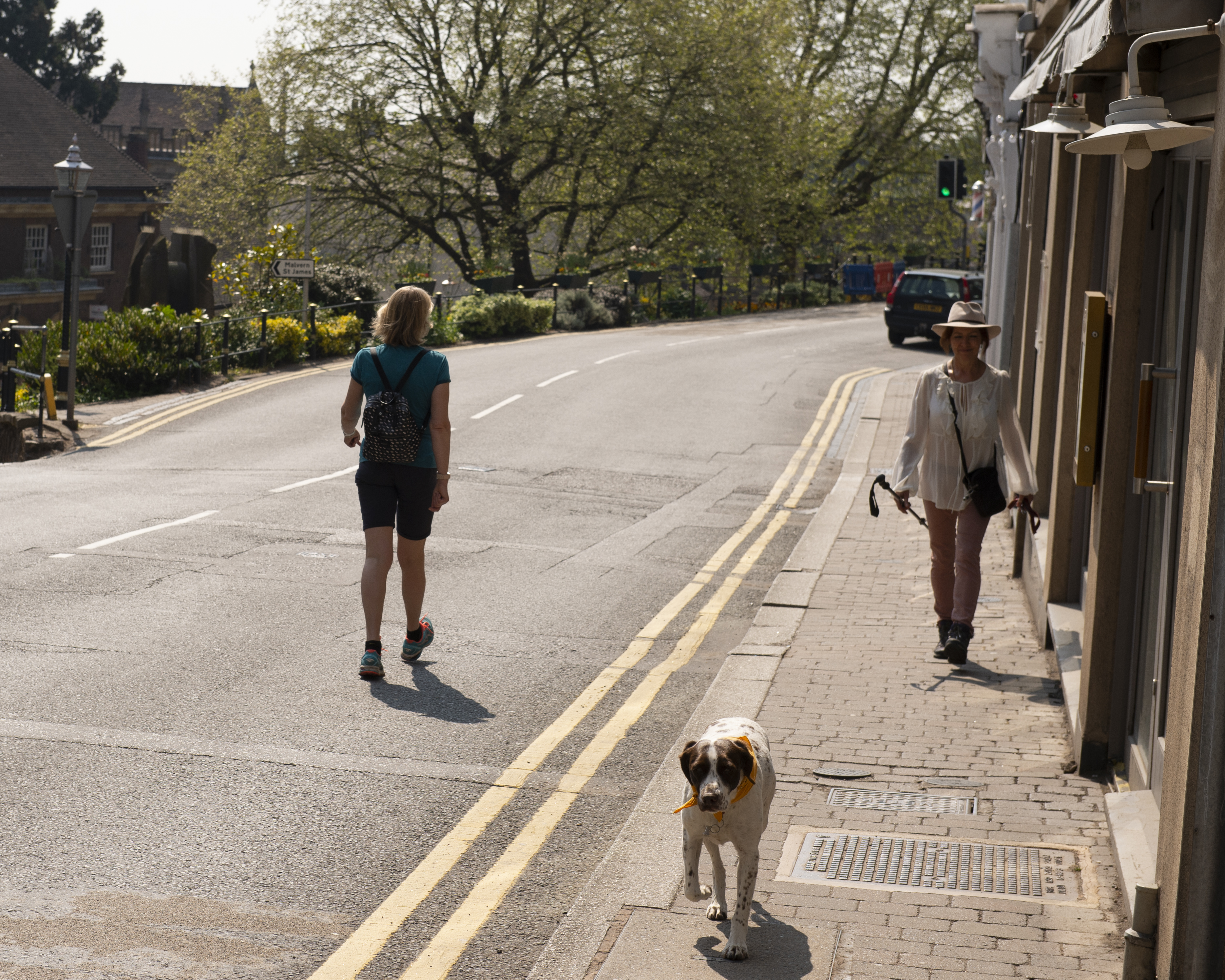
Socially Distant –  On one of our sanctioned exercise slots, I followed my wife with the camera looking to capture the new behaviour of people deliberately distancing themselves from each other.  In this shot, my wife walks into the road to avoid the lady with her dog.  What I wanted to capture here was the matter-of-fact action taken by wife at this moment, almost ignoring the lady altogether.  The message being that despite the context of the sunny day, the excited dog and the smiling lady, the act is one of coldness.  In fact, the opposite is often true.  In this case the smile was appreciation of the gesture and pleasantries exchanged.  This is an example of a decisive moment not describing the sequence of events, but merely an instant where the internal context is the only thing we have to go on.

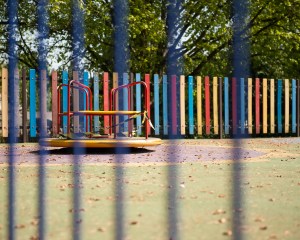
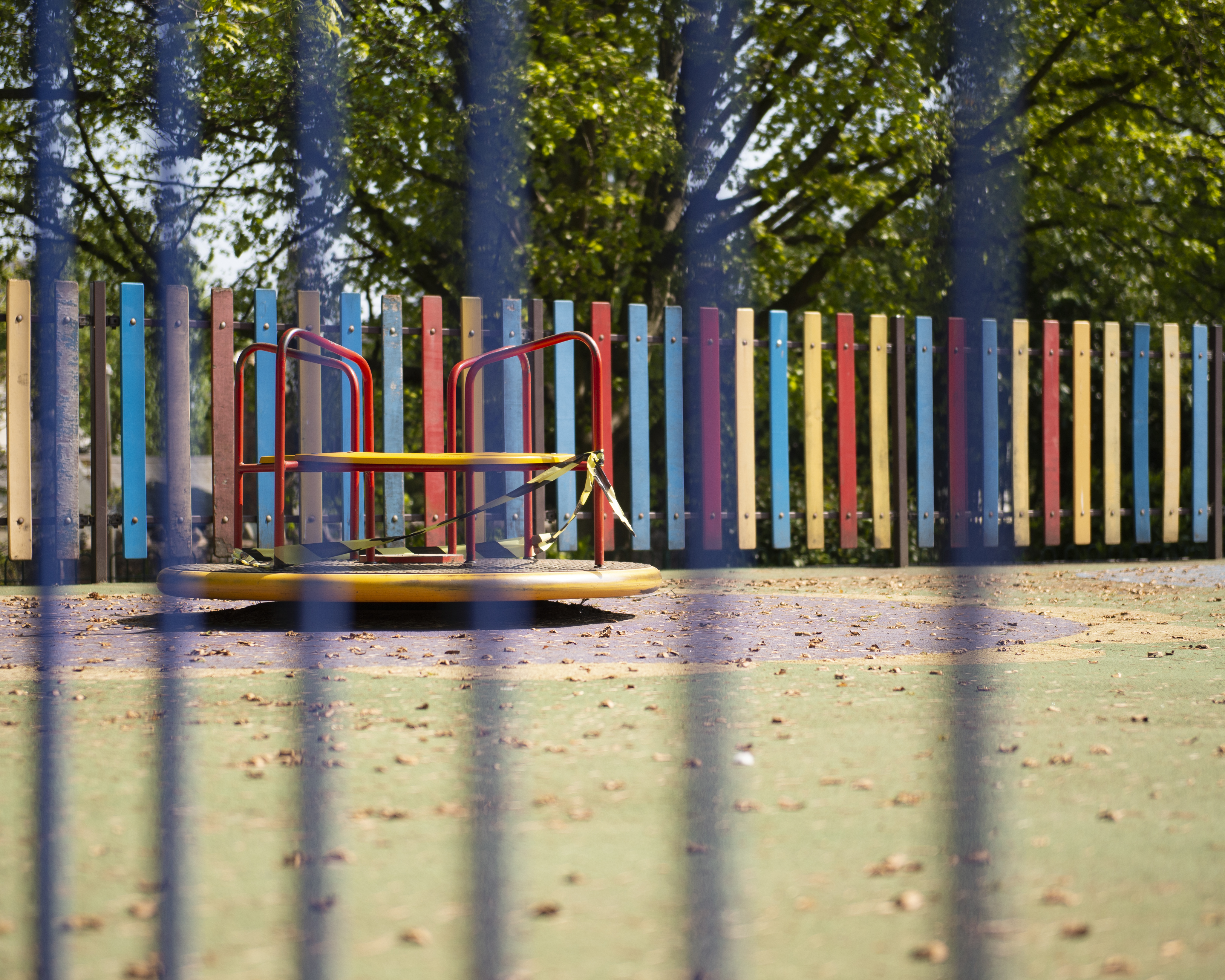
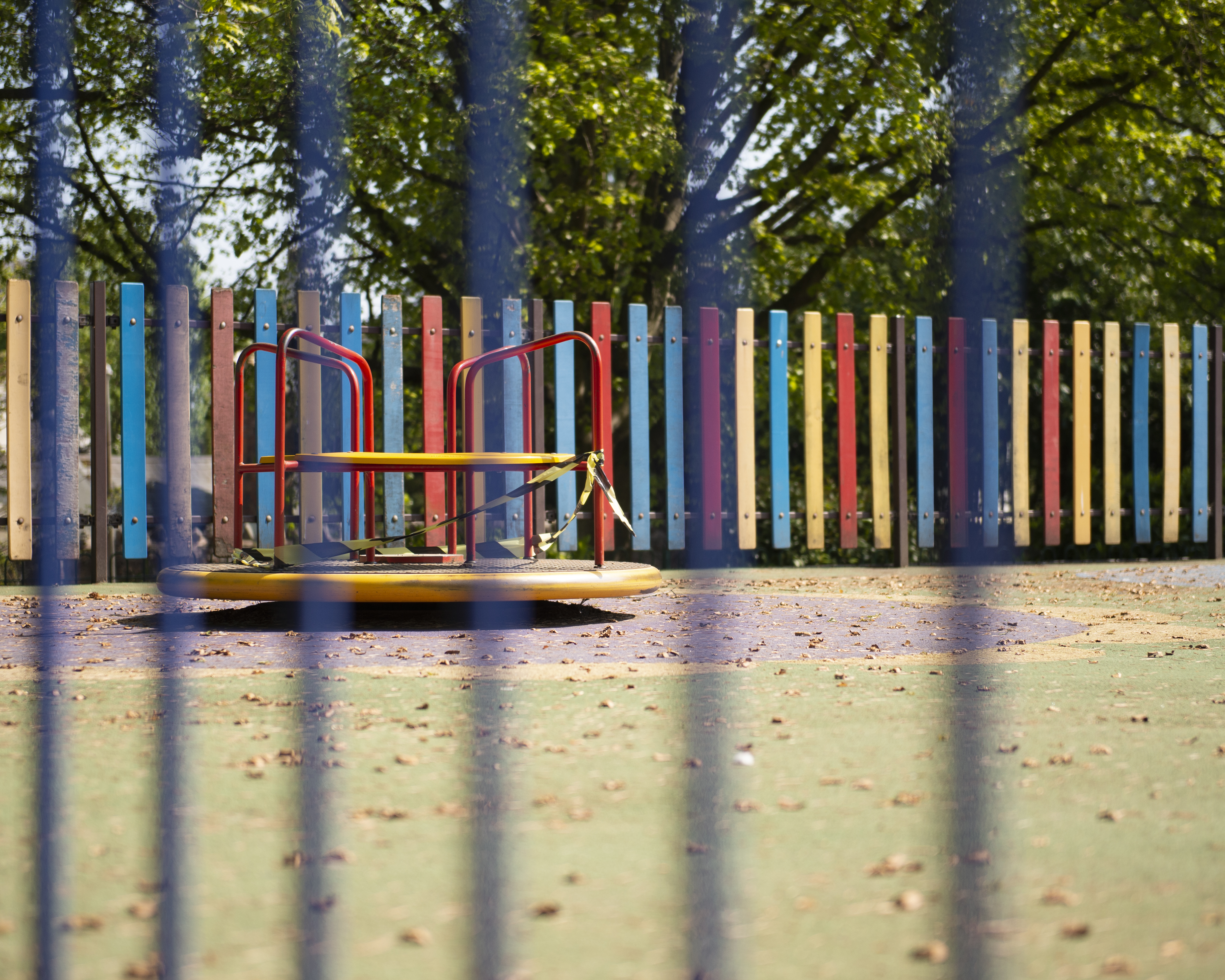
Behind Bars – The children’s playground in the Winter Gardens park was, for a while a place where people gathered defying the lockdown.  Since then, it has been closed with warning signs all around the perimeter fence.  As I had decided not to include specific references to the virus, I looked for a composition with just the sense of being abandoned.  This image of the roundabout with hazard tape around it struck me as sad, with no children around to play on it in the sun.  The railing lends itself to the sense of imprisonment.  The image could have been something less sinister, though with the park being temporarily closed for maintenance ready for the summer weather.

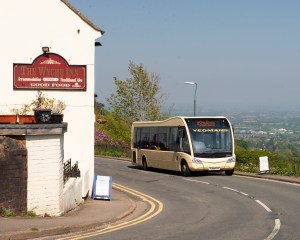
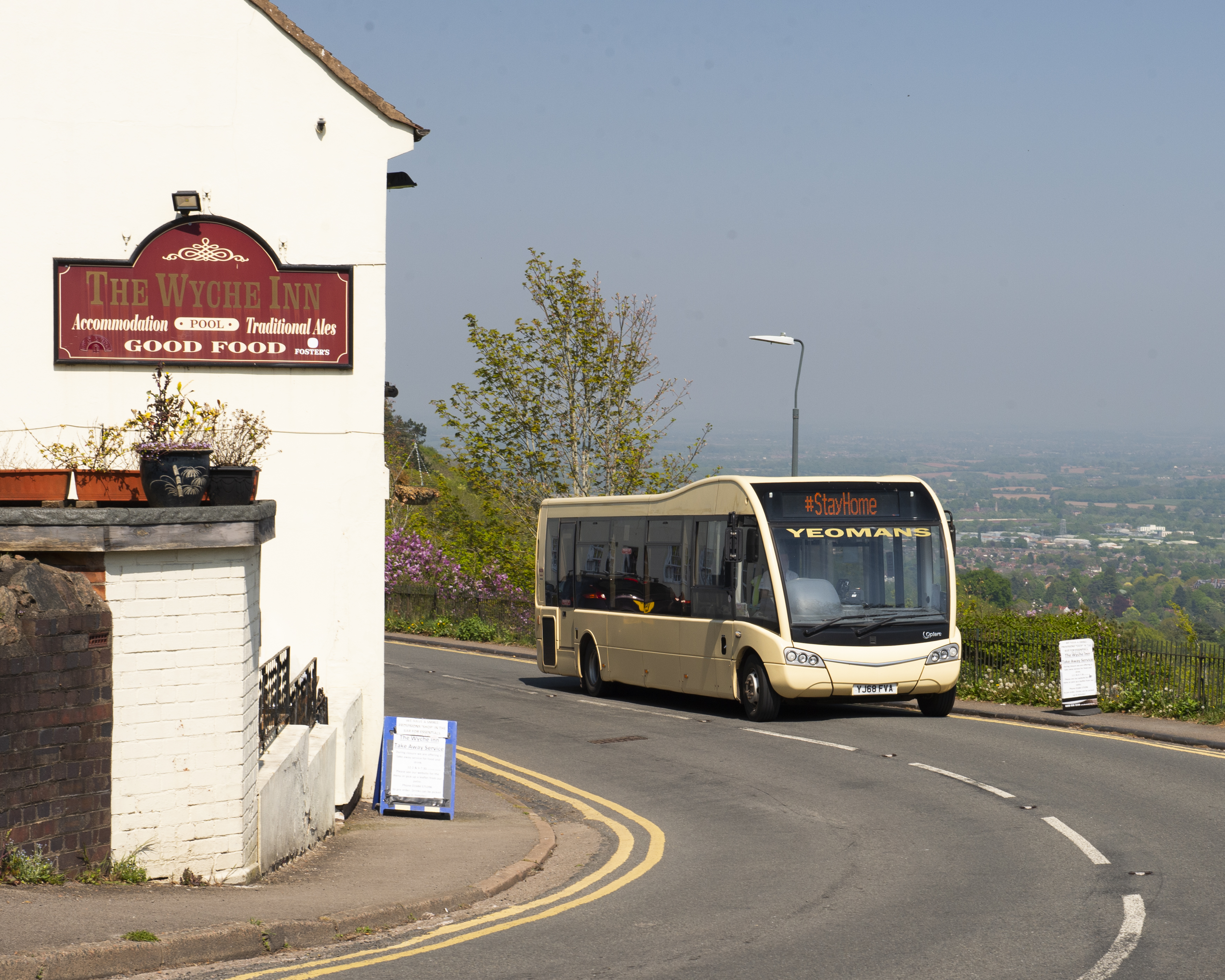
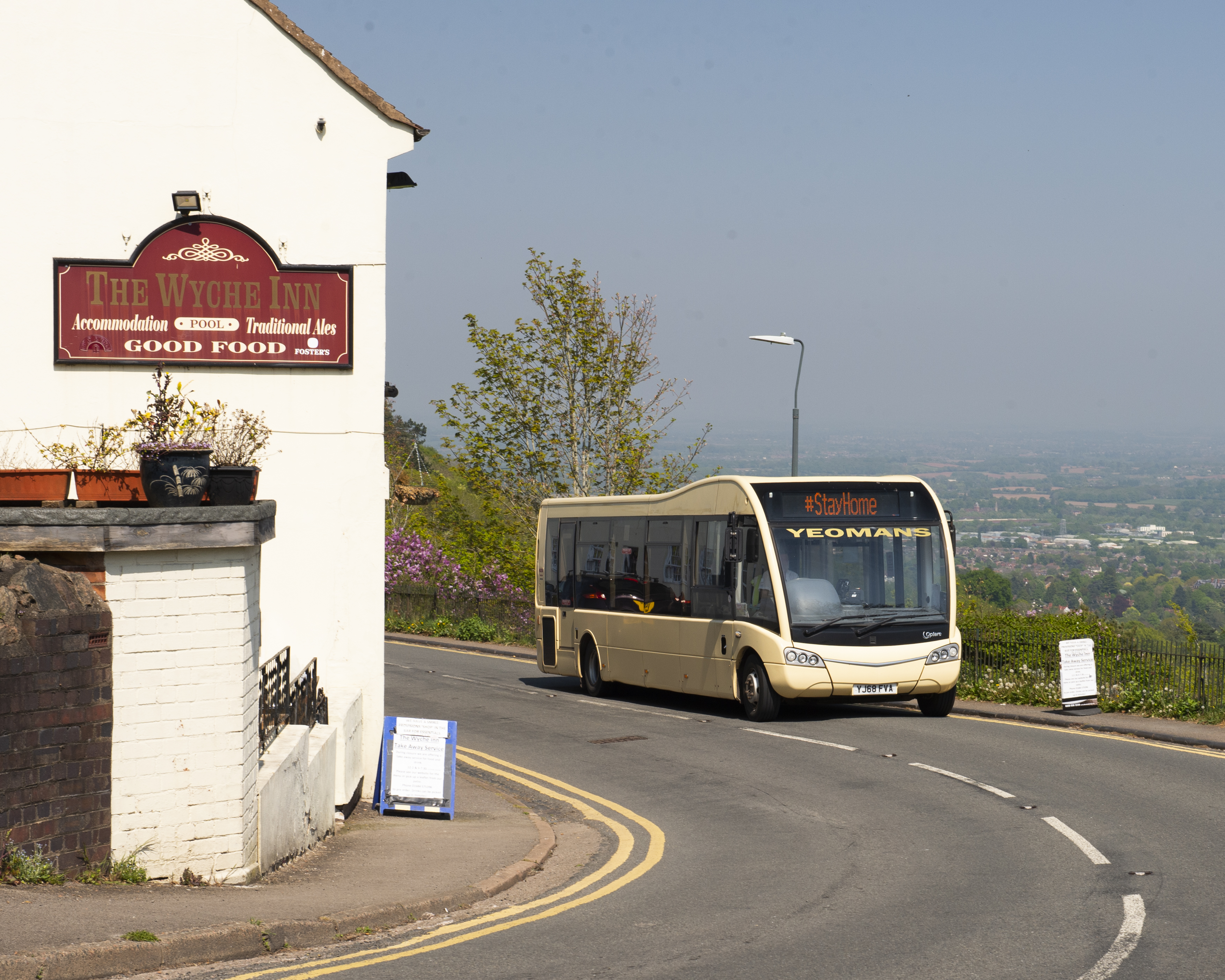
Little Choice – The pubs and cafes are all closed, but public transport is still running for essential journeys to be completed.  The sight of empty buses roaming the streets of the town with the stark ‘Stay Home’ message displayed is becoming all too familiar.  I like the conflict in this image with the pub and view enticing people to gather to enjoy the weather against the fact that we cannot.  With this image, though there is room in the context to create a narrative beyond the virus.   The message could be part of an advertisement instead of a government instruction and because we cannot see into the bus itself, we cannot tell that it is empty.

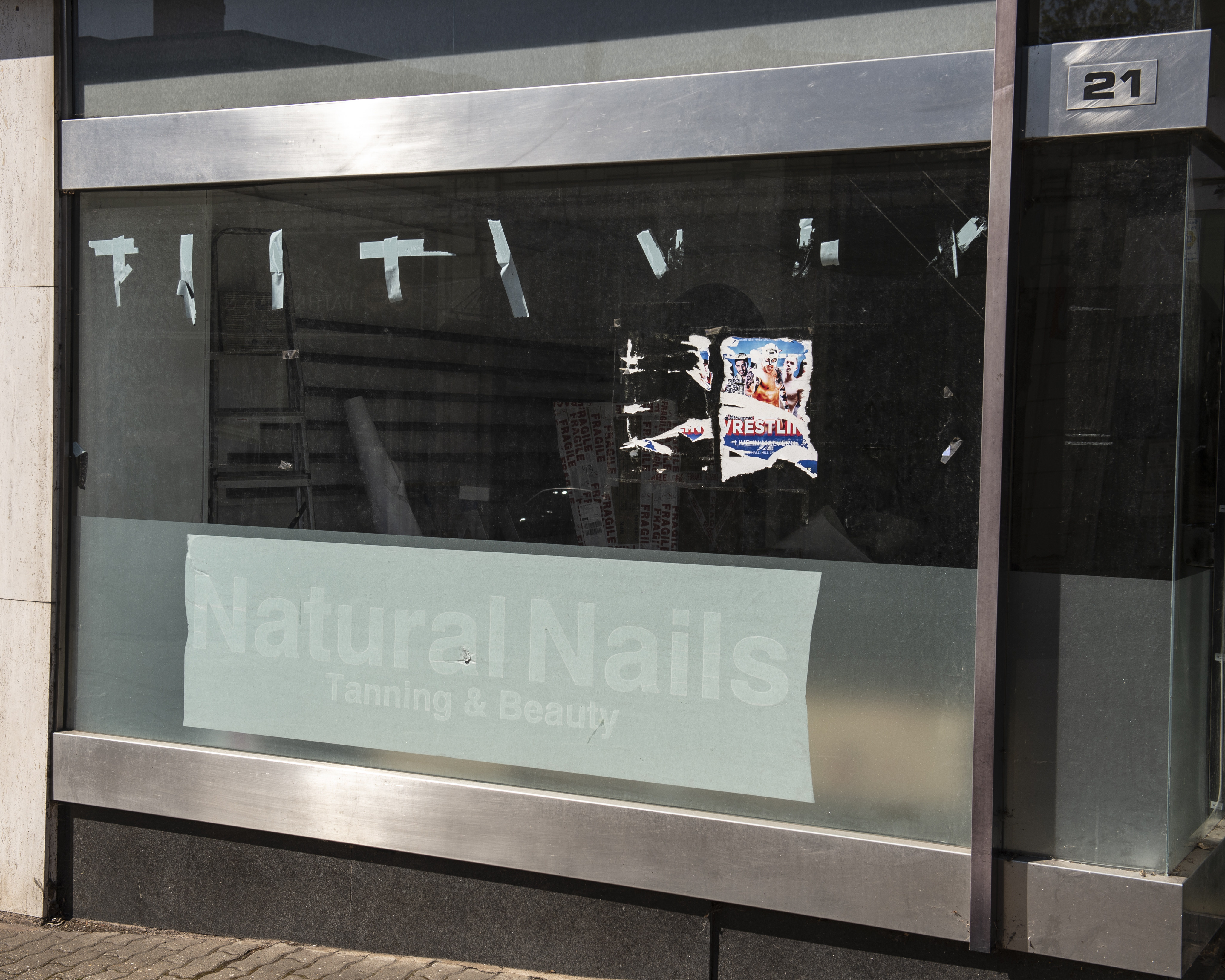
Thwarted Dream – This building is featuring in my series on the decline of the high street, but the shot I took for that was of a run-down, empty shop.  In the weeks before the virus took hold, work started on turning it into the new business.  This image without context could be interpreted as optimistic; the final step being the peeling of the transfer labels on the windows.  If we look closer though, we can see that the works inside have barely begun.  There is nobody working on the premises to get it ready to be opened.  For me, the sadness of the image is that the virus may make the business untenable before it gets going.

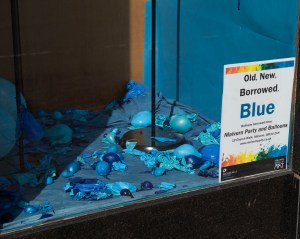
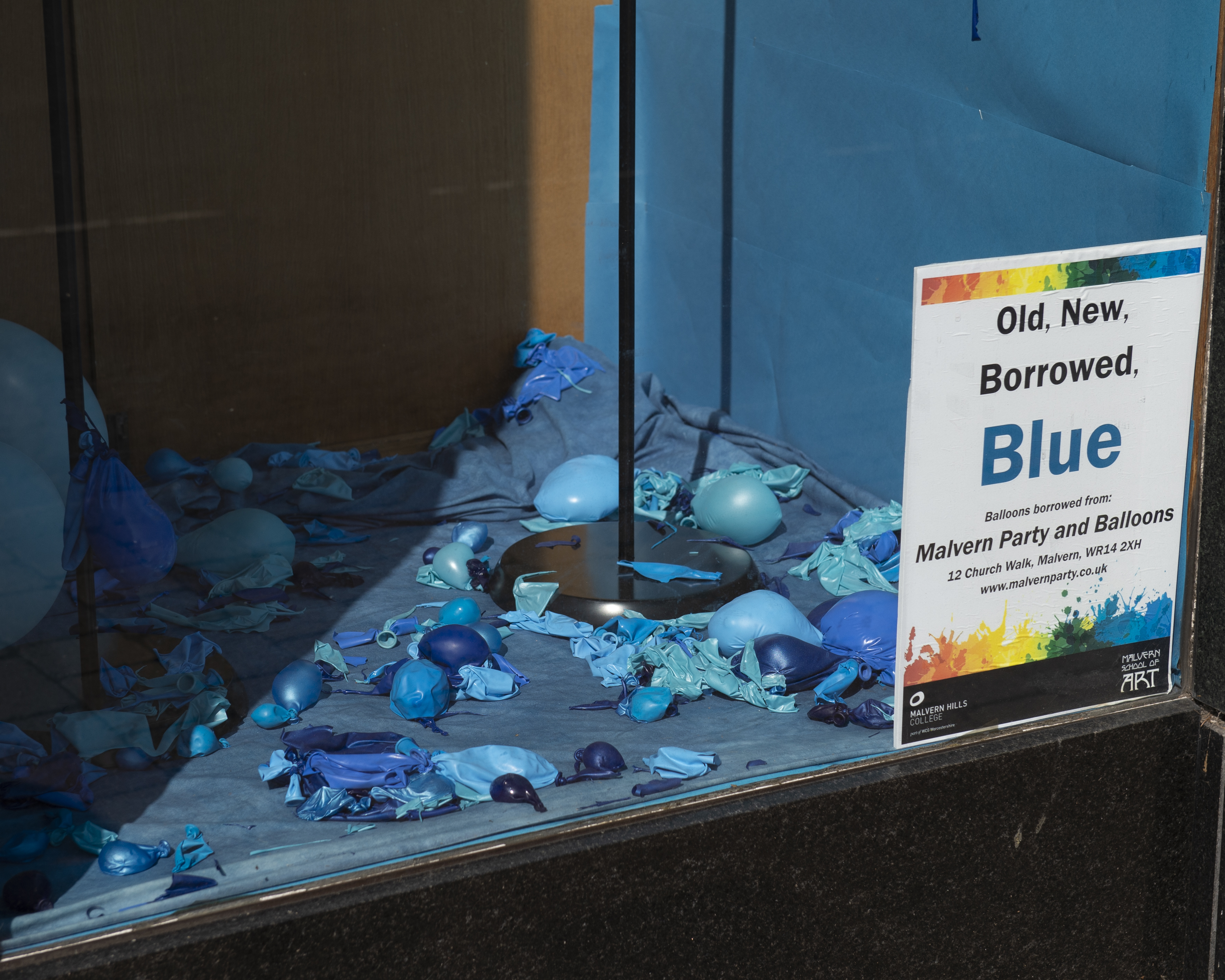
Faded Art – This is an art installation by students of a local college that was created to brighten up the windows of the recently-closed department store in the town.  Each installation has a colour theme and it has really lifted the look of the grand old building as it waits to be converted into new business premises.  Here, we have a balloon display which in itself should be a joyful image.  However, the building is empty and the helium has escaped the balloons.  I wanted to capture the sadness of the way it had been abandoned, unmaintained and how the loaned balloons would not likely to be returned or reused.  The image does contain am humorous inversion of that aspect though, saying ‘who thought that borrowing balloons was a good idea?’

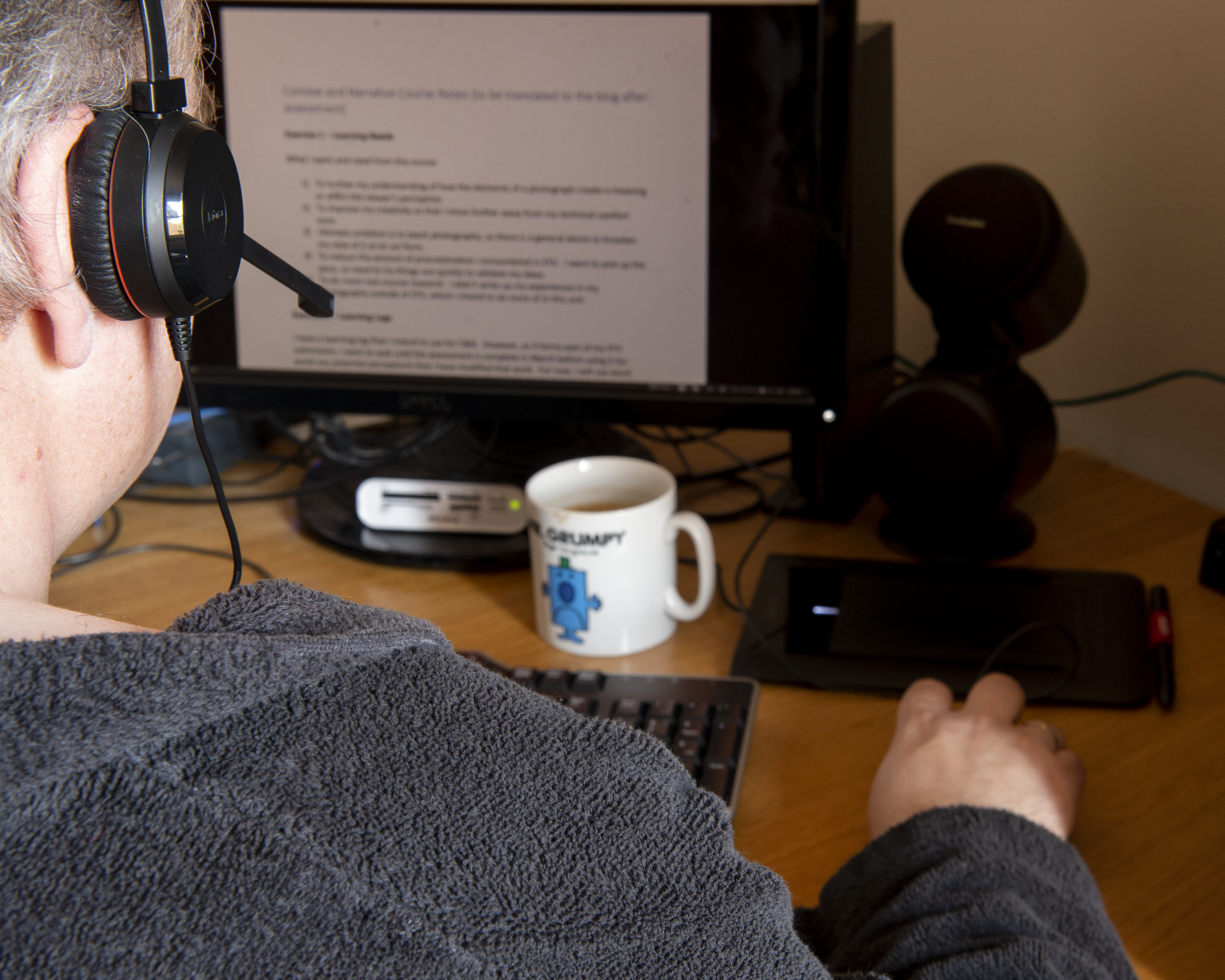
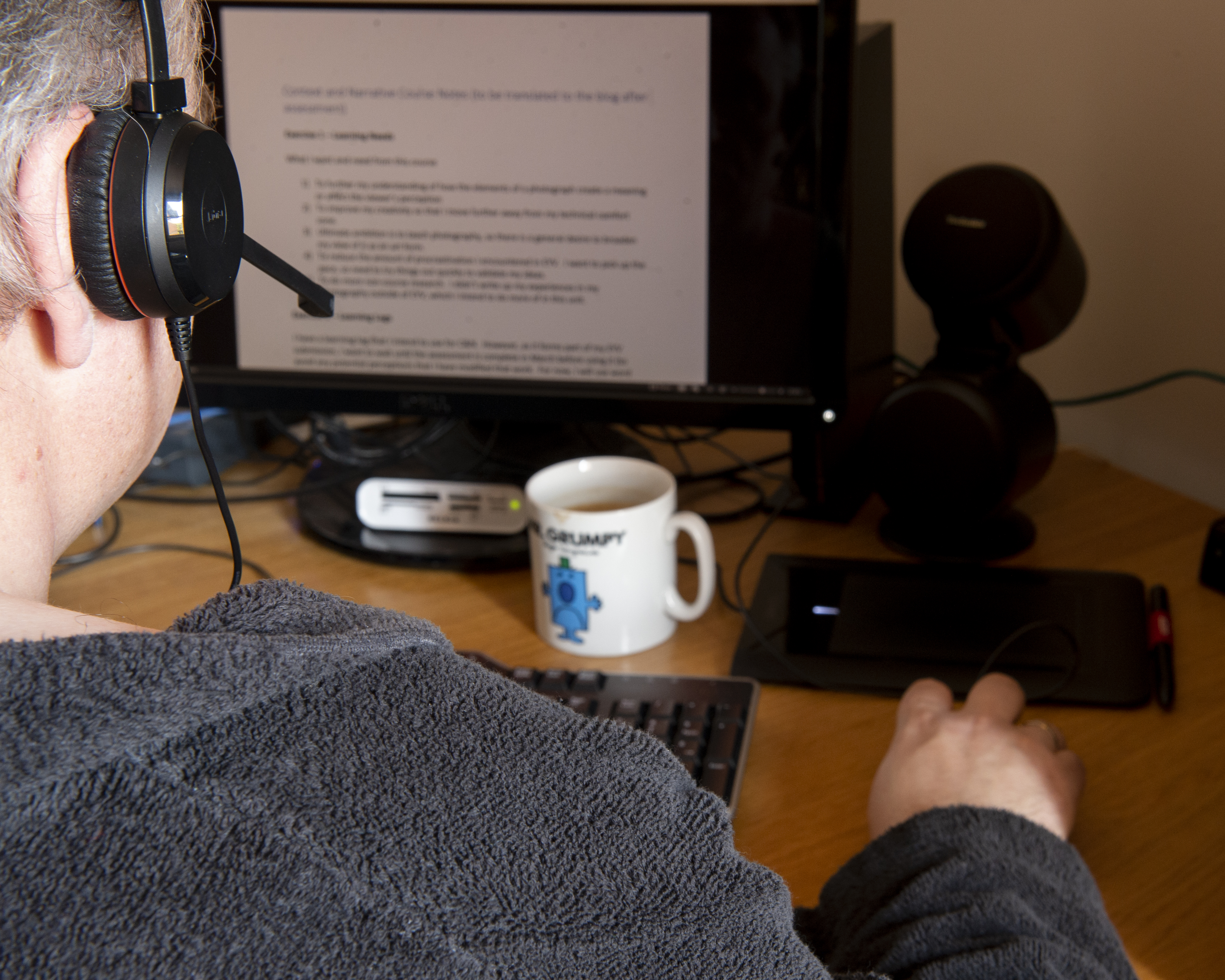
Business Attire –  This image was spotted by my wife one morning as I started work.  Working from home may have saved me a commute but the negative impact on my routine has become apparent.  Here, I’ve not even bothered to get dressed prior to starting my first online meeting of the day.  Although staged with a tripod and remote release, there is an honesty in the elements in the frame.  The negative context is reinforced by the inclusion of the mug and the state of my dress.  It could also be read as a relaxed way of working where there are no expectations other than performing in the job.

Conclusion

I really enjoyed this first assignment.  The question ‘can photography be truthful?’ was one that I had not asked myself before Part 1, but the artists that we looked at offered an insight into its subtle exploitation for documentary or art purposes.   With my collection, I feel like the duality of photography as a document is shown clearly.  The situation we find ourselves in with COVID-19 is unprecedented and for the main, terrifying.  However, one of the earliest realisations that I came to was that forcing people to change their lifestyles and stay away from each other would have a positive impact on society as a whole.  As a photographer, being limited in the places I could visit because of lockdown actually made me look harder for that positivity which resulted in my capturing more of it.  I actually struggled to find compositions that were overtly negative to be the greater challenge.  I am happy that my interpretation of the brief works; there are two sides to the story and part of that is being unable to obviously tell the difference.  By adding the simplicity of two words as a title, the narrative comes quickly.  If anything, even something as simple as that leads the viewer too readily to a narrative.   A change I would make to the series is to make the titles more obscure.

What went well

The strongest image for me is Typically British as I like the clear sense of humour mixed with the gravity of the situation.  Humour in photography has become something that I’m drawn to when times are difficult; a kind of self-medication, I guess.  The sinister side of the photograph is the thought that not even our teddy bears are safe from the virus.  Giving them WW2 gas masks emphasises how dangerous the infection could be.  For a simple composition, I think it tells both sides of the story effectively.

The other strong images for me were Behind Bars and Socially Distant, both of which provoked a negative reaction in me.  In the former it had not occurred to me that this happy space which is very popular with the town’s children would be abandoned.  Seems obvious, but its impact on me was profoundly sad.  I definitely felt like Soloman-Godeau’s outsider trying to capture this scene.  Socially Distant was also a sad image for me as the dog in the photograph came towards me for some attention, but I was distracted by my wife’s exaggerated deviation from the path.  Under normal circumstances, the dog would have been made a fuss of and pleasantries exchanged.  This situation is clearly not normal and that comes out in the photograph. Unlike Behind Bars, I was an insider in this shot.

What could have gone better

The weakest image for me is Business Attire because it is not as candid as the others.  I wanted to use natural light for the shot to ensure that there were no harsh reflections from the shiny surfaces on my desk.  This meant that I needed to use a tripod and tethered remote.   I think the sentiment and duality come out in the image, but for me there is a sense of overt context.  The inclusion of the Mr Grumpy mug, on reflection is too much of a sign-post element in the image.

Also, I would consider re-visiting the titles themselves as even though they are short and seemingly simple, they point very clearly to the intent behind the image.  Before I added them, I showed the collection to my wife.  Her interpretation of the context differed only slightly from my own, which I conclude is because we have been married so long coupled with her sharing my photographic ‘journey’ so far.

Getting Feedback

My intention was to share more widely to see which sides of the story are being ‘told’ and, more importantly, whether people believe my statement that we will be an improved society when the danger of coronavirus passes.  I sent the unallocated images to a small group of my photographer friends with simple numerical titles and asked them to arrange in the supporting and contradicting groups.   I deliberately asked them not to confer or share their thoughts on the meanings of the images with each other and perhaps unsurprisingly, some found the job of grouping them a challenge.  To make things more difficult, I told them that I wasn’t all that interested in their explanation of the narrative created for each image as discussion would have helped them form a view that was influenced by my intentions for the series.  The results were as shown below:

Screenshot 2020-05-02 at 11.44.04

Results of Review of the Unallocated Photographs

What struck me first about the results was the strong agreement with my intention for the images of the playground, the NHS thank you and the unfinished shop front.  These images were strong with elements that steered to a great sense of sadness or extreme happiness.  The ‘negative’ images were almost signposted to contradict my story, so using photography to effectively prove a lie. The next thing that stood out was the balance in some of the responses, i.e. in two minds about what the photographs say to them.  In these photographs, the story about the improvement in society comes through but with an equally opposing feeling created by the knowledge we have about the pandemic.  Socially Distant is a good example of this.  I felt that we were losing personal contact, but three people thought differently.  Perhaps the act of social responsibility caused by the distancing in the image supports that we actually care more for each other with the current restrictions.  The final observation was where the consensus was generally in disagreement with my original intent.  Looking back at the earlier research in Part 1, I was reminded of how our perspectives are built on our personal circumstances, beliefs, biases and the previous events in our lives.  Four of the people asked are living in urban environments where the virus is affecting many people in a confined space.  Their views on the images are naturally going to differ from the other two (and me) who live in a more rural setting.

Overall, I am happy with the way this assignment has gone. In Part 1, I’ve learned the difference between being part of the story and an observer, how photographs are used to get a message across that is not always truthful and that there are many different versions of what is the truth.  With the ghost photography of the late 19th Century, the trust in photography as an honest viewer of events was severely tested, with the foremost intellects being conned by photo manipulation.  Where documentary fails though, art becomes the destiny for photography ‘stories’.  Powerful messages about society like those in Dzhangal and Public Order don’t need to rely on facts to have impact. Perhaps objectivity is not all it’s cracked up to be.

References

[1] Mendel, G, 2016, Dzhangal Work, Artist’s Website, http://gideonmendel.com/dzhangal/

[2] Seawright, P, c1970s, ‘Sectarian Murders’, Artist’s Website, http://www.paulseawright.com/sectarian