Create a storyboard where the image does not depend on the text and the text adds something new to the narrative.
This exercise is a light-hearted look at the role of image and text.
Aim for it to be around 10 frames long.
Draw the picture storyboard first and then add the text.Note how the story is affected when the text is added.
Introduction
I approached this exercise by first thinking of a storyline of seemingly mundane activities and then sketching them out. I am a fairly poor sketch artist so the drawings are crude and I stopped at 8 frames. However, it is clear from the frames what the series of events is.
Storyboard
Without any captions or text, the series shows the progression of someone’s day, starting with them being in bed the night before and ending with them going back to sleep at the end of the day. The events in between are familiar with work, exercise, dinner and relaxation featuring as the day progresses. I deliberately didn’t add much in the way of additional context, apart from the sun, moon and crucifixes, primarily because of my lack of skill at drawing.
Adding Text
“You scare me…”
“…we should be happy”
“…but everything good is lost…”
“…to your endless pursuits…”
“…that always end up with a big scene…”
“…so I can’t see the point…”
“…when I don’t feel anything…”
“I’d better find somewhere else to be”
Review
When I drew the frames, I intended a cartoon that highlighted a typical day that might be experienced during the current pandemic. Like many people, lockdown presented a structured imprisonment of online meetings, trying to find something interesting to liven up the everyday experiences such as cooking, my government-sanctioned exercise and on numerous occasions excessive alcohol. We were trying to make the best of the situation and to a certain extent it worked. In the frames without text, the story is pretty clear from the way the elements denote meaning (e.g. the moon denotes night time etc). Each frame contains symbolic messages that we recognise owing to our experiences of the pandemic, but also connote aspects of a stressful life with the idea of ‘work hard, play hard’ which is driven by social and cultural references.
I realised that another side of the pandemic was the forced isolation at home that in some cases put people’s relationships under unprecedented strain. Although evidence of increases in the number of separations during 2020 are largely anecdotal, it makes sense that the relatively trivial behavioural traits that might annoy us, could be amplified by having to spend significantly more time together in a confined space. Thankfully this was not my experience but thought it would be interesting to imagine an underlying tension as a layered narrative to the cartoon. When the text was added, the images immediately offer alternative interpretations. The relay text supports a connoted message within the image but makes no reference to any literal element within the frame. Now we have the relationship issues being played out by a narrator who could be the man in the story. The religious iconography that supports some keeping faith that everything will be alright could be seen previously, but the symbolic message is potentially different with faith in ’emerging from the pandemic’ being replaced by ‘overcoming problems’. The underlying story remains the same with a day passing linearly though the 8 frames. However, now the text makes us question the causes and engage with the misery of the character.
Conclusion
The use of relay in the comic strip as described by Barthes was the idea that appealed to me the most. When we pick up a comic, the text directs the reader through the core story but supports, and is supported by, the imagery. The fascination with comics and graphic novels is where the connection between the text and imagery leaves more than enough room to create the narrative. In this case, the crudely simple series of sketches take on a different, more emotionally demanding set of meanings by the inclusion of the text. Both stories are engaging, but for me one has more impact through the structural application of the text than the other.
Read ‘Rhetoric of the Image’ (Barthes, 1964) and write a reflection in your learninglog.
How does Barthes define anchorage and relay?
What is the difference between them?
Can you come up with some examples of each?
How might this help your own creative approaches to working with text and image?
The Essay
This isn’t the first time we’ve seen this essay by French philosopher Roland Barthes, published in 1964. The ideas of signifiers and signified, denotation and connotation were introduced when we were reading images in Context and Narrative [1]. Barthes sought to ‘spectrally analyse’ an image using the same structuralism ideas reserved for language. Barthes begins by writing about how linguists tend not to recognise ‘languages’ that don’t follow the structures originally theorised by Sausurre in the early 20th Century, citing the way that animals such as bees communicate with each other. Barthes wanted to see if images, also considered by some to hold little in terms of expression in language, could be read using the same principles of linguistics. As an example, he chose an advertisement for a French brand of ‘Italian’ food products called Panzani; this was what we looked at in our introduction to semiotics in Context and Narrative. Within the advertisement, Barthes identifies three messages; the linguistic which takes the form of the textual elements and captioning, the coded-iconic which is that which we visually read within the constructs of culture, and the non-coded; the elements in that are left. He treats the former separate from the latter two, arguing that the separation of them would serve no purpose. It is when he looks at the linguistic message, the idea of anchorage and relay are discussed.
Anchorage is the name given to text that seeks to answer the question ‘what is it?’ as Barthes explains, to limit or contain the element of uncertainty that the image creates. Although not explicitly used to describe what is in the picture, an anchor should be clear enough to restrict the creation of multiple narratives about either the whole image or parts of it. The anchor doesn’t only refer to the denoted elements that the image contains, but also the connoted which means that interpretation is also restricted. In his essay, Barthes uses an example of an advertisement or D’Arcy Preserves where some scattered fruit is included in the image alongside the caption “As if from your garden”. This anchors the viewer to a particular item (the fruit) but also the idea that the preserve is made from good things (the reference to the garden). When I read this part of the essay, I was reminded of the Lurpak advertisement that I looked at in Exercise 1 [2]. In that case, the caption read ‘Empires were never built on muesli bars’, which doesn’t refer to any single element within the accompanying image, but stops us from believing that the food being represented was the stereotype of a ‘health food’. This text anchors in the same way as Barthes’ example. He goes on to say that the use of anchorage to promote but also reject a particular part of the image or a narrative resulting from it, is the most common use of text with imagery.
The relay is introduced as a less frequently used application of text to an image. Relay text is used to complement the elements in the image in a way that doesn’t describe them specifically but works with them to carry a narrative. The most common use of relay is in film where it supports the sequential building of a story by adding something about the subject that the viewer is watching. Barthes refers to comic strips as being good example of relay in action. Each comic frame contains as picture of characters set in the context of some action. The relay text guides the viewer to the story either by setting the scene or by being the dialogue between characters. Barthes points out that when relay is used effectively, the image becomes almost secondary in the reading of the story. See the example below:-
Speed Bump [3]
In this example, the text on the cereal box sets the scene of the frame. The speech bubble tells the story and the image shows a weary couple with a young child having breakfast. The image takes very little time to consume as a viewer as we are guided by the inclusion of the linguistic message (relay) and therefore don’t need to dwell on the iconic meaning of the image. Barthes makes the point that the idea behind a comic is that they are intended for people to consume quickly and rely heavily on the viewer bringing their own knowledge, both in terms of a code (language) to interpret the text, and in this example, about the current status of technology in our lives. Relay is not constant, as Barthes points out, it’s impact is felt differently depending on a number of social factors. With his Panzani example, the idea of Italianicity created by the text would only really be relatable to someone who wasn’t Italian. The use of the French language naturally puts the advert in the context of a French tourist who has some perception of Italian culture; they would have a different reaction to the linguistic message. In the example above, people of my generation would see the humour in the words spoken by the man, where children may not.
Barthes continues to explain that while images can be read using linguistic tools, photographs differ from drawings or paintings in that they contain uncoded iconic messages. What he means by this is that when a drawing is created, the representation of the subject is coded by the artist’s perception and knowledge, which is then read by the viewer. The representation doesn’t contain all information to signify the subject, but neither does the viewer necessarily need that to interpret it. In the most extreme case of caricature, the artist leaves some aspects out and exaggerates others, but we still know who the portrait subject is. Take this example.
Caricature of Albert Einstein, Unknown Artist [4]
We instantly recognise this as being Albert Einstein even though his famously wild hair, nose and moustache have been greatly exaggerated. The image is a likeness but not an accurate facsimile of the person it’s supposed to represent. Barthes argued that any image created by an artist has a code and in most cases, photography is the same. However, it is possible for photography to produce an image that is non-coded, i.e a straight copy of what is in front of the camera. The point Barthes was making was the even a non-coded image has information contained within, so if an extraterrestrial was presented with a photograph of what we know to be a tomato, they would not know a tomato but still see a shape and perhaps a difference in tone or colour. If we believe we can have an image with no code, the idea that a photograph is pure and truthful becomes believable. Barthes argues that the combination (and opposition) of both the non-coded and the coded cultural message, give a photograph its ability to relate to human history. As we have learned earlier in the unit, the idea of a point in history brought forward into the present via a variety of contemporary interpretations is a power that photography has that perhaps painting does not.
Barthes concludes his essay with the topic of the Rhetoric of the Image, linking back to its title. This deals with the interpretation of the symbolic message, influenced by culture. Barthes argues that the linguistic and denoted messages can be analysed as if a language, but the connoted messages are more difficult as they vary from culture to culture and are influence heavily by our attitudes and ideals around the signs in an image. In his analysis of the Panzani advert he identified four connoted signs but argues that there are most likely to be many more that depend on different areas of knowledge. He then goes on to conclude that the symbolic message within the image naturalises or balances the relationship between what is systematic denotation (what each element physically represents) and what is connoted (i.e. the potential meanings shaped by the environmental aspects mentioned previously). The rhetoric being referred to is how an image can be used to persuade the viewer in terms of what the image is about by using the structured meanings of the elements in the frame, but also by playing on their own psychological reactions to them.
Conclusion
Like many, I find Barthes difficult to read primarily because of his use of language and its translation from French to English. That said, there are some key messages from this particular essay in understanding how images can be used to structure meaning to a specific audience and how any use of text being either explanatory or suggestive depending on its relationship with the symbolic messages. Anchorage and Relay are shown to be used singularly, depending on the type of image. Anchorage as we have seen, signposts the viewer to the meaning of the image without leaving any room for interpretation and is used most frequently in journalism. However, I found Barthes’ explanation of Relay interesting because the text offers significant clues to what the image is about while letting the viewer build their own interpretation of the iconic message. Its use in comic strips was for me the revelation as relay hides in plain sight. If we consider a comic, we can understand the plot pretty much from just reading the text in each frame which at first suggests the medium is somehow ‘dumbed down’. The sophistication of comics is revealed in the way the text directs us to really look at the image and it is at this point that we realise that the symbolic messages in comic strips create many layered narratives. I now understand why when a successful comic strip character is represented in another media such as cinema, there is always significant debate over whether the characters and story arcs are faithful to the original ‘text’, perhaps more so than with traditional literature. Each individual reading of the comic will differ because of the social, environmental and cultural influences that Barthes refers to, but the relay text helps tell the story that the writers intended in the beginning.
In terms of how I might use anchors and relays in my future work, I think the main consideration is who am I creating for? Art is the expression of the artist, but I think I need to focus more on who I am trying to reach with my photography. With Assignment 3, I incorporated relay text in my album covers but the intent was only to support my story of the revival of vinyl without much consideration of how people might relate to it. The subsequent feedback suggested that the strength of reaction to the work was driven by the viewer’s own relationship with vinyl. The images were interesting, but I feel on reflection that the impact of the text wasn’t really strong enough to tell my story. I will endeavour to consider the audience more when thinking about including text in the series.
Choose a day that you can spend out and about looking with no particular agenda. Be conscious of how images and texts are presented to you in the real world – on billboards, in magazines and newspapers, and online, for example. Make notes in your learning log on some specific examples and reflect upon what impact the text has on how you read the overall message.
Consider the following:
Does the text close the image down (i.e. inform or direct your reading) or open it up (i.e. allow for your personal interpretation to play a part in creating the final meaning)?
What do you think was the intention of the creator in each instance?
Response
My days usually involve a walk from my house into the centre of Malvern, about a mile away. I generally use the opportunity to pick up any food that we need, shoot photographs for my current book project and spend time in the park looking at (and photographing) the wildlife. When I completed Project 1[1], I had feedback from a painter friend of mine that he routinely used the caption and title devices described in his work, but until then hadn’t considered how their combination might affect the narratives and impact of his paintings. I had the same experience when I went on my recent walk and paid specific attention to imagery and its presentation. I’ve chosen a couple of examples of images that I hadn’t notice before this work.
Coffee Advertising
On my regular coffee stop, I noticed a poster advertising a special blend that was being offered for a limited time in the cafe. The poster features a plan view of an espresso coffee with two captions. One reads “Coffee of the Season” and the other “Limited Edition Guatemalan Blend”. As with Kruger’s work, the first thing I noticed was the former as it was in a larger font and on an blank background so that it stood out. This idea of a coffee of the season is orientational, that is it sets the scene of the poster without being too specific. There is no mention of the season, but we assume it’s the current one. The imagery itself shows an intense coffee, set against some representations of biscuits that are all autumnal colours. The secondary text informs us that the coffee isn’t around for ever in a directional style. The overall effect is to intrigue the viewer with something they may not have tried before, ideal for autumn (although at the time of writing it’s 25 degrees C), and only around for a short time. The success of the advert hinges on grabbing our attention, offering a recognisable object in the form of dark coffee and then setting using our ideas of what autumn in the UK is like to seal the deal. The two captions do most of the work with the image being the proof of the message. What I mean by this is that the text could say things like “you want this to keep you warm, don’t you?” without the picture, but when we see it we create our own mental picture of the coffee doing its job. With advertising, the captions are always part of the image as it would make no sense to present the viewer with the title of the work. When we show someone our photographs, we mostly don’t include captions that are part of the picture, instead using a title as they do in media stories. I learned in Assignment 5 of C&N[2] that a simple title for a photograph can support a narrative without being directional. I called the photograph ‘Sanctum’, which invokes thoughts of peace, isolation and calm reflection. When I showed the photograph to people, they all saw variations on those themes. I now see the title as being orientational in that it supports what we can immediately see in the frame. Perhaps I will consider the use of complementary titles in my next assignment.
Estate Agents
Another image I had not noticed before was in the window of a local estate agents. The picture was almost entirely dominated by a caption over the front of it that read “Make your move this summer!”. The image behind the caption shows a row of brand new houses that all look the same, set against a bright, sunny background. Another example of an orientational caption, what interested me was the way that the image was almost lost behind it. The image itself connotes summer, the idea of brand new etc, so I wondered why it wasn’t the main point to the poster. It then occurred to me that the narrative has to be finely balanced because many people don’t like modern houses (myself included). The main idea behind the picture is to encourage people to make the change with the agent during the summer period. The element of newness in the image of the house needed to be there, but if it was too strong it might lead the viewer to think that a new house was all they were offering. This is an advertisement that doesn’t show the actual item for sale, but signifies the type of product they sell. In itself this isn’t uncommon, but for an estate agent the selection of an image that covers the breadth of properties on offer is a challenge. I think the intention was to hint at but not distract from the key messages; summer is a fine season and an even better one in which to move house. This example of text dominating the image is again similar to Kruger’s work in that it grabs attention first and then lets you explore the rest of the frame afterwards.
Conclusion
There is perhaps an unexplained conclusion that I reach at the end of this exercise and that is about how much imagery we are surrounded by when we walk down the street. Advertising is relentless, even down to the playbills that are stuck to objects such as lamp posts and electrical boxes in the street. The approaches to using captions is consistent, but when we look closely we can see the subtle decision-making that goes into the layout. Some adverts are directional, like the “30% off these beans” type that we see in a supermarket window. Others suggest what the product might be in the context of the business and others offer a life-enrichment that we might not immediately recognise, such as the autumnal coffee special. Most advertising plays on the lack of time that we have to fully digest the message, so the text is often more important than the imagery that accompanies it. Like Magritte’s assertion that we create mental images of how we see real things in the world, we take the images at face value. A house is a house, but a new house is an updated reference. If we have an aversion to new houses, our logic might stop us looking at the poster. Making the season one that we recognise (certainly in the UK) as one where we feel good, helps us make more positive associations.
Overall, like the friend I mentioned at the beginning, I am now looking at image and text differently. Perhaps in the spirit of post-structuralism I will break some of those associations in future.
In this project, we are introduced to three different types of captions that are commonly used in conjunction with published photographs. All three have different meanings and impacts on the photograph that they accompany, ranging from pure documentary ‘explanation’ to the proposal of a meaning, whether factual or fictional. For this project I will look at the three types, directional, orientational and complementary when applied to a single photograph. The picture I have chosen is one that I shot of my wife competing in her first international multi-sport event as part of Team GB. It was published in our local newspaper at the time, with a caption that fits within the directional category.
Here we have the photograph as published. It states that her name is Ackroyd, she is in Soria and she is crossing the finishing line. When we look at the picture, there are clear elements that the caption describes, e.g the location and my wife’s surname on her suit. The caption directs us to the meaning of the picture without us needing to view it for long. When we consider journalism, the basis for our consuming of news is that it should be presented rather than mined. This has had significant implications in the modern social media world because we apply that same ‘instant consumption’ to any news item put before us, whether truthful or not. The idea that someone would try to convince us of an untruth doesn’t naturally occur in most people, so on highly important subjects such as COVID-19, North Korea or Black Lives Matter, the potential for being misled is increased.
Battling the Elements
If we change the caption to one that fits within the orientation category, the image now requires more thought to understand the meaning. The contextual elements in the image are no longer directly referenced as we can’t really see the ‘elements’ being ‘battled’. What we do see, though is a celebration of completing something that has clearly taken a long time to accomplish. The geographical references are still there, so we know it’s a European triathlon. We know that Jayne is part of Team GB, which is an achievement in its own right. Perhaps the narrative now is something about a difficult journey against odds, such as bad weather, that leads us to this successful conclusion. What is clear is that we cannot just consume the picture as with the directional caption. The caption now adds part of the story, that is it sets the visual elements in the picture and helps support the creation of a narrative.
Never leave that till tomorrow which you can do today
With the caption changed to one that is complementary, the picture becomes different again. Now, the text doesn’t refer to the activity at all, instead being an idiom often attributed to US founding father Benjamin Franklin [1]. The quote naturally links with the picture but not in a factual way. The questions raised by the combination could be related to overcoming adversity, procrastination or ignoring our passions until later life. The image becomes a metaphor for many aspects of life and its meaning could be taken as motivational or as a symbol of pride, but that decision lies firmly with the viewer.
What I take from this experiment is the importance of considering the caption for a photograph. During EYV I was given the feedback that the titles that I’d chosen for my photographs in one of the assignments were too prescriptive [2]. The comment was that as a viewer, it was difficult to draw any conclusions or form any narratives because the captions described what was going on. An example can be seen below.
Walk to the Church (42mm, 1/100th at f11, ISO1250)
This caption clearly describes what this picture is about. Any thoughts about narratives around the church or the journey through the field are ended by the literal meaning of the caption. This use of the directional is not helpful in this case.
Rene Magritte (1898 to 1967)
We are introduced to the famous painting The Treachery of Images by René Magritte, which depicts a detailed rendering of a pipe, under which are the words “Ceci n’est pas une pipe” which translates to “This is not a pipe”. The story goes that the Magritte was tired of the idea that the written word, in particular works of poetry and philosophy were granted some superiority when it came to challenging our beliefs of what is real and what is imaginary. He set out to use painting to challenge our ideas of association and recognition with a series of works that included this one. As we know, Magritte stated that the image was not a pipe as it was impossible to fill and smoke it. It was instead a representation of a pipe that could occur on many levels. In his short film featuring this painting [3], Sergio Toporek takes the interpretation further. The original painting is actually a layer of paint on canvas, but if viewed as a print it’s a layer of dyes arranged in dots and on a screen, a sequence of RGB pixels etc…etc. What Magritte does is to challenge us to not simply dismiss the picture as being ‘a pipe’, because visual language tells us that’s what it is. Instead, he profers that the image is one thing and the text another. In another film about The Treachery of Images [4], the theory is that written descriptions of objects tend to connect with our visual understanding of an object in a way that actually transcends to being connected with the real thing. Hence, people see the representation of the pipe and automatically know what the real object is. These connections of names with objects was challenged by the philosophers, in particular Saussure [5], who postulated that the connection between descriptors and objects was in fact completely arbitrary outside of our societal associations using language. Magritte would almost have made as much sense to our application of these signifiers with his caption if he had said “This is a man” or “This is a double-decker bus”. Instead, his direct assertion that it was not a pipe challenges the viewer to decide what he means, with the obvious conclusion that it’s a representation of a pipe. However, there is also nothing to connect the text with the subject of the painting; they just appear on the same canvas. The word ‘this’ doesn’t have to refer to the image above it, it could equally refer to the blank space or the canvass itself. We now have a seemingly simple painting with many complex narratives associated with it – all through the combination of image and text in a complementary way.
I researched another example of Magritte’s work that demonstrates his use of title with image, but doesn’t include both within the frame. The painting The Human Condition (1933) shows a window view of a hillside landscape with a tree in the ‘foreground’. We soon realise that the centre of the painting is in fact another painting on an easel.
The Human Condition (1933), by Rene Magritte [6]
The painting is optically challenging because of this composition, but it’s when the title is added to it that we start to understand the narrative. Magritte was asked about this painting during an interview with writer Hyatt Carter in 1967[7]. Magritte said that the image challenges how we as humans assume we know something without really having the knowledge to back it up. The painting on the easel fits almost perfectly into the main image and with the alignment of the path, hedgerows and trees connecting them together, we naturally assume that what we see in the painting is actually the view beyond it. We don’t stop to ask what is really behind the easel, just convince ourselves that whoever painted it did so for the purpose of representation. Magritte further adds that this logical assumption is how we live our lives. We associate things with labels, interpret perspective even when it is obscured by something, as with this painting, and create our own world in our heads. None of this exists without the title of the work being complementary, not in a sense supporting the contents of the painting, but adding a sense of doubt about our preconceptions. It differs from the actual title of The Treachery of Images, which is itself orientational. For me, the two paintings demonstrate Magritte’s ability to combine image and text sending the narratives and assumptions created by the viewer into confusion, leading them to thing differently about what they see.
Barbara Kruger (1945 – )
We are introduced to Kruger’s very distinctive style of adding bold text using only a black and white font with red bordering. Kruger is a commentator, choosing to challenge assumptions about events, roles, politics etc through the kinds of imagery that we are familiar with in advertising media.
“I never really thought I could be an artist in the ‘art world’ sense of it. (…) But my job as a designer pretty quickly morphed into my work as an artist.”
Barbara Kruger, speaking with Naomi Martin, Artworld (2019)[8]
Kruger explains in the accompanying video [9] that she worked as an editorial designer after she left school and realised that during her editing process she was placing anchoring text over the photographs she was editing in preparation for the Copy Editors to add the real captions once they had finished writing the article. Her realisation that the text had the power to give the picture meaning and could literally be anything at all, gave rise to her creating art in her particular style. Kruger’s images are bold and unambiguous with lots of orientational and complementary text that is included in a way that makes it unavoidable. The text doesn’t lead the viewer to the meaning in the same way as a documentary-style caption, but suggests enough to provide a sense of what Kruger is trying to say. Her work differs from Magritte’s in that it doesn’t subvert, but is similar in the way that our vision of the world, driven by language, makes strong arguments about the subject of the picture.
(Untitled) Your body is a battleground (1990) by Barbara Kruger [9]
In this picture, we see Kruger’s poster-like style with her use of bold text on a solid red background. The image of a woman’s face split down the centre with one half positive and one negative, could suggest yin/yang or symbolise the way that we are all more than one person depending what mood we are in. However when the text is added, the tone changes to one of conflict. The image was made in response to the slow erosion of the precedent set for a woman’s right to choose an abortion in the landmark Roe vs. Wade case in 1973. The poster is now a rallying cry for women to defend their rights to a say in what happens to their bodies. The expression on the woman’s face, with its steely gaze and impassive lips works with the text to suggest that the fight may actually be futile. Stylistically, the image invokes a sense of Orwell’s 1984 where free will is eradicated in a dystopian future. Most of Kruger’s work has this striking contrast of text and background inviting the viewer to react before even looking at the image that is included with it. She highlights and challenges the stereotypes of everyday life in an often brutally sensationalist way.
“I’m very interested in the everyday. I love the everyday and its repetitions, its conference. It’s the events that make me nuts. I like the moments between events”
Barbara Kruger [9]
Conclusions
We looked at text with pictures in Context and Narrative and I feel that this project has delved deeper into the impact that captions and titles can have on an image. Magritte’s work has an aesthetic that we associate with the surrealists such as Dali, Escher etc, but when he includes text as an image in its own right as in The Treachery of Images, the possible meanings grow to the extent of our imagination. I felt that the comment that a representation could be seen right down to the level of the paint strokes, ink dots or pixels, created a sense of a seemingly endless rabbit hole of possible interpretations. Even taking the literal idea that the pipe is not a pipe because it isn’t the real object, challenges the viewer to think about how we have evolved to use language to create a vision of the world around us. I think this best demonstrated by the assumptions and logic that automatically try to influence our viewing of works like The Human Condition. Magritte’s idea that what we see around us is a mental creation of a vision that is influenced by our experience is an interesting one. This can be seen in daily life when people who’ve travelled extensively and experienced many different cultures try to discuss something visually related with someone who hasn’t. A seemingly ordinary challenge shows clear signs of what Magritte was talking about in his conversation with Hyatt Carter [7]. With Kruger’s work, I feel that the use of complementary text in the image creates a strong connection with the viewer as if to grab their attention before the whole picture can be taken in. While both artists achieve similar impact on the viewer using this style of captioning, the subsequent reactions are very different. I’ve also realised the importance of directional and orientational text in imagery, because like all tools or constructs there is an appropriate context in which to use them. If every newspaper’s imagery used Magritte or Kruger’s style, we would either never understand the news or have a very limited perspective on it. I’m looking forward to experimenting further with all three types in future projects.
OCA tutor Dawn Woolley wrote a regular blog on the weareoca website called ‘Looking at Adverts’. Read one of Dawn’s articles and write a blog post or make a comment on the site in response.
Introduction
The first thing to note with this exercise is that the blogs by Dawn Woolley no longer contain any images or video media. I’m not sure what the reason behind this is, but can’t help to be amused at the irony of looking at advertisements without actually being able to see them. In order to make this exercise meaningful, I decided to look at the series of blogs, try to identify an advert from the description and then find the missing image from the internet. I settled on the advert for Lurpak butter in Looking at Adverts 3
Response
I chose this advert because I vividly remember my reaction to the television campaigns by Lurpak that featured the strong textual and spoken work elements. The missing images from Dawn’s blog are shown below[1]:
Wooley begins by addressing the way that a company that produces a product that has negative connotations, being high in saturated fat, highly calorific etc, had elected to counter with a narrative of all-natural and homely. They adopted an approach that appeals to our sense of nostalgia, with the historical image of butter being central to our diets for centuries. She points to the clever use of national identity as well, shunning the potentially divisive view of modern Denmark within the Eurosceptic demographic for the historical image of the Viking. When I recall the TV campaign, I remember it using the legendary Dutch actor Rutger Hauer, whose physical appearance and voice immediately conjour the idea of big, strong men. Although a different nationality, Hauer’s spoken word conjured an image that somehow aligned with that idea. When we look at the first image we see these elements connoting the same sense of masculinity. The oversized egg surrounded by the buttered toast has particular connotations in the UK where the latter are referred to as soldiers. The suggestion with the scale of the objects in the picture implies the butter only actually plays a small part in something much bigger, emphasised by the use of empire. This ties in with the idea that mosts things, even unhealthy foods are ok in moderation. The use of big/small also comes through in the other images. The huge scale of the meal being removed from what we are told is an oven suggests that big food that feeds our families is a good thing, with the added text pointing to masculine strength again. The idea of big, strong men is clear here but tempered by the idea of providing for family, which somehow seems like a positive idea despite the blatant sexism that goes with it. In the third image, the use of scale is more simple. The composition makes the cupcakes so big as to not allow any other distractions. The text takes the idea of wholesome further by suggesting that the food is a treat made possible by the butter within it. When I look at all three pictures, I can see the themes that we covered in Context & Narrative [2]. In one of the exercises, we deconstructed an image from a magazine or newspaper for the elements that clearly signify a meaning, such as food but also connote something based on what our knowledge and experience bring to it. When I look at these images, I am immediately nostalgic about my own experiences of natural food growing up and my fascination with the Vikings as a child. It would appear that Lurpak have pitched the advertising perfectly at me because I no longer see an unhealthy food-stuff or even an overly masculine ideal, but instead a sense of comfort and fondness through postmemory.
The second part of Wooley’s critique of this photograph deals with the difference, that is ‘what this product is’ against ‘what it is definitely not’. The former is used to belittle the latter a way that Wooley refers to as rhetorical figure in the field of advertising. The first image’s idea of the powerful empire not being built on something as insignificant as a museli bar is clear, but it’s a supplemental element to the picture. Without the text, the photograph can be interpreted as being of wholesome food, with the juxtaposition of the egg and buttered toast suggesting something that makes us feel good. However, when the rhetorical figure is added, it strengthens the idea that ‘this is what you want, not that other rubbish’. In the other images, the same use of this technique can be seen more subtly. The idea of an oven being where you make food seems straightforward enough, but the statement suggests what the alternative might be (in this case a microwave meal) without actually naming it. The same attitude towards the pre-packaged is seen in the third image. Wooley’s conclusions about the campaign suggesting a complete disregard for food fads, favouring the enjoyment, comfort and fuelling that food gives us instead, are relatable. Lurpak has managed to create a campaign that both conforms to stereotypes (sexism, imperialism etc) and challenges them, suggesting that tradition isn’t always a bad thing if we don’t overthink our food. All of this in order to sell butter, which is the one element that need not actually be included as a contextual element in the photograph.
Conclusion
I realise as I write this that I am doing what Wooley herself said that she could easily continue doing, which is to further investigate the meanings within this advertising campaign. The complex narratives and clever way that the company has manipulated our postmemories and brought their emotions into the present is palpable. I was reminded during this exercise of the milk campaign of the early 1980s [2]. The advert featured two young football fans entering a kitchen for a drink, we assume after playing the game. Straight away, we are presented with the rhetorical figure of milk (which the first boy drinks) and lemonade (which the second asks for). The latter’s revulsion soon gives way when the former states that their footballing hero said that if he didn’t drink it, he would only be able to play for a small team. When the second boy hasn’t heard of them, this makes the point of the importance of drinking milk. The final written text in the advert states that “there are times when only milk will do”, an idea that it somehow makes your dreams come true. Until reading Wooley’s series on advertising, I had simply seen this advert as amusing, but now it is clear how clever the use of context in the form of written and spoken word can be. It connects a visual with an idea or desire in a way that it cannot easily achieve in its own, which could be seen as manipulation or merely capturing our imagination. Either way, these advertisements increase product sales.
I’ve recently received feedback on my submission for Assignment 4: A Picture Tells a Thousand Words [1] from my tutor. The assignment was an essay critiquing a photograph of my choice, which followed on from the work on semiotics in Part 4. I had chosen Philip-lorca diCorcia’s The Hamptons (2008) from his series East of Eden, which depicts a pair of dogs apparently watching pornography on TV in a living room.
The feedback was very positive with regard to both the written essay and the research that I had done in preparation for it. There were a couple of recommendations for additional research that came from the feedback report, which I will address in this post.
Annotating the Photograph
“I also really like the way you’ve pointed us to your ideas by writing on your chosen image, using red and blue markers to point to your working methods (these reminded on Wendy Red Star’s wonderful recent works where she made her own annotations onto archival photographs onto portraits of her American Indian ancestry (see here: https://aperture.org/interviews/people-of-the-earth-wendy-red-star/ )”
First observation from my feedback report on Assignment 4
What I love about this course is the way that seemingly innocuous connections often lead to my discovering a completely new artist. I had realised during the assignment preparation that I could import a photograph into an application on my iPad and then annotate with the device’s graphics pen. It meant that I could carry out my analysis of the signifiers and connotations and write them on the picture itself rather than in a set of accompanying notes. As well as reacting positively to this technique, my tutor pointed me at the artist Wendy Red Star, who incorporates similar annotations in her mixed media art.
Wendy Red Star (1981 -)
Wendy Red Star is a Native American artist who grew up as a member of the Crow tribe in their territory in Montana. Her work to rediscover, explore and publicise her people started as an undergraduate in Montana when she erected teepees in the grounds of her school[2]. She had recently learned that the school was in Crow territory and that all traces of her people living there had essentially been wiped away. This early act that was perceived as a political statement set Red Star on the course of creating work that highlighted the Crow against the backdrop of American colonialism. By its very nature, it is considered to be a political statement, something that Red Star denies is her intention. However, the work has found new importance within the context of the current climate of interracial tension in the US.
The work that my tutor made me aware of was Red Star’s series of photographs called 1880 Crow Peace Delegation. The photographs were taking 140 years ago when a delegation of Crow chiefs were invited to Washington by the President to ‘discuss’ the building of a railway link that would run through their lands. The discussion was essentially a way of colonial America to tell the Crow people that it was happening and that there was little they could do about it. In an interview with SmartHistory.org [3], Red Star tells of how the tactic being used was to invite the Crow half way across the country (taking many days) to the nation’s capital where they would be intimidated by the technological and military might of the white man. What the Americans didn’t realise was that the Crow chiefs were well aware of this and to counter the sense of intimidation, turned up to the negotiations in full tribal dress. The photographer, Charles Milton Bell, took a series of portraits of the chiefs in the traditional seated poses that were fashionable in the early days of photography. Bell’s images are cold and distant, as if there was little or no connection between photographer and subject – this was something he was well known for. When Red Star looked at the images, she saw the intricate details of what the chiefs were wearing. She went on to discover more about the men in the photographs, even getting in touch with their direct descendent to gain more of an understanding of their history. Red Star added written contextual elements to the original photographs, tracing around the edges of the details to help the viewer identify with their meanings. An example can be seen below:
Déaxitchish / Pretty Eagle from the series 1880 Crow Peace Delegation, 2014, by Wendy Red Star[4]
In this photograph we see Pretty Eagle, seated on a western-style chair wearing his traditional Crow clothing, holding an axe. His gaze is beyond the photographer and his expression fairly static. Typically the subjects of these early photographs had to sit very still as the exposure times were long even with the primitive magnesium flash of the time. Even taking this into account, his proud expression comes through in the composition, which ironically may not have been Bell’s intention, given the political circumstances that led to the chief being in Washington. What makes this image is of course how Red Star has annotated it with bright red ink. Her additions highlight the different elements that she thinks need attention drawing to them, e.g the ermine skins that hang from his right shoulder, awarded when an enemy weapon is captured. Other context is about the man’s life, with commentary on his wife and family in the top left of the frame as well as the story of his remains after his death on the right hand side. Red Star seeks to introduce the man behind the attempted propaganda of the original photograph, the result being an education to those who need it. Like the discussions about photography needing some visual tension that we encountered in EYV, this picture and the others in the series are difficult to ignore. The act of writing on the photographs makes the viewer stop, take time to read and then consider the meanings. In the same way that we have seen context used in this course, the viewer creates their own narrative of Pretty Eagle when looking at this image, which has its roots in historical fact. The added text essentially helps build a narrative about the character of these hugely misunderstood people. Red Star isn’t trying to be political here, merely giving a face to her people with the hope that the historical prejudices about their ‘savage’ way of life or their ‘red skin’ are debunked. The importance of her work clearly increases when we consider the extreme prejudice and fear in modern America. However, when I look at these images, I find myself focussing on the man’s face which has no annotation. The sense of ‘this is who I actually am’ is emphasised by the text but for me it really comes down to the way that the photograph was originally captured. The context here seems obvious, but the story still has space within which to develop because the central subject is captured in such a matter-of-fact way.
My tutor was relating these photographs to my use of annotation in the preparation for Assignment 4, where I identified contextual elements and potential meanings by writing on the original photograph. The thought was how Red Star’s work might influence my own, which is something I’ve been thinking about since our call. The key difference that I see here is that the original images were appropriated rather than created; the text seeking to challenge the seemingly obvious narrative about a Crow being exploited. For Assignment 5, we are required to ‘make up’ an image, so the text could be used to either help the viewer or distract them away from the obvious. As I have an easy way of trying this out on my photographs, I am intending to do so. Mixed media (as with Red Star’s work) isn’t something I even considered when deciding to study photography, so I feel that this is expanding the constraints of what I consider my creativity.
Censorship in Photography – when is art really pornography?
The second observation in my tutor’s feedback was that although I had touched on the way that artists have been misinterpreted as immoral or purveyors of what people believe to be pornography, I could perhaps explore how this has evolved over the years. We know that art is subjective within some established constructs, but how have our sensibilities changed with regard to works that we find cross the line between decent and immoral?
Pornography
books, magazines, films, etc. with no artisticvalue that describe or show sexualactsor nakedpeople in a way that is intended to be sexuallyexciting:
Dictionary definition of pornography, Cambridge Dictionary[5]
At face value, the definition of pornography above makes complete sense. An item of media that has no artistic value containing content meant to be sexually exciting. I was quite surprised at how clear this definition is, however. If it’s true, how is it that we are surrounded by ‘racy’ material in classical literature or fashionable clothing that leaves little to the imagination? Is that pornographic? The key clue here is the idea of nakedness, combined with sexuality. Where these literal or metaphorical elements are combined visually or in our imaginations, the morality of the work is questioned. Take, for example D H Lawrence’s Lady Chatterley’s Lover, which tells the tale of a wealthy woman who engages in a passionate affair with her gardener at the behest of her disabled husband. The story contains very graphic depictions of the couple’s sexual relationship and leaves the reader in no illusions of its physicality. The book caused outrage in 1930s society when it was published and in fact was banned in the UK until as late as 1960. The words, then create such a sexual reaction in the reader that unless they have no imagination, cannot help but get them sexually ‘excited’. This was the basic argument for its banning as pornographic. This too makes sense in a way as what is being depicted is sexual conduct between people, however to say that a piece of writing has ‘no artistic value’ is stretching the narrative to suit the ultimate outcome. This is where censorship has its origins – the protection of the people from that which subverts them in some way. In the case of Lawrence, it was fine for people to have sex but another thing entirely for them to read about it. The natural argument about protection of junior readers and the vulnerable is, of course a good one. It does seem like an extremely dictatorial process to ban the book in its entirety, though.
In the case of the visual arts, the arguments for censorship are even more clear. Now we have the actual representation of sex or sexuality presented to us to see for ourselves. Or do we? I mentioned two photographers in the preparation research for Assignment 4[6], Robert Mapplethorpe and Sally Mann, both of which have been either banned or criticised for the potentially corrupting nature of their work.
Robert Mapplethorpe (1946-1989)
Mapplethorpe was a photographic artist who came to prominence in New York in the 1960s and 70s. His work spanned many genres including still life and traditional portraiture, but it is for his images of nudity and homoeroticism that he is perhaps best known, both for their quality and controversy. His images of male genitalia and homosexual acts appeared to some as straight pornography, i.e. with no artistic merit beyond the simple excitement or repulsion of the viewer. However, Mapplethorpe was fascinated with sin and its conflict with what he saw as beauty. As he started to explore his own homosexuality, Mapplethorpe’s work addressed the male experience of sex and eroticism; it was controversial at the time and even more so after Mapplethorpe’s death in 1989. In 1990 a retrospective exhibition of his entire catalogue of work in Cincinnati resulted in an obscenity trial which centred on two groups of images in the collection. The first, Mapplethorpe’s collection of nudes and BDSM photographs were considered obscene for obvious reason. The second, a pair of nude images of children were seen as incredibly disturbing, drawing the conclusion in the eyes of the law that this was child pornography. The case against the organisers grew in strength with some politicians demanding that funding for the arts be withdrawn. The trial went down in history as a direct challenge of what is considered art, ultimately concluding that if a piece of work has artistic merit, it cannot be considered to be pornography. What the trial actually did was cement Mapplethorpe’s entire work into history and the allure of the artist remains to this day. What interests me about this attempt to censor the arts is that it completely overshadows Mapplethorpe’s talent for photography. His brother Edward, who worked in his studio at the height of his fame described him as not at all interested in the technical aspects of the craft [7]. Mapplethorpe instead saw the beauty in the subject and the way is should look when represented on film. His brother’s classical training in technique would bring the ideas to life more reliably than perhaps he could achieve on his own. When we look at his still life and less explicit nudes, we see a delicate respect for natural beauty that we don’t necessarily think of when we hear the artist’s name.
Patti Smith (1976) by Robert Mapplethorpe [8]
This photography of his then girlfriend, the singer Patti Smith is an example of one of Mapplethorpe’s nudes that creates a sense of vulnerability and beauty rather than being overtly sexual. The use of the natural light of the window and contrasting lines in the composition emphasise the natural beauty of Smith’s form which is curled in a sitting foetal position. I love this image because despite being simple in the way it’s constructed, it asks so many questions about what is going on for the model – what is she thinking and what happens next?
The other important aspect of the censorship of Mapplethorpe’s work is the suggestion by the trial that the artist had created child pornography. While the ultimate outcome of the trial was to dismiss this notion, the mere thought that it might be considered as such is deeply disturbing. The abhorrent nature of any form of child exploitation is never more greatly emphasised than by pornography, so much so that while reading about the obscenity trial, I decided immediately not to look at the works concerned and most definitely not to include them here in my blog. The thought made me physically sick despite the fact that they were ultimately considered to be art rather than porn. Naturally, what separates art from pornography is the idea of artistic merit which can come from multiple cultural and contextual elements in the photograph, for example a series like Nan Goldin’s Eden and After, which depicts children being children in many different ways is considered a loving tribute to them, in particular to those in her life (she has none of her own). Despite some of the images being of children bathing etc, and along with Goldin’s reputation for more adult material, the book is artistically a celebration of children that Goldin wanted them to take ownership of. There were no doubt some raised eyebrows however, but no gathering of crowds with pitchforks. How then, does the public decide? Why has Sally Mann being singled out for criticism of her similar images of children?
Sally Mann (1951 -)
We encountered the work of Sally Mann during the early exercises on light in EYV. A traditional large format photographer, Mann rose to fame with her portraits of her young family, which also drew criticism for its depiction of her young daughters as nymph-like beings. Some read these intimate portraits as sexualising underage girls, which led to similar accusations of pornographic imagery. Similarly, in Mann’s case the accusations involved children with the very real threat of Mann being arrested and charged. After being called out on her work by a preacher in Minnesota[9], Mann volunteered to talk to the FBI ahead of publishing her book Immediate Family. The conclusion was that the controversial pictures didn’t constitute child pornography by the FBI’s behavioural sciences. He went on to make the remark that while some people would potentially be sexually aroused by them, he had met people who had the same reaction to inanimate objects. There are many other anecdotes about Mann and the motivation behind her photographs of her children, but I was more interested in why people reacted the way that they did. Like Mapplethorpe and his shocking of the ‘decent, moral heterosexual’ people of American society, Mann’s pictures make people uncomfortable. In her book Pictures of Innocence: The History and Crisis of Ideal Childhood, art historian Anne Higonnet states that “No subject is as publicly dangerous now as the subject of the child’s body”. Rather than consider a mother wanting to document her children growing up through exploring their play, interactions as siblings and how they are within their environment, we instead focus on the fact that the hot summers of Virginia lead the children to often be nude. We believe that Mann is somehow exploring her own complex childhood and freely liberal attitudes through the exploitation of her kids, despite hearing from the artist that her children desperately wanted to be part of their mother’s work. The point on exploitation is further emphasised when we learn from her son that they were paid a few cents per negative[10], which in every other circumstance would be considered giving pocket money to a child. Most of all, the criticism of Mann as a ‘pornographer’ comes as much from the way that she is written about. In 1992, The New York Times published an article that explored many aspects of Mann’s life and work, including her controversial photographs of her children[10]. They gave the article the title The Disturbing Work of Sally Mann, which when reading the accompanying text, only accounts for a small part of the article. Perhaps then, we feel the need to assign some label to artists and work that makes us feel uncomfortable. The in-built discomfort means that we might acknowledge their existence but not wish to go further in understanding the context of what is bothering us. As with Mapplethorpe, my own limitations (and I consider them to be so), make me not want to include reproductions of Mann’s work in this post, despite my seeing nothing remotely sexual in the photographs. I guess we all have these limits to some extent.
Conclusions
This post covers two very different aspects of feedback from Assignment 4. I enjoyed learning about Wendy Red Star’s reclamation of her Crow heritage through annotating historical documents. For me, the pictures come alive with her additions and create a sense of who the subjects were, despite them being dead for over 100 years. In considering my own work, I can see some merits in using physical annotation to create mixed media art, but I think it’s probably a step too far at present. It has taken the past 2 years to think of myself as a photographic artist rather than an amateur ‘shot-taker’ and the conflict between my engineering brain and this new-found purpose is well documented in this blog. I will definitely be looking at other examples of mixed media in later courses as it is offers an original perspective.
The second part of this post deals with a subject that people don’t generally want to talk about publicly. Visual arts that include sex and sexuality do indeed provoke a response in the viewer, but is that pornography? Mapplethorpe’s work lifts the lid on a way of life and sexual practice that most are not aware of or wish to acknowledge, but where does the argument for ‘no artistic merit’ begin? What I realised from researching his work more deeply is that he was a great advocate of the beauty and danger of the human body, mixing perception of sin with the most natural resource we all have, our physical selves. I find some of his pictures shocking, but can appreciate the way they are shot and even deriving a narrative from them. What makes me sad is that his appreciation of his subject and talent for light and composition are completely overshadowed by the controversy and the way that his life was cut short so tragically by AIDS. The same goes for Mann. I find myself asking how any mother could create sexualising images of the children that she clearly loves very much. I know that such people exist in the world, but that vile underbelly of society doesn’t go about creating a carefully constructed documentary with a large format camera. We almost want to believe that someone is ‘not right’ when they photograph their children playing in the garden without any clothes. I think that says more about society than it does about Mann. The remaining sadness in her case is that her young children are now all grown adults and as such Mann’s work has since moved on. When we do a search of her work, though we are not directed at her intimate documentary about her husband’s debilitating illness or her beautiful landscapes. We don’t see her work about the effects of decay on the human body, we just see references to the controversy of her earlier work with her children. I come back to the original definition of pornography as being something that deliberately invokes sexual arousal, is graphically depicting sex and has not artistic merit. None of these apply to Mann or Mapplethorpe.
Write an essay of 1,000 words on an image of your choice
The image can be anything you like, from a famous art photograph to a family snapshot, but please make sure that your chosen image has scope for you to make a rigorous and critical analysis.
Introduction
For this assignment, I chose a photograph from the series East of Eden, by Philip-Lorca diCorcia. The theme of the series is described by diCorcia as America’s ‘loss of innocence’ experienced towards the end of George W Bush’s presidency in 2008[1]. The title refers to the ongoing struggle between good and evil that is referred to in the Book of Genesis[1], Cain becoming the symbol of ‘evil’ through murdering his ‘good’ brother Abel in a jealous rage. diCorcia invokes this struggle by relating it to the immoral banking practices that led to the financial crash towards the end of the Bush era. The photograph that I selected is called The Hamptons (2008), shown below. In this essay I read the photograph using the techniques learned in part four and describe my interpretation of it.
The Hamptons (2008), by Philip-Lorca diCorcia [2]
I chose this photograph because of the obvious, slightly shocking humour of the subject; two dogs watching a pornographic film. The photograph follows diCorcia’s consistent style of work that developed while a fashion photographer with W magazine in the 1990s. The composition is devoid of any distracting clutter and arranged with a ‘cinematic’ feel; diCorcia describes his subjects being square on to the camera and shot from a neutral position, i.e not from the photographer’s perspective. The result allows the viewer to ‘step into’ the frame in a similar way to modern cinema.
My Reading of The Hamptons (2008)
I started by deconstructing the elements within and looking for possible meanings using semiotics[3]. In the version below, the formal elements of the photograph are labelled in red. The potential meanings of those elements are labelled in blue.
Annotated version of The Hamptons showing the formal elements and what they might mean
The red items are signifiers which are identifiable to most viewers. The room’s plain, light coloured decorative elements: the coffee table, fireplace and audio-visual equipment, are all formal elements that create the impression a living space. Although lacking sofas or chairs, the signifiers are strong enough to signify a living room. We also have a restricted view into the next room, which gives the impression that of a large space; an apartment or house. The furniture and the audio-visual equipment could signify the room part of an expensive home; the size of the television and appearance of the other items signify something that has been carefully designed and executed. The first sign then is that this is a room belonging to someone with money. This is further supported by the photograph’s title, The Hamptons, referring to a region of upstate New York that has among the highest property values in the US, some homes costing over $100m. The other formal elements are the dogs and the pornographic film. There are two light coloured dogs of the same breed facing away from the camera in the direction of the television. One is lying down and the other is sitting upright. The latter’s hind quarters are reflected in the mirrored side of the coffee table. The film itself is mildly explicit, shows a man taking control of the sex through the position being used. The TV and the surrounding elements provide the only colour contrast to the muted tones of the scene. In terms of what the dogs and the film signify, the first impression is of entertainment being viewed by a viewer. The way that the photograph asks a viewer to look at someone (in this case something) viewing something else aligns neatly with diCorcia’s cinematic perspective described previously. The sign here is one of voyeurism, with we the viewers being the voyeurs on the scene.
In terms of what the elements mean, the way the room appears to connote a highly ordered purity, with a lack of clutter or signs of life within. The dogs share the same ‘pure’ appearance, but their reactions to what they are looking at are different. These poses could connote how what looks the same isn’t necessarily the case. For me, the dogs represent people in this image – perhaps the owners of the house who are absent from it. People may be similar but we are all different. The presence of the porn film connotes the ‘impure’ that is invading the space and perhaps points to corruption of innocence. The impressions of wealthy, class-led society being somehow better are rich in western culture, referenced many times through the years in the writings of authors like Dickens. Victorian society liked to think that people with wealth are of a higher moral standing as illustrated in his novel Oliver Twist and the idea that they might not be, makes us uncomfortable. In the case of Dickens, he had to make street urchin Oliver’s character almost angelic so that his readers could more readily accept his transcending from working to upper class[3]. When considering these connotations the studium of wealth and implication of class or being better than everyone else is, for me, being revealed or debunked by the punctum of the pornography. Our relationship with pornography is one of secrecy and sub-culture, a thing should be hidden or not spoken of with exceptions of highlighting how it corrupts society[3]. The idea of the pure dogs, in their pure environment being corrupted and the implication of damnation suggested by the fire, helps create the narrative around good vs. evil; the theme of the series the photograph comes from.
Conclusion
Introducing this photograph, I described my initial reaction as one of seeing a slightly edgy humour at it’s clear contrasts. However, after analysing the elements, their potential meanings and the context within the series, I can now appreciate the many layers of narrative that this image allows for. With my reading, the more sinister ideas about clean becoming dirty, pure becoming corrupted and how the evil is not limited to class or standing, becomes evident in the representation of the dogs in their living room. Far from being a little edgy or shocking, the image takes on a sad feeling that through our own indolence or blind trust in ‘our betters’, we somehow let evil in, a good metaphor within the original intent of diCorcia’s series.
Assignment 4 is slightly different from the others in this unit in that it is a written essay rather than a photography project. The brief is for a critical analysis of a photograph either by a famous photographer or one of our own. The essay is intended to break down the image into its context and meanings as we have learned in Part 4. This post is the preparation and research for that essay.
The Image
The Hamptons (2008) by Philip-Lorca DiCorcia [1]
This image is from Philip-Lorca diCorcia from his series East of Eden and depicts two dogs ‘watching’ a pornographic film in a very modern-looking room. I chose this image because my initial reaction was a one of humour at the slightly shocking contrast of the subjects. I am also as a fan of diCorcia’s work, having first seen an exhibition of his work, including East of Eden at the Hepworth Gallery in Wakefield in 2014. I was drawn to the way that his images seem relatively simple in their composition, yet are interesting; containing many layers of complexity that are revealed the longer we look at them.
Contextual Research: diCorcia and East of Eden
Philip-Lorca diCorcia started his career in fashion photography, working on assignment for W magazine with the same creative director for over a decade [2]. With his work in that industry he developed a style of creating a scene that was not naturally observed, by using models, flash strobes, props and of course the element of fashion that was the subject of the ‘story’. When he started to develop his ideas for his own work, he took this sense of fantasy and unreality into his art. His brother died of AIDS in the 1980s, which diCorcia used as the inspiration for his famous series Hustler, a collection of photographs of male prostitutes in the major cities in the USA. At the time, the government rhetoric about AIDS was one of moral denia (it only affected the ‘degenerate’ homosexual community) and disconnection from the way that it was wiping out a whole swathe of the population. With Hustler, diCorcia wasn’t trying to document the struggles of the lives of the young men, but instead drawing attention to their existence as people and actors in their way of life. diCorcia has stated that he didn’t know or get to know them in any way, he just set up the composition he wanted and then hired them to be part of it. What diCorcia was interested in was revealing how the outward personality of his subjects differed from what they were really like. Since he didn’t know them personally, he left any conclusions about that they were actually like to the viewer to narrate.
“A person’s interiority is very different than their exterior appearance and to some degree, life is a performance”.
Philip-lorca diCorcia, talking to The Hepworth Gallery, Wakefield[3]
In a presentation made to The Modern in Fort Worth [4], diCorcia mentions that prostitutes are essentially actors for hire and that the variety of fantasy roles that males play is much bigger than their female counterparts. In the same presentation, he answers a question about how he creates narrative in his pictures.
“I’m supposed to give you just enough information, in my mind, as you need to be intrigued, not enough to finish your experience”
Philip-lorca diCorcia on his approach to narrative [4]
What he meant by this lends itself to the theories of post-structuralism where the artist is not drawing on cultural references to tell a story, but shifting the responsibility onto the viewer. In the case of Derrida’s idea that a trace of what isn’t there is also present in a story or image, diCorcia is showing us perhaps the obvious outward impressions of what male prostitutes are, but also leaving an idea that all is not what it seems. These young men had a story of how they ended up with this lifestyle, perhaps the lack of family support or struggles with their mental health. The elements that suggest this are often implied but not actually present. His use of unreality, i.e a contrived setting for these young men to be placed within, he adds to the mystery of what the image means. We see examples of this in his fashion work:
W, September 2000 #6, by Philip-Lorca DiCorcia [1]
Here we have three people enjoying lunch in a restaurant that is immediately recognisable as the Windows on the World at the top of the World Trade Center towers. The shot was taken in 2000, the year before the towers were destroyed in the 911 attacks, but the location’s use was merely an accident; the artist knowing someone involved in the running of the restaurant. The main contextual elements in the image are the two middle-aged ladies having lunch with a much younger man. diCorcia states that the series was a fashion story about the ‘boy toys’ of women of a particular social class and age group[4]. The fashion elements that are layered into the photograph are what the series is supposed to be revealing, but when we look closer at the picture we see that nothing is at all natural about the shot, from the bright lighting to the almost over-the-top acting of the subjects. One of the women appears to be enjoying the presence and attention of the young man, while the other looks embarrassed, glaring at the camera as if she’s been found out in some way. In this image, there is both total abandonment with the mature women being entertained by the young man, as well as the acknowledgement that it’s not perhaps the done thing in society. The elegant setting adds weight to that impression, the twin towers being a symbol of prosperous America. In discussing this image, diCorcia confirmed that in fact, the women were professional models but the young man was actually a hustler in the same way as his previous series. This blending of the perceptively real and unreal, which traces of their opposites is to me, very indicative of most of diCorcia’s work; the added context making it even more intriguing.
In various interviews[4][5], diCorcia has discussed his desire to create art that is separated from his perspective, almost always making it clear that he is not part of the story but merely using a camera to observe. In the case of Heads, he elected to add a lack of control over the subjects by photographing them from a considerable distance. His lights were set up within the scaffolding of building works and his camera pre-focussed. When a person walked through the region of focus, he triggered the camera. What resulted was a series of images captured by chance more than design, in some cases the subject would be too tall or too short for the picture to work but in others, the sense of people going about their daily lives comes through strongly. The series got diCorcia in trouble as one of the subjects sued him for using his image[6], but in the main the reaction when the subjects realised they had been photographed ranged from happiness to ambivalence.
With East of Eden, diCorcia set out to create a sense of the loss of innocence. The work began in 2008 around the time that America was transitioning from the Republican era of George W Bush to the Barack Obama’s first Democrat administration. diCorcia, who described himself as ‘not Republican’ combines the contextual references of contemporary American society with religious themes throughout East of Eden. References to Adam and Eve, Cain and Abel etc give the sense of the damage done by the political culture on modern America through diCorcia’s alternative realities. The works are subtle, though as in the case of the photograph Cain and Abel.
Cain and Abel (2013) from the series East of Eden by Philip-Lorca diCorcia [1]
In the bible story from the book of Genesis, Cain and Abel were brothers and the children of Adam and Eve. The story tells of Cain murdering his brother after his offering to God was seen as of lesser value than Abel’s. His action resulted in his banishment from Eden to ‘the land of Nod’, located to the East. East of Eden is the direct reference to the story and the descent of Cain and his descendants into moral corruption following his destroying of the righteous[7]. It has been retold throughout history and in the case of Steinbeck’s novel also called East of Eden, set brought into the context of modern society[8]. In diCorcia’s Cain and Abel, we are presented with two men in embrace. The nature of their relationship is unclear but the presence of the bed suggests a homosexual couple. The men are wearing the colours of the two main political parties in the US, so the viewer is immediately asked if the embrace is one of affection or rather that they are fighting. In the doorway a naked woman watches the two men. She is pregnant, which creates the sense of motherhood. In fact, diCorcia intended the woman to be Eve, the mother of Cain and Abel – he admitted to having photoshopped her naval form the image to give her the impression of being the original human female[4]. The multiple layers of context that this photograph contains is typical of the series. Themes such as separation and division, with the chance of reconciliation are matched by the reaction to the men being a gay couple, something that conservative America still regards as a sin. The disapproval or disappointment of the Eve figure could further reinforce that sense and her pregnancy while signposting her status as mother, could also be seen as continuation – a sense of ‘we’ve started as we mean to go on’; the age of innocence lost. It could equally be read as sadness that the general narrative about homosexuality as being ‘wrong’ is still evident today, despite significant progress in acceptance and rejection of prejudice.
When we think about it, loss of innocence can have many meanings such as the loss of childhood to adulthood portrayed in literary works like William Golding’s Lord of the Flies where the extreme circumstances cause the children to have to fight for survival and, almost inevitably power. Visual artists have represented this same theme in a variety of genres, for example Costa Rican artist John Paul Fauvres’s series The Loss of Innocence which was inspired by his observations about his son growing up [9]. Fauvres challenges the associated we have with the things we enjoyed as a child by altering them in an adult, often sinister way. One such image of Mickey Mouse blended into Marilyn Monroe suggests a shift away from the pure to the superficially pure in an almost nightmarish way created by the act of seeing it through adult eyes [9]. Perhaps this explains then, some of the criticism levelled at renowned Sally Mann who photographed her children innocently playing and frequently nude. Our application of an adult perspective immediately associates the nudity of children as observed by their parents as being sinister or abusive, serving to erode innocence where it is clearly evident – I was quite shocked by this when studying the artist as part of EYV.
However ‘loss of innocence’ could also be a term associated with the veil lifting on a preconception. diCorcia believed that America had changed during the Bush administration with the financial crash brought about by the ‘immoral’ behaviour of the banking industry and the ‘terror’ and the subsequent war on terror that revolved around the 9/11 attacks. This series explores the notion that perhaps the age of innocence had been lost without anyone noticing and that it was more about the way we see the world that had changed.
East of Eden then is a series that is full of metaphor, alternative narratives and multi-layered meaning, which is why I chose a photograph from it.
Deconstructing ‘The Hamptons’
I approached this in a similar way to Exercise 2[10], where I analysed an advertisement for sliced ham. I started with the formal, factual elements in the frame and then moved on to some of the potential connotations of them. The annotated photograph can be seen below.
The elements that are labeled in red are the signifiers, or factual elements present in the composition. We see here the space containing furniture and equipment that denote a living room. The presence of the television, fireplace, hi-fi equipment and coffee table all point to a space with a very specific purpose. The space is painted and carpeted with neutral colours, which combined with the style of the coffee table connote a modern living room. Indeed the style of the room architecturally suggests modern with its central block containing the fireplace, hi-fi and log store. We cannot see what is beyond, but what we can see denotes open-space living. The audio and video equipment are large and expensive-looking, which connotes a space owned by someone with money. These elements come together to result the photograph’s first sign, which is that this is an expensive living space. This sign is further emphasised by the title of the photograph, The Hamptons. The Hamptons is a very wealthy area of upstate New York, which fits with this first sign.
The next noticeable elements are the two dogs and the pornographic film being shown on the television. The dogs are clearly of the same breed, which has a clean, lightly coloured coat. One is sitting upright and the other is laying down, but both are looking in the direction of the wall with the television on it. For me, the two dogs dennote the occupants of the space as they are the only living beings in the photograph. Their postures connote different emotional responses to whatever they are looking at. The one sitting suggests interest or tension while the other connotes relaxation and perhaps comfort. The former has their posture further emphasised by their reflection in the coffee table which only reveals the dog’s hind legs. The connotation here is that the dog is alert and ready to move if necessary, which further adds to the sense of attention being paid to what the dog is looking at. The television on the wall is what we assume the dogs are looking at and on it is a pornographic film. If the modern, expensive, perfectly neat and tidy sign of the living room is the studium when considered with the picture’s title, the porn film is the punctum. It’s stark contrast to the rest of the picture is evident from first examination and when combined with the fire offer the completely opposite sign. Here we have the perfect space and perfect occupants in the presence of something that doesn’t obviously belong. When I observed this punctum, I also noticed the increased significance in the way the scene is lit, by a uniform soft light from the right hand side of the frame. diCorcia is well known for using artificial light in his compositions because of his fashion work, so it is no coincidence or accident that the light in this image is pure. It is, of course part of the signs relating to the modern, expensive living space, but I noticed it when presented with the contrasting element, i.e. the porn film.
Exploring the possible cultural themes
With the studium and punctum of the image beginning to present themselves to me, I wanted to explore the cultural themes relating to them. The first is the culture of wealth and the way that it affects our perception of the people who have it. As mentioned previously, The Hamptons is a region of upstate New York which has some of the highest house prices in the US, some properties reaching over $100m. The fascination with that kind of wealth can be found throughout modern media, ranging from reality television stars such as the Kardashians to the billionaire businessmen and women such as Jeff Bezos (Amazon) and Alice Walton (Walmart) whose lifestyles are coveted by many. We associate money with power and indeed some of the people with money also wield power over our lives. However, where does the association with higher class and standing come from when it comes to money? Since the modern US culture and the UK share a common history, we can consider the attitudes to wealth and class that span the past few hundred years. In the Tudor era, the wealthy were born of privilege and as a result expected to be responsible for the lower classes in their regions or estates. Such responsibility was associated with respect for standing and the resources to give jobs to working men and women of the lower class. The respect was engendered, even if the ‘master’ was just a fortunate benefactor to family wealth that he hadn’t earned. These notions continued into Victorian England where the social classes were shaken up by the Industrial Revolution [11]. Now wealthy people were both revered and reviled for being ‘the betters’ of the common man, a sentiment that we see in literature such as Dickens’ Oliver Twist. In his novel, Dickens uses the theme of class divide as a battleground where the poor and morally bankrupt rob the rich as part of a criminal enterprise. The principal character, born to poverty eventually ascends to wealth by being adopted by a ‘gentleman’ and ultimately turning out to be a member of his family through his mother’s line. The story tells us that the rich are special and the poor must fight, but it is possible to cross the divide. At the time of writing, Dickens’ readers would have been acutely aware of gulf between classes, so the notions being put to them by the Dickens would have appeared unreal[12]. Dickens answer was to make Oliver a pure figure, beyond reproach whose destiny to achieve wealth and standing was ‘because he was one of them’. However, we know now that while the legacy impression of wealth symbolises higher standing or ‘being better’, we know from our more recent history that this simply isn’t the case. Highly publicised scandals and the private lives of the rich and famous and even royalty have made us cynical about what goes on behind the perfect facade of the image of wealth and success. The continued morally questionable behaviour of President Trump presents us with almost a confession that you don’t have to be good to have money. Perhaps then diCorcia’s loss of the age of innocence starts with the notion that wealthy means goodly and then contradicts it with both obvious and subtle narratives.
The second are of cultural context I wanted to explore was our relationship with pornography. Pornography has long been a devise subject that most prefer not to discuss. It’s association with historical illegality and the seedy side of life have driven it’s existence underground or behind closed doors. However it is more prevalent than ever, being regularly recorded as the most accessed material on the internet [13]. The effect of pornography on society prompted a House of Lords report in 2015 [13] in which concerns about the accessibility to children, it’s effect on their sexual development and implication in violent acts committed on women were offset by the lack of real understanding of who watches it. Their own statistics didn’t capture the volume of material being watched and which sexes, social groups and classes were the main audience for it. Arguments have been made that it is an industry like any other and that the boundaries between art and pornography are blurred at best. Take the work of Fauvres discussed earlier for example. Some of those paintings take childlike constructs and overtly sexualise them. Robert Mapplethorpe’s extreme portraits often portraying homosexual ‘acts’ and male nudity are considered art, yet despite there not being anything illegal about them, were considered pornographic when they were first published. That response was driven mainly by heterosexual sensibilities that considered being gay to be unnatural. Porn then, is something unnatural that we should be ashamed of. Despite this, many women watch pornography as well as many couples with strong, loving relationships. Like societal beliefs in wealth and morality, pornography is something best kept hidden – almost the opposite side of the same cultural coin.
Reading ‘The Hamptons’
When I read The Hamptons (2008) by Philip Lorca-diCorcia, I first see the signs that I identified in the deconstruction. This is a wealthy living space where everything is seemingly pure, but in fact there is a contrasting activity taking place. The two dogs symbolise two types of people that have a common appearance to the outside world. The pornographic film symbolises the replacement for the innocence lost, in this case the contrasting aesthetic to the purity of the room and its occupants. The inclusion of the fire that seemingly serves to provide heat to the space now looks like an almost religious signpost that whatever is happening has some form of damnation associated with it. The reactions of the two dogs to the film are different, one appearing to be ambivalent to the loss and the other being acutely aware of it. There are no other beings in the space which suggests that the occurrence and their reactions are all private; the notion of ‘not knowing what goes on behind closed doors’ could be literal when considering the dogs and the film, but my reading is that it is a metaphor for our lives – some things are neat and controlled like the room (with its almost clinical tones) and others are beyond our control (the dogs wouldn’t chose to watch a porn film by themselves). The struggle between the image of good and the struggle with the evil is not a simple one. In this photograph, the evil is already there but the dogs are merely accepting of it or intrigued by it. As with the banking scandal that served as diCorcia’s inspiration, the behaviour was going on but nobody really paid attention to it until it was too late. Like our ability to recognise the slow degradation of innocence causes by such events, our reaction to them depends on our point of view. As with the other photograph Cain and Abel, diCorcia weaves layers of potential messaging with only a handful of props and environmental conditions.
Conclusion and Preparation for the Essay
In conclusion, I am glad I selected one of diCorcia’s photographs for this assignment. As with the previous exercises, the methodical approach of looking first at what is present in the frame and what it might mean is a good way of structuring the photograph before reacting to it in some way. My reading of the studium and punctum led me to looking at how my own experiences and perspectives affect the meaning of the overall image to me. Having visited the US several times now and stayed in places where the rich are truly rich, I recognise the setting that diCorcia presented this subject within. My own views people’s morality is not driven by social media personas or public faces. Neither is it judged in any way by them looking at pornography, which I feel to be a complex subject that shouldn’t be reduced to a tool by which people are assessed. The use of dogs instead of people further reduces the temptation to judge by appearances, instead the potential narrative that the inclusion creates is all the more interesting because of the metaphor. What I loved about this photograph when I first saw it was that it made me smile. The humour introduced by the silly way the dogs are watching the film belied the sadness and almost sinister way my reading of the image evolved. It’s that complexity that makes this image resonate with me.
In preparation for writing the essay, I am intending to use a structure defined in a recent training course that I completed for work, referred to previously [14]. The structure aligns with:
Setting the scene with context and what the speech is about
Summarising the key points of the information being imparted
Personal experience and connection with the subject
A final point connects the conclusion back to the original intent in 2.
By following this structure, I will be able to prioritise the key points while remaining within the word count.
Using the weareoca website, you need to search ‘Beneath the Surface’ to give you access to Jeff Wall’s (1994) Insomnia, interpreted using some of the tools discussed here.
Read and reflect on the chapter about Diane Arbus in Singular Images: Essays on Remarkable Photographs by Sophie Howarth (2005). This is out of print but you may be able to find it in your local university library: some of the chapters are available as pdfs online. You’ll find the Arbus chapter on the student website. If you haven’t read any of Judith Williamson’s (2014) ‘Advertising’ articles (see introduction to Context and Narrative), now would be a good time to do so.
Beneath the Surface (2012)
In order to further my understanding of how to read a photograph, I am going to split this critique into two parts; the first being the blog post called Beneath the Surface by Sharon Boothroyd[1], and the second being my own reading of Jeff Wall’s Insomnia.
When I first read the Boothroyd’s post, I was immediately struck by the structure of the piece. She begins by setting the scene with a description of what the post is setting out to achieve and the tools she will use in doing so. The specific semiotics that she is referring are denotation and connotation as examined previously. The former is the objective description of what is there and the latter, the interpretation of them. The photograph is then introduced with both the top-level denotation and connotations which lead into the author’s personal reading of the image. The personal perspective, shaped by her own memories and experience is a small part of the essay, with contextual references and facts about the piece and references to interviews with the artist about his intent. This structure is similar to a theory that I was taught in my working career about verbally presenting material in a speech or talk. The speech is broken into a number of key stages
Setting the scene with context and what the speech is about
Summarising the key points of the information being imparted
Personal experience and connection with the subject
A final point connects the conclusion back to the original intent in 2.
This blog appears to follow this structure, which is encouraging as that is how I will be approaching Assignment 4. My problem with the blog post is that it is too short. Although the author was clearly limiting the post to around 500 words, my view of it is that it doesn’t really tell me anything about the picture. The introduction and personal reading are pull out a couple of connotations and reference is made to other signs and signifiers without any further detail. The personal engagement informs us of the author’s reaction to the picture, but there is little to offer any alternative perspectives on the subject. There are references to other artists and to Hall’s writings but no details about how they relate to the train of thought in the writing. It’s almost as if the author wants us to go search for the relationship ourselves, which strikes me as a little lazy. The closing statements about the work and the artist’s intent when creating the photograph are interesting but brief. All told, I was really disappointed when I read the post; the only thing I learned was how to potential structure my own essay.
My Reading of Insomnia by Jeff Hall (1994)
Insomnia by Jeff Wall (1994) [2]
While I had issues with Boothroyd’s blog post itself, her approach of starting with the formal elements I found to be a good place to start. These denotations give us the basis upon all of the other semiotics are drawn once we add our own experiences and emotions to the mix. The formal elements of this picture is that it is of a kitchen, given the recognisable items that we associate with a kitchen. We have cupboard units, a sink, a cooker, furniture and a refrigerator which all denote the kitchen. We also have an arrangement of other smaller items that on examination are also denotations, such as the tea towel hanging over the back of the chair. There is a man lying on the floor who is clothed and awake. The scene is partially lit by bright, harsh artificial light with a large shadow area in the foreground. The kitchen cupboards are a pale green colour and some of the doors are slightly ajar. On the wall above the cooker is a circle of what looks like dirt where something used to be. All of these elements are factual and as such denoting a brightly lit kitchen with a man lying on the floor. As Boothroyd observed as her example, when we think of the word ‘home’, we think of a building of some sort with recognisable physical attributes. These are denotations. Boothroyd then goes on to say that the word ‘home’ connotes something quite different in a place of warmth, love, safety etc. The specific denoting elements create the connotations that we associate with a subject. In this case, the harsh lighting and black window connotes that the image is late at night. The light green cupboards are of an old fashioned design and colour that was fashionable in the 1960s and 70s, which connotes a kitchen that is out of style and unloved. Other elements connote the same impressions; the appliances and furniture are old-fashioned in appearance. The first ‘sign’ that can be drawn from the formal elements of the image is one of uninviting and neglected. The kitchen doesn’t invoke the sensations that we associate with kitchens being the central hub of the home; this one has a sinister and unwelcoming feel to it. The second sign for me is drawn from the man, the cupboards and the circle on the wall above the stove. The man’s position, his dishevelled appearance and facial expression all connote a sense of desperation. Whatever is happening to him has resulted in him being this way. The cupboards are ajar, which connotes a sense of looking for something in a hurry; leaving each cupboard open while looking in the next one. The circle on the wall connotes something missing. In this case it could be a clock, which would in turn connotes the absence of time. All of these connotations together create the second sign of total desperation. The final element that supports this sign for me is the title of the image. With this simple title, the artist is giving us the biggest indication of what the photograph is about. However, I believe that the artist is not asking us to see an insomniac, rather to relate to the experience of it. The absence of the clock is the opposite to what most of us experience when we have insomnia; a constant feeling that we must know what time it is. In this case, there is not ability to do that. The arrangement of the table over the man suggests the desire for safety and protection that the kitchen is not offering for the reasons contained within the first sign. There is almost a ‘duck and cover’ feeling to its placement. When I consider the table, I’m not sure it naturally belongs in the scene because of it’s size and position. If we were to remove the other denotations from the scene, the table doesn’t make the kitchen a natural looking workspace, so what is it’s purpose?
The overall meaning of this photograph for me is one of loneliness and isolation from the world. Insomnia makes us feel like the only person in the world who cannot sleep, which in turn suggests that the world doesn’t care. The man in his dated, cold-looking kitchen has been looking for some solution in the cupboards but presumably without success. The only solace now is to hide beneath the table and wait for the morning.
The interesting thing about reading photographs like Insomnia is related to Barthes’ statements about the author not being in control of the narrative and the reader or viewer owning how the interpretation develops. In interviews [3][4], Wall talks about his method and how the common conception that he controls every element is a myth. He discusses the elements he puts into his compositions and how he works to make them balance but essentially leaves the whole narrative to the viewer. His other comment was that his artistic process begins without any photography in mind. He looks for subjects or scenes that resonate with him and then creates a photograph that invokes the memory of that scene. Perhaps then, the powerful associations with my own experiences of insomnia are expertly created by a handful of elements that connote the sheer hell of the condition.
Singular Images: Diane Arbus
In the chapter called Diane Arbus: A young Brooklyn family going for a Sunday outing, NYC 1966[5], Liz Jobey reads one of Arbus’s portraits and challenges the fictions that we create for ourselves when presented by a photograph. The image is of a young family of 4 going for a walk and it was taken as a portrait when Arbus encountered them on the street in New York. As with much of Arbus’s work, the thing that separated her from other street photographers of the time was that she engaged with her subjects. We are told that she would walk the streets looking for people about whom she saw something that interested her and would approach them for a picture. Jobey reads the formal elements and the subsequent connotations that suggest an awkward family relationship with a kind of unhappiness between the couple. The critique of the photograph made sense to me, but Jobey goes further in her questioning of the overall feeling it evokes. When Arbus submitted the picture to a magazine, we are told that she said:
“They live in the Bronx. I think he was a garage mechanic. Their first child was born when she was sixteen…they were undeniably close in a painful sort of way”
Diane Arbus, from a letter to Sunday Times (c1968)[5]
This contextual element forms the basis of Jobey’s challenge of the interpretation of the photograph. The very signifiers that we see in the image are somehow balanced by Arbus’s damning assessment of the couple’s relationship. The pain that she referred to isn’t readily accessible in the photograph; Jobey’s reading of it suggests tension, anxiety and embarrassment between the couple and the photographer but not pain as such. Jobey reflects on Arbus’s own life and her privileged, almost vanilla upbringing that created a sadness and loneliness in the artist. Her early work saw Arbus photographing what she referred to as ‘freaks’, which are photographs I saw a year or so ago in an exhibition in London [6]. Here Arbus used her camera to capture was was so very alien to her not just in an historical sense, but also an emotional one. Her approach of interacting with her subjects to get the photograph also revealed their reaction to the attention. Jobey asserts that her appraisal of what interested her about her subjects was countered by the way they posed for her. These were not weak or somehow in pain, but fronting up to a photographer who most likely felt that way about herself. Such was the impact of the words in the quote above that the deputy editor of the magazine changed the printed version to say “…undeniably close in a painful, heartfelt sort of way” which Jobey argues shifts the emphasis of pain more onto the artist.
In an interview with The Guardian in 2005[7], the feminist Germaine Greer describes what it was like to be photographed by Arbus in 1971, just weeks before her suicide. Greer paints a picture of someone who lacked empathy with her subject, citing that a lot of nonsense had been written about Arbus and her interactions with her subjects. She then describes the awkwardness of the shoot during which Arbus barely spoke or made eye contact with Greer. Greer was clearly not a fan nor a fan of the people that held up Arbus as original and that doesn’t really interest me; I am not a fan of Greer’s writing either. The thing that she did say in that interview that resonated with me was:
“Arbus is not an artist who makes us see the world anew; she embeds us in our own limitations, our lack of empathy, our kneejerk reactions, our incuriosity and lack of concern. Hers is a world without horizons where there is no escape from self”
Germaine Greer talking to The Guardian [7]
This statement almost sums up Jobey’s critique of Arbus for me. The only exception being that her own limitations made her see people and their lives in a remote, detached way and created her photographs with strong suggestions that we should see them in the same way. When I look at the Brooklyn family I see something akin to a paparazzi shot, where the intrusion of the approach puts the subjects ill at ease. Perhaps my own discomfort at being photographed empathises with the couple in a way that Arbus didn’t. This is the classic representation of intertextuality at work.
Rip out an advertising image from a newspaper supplement and circle and write on as many parts of the image as you can. Comment on what it is, what it says about the product and why you think it’s there. You could use this as the basis for your assignment if you feel it’s taking you somewhere interesting. Of you could adopt this method for your assignment preparation.
Come back to this exercise when you’ve reached the end of Part Four and see if you can add anything to your analysis.
The Advert
Advertisement from Waitrose Magazine
Here we have an advertisement for sliced ham. I have annotated the photograph in the advert with what I see as the contextual elements.
Deconstructing the Advert – what is there in the scene?
The first element that we notice when looking at this advert is the filled sandwich. It is an appealing looking roll that is arranged so that the contents are on display. The filling is made up from four distinct items, ham, cheese, some form of salad leaves and onions. The arrangement of these is such that the ham occupies the most space in the roll. Remnants of the filling are scattered around the roll on a wooden chopping board that the sandwich is arranged on. The other elements in the frame are the cloth to the left of the sandwich, the dark background that has no discernible detail detail and the light which is coming in from the right hand side. The elements that are not part of the subject, but are included in the frame are the ‘packet of ham’ graphic and the text. The text elements are divided into those that describe the product and those that inform as to the producer. One of the textual elements is contained within a speech or thought bubble that is pointing toward the roll.
Why might the elements be there?
The roll is oriented towards the viewer so that the filling is the first thing we are drawn to. It’s the vehicle for showing us the product but at this stage, it’s not clear what the ad is for. The filling is arranged so that the ham is the most visible element in comparison with the other foods. This points to the advert being about ham. The point is further emphasised by the use of contrasting colours of the other ingredients and the way that bits of them are scattered around the scene. The ham itself if arranged so that it is clear that it is sliced, suggesting that this is the type of product being advertised. The roll acts as a frame for the product, so that is what we are immediately drawn to. The blurred and contrasting background highlights the product as the anchoring point of the photograph.
The roll is placed on a wooden chopping board, which suggests that the sandwich has been naturally made. Combined with the cloth at the left of the frame, the impression created is one of the roll being specially made. The soft lighting highlights the subject in a soft way so that colour and texture are made clear without being jarring.
When considering the text separately, the first thing I noticed was the slogan. The slogan is a play on the phrase “the best thing since sliced bread”, a phrase that is recognisable by most British people. The substitution of ham for bread reveals that this is indeed and advert for sliced ham. The next noticeable text item is the speech bubble that declares the sandwich as being ‘free from nitrites’. This points to the product being healthy. The final text elements are the details of how to buy it. The matter-of-fact statements about it being available and the details of the company are there to inform the curious buyer. As a reminder of what they might be buying, we have a small graphic of a packet of sliced ham to reinforce the point.
What do the elements possibly mean?
Starting with the main subject, the roll itself and its filling are all intended to give the impression of good, nutritious food. The roll is rustic looking and it is arranged so that its contents are bursting out from it. The main ham filling is arranged so that it is honest about the nature of the product (sliced), but the supporting fillings of cheese, salad are not cooked or processed, suggesting a healthier combination. The use of contrasting colours makes us look at each individually and their arrangement, along with the scattered remnants and the rustic roll, suggests something home-made as opposed to mass produced. The wooden chopping board that the roll is sitting on suggests a kitchen rather than a factory and the cloth, although obscured by the main text, further emphasises that suggestion. The photograph used for the advert is enhanced by the use of text placement and language. The speech bubble that contains the phrase “made without nitrates” is an interesting one. The first observation is that the bubble doesn’t point to the ham, but the whole sandwich. The use of ‘made’ therefore seems to be aimed at the completed food, not just the product itself. The way that these two elements create this idea is subtle in getting the message across that the ham is a healthy product without simply coming out and saying that. In fact, nowhere in the advertisement does the manufacture make this claim directly. Instead, the viewer is led to the conclusion that it is because of the appetising-looking sandwich that can be created with the ham. The message is further emphasised by what is missing from the sandwich, the ‘nitrites’. Most of the general public is unlikely to know what nitrates are, but their use here suggests something bad. By stating that the sandwich contains no nitrites, the advert is saying that the public should be grateful that they have avoided this unhealthy thing. The use of fear of accidentally eating something unhealthy is very much in line with Derrida’s idea that a trace of what is missing is always present. The advertisement pushes health but also refers to the implications of not taking health seriously. In fact, nitrites are harmful. In processed meat, they are used to boost colour In this advertisement, there is no explanation other than that they are bad and the buyer doesn’t need to worry about it.
The other text in the advertisement tackles the ‘goodness’ of the product in slightly different ways. The main banner that announces ‘the best thing since slice ham’ pushes the message in a humorous way that this is an invention that is good for us. The play on words of the phrase ‘the best thing since sliced bread’ is intended to invoke the same idea. When bread was cut by hand in the old days, it was seen as a bit of a chore as well as being potentially wasteful depending on the person doing the cutting. The invention of sliced bread allowed for more convenience and less waste, a message that the ham manufacturer is making in this advertisement. They are making no secret that it is pre-processed and sliced (with the addition of the picture of a packed of ham), but making the point of ease of use in addition to the message about it not containing the traditional chemical additions (the nitrates) of other products. This is another point along the lines of Derrida’s trace of alternative meanings; the ham is better for you because you don’t have to do any work to use it. While this sounds odd, there are many people whose busy lives create a need, whether real or not, for time-saving food that lacks any additional hassle. The final element is the name of the product/manufacturer. The ideas that the word ‘naked’ creates lend themselves to the other messages about health and simplicity that the advertisement has pushed so far.
Naked (adjective)
being without clothing or covering; nude: naked children swimming in the lake.
without adequate clothing: a naked little beggar.
bare of any covering, overlying matter, vegetation, foliage, or the like: naked fields.
bare, stripped, or destitute (usually followed by of): The trees were suddenly naked of leaves.
without the customary covering, container, or protection: a naked sword; a naked flame.without carpets, hangings, or furnishings, as rooms or walls.
Dictionary Definition of Naked [3]
This is a product that is stripped back to its basic form, is not covered or has nothing to hide. The idea that the use of this word creates is one of openness that suggests it is a product unlike the others. Again, the advertisement seeks to separate itself from the rest.
Conclusion
This was an interesting exercise. The advertisement that I chose was just one at random, i.e. I didn’t chose it because of a connection with the product or the imagery, merely selected something from the magazine that I had in front of me. In deconstructing the imagery, I found that there were many subtle meanings and distinctions from other potential ideas. The ham was being touted as healthy and natural because of the way the photography was arranged with supporting text and language. The interesting realisation for me was that although all of these elements work to create that narrative, my perspective was unchanged – I don’t believe for a minute that processed ham is healthy. This is because I bring to the image my own understanding and experience to the analysis. My wife and I eat healthily for the most part and avoid things like processed meats. I know instinctively that the messages in the advert are wrong, but there are many who do not. The target population for the advertisement is the busy person or family member who doesn’t have time to buy fresh ham. There could also be the need for convenience or lower cost or simply wanting to make food last longer between shopping trips. Whatever the motivation, the buyers that are taken in by adverts like these, are not necessarily taking part in creating the narrative as described by Barthes. Instead, the advertisers simply have to signpost the meanings through what the buyer gets (goodness) and avoids (badness) through the use of imagery and text.
I found the multiple layering of this image fascinating. The brief suggests returning to this after Assignment 4, which I will consider doing.
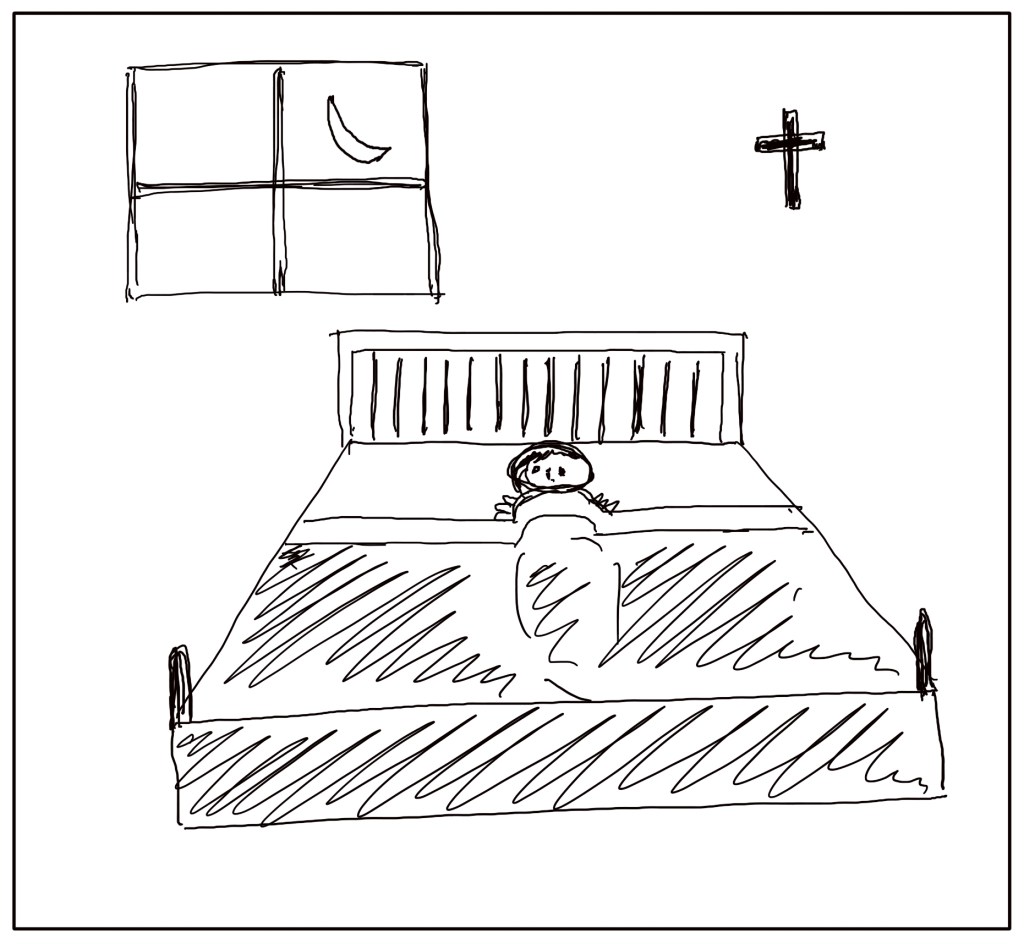
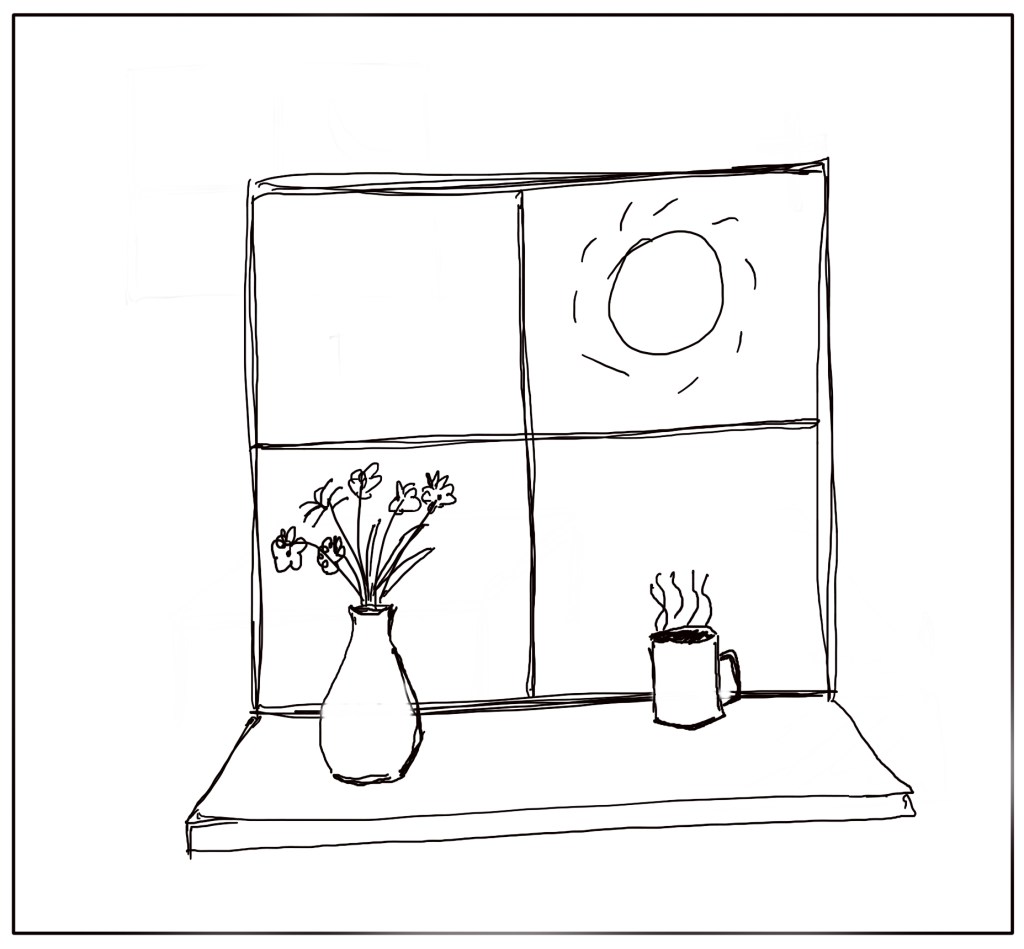
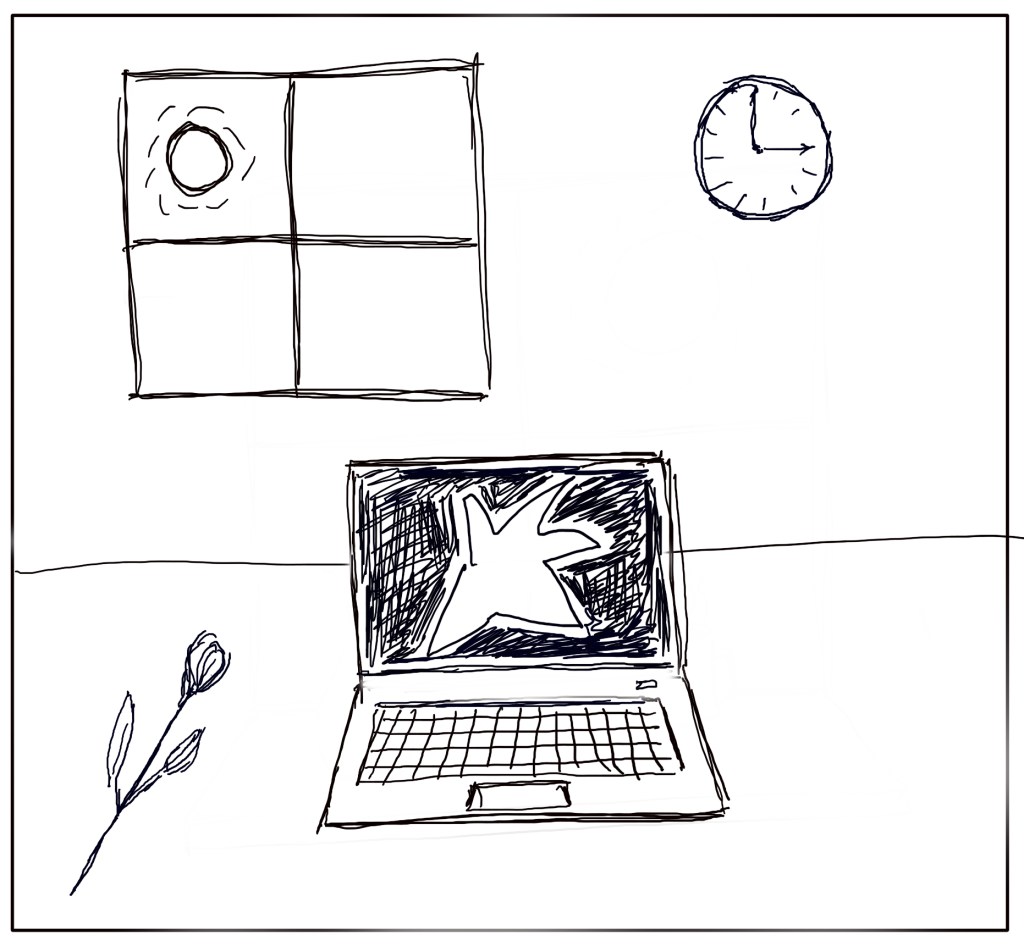

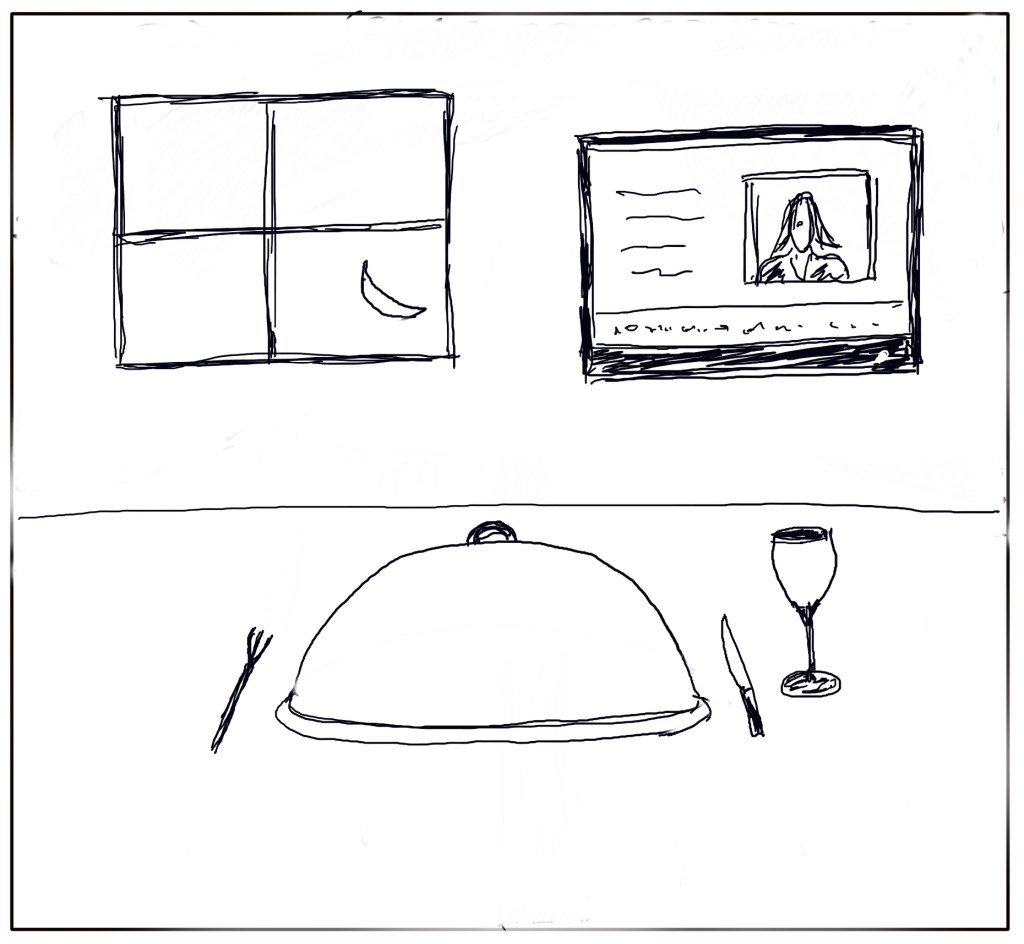
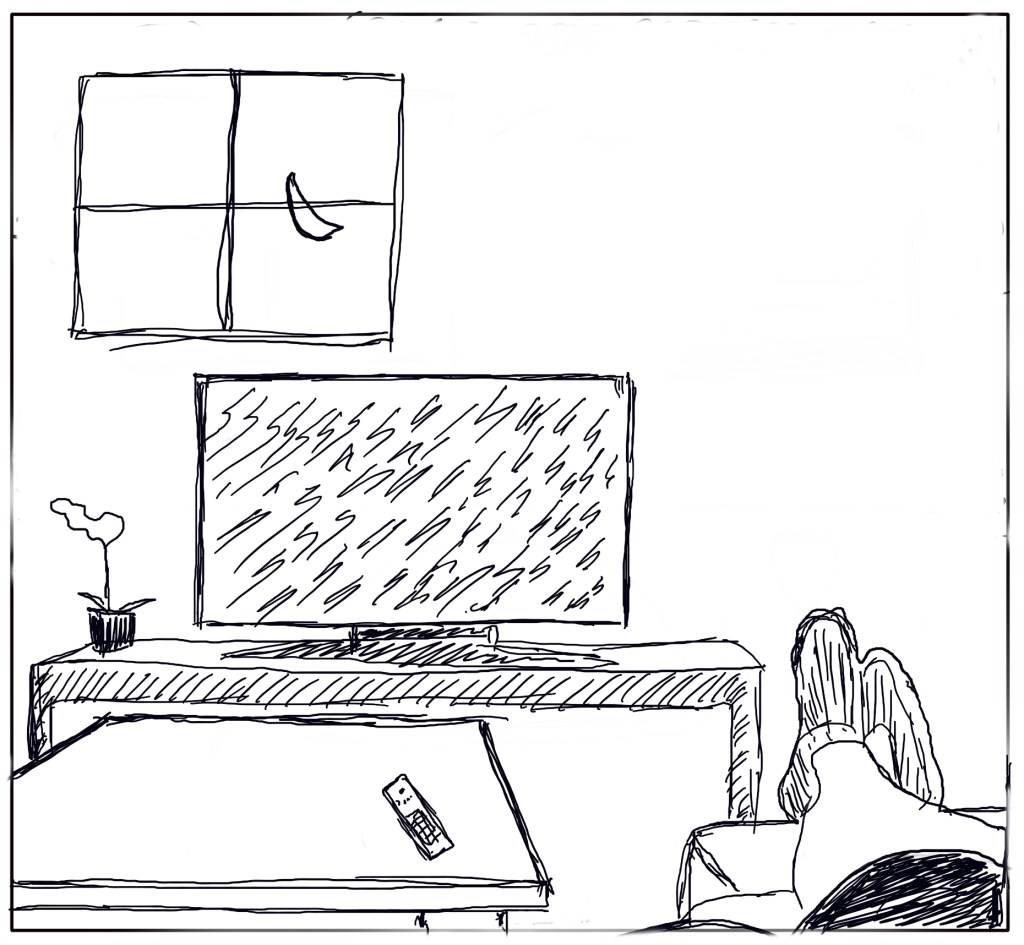

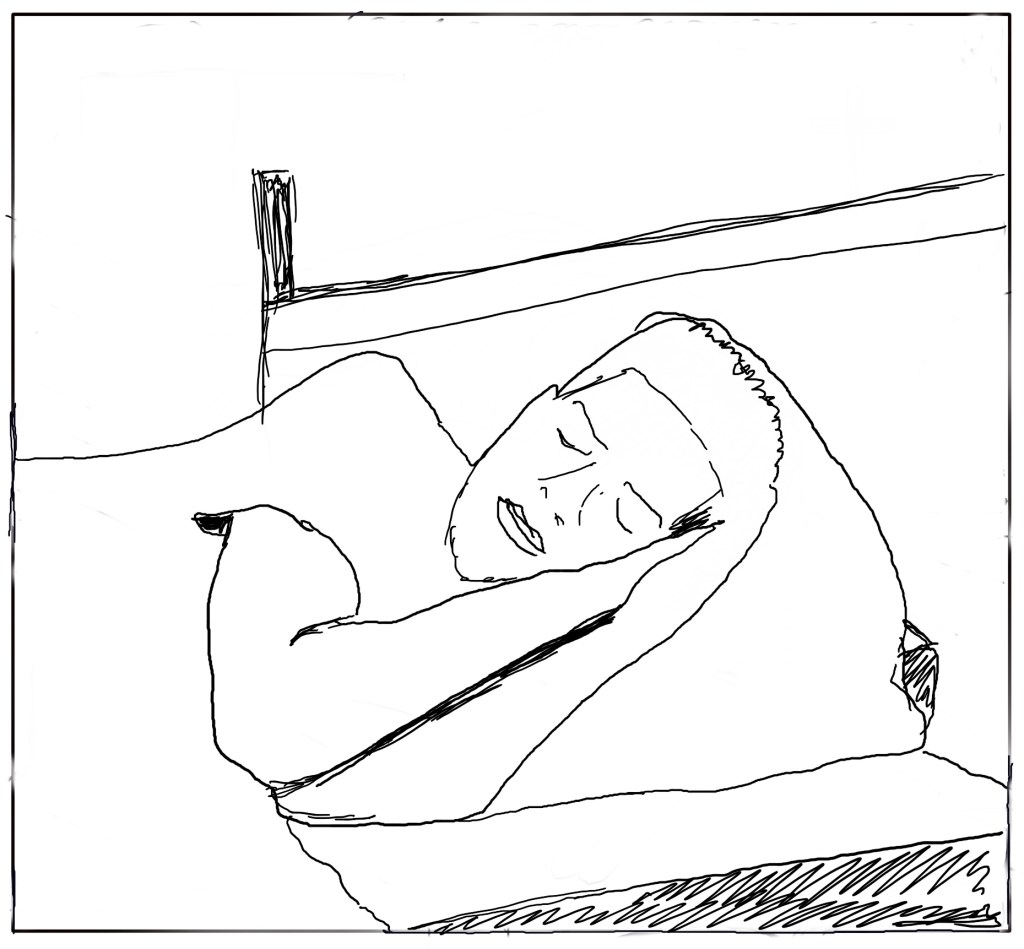
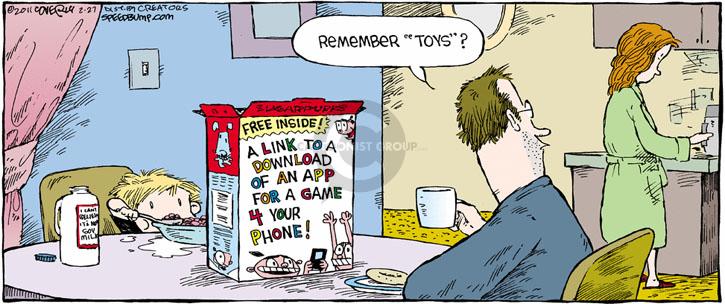
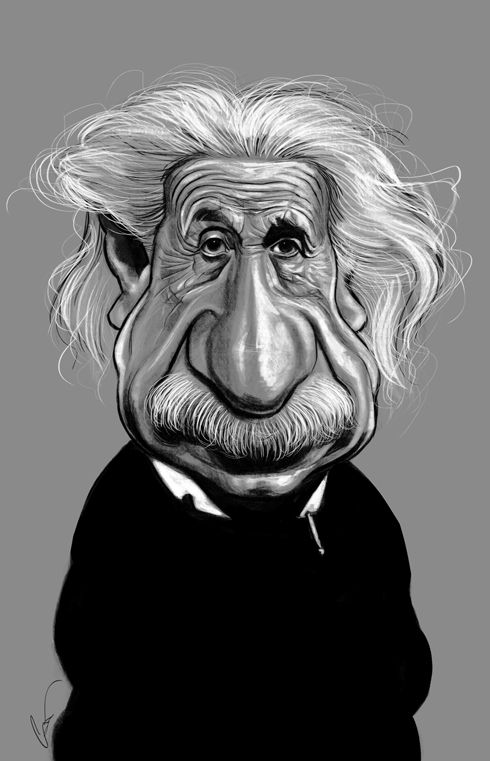
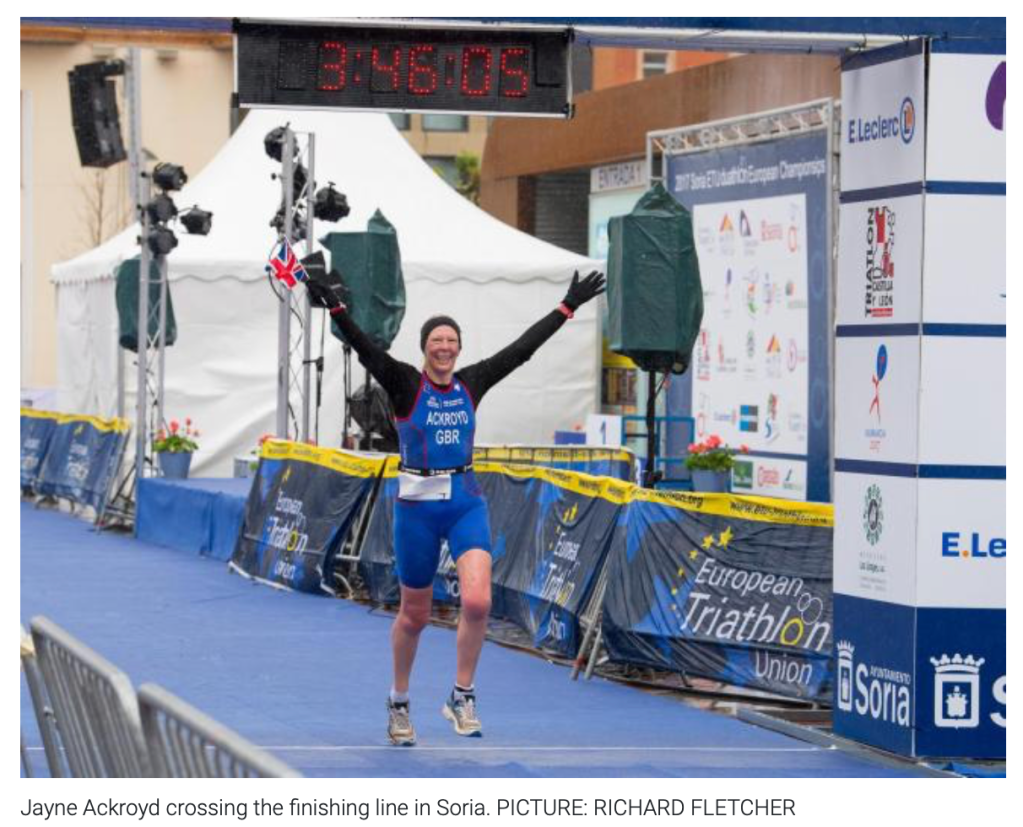
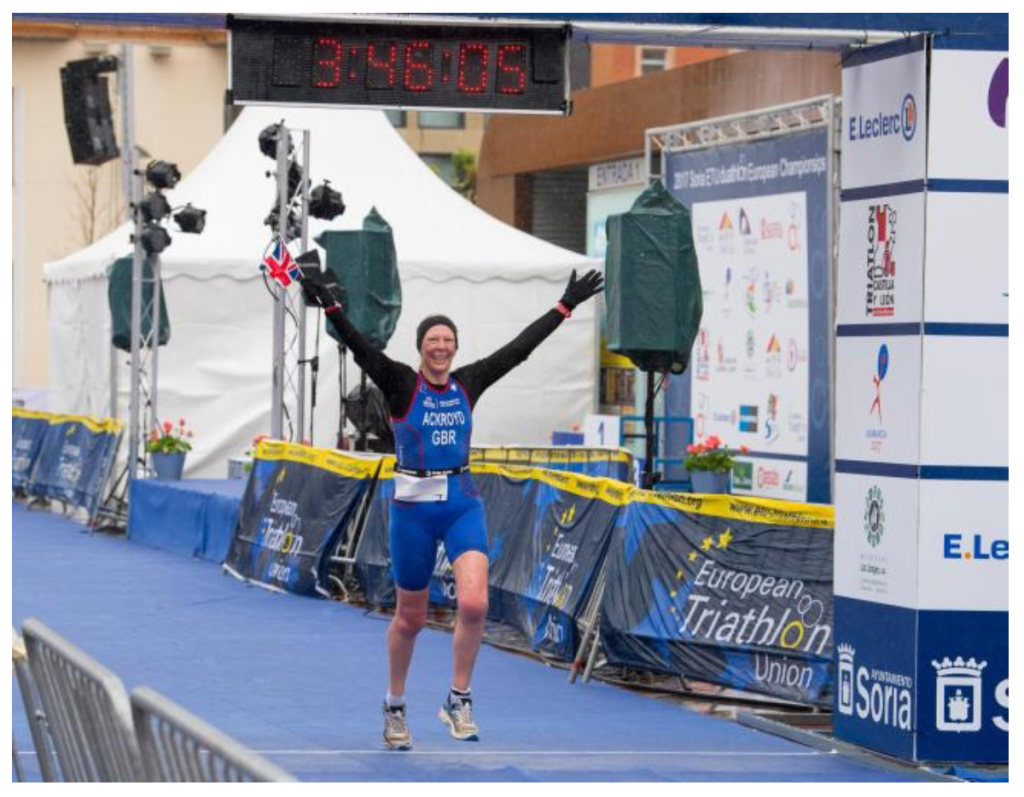
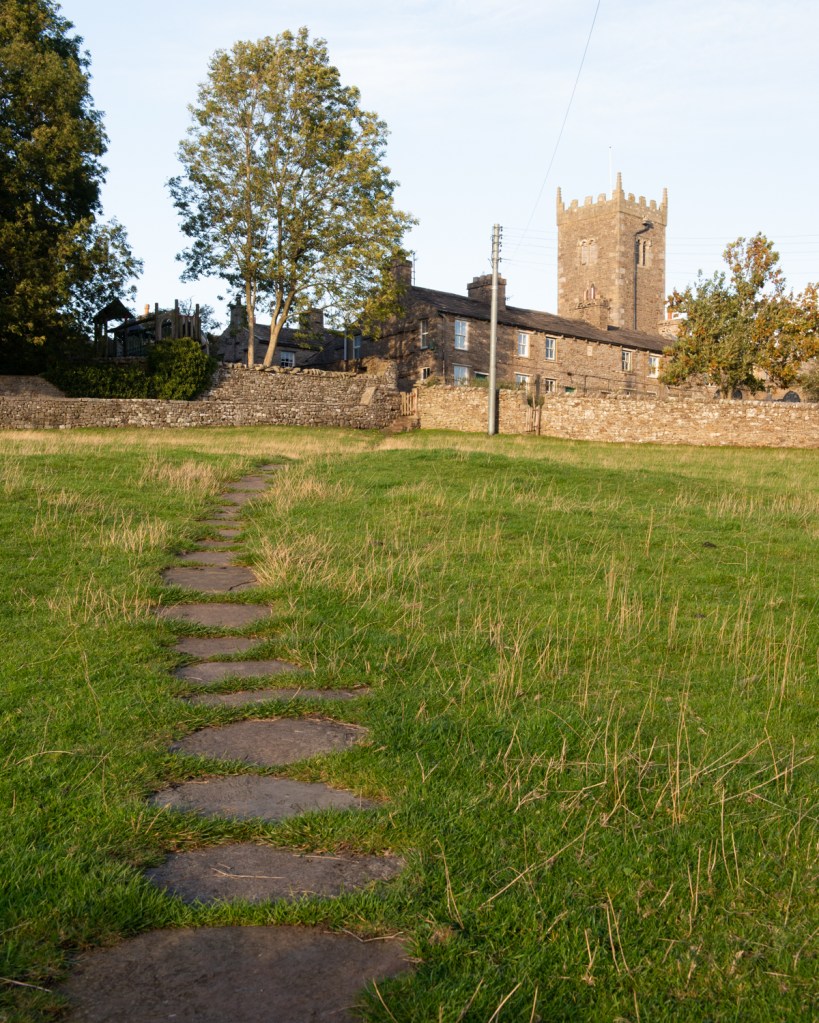
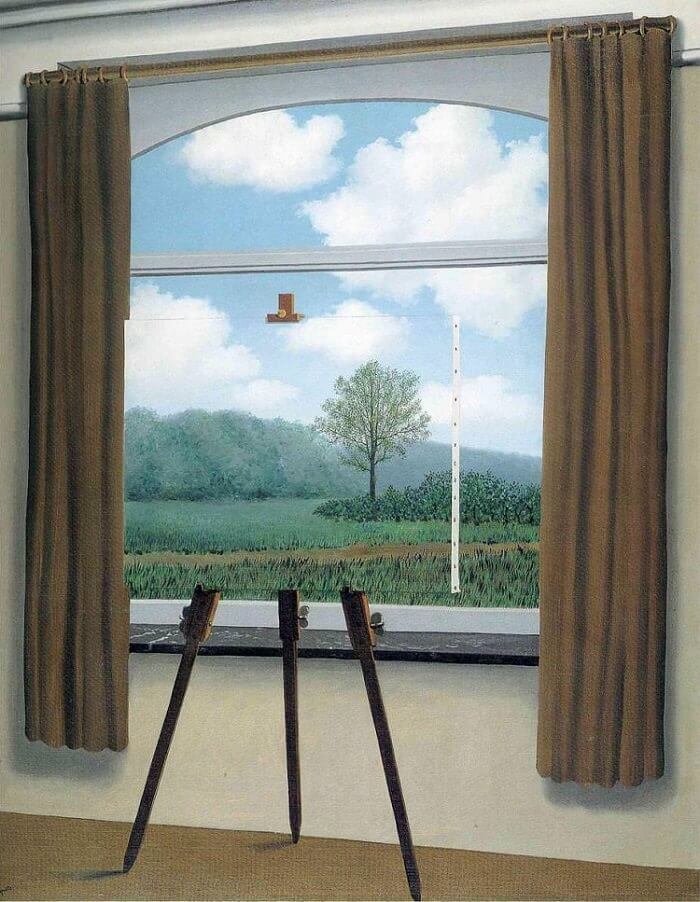


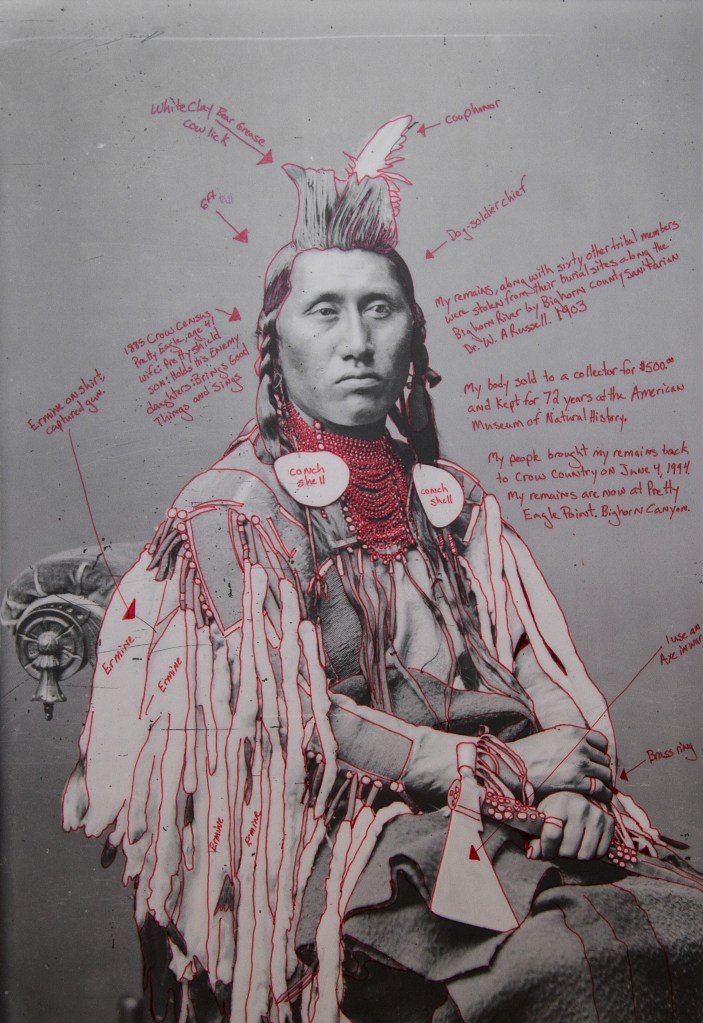

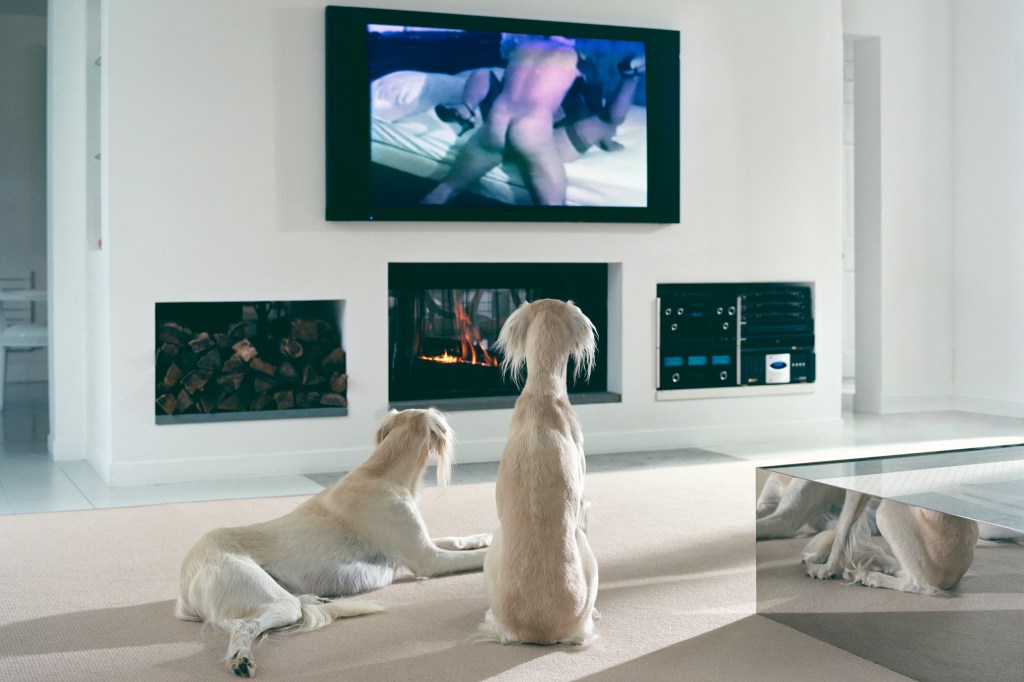

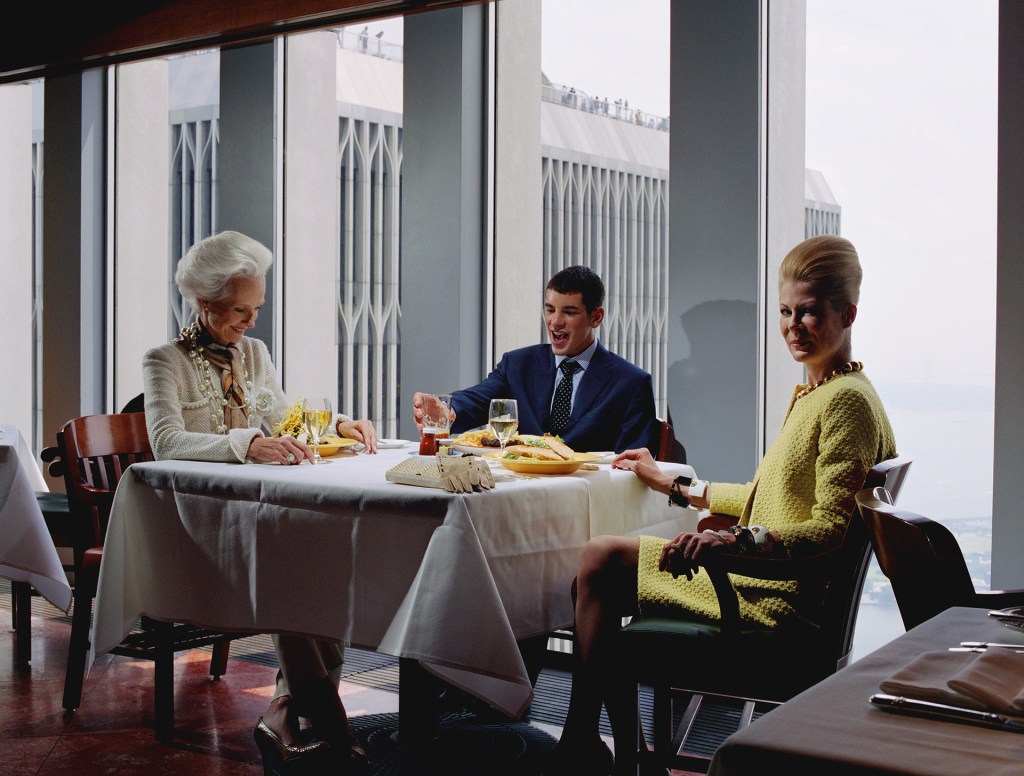
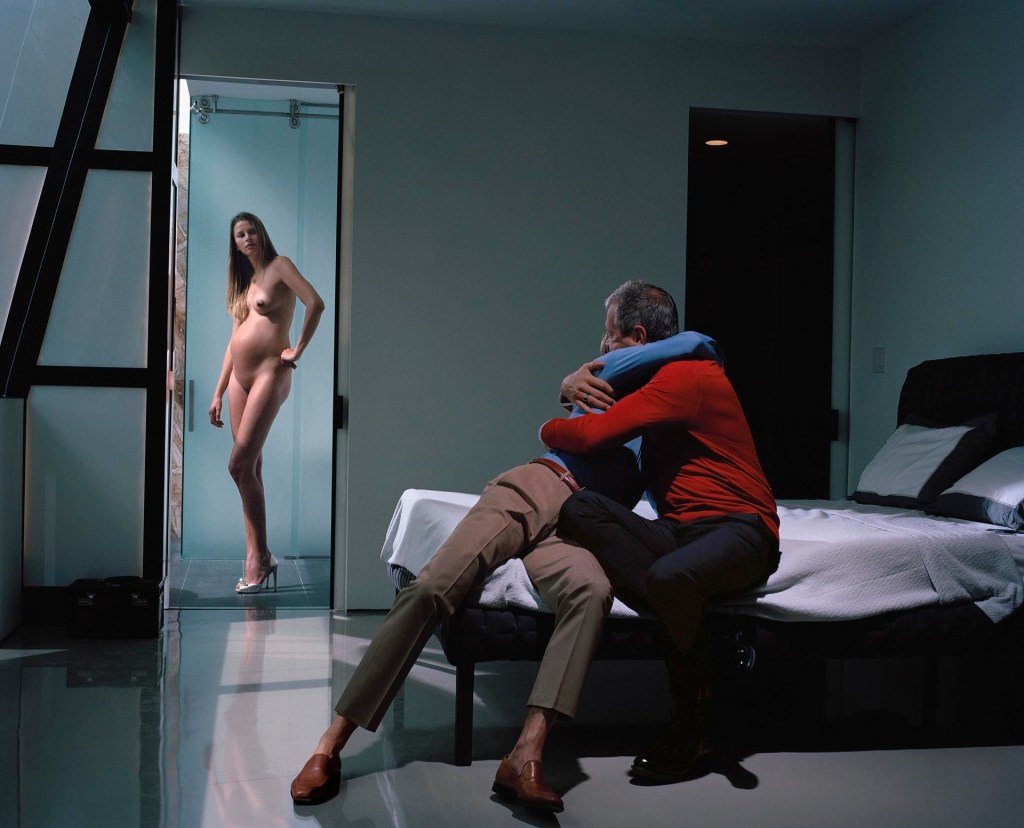
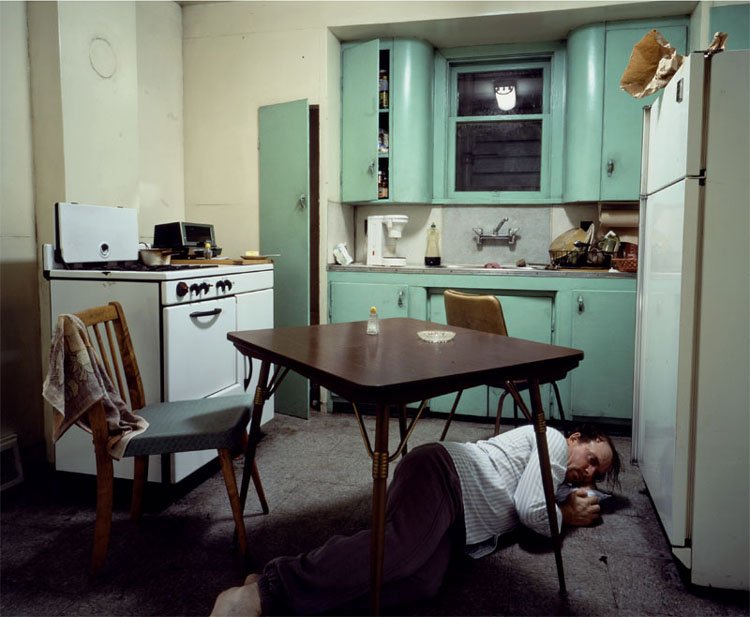

 Richard Fletcher OCA Photography Blog