Category Archives: Part 3

Research Task: Elina Brotherus

Watch this video of a talk Elina Brotherus gave about her work to OCA students on the student website:http://weareoca.com/photography/elina-brotherus-student-talk/

Review

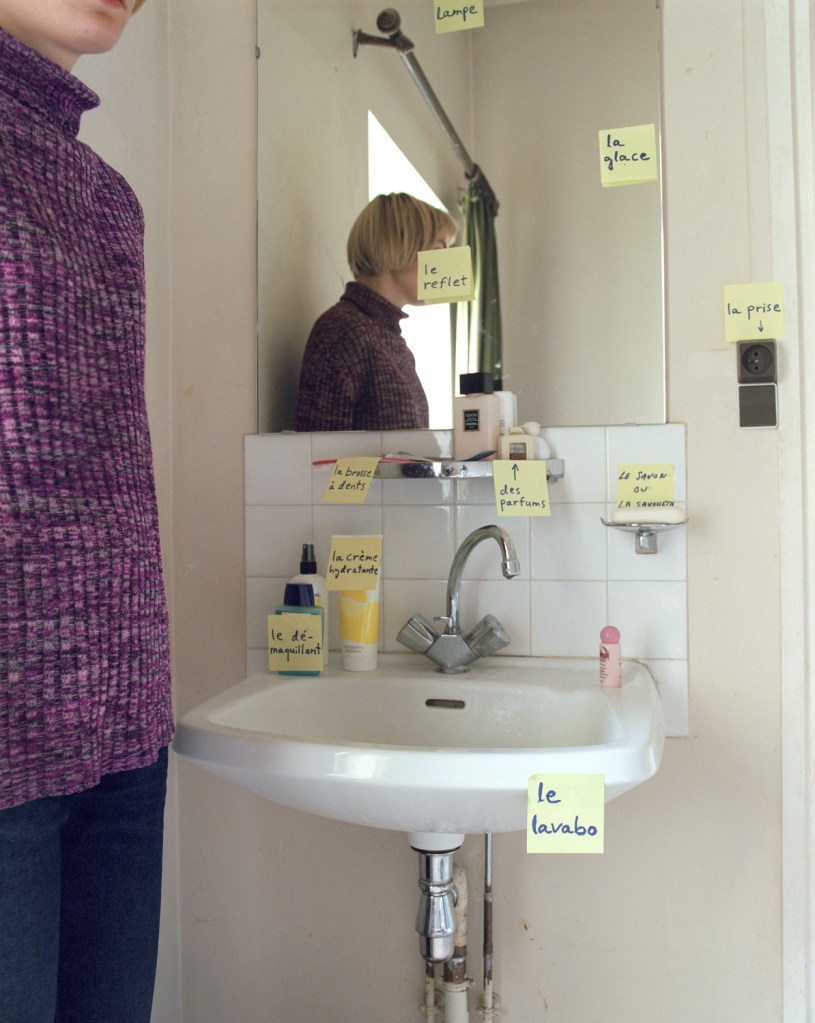
This video highlighted a couple of points for me around how Brotherus, an artist we first encountered in Context and Narrative, approaches her portraiture work. We know from the course notes that her series Suites Française was a documentary about her arriving in France without being able to speak the language and that her chosen process was to use Post-It notes as a learning aid. What I hadn’t realised was the use of film photography introduce the element of ‘random success’ when it came to Brotherus’s placement of herself in the image. For example, she highlights in the video that the placement of the post-it with Le Reflet (mirror) written on it was more luck than judgement. The way that the note covers her face is perhaps the strongest element in the image, even though the composition was intentionally representing the sense of isolation from the artist’s environment and language. Brotherus uses herself as the alien figure in the photograph and blends that emotion with the stark reality of the bathroom. The reason this was significant was that Brotherus made the point that she believed it to be better to work than overthink the idea. She suggested that the curation of a piece of work can be better achieved in review when the photographs are being selected and edited. Indeed, the Suites Française work was revisited many years later and culminated in the series 12 Ans Apres. As the title suggests, the series was revisited 12 years later when Brotherus returned to the location of her artist residency in France. The updated series now reflects on how different Brotherus’ life is in the same context as before. The labels have either been replaced by lengthy narratives in French or completely removed as in the case below.

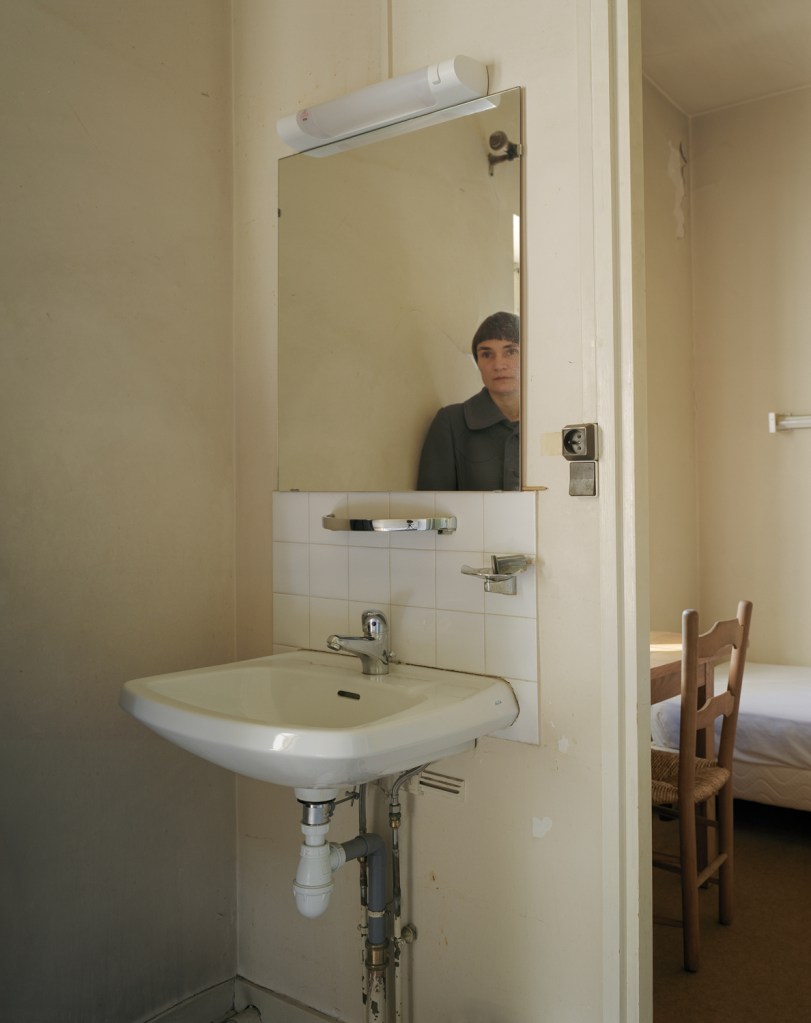
In the later version of Le Reflet, we see the same bathroom from a different perspective that shows a small area of the bedroom beyond the doorway. The sink is almost identical with the exception of the plumbing and taps and Brotherus is leaning against the same wall but this time looking at her reflection in the mirror. While there are many interpretations of these two images, Brotherus mentioned that she saw this work as a reflection of where she is now as a person against how she was when the original series. She went on to read one of the new Post-It notes that now contained what she calls a ‘position statement’. The statement reflected on how her life has turned out, both in terms of expectations that she met and things that didn’t go as expected. From what we know about Brotherus’ intervening work about her problems trying to have a family and her health issues that followed, this was a poignant statement that she made. Including it in the series as text further emphasises the mirror of her experiences. Later in the Q&A, she talked about using herself in landscape and the way that she wanted to invite the viewer to join her in appreciating the space. That shared experience is another example of the use of ‘mirror’ rather than a simple representation of what is present in the scene.

Conclusion

I enjoyed the video as it revealed these points that I had not really appreciated until recently. The act of shooting around an idea and being concerned with the way the series comes together afterwards is perhaps at odds with what we would expect. The idea of writing a position statement to establish what life is like in the present moment could be a useful tool when working on a series about myself. Assignment 3 may be a mirror so I will be looking into using it there. I’ve admired Brotherus’ work since we were introduced to her in the previous course, so listening to her talk about her creative process and using herself in the photographs is inspiring me to consider mirror as my answer to the brief for the next assignment.

References

[1] Brotherus E, 2015, “12 Ans Aprés”, Image Resource, Artist Website, http://www.elinabrotherus.com/photography#/12-ans-apres/

3) Exercise 1: Mirrors and Windows

Go through your photographic archive and select around ten pictures. Separate

them into two piles: one entitled ‘mirrors’ and the other entitled ‘windows’.

  • What did you put in each pile and why?
  • Did you have any difficulties in categorising them?You may like to repeat the exercise with some different images and record your responses. It would be interesting to see you place the same image in both camps and review your reasons for doing so.

The Images (unsorted)

Mirrors

M1
M2
M3
M4

Windows

W1
W2
W3
W4
W5
W6

How I chose to categorise the photographs

M1: this was shot during the first lockdown. A local antiques shop dressed the bears to be humorous but also as a reminder of the new restrictions on social distancing. For me, this is a mirror because I was definitely feeling the anxiety of how COVID might develop. In shooting this picture, I was expressing my own fears and my sense of humour that was trying to combat them.

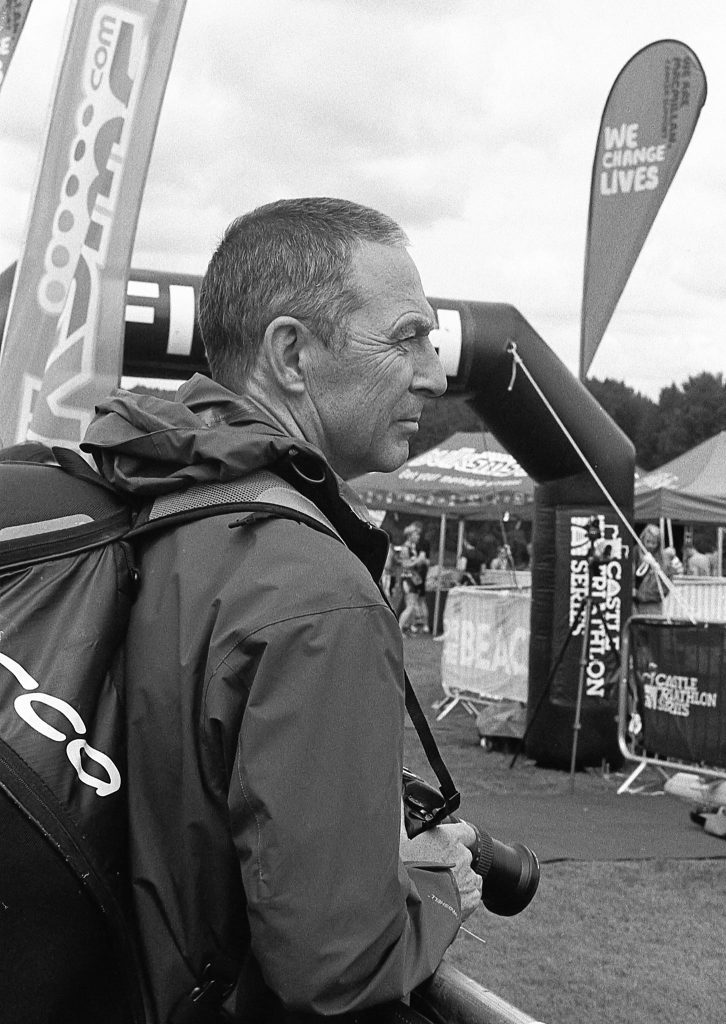
M2: this is a mirror because it shows it represents my own experiences as a sports supporter and photographer. The subject’s staring expression as he waits for his wife to come into frame is something that I am very familiar with.

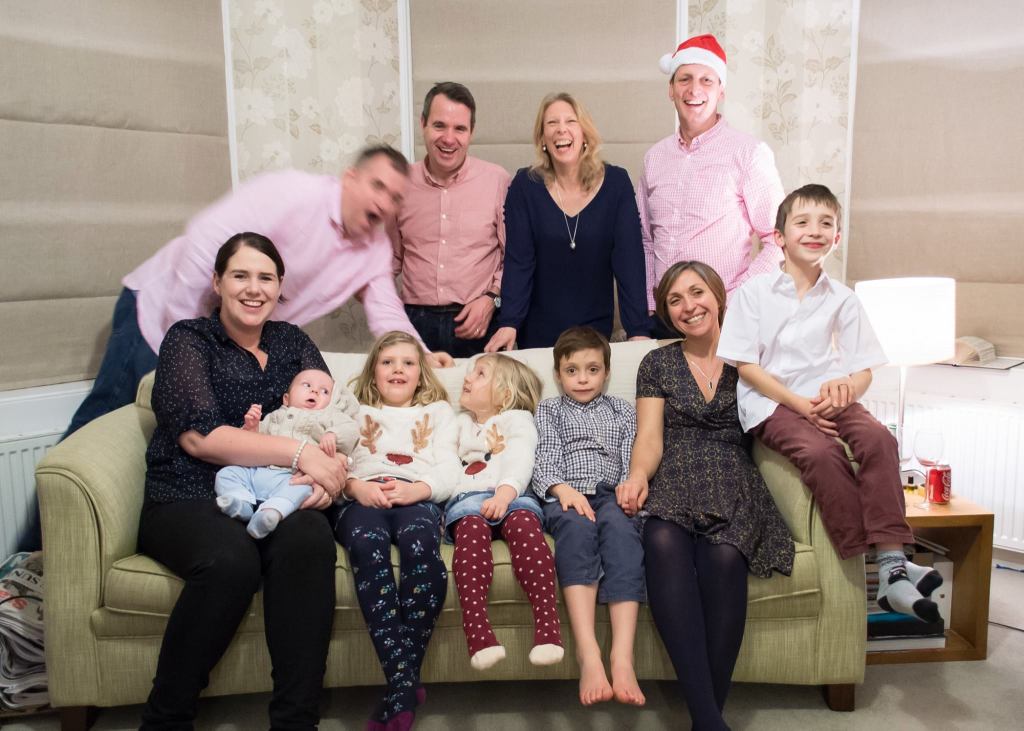
M3: this is a more obvious selection as a mirror because it is a family portrait that I am in. When I look at this picture, I naturally see my struggle to get in the frame (I got stuck between the radiator and sofa), but also the interplay between the members of my family. The image reflects my feelings of love and humour for my family

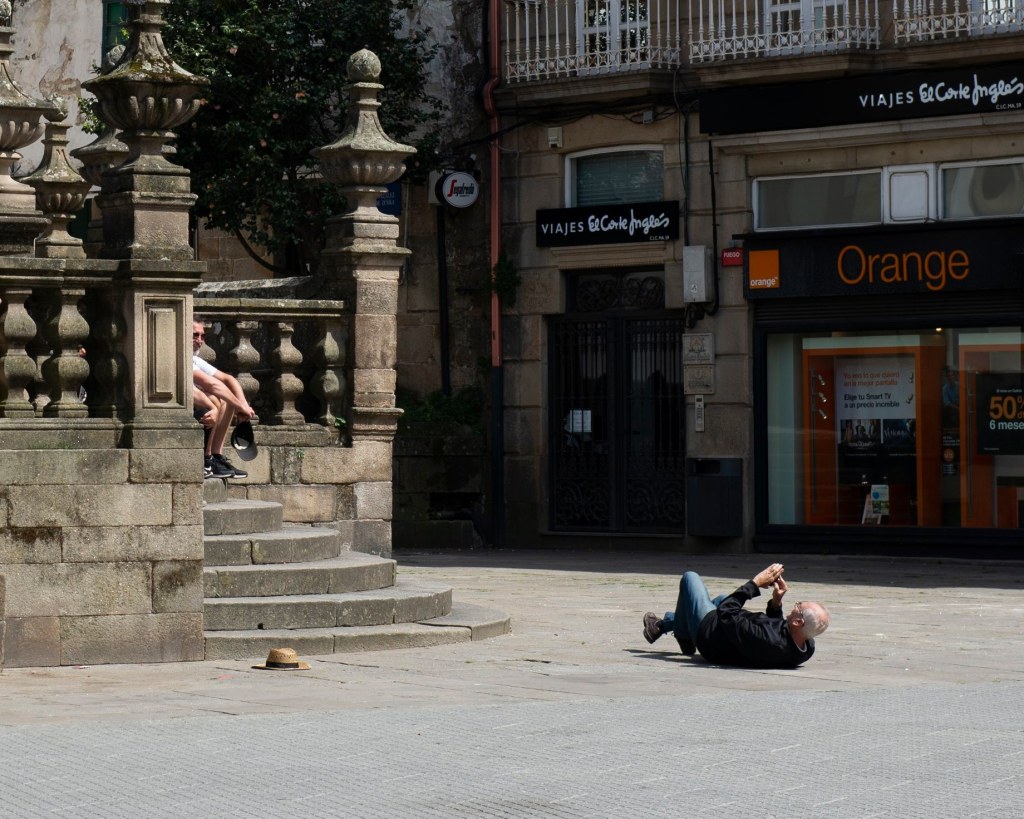
M4: this shot was selected as a mirror because if the way I was part of the scene as a tourist. Most people were taking conventional, even boring photographs of the cathedral, but this man decided to mix things up. I chose it as a mirror because I don’t have that natural sense of inhibition so it almost reflects how I would like to be in a photography situation.

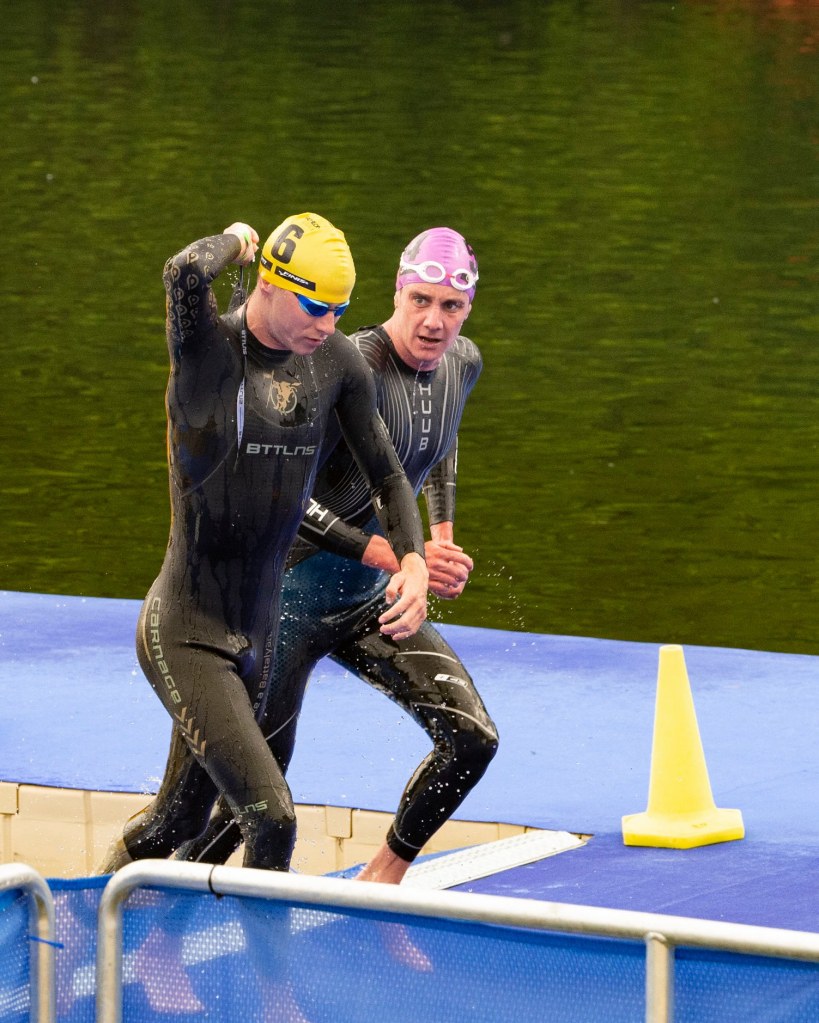
W1: I chose this shots as a window because it shows the Olympic triathlete Alistair Brownlee remonstrating with another competitor during a recent race. I had picked up on the story that Brownlee had clashed with someone in the water and the rumour was that the offence got him disqualified. This shot is a window into the immediate aftermath of that incident as both athletes left the lake and a documentary shot of the drama unfolding.

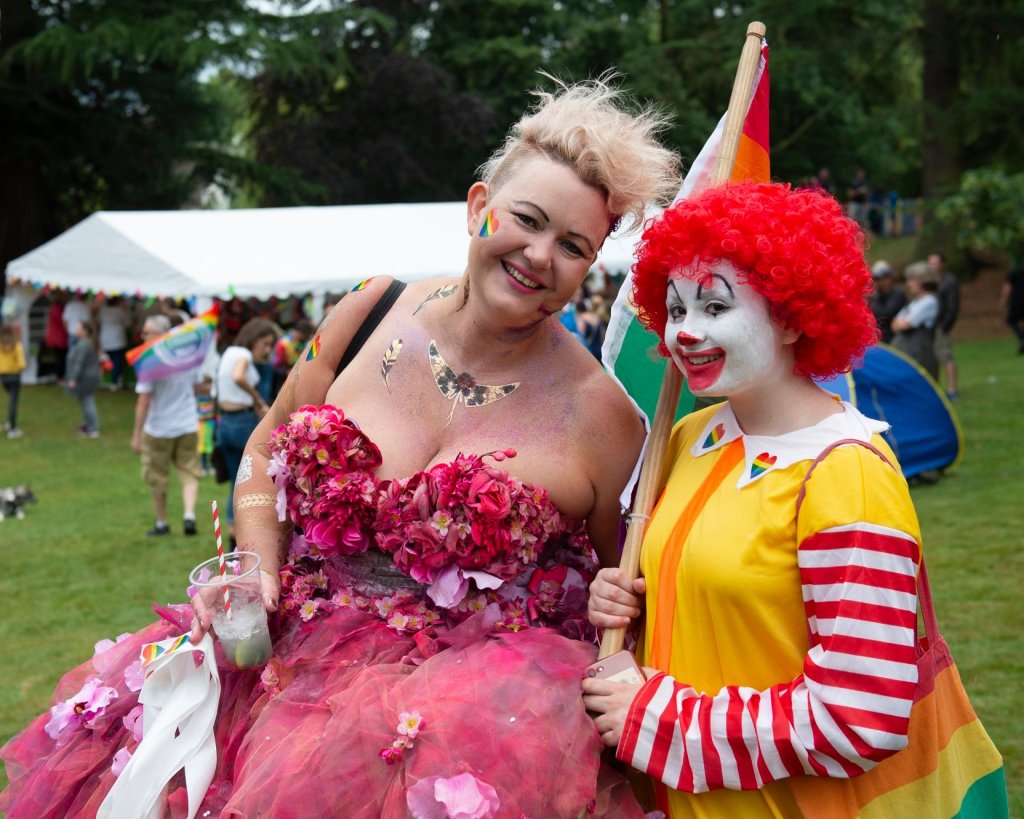
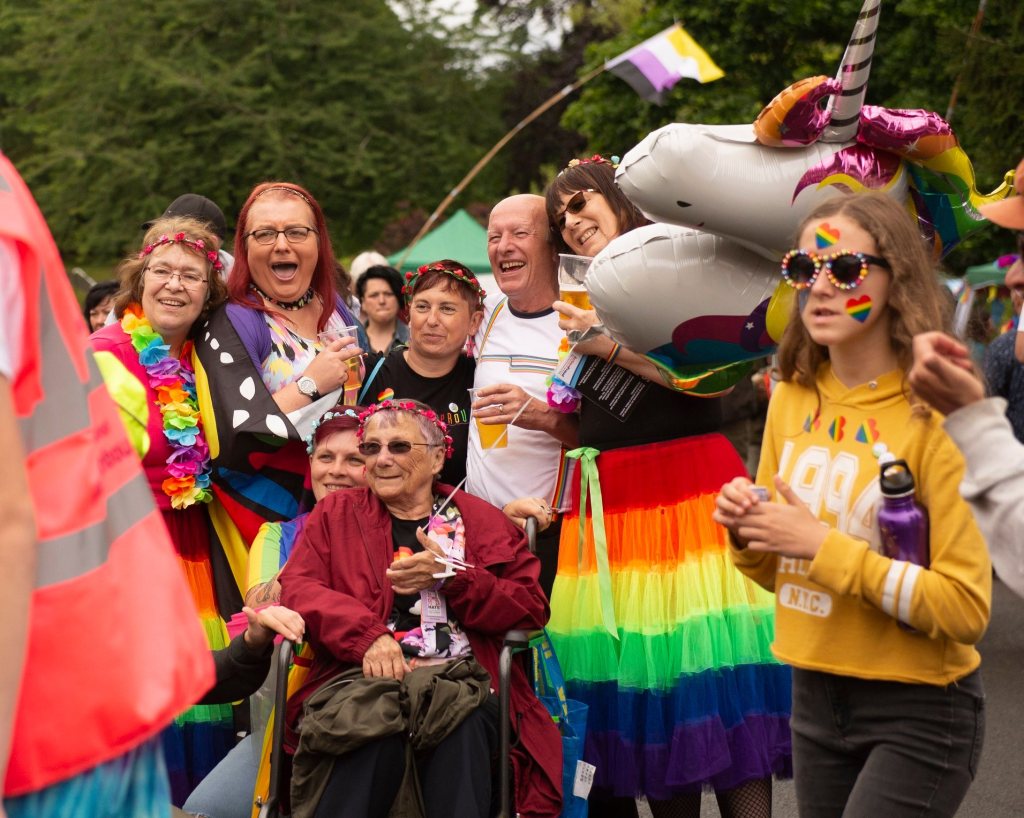
W2: I chose this shot from Malvern’s first Pride event in 2019. It’s a window because as a straight person, I cannot really relate to Pride in the same way even though I appreciate how important it is. With this sense of being an observer, I look at this picture and immediately get the sense of fun and joy of the day.

W3: this was shot at the same event. This wonderful couple were the most strikingly dressed at the event and I loved watching the way they engaged with the people around them. When they agreed to a picture, I recall being struck by their sense of joy and love for each other. Again, I related in the way that I did in W2.

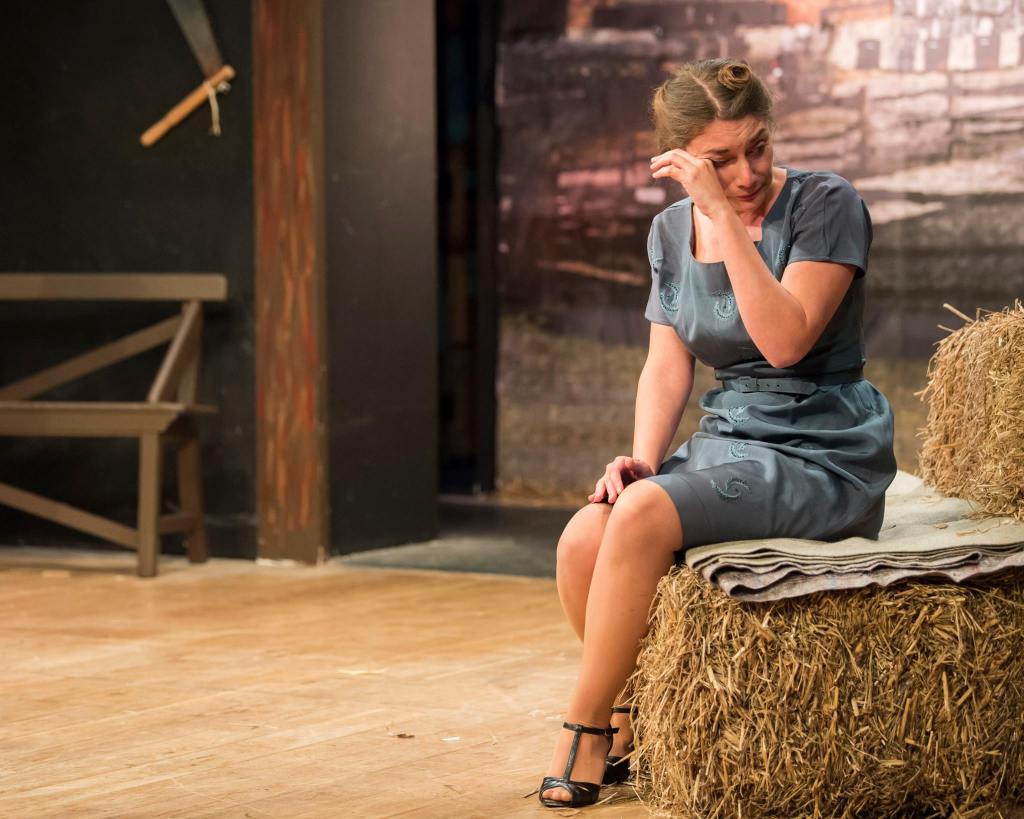
W4: This photograph was from a series taken at the dress rehearsal for a play. The shoot was formal and for use in publicising the production, so the contrast between this scene and my act of photographing made me think of it as a window.

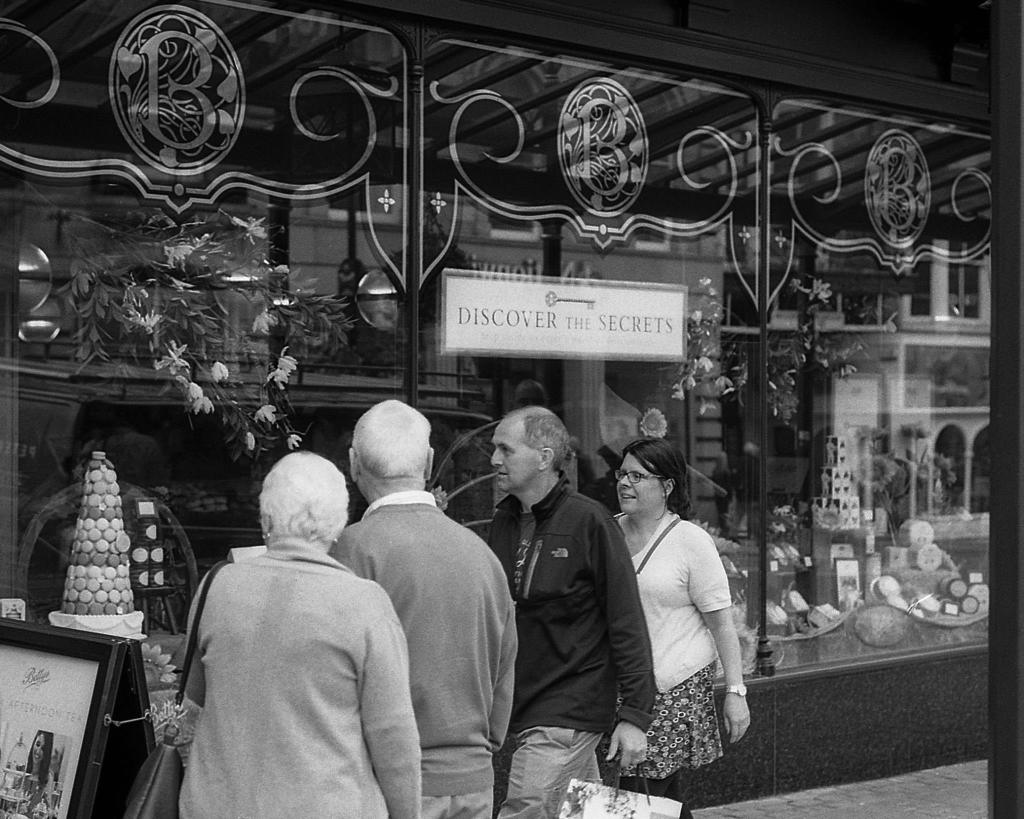
W5: this shot was an observed and shot in the ‘street style’. I was drawn to the people looking into the window of Betty’s Tearoom, Harrogate. as someone very familiar with the tearoom and the town, I was interested in how the window display lured people in. I saw this as a window because the composition includes context that shows the tearoom as a quaint piece of English history but nothing of how I see it as a Mecca for tourists.

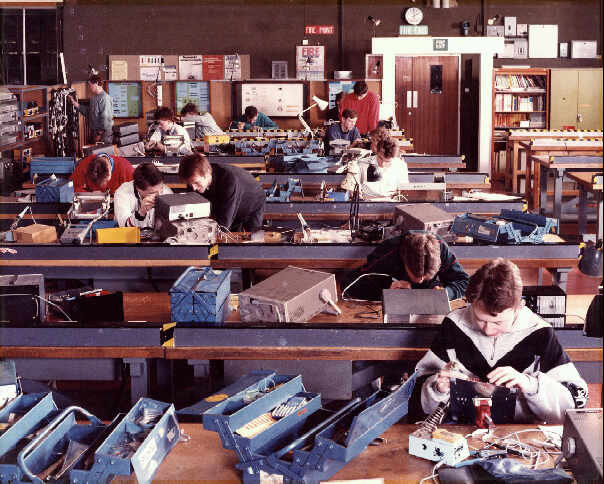
W6: this final image was shot taking in 1990 when I was an engineering apprentice. I am in the photograph but saw the shot as a window into our daily lives, which was certainly the intent of the photograph. It was used to document a specific part of the history of the site and since my rescuing it in 2000 before the building was demolished, it has been used by various historical bodies as part of local history exhibits.

Challenges in the selection

This was an interesting exercise as there are many interpretations of mirrors and windows. Some of these shots were easy to select, for example M3 being a representation, albeit accidental, of the closeness of my family and my place within it. However, the shots that caused me difficulties were M1, W3 and W4. When I saw the bears in the window, it prompted me to reflect on my own concerns about COVID, which is why I took the picture. However, I didn’t make any effort to represent my fears in the image, instead just capturing the contextual elements that stood out. The idea of social distancing was new but the inclusion of the gas masks, which connotes the invisible threat in historical terms, makes the image a powerful one. However, somebody else viewing the image wouldn’t necessarily recognise my intent for the picture. Similarly with W3, I was struck by the love and affection between the two women which I believe is represented in the image. My intention was to represent them in the context of our first Pride event, but someone with homophobic views might interpret the picture as a mirror for prejudice i.e. ‘look at how weird these people are’. There is nothing in the photograph that directly leads the viewer to my intent. With W4, the impact of the play’s theme and the intentional suspension of reality that is associated with fictional drama lead the viewer to relate to their own experiences. I ask myself why I shot this particular moment and the answer is most likely because like most people, I’ve experienced the pain of a failed romance (the context of the scene). Perhaps in shooting the isolated girl wiping tears from her face, I am relating to my own experiences and influencing the overall look of the picture.

I found this exercise interesting because I would question the assignment of ‘mirror’ or ‘window’ as a label for another artist’s work. As the course notes indicate, there is no clear assignment of these ‘categories’ and the blurring of the two is driven by the perception of artist’s intent by the viewer. As with W3, the way the photograph is interpreted depends not only on what I saw when I asked the women for the portrait, but also on whether the image is part of a series about Pride and the viewer’s preconceptions about the event and the gay community. I was trying to represent their personalities and love for each other, but this could just as well take a darker meaning related to prejudice and fear of being different. I intend to look more closely at Szarkowski’s theory in a learning log post.

3) Exercise 3: Childhood Memories

The Brief

Recreate a childhood memory in a photograph.  Think carefully about the memory you choose and how you’ll recreate it. You’re free to approach this task in any way you wish.

  1. Does the memory involve you directly or is it something you witnessed?
  2. Will you include your adult self in the image (for example to stand in for your childhood self) or will you ask a model to represent you?  Or will you be absent from the image altogether?  (You’ll look at the work of some other artists who have chosen to depict some aspect of their life without including themselves in the image for the next project).
  3. Will you try to recreate the memory literally or will you represent it in a more metaphorical way, as you did in Part Two?
  4. Will you accompany your image with some text?
  5. In you learning log, reflect on the outcome.  How does the photograph resemble your memory?  It is different from what you expected?  What does it communicate to the viewer?  How?

It might be interesting to show your photograph to friends or family members – perhaps someone who was there at the time and someone who wasn’t – and see what the image conveys to them.

The Memory

I’m not sure how, but I immediately settle upon a memory from my childhood when reading the brief for this exercise. I had a wonderful childhood as part of a family of 4 and then later with the arrival of my little sister.  Although I was a very anxious child, I remember thinking throughout the early 1980s that we were a lucky family.  My parents were good to us, Dad had a good job and we lived in a beautiful Cotswold town.  The memory that I guess shattered this illusion was when my parents decided that I needed fairly major dental work to straighten my crooked teeth.  I may have been given a choice but I was 12 years old in 1985, so probably didn’t know what was going to happen to me.  I was taken to the dentist and was determined to have too many teeth overall.  I had 4 removed and a removable retainer fitted to straighten the rest out.  My overwhelming memory on returning home was total hopelessness.  I couldn’t speak with the ‘brace’ in and eating was a challenge as removing it was initially painful because of the initial pressure it put on my teeth.  I lay on my bedroom floor listening to records and retreating into my own thoughts; the isolation and escapism that music offers when I am stressed remains with me to this day.  I still vividly remember the hopelessness of this new normal that I was expected to get used to for the next 2 years. Eventually I did get used to it of course and the brace became something I only really noticed when it was periodically tightened up.  I have been grateful to my parents in later life for having them sorted out when I was young, as more recently my wife has gone through similar as an adult, which is apparently even more difficult. 

First Idea

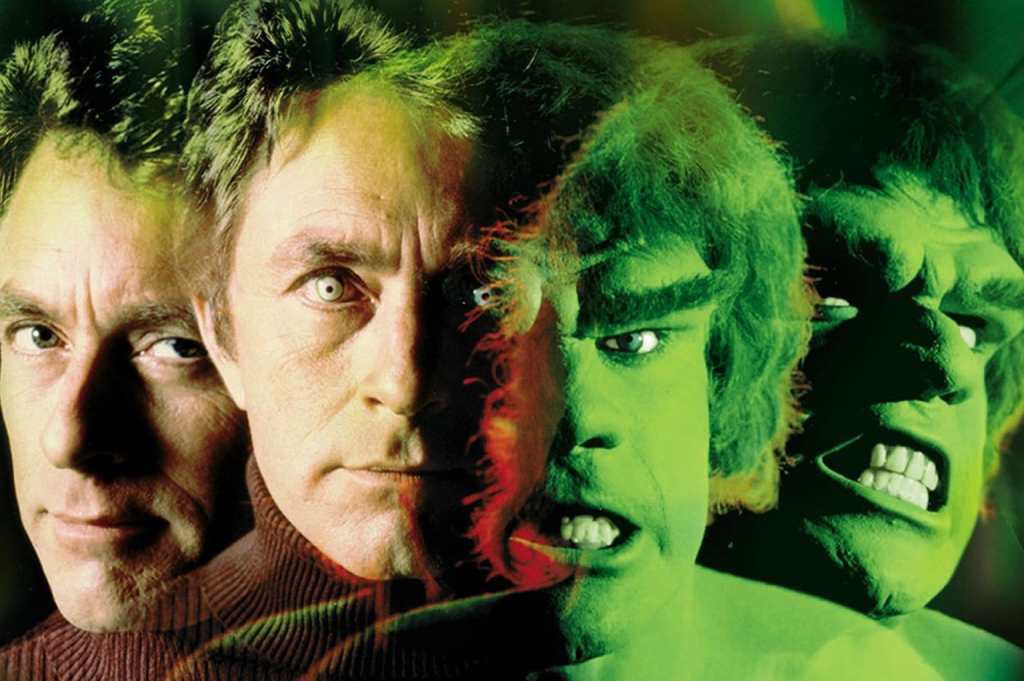
My first thought was to try to represent the change in my personality as a result of this traumatic event.  I remembered the transformations of the television series’ of my childhood, most notable Bill Bixby into Lou Ferrigno in the 1970s The Incredible Hulk.

Bruce Banner (Bill Bixby) transforms in frames into The Hulk (Lou Ferrigno) [1]

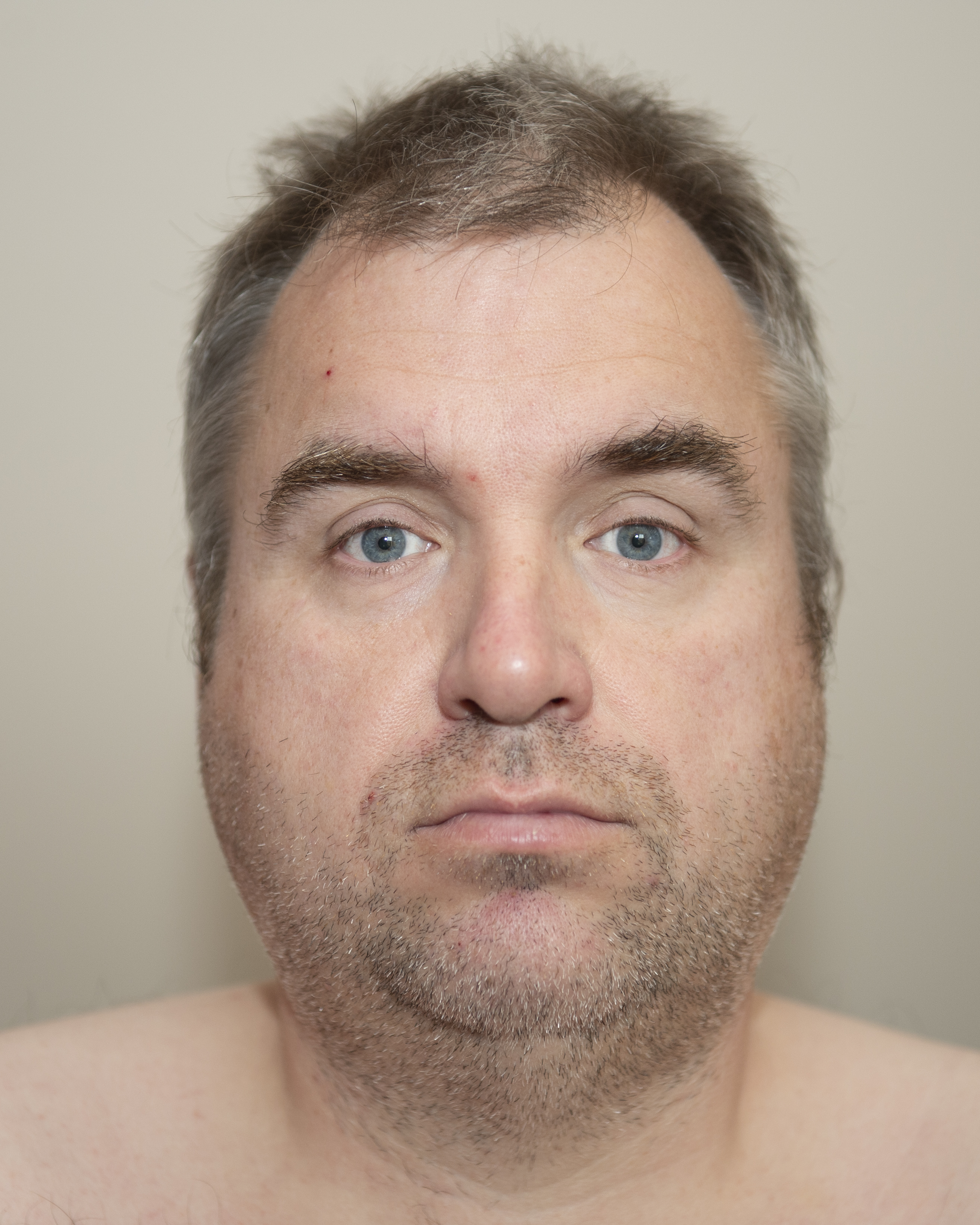
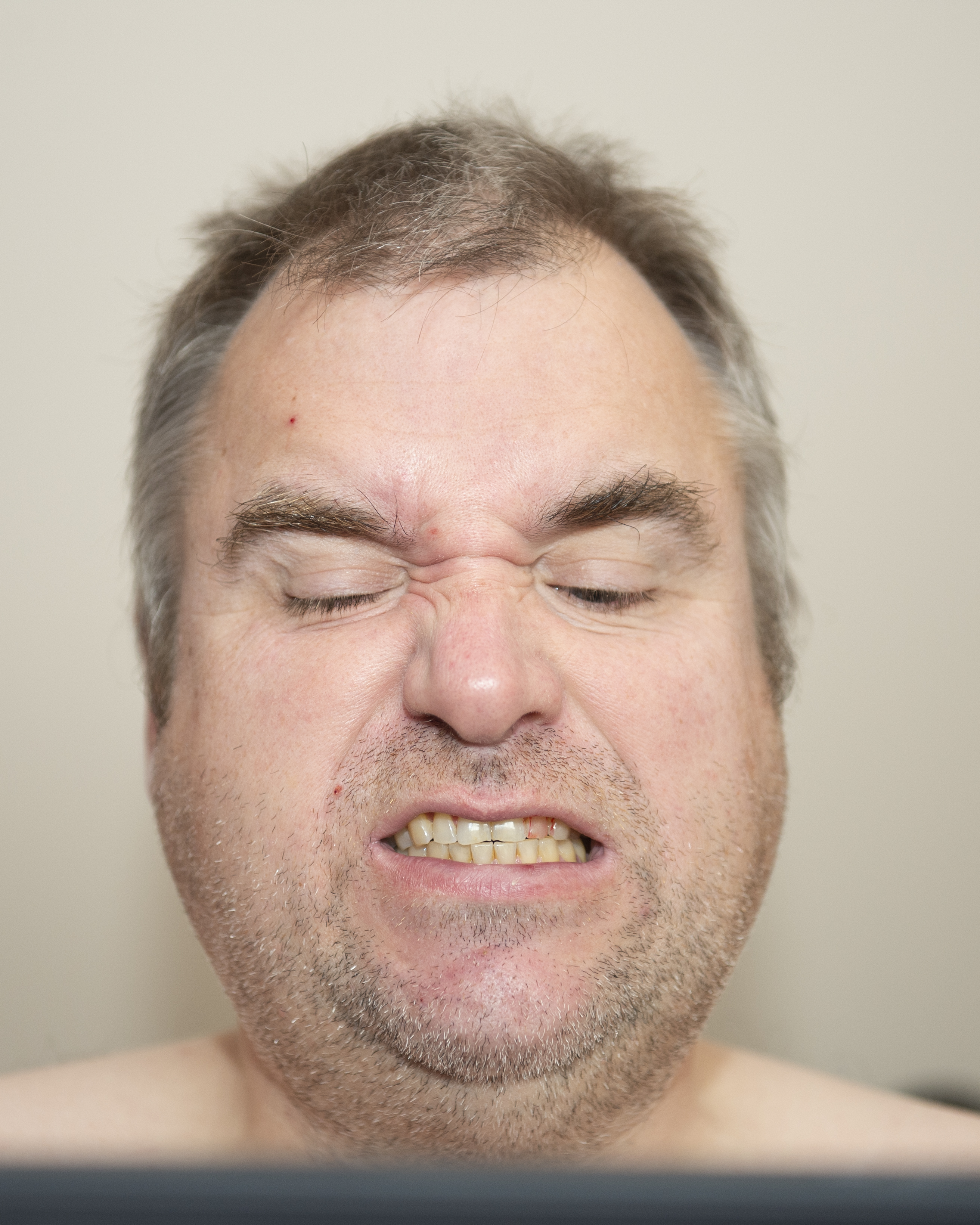
I had transformed into a relatively ordinary boy with anxiety problems to someone who never really sees the world optimistically; could I represent that in a single image? I started by shooting a number of simple self portraits with a view to manipulating them into a single frame in Photoshop later.

Although I was able to create different expressions and subsequently an impression of the transformation in each portrait, I struggled to see how I would incorporate them in a blended image.  I am not proficient in Photoshop as it isn’t a tool that interests me all that much.  My fairly recent move to back to film photography has led me to try to reduce the amount of post processing that I do, so Lightroom adjustments are the limit to my knowledge.  I experimented with Photoshop for an earlier exercise[2], but the time it took to learn the basics took away from the creative side of the exercise for me.

Second Idea

Once I had rejected the first idea, I paused this exercise to return to later. I was keen to progress to the Assignment 3 which was about Self Portraiture[3]. With hindsight, the learning that I did in the interim made returning to this exercise more rewarding. I had learned about how some artists play a part in their work rather than simply appearing as a traditional portrait subject and that in some cases, traces of context are used to help create narrative without being too obvious. With the completion of Assignment 3, I was also now much more comfortable in front of the camera than previously.

The second idea was to compose a scene that used props to suggest the nature of the event as seen through my now adult eyes. I wanted to include factual references about the evening after the dental work and the implied feelings that I experienced during that lonely first night. I would be play the part of the younger me in the composition.

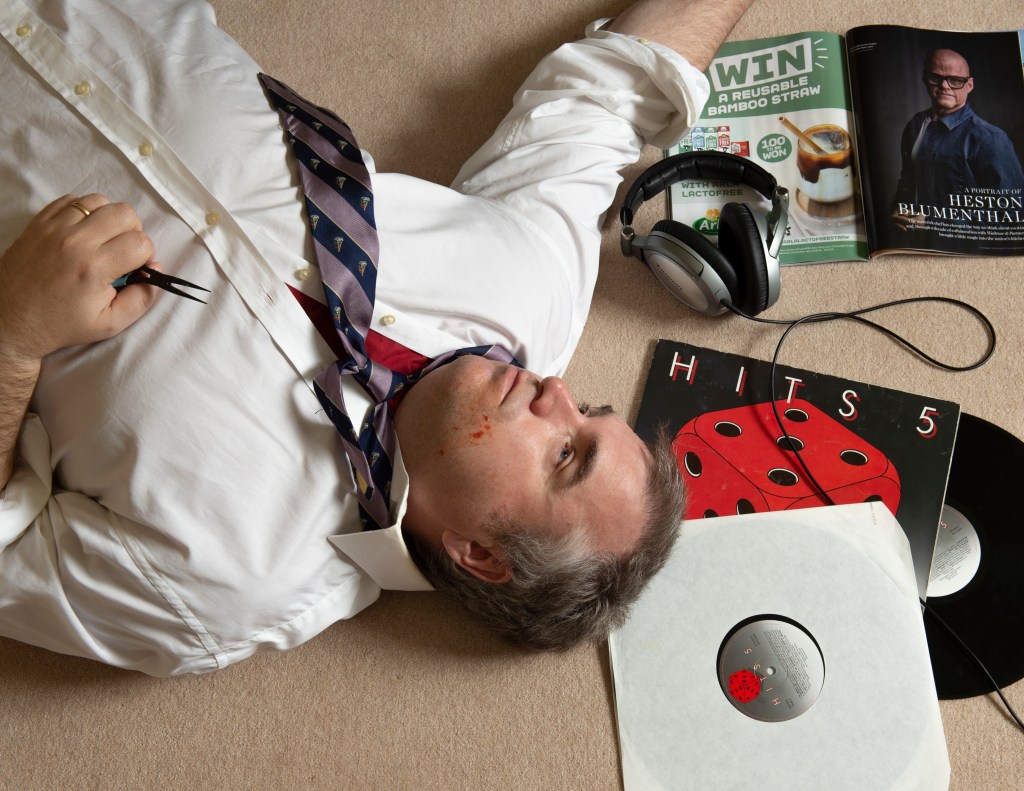
The Image

Intent and Reflection

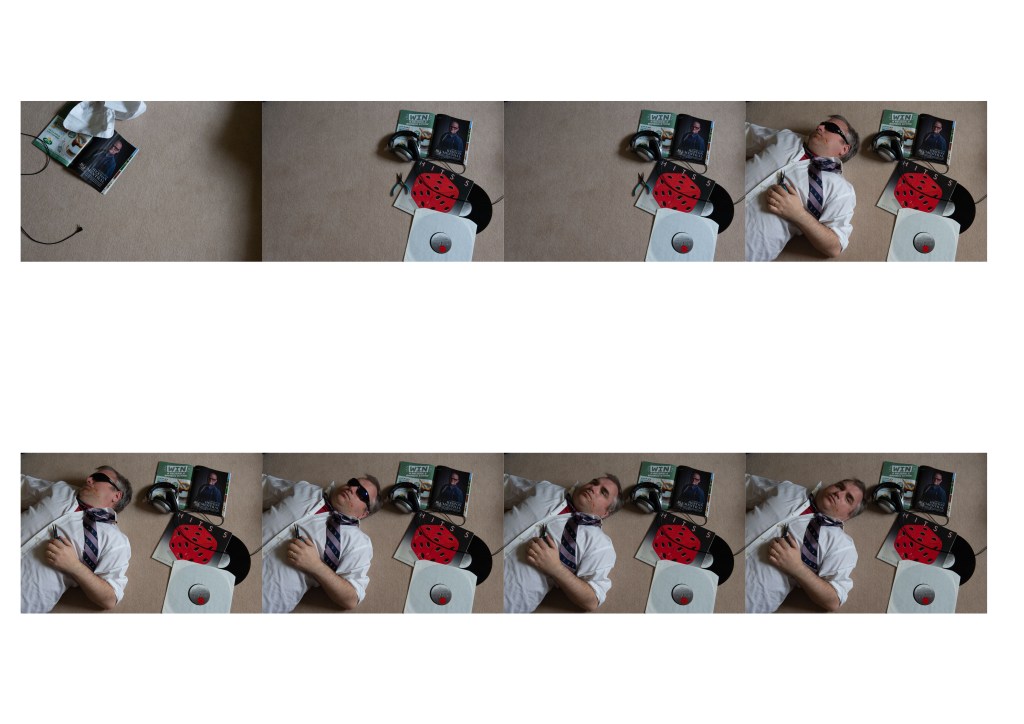
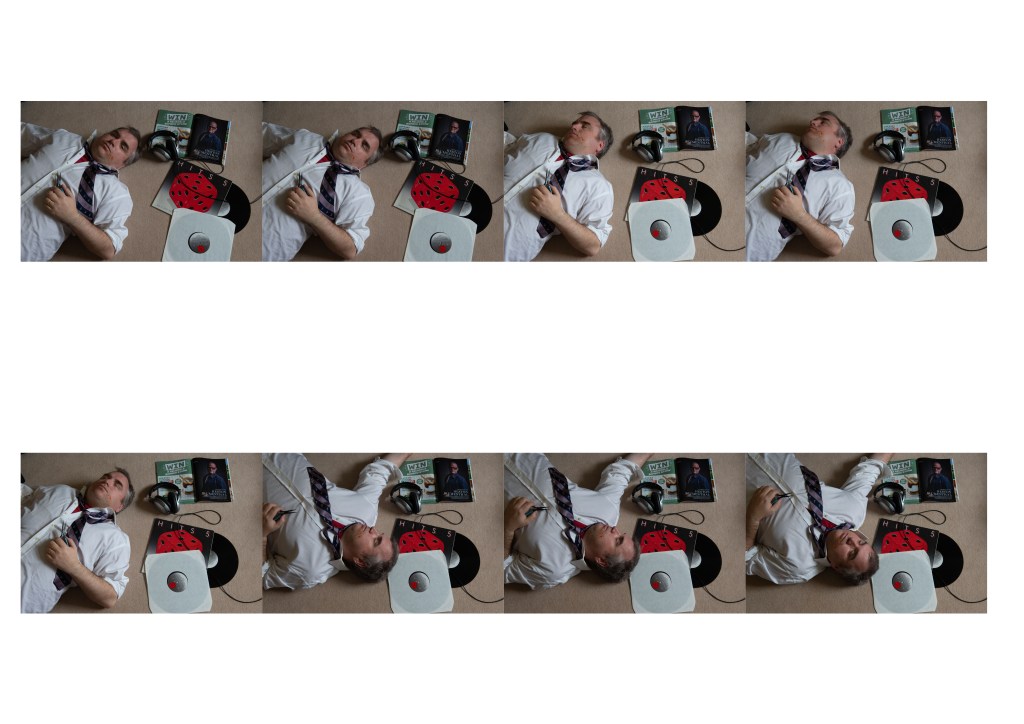
Here we have the final image of me lying on the floor surrounded by my stuff. What I intended here was to play the part of the younger me, so the school shirt and tie is arranged to suggest a schoolboy. The pose is intended to represent the sheer shock of the event, which left me pretty numb that first night. The arrangement of the tie and my blank ‘eyes open’ expression suggests the severity of this experience for me; as though my enthusiasm has been choked out of me. I’m holding the pliers to symbolise the way that I had a choice in the matter and the blood on my face is perhaps the most obvious contextual element in the frame; something having happened to cause injury. The rest of the frame is arranged with some key things that describe my environment. The vinyl album isn’t actually the one that I listened on repeat that evening, but is from the same compilation series that I was into as a young boy. I chose this one for the bright red die on the front cover as I felt it would work better with the blood on my face. The arrangement of the album is exposed and disorganised, which again refers to my feelings of confusion and anxiety. The headphones serve as the anchor for losing myself in music to escape the situation, while the magazine was a fortunate addition. One of the biggest issues with the brace was eating as mentioned previously. The combination of the advert for a straw opposite the famous chef was intended to represent the changes I would have to make with my new ‘disability’. On the whole, I wanted to include the colour red, not only to symbolise the harm that had been done but also because the whole situation made me angry and hurt. I had used colours in my submission for Assignment 3 to represent the same emotion.

When I look at this image, I am happy with the way that it brings together the things that I remember from the experience of having my teeth fixed. One of the things that I learned during this exercise was the way that leaving an idea and returning to it later can be really helpful. My first thought for the picture was rejected when I realised that I wasn’t proficient enough in the post-processing software. When I returned to the exercise after Assignment 3, I had a new confidence in both using my self to express how I feel and also simply being in front of the camera. I arranged the elements in the frame carefully and I think they work. When I showed the image to my wife, she looked carefully around the frame at all of the contextual elements. After she had done so, I explained what my intention was with the image and the feedback was positive. During the feedback for Assignment 3, my tutor asked if I would feature in more of my work. I believe that rather than just being an uncomfortable experience that I have historically tried to avoid, using myself in a photograph can be a powerful way of telling a story.

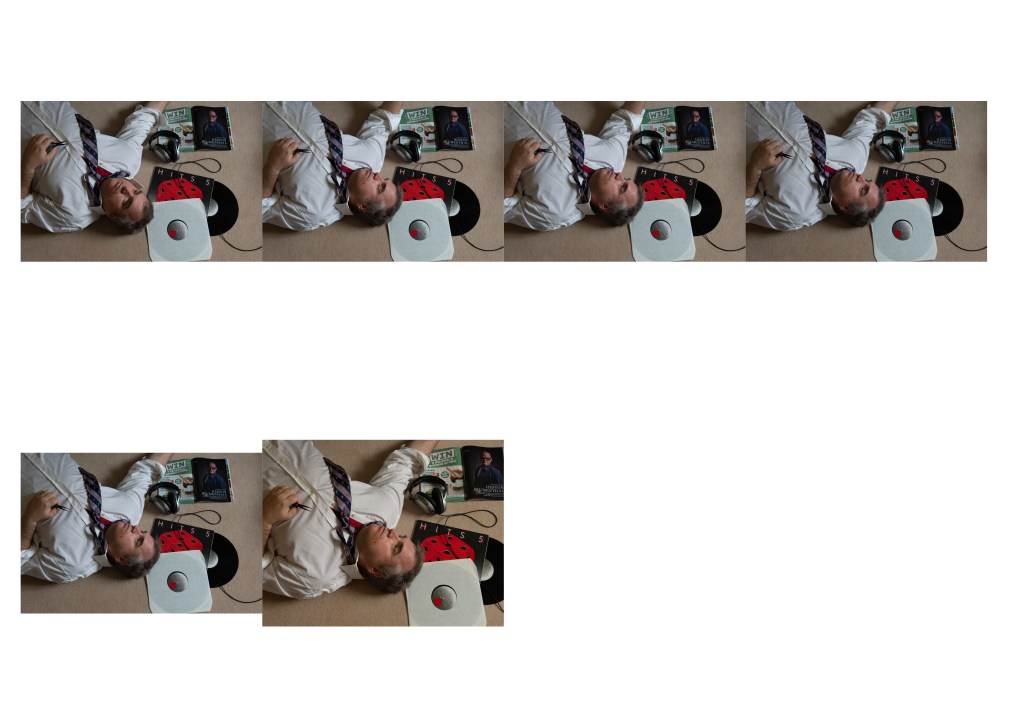
Contact Sheets

References

[1] Image Resource, ‘About The Incredible Hulk TV Show…’, Click Americana Website, https://clickamericana.com/media/television-shows/the-incredible-hulk-tv-show-intro-1978-1982

[2] Fletcher R, 2020, ‘The Manipulated Image’, OCA Blog Post, https://richardfletcherphotography.photo.blog/2020/04/17/project-5-the-manipulated-image/

[3] Fletcher R, 2020, ‘Assignment 3: Self Portraiture’, OCA Blog Post, https://richardfletcherphotography.photo.blog/2020/09/19/assignment-3-self-portraiture/

Reflecting on Assignment 3 Feedback

Introduction

I’ve just received the feedback on my submission for Assignment 3 on Self Portraiture. As with all of these video sessions, I find the constructive criticism really helpful and it often points me in the direction of photographers that I might be interested in. They may be artists that work in a similar or contrasting way to what I was trying to achieve in the assignment and they might inspire me to improve the series before submission. Whatever the connection, I find that I am looking at artists that I would not necessarily found through my own research.

The feedback was very positive about the originality of my idea, technical execution and how the images connected back to my diary. There were some good recommendations, such as re-visiting the cropping to more emphasise my face and reduce the dominance of the background colour. When I looked at the example my tutor shared, I could see how it would improve the shots by making a portrait crop. Other ideas included experimenting with the background, not just in terms of colours but also whether the setting could add to the narrative. Key among the comments were the recommended artists to look at.

Zhang Huan (1965 -)

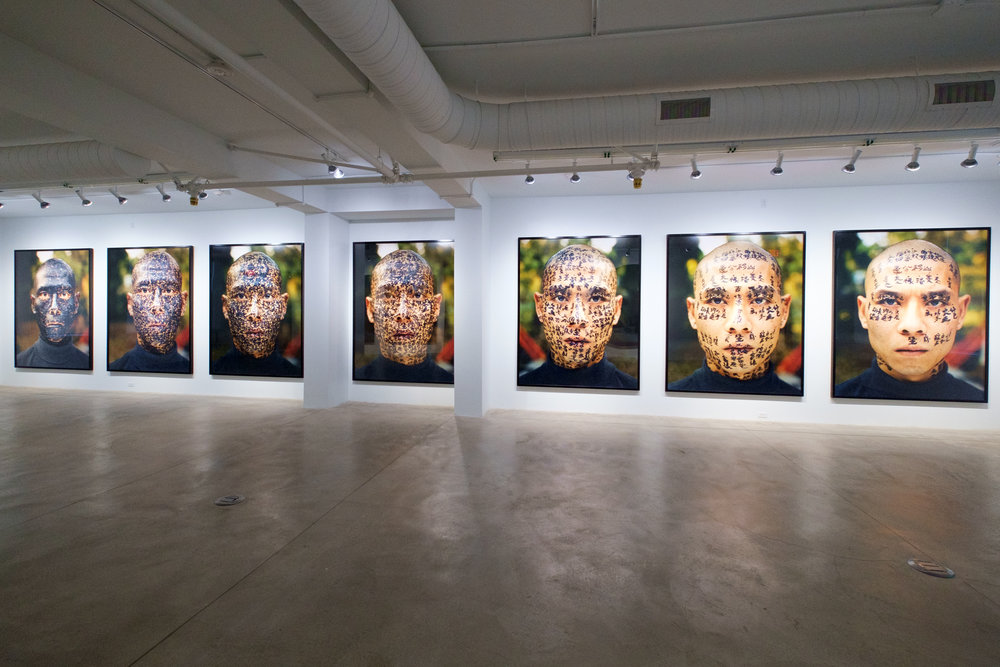
In his series Family Tree[1], Chinese artist Zhang Huan challenges the viewer by gradually covering his face in text until his skin is entirely obscured. He asked three calligraphers to write the text, which comprises Chinese folklore and commentaries on culture and the impact on family life, on his skin. The effect is a powerful one, with the ornate script that would be recognisable by someone who can read the language, slowly descending into a continuous covering. By the end of the series, the only features of Huan’s face that are recognisable are his eyes and lips. Like Morrissey’s work [2] that inspired my assignment, his expression is blank which becomes increasingly uncomfortable to look at as the series progresses. As suggested by my tutor in our feedback session, there is something disturbing about modification of the human face. The example of tattoos reinforces this sense. While they have become increasingly popular and widely accepted as body art during this century, there is still a stigma associated with them on the face. There a many stories of people struggling to get or hold onto a job because of tattoos on their faces as some people find it uncomfortable or somehow unacceptable to modify what is the main focus of communication between human beings. In his series, Huan was telling the story of culture and cultural change becoming so overwhelming that it almost smothers our sense of identity. His compositions suggest this overwhelming feeling but the ever present eyes and lips articulate his view that it can never take away our individuality that we have from birth. Huan’s series is very multi-layered when we look at how it came about. His fear of a serious health issue was the starting point for the series, which as a contextual element helps us understand Huan’s expression in the images – one of desperation or panic. The gradual build up of black ink on his face both gives us a sense of being smothered, but also shows us a gradual darkening of his normally pale skin. Huan himself indicates that this darkening is the passage of time from being born to old age or the way that a day turns into night. This is echoed in the way the background light gradually fades. The point made in my feedback about experimenting with backgrounds is made here. Huan uses a simple outdoor setting in natural light where the changes are noticeable as the series progresses. My series had consistent studio lighting that was effective but uniform from frame to frame. Perhaps I could have added the context of mood by including a more natural background with the colours represented in objects or textures that were more naturally occurring. The last of Huan’s frames is also slightly blurred, either by being deliberately out of focus or just as a result the dying light. Either way, the last frame suggests that Huan is still identifiable despite his environment. It reminded me of the Dylan Thomas poem that I used in an earlier exercise [3] – the idea of raging against the dying of the light.

Family Tree, by Zhang Huan (2000) [1]

When I look at the images, I recognise the similarities to Morrissey with her face painting. The storytelling is superb and the layers really emphasise the artist’s discomfort with modern life and his sense of mortality. The multi-layered story, like Morrissey reveals small details the more we look at the photographs. During our call, I mentioned that my impression of Morrissey and her relationship with her daughter was at the centre of the series. However, while we agreed that the references to child development and expression were very clear, I said that my initial reaction was that this was a little girl with an extremely cool mum. Who wouldn’t want a parent that lets them paint their face while all the time calling it ‘work’? This was something we both found amusing.

The main differences between Huan, Morrissey and what I had done in Assignment 3 was that they had actually modified themselves whereas I had added something in the way my face was lit by using the projector. While there was nothing wrong with my approach (indeed it was felt to be an interesting take on the brief), it was clear to me that the impact of the physical modification was higher than mine.

Hew Locke (1959 -)

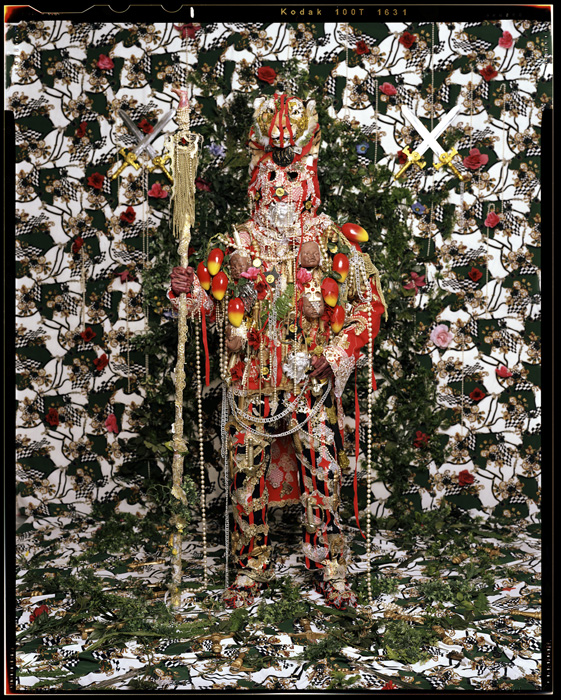
Another artist mentioned in the feedback was Hew Locke. Locke is known as a sculptor rather than a photographer. He used both media to create his series ‘How do you want me?’, which portrays the many aspects of his Guyanan culture layered with the impact of history. Locke plays the central character in each photograph, although his features are almost entirely obscured by the props and elements he uses. An example can be seen below:

‘Tyger Tyger’ from the series ‘How do you want me?'{2007), by Hew Locke[4]

In ‘Tyger Tyger’, Locke presents himself in a solider stance, brandishing a decorative staff. His appearance is almost regal with what looks like a traditional head dress and lots of jewel-like decorations. The photograph is very busy with lots of props and potential contextual elements. When we look closer at the figure, it becomes clear that Locke is wearing a British Red Coat uniform that is synonymous with the colonial military that featured in many African conflicts in the 19th Century. The uniform is adorned with symbols of wealth such as pearls and ornate chains as well as contrasting symbols of African culture (exotic fruits and what looks like tribal heads). The whole scene is a mashup of cultures and eras that come together in what Locke calls “messed-up beauty”. When we first look at this image, it’s unclear as to whether this is a person or a statue. It’s only when we look more closely that the parts of Locke’s body that are not covered can be seen. Locke’s hands tie in with the rest of the composition through his skin colour, but the eyes are present but somehow missing. What we see is a pair of empty peep-holes that Locke is looking out through. It’s a very unsettling visual effect as we can relate to the weight of culture and cultural clashes in the piece, but we cannot see how Locke is reacting to it. Is he suffering under the physical and symbolic weight of the props and costume or is he revelling it it? What I see when I look at this image and others in the series is something closer to absentia than self portraiture. Locke uses himself as a canvass as I did, but his presence appears little more than a mannequin. With the similar discomfort, there is a great deal to look at with the series. Locke’s canvass works in a similar way to the others, but the sense of him is implied through his ancestry as opposed to the more obvious presence in the work of the other artists.

W M Hunt – The Unseen Eye

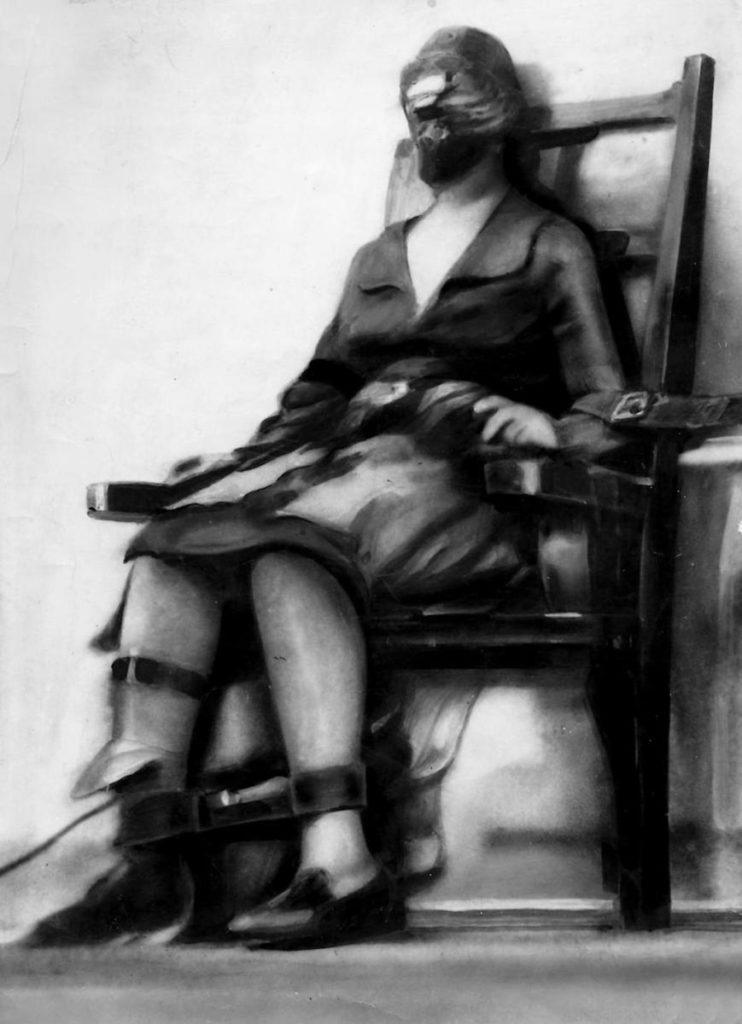
The final artist mentioned in the feedback discussion isn’t actually a photographer, but more a curator. W M Hunt has published a number of books of curated photographs on themes and the one that was raised was The Unseen Eye. This book is a large collection of photographs where the subjects either have their eyes obscured in some way or are deliberately not making eye contact with the viewer. The images are further examples of how unsettling it is when the face is modified in some way. The act of covering or averting the eyes makes us feel uncomfortable because it deprives us of our primary source of communication and our ability to read emotions. An example of one of the photographs from the book is seen below.

Execution of Ruth Snyder (1928) by Tom Howard; The Unseen Eye, W M Hunt [5}

This image of murderer Ruth Snyder being executed in the electric chair is in itself disturbing. Howard smuggled a tiny plate camera into the prison strapped to his ankle. He shot this image at the point Snyder was electrocuted and the result courted controversy across America regarding the cruel and unusual nature of the electric chair. However, it is included in the collection by Hunt because of the disturbing way that Snyder’s face is covered by the mask. She has no facial identity in this photograph, just the effect of the electricity on her body being observed by a slow shuttered camera. I find the ghoulish nature of this image interesting as a piece of the history of capital punishment in the USA. However, I have to force myself to look at Snyder’s face area because of the way the mask dehumanises her. Deserved or not, Snyder is experiencing her final moments and is pretty much invisible during that time. Looking at the image for a period of time conjures sadness as well as disgust.

Conclusion

In conclusion, the approach that I took with the use of my face as a canvass for my words was a sound one. Projecting the words onto my bare skin and using colour to reflect and evoke mood was thought to be a strong narrative. However, in looking at these three artists I realise how my series could have been made even more impactful through making it more personal. What I mean by that is the actual contact with or act of modifying me. Huan used ink in a similar way to Morrissey, but told a story of the passage of time with the ink coverage increasing to the point where he was almost lost in the image. The work of Locke also used the canvass approach but to much greater effect, almost asking us to question whether the subject was a real person or just a representation of a culture with all of its riches and threats. In the collection by Hunt, the subjects are almost dehumanised by their lack of engagement with the viewer or obscuration of their faces. Dehumanising is almost the way that all three work, but at the same time they are putting themselves in the picture, which is of course the topic of Part 3 of Context and Narrative. I found this research and reflection to be enlightening. My tutor asked me if I would feature in my work in such a personal way in the future. Despite not being comfortable in front of the camera, I can see from these three artists, in addition to the others in Part 3, that there is much more scope for experimenting with self-portraiture to tell a story.

References

[1] Huan Z, 2000, ‘Zhang Huan’s Family Tree – Whole face painted black’, Public Delivery Website, https://publicdelivery.org/zhang-huan-family-tree/

[2] Morrissey T, 2011, “The Failed Realist”, Artist Website, http://www.trishmorrissey.com/works_pages/work-tfr/statement.html

[3] Fletcher R, 2020, ‘Exercise 3 – Poetry Interpretation’, Blog Post, https://richardfletcherphotography.photo.blog/2020/07/06/exercise-3-poetry-interpretation/

[4] Locke H, 2007, ‘How do you want me?’, Artist Website, http://www.hewlocke.net/hdywm.html

[5] Zelony-Mindell E, (unknown date), “Efrem Zelony-Mindell on W M Hunt”, Rocket Science Magazine, https://rocketsciencemagazine.com/contents/efrem-zelony-mindell-on-w-m-hunt/

Preparing for Assignment 3

Introduction

I have just received the feedback on Assignment 2 in a video call with my tutor.  That was the first assignment in Context and Narrative that would count towards assessment at the end of the unit.  I was hoping that I had met the brief, and indeed that was part of the summary, however the feedback that struck a chord was that I had made things harder than they need be by not having a methodology in the way I had approached the shoot.  What that meant was that I had connected the text to the pictures, but I hadn’t had a strong common anchor between the images that would make searching for subjects more consistent.    This is not to be confused with the theory of anchor and relay that Barthes postulated, but literally something that connects the photographs in some way.  When I reflect on the work, I had been very stressed throughout shooting the photographs.  I had formed an idea that I wanted to explore, mapped out in my logical brain which elements would represent trauma in the frame and set about taking the pictures.  That was when the assignment became difficult and as I gradually found it harder and harder to find inspiring subjects, the more I tried to force creativity to come.  I hadn’t set out with a common approach to the subjects in mind and had I done so, the creative part would have been more free-flowing. An example of an strong anchoring element would be Fox’s series “My Mother’s Cupboards and my Father’s words” [1]  In this case, all of the pictures are not just of the same kind of subject, they are all of a particular subject that the artist was both familiar with and had ready access to.  Her mother’s cupboards and their inherent tidiness was the anchor, the narrative forming around the contrast of order and the brutality of the words from her father.  During the feedback call, my tutor suggested that if I’d travelled to the place where the traumas had taken place, that would have tied the images together more strongly.   I had to agree with that sentiment.

Assignment 3

Usually I would not be thinking too much about the next assignment when working through the research and coursework that leads to it.  However, the course notes steer us towards Assignment 3 with the writing of a daily diary [2].  I’ve been writing mine for about a week a the time of this post and it’s already been an interesting experience in terms of what happens to me during the course of a working day and the thoughts and feelings that are invoked.  What we need to do for Assignment 3 is to include ourselves in the narrative in some way.  The diary is supposed to stimulate ideas or be a part of the series in some way which builds on the storytelling we’ve been doing thus far.

I was reflecting on the feedback and discussing with my wife on our daily walk this afternoon.  She could understand the points about anchoring the images together by having a structured approach to the shoot and we started talking about ideas for how to include me in the narrative without it being too prescriptive.  This is still always a concern for me, which I believe stops me from completely letting go of my imagination. What my tutor meant by structure was more about having something that made the creation of the work consistent.  She highlighted the series Geolocations by Nate Larson and Marni Shindelman, which I refer to in my assignment diary [3].  This was a series that took tweets from Twitter and used the publicly available geolocation data to find where precise location they were posted from.   The photographers then visited the locations with a large format film camera and shot a photograph that was then paired with the words from the tweets.  The creativity of the idea of shooting something that tells as story of the words and what may have been happening for the author, by using a visual from where it was written is obviously very powerful.  Modern technology has allowed our precise position on Earth to be mapped to within a few metres and the idea of the trace of a story from the space we once occupied is fascinating.  An example of the work can be seen below:

From the series Geolocations by Larson and Hindelman, 2007 [3]

Here we have a beautifully composed and lit photograph from the location where the emotional tweet was written. The tweeter is asking if they have made the right decision, which could mean anything but suggests a major decision made with relation to another person. Could it be that the tweeter has left a partner to be with the undisclosed person? Could it be an innocuous as someone making a purchase from that person? The accompanying image shows a lone car parked outside a motel, which could almost be from a David Lynch film. This visual tends to support the life-changing decision narrative and when coupled with the words, has great impact. When considering the concept of the series, I naturally identified with how clever it is to use the modern technology in conjunction with the uniquely personal written word. It’s also a strong narrative that tells both the story of the unfortunate tweets as well as revealing just how private our lives really are. The debate about sharing our innermost feelings on social media is one that has been raging since its inception, but here we have an almost voyeuristic element where anyone can find where we have been and place themselves in what they believe to be our story. What interested me was the structure or plan that was being followed. The photographers clearly selected the tweets that had the biggest impact on them and then methodically visited the scene. What they shot was going to be the creative element, but the ‘mechanical’ act of visiting the scenes removed the ambiguity of “How am I going to represent the words?” This was something I really struggled with in Assignment 2. I had the random thoughts as spoken by friends and the idea of representing the traumas through industrial and empty spaces, but spent a huge amount of time trying to find compositions that fit. This forced location-hunting and subsequent ‘creativity’ was exhausting. What I needed to do in Assignment 3 was to have a plan – form an idea and then focus on a workflow for the shoot. This would leave me with more capacity for creating the imagery that supported my idea.

The Diary

The idea of keeping the diary [2] was something that appealed to me from the start of Part 3. A simple document of my working days and free time was unlikely as most of the things that happen to me in my life prompt memories and reflections on things that have happened. I would describe myself as a reflective person in general and while I don’t live in the past, I am hugely appreciative of the things I have learned from my experiences. My plan was just to write what came to me that day and with this in mind, achieving the large number of pages set out in the course notes was never a concern. My plan from the start was to share the diary with my wife as she has known me better than almost anyone in my life so far. I would ask her to read the diary and just take on board her reaction to it. My thoughts were around a series that would describe how I felt during the two weeks rather than reporting what I had for breakfast.

Initial Idea

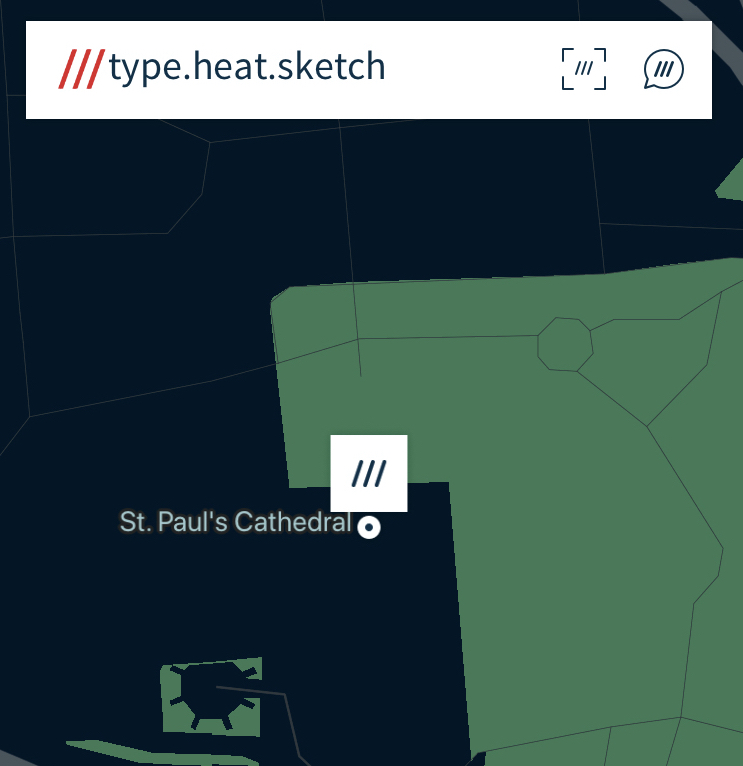
My first thought was around something similar to what Larson and Hindelman, using location technology to link to themes in my diary. I considered the fairly new application called What Three Words, which uses seemingly random words as a simple map reference for any 3x3m space in the world. A map from this software can be seen below:

‘Type.Heat.Sketch’ – the ‘What Three Words’ location for St Paul’s Cathedral in London

By choosing and searching on key words that support the themes of my diary entries, I planned to search locations and visit them. The photographs would be portraits of me standing in the precise location of my words, almost as a waypoint or position marker. I was interested in what I could create with the compositions and how they might link with my thoughts and feelings in the diary. My presence would be a reflection on my place in the world and that place would be something I had expressed with my writings. The idea was a good start, but I quickly ran into difficulties with the technology. What Three Words is a global system, so the grid of spaces it describes spans the whole globe in by using geolocation in the same way as twitter. I knew early on that if I chose the wrong words, I could be looking at a location on the other side of the world, which would be an obvious problem. My preparation for that would be using a thesaurus to come up with many different connotations that may yield more local targets. The main issue though, was the application doesn’t allow searching for locations through the individual words themselves. Currently, the only way it can be used is either by knowing the whole string of words, so Type.Heat.Sketch as in the above example or the landmark (St Paul’s) or the postal address. This was essentially a hurdle I could not overcome. However, it led to me thinking about what I wanted this assignment to say.

Back to the Drawing Board

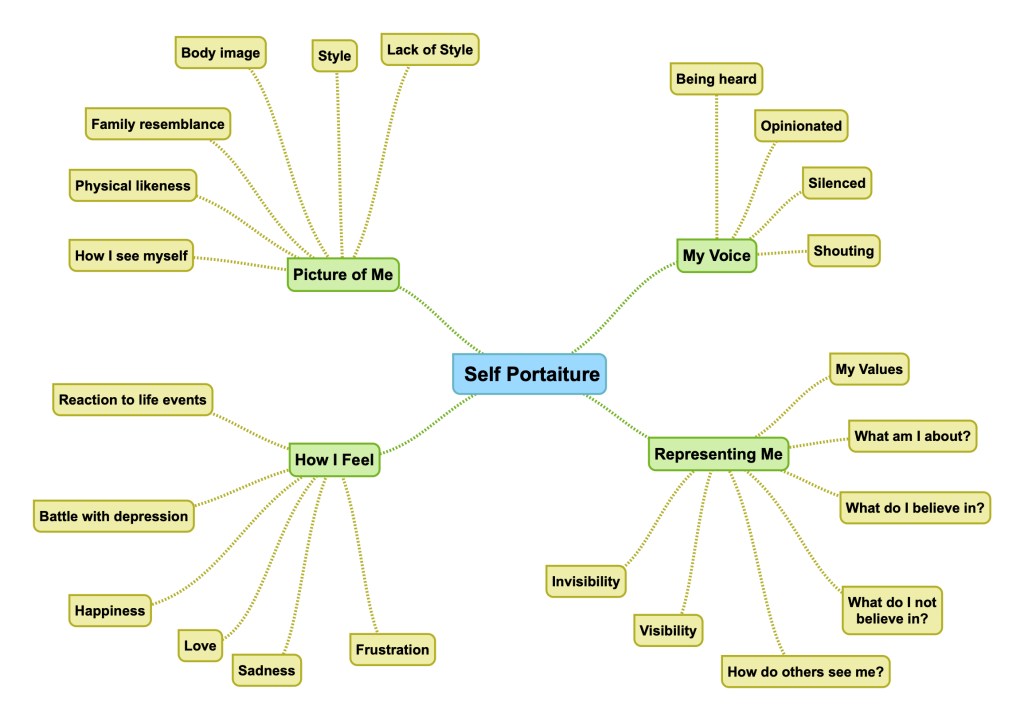
Disappointing as the first idea was, I started to think about what I wanted my assignment to say. The subject was Self-Portraiture, so it needed to have a central theme about me, my perspective or my life experiences. I was still thinking about using location in some way but accepted that it my not fit my interpretation of the brief. I used a mind map to try to articulate my thoughts on the brief at this point.

Mind Map of Self Portraiture (as I saw it at this point).

At this point, I was still thinking of self portraiture in the traditional sense. A picture of me in some contextual setting with some narrative that could be drawn from it. The subsequent work in Part 3 introduced me to the works of Morrissey who placed herself in the lives of others[4] or used herself as a simple blank canvass [5] in a way that is clearly self portraiture. Then, with the addition of Calle, Kapajeva and Shafran, the concept of self portraiture as something that the artist has to be physically present in was challenged. With Moffat, the artist became an actor in the work with the connections between her sense of self and her subjects being imitation [6]. When I revisited the mind map, I could add ‘absentia’ and ‘mirror’ to the ideas of portraiture of myself. The work that really inspired me from those artists was that of Calle and Morrissey. Calle’s act of getting a group of people to articulate how she might be feeling about being dumped was almost creating the art automatically. The 107 women told Calle’s story from their own perspectives but in a way that anyone could relate to. She introduced humour in the destruction of the words which creates the narrative of taking away her ex partner’s power. Morrissey worked with her young daughter to produce a series about the way that children express themselves as they develop. Her role in the series was as a blank canvas for her daughter to paint on which also created a narrative about parents and children and their natural bond. The other artist that had inspired me from the start of this course was Anna Fox. In her work Cockroach Diary [7], Fox tells the story of her battle with her landlord over an infestation of cockroaches. She blends images of her handwritten diary that details her encounters with factual images of the insects either crawling around her flat or recently killed by the artist. What is a documentary struggle to persuade her landlord that there really is a problem they should be looking at, is also a commentary of life is like when you don’t have a comfortable home environment. Fox was a struggling artist and mother when this series was created and it really made me feel like a lucky man.

Another idea

My second idea for the assignment took cues from Calle, Morrissey and Moffat. I’ve always been told that I write well, which is partly down to the many reports and documents I’ve had to prepare in my career but also because of my passion for communicating with people. The written word is not necessarily the easiest medium for this as it is open to interpretation. Care needs to be taken to get the message across while accounting for how the audience may react which is a challenge that I always relish when I’m writing. During the writing of the diary, I enjoyed setting the scene for what I was trying to say and found myself drifting into my memories with ease. This is something I wanted to get across in the assignment in order to represent my personality. Like Calle, I wanted an alternative view of the text but instead of using other people I opted for technology to do the legwork for me.

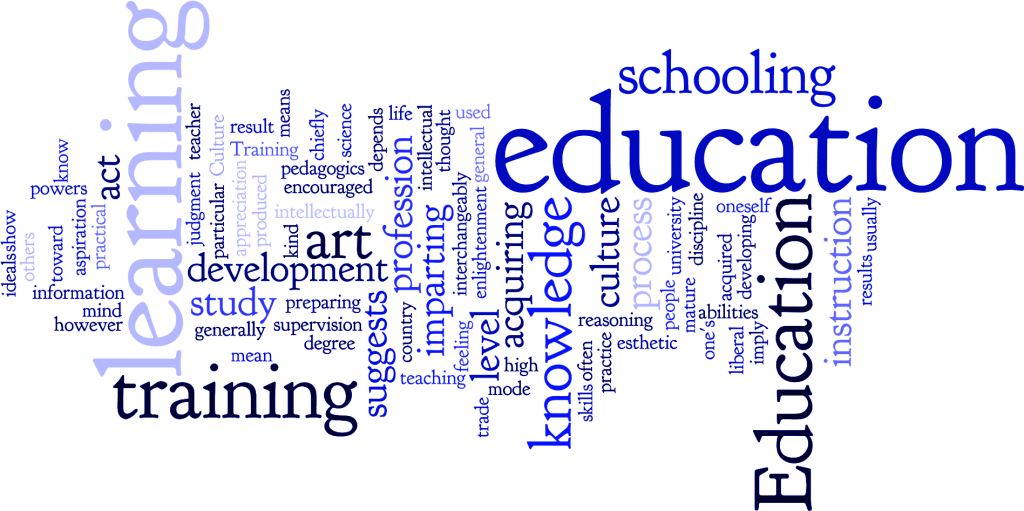
In my line of work, there are always ways of collating messages from multiple sources e.g a survey or poll so that people can easily grasp the consensus. One of the techniques that emerged a number of years ago was the creation of a word map or cloud. They would be a collation of the most used words in a body of text or description or even a narrative that are represented visually. The most used words would be the largest font size, while the less frequent ones relegated to a smaller, less distracting size. The theory with this technique was that the importance was related to the number of times the word occurred. In the case of a survey, this is true as it’s usually a collection of many views – the more it occurs, the greater the consensus. An example of this can be seen below:

Example of a word map\

What is interesting about these maps is that they are specifically designed to draw our attention to a few key messages. I started thinking about how I write and the connections I make between subjects. This crude algorithmic representation could be used to represent my thoughts without actually forming sentences in the traditional structure. More importantly, running the diary entries through a word map generator would provide the structure that I was missing in my previous assignment. I did a quick search online for software that would create a word map from my diary and found one that would work well for this idea.

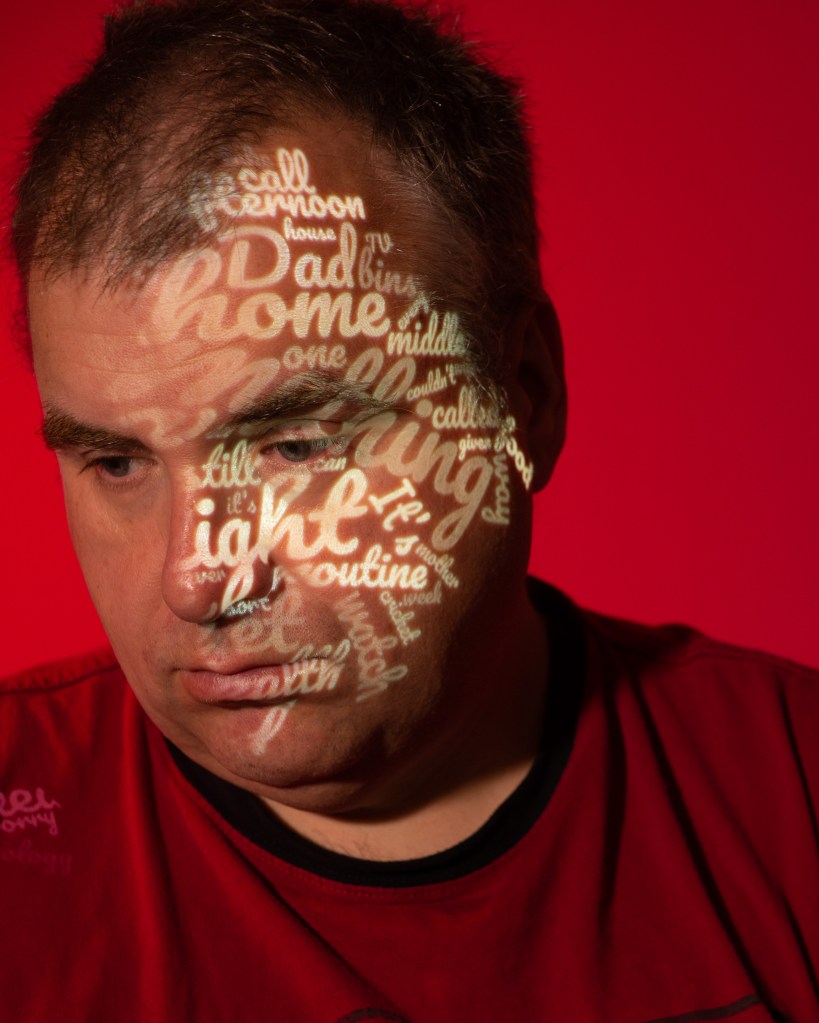
In terms of photographing to support the words, I was immediately drawn to Trish Morrissey’s work The Failed Realist [5] where she used her face as a blank canvass for her daughter to paint on. The consistent theme was her blank expression on the artist’s face and each composition being the same. The distinguishing features were the painting with their childlike interpretation and the image titles that tell us what each is supposed to be. I was really inspired by the self-portraiture being a canvass serving no other obvious purpose than to showcase something else. In reality, Morrissey’s part in the series is another layer of context pointing to her relationship with the other artist and, perhaps the visualisation of the child’s creativity through adult eyes. For my assignment I would use my physical self as a canvass for my diary by projecting the word maps onto my skin. I could create the context by choosing which part of my body to project on, depending on the words in the map. I was also inspired by Moffat’s use of photoshop to create an almost unreal visualisation of her as her subjects and decided to light the background in a way to both make as statement of my mood and make each image stand out on its own.

Initial Conclusions

At this point, I felt that I had achieved a number of milestones with this idea for the assignment. I had taken on board the feedback about having a structure to the approach in my work. I had taken inspiration from a variety of photographers studied in this section of the course and combined elements in my idea. I would be experimenting with the compositions so that they enhance the words.

Technical Approach

I started by finding a Word Map generator program that could analyse my diary. I chose an online tool called wordclouds.com which allows the user to upload large bodies of text, change the shape of the resulting map as well as colours and fonts. The most important feature was the ability to remove words from the map using the word count list. I decided that I wanted the most-used words to stand out in the word map, so I chose to delete all of those that appeared only once in the text.

The first step was to upload the text for each day of the diary and save local copies of the word maps for processing. I then removed the single-event words and experimented with the shape of the map. Different shapes meant that the words would be arranged differently when projected. I didn’t want the maps to be too contrived, so largely stuck to simple square and diamond patterns which resulted in aesthetically pleasing maps. Each processed map was saved as an image file.

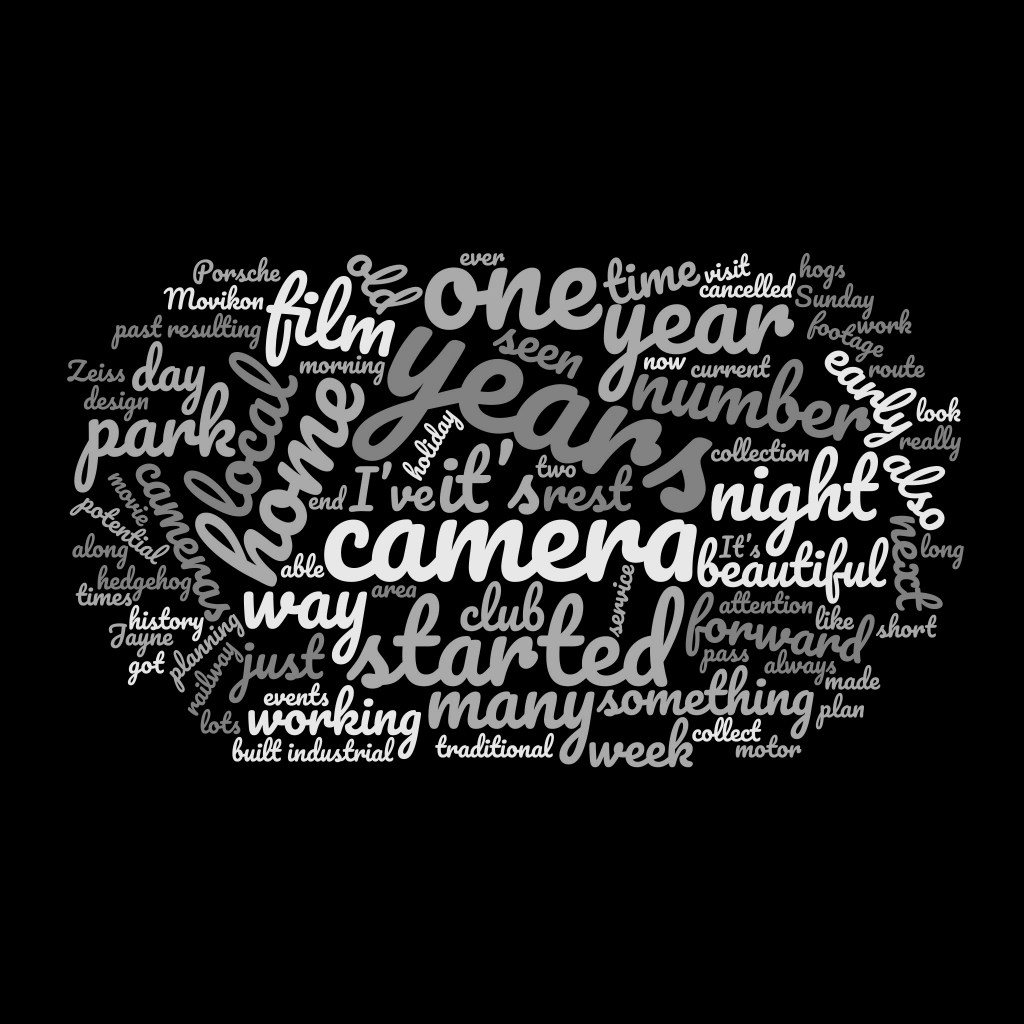
The projector that I was using was connected to my computer and some tests were carried out on my skin. The first thing I noticed was that there was enough contrast to make the words stand out. The projection bent around the contours of my face and body, which was the effect I was after. However, I realised early on that the colours of the words were too much of a distraction and were actually only related to the word count. Since the size of the text was also related to word count I decided that I could remove the colour and still keep the look I was after. To achieve the final look, I converted the maps to black and white. An example of the word maps can be seen below:

Example of word map

At this point, I started thinking again of what I wanted to say with this series. I wanted to highlight the differences between the emotions and memories that I’d expressed in the diary and the impassive interpretation of a computer algorithm. The words created in the maps were the ones most commonly used in my writing, but their meaning collectively differed from the original text to such an extent that multiple narratives were possible when viewing them. I needed a way to bring that into the photographs, so I asked my wife to work through the diary again paying attention to the sense of emotion in each entry.

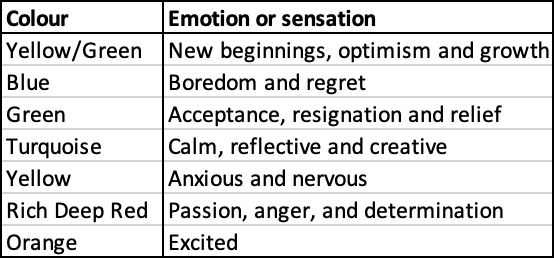
The conclusion from reviewing the diary entries was that the core themes in the two weeks of the diary could be grouped into emotional themes. Rather than a simplistic model of happy, sad, angry etc., the themes that Jayne recognised in the text were more about sensation or perception relating to the events being described. In this case, boredom and excitement were just as tangible as the traditional category of mood. These themes could be grouped across the 14 days of the diary into 7 clear ’emotions’ There is significant research into how emotions are both represented and invoked by our perception of colour. As our primary sense, the sight of colour can induce a mood that we subsequently associate with that colour subconsiously. For this series, I wanted to both represent my emotional responses by using colour but also to suggest to the viewer how they might feel about the image through its use.

Researching colours and emotions revealed both theory and empirical data that was promising for my group of emotional responses. I first looked at how colour is used in advertising to make the target audience feel a certain way. In an interesting article on the psychology of colour [8], the author suggests that our associations with colour can cover a variety of emotional reactions the follow a common relatable theme and that the reactions depend on the other contextual aspects of a situation or subject. For example, red is associated with anything that invokes passion but an image of glossy red lipstick invokes erotic or romantic feelings where a fire engine creates a sense of danger or hazard. The response to get the pulse racing is the same, but the stimulus is different depending on the situation. When used in a photograph, how the viewer responds will be dependent on what else is going on in the frame. The second research source was a survey of how men and women of different cultures react to colours when they see them [9]. The survey asked people to choose the emotion that best matched their reaction to a colour from a multiple choice list. The data was then collated to show the emotions that best correlate with colour. From the two papers, the following list of colours and emotions was created.

Grouped emotional responses with their associated colours

At this point, I shot another test, this time with a colour in the background created by a strobe and red gel.

Second Test – Using a red gel combined with the monochrome text projected onto my face.

The final stage was to experiment with composition. I was originally inspired in this idea by Trish Morrissey’s The Failed Realist, which revolved around just one composition where the artist looks straight into the camera. The frames were cropped to her head and shoulders and her expression is completely blank. There are no props, backgrounds or attention to her form such as hair and makeup – she literally uses her face as a blank canvass for her daughter. I wanted to something similar in order to focus the viewer on the words with only the background knowledge that they were mine. What makes each photograph interesting in that series is the different paintings and their titles. I needed to ensure that my images had that same variety to hold interest. As the diary was a linear progression of two weeks of my life and the colours mapped the emotions of each day, I decided that this was sufficient context to keep the series from looking like 7 versions of the same picture.

Conclusion

During this preparation phase, the idea had developed through my having a structured approach that would provide the baseline for creating the work – this was one key takeaway from the feedback after Assignment 2. I took inspiration from the photographers studied in Part 3 and my plan for this series should lead to a piece of work that highlights the contrast between expression seen through human eyes and those of a computer; the emotions being both a representation and invitation to the viewer to feel a certain way about the words. In conclusion, I feel that the series potentially has the multiple layers of context we’ve been working with throughout this unit as well as being uniquely personal to me in terms of creativity.

References

[1] Fox A, 1999, “My Mother’s Cupboards and My Father’s Words”, Artist Website, https://annafox.co.uk/photography/my-mothers-cupboards-and-my-fathers-words/

[2] Fletcher R, 2020, “Assignment 3 Diary”, OCA blog post, <insert link>

[3] Feinstein J, 2016, “Geolocations: Two Photographers Heatbreaking Visualizations of Tweets”, Humble Arts Foundations Blog Post, http://hafny.org/blog/2016/geolocation-two-photographers-heartbreaking-visualization-of-tweets

[4] Morrissey T, 2007, “Front”, Artist Website, https://www.trishmorrissey.com/works_pages/work-front/workpg-01.html

[5] Morrissey T, 2011, “The Failed Realist”, Artist Website, http://www.trishmorrissey.com/works_pages/work-tfr/statement.html

[6] Rosenberg K, 2007, “Show and Tell, Tracey Moffatt at Stux Gallery”, New York Magazine, https://nymag.com/arts/art/showandtell/26538/

[7] Fox A, 1999, “Cockroach Diary”, Artist Website, https://annafox.co.uk/photography/cockroach-diary/

[8] Rickard, 2015, “The Psychology of Color: A Designer’s Guide to Color Association & Meaning”, ZevenDesign, https://zevendesign.com/color-association/#green

[9] Centeno A, “Colour and Emotion Across Culture – Emotional Responses of People to Various Colours”, Real Men Real Style Magazine Post, https://www.realmenrealstyle.com/color-emotion-cultures/

3) Exercise 4: Shafran Critique

The Brief

Go to the artist’s website and look at the other images in Shafran’s series.

You may have noticed that Washing-up is the only piece of work in Part Three created by a man. It is also the only one with no human figures in it, although family members are referred to in the captions.

  • In what ways might a photographer’s gender contribute to the creation and reading of an image?
  • What does the series achieve by not including people?
  • Do you regard them as interesting ‘still life’ compositions?

Critique

The brief draws attention to the work in Part 3 being almost entirely created by female artists, with Shafran being the exception. I hadn’t initially spotted that while working through the projects and exercises, so this was the first area I wanted to explore in answering the brief. My neutrality in appreciating the works naturally stems from my life experiences to date. Many of my strongest influences have come from the key women in my life and I believe that has shaped my perspective on how people share their opinions and emotions with others. It’s not to say that I haven’t had strong male role models of course, but I think the balance of both influences is responsible for the fact that I haven’t considered gender in my interpretation of the works in this unit.

With regard to how gender contributes to the work and its interpretation, I think the starting point for me is the artist’s experience within their environment. Men and women naturally have different experiences caused by their biology and so it’s not unreasonable to expect their expression of the emotions surrounding them to be different. For example, Brotherus’ story of unsuccessful IVF treatment is told from the painful perspective of being a woman unable to conceive. The women that I know who have been through that experience, all had huge doubts about themselves because of being unable to do what is the most natural thing in the world for their gender. Some felt like failures and shouldered the responsibility for any unsuccessful treatment cycles. Brotherus’ story is incredibly raw and moving, however her series also contains her references to her partner who is, for the want of a better expression ‘in the same boat’. His role in the work is relatively small compared to hers and the photographs say little about his experience. Would a series from his perspective be as powerful? Undoubtedly so, but perhaps it wouldn’t be as focused on the biological disfunction as hers. My male friends who’ve experienced IVF spoke of trying to remain supportive, calm and patient, despite sharing the anger and disappointment when it didn’t work. I believe a male perspective on the same event would have similar themes, but different narratives. In the case of Lee’s Projects, the artist explores the cultures and sub-cultures that were alien to her as a young Korean woman. The themes range from age to race, societal roles to sexuality and Lee places herself in this virtual world to experience and comment from within. In an interview [1], Lee said that she always includes other people in her work as she feels that she learns more about who she is through the eyes of the people around her. This self-perception is likely more about someone who emigrated to the US to complete her study (Lee moved to the US to study for her Masters degree), but there is also likely to be an element of gender, bias simply because she is of a generation where women were more empowered in their pursuit of career. While I cannot speak for all men, I personally don’t view myself through the eyes of other people, but do use their feedback to inform my opinions on my behaviour and the way that I interact with them. Perhaps then, I would have worked on Projects with more of a feeling of ‘outsider’ documenting human relationships, rather than their effect on my own self image.
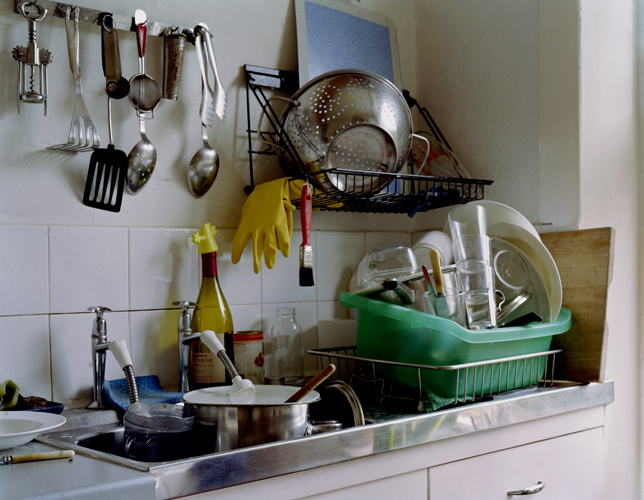
With Shafran’s Washing Up the subtle compositions have contextual elements that tell a story of daily life through the lens of what he and his partner have in common. When I look at the images, I see a very factual representation of domestic life and the cues such as paint brushes and brightly-coloured utensils don’t really have a gender bias. He creates as sense of ‘done’ about the subject (the washing up) as well as alluding to his and his partner’s presence or absence through the amount of crockery on the rack. I found the inclusion of the initials behind the taps to be an almost passive-aggressive statement because of the crudity of their construction, but they could have been created from the perspective of either of them. Where the other artists in Part 3 have told stories of events in their lives, Shafran tells a factual tale of the passage of daily life through a series of aesthetically appealing still life type shots.

With regard to Shafran omitting people from his compositions, I think that the overall effect is that of a broadly interpretable context. The pictures say something about the lives of the people involved, but tell very little about them personally. We cannot derive any information about age, looks or social standing, but these are traditional contextual elements for portraiture. Shafran isn’t interested in showing himself or his partner to the viewer, but instead tells a story of their lives through images of their environment. We are not distracted by wondering about the traditional contexts, but instead are looking at the evidence of their lives in a way that is relatable to everyone. We all have some type of kitchen domesticity to contend with. For me, the bottle of wine that appears next to the sink in a number of the pictures is a relatable feature of modern stressful living. The ever-present washing up gloves acting as separation from the task also tells me that there is an order to their world, without worrying about saying who wears them. Shafran’s work takes the concept of storytelling further than portraiture, making the statement that we are not just a physical presence to be captured, but our lives have an impact that can be just as interesting a document as a simple shot of the face.

When I look at Shafran’s Washing Up I do see a series that could easily be interpreted as a still life.

“Still life can be a celebration of material pleasures such as food and wine, or often a warning of the ephemerality of these pleasures and of the brevity of human life”

Tate Definition of Still Life [2]

Shafran’s images show everyday items in a recognisable scene that do indeed point the brevity of human life as above. The washing up Is either underway or finished which is a snapshot of time that may be repeated the following meal, but will be different each time. The lighting in the photographs emphasises the different textures and colours of the items in a way that traditional still life does, but their arrangement leads away from a simple appreciation of them with relation to each other. The other contrasting elements suggest more connection between the items and their surroundings; only after looking closely do we see that there might be a story about the owners being told here. As we move through the series, the items in the kitchen are either arranged differently or changed completely, which again suggests the images are not of the items but of their part in the daily routine of the owner’s life. To that end, still life isn’t really the right genre to assign to this work.

Conclusion

I find Shafran’s work interesting in it’s seemingly simple representation of the banal. The trace elements of his and his partner’s lives are very subtle, but Shafran bring them out of the background for the viewer to interpret how they wish to. In leaving himself and his family out of the photographs, there are no preconceptions about them only a suggestion of what they life might be like. I’m not convinced that Shafran’s gender is a contributing factor to the impact of his work as could potentially be said of the other artists in Part 3. Shafran talks of reacting to something he sees and wanting to communicate it in a simple way [3]. Perhaps the reaction is emotional or environmentally driven as with the other artists and that Shafran chooses to express himself through carefully using props instead of people. Whatever the reason, his work has a wonderful sense of the ordinary about it in the way that Anna Fox’s work did in Part 2.

References

[1] Unknown, 2013, “INNERView EP65 Who am I? The artist drawing attention in New York – Nikki S Lee, ARIRANG TV Youtube Channel, https://www.youtube.com/watch?v=YMychWgKedA

[2] Unknown, “Art Term – Still Life, Tate Online, https://www.tate.org.uk/art/art-terms/s/still-life

[3] Smythe D, 2018, “Everyday Beauty with Nigel Shafran”, British Journal of Photography, https://www.bjp-online.com/2018/05/shafraninterview/

3) Project 3: Self-absented Portraiture

Introduction

The concepts studied in Part 3 thus far have largely been what I’ve come to expect in the genre of portraiture.  I could relate to the metaphorical story telling of Brotherus and the substitution work of Morrissey as their life and personality exist within the work either in their entirety or partially.  However, this project introduces us to what at first glance appears to be a more tenuous form of portraiture, that of not being part of the image at all.  Instead, the artist is represented by the inclusion of other people or in some cases, nobody at all.  When considering this idea of self-absented portraiture, the immediate thought that it cannot be consider so if the artist is not in the picture, can be quickly dismissed when considering human imagination, interpretation and the creativity that it involves.  People see things that remind them of life experiences, so it’s not difficult to connect other people that seem familiar to the artist or even simple environmental elements with a ‘sense of self’.  In this project, we are introduced to two new artists and one that we looked at previously, all of whom have told their story or a expressed their life experiences through absented portraits.

Maria Kapejeva

Kapejeva’s Portrait of the Artist as a Young Woman takes it’s cues and inspiration from James Joyce’s similarly titled book Portrait of the Artist as a Young Man, which tells the story of the intellectual and religious awakening of a young man growing up in the Catholic faith in Ireland.  Kapejeva grew up in Estonia in the 1970s and 80s where the culture dogmatically ordained that men and women would be considered equal in the workplace, but that women would be entirely responsible for domestic homemaking and raising the family.  This latter imbalance meant that women could, but rarely did achieve successful careers, instead waiting around for a man to keep them well enough for focus on their domestic duties.  Like Joyce’s lead character, Kapejava rebelled against the idea of her upbringing by using her photography to explore the alternatives to life as prescribed by her culture.   These portraits are of women who Kapejeva relates to in her quest to break the stereotypes of women as she saw them.  In each subject, she seeks to capture the strength of their intellects as well as their determination to flourish in their environment without conforming to expectation.

My two favourite images from the series are shown below.

MKapajeva01-Asya

Untitled, from the series ‘Portrait of the Artist as a Young Woman, by Maria Kapejeva 2012- [1]

Here we have a young woman dressed in modern clothing, holding a cat.  Her fashion and makeup is bold an loud, yet she wears a scarf in what could suggest domesticity.  Scarves like this were popular during the middle of the 20th Century with women who did domestic jobs that needed them to keep their hair tied up out of the way.  In this image, though it both complements and contrasts the rest of her clothing which includes a fur coat.  Fur coats used to symbolise status and standing in high society, again an older reference as with the scarf.  I see the woman as being both successful and comfortable tacking everything that comes her way, even the drudgery of domestic life.  For me, the most compelling element in the image is the cat.  There is a common impression that some single people who have cats do so as a substitute to human company.  The extension to that thought is that single women in particular are drawn to cats, which is as ridiculous as it is offensive.  The woman in this picture cradles the cat with the defiant expression that suggests she needs nobody to make her life complete.  As Kapajeva states in her description of the series, the women she encountered were realising their own potential rather than settling for a life of marriage and domesticity.  This image embodies that thought perfectly for me.

MKapajeva05-Nastya

Untitled, from the series ‘Portrait of the Artist as a Young Woman, by Maria Kapejeva 2012- [1]

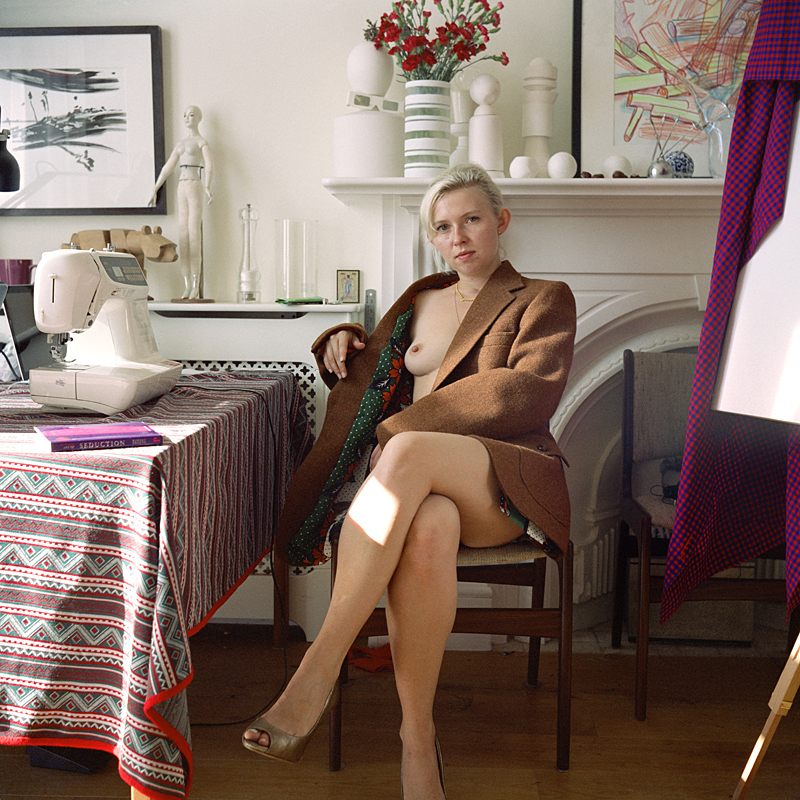
In this photograph we have a young woman sitting at at table with the implication that she is completely nude under her jacket.  The elements in this image include her sewing machine, anatomical statuette and a garment draped over what looks like an artist’s easel.  They suggest that the woman is a fashion designer or seamstress sitting in her working environment, which is different from the previous photograph where the woman is sitting in a street scene.  We also have a book titled ‘Seduction’ on the table that ties in with her nude figure.  The model is posing in a seductive way, bearing one breast to the viewer wile the rest of her figure is covered up by her jacket.  The only other item of clothing is her shoes which are a high heel design, also suggesting a seductive glamour.   Finally, we have her expression which is one of a woman in complete control of her self image.  Her gaze out of the photograph suggests that she has her own unique style and will play the part of ‘seducer’ on her own terms.  When I look at this image, like the previous, I see a great strength and independent spirit coming through.  It’s easy to see the connection with the artist in these individual images, but the messaging is much clearer when seen in the rest of the series.  Kapajeva left Estonia to explore her own independence, strength and desire to create her own style.  It’s clear to interpret these images as telling her story, even though she isn’t involved directly in the visual.

Sophie Calle

We were introduced to Sophie Calle in Project 2 of this course.  Her famous work Take Care of Yourself tells the story of her being dumped by her lover via email.  Her reaction to this remote, detached separation was to share the email with a group of women (107 of them).  Calle asked the women to react or respond in their own way, resulting in a piece of work that was mixed media.  In some cases, the women responded by critiquing or editing the text, while others physically destroyed a printed copy of it.  One of the women was a biathlete who shot a copy of the email with her biathlon rifle.  Rather than simply being a photographic project, Calle achieved a belittling and public shaming of her former lover without ever mentioning his name.  She did, as the course notes describe, demean the power of the email and turned it into a joke for everyone to see.  What interested me in re-visiting the work was that the common thread through the pieces within it was of course the email and that was something that was happening directly to Calle.  She was the one receiving it and having to deal with the subsequent heartache.  However, the women she sent the message to responded as if they were Calle.  The concept of ‘Hell having no fury like a woman scorned” is real here as each woman reacts in a visceral way that their ‘sister’ might have.  There is no indication that Calle was close to all who took part in the project, so the resulting message leaves us with an insight, but also mystery around Calle’s actual reaction.  Perhaps the women were being extreme in their treatment of it, or perhaps they were merely an outlet for the extreme hurt and anger that the artist was suffering.  Either way, the work is definitely a self-portrait of Calle’s emotion and personality in its curation and also of her gender and the solidarity of women wanting to be respected even when a relationship is coming to an end.

Nigel Shafran

In his work Washing Up, Shafran presents us with a series of images shot from similar perspectives of a kitchen sink space.  Each composition contains common elements such as the sink, the worktops and the kitchen utensils hanging on the wall.  However, each one is composed with some activity occurring or having just occurred within the space.  Shafran describes with this images the way that our lives pass from the viewpoint of the seemingly banal.  His kitchen sink has the remnants of a recent meal or a reference to the comings and goings of him and his partner, Ruth.   Subtle changes in the lighting from natural to artificial and the inclusion of contextual reference such as tinsel lend suggest the passage of time.  Consider the two pictures below:

001washing_up

From the series ‘Washing Up’, by Nigel Shafran (2000) [2]


005washing_up

From the series ‘Washing Up’, by Nigel Shafran (2000) [2]

In the first image, we have the kitchen sink with the the crockery from a meal drying on the rack.  The scene is muted in colour apart from the boldness of the teapot, washing up gloves and the little blue figure sitting on top of the electrical outlet.  The natural light and the teapot suggest the morning, but the intriguing elements in the frame are the letters behind the sink.  The N and R on closer inspection are made from black electrical tape so are not part of the normal tiling of the kitchen.  Their position behind the taps suggest a relationship with them and the initials themselves are those of Nigel and his partner, Ruth.  What is this saying about them in this composition?  Is there. suggestion of opposites or of conflicting moods?  One could be considered hot and the other cold, like the taps themselves.  The picture leads us to question why the lettering and the contrasting decorating of the wall with what looks like cards and photographs.  Clearly something is being said about a point in Nigel’s routine here, but the contextual elements are broad enough for the viewer to draw their narrative.

When we look at the second image, which is the third one in the series, we see the same scene but with something different going on.  Firstly, the lettering has gone, which further points to some temporary event or issue.  We now have part of a bottle of wine and clear evidence of some kind of party.  When we look closer still, there are a number of paint brushes drying on the counter and hanging from the rack.  Perhaps there has been some decorating being celebrated or perhaps some other form of art is being created.  The space in which to create the narrative is equally broad but in each case a different story is being told about Nigel’s life.

The interesting thing about this series is that as indicated in the notes, the photographer is not part of the composition.  Unlike the direct connections that we have with Kapajeva and Calle, the only thing we know for sure is that this is Nigel’s home environment.  His life is playing out in this ordinary scene and while elements are most likely constructed for the photographs, the sense of natural order and passage of time are strong in this work.  Without knowing anything about the photographer, we are almost improvising a story around him through the simple elements or ‘stuff’ that he includes here.

Conclusion

In each example, the point that self-portraiture needs to have the artist present is reinforced.  If narrative can be created by contextual elements that the artist includes, it makes sense that if those elements are part of their life then the work is a self-portrait.  My conclusion from this research is that our traditional impression of what makes a self-portrait stems from the literal representation of the artist from early painting.  Painters were hugely successful people, but because of the absence of print and photographic media, the only way people got to see them was through their self-portraits.  Even then, the pictures were controlled by the artist, revealing just what he or she wanted representing.  I’m reminded of the so-called likenesses that Holbein painted during the Tudor period.  People saw beauty or ugliness, humour or meanness in his subjects which were controlled to the artist’s extent that the famous story of Anne of Cleves being nothing like her portrait [3] demonstrated the power of the painter.  The same can be said for their self-portraits, which could mislead the viewer both in terms of their appearance and their personality.

If we move away from the traditional to the absent self-portrait, we have to derive meaning from very subtle contextual and cultural elements.  We ask questions about Kapajeva’s actual experiences and Shafran’s actual life but that doesn’t stop us from having an impression of the artist, more that there are many different versions we can see and many different conclusions we can draw.

References

[1] Kapajeva M, 2012, Portrait of the artist as a young woman’, Artist Website, http://www.mariakapajeva.com/a-portrait-of-the-artist-as-a-young-woman/

[2]Shafran N, 2000, “Washing Up”, Artist’s Website, http://nigelshafran.com/category/washing-up-2000-2000/page/4/

[3]Unknown, “Anne of Cleves”, The National Portrait Gallery, https://www.npg.org.uk/collections/search/person/mp11081/anne-of-cleves

Assignment 3 Diary

Introduction

This diary is in preparation for Assignment 3.  We are required to keep a diary of a period of two weeks or more, writing two or three pages about myself for each day.

I am starting my diary on 1st August to give me as much material as possible for when I am read to start the assignment.  The diary will be held here as draft, published only when the assignment is underway.  I am going to aim for between 1000 and 1500 words per day.

Saturday 1st August 2020

A planned trip to see Jayne’s mother for the weekend.  She lives in Batley in West Yorkshire, which in the past couple of days has experienced a spike in COVID-19 cases which resulted in an increase in lockdown measures.  After doing some research, we concluded that the family bubble that we had established earlier in the pandemic was still in effect, so we decided to go ahead with the visit.

The journey to Batley is a fairly dull one, taking in many miles of motorway.  If everything goes to plan, the journey takes 2 1/2 hours, but with the vagaries of the M42 and M1, it has stretched out to over 4 hours in the past.  The last time we visited was during the initial relaxing of the rules on going out, when family bubbles could be established with people living on their own.  Since Jayne’s Dad died a few years ago, Hazel has lived on her own, although the people who live near her have been hugely supportive of her.  This visit was more for moral support as much as anything.

We set off a little later in the morning that expected but mercifully, the motorways were relatively clear. I was struck by how busy some stretches were, though as we had all got used to the near-empty streets of lockdown and the silence that went with it.  Now we found ourselves tangled up in traffic, presumably caused by people heading off for their summer holiday.  COVID-19 has resulted in many people having to do what has become known as a Staycation, i.e having a holiday at home or in the UK.  People have been struggling with the lack of structure and in the case of parents, homeschooling.  It shouldn’t have surprised me that there were so many people looking for some form of escape in the sun during August.

It reminded me of a conversation we had with some friends who came around yesterday for a socially-distanced cup of tea.  We’ve been friends for over 20 years and haven’t seen much of them since this madness began, despite living only a couple of miles from each other.  We talked about the way that things were returning to something like normal and arranged to meet up for dinner.  The truth is that although our favourite places in the town are now open, their situation is far from normal.  Face masks and hand cleansers that despite their very best efforts to hide or disguise are becoming a familiar feature in the act of going out.  Our favourite restaurant in town has done a superb job of making it feel normal, though so we resolved with our friends to give it a go as a four.  “Does it matter that we are a foursome that doesn’t live together?” was a question.  “How far do we need to sit apart from each other if it does?”  The nervousness around the whole subject is palpable, but in our case not insurmountable.

We arrived at Batley after a journey talking about my recent submission of Assignment 2, which had quite an effect on me.  Like many of the projects in the course to date, this one challenged my whole way of thinking when it comes to art and photography.  My engineering background, which suited my inquisitiveness about how things worked when I was growing up, taught me to plan and execute to get a specific result.   That result could then be judged and marked accordingly.  This course is the complete opposite in its approach.  The planning needs to be done and the ideas formed into something that can meet the brief.  However, the inspiration for the subjects doesn’t come naturally to me after the stuff that I find relatively easy.  Also, the more I try to force it, worse it becomes.  Jayne and I talked about my wanting to quit the course during that assignment (not for the first time) and really how the feeling of huge discomfort is a sign that things are going in the right direction.  I am changing as a photographer and for the better for sure.  Just need to recognise the signs and ride out the storm that follows.

Jayne’s mother is in great form.  She’s quite remarkable in her outlook on life, which is dominated by positivity and keeping busy.   I’m on duty for cooking dinner as she loves my roast potatoes, apparently.  We talk about the course, which she is always interested in as she was an artist and teacher herself. I sat looking at the four photographs of mine that we had printed for her a few years ago.  When Bryan died, she started to think about how some of the pictures and decorations that the house had were driven by him, while she had never been all that happy with them.  Bryan was a wonderful guy but quite dominant in terms of what he liked and disliked.  It was often better just to got with the flow.  The four images, each landscapes that I had shot over the past few years, were replacing some pictures that she was not fond of.  I was chuffed at the time that she asked for the to be printed and while I did that myself, the mounting and framing that my local framer did set them off perfectly.  What makes me smile about them is the fact that two were shot with my fancy DSLR while the others were with a manual film camera from the 1950s.  I loved the fact that my skill with both pieces of equipment was such that it wasn’t possible to tell the difference with the prints.  Now, though it makes me smile because in the context of my study it’s completely irrelevant.  Technical skill can be easily self taught (in my cases a lot of my learning has been under my own steam), but the learning about how to think like an artist is something quite different.  I found myself wondering what I’d be like by the end of Level 1.

I spent the afternoon working on one of the exercises in Part 3, which I had the space to think about by being here.  Headphones on and listening to a random playlist on my computer, I have worked for about 4 hours now.   Dinner and a film to follow and almost certainly some wine.  One of the drawbacks of lockdown has been the increased alcohol intake for both of us.  It’s not out of control though, more just a case of something nice and relaxing to look forward to at the end of a day generally filled with the monotony of working from home and getting out for some exercise where possible.

Tomorrow I’m taking the most recent addition to my camera collection out for a spin.  It’s an 8mm movie camera from the late 1950s and if offers me an escape from everything in being so different from photography and study.  Looking forward too that immensely.

Sunday 2nd August 2020

After another sweltering night, I got up relatively early in order to visit the local park with the latest addition to my camera collection.  The Zeiss Movikon 8B is a movie camera from the late 1950s and something special for the collection because of the way it’s designed.  Unlike traditional movie cameras that pass the film across the gate perpendicular to the lens, the Movikon’s film spools are orthogonal to it.  What this means is that the transport mechanism has to bend the film through two lots of 90 degrees to expose it.  It’s a sight to behold when loading and unloading, and it really shouldn’t work at all but does.  It continues to remind me of the tenacity of German engineering, which also resulted in the Porsche 911.  In that design, the engine is placed behind the rear axle of the car which is widely acknowledged to be the worst position from a balance and handling perspective.  Porsche paid no attention to the criticism, instead electing to spend over 60 years perfecting the design and resulting in one of the most iconic sports cars in history.  Zeiss may not have made the Movikon for the same length of time, but their idea made the camera compact and easy to handle so it was worth making it work.   This morning I wanted to film the local model boating club.  The club meet every Sunday at the large lake in the middle of the park to ‘sail’ a variety of powered and traditional yachts.  They’ve had a particularly difficult time during COVID-19 as most clubs have, but at least there was a better chance of social distancing in their club.

I loaded up the camera and we started out on our walk.  Batley is an old industrial town which, like many in West Yorkshire was built on the textile industry.   The industrial history is everywhere to be seen, whether it is the old factories themselves, the beautiful houses that the mill owners built for themselves or just the blackened stone from years of burning coal.  In modern times, the mills have all closed and the area was one of many places that experiences huge levels of immigration, resulting in some clashes in culture and race.  The park is popular with everyone though and there are lots of walking routes around the area.  We chose one that ran along the former railway line which is beautiful and a route that we have done many times.   What always strikes me is the contrast between the natural world and the evidence of previous construction.  The banking of the railway is clearly visible and punctuated along its route by classic Victorian bridges.  On the way into the park, we passed the old general hospital which has been derelict for a number of years.  Broken windows, graffiti and slipped roofing tiles create a very sad visual, not just because of the decay but the lack of enthusiasm for saving such a beautiful piece of architecture.

The camera was performing well until we reached the halfway point, when the wind-up motor failed. Disappointing, but I’ve learned over the years that when you collect mechanical camera gear from the last 100 years, you can expect reliability issues.  Probably easily resolved, but it meant that my filming was cut short.  Whatever is wrong with it isn’t serious as the motor started working again once we got home.  Time for a service, I think.   The rest of the morning was preparing to return home.  My mother-in-law is a devout churchgoer and has been able to go to the Sunday service again after a long absence.  Once she had come home from church, we organised her visit to us in Malvern at the end of August.  We would be driving up to collect her for the week, during which we are all headed for Wiltshire for a 90th birthday celebration for one of Jayne’s father’s cousin.  It has been a concern that it wouldn’t be able to go ahead because of the pandemic, but it’s looking more promising now.  The overwhelming feeling is that everything we plan for the rest of 2020 has the potential to be cancelled, given the current news headlines about outbreaks in the UK.  In fact, our trip to see Hazel was at risk on Friday as her region had been subject to some local lockdown restrictions.   We are hoping to make the party but are under no illusions about what the immediate future holds.

One the way home, we started planning our next holiday.  We have had two cancelled this year so far, with a number of triathlon events that would include long weekends also being called off.  With the rest of the year provisionally planned, we turned our attention to 2021 and 2022.  Towards the end of this year, we have hired a camper van as a trial with a view to buying early next year.  It’s something we are both very excited about because it give us a little more freedom to take off for short breaks whenever we like.   With this in mind, the holiday planning was really fluid at this stage.  What it brought home to me was the importance of having something to look forward to, even if it’s not fixed.  The events of this year have damaged all of us to some extent, so the need to plan enjoyable things is important more now than ever.

When we arrived home, I reviewed the footage from my hedgehog cameras.  I’ve been obsessed with hedgehogs for the past few years, ever since Jayne claimed to have seen one wandering down our newly-finished drive.  I hadn’t seen a hedgehog for many years and when I started to research their plight, I discovered how vulnerable they were to potential extinction within the next decade, without some change in our behaviour towards their habitat.  In the past week they have been officially added to the government ‘red list’.   After our sighting, I bought a wildlife camera to prove it wasn’t her imagination.  To my surprise, we were visited by several hogs that first night when I put food out.  Fast forward nearly 3 years and we have a number of feeding stations and cameras that capture these mysterious creatures going about their nocturnal activities.  I’ve also rescued a number and we are an official release garden for hogs that are rehabilitated at the local rescue.  This is probably the most rewarding thing that I do, so it’s always an emotionally enriching experience to review the footage of the night before.

The day ended with my cooking dinner and Jayne and I indulging our habit of watching boxsets on the TV.  The current one is a detective drama that runs for 4 seasons and we have just started the final one.  I look forward to the quiet time I have with my wife after a day of working, or in this case travelling.  Neither of us are out of bed after about 9.30 as we have early starts during the working week, so a couple of episodes of a show are the perfect way to pass from day to night.

Monday 3rd August 2020

Monday’s are always an interesting and almost nerve-wracking experience for me since going part time in 2018.  I only work 4 days a week now, which is a decision I made when I wanted to start studying for my degree.   For the most, work is manageable during the shortened week and I am always conscious of the people around me who work many additional hours.  Some of my leadership colleagues will compress their hours into four days and not being in the office on Friday, but inevitably they end up working that time as well.  My decision to change my contract and reduce my salary accordingly was designed to prevent me from feeling obliged to work the additional time.  For the main, it works which always makes me wonder whether I’m somebody who needs some limiting rules in place to give me the confidence to push back.  When I think about this course so far, I see evidence of those constraints in how I go about the practical work.   When I finished my submission for EYV, the criticism from my tutor was still ringing in my ears.  I had chosen a definite style for my series for Assignment 5 which fell into what I had become comfortable with over the preceding years learning the technical skills part of photography.  When I first started playing with low key lighting in a studio environment, I was following instructions from Youtube.  Single key lights and ‘Rembrandt Lighting’ dominated my thinking and that was evident with the submission several years later.  My tutor praised the skill but it didn’t say anything about me, which is probably where I find myself in most things; governed entirely by learning and the comfort zone that creates, without taking any real risks that speak to who I am.

Every morning I had a Skype call with my team.  Although a relatively small group at just over 20, my team spans 3 management disciplines and is regarded by many as a ‘glue’ that joins up the projects with Engineering.   This has made the remote working arrangement that we have in place a significant challenge in that the different areas have different needs and concerns about the future post-COVID.  Our industry has suffered from not having as many planes flying and passengers travelling, but we won’t understand the extent of that impact until some level of normality has been regained.   The morning calls are intended to get everyone in the team together in a virtual sense and is used to brief them on any emerging news and just to see how everyone is.  By and large it has been well received, but the challenge is being able to stay up to date on the news while being out of the office every Friday.   The business has always been a hotbed of gossip and sharing of stories, so making sure that important messages are being heard from me and not the rumour mill has proven to be important.  This morning was an example of how we get it wrong.  In the previous week, we had heard of a new process for people to return to work safely.  It was created by someone who likes structure and order, so is incredibly prescriptive.  Our leadership team didn’t know anything about it until Thursday afternoon, by which time I wasn’t able to find a slot to brief the team.  In the subsequent Friday, it became apparent that the message had got around the business like wildfire and many emails flew around citing the importance of following the process.  What was missed in the excitement was that it only actually applied to a specific building and in the case of my team, only 3 people.  When I joined the call today, the confusion was well established.  I had to put out this fire, which wasn’t my doing.  It got me thinking about the amount of control we have in our lives when there is something as serious as the pandemic happening.  It also reminded me of the importance of communication and interpretation.  Even with the best efforts, which this definitely wasn’t, we can all misinterpret the message.  I have always tried to preach this message to everyone who has worked for me over the past 25 years, but in the face of this fiasco I found myself falling short of my own teaching.  I emailed one of my leadership colleagues who I have a great working relationship with and respect hugely.  The mail criticised the mixed messages that we were having about returning to work.  What I didn’t realised was that I was almost responding to his important role of managing this very same issue for another building.  He read my criticism as one levelled at him, which was the furthest possible thing from the truth of my intention.   All resolved, but a lesson in how bad remote communication can be.

The rest of the day went well, with some major problems that we have being having being solved.  This sums up my working life; problems of varying severity that need to be solved.  When it comes to my approach to solving problems, I’m told (mainly by my wife) that I’m effective when the problem is immediate and serious, but when it’s something that is slow burning, not so.  She likens it to a fighting dog response; some breeds of dog that were used for this barbaric practice were selected for their delayed pain response which made them more resilient.  In my case, I’m reminded of an incident that happened several years ago while traveling to the cottage we were spending Christmas at in Yorkshire.   There had been heavy rain at the time and lots of the small roads had become flooded.  As we approached the last few miles of our journey we drove over a small rise and found ourselves crashing into a deep flood.   The stream that ran alongside the road had breached and was crossing the road in the valley.   We were properly in the middle of it and while my wife panicked, I went into automatic pilot and quickly realised that the first priority was to keep the engine running.  Gunning the throttle, I looked at what was ahead.  We could see the line of the sheep fence that followed the road rising up in front of us.  As long as the road didn’t go any deeper, we should be ok if we followed that.  I put the car in gear and went for it.  The water was so deep that it was coming over the bonnet of the car.  After a minute or so, we emerged from flood and carried on the remaining few miles to the cottage.   It wasn’t until a while later while we enjoyed a first pint of the holiday, that I realised the severity of the situation that we were in.   My realisation was accompanied by complete post-traumatic stress, while my now calm wife watched with amusement.   In the context of my study, my natural response doesn’t lend itself to getting the assignments underway and finished; more the greater the procrastination, the worse things become.  I sometimes wish that this was as straightforward as the job I am paid for.

Tuesday 4th August 2020

Tuesday is the one day in the week that I go to the office.  It was a decision that the engineering leadership team took in order to help drive communication between us as well as offering our team members the opportunity to come in and see us if they needed to.  One of the biggest issues with the remote working arrangement is that we don’t all have cameras activated on our computers for a variety of reasons.  That means that the regularity of conference calls can leave people feeling isolated from the rest of their colleagues.  It’s particularly difficult for people who live alone that aren’t used to so much time by themselves.  I’ve had a number of occurrences of this isolation causing stress that boiled over into a rant or meltdown by people who work for me, the hardest part for me is understanding the root cause which in itself is difficult when I can’t read their body language.  I’ve been thinking recently on the effects of isolation, shielding and the relentless nature of this pandemic; how it will affect people’s mental health once some level of normality has been achieved through vaccines etc.  I really do think that this experience has been the hardest thing humanity has had to deal with since the Second World War.  The added dimension of modern technology and round-the-clock news tests human resilience further.  I wonder if the remotest parts of the planet have any clue what is happening around them when access to this information is severely restricted.  Like the ancient civilisations of South America that were only discovered in the past hundred years or so, they have an innocent ignorance of the impact of the disease on the rest of the population, as well as the impending threat of climate change.

On this particular Tuesday, I witnessed the stress getting to one of my peers who is having a particularly difficult time with the lack of clarity around one of the projects.  This uncertainty boiled over into losing of temper, which caused the added stress of embarrassment and a stunned realisation that some issues really need tackling head on.  The ability for us to articulate our concerns through verbal and non-verbal communication is what delineates our position in society.  What I mean by this is with higher level education and a professional career comes an expectation. that we can keep on message, keep our emotions back for when we really need them.  With lower levels of education or bad experiences and lack of role models to aspire to, that same restraint can be exhausted much more quickly.  I was thinking that the pandemic was becoming a leveller, with everyone in fear of their health and that of their loved ones.  With the fear of uncertainty, particularly around work the frustration can be much more visible.  It’s certainly what I’ve experienced in recent times.   What I realised today, though was that while work is difficult and frustrating at times, there isn’t anything about it that evokes the emotions that I experienced with the most recent assignment.  At times, working on that series was a wonderful experience of not trying to overthink the brief.  However, at times, the lack of inspiration and my in-built belief that I should be able to somehow make inspiration happen was incredibly depressing.  The more I tried, the worse it got.  The worse it got, the more I wanted to quit altogether.  Only when I finished the work and selected the final images, did I appreciate what I had achieved.  I struggle to find the same things in my working life that take me on such an emotional rollercoaster, which I believe not to be symptom of disliking my job, but instead that it makes me uncomfortable.  The old adage “what doesn’t kill you makes you stronger” may have some element of truth to it.  As I write this, I’m thinking about all of the other potential narrative stories I could tell using my experience of Assignment 2 as a baseline.  I certainly want to have a go at progressing my narrative about the decline and rebirth of my town’s High Street, which is something that was originally just a viewpoint rather than a story.

Back to the job in hand.  I had already started the ball rolling on sorting out one of my shortages of staff in a particular area and today was the day that I had to discuss the plan with the people who run that particular project area.  Our company is run as a matrix, meaning that there is a group of leadership that manage the delivery of the projects and a group that are responsible for providing the right people to work on them.  There has always been a tension between the two axes of the matrix in that the people technically work for me, but are embedded within the projects.  Naturally, they become part of the delivery team and every project area wants stability in the personnel base.  With the current pandemic situation, we have been unable to recruit to fill the gaps left by natural attrition, which has left my team with major challenges in how they support the projects.  In this case today, I had to tell the project that I planned to move one of their longest serving team members to another area whose need was greater.  It wasn’t ever going to be an easy conversation and sure enough the mood wasn’t great.  However, I finished the day believing that the plan I had put in place was the right one.   What made the day finish on a high was that the person I’d found to take over from that team member was really keen to get started.  Cautiously optimistic.

Wednesday 5th August 2020

Wednesday signalled a return to home working.  Not really a challenge aside from the constant need for conference calls.  Tuesdays offer a small respite in terms of actually seeing my colleagues, but Wednesdays always feel like a return to the normality that has been part of our lives since the end of March.   The day started with the usual call with the team to check if they are ok.  At the start of lockdown we had a number in our team that either exhibited COVID symptoms or who lived with someone who did.  The obvious similarities to the symptoms to flu-like bugs caused us to be a little more panicky than usual.  Were the symptoms a sign of the dreaded virus or just another illness that we pick up during the course of a year.  I had at least one team member that had the unusual symptoms of loss of smell and taste, but they quickly returned so if it was a real case, it was mild at best.  Other people had partners who were front-line NHS and experienced their colleagues going down with the virus and being confirmed as such.  I remember one whose wife worked in a department that had 3 doctors test positive for the virus, although mercifully she didn’t get it.  As we were all working from home, there was little to no risk of it causing an issue in the business, but it was still a theme that people would tell us about their symptoms on the morning call.  On this particular morning, I realised how that doesnt happen at all now.  Isolation was indeed a good way of reducing the risk to our health, it would seem.  Today, everyone was in good form.

The agenda for the day was half yearly reviews for three of the team.  These usually take the form of looking at what they had managed to achieve against their objectives for the whole year.  The intention was to determine if anything needed to change in the second half of the year.  For me, the company is in survival mode because of the pandemic and while we are doing well in a volatile marketplace, I’m not expecting my team to have achieved any growth activities.  Instead, we are all on a mission to reduce costs to help the business and in that respect there has been some good progress.  I enjoy the one to one meetings I have them, although I value seeing them more than just talking to them for reasons I have already discussed.   All three of today’s meetings went well.

The less good part of today was taken up with some difficult conversations with my peers.  Our situation is stressful for everyone, but the uncertainty is affecting some of my colleagues more than others.  One in particular is struggling with the lack of clarity from the executive team.  We are a close knit team and I see it as part of my job to support my colleagues, no matter what.  Today was about us sharing our worries and seeing if we could mutually reassure each other that we would still have a job at the end of this pandemic.  I think it went ok, but like many things in life it is not a single activity that solves the problem.  We will continue to prop each other up during the difficult times and take the help when we need it.

The day ended with a recipe from Jayne’s new cookbook.  We’ve been pretty careful with our food during lockdown and consider ourselves to have a pretty healthy diet.  The only difference is, like many we’ve enjoyed more wine that we would normally have.  While it’s under control, it teaches a lesson in how people can become dependent on the things that make them happy when everything else is hard going.  In the case of alcohol, it’s a hidden threat that enjoyment becomes utter dependency, which nobody thinks is a good idea.  The book was all vegetarian, which meant that it had a number of highly creative recipes in it.  We chose a vegetable curry, which we really enjoyed.  Far from the old-fashioned notion that vegetarian recipes were somehow missing an element with the absence of meat or fish, this was something created around the central components.  It was something I would happily order in a cafe or bar.  I started to think about acceptance, whether explicit or implied.  I am someone who is realistic as opposed to optimistic or pessimistic.  There is a balance of thought that hopes for the best but isn’t surprised when things are not as they should be.  My choice to accept the latter is something that I wrestle with.  When I was suffering from depression, acceptance equated in my mind to not being able to do better or somehow not being worthy of things being right.  As I started to recover, my view shifted to one of ‘try everything and put up or shut up’.  It was a healthy step, but now results in my being frustrated and grumpy when I don’t see something being as it should.  If left unchecked, it can build to a level where I explode.   I find that other people’s behaviour others is one of the biggest triggers.  During the afternoon, I had been asked to take on a piece of work on behalf of my boss, who is very busy at the moment.   It’s a simple enough thing to achieve, but one of the people involved is from another part of the company.  He and I don’t get on at all after an incident involving one of my team a couple of years ago.  It’s apparent that if the guy can avoid working with me, he will; opting instead to go around me to my boss.  In this particular case, the decision was made that it was me he had to deal with.  He called a meeting that I was invited to and a the allotted time, didn’t turn up.  When he rescheduled it, my boss was back on the invitations and I was relegated to an optional attendee.  It cuts no ice with me of my boss, so the guy will have to ‘put up or shut up’, nevertheless it’s a frustrating behaviour to me because of the lack of respect he has for my position.  Rather than make me feel inferior though as it would have done years ago, I just get angry.  It won’t come to anything because its a professional relationship that we will maintain.  Given the choice, neither of us would want to spend any time with the other which suits us just fine.

Thursday 6th August 2020

Today is the last day of my working week and, unusually for the new normal, I find myself going into the office.  This was because I had a meeting about how to move on from the restrictions that we currently have in place and keep those who are returning to work safe.  The building was practically empty with only about 30 people in a space that can accommodate a few hundred.  We are planning to reconfigure the space to allow for social distancing and what my colleague refers to as ‘hybrid working’.  This means that people can go back into the office if their function or project requires them to and find a space that is distanced from others somewhere in the building.  It means that we are going to turn the whole building into hot desks.  When I first came across hot desks many years ago, I thought they were ideal for people who needed a space somewhere other than their usual office.  I was initially used to having my own office at my previous company and at the very worst, sharing that space with one or two people.  Then as the company built larger open-plan buildings to replace the old ones, we all ended up in large open offices with 20 to 30 people in them.  It was culture shock at the time, but much more collaborative in the long run.  Hot desks were part of that arrangement, which meant that people could be in multiple locations.  Today’s thought about making the whole space fluid is something that is done by other companies, but not ours.  My immediate thoughts were around how I was going to break it to the people.  One of the things I’ve learned over the years is that after salary, the most decisive and passion-inducing topic was accommodation.  Like me when I had my own office (and one of them was so big that it had a full-sized conference table in it), we become attached to and comfortable with what we know.  Our desks are our little independent states within the ‘world’ that is the rest of the office.  We personalise our space with ornaments and photographs and call it our own.  The truth is that it’s not our own, it belongs to the business.  The need to de-personalise the workspaces is something that we aren’t undertaking lightly, but it won’t be seen that way by the people who work for us.  I have a team member with four computer screens who is going to go mad when I tell her she can have only one.  If I think about my own sense of home, I’m reminded of the time when home was the last place I wanted to be.  I was being driven slowly mad by noise from our upstairs neighbour, which became the trigger for a series of serious depressive episodes that eventually landed me in hospital.  I had no axe to grind with our neighbours and they could never have fully understood the damage they were doing to me.  However, we had to sell the flat and move to stand any chance of things being better.  Now, I’m much healthier and happier in a detached house where I have felt at home.  My passion for collecting cameras and surrounding myself with things that I like stems from that need to build a sense of home.  It’s important to me, but not in a work sense.  I’m looking forward to not being shackled to one location; I just have to find a way of putting out the fires with the team when they catch alight.

The other interesting thing today was that I had recently been asked to lend my experience to a proposition that we are preparing for a client.  Having just been included in the team that are preparing it and the timing with it being holiday season, I’ve busied myself thus far with reading into the subject.  My colleagues recently prepared a paper that they sent to the client discussing some potential technical solutions to their problem.    What I learned from reading it was that we had some ideas, all of which would solve what we know to be their problem at present.  It was intended for a number of follow-up meetings to explore what the customer needed and the best solution for them.  This was all good, but I pointed out to the author that there wasn’t a sense of what we thought was the best option.  He was confused by this, saying that he had deliberately left the options as having equal merit so as to not lead the customer away from something that might be important to them.  Again, this was fine but I explained that the reason they were talking to us in the first place was because of our expertise and experience of developing such solutions over the past 25 years.  If I were them, I’d want to know what that expertise says could be the best solution.  I started to think about our interactions with people who we perceive to know something we don’t or have experiences that we haven’t had.  We seek to know what they think rather than be left alone to roll the dice and make a choice.  Over the past few years, I have taught a training course at work that explores how to get to the heart of what a customer wants.  The course teaches conversational and brainstorming techniques to tease out the details in a methodical manner and to test our assumptions about what we know.  One of the core themes is that the more we learn and experience, the more we trust our own judgement.  For the main, this works ok but in some cases we can assume and draw conclusions that are incorrect or don’t quite ring true.  In the case of a commercial proposition, the gap between right and not quite right is small but it can cost us the potential business.  I reminded the author of the paper of the course that I remember him attending and we talked about the key points.  It was fairly easy to see that he’d done all of the right things to avoid untested assumption, but in doing so had almost lacked the confidence to say what he thought was the right answer.  It reminded me of my first management role when I was in my twenties and my boss at the time.  I went into his office one day and told him what the problem was that I wanted to solve.  At the end of my speech, he asked me why I’d told him all that.  He quoted the cringeworthy line “Don’t bring me problems, bring me solutions” with a fair degree of tongue-in-cheek humour.  I agreed and left his office to think of some solutions.  When I returned, he fixed me with the same blank stare as before when I finished my pitch.  “So, what do you think we should do?  You’re in charge of this project, so tell me what you want to do and I’ll agree or disagree with you going to do it”.  My answer was simple and his response was equally simple in agreeing with my suggestion.  He had appointed me to the job because he knew I could make those decisions.  I went from asking for the solution to telling him what it was and reducing his role to one of Yes/No.  It is something I try to do to this day in many parts of my life.  From deciding on a purchase or arrangement that my wife and I want to make, to how much I’m willing to bid on an eBay auction.  Sometimes we just need to put our hand up and say what we think.  I’m looking forward to being involved in this project because of the capability we have to make the customer really happy.

Friday 7th August 2020

The end of my working week has arrived.  As with all of my Fridays, the main focus is this course.  This morning I had a meeting scheduled with my tutor to discuss my Assignment 2 submission “Photographing the Unseen”.  Like all of the assignments to date, I found it to be a huge challenge to the way I think, searching for metaphors rather than relying on the literal.  A few weeks ago, I took a week of work to relax and to complete the assignment.  Relaxing during lockdown is something I’ve struggled with, not because of any personal circumstances but just because I’ve observed all of the plans we have made dissolve one by one.  Jayne and I have lost two holidays so far this year through COVID and have not been able to enjoy our time together competing in triathlon events.  Whereas last year saw us complete our longest ever open-water swim (3.8km) and compete in another Weymouth Half Ironman with my doing the swim leg of the relay, this year has seen none of those wonderful things.  The plan for the week off was to go for a couple of days out and travel quite a distance to do some swimming, just to say that we had in 2020.  The two issues with this plan were that most places are still restricted to the point where they are a surreal experience and even when we did swim, a combination of my more sedentary lifestyle this year and an injury that I picked up in January, made the whole thing less fun for me.  Add the assignment to all that and I didn’t feel all that relaxed by the time I went back to work.   The assignment itself took me on a rollercoaster of emotions ranging from the joy of coming up with an idea to the depressing feeling of not being able to make it happen.  I reached a point where I wanted to quit, the third time so far in the past 2 years.  Photography has been a pleasure over the years and this course was starting to make me resent it.  Still, when the final selection of images and text were complete, I was happy with what I had produced.   My tutor feedback was positive; I had met the brief which was a good start.  The series worked on some levels and not on others, which is something I’ve come to expect.  My tutor made the excellent point that the photographers that I have been studied have developed their narrative ideas over a long period of time; the finished articles were never ‘right first time’.   What we are trying to do in this course is to create a narrative under some time pressure and with just our research and imagination at our disposal.  As my tutor pointed out, “if it were easy, we would all be successful photographers”.   As always, the written feedback included recommended artists to look at and some thoughts on how I might develop ideas for Assignment 3.

I spent some of the day researching and the rest of the afternoon relaxing; I sometimes just need to digest what I’ve been told.  When it came to our afternoon walk, Jayne and I were discussing the assignment and started to bounce some ideas around for Assignment 3.  I got home and started working on the idea as part of another blog post – it felt good to have the nucleus of an idea, even if Assignment 3 is some way off.

The day was rounded off with us going out for dinner with some friends.  Like many, we haven’t seen each other since the end of March because of the lockdown and in the run up to this planned evening together, were wondering if we should.  The rules around getting together have certainly become more confusing since the simple “Stay at Home” of the first few months.  We worked out that it was ok and spent a very pleasant evening socially distancing in one of our favourite restaurants in town.  It brought home to me how much I miss contact with other people.  While Jayne and I are more than happy in each other’s company and we love our house, the detachment from the people does impact on me.  Technology has made things easier, but for me it’s not the same.  On the way home, I thought about how lucky we are when compared to other people who are struggling with the same feelings.  People deal with their circumstances very differently, whether it’s adapting their business by going online or, as in the case of the Italians living in the major cities singing opera from their balconies.

I’m currently struggling to sleep at the moment; a combination of the recent warm weather, the stress of what is going on at work and my general difficulties with the pandemic and its impact on what I consider normal.  I lay awake at 2am thinking about the feedback and how I might develop my idea for Assignment 3.

Saturday 8th August 2020

A slow start through lack of sleep the night before.  I was woken by my wife who was preparing to go out for a bike ride before the heatwave took hold later in the day.  My wife is a serious athlete, who has competed in 8 marathons, 6 of which were the world majors, before ‘retiring’ from distance running to take up triathlon.  So far she has competed internationally in Duathlon and Aquathlon which are variants of the swim, bike, run.  She continues to be a total hero to me, although I wouldn’t say that she inspires me as such.  I am a good swimmer, so we have been competing together at events where I can take part in a relay.  I’ve always felt proud of my own distance swimming achievements, though.  My first distance swim was 2 miles open water, which is a massive challenge in its own right.  Even though COVID has put paid to my training this year, I am determined to swim the 11 mile length of Lake Windermere before I am 50 in just under 2 and a half years’ time.

On this particular morning, I wasn’t going anywhere.  One of the things I love about my house is how quiet it is; a stark contrast to our how our previous home ended up.  Noise is the biggest single cause of stress in me, resulting in distress  but also extreme anger.  My main issues are around the intrusiveness of other people, so noisy buildings or hotel rooms are generally very difficult for me.  Although I’ve recovered over the years, we still need to take special measures to ensure that holidays don’t introduce this stress and essentially spoil things for us both (the impact on my mood being what it is).  This often means spending more money on upgraded or luxury accommodation, which is something I’m not exactly complaining about.   Our house is a sanctuary of peace and quiet as it’s comfortably detached from the people who live in the same road.  On this particular morning nothing was any different, so I dozed until I realised that I really should get up and do something.   My plan was to take one of my many cameras out and do some landscape or architectural shooting.  The problem with that is that the light has to really be subtle and interesting, not harsh like that encountered on a bright, sunny day.  Saturday was going to get very hot and be very sunny indeed, so the sensible plan would have been to take my wife’s cue and get going early.  I had now left it too late for that, really.  The main change in my photography that I have observed over the past couple of years is that while I used to enjoy taking landscape or architectural photographs, I am now much more interested in subjects that mean something.  I’m not polarised against those two genres, but they don’t interest me as much as they once did.  So a combination of being tired, chilled and disinterested meant that I didn’t get going until late morning, but which time the light was all wrong.  I was still keen to take a camera with me on my walk, as I always do, so I loaded up my Pentax 645 and headed out.  I enjoy walking around the place I live in and for Assignment 2, discovered a number of wooded pathways around the small trading estate area.  Many of the these views were either the inspiration for some of the photographs in the assignment or appeared in the final selection.  Today was just as interesting a walk as any through the warren of paths as I was shooting high contrast black and white film in my camera.  The only real time that I shoot during such harsh conditions is when I know that the contrast will somehow improve the picture.

I stopped for lunch at one of the cafes on the estate and thought about where to head next.  By this time the heat of the day was building and I was beginning to get concerned.  The cause of my anxiety goes back to when we first bought our convertible sports car several years ago.  We decided to spend some time in Kent for our summer holiday and at the end of the week, drive along the south coast to Brighton for a few days before heading home.  That summer was also very hot and as we drove along the coast road with the roof down, I was obvious to the intensity of sun on my head and neck as the breeze kept me relatively cool.  When we reached Brighton, I immediately started to feel unwell, with severe shivering and nausea taking over.  Within an hour I was really ill an spent the next three days stuck in the air-conditioned room trying to regulate my temperature.  It was so bad that my wife was considering phoning for an ambulance as she was worried that it might be more serious than it first appeared.  Eventually as it came closer to the end of our break, I started to feel better but to this day I’ve never been so ill or scared of being ill in all of my life.  The other consequence of this experience is that I’ve never been able to handle direct sunlight or heat for long periods, hence my beginning to worry at the cafe.

I eventually left the cafe to continue my walk and started to struggle after a couple more miles.  When Jayne rang me. I was in some trouble as although I had properly hydrated and applied sun lotion during the walk, I’d forgotten to take my hat which is the only real protection for this problem.   She had to collect me in the car, by which time I was ready to pass out (I believe I did momentarily in the passenger seat).  A narrow escape as once I was indoors again, I started to feel better.  The rest of the day was spent relaxing, watching the cricket on the television and preparing the evening meal.  It made me sad that such a summer’s day had ended up in a bit of a mess.  I love the warm, dry, long summer days more than any of the other seasons, so try to make the most of them when I can.  I had to console myself by sitting on the balcony overlooking the back garden for a while to watch the sun go down.

Sunday 9th August 2020

After another difficult night’s sleep, today was going to be focused on the course.  On Friday, Jayne and I had discussed ideas for Assignment 3, which is about putting yourself in the picture.  The idea is to use this diary to somehow guide the story of the series and the inclusion of the photographer (me) adds the personal connection to it.   I was looking at Geolocations, but photography duo Larson Shindelman.  They took posts from the social media platform Twitter and found the location by using the embedded geotagging data that is publicly available whenever people post.  They then visited the location with a large format film camera and shot a photograph that was then paired with the tweet itself.  Like my random thoughts, they paired locations with words that appear to be disconnected.  However, unlike my series they were exploring something very specific in the location of these public streams of consciousness.  I’ve always been cautious around Twitter for a number of reasons.  The first is the sheer scale and accessibility of the information being shared.  Unlike the platforms where the audience is limited to people you know, Twitter is very, very public which is fine until it isn’t.  We only need to be aware of the regular tweets of President Trump, and the reactions around the world to them, to see the impact of Twitter on our way of life.   My second concern is how the internet has a very long memory.  Things that are tweeted in haste or some lack of judgement can come back to haunt people many years later.  I’m reminded of the Hollywood director James Gunn who was sacked for views expressed many years before he made the producers billions in revenues from his highly successful Marvel films.  He was eventually reinstated after his heartfelt apology and subsequent backlash from actors and fans alike.   These two aspects mean that while I do enjoy reading tweets of ‘famous’ people that interest me, I’ve never engaged with the platform.  So imagine having someone take your tweets and seeking out the place where they happened and photographing it.  The place could be anywhere and have any meaning to the individual, but to the viewer of the series the images have an almost ethereal connection.  This is where an event, a reaction or a random thought took place.  There is also a comment on the passing of time; yes the internet never forgets, but at the time of the photograph the tweet had happened and was consigned to history.

For my series I have been thinking about another recent innovation in information technology.  What3words is a mapping system that breaks the world into 3x3m squares and assigns them a coordinate made up from 3 words.  The unique combination of words means that the application can be used to locate and navigate in a similar way to GPS.  It’s become popular with non-technical people who aren’t familiar with GPS coordinates when they suddenly find themselves in an emergency.  Some of the emergency services have also started to use it.  My first thoughts were about searching the words used for key words about me and then visiting those locations.  My photographs would include me as a physical waypoint marker in the scene at the precise location given.  While this idea worked in theory, I would need to expand it to somehow incorporate something within this diary.  As I started to research the what3words app, I learned that its possible to find the three word coordinates from an address or postcode, it wasn’t possible for the reverse search from one or more of the words themselves.  What this meant was that it wouldn’t be possible to search for keywords that could form an address that I could use in the photography.  I would need to rethink the idea and explore what the core thought was that created it.  The danger here is that I gravitate to something clever that doesn’t have the impact either because the underlying story isn’t strong enough or the photographs themselves are weak.

Monday 10th August 2020

The beginning of another week working from home.  Since we went into lockdown back in March, the routine has been familiar and monotonous.  Although I am part time, the weeks become weekends and then weeks again.  The extreme lockdown measures that were introduced at the end of March destroyed the excitement of having Fridays off work almost overnight.  Now, I would get to the end of my working week and find myself stuck in the same room for the fifth day.  The only difference was the need to press on with the coursework.   The easing of lockdown brought some relief in that we could go out more often and buy things from non-essential businesses but the feelings of being isolated remained for me.  The peak of that feeling was every Monday morning like this one, where the week started all over again – same as the previous.
Like all Mondays, the first order of business was the team call.  I’ve been running these ever since we went into lockdown, for many reasons but principally to make sure everyone is ok.  Some live as part of a family and some live by themselves, so it was really important at the start of lockdown that I was able to connect with everyone.  As the time has passed, the meeting has become more about briefing them on any new information about the business and the changes that we are going through because of the pandemic.  These messages are sometimes interesting, sometimes boring and sometimes controversial.  Where there are questions or challenges from the team about what they are being told, I endeavour to resolve them if I can.  It’s not always possible, though as the engineering leadership team isn’t currently involved in some of the higher-level discussions or decisions.  At the point that we are, some of the information that is being briefed will be easier to explain.  For now, though there is a sense of ‘no news is good news’ – a bizarre expression that suggests that ignorance of something happening is better than knowing.  In my experience, that’s rarely the case.

Today’s subject was addressing something that had leaked to the wider community before the official announcement.   The subject was relatively harmless on the surface but has a deeper meaning for many.  Most of the engineering organisation has been working from home continuously since lockdown, but over the past couple of months some have returned on to the site on a temporary basis.  As with all businesses we are trying to introduce returning to the office in a gradual and safe way as an outbreak in the buildings would be catastrophic to our ability to manufacture.  One of the plans that I’ve been involved in is implementing a hot desk arrangement in the main office building.  In order to do this, we need everyone to clear their personal possessions from their desks so that anyone can use the space should social distancing prevent them from sitting at their own.  The arrangements for this plan were being finalised last week when I was in the office, but somebody send the details to their own team before the announcement.  What followed were lots of complaints and concerns raised, which isn’t a surprise to me but a shame nonetheless.  Throughout my career, the second most emotive subject behind salary is accommodation or office space.  People naturally want to work in a space they consider their own.  They personalise the space with photographs, coffee cups and ornaments that make them feel at home and in an open plan office like ours, get accustomed to the people who sit near them.  We all have a sense of mini community that is similar but different in comparison to what we might have outside of work.  Asking people to give that up is a difficult thing to manage.  It’s true that the staff don’t own the space or equipment that they use, but we are not trying to demotivate anyone by being heavy handed.  Today’s meeting sought to answer some of the team’s questions and set them at ease.

The rest of the day was devoted to working on a new opportunity that we have for business with a new aircraft.  Since being in the business, I’ve not wanted to get involved to any great detail in the technology and engineering.   This was a conscious decision that I made early on.  I had spent the previous 16 years managing projects and teams in another company, which was exciting because of the engagement with the customers and the engineering community alike.  It was all about problem solving and managing risk that may impact the company or the customer.  What the role didn’t really involve was the more human side of working in large teams.  I still think about a meeting that was held by the chief engineer for our area to look at ‘lessons learned’ from the project that I had just completed.  My whole project team were invited to attend and we discussed the successes and failures that we had encountered during the the work.  One part of the meeting was devoted to their feedback on how it had gone and in particular my leadership.  It was hard to listen to as although everyone enjoyed the challenges and the reward of having completed the work for the business, they all felt that I’d worked them very hard.  In some cases, people suffered in silence with the stress of our deadlines which I was almost oblivious to.  When I joined my current company, it was as a team leader rather than a project manager.  This role allowed me to support the team away from the projects and help them improve their performance rather than drive them to deliverables for the business.  Since joining I have remained in this type of role although it has expanded significantly.  More recently, though my leadership has asked me to get more involved in building a relationship with a customer we have little engagement with, but significant opportunities.  It feels good to be working in this space again after so many years.  I know I am going to enjoy adding his element to my current role, but see the challenges of managing the time devoted to it.

Tuesday 11th August 2020

Tuesday is a day of what always feels like the same meeting.  It begins with the Engineering Leadership meeting for the site that is run by the Engineering Director for the larger of the two businesses.  This meeting is where anything that affects the whole site is raised and discussed, along with any important visits, operational issues etc.  From this meeting comes a set of minutes that are used to two further meetings with different attendees.  The first is our divisional leadership meeting where my boss discusses with his whole team, some of which don’t attend the previous one.  The final meeting is with my old boss’ team, which I attend because I want to stay in touch with what is going on – this one just happens to be on a Tuesday as well.  This almost farcical sequence of events regularly gets me thinking about status and hierarchy.  I’m the leader of the operations and project management group in our business, which is part of the engineering leadership team.  My colleagues and I have the people that work on all of the projects across the product and customer base.  We have to resolve problems and make decisions for our engineering team that also fit into the wider picture.  The funny thing is that unlike many of my colleagues, I don’t really see this position as a symbol of status.   We are arranged in a matrix organisation and the mantra of the overall US leadership is that everyone has a part to play in keeping everyone else accountable.  We are encouraged to raise issues that naturally affect the safety of our products as they have implications for the public who fly on the aircraft.  However, we are also encouraged to raise issues that contravene our policies or moral standards which means that somebody very junior should be able to discuss something with somebody much more senior if they see something the latter is doing that could be a problem.  Great in theory, but in practice a hierarchy still exists.  People are naturally hierarchical as they are predisposed to be when they are children and taught to be throughout their working life.  When we are children, we are shown that our parents are demonstrably superior in knowledge and experience to us.  We depend on them for direction and guidance which helps shape who we will become.  As we grow older, the roles start to reverse until at some point many people experience their parents becoming dependent on them.  Even so, the perceived hierarchy is still there; some parents aren’t even aware that they are still behaving as the matriarch or patriarch.  It’s a similar situation on the workplace, despite the grand gestures of the matrix structure.  In the case of the meetings on a Tuesday, I’ve only recently been invited to the first one with the leaders of the whole site.  I’ve been aware of it for a long time, but never really shown any interest so it was a surprise to suddenly get an invitation.  Whatever drove it to happen wasn’t instigated by me, more that it was felt that I should be there.   The meeting itself for me is only about 50% effective in discussing the important topics, so I find myself questioning the point of it.  As Tuesday progresses, the topics become more interesting as more people are involved in their debate.  Perhaps my reticence about the first meeting is more about it feeling like a morning prayers session than a constructive meeting.

One of the key topics was the imminent departure of the site’s Chief Engineer, who had elected to retire as part of the cost reduction measures in the business.  Although we hadn’t worked together all that much, I had enjoyed our interactions and was sad to be seeing him go.  Today would be his last day in the office as for the rest of the week he would be working from home before leaving on the Friday.  He hasn’t been the first of the long-time employees to elect to leave under the current scheme and while their departures have been sad occasions, the harder aspect has been the fact that we were not able to say goodbye to them properly.  The COVID restrictions have meant that we have few people in the office and even if we could get more to attend, a big gathering wouldn’t have been possible for safety reasons.  I recall that when I first started with the company, I was struck by the sense of family that the people who worked there had.  Some of the employees were indeed part of a big family, with several generations having worked for the business over its 81 year history.  Some families still had a number of people working there, much to the amusement of us new people as it had a mafia feel to it.  One of my close colleagues has 6 of his family working on site, so when the business introduced the free Christmas turkey scheme 5 years ago, his family ended up with a challenge on freezer space as a result.  The notable thing during these early days was how people treated those who had been in the business for a long time.  On occasions like these, a huge gathering took place in the middle of the main building with up to a hundred or more people in attendance for the career eulogy given over a Tannoy system.   It was a sign of the appreciation we had for these people and something that COVID has completed ruined this year.   I have someone in my team who leaves at the end of August under similar circumstances.  He has been with the company for 35 years and is a popular guy with everyone he works with.  I’ve arranged a card and collection using the virtual technology available these days, but it just doesn’t feel the same.  I plan to meet up with him to do the usual handover of equipment, security badge etc, so will try to make it a send-off even though it will be short by a considerable margin.   We’ve already discussed getting together as a wider group when ‘this madness is over’.  Trouble is, nobody can predict with any accuracy when that might be.

Wednesday 12th August 2020

Wednesday was focused on completing the half-yearly reviews for my team ahead of the end of August deadline.  These meetings are generally pretty positive, but today I was conscious that they would include a couple of difficult conversations with people who have had a difficult relationship with me of late.  The reasons behind the issues are clear enough; namely the ‘new normal’ as people are calling it and the stress of not being able to have the personal interactions with people around them to get things off their chests.  I don’t like the term ‘new normal’, as it suggests that nothing will return to what we knew pre-COVID.  The idea that this is it scares me because I’ve had my own struggles with lockdown and the restrictions on seeing people.  The meetings today, though went well.  We had to discuss the issues, but managed to keep the right side of them blowing up again between us.  Half-yearly reviews are an opportunity for both manager and team member to review their progress against what they set out to do at the start of the year. Even though the year has been an odd one, the need to be working from home has brought with it an efficiency that we hadn’t seen before.  Many people, including myself, have enjoyed the freedom of not having to commute to work, instead having additional time to complete tasks or attend meetings that they would normally be excluded from.  In my case, I use the hour in the morning that I would normally be driving to the office to work on this course.  It means that I get my weekly hours up without really having to try to find the time, which has been a struggle from the start.  In the case of some of my wife’s colleagues, they find themselves more inclined to attend meetings with the US that take place in the evenings, because they can take time out during the day to compensate. I made the point to my team early on in lockdown that the leadership was trusting them to be working when at home, rather than the traditional view that it’s somehow a bit of a skive.  All of the team responded brilliantly to this trust and so despite our difficulties, I was able to congratulate these guys on a great first half of the year.  The lesson we all learned was about how the distance and separation of our current situation has made it impossible to be completely sure of how to interpret emails, throwaway comments etc.    I was reminded of the phone call I received from one of my mentees a couple of months ago.  He had been in a meeting hosted by a more senior leader, during which one of his close colleagues and friends made a joke at his expense.  The meeting, which was a telephone conference, laughed at the joke as did my mentee who thought it was funny as well.  However, the host then went on to encourage the continuation of the joke’s theme which in turn got the whole meeting coming up with their own one-liners about my colleague.  At this point what was banter became something more sinister.  My mentee had contacted me to see what I though he should do about it as the meeting had ended without any sort of closure for him.  I recommended that he spoke to the host privately to express how the banter made him feel and to point out that as the senior in the ‘room’, he should have shut the conversation down and moved the meeting on.  It was resolved by him following that advice and predictably, the host of the meeting was mortified that he had caused any distress.  When we cannot read someone’s body language, the chances of misinterpretation increase.  I have a reputation at work for being direct, almost blunt in some of my engagements, so while I believe that the behaviour of the two members of my team was unnecessary, I understand that I could have diffused it futher.  Had we been able to see each other, it may have gone in a different direction.

Once the day was over, I set about writing up this diary in my music room with a nice vodka and tonic to go with it.  I have been listening to my vinyl turntable since completing its restoration 3 years ago.  I remember being a teenager and enjoying digging through records in the 1980s, but also remember the relief I felt at the invention of the CD.  I was as impatient then as I am now, wanting to listen only to the tracks of an album that I liked as opposed to listening to the whole record.  CDs were a hugely liberating thing and I remember buying my first player at the age of 15.  Fast forward 32 years and I have rediscovered that contentment of listening to an entire album on vinyl that had eroded when I was younger.  Tonight, I was listening to Gil Scott-Heron, the legendary American poet who released his last studio album I’m New Here shortly before he died.  His poetry is woven into musical backing tracks and although short, is an album that demands to be listened to from start to finish.  What I love about Scott-Heron’s work is that it’s so powerful in how personal its origins.  He was a major influence during the campaign for black rights in America during the 1970s, so there are naturally many poems about protest, struggle and revolution.  However, on this album there are many tracks about himself, his childhood living with his grandmother and his battles with self-doubt, alcohol and the drug addiction that would eventually lead to HIV and his death.

“If you gotta pay for things you done wrong, then I gotta big bill coming”, Gil Scott-Heron (2010)

This really resonates with me, particularly at the moment.  Although the context of what he was saying was more about after death, paying for the mistakes made, if has a special meaning during COVID.  There are things I’m not on top of, things I’m neglecting to think about or resolve and the overwhelming feeling that at some point they will need to be settled.  Procrastination is something I’ve always been guilty of, which is why I put myself under pressure when working on the assignments for this course.  It’s what made a lot of my homework as a kid very ‘last minute’. It’s a trait that I try to overcome but always struggle to because of the fear of getting something wrong.  What this course is teaching me is that I have to make mistakes and not be surprised when I do.  As my tutor pointed out, if it was easy then everyone with a camera would be a successful photographer.

Thursday 13th August 2020

The last day of my working week has come around quickly.  Today was the first full day of the financial planning cycle for next year.  This is a mammoth exercise that we go through each year to work out how much money we need to make and how much it costs the business to deliver that income.  What usually happens is that the engineering and programs organisations will forecast our work for the year and the finance department will make adjustments ahead of the final review.  The drawback of this is that when the budgets are signed off for the coming year, the numbers are not always recognisable to the department as what was originally put forward.   This year we’ve agreed to be more collaborative so that we are all aware of what is being agreed to.  This means a fair amount of work for me in an area that I’ve only been involved in on the periphery previously.  I’m looking forward to the challenge.

The other activity that always makes me smile on a Thursday is our Lunch and Moan session.  A play on the term used for educational meetings over lunchtime called ‘Lunch and Learn’, our version is between me and 3 close senior leadership colleagues.  We are all under pressure from many quarters, so the hour over lunch on a Thursday is a welcome release for us.  Today’s topic was around the uncertainty of the intended re-organisation of the businesses on our site.  While both businesses work closely together, they are very different from each other.  The proposed merging of the two will probably not have any impact on the general populous, but could well affect us in our roles.  Clearly when two teams that do similar things are joined, there isn’t necessarily the need for two sets of management in the new structure.  One of of colleagues is incredibly worried about their position and the rest of us range from sanguine to concerned.  Lunch and Moan is an opportunity for us to support each other with our anxieties. I am firmly in the sanguine camp having being in a similar position in the past.  I’m also fortunate that we are independently financially comfortable, so losing my job wouldn’t be a particular hardship to me.  In fact, I’ve considered giving up work to study but realised that I have an internal limit on how long I can study for a prolonged period.  If I were to study 5 days a week, I probably wouldn’t get the benefit of 5 days of study.  In reality, I’d probably work at twice the pace I am now, but without the benefits of a good, steady salary to go with it.  With regard to the uncertainty, my approach is to apply for the roles that are available in the reorganisation and see what happens.  This rational thought process isn’t something I’ve always been able to do and in fact still deserts me in the most trivial sets of circumstances.  For many years I suffered with my mental health, which has left me with what I describe as my ‘need to worry’.  If I find myself in a comfortable situation like being on holiday or being somewhere that I associate with relaxation, I still subconsciously find something to worry about.  It can something trivial like ‘did I leave the iron on’, even though I know I haven’t used it.  The impact of this continual worry is that I never truly relax.  In fact, I cannot remember when my mind was completely quiet.   A couple of years ago, I started doing yin, a popular but lesser known variant of yoga.  It came about because my wife was looking for a relaxation class that was predominantly stretching muscles and joints.  I expressed an interest as I carry most of my stress in my shoulders and neck, as well as having a noisy mind most of my waking hours.  I was sceptical at first, but after a few months of going, the benefits became obvious.  My mind was quieter and my physical flexibility improved each session.  Unfortunately, the teacher decided to emigrate, so the sessions ended abruptly.  Being a creature of habit, I didn’t go in search of an alternative class to attend, instead simply stopping yoga altogether.  I believe those times were the most relaxed I’d ever been and on this particular Thursday I made the decision to attend a virtual class tomorrow, run by a friend of ours called Peter.  Jayne had been doing virtual classes for some time, so she know the form and how to set up our space accordingly.  I was looking forward to this session while finishing my work on Thursday.  The odd contrast of being part of Lunch and Moan, where everything is driven by those who are most stressed, with the prospect of letting it all go on Friday evening was palpable.

Friday 14th August

Woke in the middle of the night to learn that my Dad had been quite ill during the previous week.  He’d had visit from the doctor and was given some antibiotics for something that appeared to be a bladder infection.  My dad hasn’t been in the best of health for a number of years and is prone to this sort of thing.  It’s never an easy watch to see him suffering with his ailments and particularly hard to hear this sort of news in the middle of the night.  Jayne and I have talked about the way that the technology that gives us 24hr contact with people can be a problem when unexpected contact is made.  For example, her mother is now 86, lives over 160 miles away and is in good health.  They speak every day via video call, something that my mother-in-law has picked up quickly along with every other technical challenge presented by current technology.  It’s all good until we get a call out of the blue, like we did recently.  The immediate worry is that something has happened to her and our minds start racing as to what we might need to do.  On this occasion one of her neighbours who has been looking out for her during lockdown, called to say she couldn’t get hold of her.  While the neighbours have been great, this one is a bit of a busybody.  She had become accustomed to watching Hazel’s routine of putting her recycling bins back in the garage after they had been emptied in the morning.  On this day, the bins were still out in the afternoon.  The neighbour had tried the house but got no answer, called her mobile and got her voicemail and, after some time called Jayne.  The truth was that she had been out for a walk and realised when she had returned home about the bins still being on the driveway.  She decided that it didn’t matter and went home for a snooze.  It’s perfectly reasonable to expect anyone to want to change their routine for any reason, but when it’s something that’s used as a measure of someone’s wellbeing, it’s great that someone was that observant.  However, the chain of events caused by the phone call to my wife are a new phenomenon with the advent of mobile phones.  In the case of my Dad, I received a text from my sister and it was entirely fluke that I picked it up.   My routine for a Thursday night is to have a curry and a few drinks, so even if I wanted to rush to see him in the middle of the night, I couldn’t have.  There was no further news on his condition for the rest of Friday so the day was devoted to my coursework and researching the photographers for Part 3.

Something I’ve noticed happening more often since lockdown is how tired I get mentally. Not sure what the contribution factors are, but the like-for-like differences from last year are primarily reduced exercise from the lack of swimming and shorter walking distances, coupled with higher food and alcohol intake.  None of these are of particular concern; I’m still active, despite the working from home lifestyle and the consumption of food and wine, while higher are not a worrying trend.  I can take or leave either, but I have always enjoyed my food and red wine.  These days, its something that I enjoy as a way of breaking up the monotony of the day, rather than something as an escape from the world.  By the time I get to a Friday I find myself unable to concentrate on anything further that involves looking at a computer screen as that is my whole week up until that point.  Today, I settled down to watch some cricket on the TV in the afternoon and before I knew it, was waking up 3 hours later.  This reminded me of my childhood when my Dad worked for an insurance company.  His job meant that he was at home during the day and out in the evenings, literally leaving the house at around the time my brother and I got home from school.  I never fully grasped it at the time, but he worked incredibly hard during those years and worked for promotion in order to get some more sociable hours.  What I remember the most from this time, though was that he spend almost all of the weekend with us, culminating in the traditional family lunch on Sunday.  My mother was an amazing cook and she made the full dinner with all of the things that were our favourites including fresh veg from our grandad’s allotment.  My parents would open a bottle of wine, one of those cheap and cheerful Germanic ones that were popular in the 1980s.  In the afternoon, we’d go to the living room to watch TV which was usually motor racing or cricket during which Dad would announce that he “needed five minutes”.  That signalled him falling asleep.  It made me smile today because history was repeating.  I told my wife that I was just going to take a short break from my college work and then…  Perhaps he and I am more alike than we thought.

During the night, we got word that Dad was being taken to hospital with a suspected abscess in his digestive system.  These things are always a worry with his health the way it is.  So far, he has been given pain relief to make him comfortable while the doctors decide the right treatment for it.  Some things put everything else into perspective.
3) Exercise 2: Self-Representation

The Brief

  1. Is there any sense in which Lee’s work could be considered voyeuristic or even exploitative?  Is she commenting on her own identity, the group identity of the people or both?
  2. Would you agree to Morrissey’s request if you were enjoying a day on the beach with your family?  If not, why not?
  3. Morrissey uses self-portraiture in more of her work, namely Seven and The Failed Realist.  Look at these projects online and make some notes in your learning log.


Question 1

Is Lee’s work exploitative?  I would have to say that my initial reaction to the Projects series was that of her trying to understand a cultural reference that she could not naturally be a part of.  My thoughts were that she was looking at the culture from within it, like a spectator would walk around a gallery of sculpture.  Her series The Lesbian Project has her both exploring her own sexuality and that of the lesbian community. It goes beyond the simple acts of women attracted to each other and explores the whole gay social scene.  The only one of the projects that I consider exploitative is The Seniors.  For me, this series is different from the others in that Lee seeks to deceive  the viewer and her subjects.  Many of the elderly people that she photographed didn’t believe that she was a young person, but instead one of them[1].  For me this moves away from a narrative of the outsider observing from within to mimicry and almost ridicule.  Lee doesn’t photograph the struggle of the elderly, merely puts herself among them.  Where the other projects could place Lee in the culture that she is trying to explore, I felt that The Seniors was less about exploration and more about exploitation.  With regard to voyeurism, each series is a peek at another way of life, whether culturally or sexually so but can be argued to be voyeuristic.  For me, the impact of Lee being part of the image is both commenting on what is she is trying to blend in with and at the same time highlighting how different her own life is as a Korean woman.  To that extent, I don’t feel that the voyeuristic angle is harmful in any way.  However, what Lee couldn’t have known when she shot these series is how the world’s perception of culture, race and sexuality would change in the intervening years.  For example, the way that we view gay rights from the perspective of hounding out prejudice could make her Lesbian Project more uncomfortable now than before with a heightened sense of not belonging.  Also, the increasing focus on the lives and rights of Black Asian and Minority Ethnicity (BAME)   makes looking at the Hip Hop Project more uncomfortable, despite Lee being part of that ‘classification’.  The sense of irony and of the outsider is even stronger now with her Ohio Project, where Lee dressed and posed as part of the mid-west white American culture.  Whatever her reasons for shooting the series’ (there are few interviews with Lee herself on the subject), they do provoke thought and curiosity which is magnified by whatever cultural lens we view them through.

Question 2

I thought I had an answer to this question until discussing Morrissey’s work with my wife on one of our walks.  When describing the Front series to her, she exclaimed “you would never agree to that!”.  I was surprised, until I thought about the context of such a request.  Morrissey was approaching complete strangers to ask if she could substitute herself into their family gathering and then be photographed.   My immediate reaction would have been to say “No” as photographing people is something I myself have little confidence in doing unless I know them well.  However, I had an experience recently when shooting Assignment 2 that took me out of my comfort zone and which yielded the cooperation I wanted.  One of the images in the series is of a 1950s television set in a ruined barn, which was discovered by a friend of mine out walking with his family.   When I said that I was interested in using the scene as one of my assignment images, he sent me the location details and my wife and I drove out to it.  Having parked nearby, we planned to walk down the same footpath to where my friend said he had seen the barn.  At this moment we were approached by a lady who asked if we were lost or needed help.  I explained what we were there to do and she revealed that the building was hers.  Instead of leaving it there, I explained the context of what I was trying to achieve and she, being interested, immediately agreed to my photographing it.  Although the scene was on a public footpath, it still meant pointing the camera at her house so this permission was very welcome.  We ended up discussing the idea for quite a while before I went to take the photographs.  A couple of weeks later, I returned to the spot with my 4×5 film camera in order to take a more classical landscape shot.  Again I ran into the lady who owned it and we talked at length about photography, my interesting camera etc and again she was more than happy with me being there.

In answering the question, I believe I would be happy to cooperate if Morrissey took the same approach as me.  The more the lady understood, the more comfortable and actually supportive she was.  I think that without that engagement, it would definitely not be something I would take part in because I am inherently a very private man.  Being disturbed with my family by a stranger with such a strange request would not sit well with me unless there was a conversation around the purpose.  From the interview with The Guardian [2], we can interpret the level of trust engendered by Morrissey in her subjects with the swapping of clothing and jewellery and getting the ‘replaced’ to press the shutter. What we can’t be sure of is how many families refused to be in the photographs.  I know that with the right amount of conversation and understanding of what the goal is, I would actually be happy to be part of such a project.

Question 3

Seven

Here we have a series of family photographs that look like any that people of my generation have as prints.  They are to all extents snapshots, taken when a family is able to be posed for longer than a few moments; of ordinary situations, celebrations and holidays.  Like many of my own photographs of this nature, there are quality issues; thumbs over the lens, badly posed, badly lit and with eyes closed or less than appealing facial expressions.  At first glance, these look like a collection, as described by the artist [3] as “Pictures that would have normally ended up down the back of the sofa, or burned so that they would never see the light of day.”    On closer examination of course, they are modern reimaginings of family photographs with careful attention to the period details and deliberate quality issues.  Morrissey includes herself in the images, but they don’t appear to be about her.  She refers to distorting of tropes and genres to create new meanings to her work[3], which is something that immediately becomes apparent with the blurring of gender and age.  Morrissey and her sister play the parts of other family members, mixing these elements to create a sense of real but unreal in each shot.  An example of Morrissey’s playfulness can be seen below:

a4473ea6-269e-4555-9d9d-d000a872cfe1

September 4th 1972 (2004) by Trish Morrissey[3]

Here we have a couple posing in front of their classic VW.  The couple are a male and female dressed in contemporary clothing and the immediate assumption (for me, anyway) is that this is Morrissey’s parents in the early 1970s.  The contextual detail of the frame all fits with that period and the addition of the learner plate on the car suggests a young couple just starting out.  The image itself has a vintage feel to it, with slightly soft focus and the colour saturation of film (which in 2004 it still could well have been).  Perhaps the most obvious element is the one that isn’t jarringly so; the couple are in fact Morrissey and her sister dressed up.  Morrissey creates a sense of affection in the image with the elements pointing to a happy young couple embarking on new adventures with the addition of one new driving licence.  However, she also challenges the heterosexual couple stereotype by creating the work in the 21st Century and using her sister as the assumed-to-be male figure.  If this shot were to be taken today, we would be surprised perhaps by the way the two women are dressed, but the idea of a female couple embarking on the same adventure is less of a minority thought as it would have been nearly 40 years ago.  What I see here is Morrissey using herself as an actor without the story being specifically about her.  Her body, facial expression and clothing are merely contextual elements to create a completely different narrative, the series building around family but each image asking the viewer to make up their own mind about the subject.

The Failed Realist 

This series of self portraits features the same pose and facial expression in every photograph, Morrissey shown from the shoulders up with an impassive stare and neutral mouth.  The series is centred around a theory about the way a child’s creative desire is not yet matched by their ability to express themselves.  The stage, referred to as Failed Realist, produces the childlike drawings and paintings that many people have pinned to the wall or attached to the fridge door; the child knows what they are trying to say, but can’t quite communicate it physically.  In this series,  Morrissey worked with her young daughter to produce pictures of this stage.  She got her daughter to paint something that she had seen in media, read or experienced onto her face, using it as a blank canvass.  The accompanying textual description links to our own ability as adults  to interpret something that is ambiguous.  Morrissey’s blank expression suggests a medium for her daughter to paint on, but also her indulging her child’s creativity as if they are playing a game together.

5fcc265c-b603-4096-8ca7-56a6dfc2f1d9

Ladybird, from the series The Failed Realist by Trish Morrissey, 2011[4]

The above photograph is one from the series.  Her daughter has painted something that resembles a ladybird on her face with the features that a child would recognise such as the bright red colour and black spots.  The use of the purple paint for what we assume is the ladybird’s head is where the original psychological concept takes over.  Adults know that ladybirds don’t have heads this colour and unless painting in abstract interpretation, would probably not have chosen purple.   It demonstrates the way that her daughter is so close to being able to articulate a ladybird in her painting but isn’t quite there yet.  The irony here is that the more we understand or appreciate something as we grow, the less we are able to create a sense of a subject without that technical perfection.  I love this picture because of how Morrissey is connected with her daughter’s imagination by being the painting but the image isn’t about her.  It explores a relationship with art and being a parent but doesn’t seek to be explicit in its messaging.  In all the images there is a sense of fun and love that comes through; we all grew up with similar approaches to creating, but how wonderful to work with your mother as an artist.

Tracey Moffat – Scorpio

Another artist that we are introduced to in this exercise is Tracey Moffat who’s series Scorpio explores the celebrity culture through Masquerade.  Moffat plays the part of famous people who, like her have the star sign Scorpio.  She dresses and styles herself as the character in a way that is recognisable to some extent, but not convincingly realistic. Each frame is set against a plain background that is then substituted with a contrasting one in post-processing, star constellations featuring regularly in the series.  In her series, Moffat emphasises her ‘becoming the character’ by leaving elements that studio portrait photographers would remove from the frame and the presentation of each Scorpio as both a finished print and a set of contact sheets.  This style almost chronologically tells the story of her transformation, with her makeshift studio environment remaining in the shots as if to give a sense of the paparazzi about them.  The way that Moffat approaches her series creates an almost childlike ‘dressing up’ feel blended with the relentless sense of being in the spotlight that echos the lives of her subjects.   The example below is Moffat becoming former Indian Prime Minister Indira Ghandi.

hero-1440

Being Indira Gandhi, by Tracey Moffat [5]

images

Being Indira Gandhi, by Tracey Moffat [6]

Here we have the two parts of the photograph as separate images.  The first is the finished product with Moffat adopting the elegant but stately dress of Gandhi ‘posed’ against a background of mountains in cloud.  The image has a serenity about it brought by the background that lends itself to the spiritualism of India and of someone revered by the people in the way that Gandhi was.  However, the pose and composition of Moffat herself is one that we might associate with unwanted press intrusion.  She is barely in the photograph as if the picture was stolen in some way.  When we look at the contact sheet, all of the images have a stylised, fashion pose about them.  By combining the contexts, Moffat archives a multi-layered narrative through acting out someone she has a small connection with, but also trying to imagine what it must have been like to be Gandhi under constant media attention.  Gandhi was assassinated in 1984 aged 66, long before social media and 27/7 news coverage, so Moffat takes her fictitious character further by imagining the younger woman in modern times.   It’s an interesting series as it Moffat, like Morrissey is using herself as a canvas or medium without the photographs being about her.  Her use of photographic technique in a playful, almost amateurish way further emphasises the fantasy of her subjects and hence the duality of being artist and the character in the ‘play’.

Conclusion

My conclusion from this exercise are more around the alternative use of self to represent a subject.  Both artists have put themselves directly into their work and within the subject, placing themselves in a situation to tell a story of something dear to them.  The thing that is different from other self-portraiture is that the narrative is not about the artist in the way that Brotherus and Woodman used themselves. Instead, we have a trace element that suggests a connection with the sense of self while challenging the viewer to look hard for some meaning to them.  Lee’s work on Projects places the artist as commentator in an environment that she isn’t part of, while infiltrating her subject in disguise.  Morrissey’s approach to be ‘cuckoo’ in a moment of other people’s lives is very subtle, where her other work with her family photographs is more dramatic.  Instead of a sense of infiltration, we have a creation of new/old memories that challenge our modern interpretation of the past.  Her portraits in The Failed Realist have a sense of fun, not just because of her child’s paintings, but the connection between mother and daughter exploring the joy of expression.

With regard to Moffat, the cumulative effect of the photography with the fantastical post-processing is impactful.  I find myself wondering how that series got started and evolved creatively.  It’s certainly not somewhere that I feel I would have ventured, but perhaps that’s the point of self-portraiture when the meaning isn’t directly about the photographer.  If we use ourselves as the canvas or platform for other stories, the breadth of possibilities is much wider than if it’s an exercise in self-indulgence.

References

[1] Cotter H, 1999, “Art in Review: Nikki S. Lee, The New York Times, https://www.nytimes.com/1999/09/10/arts/art-in-review-nikki-s-lee.html

[2] Phillips S, 2013, “Trish Morrissey’s best photograph: infiltrating a family on a Kent beach”, The Guardian, https://www.theguardian.com/artanddesign/2013/jan/23/trish-morrissey-best-shot

[3] Morrissey T, Date Unknown,  “Feature: Seven Years”, Lens Culture, https://www.lensculture.com/articles/trish-morrissey-seven-years

[4] Morrissey T, Date Unknown, “The Failed Realist”, Lens Culture, https://www.lensculture.com/projects/228833-the-failed-realist

[5] Image Resource, Roslyn Oxley9 Gallery, https://www.roslynoxley9.com.au/exhibition/under-the-sign-of-scorpio/vj5qx

[6] Lou R, 2012, Tracey Moffat – Being Indira Gandhi, Restruction Blog Post, http://restruction2012.blogspot.com/2012/05/tracey-moffatt-being-indira-gandhi.html


3) Project 2: Masquerades

What is a Masquerade?

VERB

To masquerade as someone or something means to pretend to be that person or thing, particularly in order to deceive other people.  – Collins English Dictionary [1]

Quite simply, our understanding of masquerade is the act of acting or pretending to be something or somebody else.  The dictionary definition above refers to the idea that masquerade is all about deceiving people, but that isn’t what we are introduced to in this project.  Here there is much more of a sense of substitution, the idea of being a part of the narrative without actually being the subject of it.  When I first started to read about the first of the photographers (Nikki S. Lee), I was reminded of the evolution of virtual reality.  Used for everything from gaming to microsurgery, the technology allows the viewer to become part of that they see as an explorer or player.  In her group of works called Projects, Lee literally puts herself in the series in order to explore the theme for herself.  The images are not of her as herself, but taking on a visual or cultural ‘disguise’ to that she plays a part in the story.   Lee shot a number of Projects that explored issues such as race, sexuality and local culture.  In each, she is recognisable but not distracting.  In many cases, she has strayed into territories that are jarring when looked at through the lens of recent years.  For example, in the photograph below from her series The Hip Hop Project she has drawn criticism not for her exploring the predominantly African American music culture, but the fact that she blacked up and styled herself as a young black woman to appear in the composition.

NSL-Hip-Hop-2

From the series The Hip Hop Project, by Nikki S. Lee [2]

 When I look at this picture, it takes a while to notice that which is out of place. The first reaction is that here is a group of young black people, posed in a typical US street scene and expressing themselves within their youth culture.  Their demeanours and expressions have an almost confrontational pride to them, synonymous with the hip-hop music culture that was emerging in the US at the time.  Lee blends in with the image as if being part of that story, but once we recognise that she is not part of the culture, becomes a social commentator.  This roleplay is an effective merging and separation of artist and subject that remains fluid when I look at it.  I started this project a week or so ago because of illness and my focussing on writing my Assignment 3 diary during my spare time.  Over the course of that week, I looked at this image many times and on each occasion, started with a different initial reaction to it.  Although I knew about Lee’s subterfuge, I still found myself occasionally looking at the picture as three young black people.

Lee’s other work included an interesting Project where she was made up to look elderly.  This work for me was more intent on deception than the Hip Hop series.

image

Untitled, from The Seniors Project by Nikki S Lee, 1999[3]

Here we see Lee in full prosthetic makeup disembarking from a bus full of other senior citizens.  This image provokes a different reaction when I look at it.  For me, the deception of the disguise is overwhelming and rather than tell the story of being an elderly person, appears to mock them.  I guess the reason behind my reaction is that for all of the other series, Lee could have been part of the culture as a Korean.  She could have been part of hip hop, been lesbian, been from Ohio etc…etc…, but with this one she is clearly trying to be something impossible.  For me, Lee loses her sense of self in these images and that connection between artist and subject that is present in her other photographs is lost in this project.

Trish Morrissey

For her series Front, Trish Morrissey took masquerade another step further to Lee’s work.  Here, the artist approached families that she didn’t know and swapped placed (and clothing) with a female member of the group.  She then took the place of that person in a series of portraits of the families.   Here the artist has been the cuckoo in the next to some extent, blending in with the others but all the time keeping her own identity.

Chloe-Gwynne

‘Chloe Gwynne’, from the series Front by Trish Morrissey, 2005 [4]

In this image from the series, Morrissey is seen in the centre of the picture.  She blends in neatly with the others who are of a similar age, white and slim.  However, when we look at her expression, we see a slight discomfort which is almost awkward.  She preserves the nature of the series, where she has consciously invaded a gathering of family or friends while not being part of it.  Her expression reminds me of every photo taken of me as a child, where my reluctance to be noticed resulted in an awkward expression.  In this photograph, all of the elements from the summer bikini to the bottle of beer in her hand suggest that she is trying to be part of it, but behind the ‘front’ is the uncomfortable truth that she is a complete stranger.  In many of the images, it takes a while to first spot her and then look at how she fits into the other elements in the scene.  However, in one shot the different is more thought provoking and has a more defined statement.

Hayley-Coles

‘Hayley-Coles’, from the series Front by Trish Morrissey, 2005 [5]

In this photograph, Morrissey poses replaces the mother in this family gathering by the white cliffs of Dover.  What is striking is that the family is black, so the contrast is immediately apparently.  I initially wondered why this photograph was part of the series at all.  Aside from the obvious difference in colour, Morrissey’s expression doesn’t stand out either.  In the other pictures, her enigmatic and somewhat awkward smile was a trace of her personality in a scene that wasn’t about her.  However, in this image the father and son have similar expressions to hers.  This shot looks very staged where the others are more natural.  Then I started to consider the clear assumption that I had made  when I first looked at it, that the mother was also a black woman.   This natural assumption could be hugely far from the reality of the image; the woman may not be black (the boy’s skin is quite pale compared to his father), the ‘family’ might not be a family at all with the three people being related in some other way.  This image started to challenge my assumptions about the concept of traditional family, the instant conclusion drawn about two different ethnicities etc. For me, this is actually the most powerful image in the series as it is more direct in challenging the viewer about the narrative.  Morrissey achieves a similar ‘here but not here’ feel to her photographs with subtle contextual elements in the frame, but it is in this picture that the elements build more powerfully.
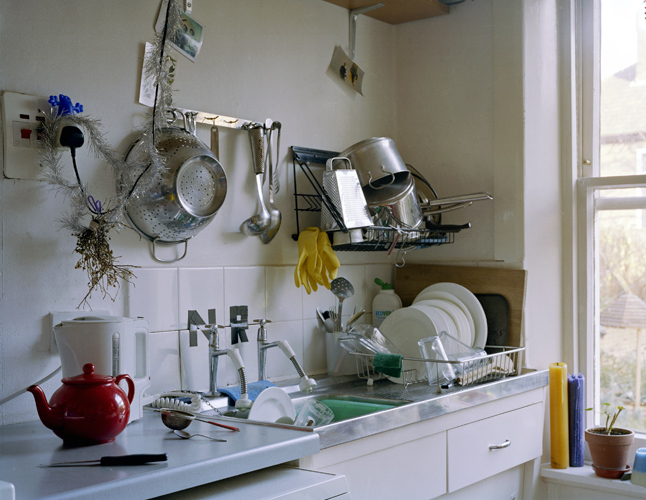
One thing I took away from both photographers was the confidence and even courage that they had in approaching their work.  Both had to place themselves into an alien environment where people’s lives would be impacted by their presence.  In the case of Lee, there is a sense of make-believe and cultural appropriation and in Morrissey, the sense of invasion and intrusion.  However both had to ask total strangers to become part of their work., which is something that I find difficult to comprehend.  This is, of course more a comment about myself than the artists but the work takes on a greater significance for me because of how challenging it would have been to create it.
References

[1] unknown, “Masquerade definition and meaning”, Collins English Dictionary, https://www.collinsdictionary.com/dictionary/english/masquerade

[2] Miller, L, 2020, “Nikki S Lee’s Projects Series”, Artnews Article, https://www.artnews.com/gallery/art-in-america/aia-photos/nikki-s-lees-projects-series-photos-1202682209/nsl-hip-hop-1/

[3] Unknown, ‘artwork listing’, The Guggenheim Museum, https://www.guggenheim.org/artwork/12990

[4] Morrissey, T, 2005,  ‘Front’, Artist’s Website, http://www.trishmorrissey.com/works_pages/work-front/workpg-02.html

[5] Morrissey, T, 2005,  ‘Front’, Artist’s Website, http://www.trishmorrissey.com/works_pages/work-front/workpg-06.html