Category Archives: Exercises

Project 6, Exercise 1: The Case of Kim Phuc (Review)

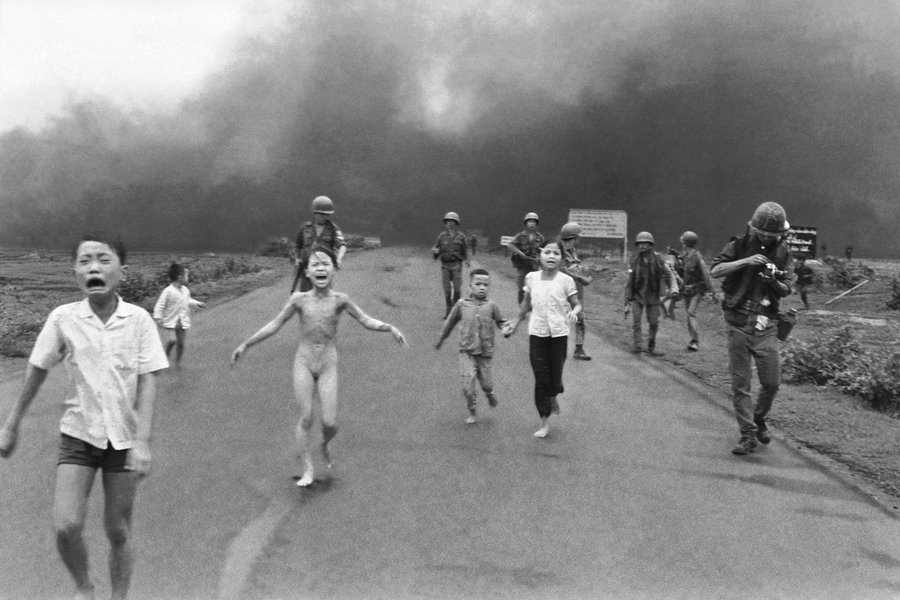
We looked at this photograph at the very start of this course. Let’s consider it again. Please revisit your very first learning log entry for this course. Read what you have written.

Write another short (200 word) response to your original entry. 

Has your opinion on this photograph changed or stayed the same? 

What have we covered in this course that has shaped how you think about this image?

The Photograph

Nick Ut (Huỳnh Công Út) The Terror of War, children in flight from a napalm bombing during the Vietnam War, 1973: in Batchen et al (2012) Nick Ut, Accidental Napalm Attack (1972) Pg 146

Original Response

Review

My views on the ethics of taking the picture are unchanged.  Ut had a responsibility to capture the war, and this photograph epitomises the suffering of victims of napalm attacks, with the emphasis on children.  However, the image does not tell the story of the event itself, being a friendly fire incident, rather focuses on Vietnamese children as victims of general atrocity which, while correct, is a single story only.  Ethically, the photographer behaved honourably in saving Phuc’s life after taking the picture, but in editorial, she was not protected as a vulnerable person.  As soon as she was revealed to have survived, her identity should have been withheld.  Instead, she was turned into a propaganda tool, which undoubtedly made a difference to public sentiment regarding the war.  Although the image has been a positive influence in Phuc’s later life as a campaigner, nobody could have forseen that at the time.  Retrospectively applying an ethical approach to the image, might lead to the conclusion that it should never have been taken.  However, retrospectively applying the same standards to editorial reveals issues of Duty of Care, as well as singular narratives that could have been given more consideration.

Project 4, Reading Task: Case Study of Family Consent

The Brief

Read the article by C. McKinney: “Leibovitz and Sontag: picturing an ethics of queer domesticity.” Shift Journal [online]. 

Reflect on and summarise the ethical considerations of the case study (150 words) andpost this to your learning log.

Reflection

McKinney raises the problematic nature of photographing outwardly private people, against a backdrop of homophobic perspectives on domestic life, perpetuated by Sontag’s blood family.  We see how consent, first implied in the posed portraits, is questioned when Sontag became perceivably too ill to comprehend being photographed.  All evidence points to her tacit understanding of pictures having distribution as their primary purpose, so how do modern sensitivities around privacy and respect for the dead influence our view of art? A point is made that family see themselves as the owner of a loved-one’s posthumous representation above all others, this case including Sontag’s 15 year romantic partner. Core themes of ‘disrespect’ run through criticism of Liebowitz, possibly because her photographic craft often transgresses perceived decency, but also because of her gender and sexuality.  The piece highlights the strength of family influence, and how this must be considered in the context of gaining, and maintaining, consent.

Project 2, Exercise 3: Exploring Approaches

Introduction

The research part of this exercise can be found here:-https://oca.padlet.org/richard5198861/project-2-exercise-3-exploring-approaches-epuck7e6y0kmy983

The final part of the brief for this exercise calls for an analysis of works by two of the photographers from the lecture[1]. I chose Handsworth Self-Portraits (1979) by Bishton, Homer and Reardon, and Imperial Courts (1993 – 2015) by Dana Lixenberg for this part.

Comparative Analysis (450 words)

The first, observation about these works is that they are both traditional ‘documentary’, namely they are recording the lives of two communities. These communities share common themes too, with Lixenberg’s subjects being marginalised African-Americans living in a  prosperous US city, and the Handsworth project being a multicultural district in Birmingham with similar challenges and tensions.  Their approaches differ, with Lixenberg seeking to be both insider and outsider simultaneously (DANA LIXENBERG – Interview 2017 – YouTube, s.d.) in a semi-directional style, as demonstrated in the photograph below.  


Fresh, Real, Flave and 4Doe (Real Fresh Crew), from the series “Imperial Courts”, 2008 (Dana Lixenberg, s.d.)

Here a group of young men clearly posing for her portrait.  In 2017 interview, Lixenberg tells of the boys wanting to flash their gang signs. After discussion and the showing of Polaroid test images, she got them to understand that the work wasn’t explicitly about their gang, but their place in the wider community.  The result is a collaboration between photographer and subject, established over time. 

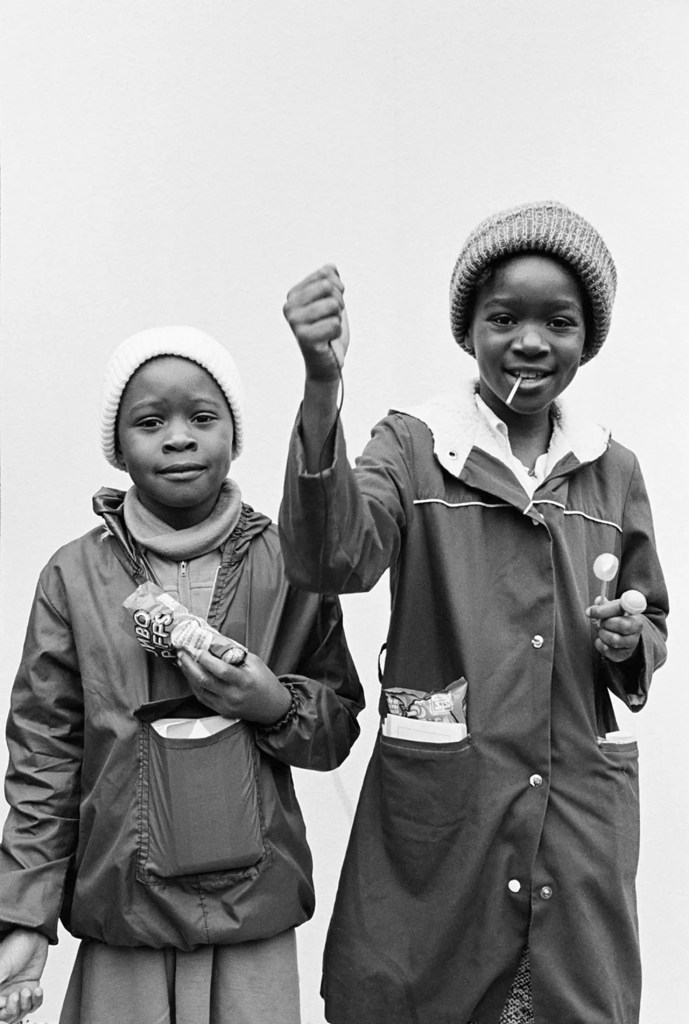
From the exhibition Handsworth Self Portrait: 40 Years On by Derek Bishton, Brian Homer and John Reardon (Smyth, 2019)

By contrast, the second image from Handsworth, shows the subjects taking complete control over their representation.  The photographers have set up the camera given them the camera trigger, allowing them to engage with the camera as much or as little as they want.  Rosler dicusses the camera’s ‘power’ as seen by the subject and the effect it has on their reaction.  We see a different reaction to the instrument when the photographer is directly involved.  Bishton et al democratise this power by conceding the ‘moment’, while Lixenberg dilutes it through continual dialogue.  Neither image is more ‘truthful’ than the other, as all the subjects play ‘characters’ of themselves.  However, where Handsworth removes environmental distractions, the decaying infrastructure, evidence of intolerance etc, by using a plain background, Lixenberg supplements her work with carefully selected backgrounds, landscape, and still-life images.  With the former, we gain a knowledge of the people and their cultural and personal differences, and the latter, a narrative about the place as well as the community.  Other similarties include both artists engaging with their subjects in a transactional way to build trust, either through the giving of Polaroids (Lixenberg) or the offer of prints (Bishton et al). They built a reputation with their subjects that encouraged even the most reluctant take part in the work and avoid the pure spectator approach described by Bey (Bey D, 2019) or the ‘super tourism’ postulate by Sontag (Solomon-Godeau A, 1994) by living or working within the community.  In doing so, their approaches challenging the concept of ‘binarism’.

The viewer recognises in both, the humanity of people and a hint of what their lives are like, even without any real knowledge beyond judgmental media portrayal.  Both series achieve this via different routes, but the effect remains very similar. 

Bibliography

Martha Rosler, Post Documentary, Post Photography? — Are.na (2018) At: https://www.are.na/block/1791938 (Accessed 02/06/2023).


Bey, D. (2019) On Photographing People and Communities. The Photography Workshop Series. Aperture Foundation. pp 26-75.

Solomon-Godeau, A. (1994) “Inside/Out.” In: San Francisco Museum of Modern Art. Public Information: Desire, Disaster, Document, Part 1. pp. 49-61.

Figures

Smyth, D. (2019) Handsworth Self Portrait: 40 Years On. At: https://www.1854.photography/2019/03/handsworth-self-portrait/ (Accessed 01/06/2023).

Dana Lixenberg (s.d.) At: https://www.deutscheboersephotographyfoundation.org/en/collect/artists/dana-lixenberg.php(Accessed 02/06/2023).

Reading Task: Photographic Truth

The Brief

Read “Chapter 1: Images, Power, and Politics” in Marita Sturken and Lisa Cartwright, Practices of Looking: An introduction to visual culture (3rd ed.) (2018) Oxford University Press, available on the unit Reading List.In your learning log, write a response to the chapter (300-400 words). How do you understand “truth” in your photographic practice? What relationship do your images have to truth? How does the learning from this project and Sturken and Cartwright’s chapter prompt you to think about your own practice or about work produced by others?

Response

In my work, “truth” is a concept that I have only recently begun to explore. Until the end of the unit Context and Narrative, I shot photographs to rigidly document what I saw before me, primarily as a way of remembering a moment. When I started to work more in constructed tableaux, that changed. I consciously started to reverse-engineer cultural references related to my life experience using Barthes/Saussure’s ideas of semiotics in visual language. Incorporating denotive elements that offered a variety of connotations allowed me to change formal reality to something more interpretive. This culminated in Modern Monsters in the previous unit. 

In considering the reading chapter, I would say that my work points to relationships between people and circumstance, in a largely fabricated way.  I relate to the work by O’Sullivan and Van der Born as they create something familiar and believable, but less so the power relationships of Alfridi et al and Orr, who present injustice directly to the viewer through iconic references.  This chapter made me think about the act of observing and then connecting the elements of the composition with other meanings, as in the case of Frank’s Trolley and Lange’s Migrant Mother.  I am interested to know to what extent the moment contributed to these photographs and how much was reflective after the fact.  We know that both were taken during long documentary trips that yielded many similar situations, so how did the context of the rest of the shooting (that day, that week, that month) influence the production of a particular image to represent power (or lack thereof)?  I concluded that this is probably what holds me back in photographing events unfolding before me, and drives me towards the more fabricated image. 

 In considering how the ideas of power, ideology, iconography and cultural representation will affect my own work, I believe the focus will be more about planning how to represent the subject before taking a single picture.  As well as the central ethical questions about ‘should I?’, I’m going to explore what I want to say in more detail.

Project 1, Exercise 3: Finding Common Ground

Share your list of principles with your peers in the Ethics and Representation Forum

Spend some time comparing others’ lists with your own. What would you add to your own list that you see on someone else’s? Engage in a discussion with others about the choices you made when compiling your list using the forum thread.

Afterwards, reflect in your learning log about anything you may have learned from your peers. Revise your list of ethical principles if necessary, and explain any changes you make as a result of the group discussion.

My Ethical Principles

  1. Respect for the subject. Not to be confuse with deference of having to like the subject. The person or persons, their story and the context in which I’m photographing needs to be done respectfully in terms o what I am trying to represent, without any actions by either side to bend the ‘truth’
  2. No Harm. To do enough work to understand the potential impacts of my work in the future, whether I am comfortable that my intention remains the same and how, if at all, I can control it.
  3. Honesty. Being open and upfront in my communications with the subjects and also the ‘users’ of the work.
  4. Understanding the wider context. Simply the act of doing the due diligence to identify and potentially correct any ethical concerns I might uncover before creating the work.
  5. Collaboration. Not being the expert on a subject. Where there are unfamiliar aspects to a person’s story, work with them to balance my own perspectives.

Note that these are my ethical values based on previous experiences, and that they will undoubtedly change as the course progresses.

Reflection on the Forum Posts

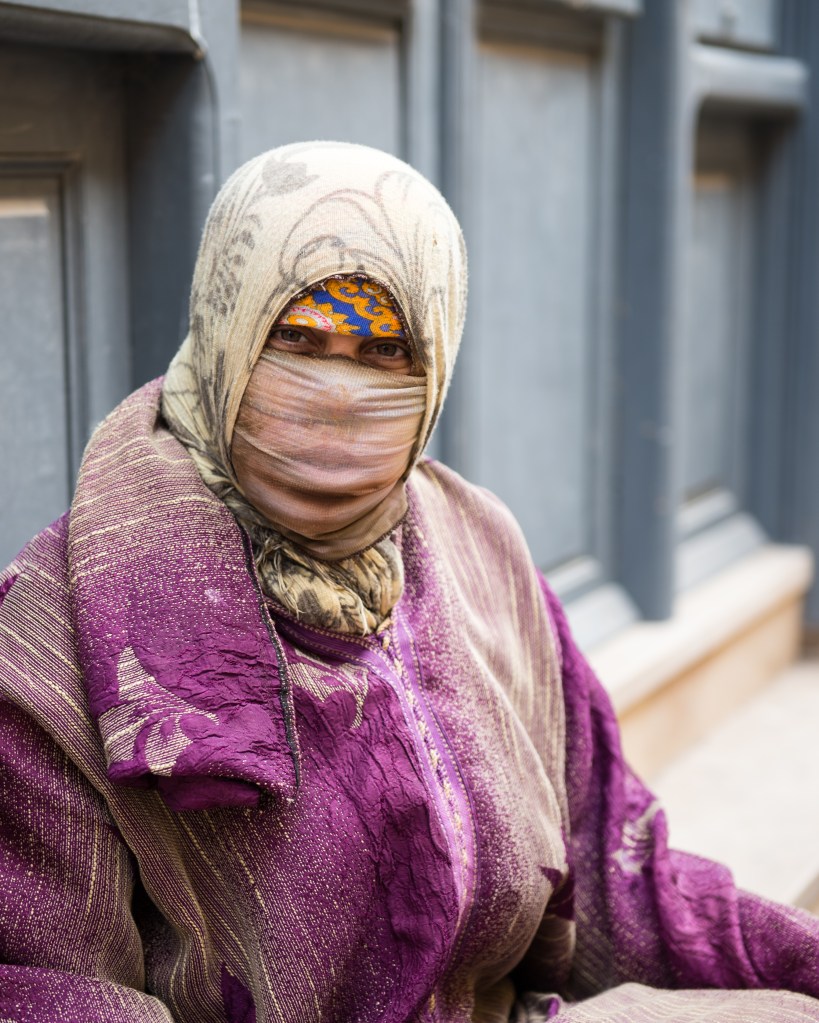
It’s clear from reading the other student’s lists of ethical values, that there is much natural common ground. We all see respect and doing no harm as being core to our photographic practice, with additional ideas such as justice, health and beneficence being highlighted. In reflecting on the areas where we differ, I conclude that I have similar ideas, but articulate them differently. For example, informed consent in my value is a combination of collaboration and honesty in communication. I currently struggle to make a case for consent where it assumed, rather than specifically gained, as demonstrated on my Morocco trip in 2015. During that visit, I took a picture of a homeless lady, who gave me her consent to do so because I had just given her the spare change in my pocket. Having learned the cultural sensitivities by then, I would not have assumed consent because she was sitting in a public place (the difference In Moroccan law notwithstanding). Was the consent informed though? I don’t believe so, because we didn’t discuss why I wanted to shoot her, nor did we consider together what the image would subsequently be used for. There were good reasons for this though, the principal one being that we didn’t speak each other’s languages. My view on that photograph (below) now, is that I am uncomfortable about the transactional nature of it, my perspective as a tourist in making an image of a homeless person despite my best intentions not to exploit her situation, and the lack of understanding between photographer and subject. Portraits of this kind are, or course, very intimate which means that my ethical values as I now seem them, need to be considered more carefully.

Homeless woman of Marrakech, shot in 2015

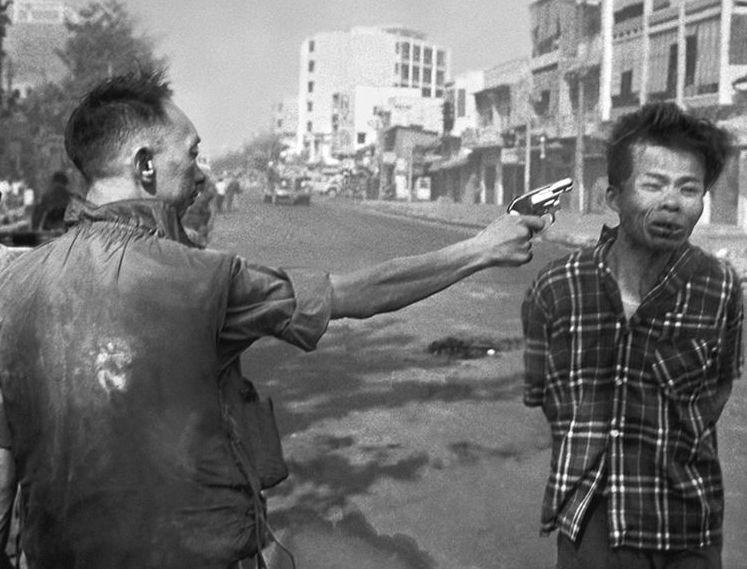
There is discussion in the forum about ethics being somehow ‘bent’ in the face of a split-second moment as in the Napalm Girl image. My personal view on this is that rather than bending ones own ethics, there is comfort in operating within those of another. In the case or Nick Ut’s image, the situation was within the constructs of photojournalism, as he was in Vietnam to document the conflict. His pictures would be governed by his own vision and perspectives on the way, so I agree that his own personal ethics would be the guiding force. However, the incident that led to Napalm Girl was a split-second decision, after which Ut behaved in a very human way, saving Phuc’s life and forming a lifelong bond with her. His actions in shooting the picture first are not, in my view, momentarily compromising his values but working within those set by his employers. This is where I see issues with having ethics. As the learning to date makes it clear that ethics are personal to the photographer, we will all differ from each other. This difference is magnified when an editorial is involved. Ut selected Napalm girl as the most powerful image, but he effectively lost all control over how it would then be used by the press, the public and the politicians. Whatever his original intentions, they would have been diluted through the editing and publishing stages. It reminds me of Eddie Adams equally famous image of the execution of Nguyễn Văn Lém in 1968, which was one of many documentary images that he took of the arrest of the Viet Cong soldiers.

Eddie Adams’ famous execution image, 1968 (Nguyễn Ngọc Loan, 2023)

Like Napalm Girl, this image won the Pulitzer Prize for the photographer and went on to fuel anti-war sentiment in the United States. It differed in that when published, the revulsion at the act depicted was focused on the man who pulled the trigger. The idea of doing no harm, that may well have been a personal value of Adams, was lost through the editorial. The press ethics really centre around the faithful representation (as much as it can be) of an event, without exploitation, interference or undue influence. To that extent, the picture met the press standards, but not necessarily that of Adams.

This picture really messed up his life. He never blamed me. He told me if I hadn’t taken the picture, someone else would have, but I’ve felt bad for him and his family for a long time. I had kept in contact with him; the last time we spoke was about six months ago, when he was very ill. I sent flowers when I heard that he had died and wrote, “I’m sorry. There are tears in my eyes.”

(Adams, 1998)

In conclusion, our ethics as people are usually enough govern how we approach our own work. In that regard, my fellow students and I clearly believe the same ethical values, with language being the main separator. Our ethics can be challenged by others when we no longer have control over our image. In these cases, our best intentions are the best we can aim for.

References

Adams, E. (1998) ‘Eulogy: GENERAL NGUYEN NGOC LOAN’ In: Time 27/07/1998 At: https://content.time.com/time/subscriber/article/0,33009,988783,00.html (Accessed 10/04/2023).

Nguyễn Ngọc Loan (2023) In: Wikipedia. At: https://en.wikipedia.org/w/index.php?title=Nguy%E1%BB%85n_Ng%E1%BB%8Dc_Loan&oldid=1146876860 (Accessed 10/04/2023).

Project 1, Exercise 2: Identifying Ethical Principles

The Brief

What ethical principles guide your work as a photographer?

Do some independent research and self-reflection to generate a list of ethical principles that are important to you in your work as a photographer. 

Define each principle in relation to how it relates to your practice. You might want to include some examples to illustrate the principle. Complete this exercise in your learning log, we recommend you define 4-6 principles that feel authentic to your work. Reference where you drew any of the guidelines from. 

Response

Research led me to consider the concepts laid out by the National Association of Press Photographers and the Photography Ethics Center, when applied to a number of practitioners, some whose work I admire and others that I do not. The research for this exercise can be seen here:

https://oca.padlet.org/richard5198861/research-for-project-1-exercise-2-fbzq4v0a2ov52rog

In considering my own ethics, I conclude that these are my ethical principles:

Respect as much of the facts as possible

This first principle is a tricky one to define, because the concept of fact and truth are themselves complex. What I mean here is that whatever the situation or story, I see to understand as much of it objectively before deciding on how to represent it. An example would be my experience in Marrakech [1], where I knew so little about the culture, I could only offer my perspective as a tourist.

Avoiding causing direct harm or distress

In looking at Bruce Gilden and his attitude towards his subjects, I realise that I’m not a street photographer. He and Cohen (the other photographer in the Padlet) place themselves directly in confrontation with their subjects. While it’s legal to photograph people in public places in the US and UK, the way that some photographers obstruct their subjects makes me uncomfortable. In Cohen’s case, there is occasional collaboration between subject and photographer, but Gilden appears much more aggressive. All of the street work I’ve done in the past has been from a distance, using a mid-zoom lens. I think it’s that discomfort that makes me work in this way.

Be interested in the wider context

Listening to Sally Mann talk about her projects that involve her family, it’s clear that any doubts she has are eased by considering the wider implications of her work. In particular, photographing her husband, who is very ill, she relies on his bravery in telling his story to counteract the pain of photographing her loved one.

Be open and honest

I think my biggest learning to date in this regard, came from Identity and Place, where we had to photograph people we hadn’t met before [2]. When I started the assignment, I was looking for some kind of segue way into a conversation to convince them to let me shoot them. What actually happened is that I simply talked to them about the course, my objective, where the pictures would be shared and what I would be using them for. This was a much better strategy in terms of building trust between photographer and subject and resulted in pictures I was happy with. I still see most of my subjects from time to time and we still chat, even though the pictures were taken nearly 2 years ago. Honesty helps people understand what their image or representation is going to be used for and offers them a way of challenging or rejecting anything that conflicts with their own values.

Collaborate

The idea of collaborating for me covers many things, including an amalgamation of ideas, representation that is respectful or challenging in a given context, and consent. The Photography Ethics Center uses the example of photographing children as a case for collaboration. A child isn’t developed enough to be able to understand how they are being represented. By collaborating with their parent or guardian organisation who knows them, we can reach an agreement that will avoid issues of safety, long-term harm and influence that might effect their development. This is not a straight-forward transaction, as demonstrated by the case of Spencer Elden who was photographed for the famous Nirvana album cover when he was a baby. Collaboration took place between the artist and his parents, but many years later Elden had a problem with the image. There are wider issues raised than a matter of ethics, with Elden being accused of indulging in the fame of the picture until that fame had diminished. Ultimately, his civil case regarding harm done to him was dismissed by the court. Where children are concerned, Collaboration in the form of open and honest discussion and consent to take a picture are key to avoiding any harm being done.

Conclusion

When I reflect on these principles, I see that they are closely interlinked and that they align with how I try to behave in other aspects of my life. The key learning point is that the camera doesn’t give us, as photographers, an excuse to alter our behaviour towards other people because it somehow anonymises what we are trying to represent. In the case of Napalm Girl, the photographer was employed to document the war visually, so when the attack on the villagers happened, his first thought was to shoot, what he saw. His instinct as a human being was to help the children, in particular Kim Phuc, who was in the most danger. He is credited with saving her life, which in my view balanced the decision to shoot first, help second. What Ut could not have been fully aware of, nor could he control, was the way the image was used for the next 50 years. He probably wasn’t aware what damage he would cause Phuc psychologically during her formative years, through the embarrassment of her nudity and vulnerability. In their case, a strong relationship formed after the fact, which would have provided both with insight into the impact of the decision to shoot and the impact it would have for both of them. When we look at the NAPP ethical values as an organisation, we can see that Ut did behave in an ethical manner. That may not have been how the world saw it when the image was published, but I don’t see how a conflict photojournalist could predict that in the decisive moment that presents itself. I was interested in the evolution of the Ethics Center and the concepts that were at odds with the historical video of Bruce Gilden. Gilden proclaimed that he had not ethics and that photojournalism was all ego, something he later retracted as being sarcasm. I personally think his comments at the time were the accepted norm and that history has rewritten the norms. If we consider how his approach to work would be received today, in an era where everyone has a cameraphone and everyone is being photographed largely without their consent, it stands to reason that modern ethics has had to remind photographers what their responsibilities are to their subjects and stories. For me, the experience of street photography is governed by my own ethics to the extent where I avoid it as a genre. This isn’t a positive situation either, as an artist shouldn’t be self-governing to the extent that they don’t produce work. I’ve self-edited to my detriment in this course previously [2], and having conducted some preliminary research into ethical practice, I would approach the shoot differently. My particular issue centred around not wanting to publish images that might cause my subjects issues (causing harm), but could have been offset by clearer communication (open and honest), which might have steered the work differently, but prevented my wanting to keep it from being viewed.

In summary, I am interested to see how my ethics change, if at all, as I progress through this module. What I’ve learned so far has made me think about my approach to work in a different way, so it will be interesting to see how that affects my future work.

References

[1] richardfletcherphotographyblog (2021) Assignment One: ​The non-familiar. At: https://richardfletcherphotography.photo.blog/2021/04/11/assignment-one-%e2%80%8bthe-non-familiar/ (Accessed 02/04/2023).

[2] richardfletcherphotographyblog (2021) Assignment Two: ​Vice versa. At: https://richardfletcherphotography.photo.blog/2021/06/25/assignment-two-%e2%80%8bvice-versa/ (Accessed 02/04/2023).(Password: Leitz1957RF)

Project 1, Exercise 1: The Case of Kim Phuc

The Brief

Nick Ut (Huỳnh Công Út) The Terror of War, children in flight from a napalm bombing during the Vietnam War, 1973: in Batchen et al (2012) Nick Ut, Accidental Napalm Attack (1972) Pg 146

Before we dive into this course, take a few minutes to write a short 200-word response to the ethics of this photograph in your learning log. Would you have taken this photograph? Would you have published it? Why or why not?

Response

This image has always made me uncomfortable from a non-photographic perspective, because of the clear horror of the situation. The press photographer had the responsibility to capture the moment, and we know that immediately after this shot was taken, he helped quickly get Phuc, who was naked because her clothes had burned off her body, to a hospital [1]. Like Capa before him, the line between observer and participant was a fine one. Personally, I would have struggled with shooting this emergency over wanting to help. The result though is a powerful reminder of the impact of war, so its publication was important in educating the world. However, I question the impact on Phuc herself. She is known to dislike the image, not because of the event, but her nakedness, which she saw as shameful [2]. The photograph is a permanent reminder of her suffering to this day, which seems at face value to be less important than the messaging about the war. For me, the ethical issues relate to the photographer’s decision to shoot at that moment, capturing a terrified naked child over another the others fleeing the scene, but also the editorial decision to publish. The narrative that the Associated Press were after took no account of the representation of the child and the infamy that would haunt her for another 50 years.

References

[1] Nick Ut | World Press Photo (s.d.) At: https://www.worldpressphoto.org/nick-ut (Accessed 08/03/2023).

[2]. Ratcliffe, R. and correspondent, R. R. S. A. (2022) ‘‘Napalm girl’ Phan Thi Kim Phuc receives final burn treatment after 50 years’ In: The Guardian 01/07/2022 At: https://www.theguardian.com/world/2022/jul/01/napalm-girl-vietnam-war-phan-thi-kim-phuc-final-burn-treatment (Accessed 08/03/2023).

Project 5 – Exercise 1: Planning you area of interest

The Brief

This exercise is in preparation for the formal critical review in Assignment 5 at the end of the project. As given, the critical review brief is as follows:

  • Compare the theoretical features, characteristics and histories of one or more photographic genres
  • Use your research skills competently to deconstruct a given genres’ conventions
  • Demonstrate an awareness of the multiple readings of the histories that have informed genre in a global context

The critical review takes the learning from parts 3 and 4 and picks up from the comparative analysis completed in Project 2, which can be found here:

https://richardfletcherphotography.photo.blog/2022/05/08/project-2-exercise-2-comparative-analysis/

For this exercise, I will briefly review the above analysis and update with what I’ve learned since. I will then decide on my area of interest for the review within this project.

Summary of Project 2: Exercise 2: Comparative Analysis

For the exercise, I chose two landscape images; Ansel Adams’ Moonrise over Hernandez, New Mexico (1941) and Richard Misrach’s Bonne Carre Slipway, Norco, Louisiana (1988). Both images are classical landscape in terms of their visual codes. My comparison related to the contextual emphasis of each image, rather than their aesthetic merits. With regard to the latter, I drew attention to the similarities and differences, one being black and white, both featuring manmade structures, one being more traditional in the use of thirds and the other, not so. However, with the context the two photographers differed considerably, despite them both being interested in conservation of the natural world. Adams’ image reveals the majesty of the landscape and man’s insignificance both in scale and when considered within the construct of religion. By contrast, Misrach’s image shows us how man is impacting the landscape, his subject being an oil refinery.

Having completed parts 3 and 4, I am now familiar with the works that formed the New Topographics exhibition in 1975, where the artists moved away from the aesthetic beauty of the landscape to show how construction and human behaviour fit within it. This made sense of where Misrach’s inspiration came from. The series that his picture comes from walks the viewer through the routine of petrochemical processing in Louisiana, an area that for most part is rural country. His images follow the landscape traditions in terms of composition, but having now covered the difference between the interpretations (beautiful, picturesque, sublime), I now appreciate the narratives that can be derived from them more. The series is actually terrifying, as the destruction of the natural world is almost desensitised owing to the world’s reliance of the fossil fuel being processed. Images of dead trees, hazardous waste dumps and abandoned dwellings reveal what has taken place and continues to do so at such a slow pace that nobody notices. Unlike Adams, Misrach is showing what we can’t or won’t see about how we live, in a similar way to the likes of Lewis Hines and Martha Rosler with their documentary advocacy.

Thoughts on a Critical Review

I considered revisiting my analysis as the context of the additional learning explained the motivation behind the images, Misrach’s in particular. However, I have been interested in a question from Part 4, which is related to landscape but could be applied to the other genres as well.

In Colin Pantall’s lecture and supporting presentation notes, titled The Way We See, Where We Look and What we Show, he said

“Landscapes can show the infrastructure of power, can show the dividing lines of power. Sometimes we don’t think of these as landscape, but they are, because that is the defining part of them”

(Colin Pantall Presentation, s.d., video timestamp 11m,50s)

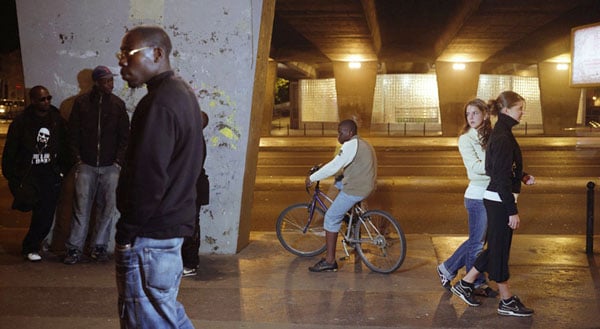
At the point that he says this, the presentation is showing this photograph by Mohammed Borrouisa from his series Périphérique.

From the series Périphérique, by Mohamed Bourouisa [1]

I was confused by the comment as Landscape was not my initial reading of this photograph. Instead, I believed it to be more documentary or one of the sub-genres, street photography. This was the basis for my critical analysis – what is it that makes this a landscape and how does the reading of the internal and external context affect our classification of a photograph?

The research for the essay can be found in the Padlet:

https://oca.padlet.org/richard5198861/x3zfpecfl3guc6yw

Essay Title

“Which is it? – How contexts can alter our interpretation of the genre of a photograph?”

Additional Note

At this point, I received feedback that my literal interpretation of the brief for Assignment 5 may result in lots of repetition. With this in mind, I focused my attention on gathering research and writing my submission. I am offering the draft as my completed essay, electing to update ahead of assessment if required. For this reason, there is no write-up for Exercises 2 and 3.

References

Colin Pantall Presentation (s.d.) At: https://oca.cloud.panopto.eu/Panopto/Pages/Viewer.aspx?id=7818fd51-11c1-4dec-b524-adc100b4b808 (Accessed 21/09/2022).

Project 4, Exercise 1: Looking at artistic practice & research (Part 2)

Introduction

In this post, and the accompanying Padlets, I revisit two of the sources texts in more detail. My broad theme of Communication was explored in the context of the genres of Documentary and Portraiture in Part 3, because at first glance the ideas of the history of culture, technology and identity was felt to fit naturally within them. In this project though, the ideas of how landscape is both defined and affected by mankind, as well as the inverse impact on our behaviour are presented. This offers a whole area to research, starting with Source Text 1- Colin Pantall’s lecture on The Way We See. As I have been considering how my theme could become a focused project, I’ve thought about cultural perspective and the potential audience for the series. When reading the source texts, the other work that stood out to me related to ideas of representation, being inside the culture or observing it. This picks up on the ideas of Insider/Outside that Martha Rosler discussed in her work in the Bowery district of New York. Chris Coekin’s work Backwards and Forwards in Time is the second Source Text discussed here.

Colin Pantall – The Way We See

During the course of the lecture, Pantall poses a series of questions. I’ve condensed them into a single question for each section of the lecture in order to address them here.

  • How are maps used now and how, if all, do they affect how we experience a place?
  • When considering a beautiful, picturesque or sublime landscape, are there any problems with tending to the beautiful?
  • Does the wilderness still exist and can a landscape be tamed by the photographer?
  • How can photography be used to record the changing landscape and is it capable of driving real change?
  • How does a landscape make us feel and what tangible elements are there that contribute to this comfort?

Padlet: https://oca.padlet.org/richard5198861/dc24mgyzgc4egcf9

Response

This source text covered a lot of ground, but the first and perhaps most obvious lesson was that the landscape is something actively defined by the viewer, rather than being something that generally surrounds us. Landscape as a photographic construct says much more about the environment and culture of a region `than just what is contained the aesthetic. When considering place, we use technology to inform us both how to travel and what to expect when we get there. The former is the rise is popularity of digital maps such as Google Maps and Google Earth. The latter is provided by the shared experiences of others through review sites and social media. Where traditional maps told us about what was important to our national identity and culture, we have the rest of the internet to use for the same research. Our ideas of what a landscape looks like come from the picturesque imagery that is produced as a byproduct of tourism and aesthetic visualisation by some photographers. It makes us want to seek out the views that we are presented with so that we might have that same experience. In the case of Jacqui Kenny who suffers from agoraphobia, the artist uses the millions of available snapshots available as part of Google’s Street View to explore places that are not physically accessible to her. The photographic process is more akin to curation as Kenny suggests [1], but in a way the process she uses to review the images is akin to being present in the scene. She is a cold observer, able to draw her own conclusions about the environment and its people by incorporating the appropriate visual elements to convey some form of meaning from her work. Her work tends away from the traditional notions of aesthetic beauty in favour of some statement about human life in the landscape, which is more in keeping with the New Topographics ideas of the 1970s than with the early landscape photographers. This movement invoked as sense of irony for me about Ansel Adams. In his quest to capture the beauty of the wilderness and protect nature, Adams actually contributed a cultural idea of what wilderness was. The creation of the national parks in the US had the effect of preserving an aesthetic idea of wilderness, while inviting people to go visit. This explains the complexity of the definition within The Wilderness Act (1964), which sought to appease both sides of the argument over it being purely natural or influenced but culture. The proof that Adams’ was applying his own ideas to landscape comes from his production of thousands of different prints from a single negative. In the example of his famous Moonrise, Hernandez, New Mexico (1941), the emphasis of the elements in the composition changed from early to late prints. The acknowledgement that man changes the landscape led to the rephotography projects that set out to highlight the negative side of our existence. Photography is used in this case to document the damage, but also on occasion, the progress – Sebastio Salgado is the notable example with his ‘rephotography’ of his rainforest reintroduction project. In other cases, such as Nick J Stone, rephotography documents how things can be redeveloped. His Ghosting History images show us how things changed after the Second World War, but in a way that is familiar to us. Familiarity is one aspect of our comfort with the landscape that is inextricably linked with our identity. In Britain, the recognition of a street that hasn’t changed that much since the war, but has overcome the damage in the overlaid photograph gives us a sense of comfort. Comfort is associated with well-being and while the idea of the natural landscape being peaceful and somehow nourishing is well established, a city landscape or a space that creates strong memory and postmemory is equally comforting.

The interesting learning from this source text is how landscape connects with ideas of identity and the human experience. The former is something we would traditionally associate with portraiture, while the latter is more closely linked with documentary. In both cases, the exploration of how the landscape is theoretically and physically formed by our need or desire from some ‘value’ has led to explorations of our own behaviour. Whether the documentary of potential resources as with Timothy O’Sullivan or the way an urban district takes on a sublime feeling in Sibusiso Bheka, the relationship between man and landscape remains at the heart of photographic practice.

Chris Coekin – Backwards and Forwards in Time

This source text took the form of a Padlet that describes Coekin’s background, influences and three of his works, Knock Three Times, The Hitcher and The Altogether. I’ll be exploring his works and the connections to his influences, both historical and contemporary.

Padlet: https://oca.padlet.org/richard5198861/9sz8id40r5k1icss

Response

As the title of his Padlet suggests, Coekin’s work explores the traditional ideas of class culture through a number of documentary series. He achieves this by exploiting the main visual codes in each of the major genres to produce work that spans them all without drawing the viewer’s attention to any particular classification of the images. What is most interesting to me is the use of candid and staged portraiture, the former being akin to the snapshot that has been perhaps the most popular use of photography since its invention. We all recognise the style of the snapshot; the lack of direct engagement between photographer and subject, the use of flash that appears to be difficult to control with it’s washed out highlights and dark shadows, and the subject appearing to be ‘doing something natural’. In his use of snapshots in Knock Three Times and The Hitcher, Coekin introduces a sense of being an observer. In the former, his images capture the members of the club chatting, drinking and even leaving their gathering. Coekin is watching, rather than taking part. On image of a man urinating provokes the viewer in thinking about this voyerism; such an image would not be something most people would consider shooting as it’s an intrusion on a private moment. It contrasts with a similar image in Nan Goldin’s Ballad of Sexual Dependence (Goldin, 2012, p.74) which, apart from being far more explicit, reveals a definite connection with between artist and subject. The other style of portraiture in Coekin’s series’ are posed or staged. In The Hitcher, the artist asks for a staged portrait of the people who picked him up while hitchhiking. These pictures provoke a variety of emotions within them, ranging from the appreciation of being noticed for the act to the discomfort at the highlighting of the deed. In some cases, the artist’s direction can clearly be seen as with the image analysed in the Padlet. However, this is most evident in The Altogether, which is stylistically similar to the work of August Sander. Where Sander was looking to document people and their professions, Coekin’s work is more contradictory to the stereotypes of the working class factory worker. They appear in combative stances, comradely group shots and with iconic ideas of struggle factored into the pose. For me, the combination of the two styles of portraiture add to each other, much as in Larry Sultan’s Pictures from Home. However, I get more of a sense of exploring the artist’s feelings about their own experiences from Coekin’s series’, particularly in The Hitcher, where he places himself in the centre of the story and explores modern society’s view of the age-old tradition of hitchhiking. In all of the works here, Coekin uses his own experiences to influence how he represents the subject, but achieves this by being both participant and casual observer through his use of portraiture. The series’ also include still life, which Coekin uses to punctuate the narrative. In Knock Three Times, we see the elements that characterise the idea of a working men’s club (drinks and empty glasses, snooker tables, beer mats etc), but we also see traces of the people who were using them. In The Hitcher, the still life images of discarded items at the side of the road, speak to the current state of our environment and infrastructure. In one picture, a dead rabbit is shown between the kerbside and painted line of a road. The animal is arranged as if viewed running, while the line has an imprint of a vehicle tyre in its surface, likely made when the paint was still wet. The image’s potential narratives about the threat to wildlife caused by the roads, the way it should have been ‘safe’ where it was and the correlation with the dangers of hitchhiking are palpable. In one picture we see the fact that countryside is a dangerous place and that the romantic idea of wandering the roads doesn’t necessarily translate into modern times.

Conclusion

In conclusion, there are a number of key points to consider from these source texts in terms of my own work. They are:

  1. How we see the landscape is very much driven by both our place within and our perspective on what is happening to it. We might recognise cultural or historical significance to an aspect of landscape, how it has changed over time and concern for its future. These are strong drivers for how artists and photographers represent landscape.
  2. A landscape can be defined by its people in a way that doesn’t, at first glance centre on the landscape. For example, an image in Mohammed Bouroissa’s Périphérique that is described in Pantall’s lecture, is referred to as landscape despite the main subjects being the people in the frame. The region in Paris where the images were set, has gone through significant cultural, racial and economic change which Bouroissa represents in a series of mise-en-scéne photographs. This question about how an image is identified within genre is something I want to explore in Part 5 for the critical essay.
  3. In a similar way to 2), the work of Sibusiso Bheka highlights another aspect of landscape in its treatment of an urban environment at night. The behaviour of the people and the way the images are lit by the artificial light coming from houses etc, all serve to create a sense of the sublime. Where sublime landscapes tended to centre around the alluring threat of the natural world, Bheka’s pictures drop the viewer into a potentially dangerous, yet fascinating night scape.
  4. Within the portraiture genre, the methods for making pictures vary along with their interpretation. Snapshots and staged portraits combine well in Coekin’s and present the viewer with a perspective driven by the artist’s connection with the subject, as well as an detached observer.
  5. Including still life in a series can add a form of punctuation to the narrative. In the case of Coekin’s work, the still life adds the situational information, whether supporting or challenging a known stereotype such as the working classes.

This has been an interesting exercise in terms of seeing how the visual codes from a genre aren’t always read a certain way, how our own identity affects how we might represent a subject and how the technical approaches within a genre can be used to achieve different, but interconnected meanings.

References

[1] DenHoed, A. (2017) ‘An Agoraphobic Photographer’s Virtual Travels, on Google Street View’ In: The New Yorker29/06/2017 At: https://www.newyorker.com/culture/photo-booth/an-agoraphobic-photographers-virtual-travels-on-google-street-view (Accessed 17/08/2022).

[2] Goldin, N. (2012) The ballad of sexual dependency. (2012 reissue) New York, N.Y: Aperture Foundation.
Project 4: Exercise 1- Looking at artistic practice & research (Part 1)

The main focus of Project 4 is developing your own work. In support of that activity, use the Source Text and Case Study examples to further your practice and research as you develop your understanding and awareness of complex boundaries of artistic practice and research themes and genres. 

Start by browsing the four sources below before returning to two of these in more depth.

The Source Texts – Notes

Part four introduces us to source texts that deal with the changing perspectives on landscape and how it has historically been represented, as well as exploration of our identity within the world. These are inextricably linked in the work of the artists and critics in this section and the first thing to note is the absence of boundaries between the genres exploited to tell these stories. In Colin Pantall’s Ways of Seeing, there are recognisable landscape photographs that obey the conventions of the beautiful, the picturesque and the sublime, mixed with a documentary and even ‘still life’ style such as the work of Ester Wonplon. Her series explores the threat to the glaciers caused by climate change in a mixed media presentation.

(ESTER VONPLON_Nuit de l’Année 2015, 2015)

Her theme is one of documentary in the traditions of the advocates of the early 20th Century. She highlights the impact of human behaviour but set against the specific backdrop of the landscape. Pantall discusses the move away from straight representation of the landscape with the New Topographics exhibition in 1975, which focused on more man’s place and influence on it. The aesthetics were significantly different, but the ideas were important because they now started to associate our identity in terms of the world around us. When we consider these additional elements, such as buildings, telegraph poles etc, we can connect with the idea of an object’s impact on the landscape. Artists are able to blur the lines between the landscape genre and still-life in order to say something that is inherently documentary. With Wonplon’s series, the sheets of fabric used to reflect the sun’s rays and keep the ice cool, are themselves treated in some frames as still life. The images become more about the futility of the idea, with the frayed fabric suffering from the environment that it is being used to protect. It speaks to the desperation and arrogance of man; that the impact of human behaviour could be restricted once the damage has been done.

In Sibusiso Bheka’s At Night They Walk With Me, the artist explores the evolving landscape of his home town of Johannesburg, viewed at night. He brings perceptions of the streets and neighbourhoods from his childhood into the work, revealing how areas take on a different feeling to the daytime, how the people behave towards each other etc. The idea of a landscape shaping and being shaped by people draws on the conventions of portraiture and documentary in the context of observation. The work invites the viewer to appreciate the sense of community after hours, while making it clear that the progressiveness of Joburg, and it’s continuing battles with poverty and crime, still has a long way to go. Some of these themes are also present in the other source texts, but I’ll be returning to this specifically in Part 2 of the exercise. In Stacey Tyrell’s Self-Portrait and the Colonial Gaze Padlet, the artist explores the preconceptions of her origins as seen through the eyes of a black girl growing up in a predominantly white region. She looks at how her ancestry and DNA comprises a significant mix of European and African ethnicities, but she was never comfortable or culturally expected to celebrate her non-black origin. Her self-portraits take their cues from traditional painted images of white icons, with her playing the white part using make-up. The questions it raised with me were around appropriation, hers in playing the part of another ethnicity (much like Nikki S Lee, who Tyrrel cites as an inspiration), but also by society. We associate world regions with races in a way that is rooted in history, or more importantly the documentation of history. Black people are associated with Africa and the Caribbean, and white people, Europe etc. Even though the modern world has a greater understanding of our mixed origins through DNA technology, these associations are almost as rigid as those for the portraiture genre itself.

In Chris Coekin’s Forwards and Backwards in Time, we see an exploration of identity from within a community, where there is an ideological bubble around its people, as well as an observer of where a community sits within the grander idea of British society. Coekin’s inspirations are artists who have taken an idea of how an area of society lives or is expected to behave, and both celebrates and challenges those stereotypes. I was particularly drawn to Case Histories by Boris Mikhailov, which explores the effects of the break up the USSR on the people of Ukraine. His images contrast the progression of capitalism and the idea of prosperity away from the Soviet regime, with the destitution, poverty and abuse of the disaffected. The photographer invites the viewer to see the people through their obviously desperate circumstances, even paying them to strip nude to make the point. His pictures don’t create a sense of poverty tourism however, but instead document the fact that they exist in a society that generally dismisses them. This work is even more poignant with the present day conflict in Ukraine, leaving the viewer wondering what might become of these people in the long term. In Coekin’s own work, he explores a variety of societal constructs, including the working class and the idea of free roaming in the UK. I’ll be looking at his work more closely in part two of this exercise.

In the final source text, Andy Hughes explores the human impact on the ocean environment with his series ‘Dominant Wave Theory’ about plastic pollution. The images are still-life, taking their cues from momento mori, defined as:

…a Latin phrase meaning ‘remember you must die’. A basic memento mori painting would be a portrait with a skull but other symbols commonly found are hour glasses or clocks, extinguished or guttering candles, fruit, and flowers.

(Tate, s.d.)

Closely linked to Vanitas, which was the sub-genre of still life painting that looked at in Assignment 2[2], the idea of remembering our mortality comes through in Hughes’ images, where the scale and position of the objects within the frame give the viewer nowhere else to look. With each image, the object is made to represent something different from what it actually is. An example can be seen below:

Sandwich, by Andy Hughes (2003), (dominantwavetheory, s.d.)

In this picture, a discarded sandwich wrapper rises from the floor like a mountain. Its appearance resembles the classical representation of mountains, in particular the iconic view of Mount Fuji in Japan. The use of shallow depth of field gives the sense that the object is being viewed from far away, which further enhances the illusion of the wrapper being transformed. The image utilises other visual codes that suggest that no good comes from this plastic object, namely the black backround from which it is revealed. The suggestion here is that at some point, there will be nothing else other than plastic in the natural world. The wet surface suggests it being impervious to the elements, which predicts the fact the object will not degrade quickly. All of these things serve to shock the viewer back into realising that it’s just a sandwich wrapper, but that it could mean so much more if the human disregard for waste continues. Like the Vanitas paintings of the 17th Century, the use of simple objects as powerful symbols convey much more than they do at first.

Conclusion

In conclusion, each of the source texts use a particular genre to describe something about mankind, either on a macro level (our impact on the environment and attitudes towards it) or on a micro level (specific cultural behaviours and histories). For me, they are all equally effective but I found the use of landscape and still-life most interesting. There is a clear overlap between landscape and documentary within Pantall’s Ways of Seeing, which I intend to explore further. I was also drawn towards Coekin’s combination of portraiture and documentary, which is an area I touched on in Assignment 3, but need to investigate in light of my feedback from that work.

References

[1] ESTER VONPLON_Nuit de l’Année 2015 (2015) At: https://vimeo.com/143865219 (Accessed 10/08/2022).

[2] Tate (s.d.) Memento mori. At: https://www.tate.org.uk/art/art-terms/m/memento-mori (Accessed 10/08/2022).

[3] richardfletcherphotographyblog (2022) Assignment 2: Analysis Through Making. At: https://richardfletcherphotography.photo.blog/2022/05/19/assignment-2-analysis-through-making/ (Accessed 10/08/2022).

[4] dominantwavetheory (s.d.) At: https://www.andyhughes.net/dominant_wave_theory.html (Accessed 10/08/2022).