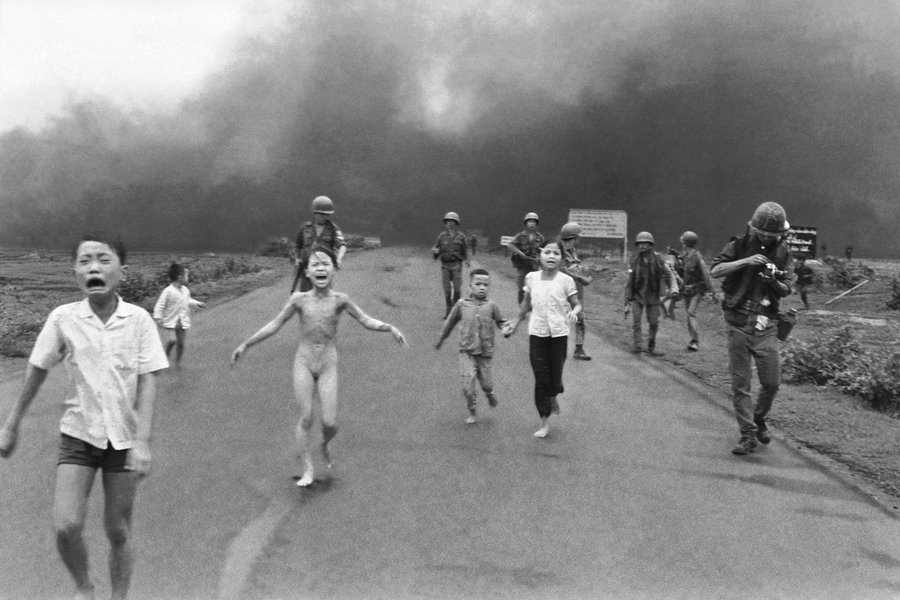
We looked at this photograph at the very start of this course. Let’s consider it again. Please revisit your very first learning log entry for this course. Read what you have written.
Write another short (200 word) response to your original entry.
Has your opinion on this photograph changed or stayed the same?
What have we covered in this course that has shaped how you think about this image?
The Photograph
Original Response
Review
My views on the ethics of taking the picture are unchanged. Ut had a responsibility to capture the war, and this photograph epitomises the suffering of victims of napalm attacks, with the emphasis on children. However, the image does not tell the story of the event itself, being a friendly fire incident, rather focuses on Vietnamese children as victims of general atrocity which, while correct, is a single story only. Ethically, the photographer behaved honourably in saving Phuc’s life after taking the picture, but in editorial, she was not protected as a vulnerable person. As soon as she was revealed to have survived, her identity should have been withheld. Instead, she was turned into a propaganda tool, which undoubtedly made a difference to public sentiment regarding the war. Although the image has been a positive influence in Phuc’s later life as a campaigner, nobody could have forseen that at the time. Retrospectively applying an ethical approach to the image, might lead to the conclusion that it should never have been taken. However, retrospectively applying the same standards to editorial reveals issues of Duty of Care, as well as singular narratives that could have been given more consideration.
 Richard Fletcher OCA Photography Blog