Monthly Archives: Aug 2023

Assignment 4: Framing Your Family

The Brief

Create a series of 4-8 images exploring family, drawing from the writing and contemporary practitioners discussed in this project. 

Family as defined here is not limited to any traditional sense of the word and you are encouraged to define ‘family’ on your own terms in your written reflection.

Please remember to gain written consent from family members if they feature in the work. You may wish to refer back to the terms of engagement in collaborative practices discussed in Project 2. You may choose to share these photographs in the unit forum or privately with your tutor (asynchronously). 

Write a reflection in your learning log (around 500 words). Use this as an opportunity to reflect on the activity. Describe the context, your approach, your ethics, any challenges you faced, and how your family members feel about the images that you have produced. 

Introduction

The concept and preparatory work for this assignment can be seen in the sketchbook:

https://oca.padlet.org/richard5198861/assignment-4-sketchbook-nypzni0hc0phvi51: Assignment 4: Framing Your Family

The Series

Reflection

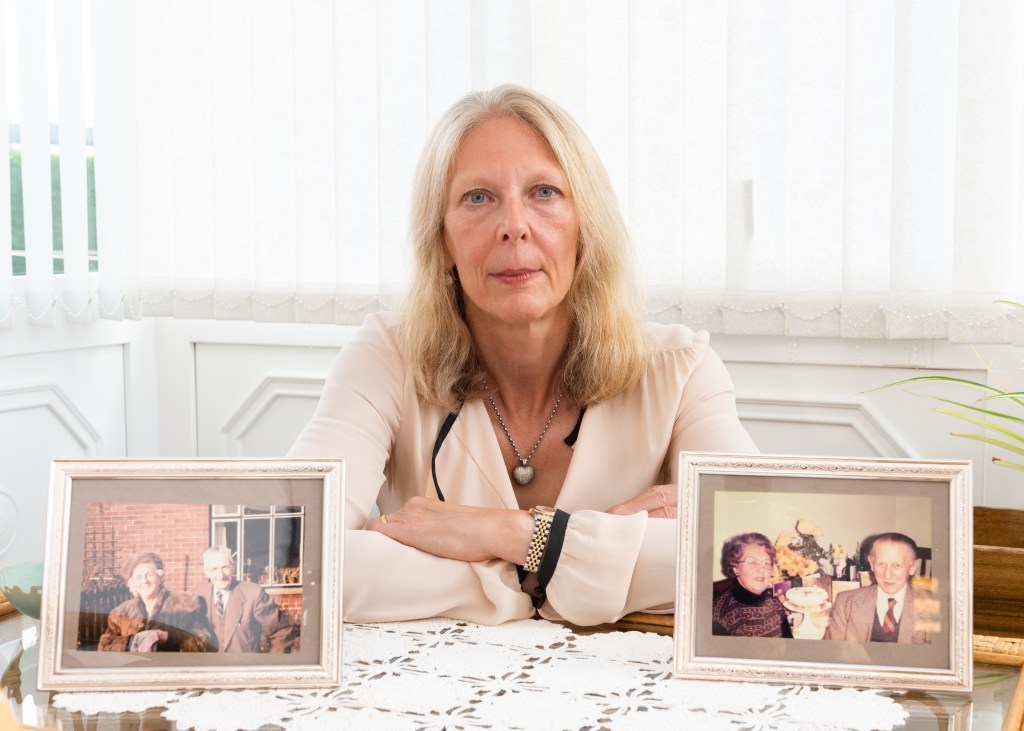
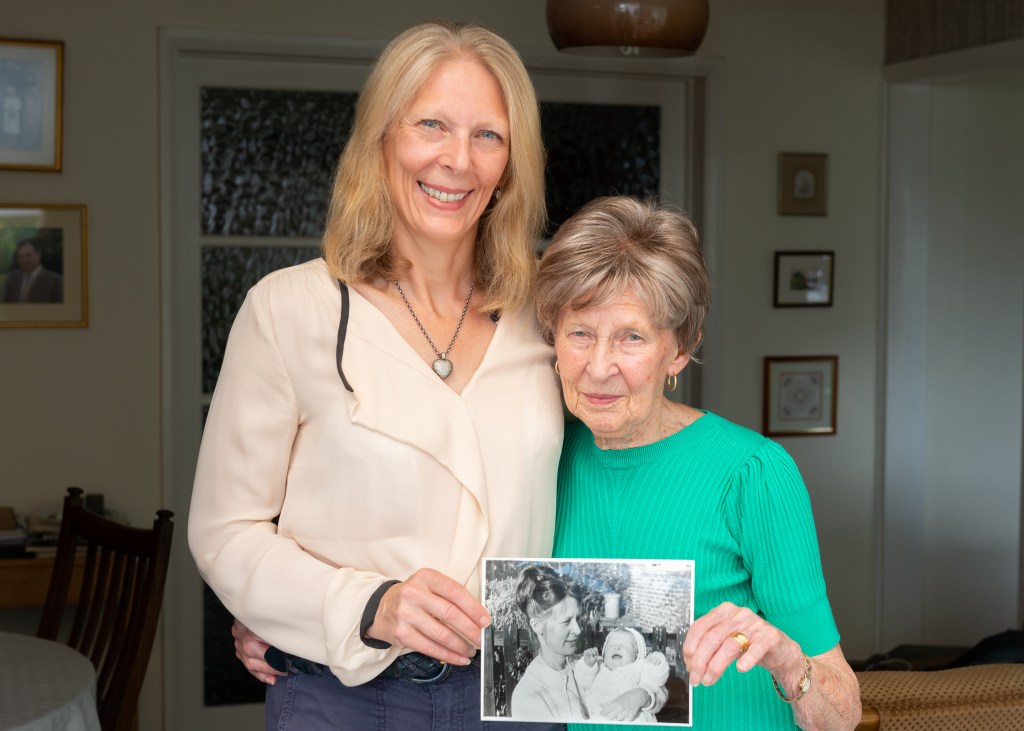
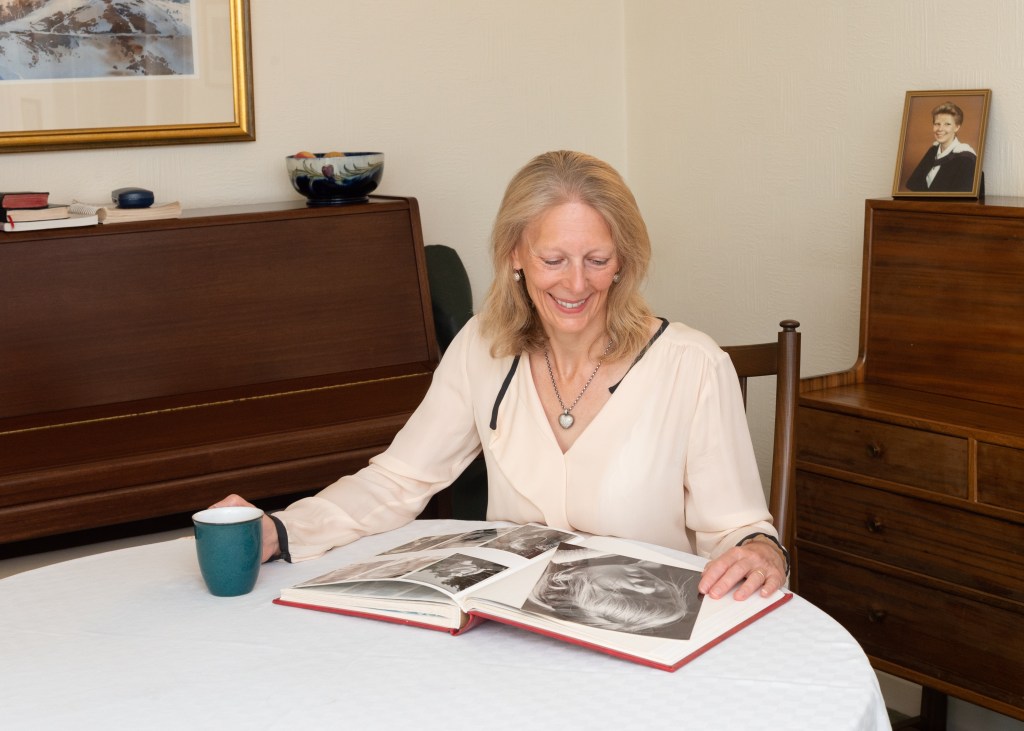
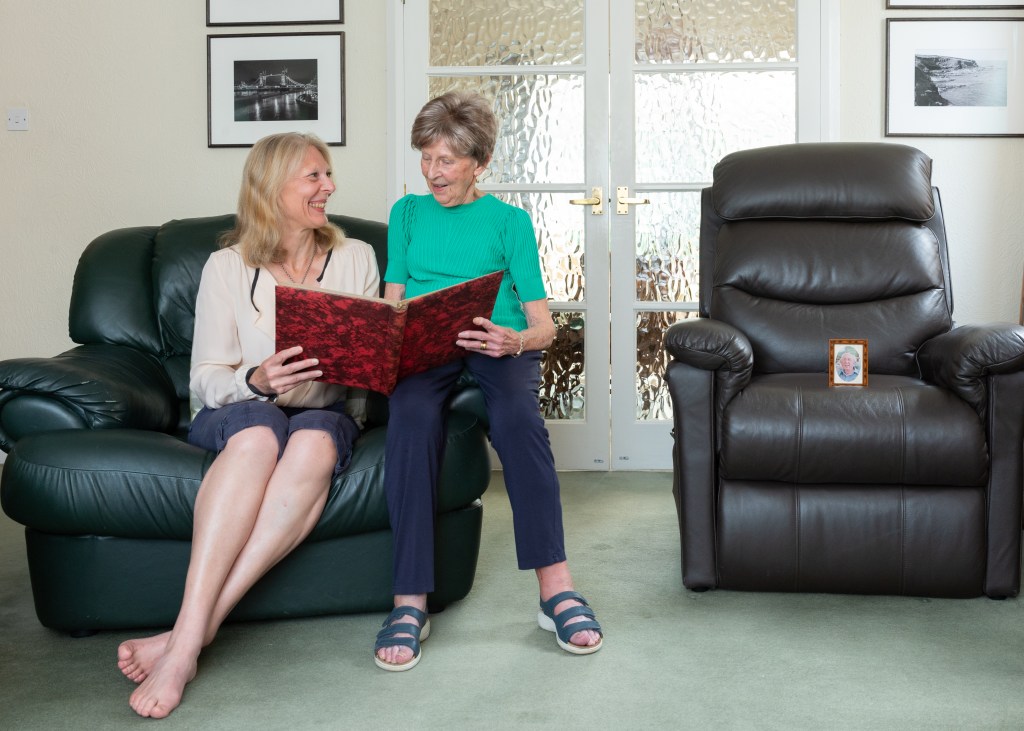
I chose my wife Jayne’s family as my subject because when we met, there were just three close relatives, her parents and uncle.  The family is now just Jayne, her mum Hazel and me. The audio interviews recorded by my father-in-law with his parents started me thinking about familial relationships and visual similarities that photographs document over time. 

My approach was to talk through my idea with Jayne and Hazel ahead of a visit in August.  I suggested spending an afternoon looking through the family albums to find pictures that could be incorporated in the compositions ,and then shooting the following day.  The images weren’t a collaboration in the same way as in part 3, as we had a relatively short period of time for the work.  Seeing the old photographs invoked emotional reactions in them, which led to them being distracted. This needed to be carefully managed.  They had both volunteered to support me with this, which led to my not pushing for any decisions or answers on a particular idea, choosing instead to let that first afternoon flow.  When it came to the shoot, the first challenge was their preference to be directed.  I found that I had to just throw out ideas as alternative to instruction, as I wanted their poses and interactions to be as natural as possible.  Secondly, Hazel wasn’t feeling all that well, and it was obvious at the start that she only had limited patience for the shoot, being in discomfort.  I understood the need to keep the shoot moving along so that she could rest in between compositions.  

Overall, the shoot was successful as I believe the images represent what I set out to reveal.  The working dynamic was interesting, as both women are used my camera.  Although this made consent easy to acquire, Jayne pointed out a nervousness of committing to it formally.  Perhaps that highlights the difference between perceptions of the role of family member and photographer.  There was definite trust that was brought to the session, firstly that the images would be aesthetically respectful, and secondly that I would discuss any deviation in the intent for the work.  For example, I didn’t want to represent Hazel as a stereotypical widow but to make the point that Bryan was no longer with us.  The last two images involved open discussion about that intent.  Interestingly, I have yet to share the work beyond the OCA group, my reluctance being about inviting the public into my family circle.  As a private person, balancing the role of documentarist and proxy subject was definitely a challenge. 

The work in part 4 has influenced the way I’m thinking about my SDP, in particular Mitchells’ subject interviews and the idea of dynamic ‘agency’; the review and re-work process that needs a strong connection between photographer and subject to be successful.  My SDP has already built fledgling relationships with my portraiture subjects, which are yielding a greater understanding of what the LGBTQ+ community struggles with every day.  

EAR Self Directed Project Notes: An ethical conflict

Context

My current idea for my SDP is a documentary series about Malvern Pride, and event that I photographed in a professional capacity in 2022, and will be repeating this year. In preparation for the event, I met with the organising committee and volunteers to discuss the practical details of the day. I had the opportunity to talk to the assembled group, most of whom are part of the LGBTQ+ community, about my social documentary project, and in particular the ‘socially engaged’ element. I told them that I wanted my work to be from the perspective of people within the community, rather than as seen by an outsider like myself. It would require voluntary interviews and collaborative portraits of the individuals. There were many people who were interested in taking part.

The Group for Mature Lesbians

One of the committee members said that she wanted to be part of the project, but I might want to talk to a group that she belonged to that was founded by a friend of hers. It was formed to support lesbian women living in Malvern, acting as a social network because the founder felt that her demographic was under-represented in the town. She thought that I could tell the story of the group and its members as part of my project. I reflected on whether this could be the total focus of my SDP as an alternative to Pride, but said that I was interested in meeting with them to discuss further.

The Difficult Conversation

During this discussion, we were joined by another woman in her 60s who said that she’d only recently moved to Malvern and was volunteering for the first time. She asked me about the project and why I wanted to do it, which I explained. During my description, I used the terms positive and negative to describe the two sides of the meaning of Pride, the positive being the celebration of the LGBTQ+ community, and the negative being the ongoing protest against prejudice and the demand for equality and respect. Her reaction was instantly anger, which made me quickly realise my blunder. She demanded to know why protest was ‘negative’, which I answered by immediately apologising for my clumsy use of language. The other woman jumped to my defence, pointing out what she saw as the meaning of what I’d said. She suggested that the lady was overreacting, which didn’t pacify her. I continued to apologise and explain what I meant in a couple of alternative ways, until she calmed down and we moved on. I believed that things were now ok and we continued to discuss Pride and its importance to the town.

Aftermath

About a week later, I bumped into the committee member in the street, and our conversation soon turned to the group that she was a member of. She informed me that she didn’t think it would work, because the woman from the meeting, who was a member of the group, had mentioned me to the others. The content of the discussion wasn’t clear, but the result was that the members were now anxious about engaging with me. While the committee member was going to talk to the founder privately, she didn’t think the damage could be undone.

Reflection and Learning Points

  • It was clearly a disappointing outcome that occurred because of my carelessness with the language. In the follow-up discusson, my friend suggested that it wasn’t a big deal, but clearly it angered the woman.
  • Ethically, it’s my responsibility to navigate the sensitivities around a subject where a subconscious bias might be at play. I genuinely don’t see protest or campaigning for rights as ‘negative’, but I can imagine that many straight people do. Protest is a basic human right in this country, but as we see in the media coverage of disruptor protests such as Extinction Rebellion and Just Stop Oil, the wider public finds the methods to be frustrating and problematic. Ironically, that’s the point of their methods. In my case, I represent to the woman, a middle-aged, middle-class, white heterosexual male, who is most likely the demographic responsible for categorising LGBTQ+ people to suit their own ends.
  • I acted appropriately and did my best to recover the situation. I later learned in another encounter with her that she is just a generally angry person. It wasn’t aimed at me personally, but it was sufficient for her to have (allegedly) spoiled a potential constructive relationship with an interesting group of people. I learned to quickly move on and look for alternative subjects and ideas.
  • While it’s an important learning point, it’s also set in a much wider context of the project, which isn’t focused on a particular gender or sexuality group within the LGBTQ+ community. I have alternative options, so am not dwelling on what is a fairly small incident.

Project 4, Reading Task: Case Study of Family Consent

The Brief

Read the article by C. McKinney: “Leibovitz and Sontag: picturing an ethics of queer domesticity.” Shift Journal [online]. 

Reflect on and summarise the ethical considerations of the case study (150 words) andpost this to your learning log.

Reflection

McKinney raises the problematic nature of photographing outwardly private people, against a backdrop of homophobic perspectives on domestic life, perpetuated by Sontag’s blood family.  We see how consent, first implied in the posed portraits, is questioned when Sontag became perceivably too ill to comprehend being photographed.  All evidence points to her tacit understanding of pictures having distribution as their primary purpose, so how do modern sensitivities around privacy and respect for the dead influence our view of art? A point is made that family see themselves as the owner of a loved-one’s posthumous representation above all others, this case including Sontag’s 15 year romantic partner. Core themes of ‘disrespect’ run through criticism of Liebowitz, possibly because her photographic craft often transgresses perceived decency, but also because of her gender and sexuality.  The piece highlights the strength of family influence, and how this must be considered in the context of gaining, and maintaining, consent.