Share your list of principles with your peers in the Ethics and Representation Forum.
Spend some time comparing others’ lists with your own. What would you add to your own list that you see on someone else’s? Engage in a discussion with others about the choices you made when compiling your list using the forum thread.
Afterwards, reflect in your learning log about anything you may have learned from your peers. Revise your list of ethical principles if necessary, and explain any changes you make as a result of the group discussion.
My Ethical Principles
- Respect for the subject. Not to be confuse with deference of having to like the subject. The person or persons, their story and the context in which I’m photographing needs to be done respectfully in terms o what I am trying to represent, without any actions by either side to bend the ‘truth’
- No Harm. To do enough work to understand the potential impacts of my work in the future, whether I am comfortable that my intention remains the same and how, if at all, I can control it.
- Honesty. Being open and upfront in my communications with the subjects and also the ‘users’ of the work.
- Understanding the wider context. Simply the act of doing the due diligence to identify and potentially correct any ethical concerns I might uncover before creating the work.
- Collaboration. Not being the expert on a subject. Where there are unfamiliar aspects to a person’s story, work with them to balance my own perspectives.
Note that these are my ethical values based on previous experiences, and that they will undoubtedly change as the course progresses.
Reflection on the Forum Posts
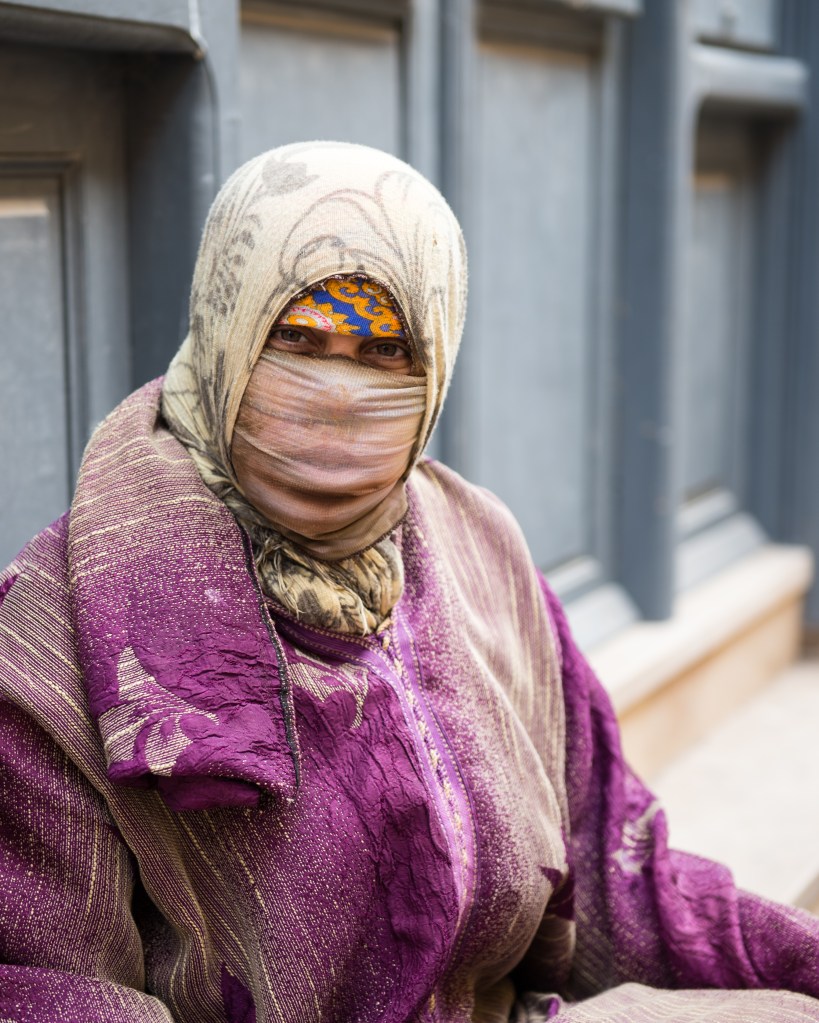
It’s clear from reading the other student’s lists of ethical values, that there is much natural common ground. We all see respect and doing no harm as being core to our photographic practice, with additional ideas such as justice, health and beneficence being highlighted. In reflecting on the areas where we differ, I conclude that I have similar ideas, but articulate them differently. For example, informed consent in my value is a combination of collaboration and honesty in communication. I currently struggle to make a case for consent where it assumed, rather than specifically gained, as demonstrated on my Morocco trip in 2015. During that visit, I took a picture of a homeless lady, who gave me her consent to do so because I had just given her the spare change in my pocket. Having learned the cultural sensitivities by then, I would not have assumed consent because she was sitting in a public place (the difference In Moroccan law notwithstanding). Was the consent informed though? I don’t believe so, because we didn’t discuss why I wanted to shoot her, nor did we consider together what the image would subsequently be used for. There were good reasons for this though, the principal one being that we didn’t speak each other’s languages. My view on that photograph (below) now, is that I am uncomfortable about the transactional nature of it, my perspective as a tourist in making an image of a homeless person despite my best intentions not to exploit her situation, and the lack of understanding between photographer and subject. Portraits of this kind are, or course, very intimate which means that my ethical values as I now seem them, need to be considered more carefully.
There is discussion in the forum about ethics being somehow ‘bent’ in the face of a split-second moment as in the Napalm Girl image. My personal view on this is that rather than bending ones own ethics, there is comfort in operating within those of another. In the case or Nick Ut’s image, the situation was within the constructs of photojournalism, as he was in Vietnam to document the conflict. His pictures would be governed by his own vision and perspectives on the way, so I agree that his own personal ethics would be the guiding force. However, the incident that led to Napalm Girl was a split-second decision, after which Ut behaved in a very human way, saving Phuc’s life and forming a lifelong bond with her. His actions in shooting the picture first are not, in my view, momentarily compromising his values but working within those set by his employers. This is where I see issues with having ethics. As the learning to date makes it clear that ethics are personal to the photographer, we will all differ from each other. This difference is magnified when an editorial is involved. Ut selected Napalm girl as the most powerful image, but he effectively lost all control over how it would then be used by the press, the public and the politicians. Whatever his original intentions, they would have been diluted through the editing and publishing stages. It reminds me of Eddie Adams equally famous image of the execution of Nguyễn Văn Lém in 1968, which was one of many documentary images that he took of the arrest of the Viet Cong soldiers.
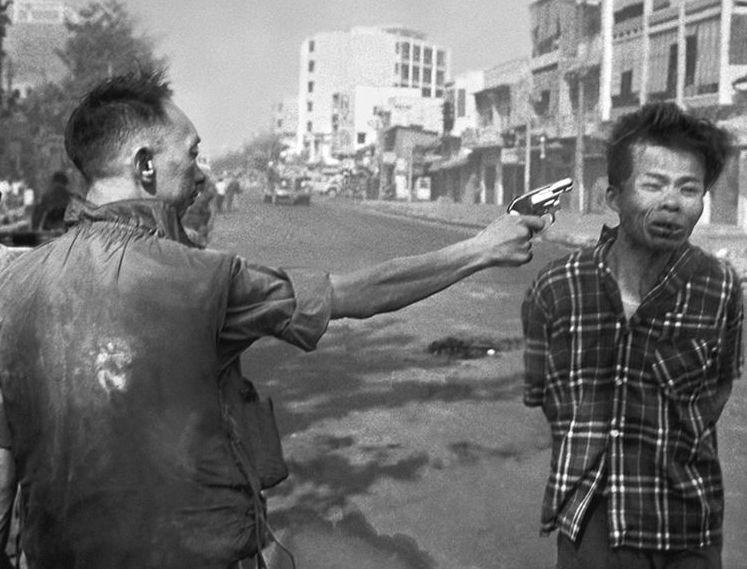
Like Napalm Girl, this image won the Pulitzer Prize for the photographer and went on to fuel anti-war sentiment in the United States. It differed in that when published, the revulsion at the act depicted was focused on the man who pulled the trigger. The idea of doing no harm, that may well have been a personal value of Adams, was lost through the editorial. The press ethics really centre around the faithful representation (as much as it can be) of an event, without exploitation, interference or undue influence. To that extent, the picture met the press standards, but not necessarily that of Adams.
This picture really messed up his life. He never blamed me. He told me if I hadn’t taken the picture, someone else would have, but I’ve felt bad for him and his family for a long time. I had kept in contact with him; the last time we spoke was about six months ago, when he was very ill. I sent flowers when I heard that he had died and wrote, “I’m sorry. There are tears in my eyes.”
(Adams, 1998)
In conclusion, our ethics as people are usually enough govern how we approach our own work. In that regard, my fellow students and I clearly believe the same ethical values, with language being the main separator. Our ethics can be challenged by others when we no longer have control over our image. In these cases, our best intentions are the best we can aim for.
References
Adams, E. (1998) ‘Eulogy: GENERAL NGUYEN NGOC LOAN’ In: Time 27/07/1998 At: https://content.time.com/time/subscriber/article/0,33009,988783,00.html (Accessed 10/04/2023).
Nguyễn Ngọc Loan (2023) In: Wikipedia. At: https://en.wikipedia.org/w/index.php?title=Nguy%E1%BB%85n_Ng%E1%BB%8Dc_Loan&oldid=1146876860 (Accessed 10/04/2023).
 Richard Fletcher OCA Photography Blog