Monthly Archives: Apr 2023

Reading Task: Photographic Truth

The Brief

Read “Chapter 1: Images, Power, and Politics” in Marita Sturken and Lisa Cartwright, Practices of Looking: An introduction to visual culture (3rd ed.) (2018) Oxford University Press, available on the unit Reading List.In your learning log, write a response to the chapter (300-400 words). How do you understand “truth” in your photographic practice? What relationship do your images have to truth? How does the learning from this project and Sturken and Cartwright’s chapter prompt you to think about your own practice or about work produced by others?

Response

In my work, “truth” is a concept that I have only recently begun to explore. Until the end of the unit Context and Narrative, I shot photographs to rigidly document what I saw before me, primarily as a way of remembering a moment. When I started to work more in constructed tableaux, that changed. I consciously started to reverse-engineer cultural references related to my life experience using Barthes/Saussure’s ideas of semiotics in visual language. Incorporating denotive elements that offered a variety of connotations allowed me to change formal reality to something more interpretive. This culminated in Modern Monsters in the previous unit. 

In considering the reading chapter, I would say that my work points to relationships between people and circumstance, in a largely fabricated way.  I relate to the work by O’Sullivan and Van der Born as they create something familiar and believable, but less so the power relationships of Alfridi et al and Orr, who present injustice directly to the viewer through iconic references.  This chapter made me think about the act of observing and then connecting the elements of the composition with other meanings, as in the case of Frank’s Trolley and Lange’s Migrant Mother.  I am interested to know to what extent the moment contributed to these photographs and how much was reflective after the fact.  We know that both were taken during long documentary trips that yielded many similar situations, so how did the context of the rest of the shooting (that day, that week, that month) influence the production of a particular image to represent power (or lack thereof)?  I concluded that this is probably what holds me back in photographing events unfolding before me, and drives me towards the more fabricated image. 

 In considering how the ideas of power, ideology, iconography and cultural representation will affect my own work, I believe the focus will be more about planning how to represent the subject before taking a single picture.  As well as the central ethical questions about ‘should I?’, I’m going to explore what I want to say in more detail.

Project 1, Exercise 3: Finding Common Ground

Share your list of principles with your peers in the Ethics and Representation Forum

Spend some time comparing others’ lists with your own. What would you add to your own list that you see on someone else’s? Engage in a discussion with others about the choices you made when compiling your list using the forum thread.

Afterwards, reflect in your learning log about anything you may have learned from your peers. Revise your list of ethical principles if necessary, and explain any changes you make as a result of the group discussion.

My Ethical Principles

  1. Respect for the subject. Not to be confuse with deference of having to like the subject. The person or persons, their story and the context in which I’m photographing needs to be done respectfully in terms o what I am trying to represent, without any actions by either side to bend the ‘truth’
  2. No Harm. To do enough work to understand the potential impacts of my work in the future, whether I am comfortable that my intention remains the same and how, if at all, I can control it.
  3. Honesty. Being open and upfront in my communications with the subjects and also the ‘users’ of the work.
  4. Understanding the wider context. Simply the act of doing the due diligence to identify and potentially correct any ethical concerns I might uncover before creating the work.
  5. Collaboration. Not being the expert on a subject. Where there are unfamiliar aspects to a person’s story, work with them to balance my own perspectives.

Note that these are my ethical values based on previous experiences, and that they will undoubtedly change as the course progresses.

Reflection on the Forum Posts

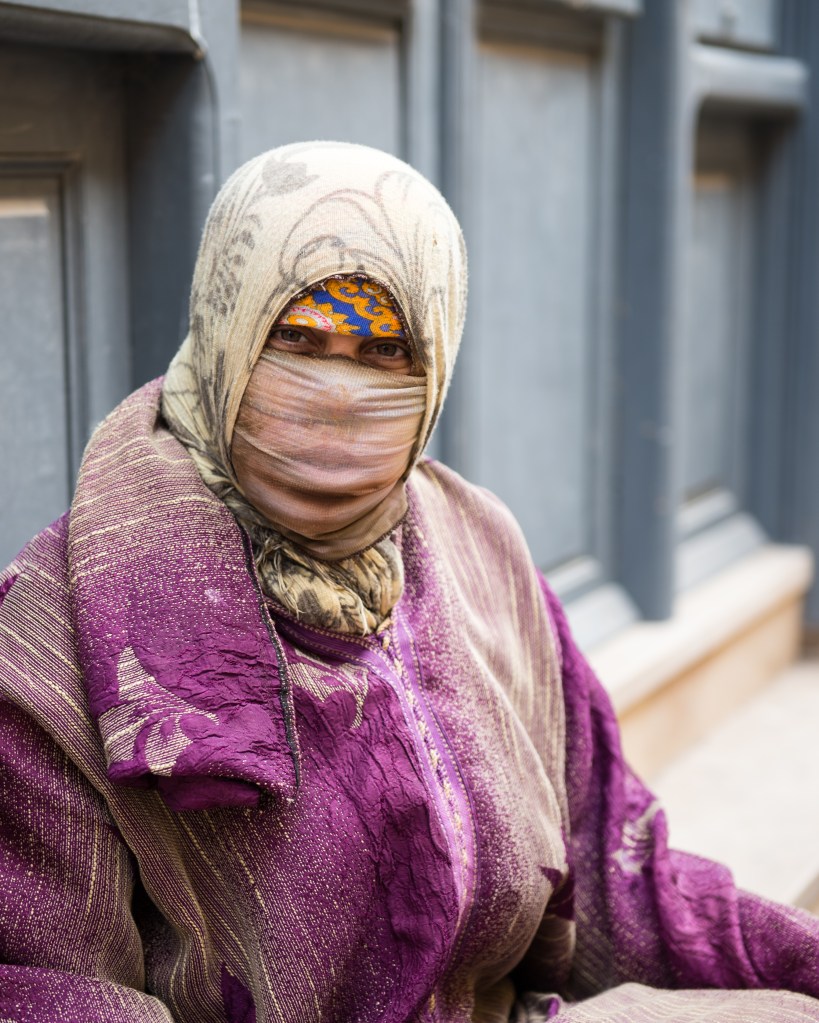
It’s clear from reading the other student’s lists of ethical values, that there is much natural common ground. We all see respect and doing no harm as being core to our photographic practice, with additional ideas such as justice, health and beneficence being highlighted. In reflecting on the areas where we differ, I conclude that I have similar ideas, but articulate them differently. For example, informed consent in my value is a combination of collaboration and honesty in communication. I currently struggle to make a case for consent where it assumed, rather than specifically gained, as demonstrated on my Morocco trip in 2015. During that visit, I took a picture of a homeless lady, who gave me her consent to do so because I had just given her the spare change in my pocket. Having learned the cultural sensitivities by then, I would not have assumed consent because she was sitting in a public place (the difference In Moroccan law notwithstanding). Was the consent informed though? I don’t believe so, because we didn’t discuss why I wanted to shoot her, nor did we consider together what the image would subsequently be used for. There were good reasons for this though, the principal one being that we didn’t speak each other’s languages. My view on that photograph (below) now, is that I am uncomfortable about the transactional nature of it, my perspective as a tourist in making an image of a homeless person despite my best intentions not to exploit her situation, and the lack of understanding between photographer and subject. Portraits of this kind are, or course, very intimate which means that my ethical values as I now seem them, need to be considered more carefully.

Homeless woman of Marrakech, shot in 2015

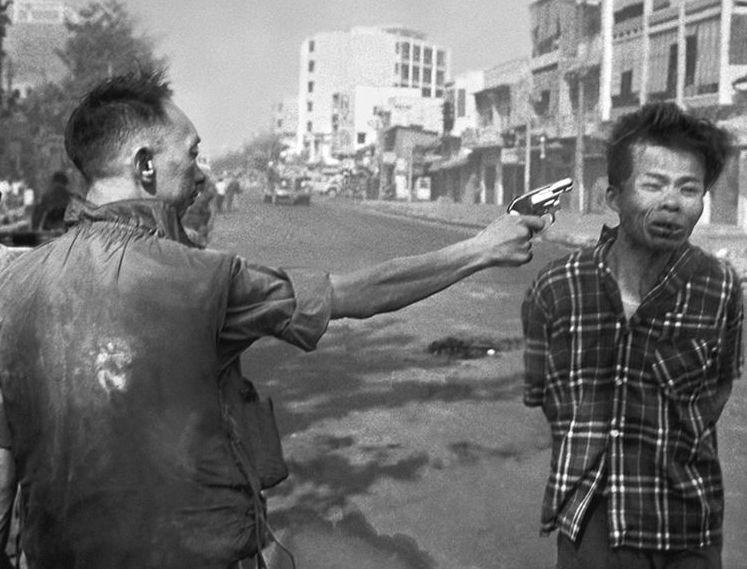
There is discussion in the forum about ethics being somehow ‘bent’ in the face of a split-second moment as in the Napalm Girl image. My personal view on this is that rather than bending ones own ethics, there is comfort in operating within those of another. In the case or Nick Ut’s image, the situation was within the constructs of photojournalism, as he was in Vietnam to document the conflict. His pictures would be governed by his own vision and perspectives on the way, so I agree that his own personal ethics would be the guiding force. However, the incident that led to Napalm Girl was a split-second decision, after which Ut behaved in a very human way, saving Phuc’s life and forming a lifelong bond with her. His actions in shooting the picture first are not, in my view, momentarily compromising his values but working within those set by his employers. This is where I see issues with having ethics. As the learning to date makes it clear that ethics are personal to the photographer, we will all differ from each other. This difference is magnified when an editorial is involved. Ut selected Napalm girl as the most powerful image, but he effectively lost all control over how it would then be used by the press, the public and the politicians. Whatever his original intentions, they would have been diluted through the editing and publishing stages. It reminds me of Eddie Adams equally famous image of the execution of Nguyễn Văn Lém in 1968, which was one of many documentary images that he took of the arrest of the Viet Cong soldiers.

Eddie Adams’ famous execution image, 1968 (Nguyễn Ngọc Loan, 2023)

Like Napalm Girl, this image won the Pulitzer Prize for the photographer and went on to fuel anti-war sentiment in the United States. It differed in that when published, the revulsion at the act depicted was focused on the man who pulled the trigger. The idea of doing no harm, that may well have been a personal value of Adams, was lost through the editorial. The press ethics really centre around the faithful representation (as much as it can be) of an event, without exploitation, interference or undue influence. To that extent, the picture met the press standards, but not necessarily that of Adams.

This picture really messed up his life. He never blamed me. He told me if I hadn’t taken the picture, someone else would have, but I’ve felt bad for him and his family for a long time. I had kept in contact with him; the last time we spoke was about six months ago, when he was very ill. I sent flowers when I heard that he had died and wrote, “I’m sorry. There are tears in my eyes.”

(Adams, 1998)

In conclusion, our ethics as people are usually enough govern how we approach our own work. In that regard, my fellow students and I clearly believe the same ethical values, with language being the main separator. Our ethics can be challenged by others when we no longer have control over our image. In these cases, our best intentions are the best we can aim for.

References

Adams, E. (1998) ‘Eulogy: GENERAL NGUYEN NGOC LOAN’ In: Time 27/07/1998 At: https://content.time.com/time/subscriber/article/0,33009,988783,00.html (Accessed 10/04/2023).

Nguyễn Ngọc Loan (2023) In: Wikipedia. At: https://en.wikipedia.org/w/index.php?title=Nguy%E1%BB%85n_Ng%E1%BB%8Dc_Loan&oldid=1146876860 (Accessed 10/04/2023).

Project 1, Exercise 2: Identifying Ethical Principles

The Brief

What ethical principles guide your work as a photographer?

Do some independent research and self-reflection to generate a list of ethical principles that are important to you in your work as a photographer. 

Define each principle in relation to how it relates to your practice. You might want to include some examples to illustrate the principle. Complete this exercise in your learning log, we recommend you define 4-6 principles that feel authentic to your work. Reference where you drew any of the guidelines from. 

Response

Research led me to consider the concepts laid out by the National Association of Press Photographers and the Photography Ethics Center, when applied to a number of practitioners, some whose work I admire and others that I do not. The research for this exercise can be seen here:

https://oca.padlet.org/richard5198861/research-for-project-1-exercise-2-fbzq4v0a2ov52rog

In considering my own ethics, I conclude that these are my ethical principles:

Respect as much of the facts as possible

This first principle is a tricky one to define, because the concept of fact and truth are themselves complex. What I mean here is that whatever the situation or story, I see to understand as much of it objectively before deciding on how to represent it. An example would be my experience in Marrakech [1], where I knew so little about the culture, I could only offer my perspective as a tourist.

Avoiding causing direct harm or distress

In looking at Bruce Gilden and his attitude towards his subjects, I realise that I’m not a street photographer. He and Cohen (the other photographer in the Padlet) place themselves directly in confrontation with their subjects. While it’s legal to photograph people in public places in the US and UK, the way that some photographers obstruct their subjects makes me uncomfortable. In Cohen’s case, there is occasional collaboration between subject and photographer, but Gilden appears much more aggressive. All of the street work I’ve done in the past has been from a distance, using a mid-zoom lens. I think it’s that discomfort that makes me work in this way.

Be interested in the wider context

Listening to Sally Mann talk about her projects that involve her family, it’s clear that any doubts she has are eased by considering the wider implications of her work. In particular, photographing her husband, who is very ill, she relies on his bravery in telling his story to counteract the pain of photographing her loved one.

Be open and honest

I think my biggest learning to date in this regard, came from Identity and Place, where we had to photograph people we hadn’t met before [2]. When I started the assignment, I was looking for some kind of segue way into a conversation to convince them to let me shoot them. What actually happened is that I simply talked to them about the course, my objective, where the pictures would be shared and what I would be using them for. This was a much better strategy in terms of building trust between photographer and subject and resulted in pictures I was happy with. I still see most of my subjects from time to time and we still chat, even though the pictures were taken nearly 2 years ago. Honesty helps people understand what their image or representation is going to be used for and offers them a way of challenging or rejecting anything that conflicts with their own values.

Collaborate

The idea of collaborating for me covers many things, including an amalgamation of ideas, representation that is respectful or challenging in a given context, and consent. The Photography Ethics Center uses the example of photographing children as a case for collaboration. A child isn’t developed enough to be able to understand how they are being represented. By collaborating with their parent or guardian organisation who knows them, we can reach an agreement that will avoid issues of safety, long-term harm and influence that might effect their development. This is not a straight-forward transaction, as demonstrated by the case of Spencer Elden who was photographed for the famous Nirvana album cover when he was a baby. Collaboration took place between the artist and his parents, but many years later Elden had a problem with the image. There are wider issues raised than a matter of ethics, with Elden being accused of indulging in the fame of the picture until that fame had diminished. Ultimately, his civil case regarding harm done to him was dismissed by the court. Where children are concerned, Collaboration in the form of open and honest discussion and consent to take a picture are key to avoiding any harm being done.

Conclusion

When I reflect on these principles, I see that they are closely interlinked and that they align with how I try to behave in other aspects of my life. The key learning point is that the camera doesn’t give us, as photographers, an excuse to alter our behaviour towards other people because it somehow anonymises what we are trying to represent. In the case of Napalm Girl, the photographer was employed to document the war visually, so when the attack on the villagers happened, his first thought was to shoot, what he saw. His instinct as a human being was to help the children, in particular Kim Phuc, who was in the most danger. He is credited with saving her life, which in my view balanced the decision to shoot first, help second. What Ut could not have been fully aware of, nor could he control, was the way the image was used for the next 50 years. He probably wasn’t aware what damage he would cause Phuc psychologically during her formative years, through the embarrassment of her nudity and vulnerability. In their case, a strong relationship formed after the fact, which would have provided both with insight into the impact of the decision to shoot and the impact it would have for both of them. When we look at the NAPP ethical values as an organisation, we can see that Ut did behave in an ethical manner. That may not have been how the world saw it when the image was published, but I don’t see how a conflict photojournalist could predict that in the decisive moment that presents itself. I was interested in the evolution of the Ethics Center and the concepts that were at odds with the historical video of Bruce Gilden. Gilden proclaimed that he had not ethics and that photojournalism was all ego, something he later retracted as being sarcasm. I personally think his comments at the time were the accepted norm and that history has rewritten the norms. If we consider how his approach to work would be received today, in an era where everyone has a cameraphone and everyone is being photographed largely without their consent, it stands to reason that modern ethics has had to remind photographers what their responsibilities are to their subjects and stories. For me, the experience of street photography is governed by my own ethics to the extent where I avoid it as a genre. This isn’t a positive situation either, as an artist shouldn’t be self-governing to the extent that they don’t produce work. I’ve self-edited to my detriment in this course previously [2], and having conducted some preliminary research into ethical practice, I would approach the shoot differently. My particular issue centred around not wanting to publish images that might cause my subjects issues (causing harm), but could have been offset by clearer communication (open and honest), which might have steered the work differently, but prevented my wanting to keep it from being viewed.

In summary, I am interested to see how my ethics change, if at all, as I progress through this module. What I’ve learned so far has made me think about my approach to work in a different way, so it will be interesting to see how that affects my future work.

References

[1] richardfletcherphotographyblog (2021) Assignment One: ​The non-familiar. At: https://richardfletcherphotography.photo.blog/2021/04/11/assignment-one-%e2%80%8bthe-non-familiar/ (Accessed 02/04/2023).

[2] richardfletcherphotographyblog (2021) Assignment Two: ​Vice versa. At: https://richardfletcherphotography.photo.blog/2021/06/25/assignment-two-%e2%80%8bvice-versa/ (Accessed 02/04/2023).(Password: Leitz1957RF)