Monthly Archives: Jun 2022

Project 3: Exercise 2: Reviewing your broad themes

Begin by browsing the Source Texts and Case Studies and make notes of at least 5 broad themes you can identify that interest you. Identify at least 2 source texts or case studies that you can work through to help develop your own practice and have these ready to support your Project 4 work. List other possible broad themes that you think could have potential for yourself, your peers or other practitioners that interest you. 

Make notes in your learning log. 

You can also share ideas with peers in the Mapping Territories Forum.

Response

My idea of exploring communication as a broad theme (Exercise 1 [1]) led me to consider the further themes that overlap the idea. My starting point was the way that communication has evolved in recent years, with the advent of mobile phones, messaging platforms and social media. This led to the first broad theme of ‘Technology’. In moving to a more digital interaction, I was interested in the way that we communicate with each other and how that had changed. Personal engagements are influenced by who we are, where we fit into a social or familial hierarchy. This led into the broad themes of ‘Identity’, ‘Family’ and ‘Relationships’. I realised also that we are surrounded by information that instructs and prohibits our behaviour, most of which are technology agnostic, that is they require no expert knowledge beyond our way of reading (visually, braille or audible) in order to be effective. Our engagement though, is ultimately driven by our willingness to consume. My final theme is around ‘Rebellion’.

Reading the Source Texts and Case Studies, I selected “Look at Me! The Representation of Self” and “Documentary Depictions and Dilemmas” because they cover the central aspects of what I am interested in. The former deals with representation of personality both as the artist sees it, but also the ideas of projecting a persona, something that is highly relevant to the online world of imagery. The latter deals with the historical shift from straight representation of a scene or event with a view to revelation or social change, to the photographer guiding the narrative according to their perspective. I thought this to be particularly relevant as my ideas communication and its impact on our seeing the world around us, also beg the questions “Does it matter?” and “If there is no noticeable harm, does it matter?” I want to pursue this later in my SDP.

Reviewing the Source Texts

I used Padlet to map the key learnings and messages from the two source texts. They can be found at:

“Look at Me! – The Representation of Self” https://oca.padlet.org/richard5198861/ca380ho1gq6cgndc

and

“Documentary Depictions and Dilemmas. “https://oca.padlet.org/richard5198861/j8sxcdq8ybngzxl3

Conclusion

The first conclusion from this exercise was that my broad theme of Communication does indeed span the 5 other themes that identified. There is a strong theme of change in how we engage with each other and the wider population, which is contiguous with the attitudes of the photographers who pioneered documentary. Their intentions evolved from straight reporting and furthering the idea of the camera being a tool, to growing a conscience and becoming both reporter and advocate. The photographers who wanted to reveal poor living conditions or human rights violations, broke the conventions. It’s no surprise that these photographers were unaffectionately known as ‘muckrakers’ owing to their deliberate attempts to let the viewer into an aspect of humanity to be ashamed of. The emergence of the mass observation and curated stories of the 1930s could be argued to mirror the broadening collective of modern media outlets that push specific narratives across the internet, furthering a confusion over what is truth. The ‘truth’ of the photographic representation in the mid-20th Century became less important than the tactic to present or shock the audience. In a parallel with the idea presented in “Look at me…” that Big Brother created an apathy in the audience with regard to the ‘reality’ of reality television, the full context of stories such as the migrant sharecroppers or the people of the Bowery in New York, was no longer important – just as long as the editorial was ‘broadcast’ Similarly with Cindy Sherman, Jo Spence and Rosy Martin, we had serious assumptions about contemporary and generational female identities challenged by the artists acting as other people. With both genres, external context such as our preconceived ideas of a culture or gender, our memories of how things used to be and our recognition of ‘progress’ are increasingly introduced into our reading of an image when stories are being told instead of relayed.

For my theme, I will need to consider how to home in on the core messages I want to convey. This exercise has allowed me to gather my thoughts about the various aspects of communication as a theme and, most importantly, how I react to them.
Project 3: Exercise 1 – Select a Broad Theme

Select a broad theme as your individual starting point and research how it is expressed photographically through different genres by different practitioners.

Some examples of broad themes include (but are not limited to):

  • The Body
  • Identity
  • Friendship
  • Systems
  • Home
  • Environment
  • Anthropocene
  • Power
  • The Gaze
  • Materiality
  • Otherness
  • Time
  • Family

You can choose one of these, a variation, or something else. Assignment 3 is designed to help by making connections within your analysis.

Response

The broad theme that I have chosen is ‘Communication’, as it is something that I’ve been interested in since Identity and Place. Communication covers a very large area of established norms in the natural world, but in human life it has continued to evolve at pace over the past century or so. What interests me is not so much the methods for communicating a message between people, but how our understanding of visual or symbolic communication has changed with the advances in technology and the impact it has had on our general awareness of what is going on around us. For example, I was in town this week and noticed the increased presence of Union Jack flags hanging from the buildings in the centre. On its own, the flag symbolises the national identity for the UK and stirs many emotions and memories from its use in the sports events such as the Olympic Games to the uniforms of our Armed Services. The current context for its use in Malvern is the upcoming Queen’s Platinum Jubilee. We recognise this without any prompting, because the many methods we use to communicate information tell us that this event, unique in British history, is very soon. The message is reinforced further by the addition of banners and signs in shop windows, but only when we pay attention to them, do they have a conscious effect on us. Subconsciously, we know that there is a celebration coming.

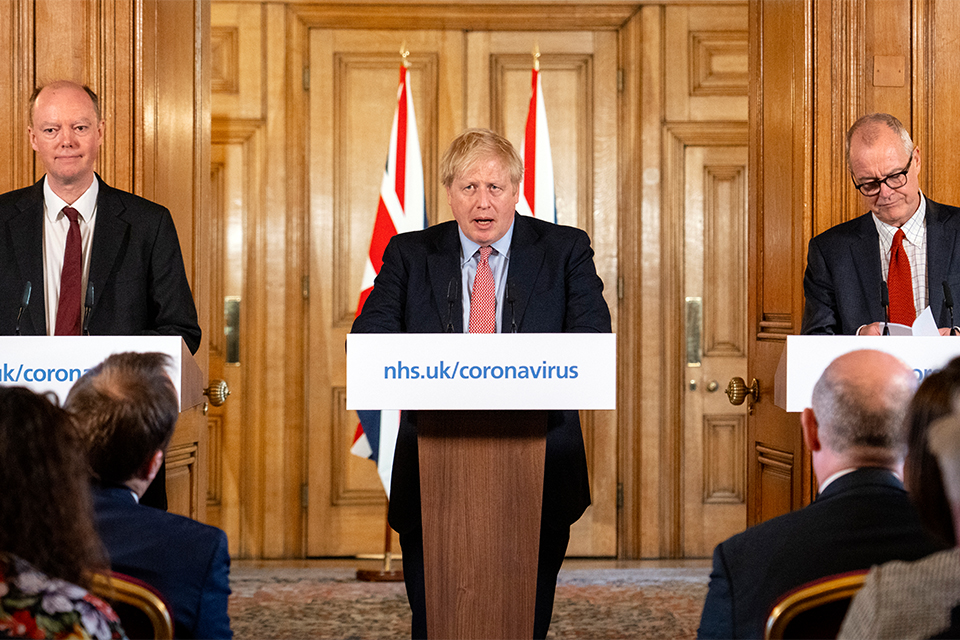
In Assignment 4 of I&P, I paired transcripts of the government COVID briefings with imagery that suggested a contrast between the mood of my town and the messaging coming from our leadership. The briefings were televised, which in itself presented us with a visual communication of how serious the situation was, while trying to reassure the public that those in charge were working the problem.

Fig 1. Prime Minister’s statement on coronavirus (COVID-19): 12 March 2020 (s.d.)

This still, taken from one of the broadcasts, contains the visual elements we came to expect. The Prime Minister flanked by his scientific experts, standing at lecterns, which themselves are symbols of education or presentation. The setting is grand and important-looking and in the centre are two Union Jack flags, creating a sense of national identity and unity as explained previously. The modern use of a website address completes the message ‘if you are unsure, for any reason, go check the website’. The impact of this visual (even in video) is different from the written words that I included in Assignment 4 as they create more internal context, leaving little to our own interpretation. This is where I am interested in our attention to such communication, how it has changed with technological distraction and the effect it has had on our daily lives.

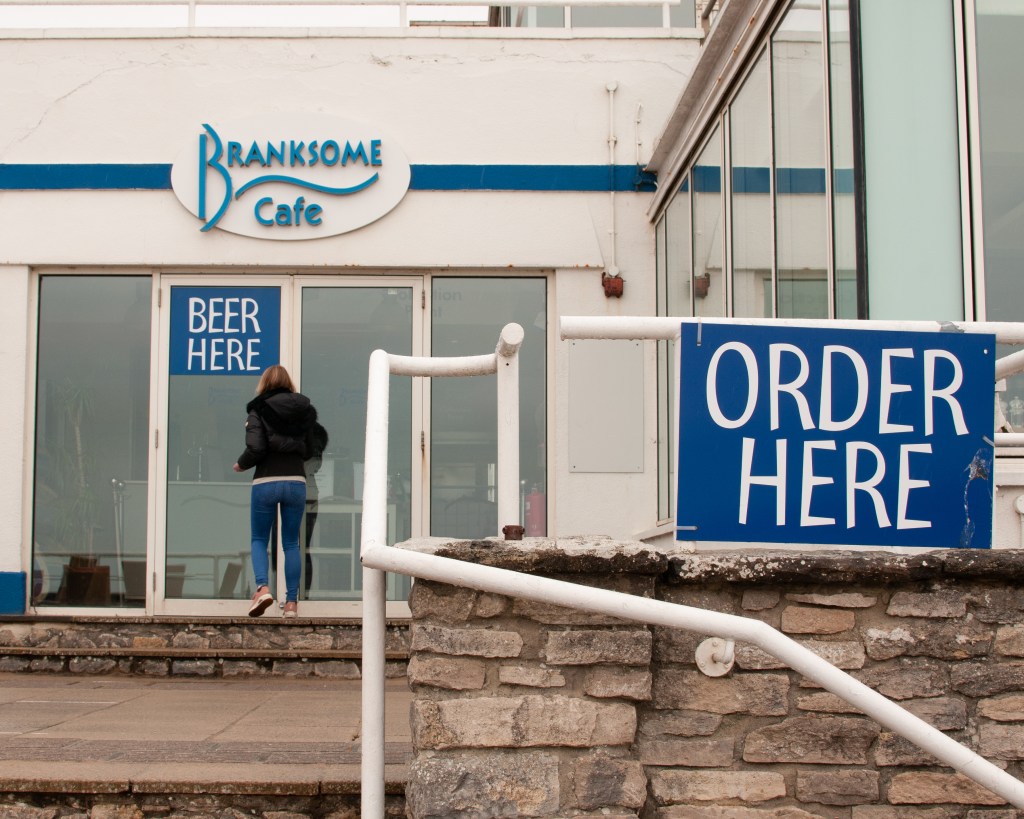
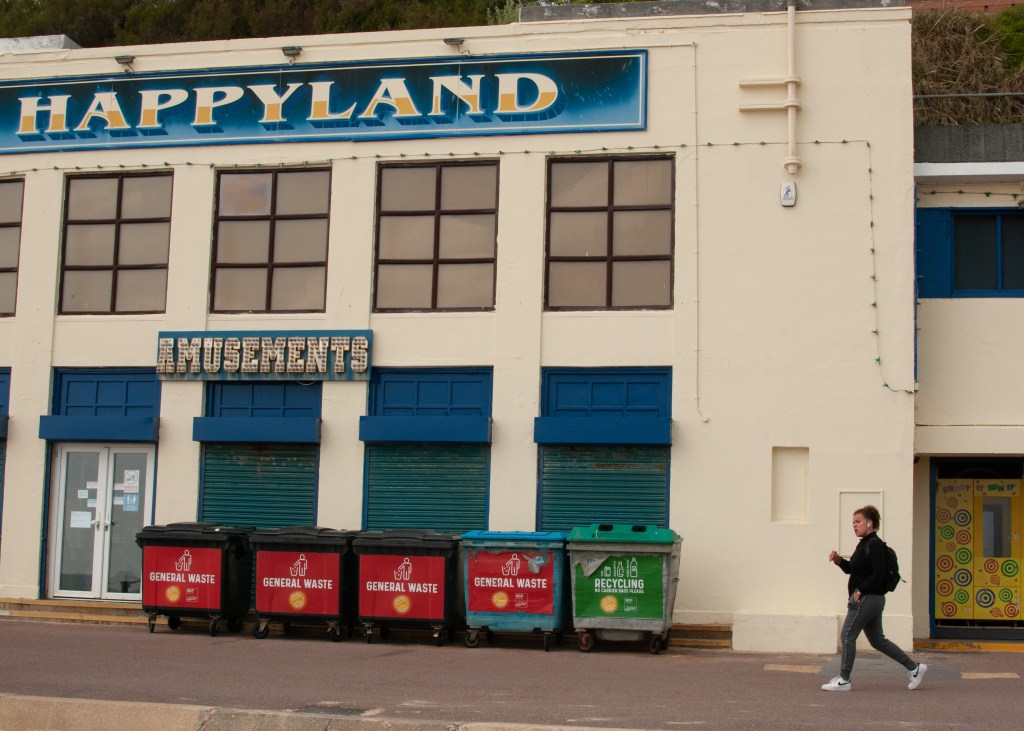
In exploring this theme, I started to observe examples around me and took a few photographs to start shaping my thoughts.

One
Two
Three

Research into how my broad theme fits or overlaps into the genres, as well as practitioners can be found in the Padlet linked below:

https://oca.padlet.org/richard5198861/eehevthvdshw2yup

Initial Conclusions

My broad theme is actually vast. Communication is clearly a word that covers many different ways of establishing an understanding between people, whether on a one-to-one basis or as a broadcast. How information is received is as important and as varied because expectation and ideas of truth are influenced my many social factors and personal beliefs. Aside from the physical communication mentioned here, there are cultural understandings that we learn to the extent where concentration on the meaning is negated, such as the Union Jack symbolism.

During a recent cohort call, my peers analysed my three images above using Barrett’s CRIT process. Amongst the feedback was a comment about the deckchairs in the beach shot. They are positioned together and facing the sea, which when we think about it is the usual position for deckchairs when we see them for real or in an image. The communication comes in the form of an invitation to ‘sit, with company and admire the shore’. As well as the work in the Padlet, this feedback led me to think about the participants in a communication series that I might create. Are the messages I want to present between people within the frame (or implied within the frame) or is the viewer part of the message? For example, a still life image representing communication needs the direct engagement with the viewer because it is a relationship between them and the artist. However, in my three images above, the relationships are between the signs and the people within the compositions. I believe the answer to this is not a simple choice of one or the other for a documentary series that merges with the still life and portraiture genres, instead it is a hierarchy of meaning. I need to choose which form of communication, it’s participants and the general idea of what the image means as a priority, letting the viewer look beyond that to the alternative ideas.

This broad theme is going to form the basis of my Self Directed Project in the second half of the course, because I see a number of strong areas for exploration through photographs.

Image Reference

Fig 1. Prime Minister’s statement on coronavirus (COVID-19): 12 March 2020 (s.d.) At: https://www.gov.uk/government/speeches/pm-statement-on-coronavirus-12-march-2020 (Accessed 25/05/2022).