Read Chapter 4, ‘Something and Nothing’ in Cotton, C. (2014) The Photograph as Contemporary Art (3rd edition) London: Thames & Hudson. You will find this on the student website.
- To what extent do you think the strategy of using objects or environments as metaphor is a useful tool in photography?
- When might it fall down?
Write some reflective notes on these points in your learning log.
Introduction
The chapter ‘Something and Nothing’ deals with the variety of approaches taken by artists to photographing the everyday things that we are not necessarily looking for. The Nothing is described as the missed item and the act of photographing it shifts its meaning to Something, even thought quite what that may be is defined but the artistic intent. When I read this chapter, I was a little overwhelmed by the sheer number of artists it contains. Some of them I am already familiar with through my studies thus far, but others are completely new to me. Each has demonstrated a different way of ‘seeing’ the apparently banal and representing it visually using photography. Some, like Jason Fulford [1] incorporate texture of manmade and natural objects with the accidental humour that might otherwise go unnoticed. His shot Atlanta, GA, 2017 shows a window in a brick wall surrounded by bushes and grasses. The window contains a translucent sign advertising photocopying, which is something fairly ordinary in itself. However, the bright sunlight casts an image of the sign on the sun blinds behind it. The word ‘Copies’ is effectively ‘copied’ which conjurs the idea of mans insignificance in the face of the natural world. The ordered arrangement of the brick wall and graphic design is upstaged by nature, both in terms of the foliage in the foreground and the sunlight. Other artists like Wolfgang Tillmans [2] document what remains from human activity. In his image Suit, we see a seemingly discarded. We are left wondering about its ‘placement’, who wore it and why it might have been left this way.
To what extent do you think the strategy of using objects or environments as metaphor is a useful tool in photography?
Both examples above demonstrate the use of metaphor, described as:
“An expression, often found in literature that describes a person or object by referring to something that is considered to have similar characteristics to that person or object.”
Cambridge Dictionary Definition [3]
Metaphors are for me a clever way of using what is a literal tool or process in a more creative way. We have learned throughout Level 1 that there is a tendency to believe the literal interpretation of what is contained within a photograph; that the medium is objectively truthful. What metaphorical images achieve is a suspension of reading what the photograph contains in terms of objects and try to understand why they are represented in the context of the rest of the frame. Metaphors encourage a more detailed review of the picture to uncover some sense of what its about, which we learned way back in EYV. The idea of an image having sufficient technical ‘visual tension’ to make us stop and really look, coupled with the layers of meaning we uncovered when linguistically analysing a photograph enriches the viewer’s experience. In each example covered in chapter, empty scenes, strangely juxtaposed objects and the results of human behaviour are presented to the viewer as observed by the photographer. Once the viewer has got past the literal, the possible meanings begin to emerge, influenced by the not only the artist but also the culture, experience and opinions of the viewer. I was reminded of this recently when I showed my Assignment 4 to some members of my family. Our connection to each other is naturally very personal and strong, so when presented with the images of my town during COVID, they tended towards the literal interpretations. They saw blank, but recognisable spaces and picked up on the mood introduced by the use of black and white film. In the case of my mother-in-law, she instantly recognised her daughter in one of the shots which while factually correct was not the intent for her inclusion in the image. Once they had all had time to dwell on the text and the image, the metaphors presented themselves. In particular with the image below:
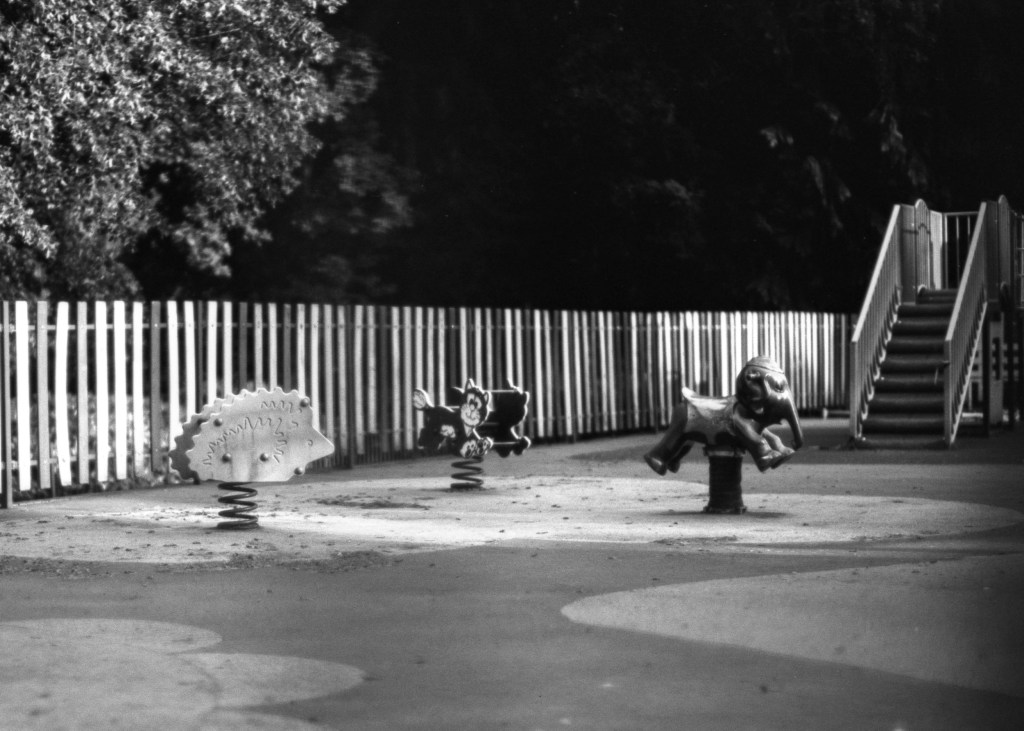
Michael Gove, Chancellor of the Duchy of Lancaster, April 2020
This image was intended to use the hedgehog rocker as a metaphor for children when paired with the quotation about one of the first child casualties of COVID-19. The endangered status of real hedgehogs was intended to ask the question “are our children next with this disease?”. The image and text really resonated with the people that saw this series as it sums up the fears of the time, while actually being of an empty playground (as a side note, the whole playground has been demolished to make way for a new one – something I will consider for extending that series).
When might it fall down?
For me, overuse of metaphor runs the risk of confusing the viewer. In order to grasp some meaning to the image, the viewer brings their life experiences and perspectives to their interpretation. If the metaphor is very specific to a culture or section within society, those from outside it will see something very different. For example, I recently started a small series on the careless traces of people while on holiday in Yorkshire. When people intentionally discard something without thinking about its impact on others, it really irritates me, because of the way I was brought up. My series is intended to highlight how my sensibilities are challenged by the sometimes sinister acts of others and the acceptance that I must exhibit in most social contexts. It’s also a commentary on how I believe I can handle confrontation but generally avoid it, choosing to ‘quietly seethe’. The image below was one of the first images I shot for the series.
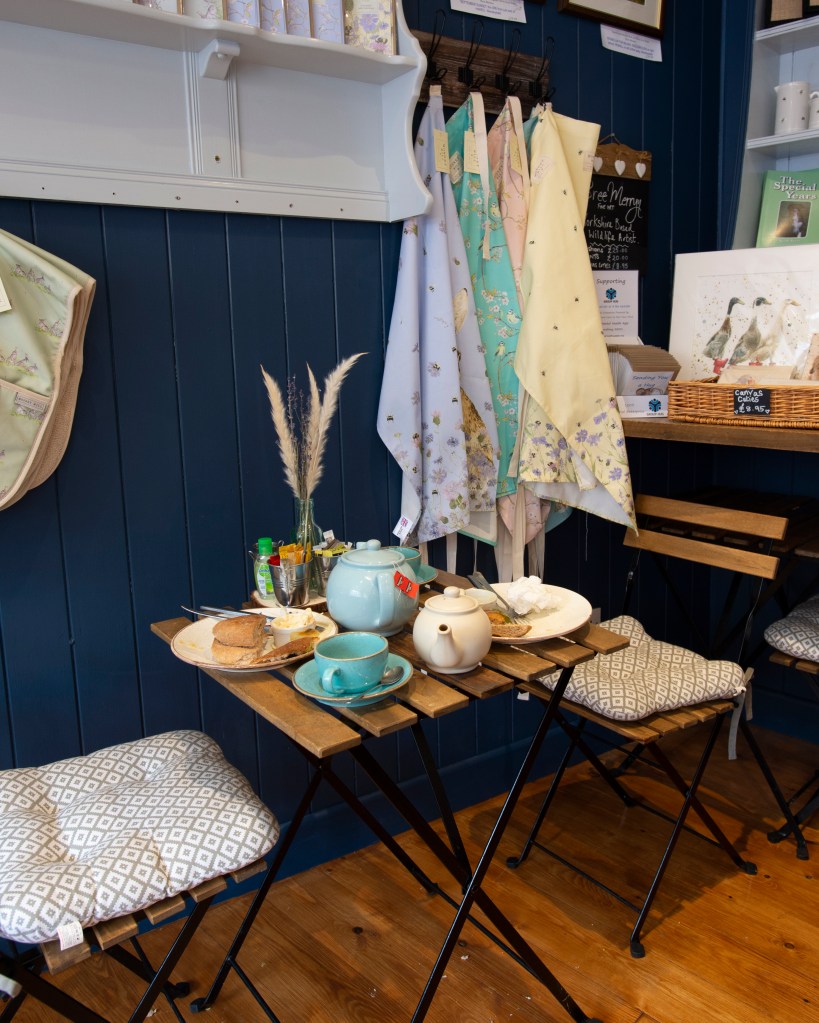
This photograph intended to use the discarded food as a metaphor for the disrespect of a way of life, in this case that of Yorkshire. The people of Yorkshire are, in my experience extremely generous with their hospitality, so the idea of someone having most of their food in a cafe irritated me. The visual context in this shot is pretty clear, the cafe being typical of the small community ones that cater for tourists as well as the locals. The small Yorkshire Tea bag sets the location further, however my idea of the discarded food as a metaphor for an insult is pretty thin. I was present when the people (who were tourists). got up and left without finishing their food, but there is nothing in the image that suggests that is what I have just witnessed. The viewer can ask questions about the people but the connection with my intent is not particularly strong. I think like many styles in art, something that is used inappropriately can leave the viewer cold. As artists, we need to be able to explore ideas that need more explanation with more literal references, leaving the use of metaphor to layers that complement the main story.
References
[1] Cotton C, 2004, “The Photograph as Comtemporary Art”, Page 127
[2] Cotton C, 2004, “The Photograph as Contemporary Art”, Page 137
[3] Unknown Author and Date, “Metaphor: Meaning in the Cambridge English Dictionary”, Cambridge Dictionary Online, https://dictionary.cambridge.org/dictionary/english/metaphor
 Richard Fletcher OCA Photography Blog