Choose ONE of the following:
a. ‘Mirror’
Choose a community that you’re already a part of. It could be your child’s nursery or your regular gym class, but it should be something that takes up a substantial amount of your interest and time.
Create a photographic response to how this group informs who you are as a person.
● What aspects of this group or community reflect on you?
● What do you share?
● How does it function as a mirror reflection of who you are?
b. ‘Window’
Use this opportunity to find out about a community that you don’t know much about and tell their story. Get to know them and talk to them; learn by listening and understanding.Your aim here is to become an insider. You’re beginning as an outsider so it is important to choose a group that you can spend a lot of time with. Negotiation skills and respect are intrinsic to working well with your subjects and are invaluable skills for your development as a photographer.Be clear about your intentions and involve your subjects in the process in order to obtain the best results.
What window into this world can you access through your role as a photographer?
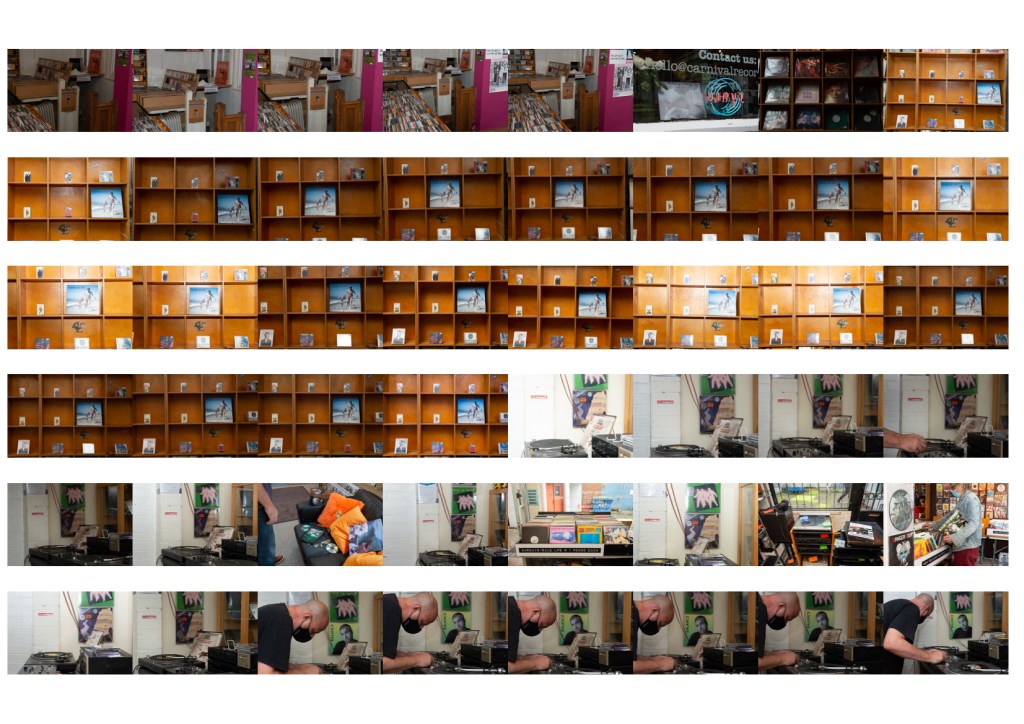
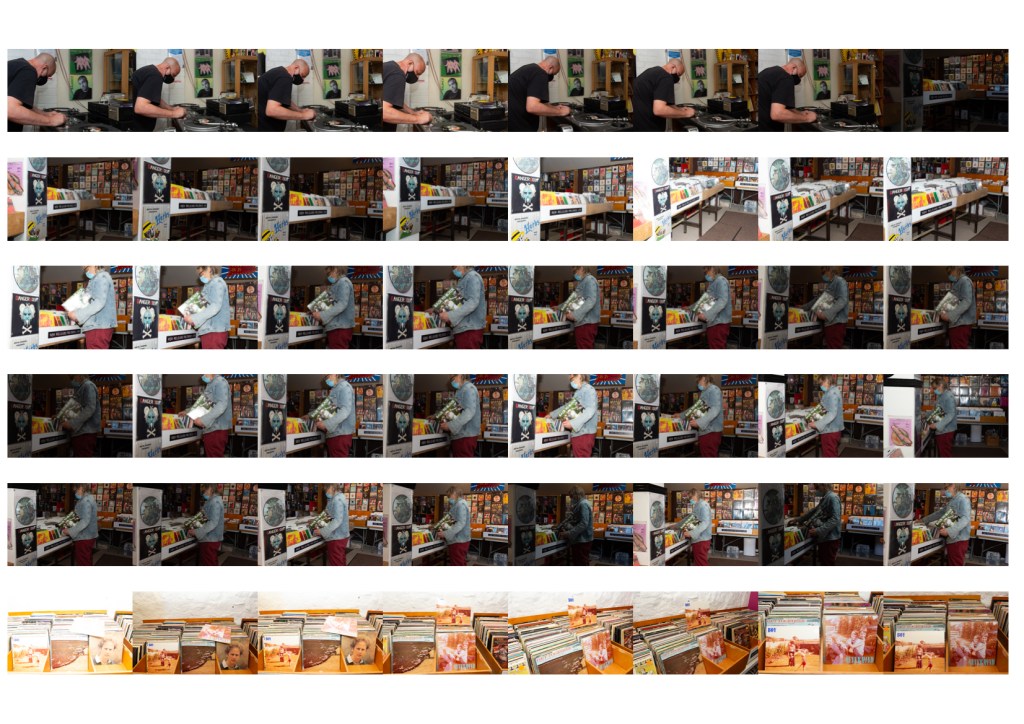
In either case you can create as many pictures as you like but, in your reflective commentary, explain how you arrived at the final edit. The set should be concise and not include repetitive or unnecessary images. Be attentive to this aspect of production. Spend some time researching how other photographers seem to edit series of works. There’s helpful advice on editing and sequencing in Maria Short, Context and Narrative (2011) Lausanne: AVA Publishing.
Some questions to consider are:
● What order should the images be shown in?
● Are there too many repetitive images?
● Do you need to let go of earlier images because the project has changed?
● Are you too close to some of your favourite pictures and they don’t fit thesequence?
● Do you need to re-shoot any for technical reasons?
● Are there any gaps that need to be filled?
Send your final series of images to your tutor together with your reflective commentary (500 words) on this assignment.
Introduction
For this assignment, I chose the concept of the mirror as I was inspired by a coincidental conversation that occurred while working on Part 3. For as long as I can remember, I’ve been passionate about music and in the past few years have joined the many people who have rediscovered vinyl records. I’m fortunate to live in a town that has its own independent record shop that is owned by a friend of mine and it was during a conversation with him that this idea came about. I was having a tough time and was digging through records as a way of relieving my stress. My friend suggested that if I ever needed to just escape, I could just sit on the shop’s sofa and listen to what was playing at the time. He offered this because “you’re part of our community”, a quote that immediately resonated with me. We went on to discuss the idea of the vinyl community over the next few visits and concluded that while music was mainstream, the people that choose to listen to it on this particular medium are somewhat on the fringes of society. Their idea of relaxation is to look through thousands of records for something they might like, rather than quickly surfing the internet for their music. They like nothing more than to talk to other like-minded people about new releases, gigs they went to in the past and even the gear that they play their vinyl on. I started to think about how this conversation affected me. Being a child of the 1970s, I grew up with vinyl and cassette tapes as being the two ways to listen to music. I would spend hours listening to pop music on my hand-me-down record players which were only given to me as an alternative to throwing them out. At the weekend, I would go to the nearest town and spend my time looking through records in the same was as I do now. While CDs and digital music essentially killed off vinyl for 30 years, its revival makes me feel as though I’ve come full circle.
My Idea
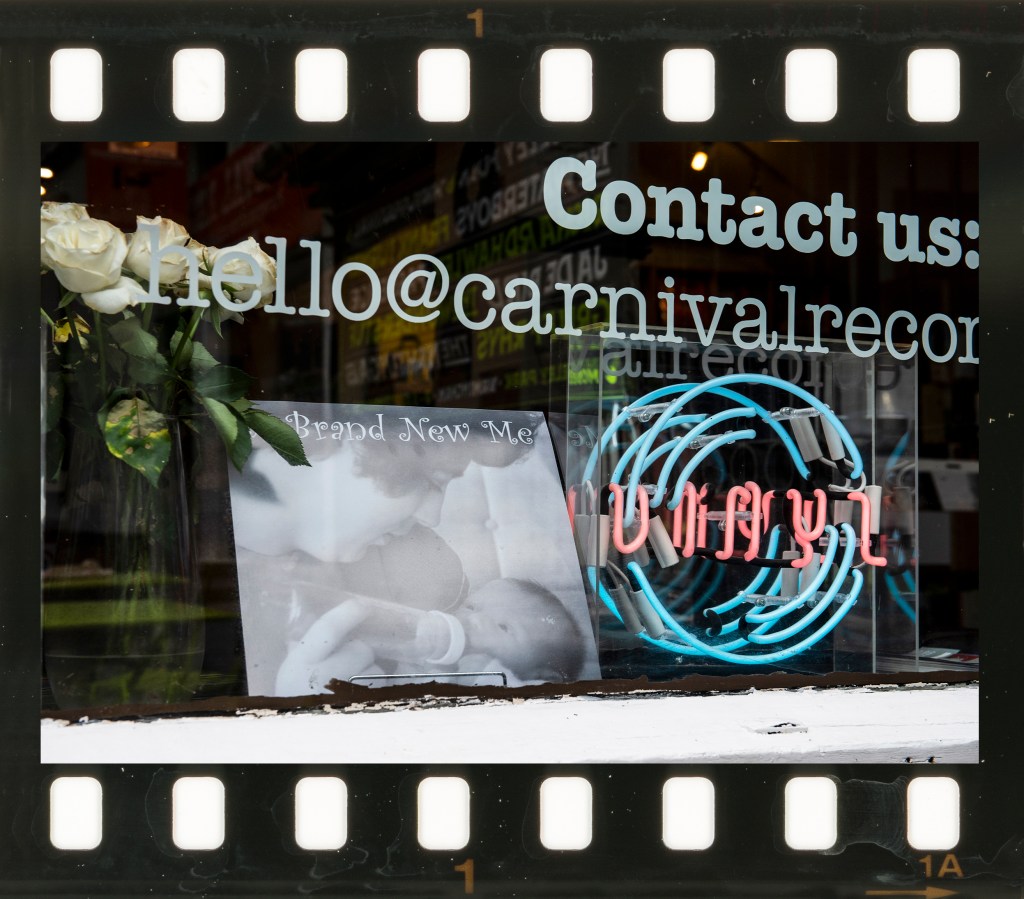
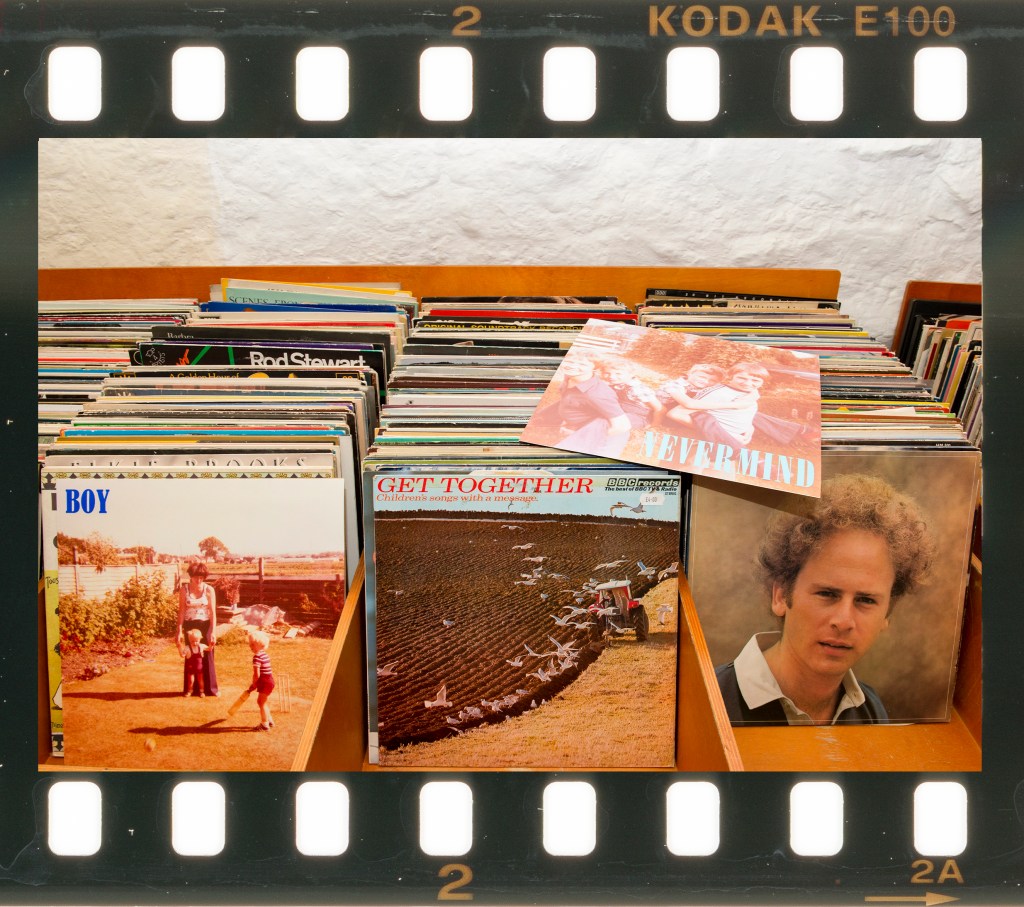
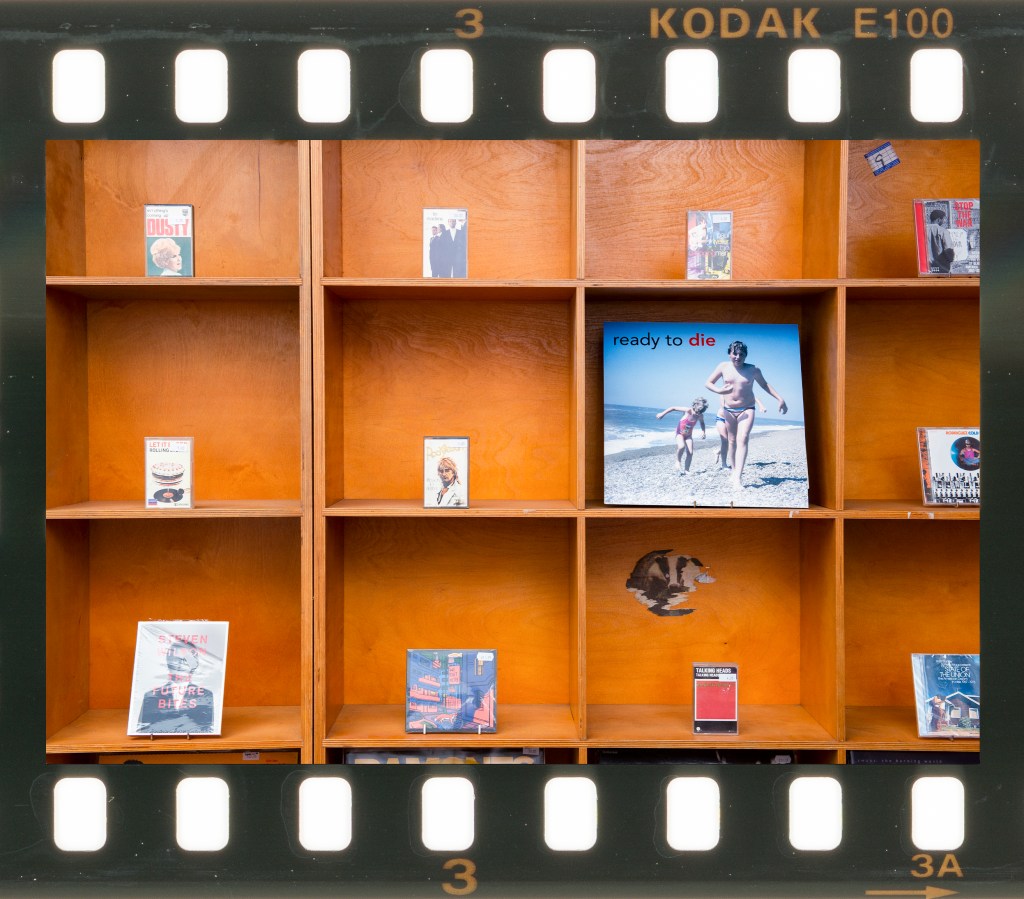
I wanted to explore the prevalence, decline and revival of vinyl and how it tied in with the passage of my own life. I would use family archive photographs of me growing up to establish a form of timeline and combine with text to suggest how both vinyl and I changed over that period. I realised that the intention here was not to suggest key moments in my life aligned directly with the vinyl story but to reveal something about me as it played out. After considering how to incorporate images with the background, I took inspiration from Hans Eijkelboom [1] and Trish Morrissey [2] and looked for a way of substituting myself into the frame. Both artists replaced a person in their pictures which asked the viewer to look closely at their likeness and potential meanings for the fabricated image. I found both of their projects fascinating as they contained an implied self rather than being overtly about the artist’s image. For my series, I decided to make my own vinyl album covers with my photographs as the artworks. Over many years, musicians used artists and photographers to create the image for their albums to draw attention to their style, the album’s themes or just to stand out from the rest. The result was a broad spectrum of ideas and designs, which meant that I could include myself in a similar chameleon-like way to Eijkelboom and Morrissey but stand out enough to invite questions. To help support the narrative, I decided to give each album cover the name of a real album by a well-known artist. Including text would add another layer of context and further enhance the narrative about the vinyl story while further physically connecting my image to it.
Approach
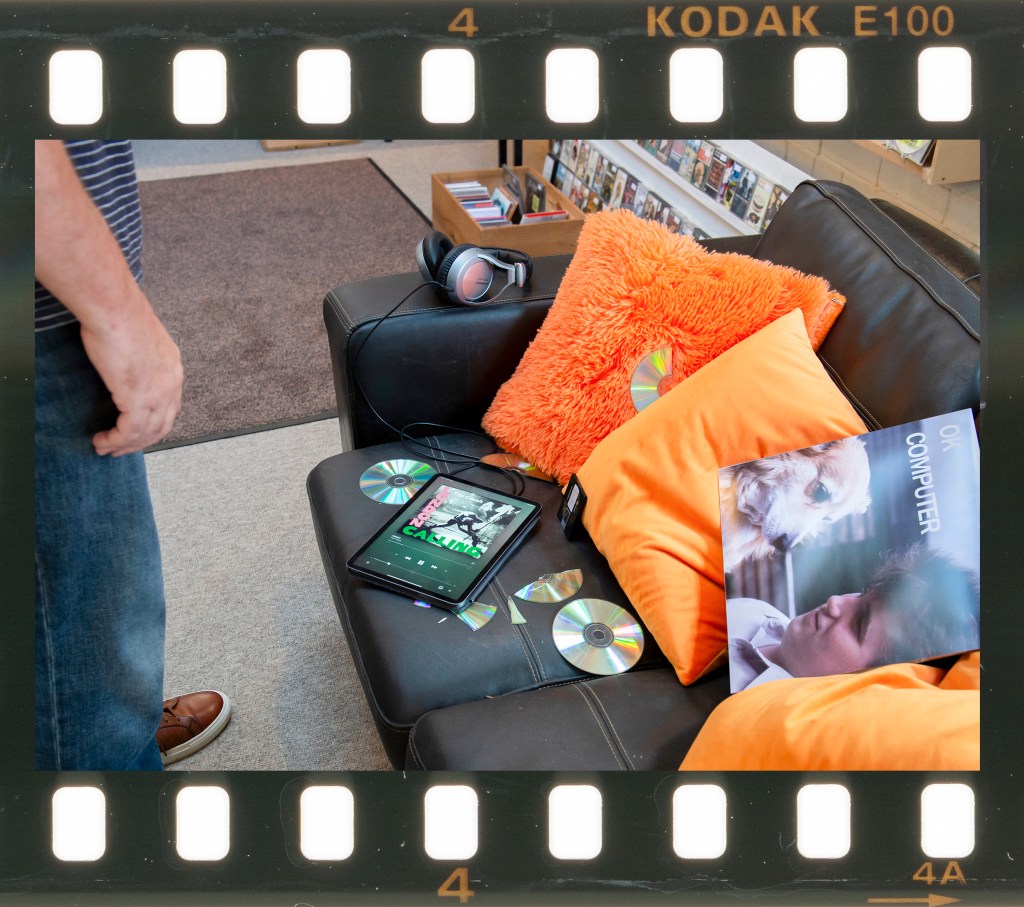
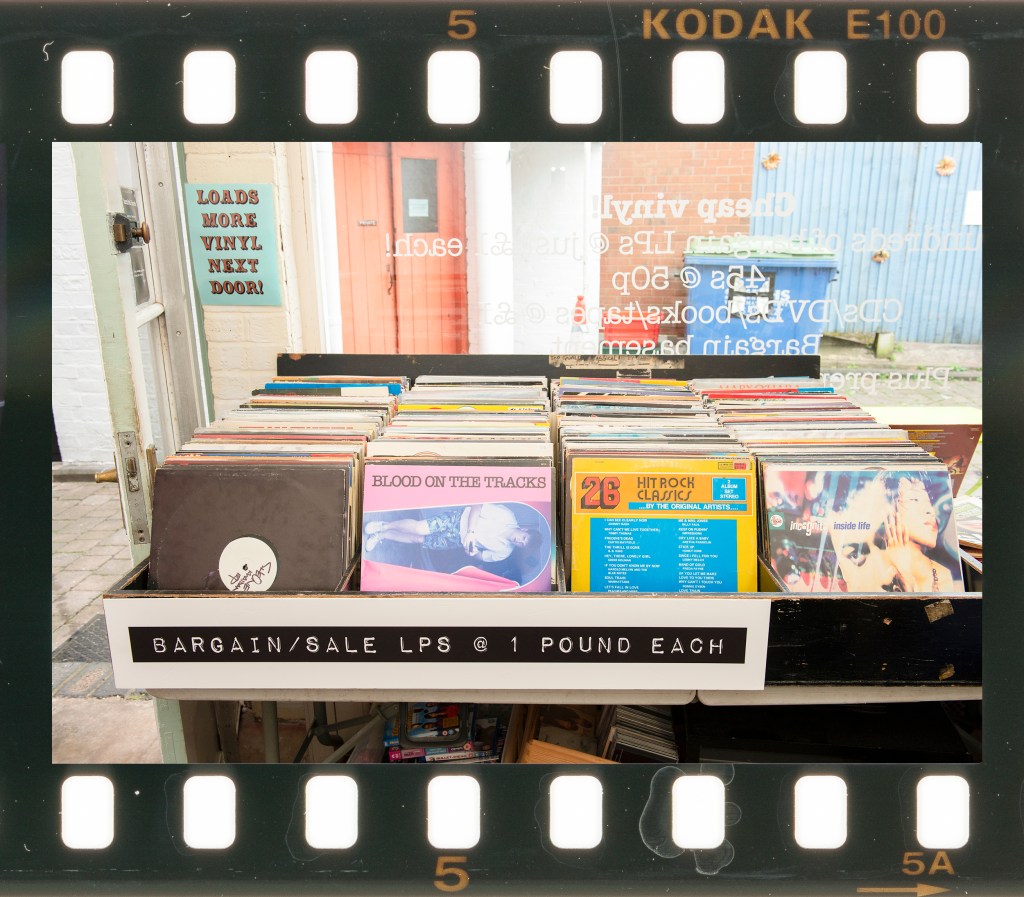
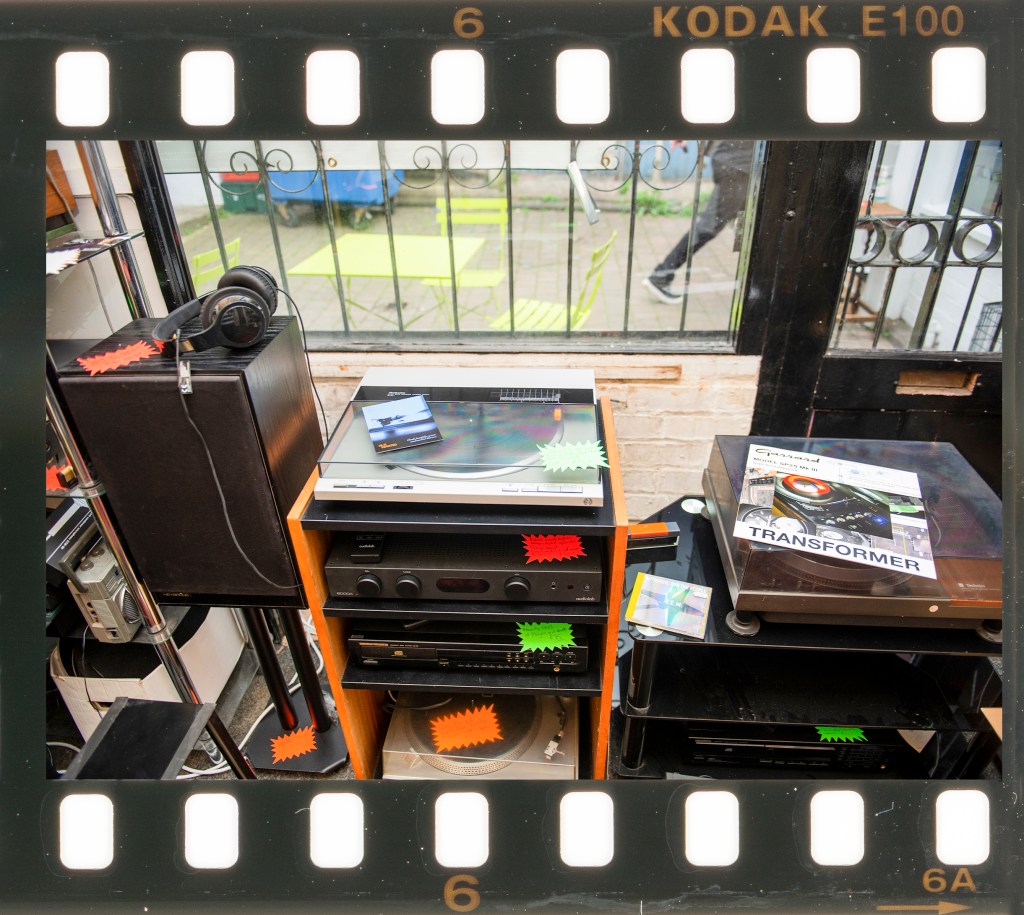
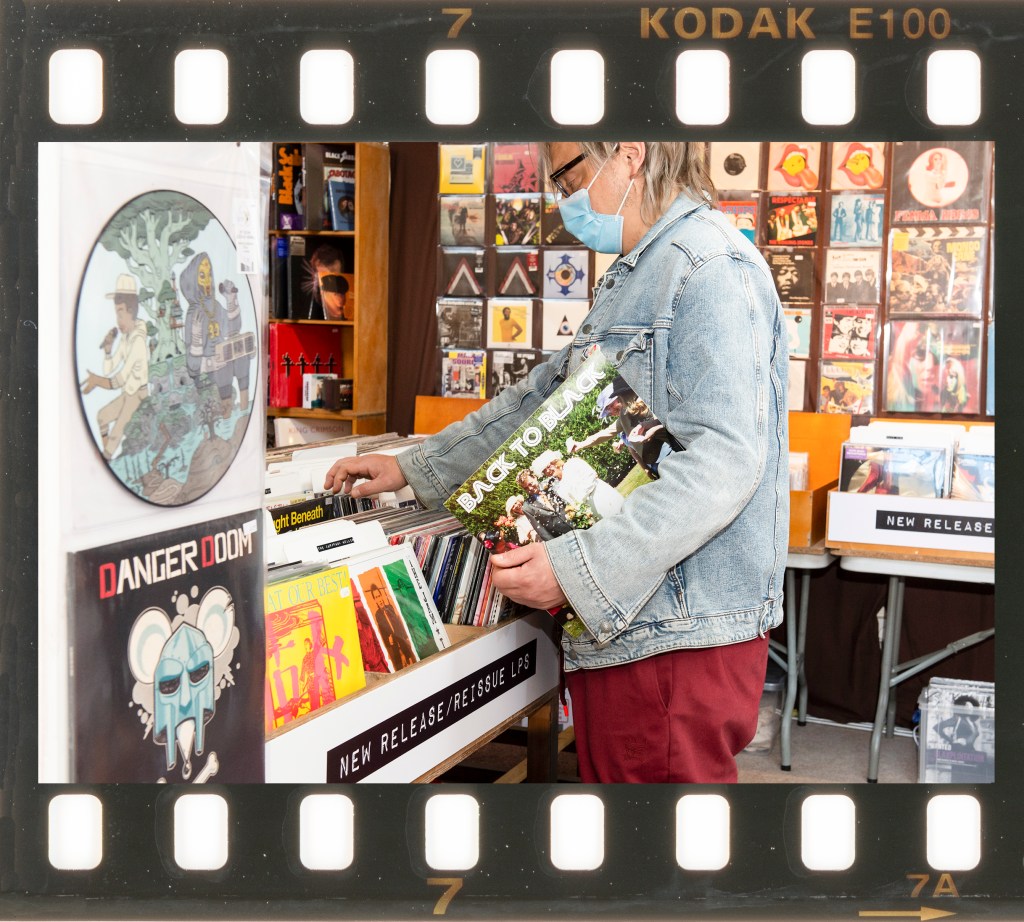
I started by reviewing my family archive. As a shy child, I was always reluctant to be photographed, so of the 2000 or so pictures I have of the family, there are probably only 100 with me in them. I selected 6 photographs that showed me at different ages from a baby to late teens with the only criteria being that I was the main subject in the image (most included other members of my family). I then included them with two shots of me as an adult, one taken on my wedding day and the other a self-portrait taken specifically for this assignment. I wanted to keep the chronology of my portraits but didn’t want to be limited in the same way in the use of album titles as I saw those as supporting the narrative rather than obviously leading it. This meant that I selected album titles from across the decades that suited my photographs without a timeline that linked them together. I made the album covers using actual cardboard sleeve blanks and for each shot on location, put a record inside to make it look like a real album.
I shot each photograph with a single speedlight flash and kept them as landscape format for consistency. While thinking about this work, I was reminded of another revival in photography that echoed vinyl. Film has undergone a resurgence in the past few years and a specific example is Kodak Ektachrome E100, which was discontinued in 2018 only to be reintroduced 5 years later. Like vinyl, film is an analogue and often imperfect medium so I decided to present my series as a set of Ektachrome film frames. The scans of the film strips show the imperfections such as water marks, dust and minor scratches, which I felt added to the nostalgia of the images even though they were shot digitally.
The Series
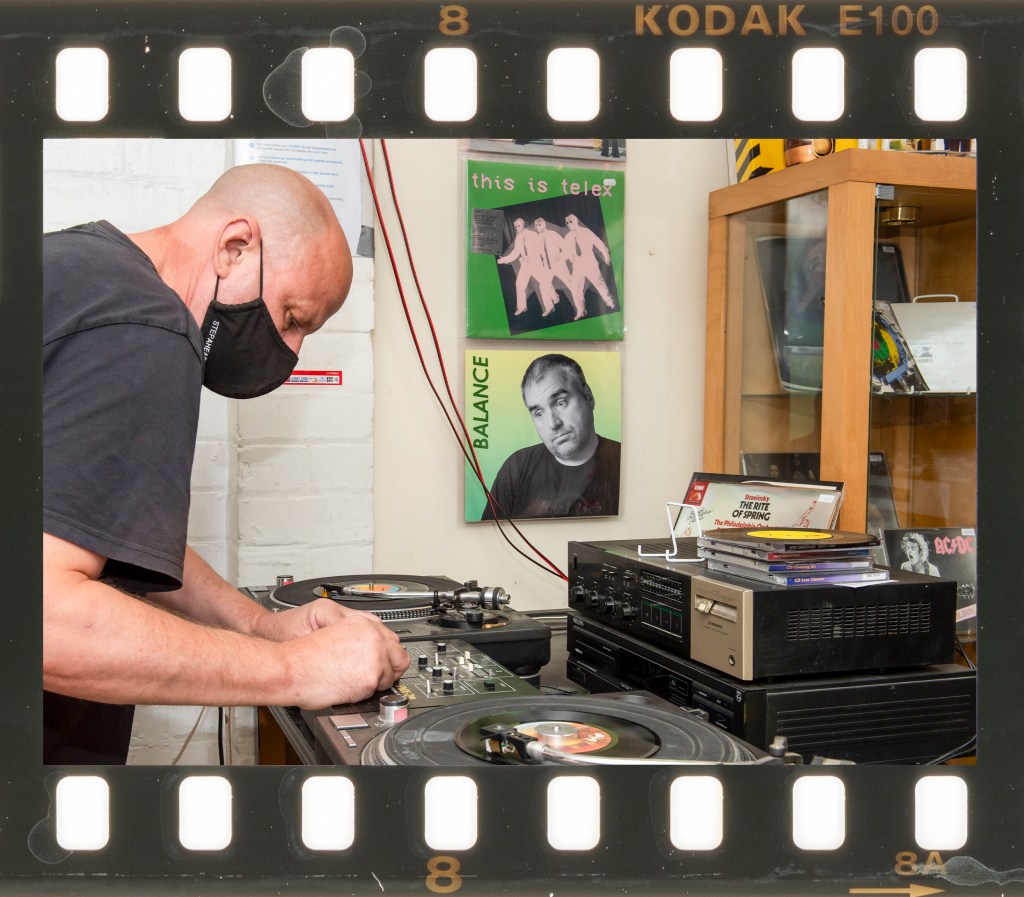
Individual Images

One 
Two 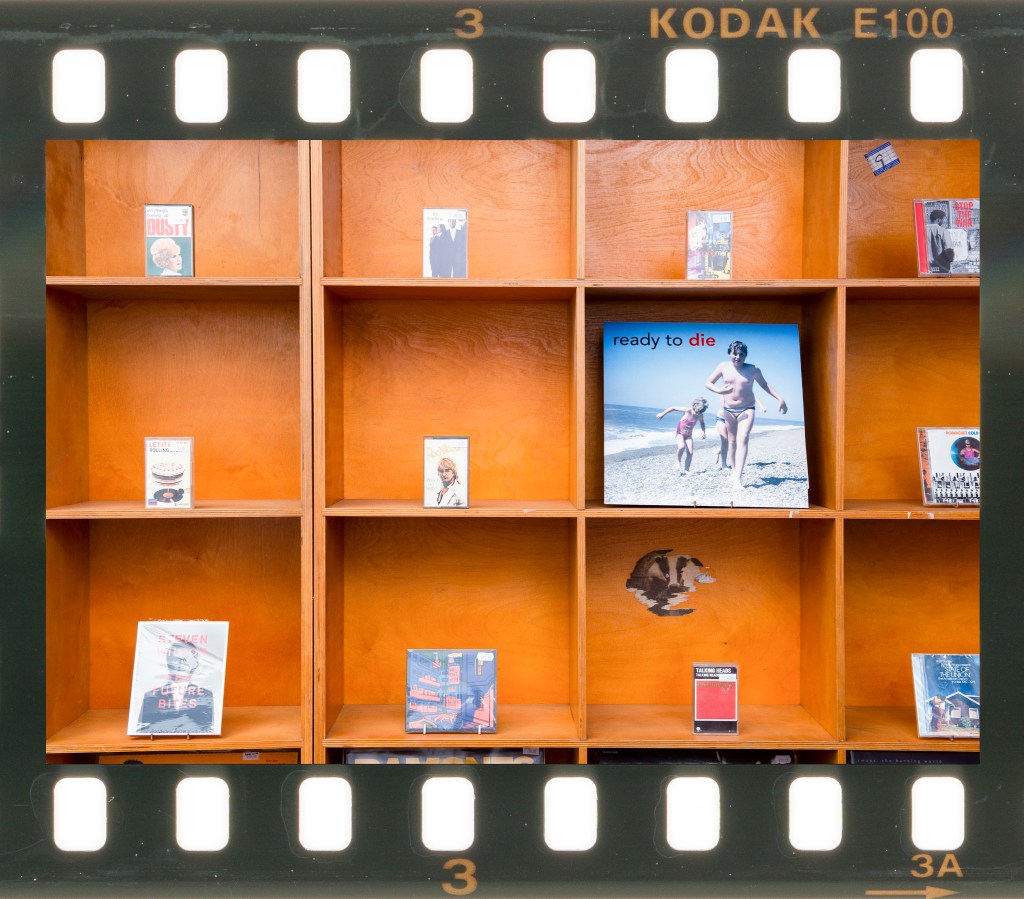
Three 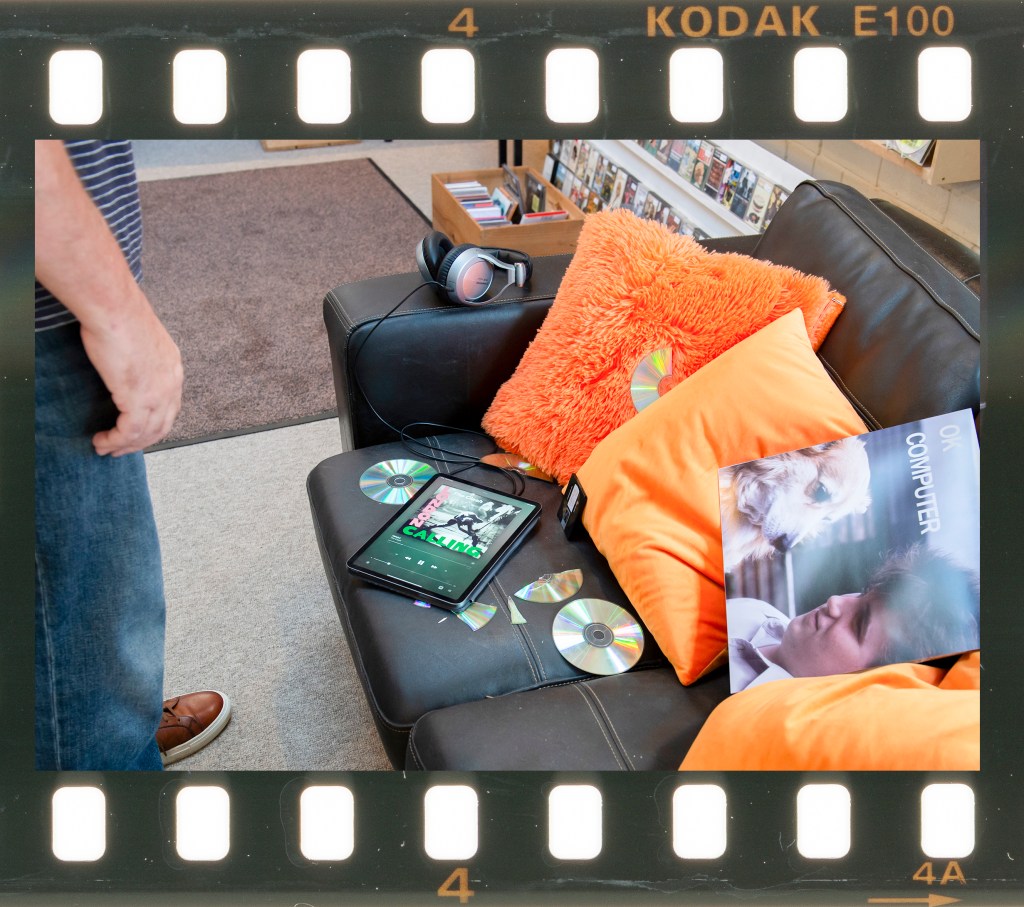
Four 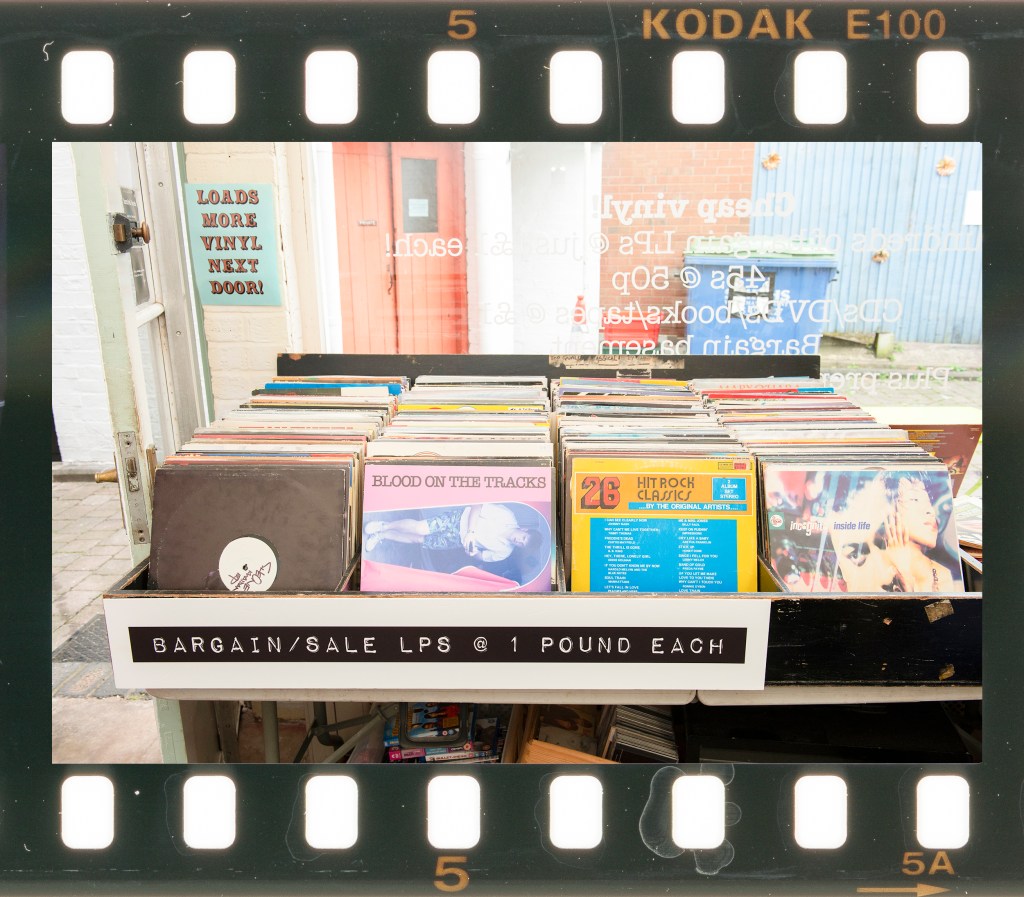
Five 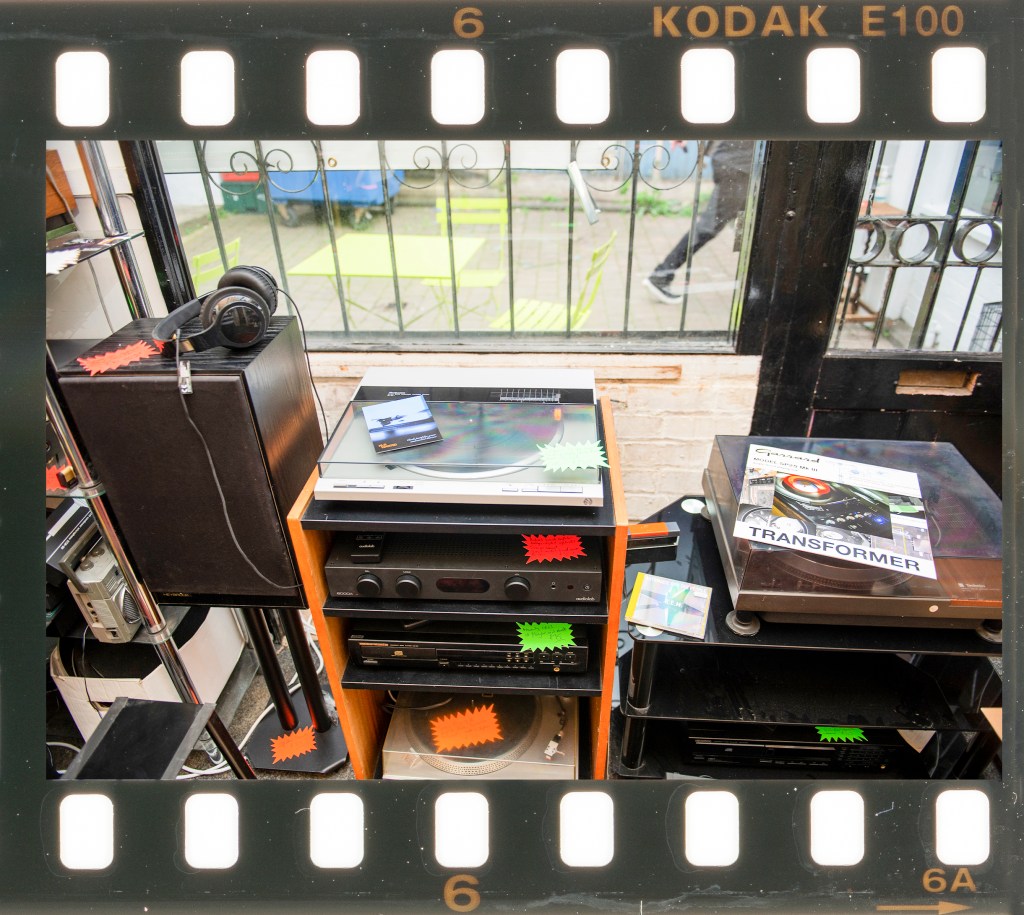
Six 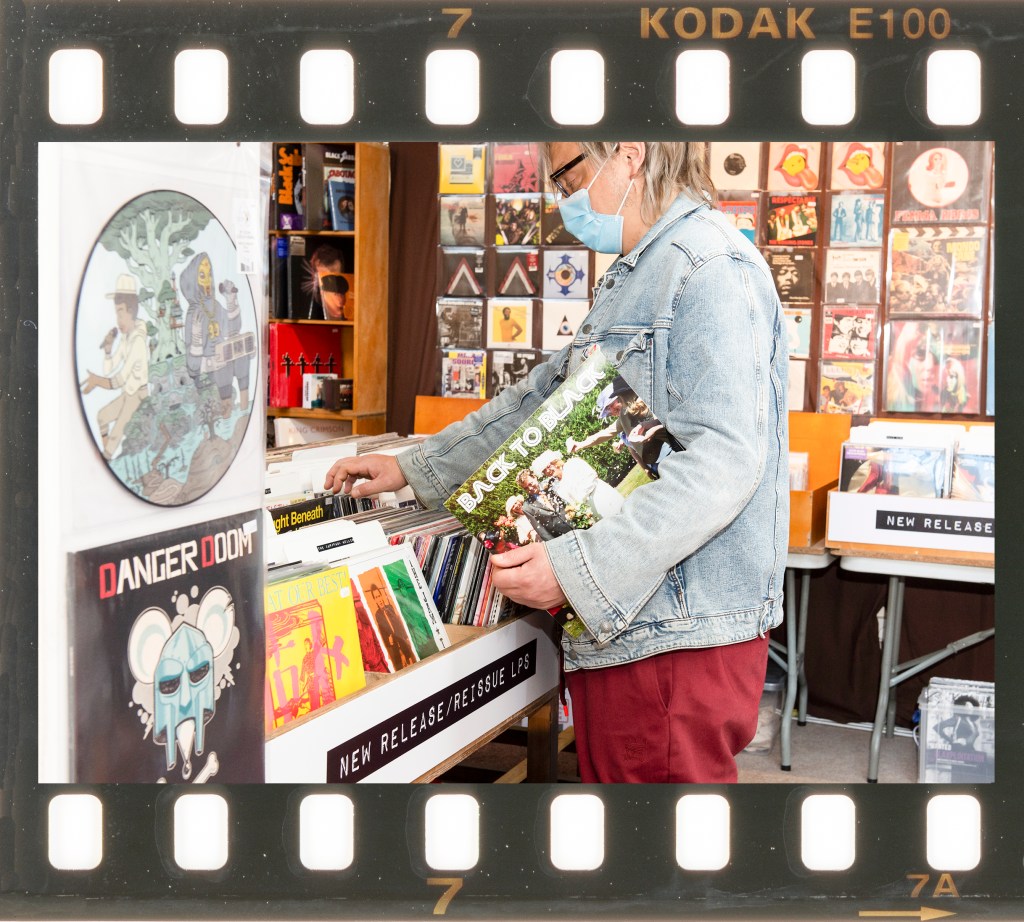
Seven 
Eight
Reflection
My intention for this series was to tell the story of the heyday, decline and revival of vinyl in a contemporary setting, using images from my childhood to provide my perspective. I chose to present them as individual pieces of film to further tie in the narrative of rediscovery as well as the imperfect nature of classical analogue media
When reflecting on the series, I am happy that the general themes of abundance, loss, alternative ideas and rediscovery come through in the photographs. One and Two speak to a time early in my life where vinyl was abundant and the most available medium to listen to music on. My memories of those early years were my family and friends enjoying music together, sharing our thoughts on new releases and rushing out to buy them from our local, community record shops. Three invokes the takeover of cassettes and CDs as I reached my early teenage years and how, within a short space of time the vinyl records became less popular. By the time we reach Four, even the seemingly modern CD has succumbed to downloads and computers, with vinyl about as far removed as it could be. The revival then begins around Five, where most people couldn’t believe it or understand why. In Six I’d reached a point where I needed a record player, something I’d not had for nearly 30 years, and electing to rebuild my family’s old system. Seven and Eight complete the full circle nature of this revival, with new records being released and shops like this one stocking music on more than one format.
I believe that the series flows well with 8 images and cannot really identify any gaps that would be filled by including more. I’ve deliberately tried to avoid repetitive images, which is one reason why I mixed shots of the shop and its products with the people who run it. The inclusion of people was intended to provide some context rather than be the dominant subject, which is why they are ‘cropped’ by at least one edge of the frame. I think that the album covers work well with their titles as in some cases they seem incongruous with the image. The connections between the images of me and the chronology of the story are clear, but each picture has enough context for the viewer to decide what it’s about without being led.
The strongest image for me is 3 as it shows my perception of the choking of the format, contrasted with the happy scene on the beach by including a dark album title. When I saw this photograph, I was struck by the similarity of being chased by my smaller siblings and the looming advance of cassettes and CDs on the older format. The weakest image is 6, as the album cover doesn’t tell the story of my rediscovery of hifi equipment as strongly as the other image narratives. My decision to restore the system was an emotional one as my earliest memories are of my mother playing it when I was a child. I struggled to find a way of expressing this emotion so placed the image more as a factual signpost. While it’s not as strong, I still believe it fits well enough in the series without reshooting.
Against the Assessment Criteria
Demonstration of Technical and Visual Skills
All of the images are well exposed and sharp with use of aperture to reduce any impact of distracting elements not related to the subject. I deliberately composed in landscape in order to present the photographs as film frames and incorporated people only as supporting contextual elements instead of being the dominant subject. I believe these tableaux compositions meet my original intent in incorporating many different connotations in a each frame.
Quality of Outcome
This series was intended to be a mirror with the images revealing something about me within the narrative. I believe that this series meets the brief in this regard. Each photograph features a representation of me at an age that aligns with the key theme and the often contrasting album titles both ground the fake album covers in reality and help tell the overall story. Feedback received so far indicates that this clever combination of real and imaginary strengthens the connections both within each frame but also the series as a whole. I believe it meets the brief.
Demonstration of Creativity
My approach to the brief differs from traditional self-portraiture because I’ve included archive photographs of myself in the contemporary setting of the record shop rather than posing for the photographs. The arrangement of the compositions is such that a sense of events that happened in the past have been brought into the present. The photographs present a mix of the straight chronology of my life with the events around vinyl’s decline and rediscovery with the familiar, yet out of time album titles. The contrasting imagery of the album covers and their titles asks questions about my past life and how I view it from a nostalgic perspective. It could be argued that contrasting, for example putting Amy Winehouse’s album title ‘Back to Black’ on a photograph of my wedding day, suggests a dark view of a joyous time. The true meaning of course is that we are back on vinyl which is black in colour, but I don’t make that clear with the rest of the composition. The inclusion of the model and his mask could also be interpreted as a commentary on the current pandemic crisis – I leave that to the viewer to decide. For me, the series comprises of 8 images that work together without any obvious gaps and each image has a number of layers of potential narrative to keep the viewer’s attention.
Context
Within the context of Part 3, I was heavily inspired by Eijkelboom and his substituted family photographs. By inserting himself into a stranger’s family for a picture, Eijkelboom challenges the viewer to tell the difference between what is real and what is not. His perspective on the traditional family unit and how that blueprint is so recognisable in our culture is done with a humorous angle. What I intended with my series was to ask the viewer to relate to the ‘full circle’ narrative around vinyl, but also the linearity of my life moving through the story. It is a mirror because it reflects my experiences without being too literal, but it could also be considered a window into the sub-culture of vinyl listeners. The shop has a very indie aesthetic, with everything designed around making the music accessible rather than being pretty. To the uninitiated, the series could simply act as a document of how things are now within this community.
Contact Sheets


References
[1] Fletcher R, 2021, “3) Project 1 Mirrors”, OCA Blog Post, https://richardfletcherphotography.photo.blog/2021/08/11/3-project-1-mirrors/
[2] Fletcher R, 2020, “3) Project 2: Masquarades”, OCA Blog Post – Context & Narrative, https://richardfletcherphotography.photo.blog/2020/08/21/3-project-2-masquerades/
 Richard Fletcher OCA Photography Blog
This is an interesting concept Richard, I would like to have been able to see bigger versions of the images but I think the film style borders really works well with your theme of vinyl and nostalgia. I still have 78s including an Elvis Presley one we used play on a windup record player! I do like your last picture of you looking wistfully at the record deck and I agree with your reflection the series does hold together.
LikeLike
Thanks Jonathan. I’ll put the bigger shots in our folder before our call this week. 👍🏻
LikeLiked by 1 person
Pingback: Reflecting on Identity and Place | Richard Fletcher OCA Photography Blog