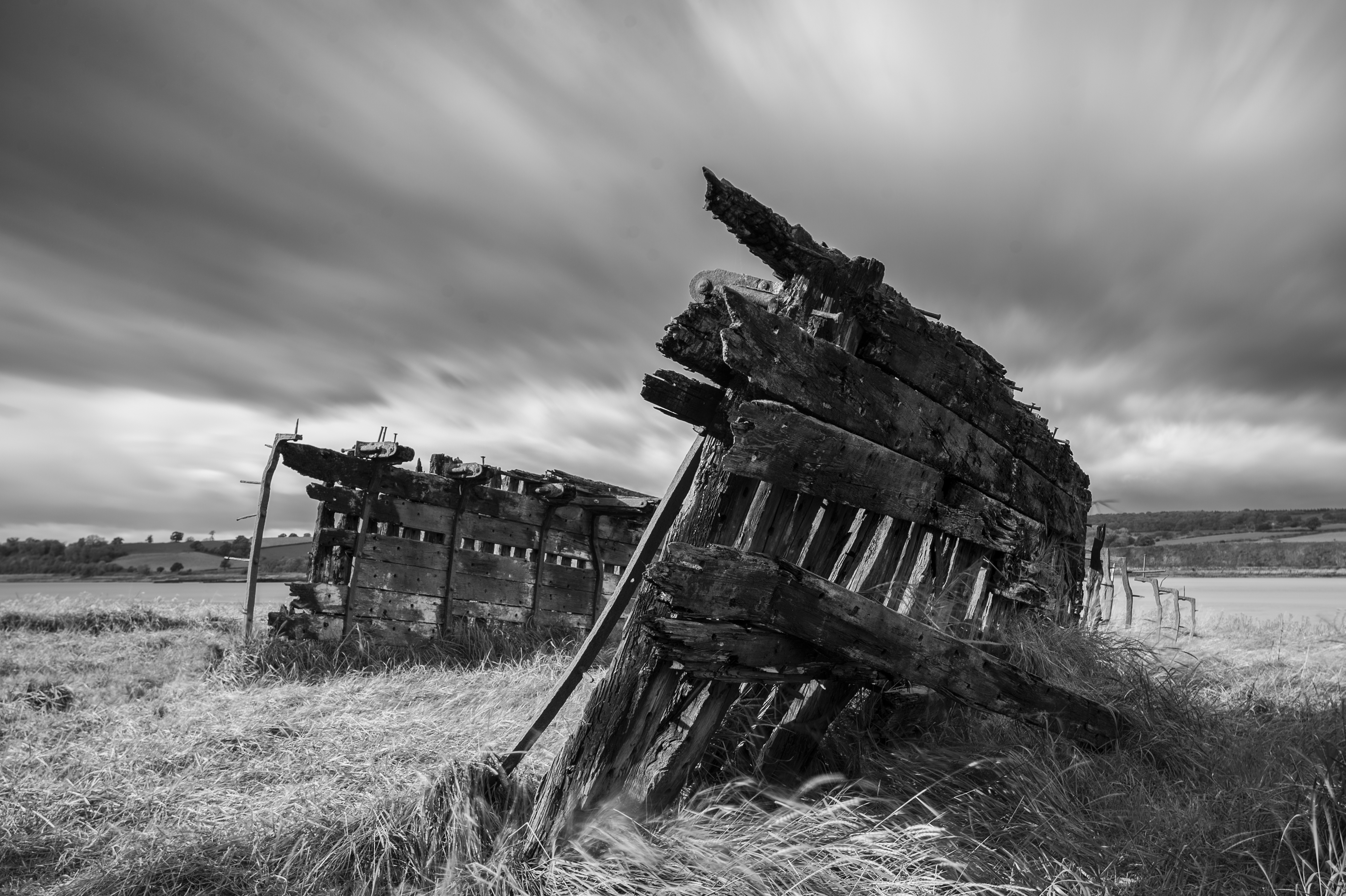
Durden, M. & Grant, K. Double Take: Portraits from The Keith Medley Archive (2013) Liverpool: LJMU Archives. Pg 15.
“The picture serves as a trap for our gaze.”
This exercise gives you the opportunity to explore the image as a window with which to trigger memory.
● The objective here is to produce a series of five portraits that use some of the types of gaze defined above.
The specifics of how you achieve this are down to you; you choose which types of gaze you wish to address and who your subject might be in relation to this decision. What you’re trying to achieve through these portraits is a sense of implied narrative, which you can explain through a short supporting statement. Don’t try and be too literal here; the viewer must be able to interact with the portraits and begin to make their own connection to the work, aided by the type of gaze you’ve employed.
● Write down any thoughts or reflections you might have regarding this exercise and include this in your learning log or blog.
Approach to this Exercise
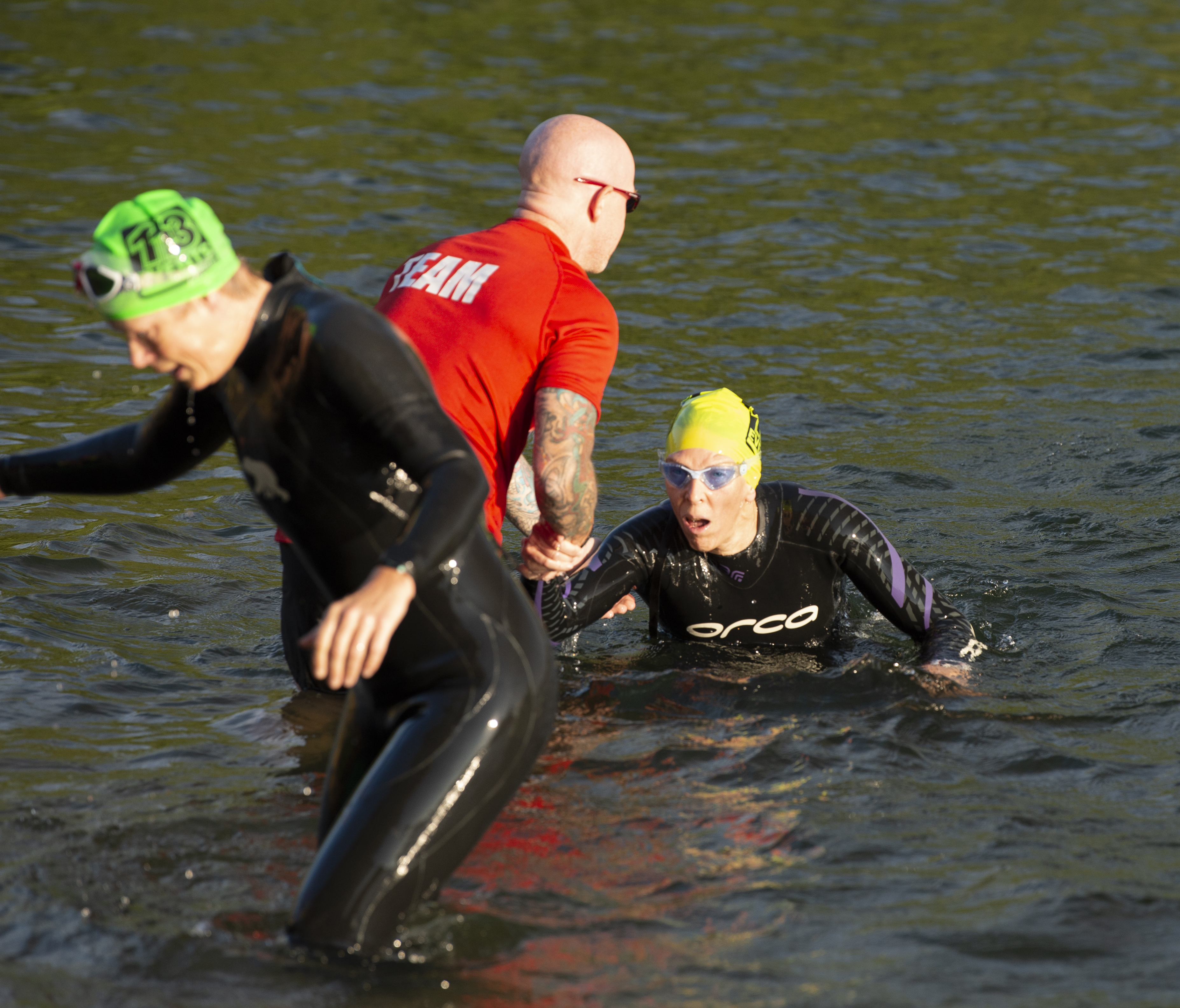
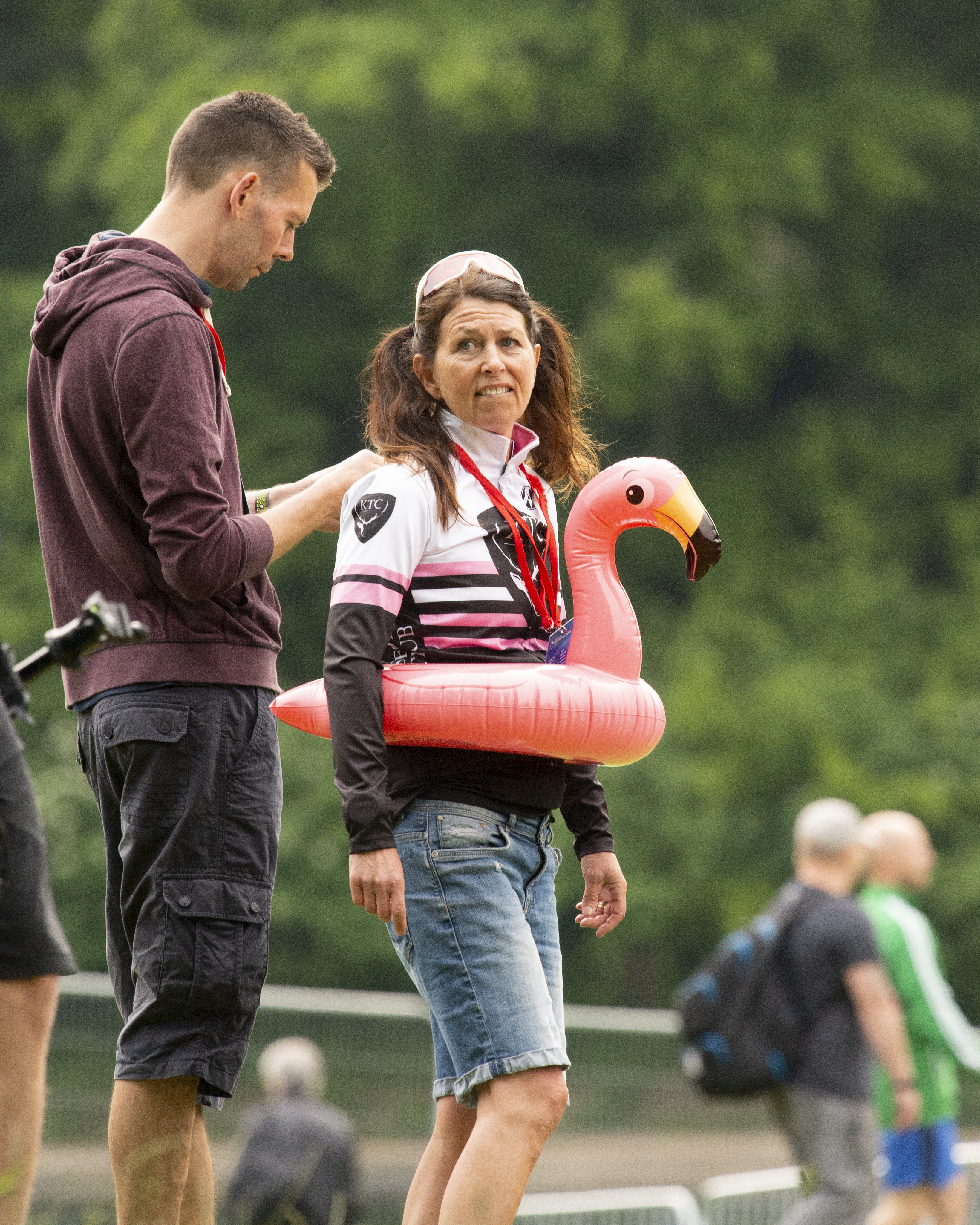
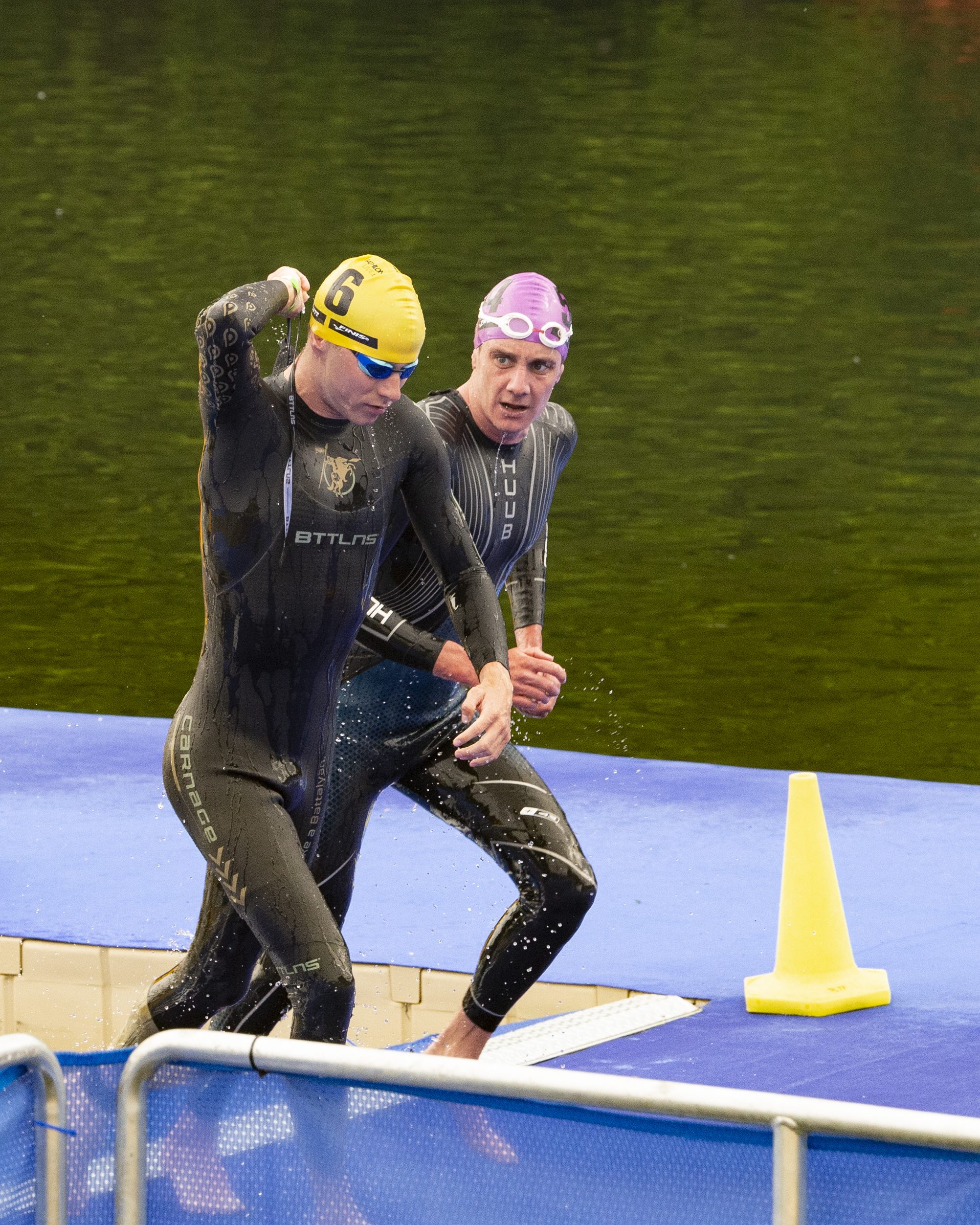
I elected to choose some images from my library that support the emotions of triathlon. I’ve supported many triathlons and even competed in some over the past few years and I’m always struck by the difference between being involved and being a spectator. In this series, I use the gaze to draw the viewer into the relationships between competitors and spectators set against the challenges of the event.
The Images
One 
Two 
Three 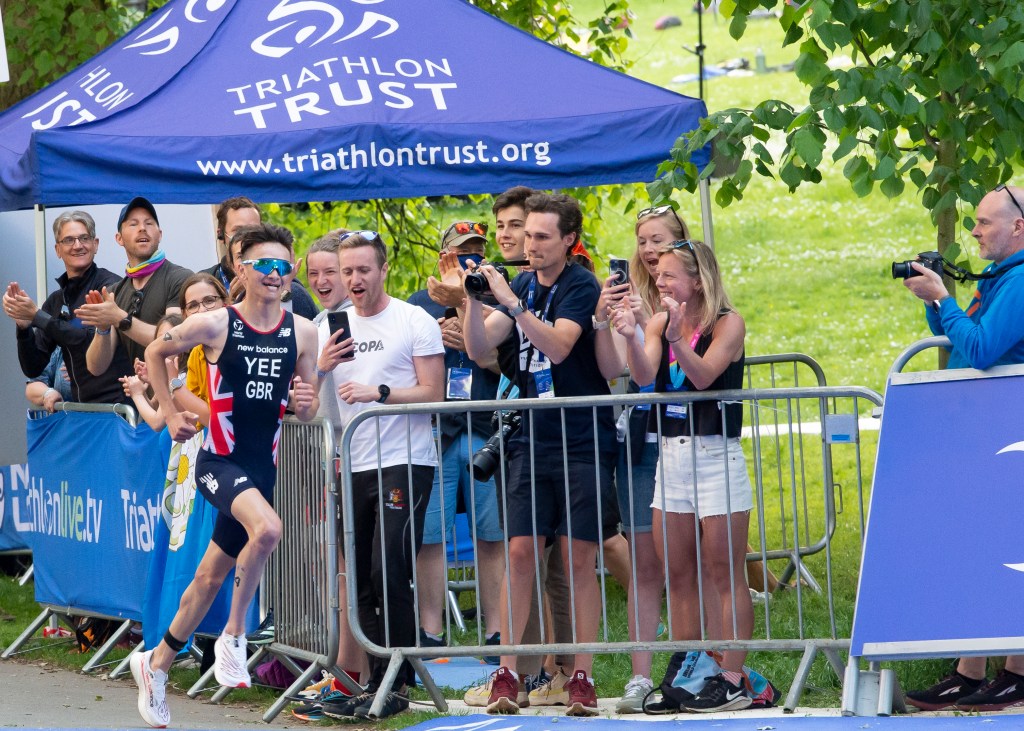
Four 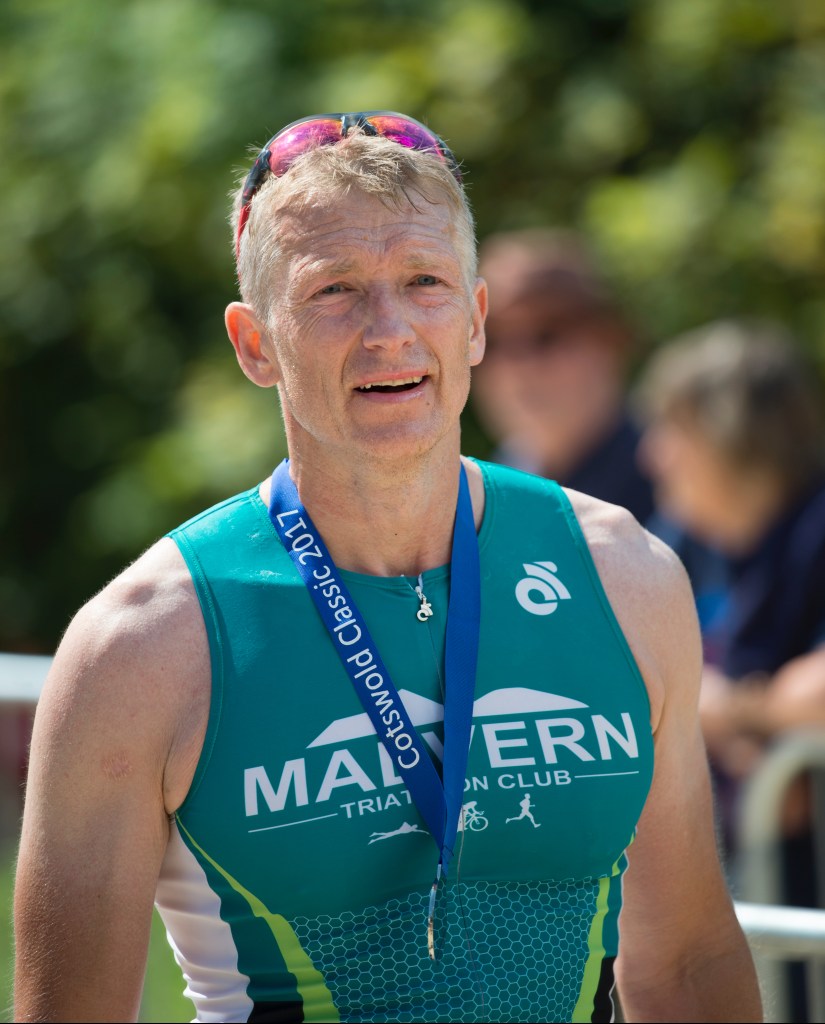
Five
Reflection
Of the list of gazes postulated in the notes, the ones that interested me the most were averted and internal, where the subject isn’t looking at the photographer or engaging directly with the viewer. I think this comes more from historically seeing the direct gaze, where the subject looks through the camera at the viewer, as being traditional portraiture. There’s certainly a sense of ‘watch the birdie’ about them in their simplest form, even though as I mentioned in Project 2, the connection between the viewer and subject can be very powerful. For this exercise, I wanted to explore situations where the subject or subjects are engaging with something else in the frame, visible to the viewer or ‘off camera’
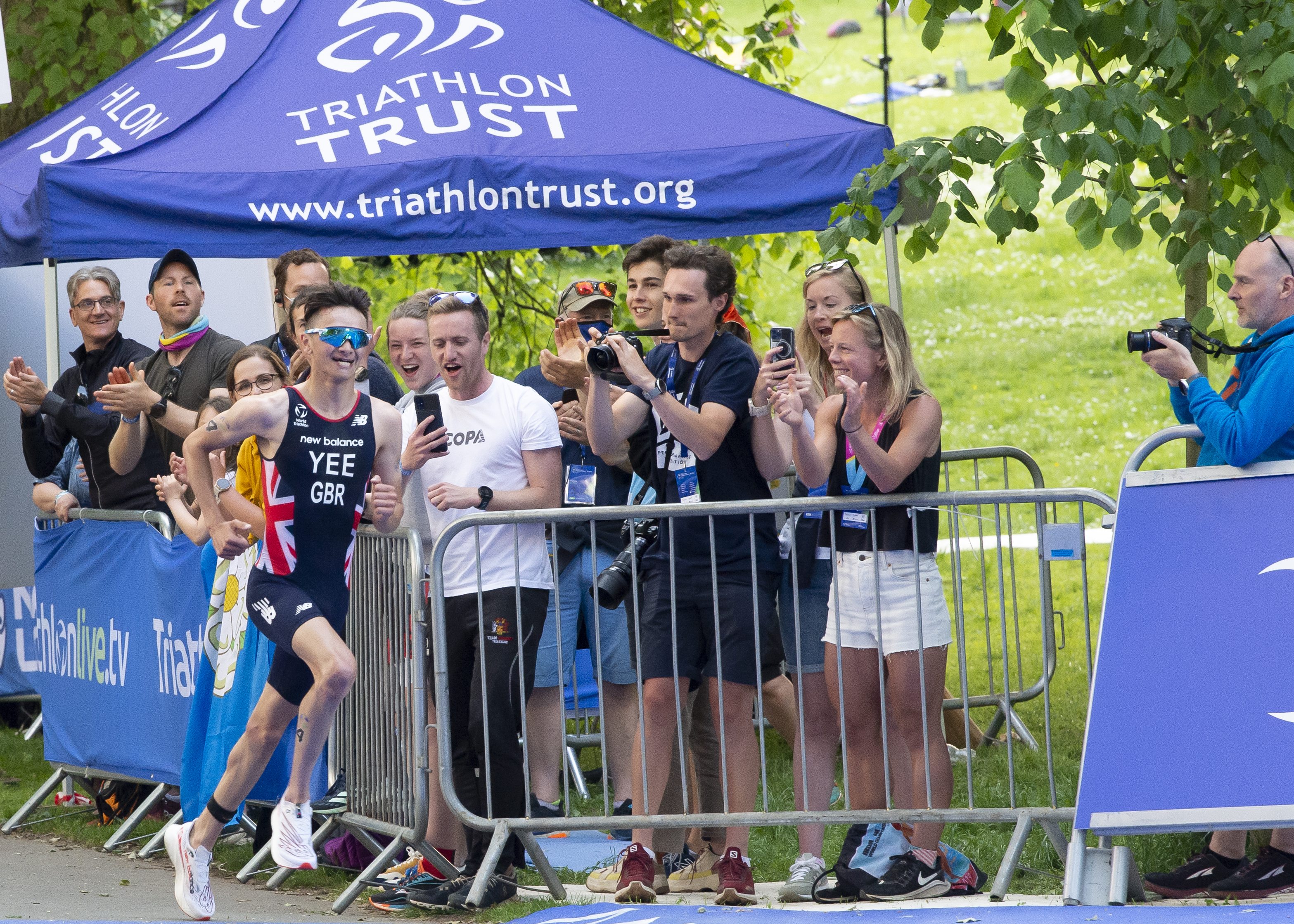
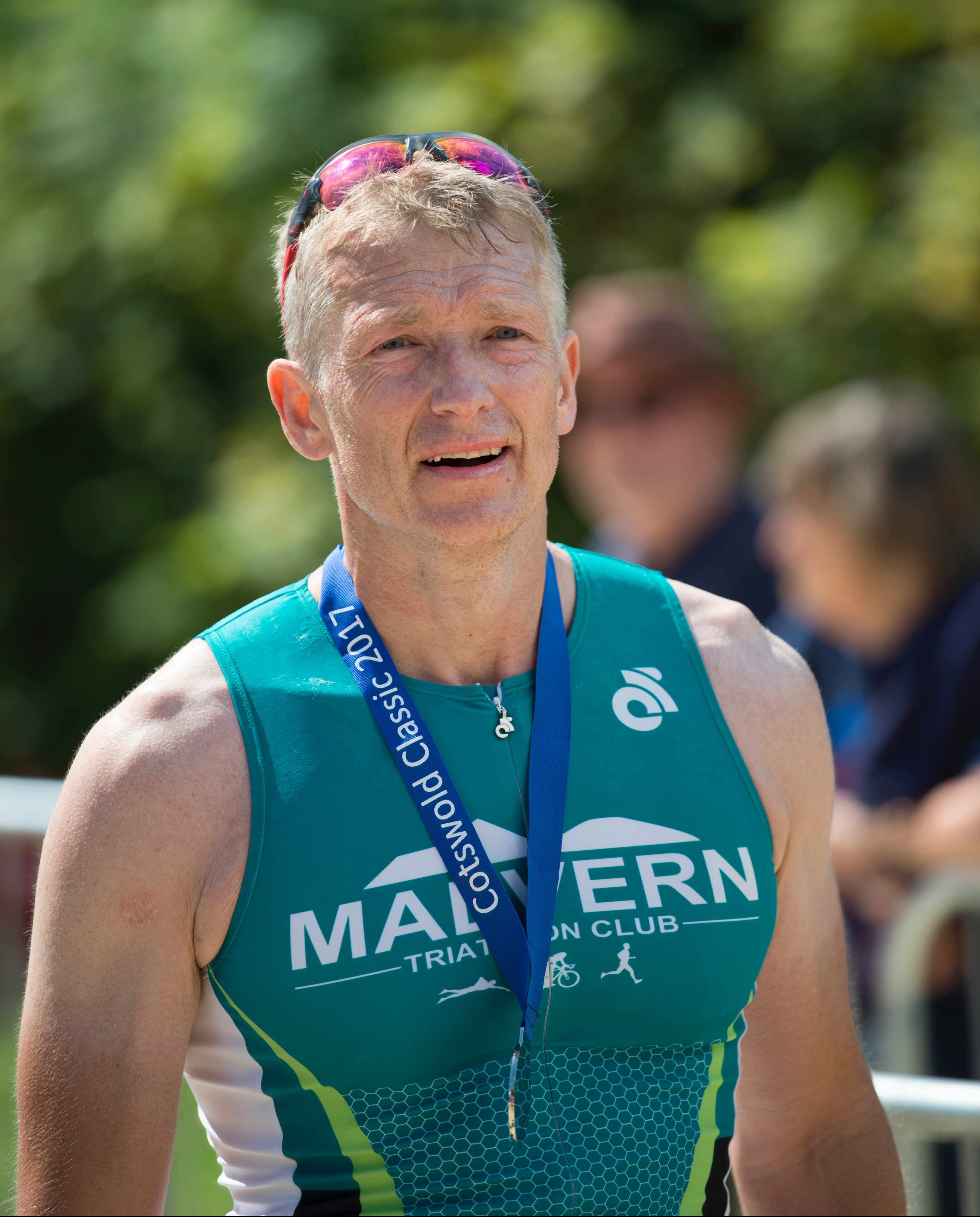
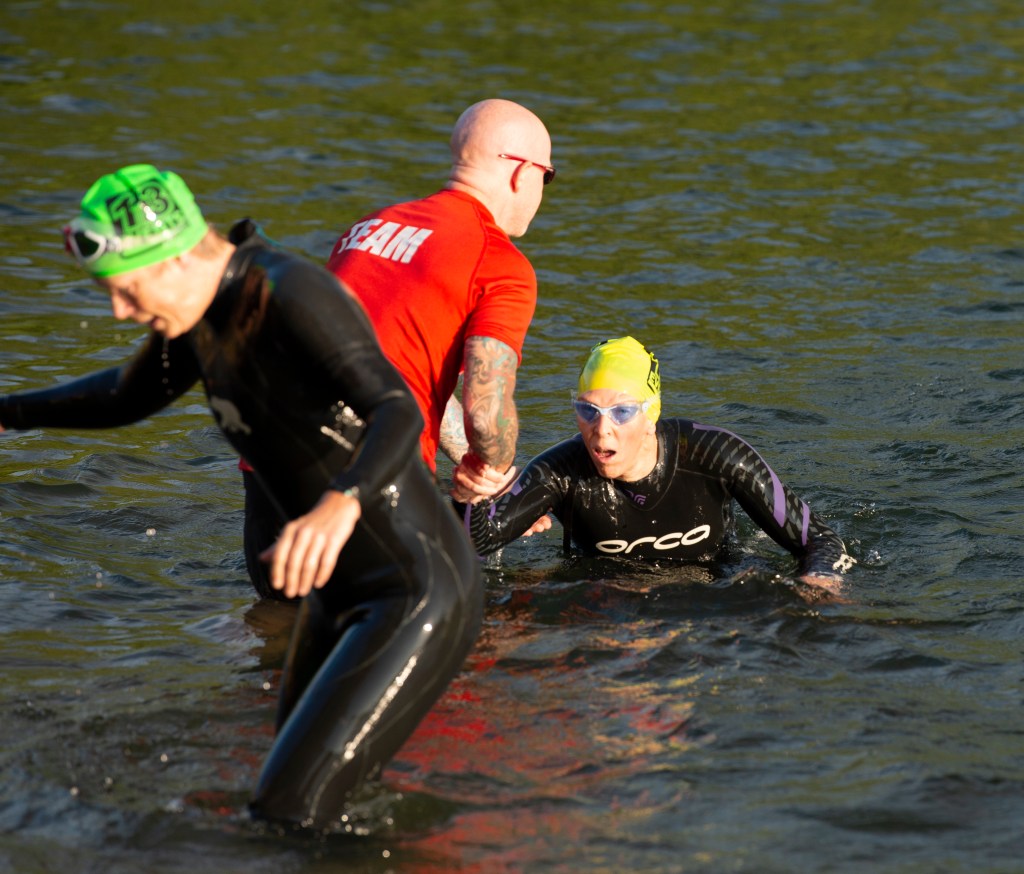
With this series of images, each subject is unaware of my presence, but connected with someone else. One is a shot of my wife completing the swim leg of a race, being helped out of the water. I chose this shot because of the subtlety of the communication between the two subjects in the frame. My wife is looking towards where she has to exit the water and the assistant is looking for the next swimmer he needs to help. Although their gazes are averted from the camera and each other, their communication is clear as he helps her find her feet after the long swim. Two is of a spectator I spotted at a recent event. Her peculiar outfit garnered a lot of attention but she was completely oblivious to it. Her averted gaze towards her husband seems to seek some form of engagement but he is ignoring her. Was he embarrassed or just distracted by something else more interesting than a woman wearing an inflatable? Three was shot during the recent Leeds triathlon and shows a competitor angrily addressing another athlete. It followed an incident where the former (Alistair Brownlee) allegedly impeded the other swimmer and was subsequently disqualified. The gaze in this image has a very clear emotion attached to it, but is made stronger by the way that the other athlete ignores the abuse, electing to focus on his own race instead. Four was the complete contrast to Three, where the winner of the men’s race (Alex Yee) was being cheered on as he turned toward the finish. In this image we have the joy of spectating a major event in the gazes of the supporters, but Yee isn’t looking at them. His focus remains on the race, even though he’s clearly ecstatic about his impending win. The image combines joy in the whole scene. I chose Five because of its closeness to being a direct gaze. It shows a local athlete after he’s finished a race and while his gaze might look as though it’s locked onto my presence as the photographer, the reality is that he’s not really looking at anything. This ‘thousand yard stare’ is fairly common when someone crosses the finish line and is usually replaced quickly by wanting to find their supporters or fellow competitors to discuss how the race went. For me, this shot allows the viewer to relate to that moment of vacated thought whilst asking the obvious questions about how he feels.
Conclusion
I chose the averted and internal gazes as the basis for this exercise because of the potential for observing a drama playing out. They follow the idea of the photograph as a memory in me because I was there and took the pictures. They further trigger memories of the many hours I have spent spectating at events, the considerable time that passes when waiting for my wife to pass the spot where I am standing (Two). They also remind me of the unfettered pride of cheering her on (Four). They further invoke memories of my own competitions as a swimmer, with the what goes well (One) and what goes badly (Three). The general sense of emptiness after crossing the line is fleeting but very powerful and the memories that Five triggers, include the sense of exhaustion but happiness at achieving the goal that many other athletes and sports people feel. My main conclusion from the exercise is that the careful selection of an image with a particular gaze strengthens the narrative of a small series like this one. The images don’t cover one event, nor do they cover every aspect of triathlon. However we get a sense of the atmosphere of competitors and supporters from the way that people interact with each other in the pictures (internal gaze). In this case, the viewer and photographer are observers but the memories of self-achievement, overcoming challenges and pride come through the series without any direct experience of triathlon being required. The increased exposure of this sport only serves to help the viewer appreciate what both groups of people go through in a similar way to our restorative nostalgia around the conflict in Afghanistan or the American migrants nearly 100 years ago. This tells me that the subject’s gaze does indeed increase or decrease the way we are affected by the postmemory and that it’s a potentially useful tool when photographing people.
 Richard Fletcher OCA Photography Blog