Write a reflection in your learning log about some of the ways in which marginalised or under-represented people or groups could be badly or unhelpfully portrayed
.● How might being an insider help combat this?
A friend and I were recently discussing my recent departure from my job through redundancy and whether or not I missed the field in which I had worked for nearly 32 years. My answer wasn’t a straight-forward one as there were elements of the work that I really enjoyed, but not so much the increase in the mediocre administration that the company expected of people at my level. My friend was struck by one part of my answer though, which was about feeling out of date with the increasing number of younger engineers and budding managers coming through the business. I explained that although I was only 48 years old, I had been working since I was 16 and had seen a great deal of change during that time. I had always felt that I had an affiliation with the younger crowd because I remembered what it was like to be like them at a time that felt like it was not all that long ago. During my last couple of years, I had felt like I understood this less than before.
We explored the reasons why that might be the case and I realised that it was driven by the advent of communication of ideas. Mobile phone technology coupled with the emergence of social media meant that people of the millennial and Generation Z age-groups had different ways of anchoring their ideas to my generation (X) and perspectives through technology and the culture that it establishes. Every subject has a new set of references upon which it is established, which means that the younger generations often don’t often feel the need to learn directly from people in my age group. This sense of disconnection coupled with the enhanced sense of social equality and questions around how to solve the climate crisis, make me feel like my input is somehow not as valuable as the popular views circulated online. For me, this has been brought into focus during the pandemic, where some age groups took COVID-19 to be more or less serious than others. False data and disinformation put some of the socially vulnerable groups at enhanced risk as a result.
I thought about how my generation is represented and how it could be improved. The middle age generation has experienced national strikes in the 1980s so are often either very suspicious of union representation or whole-heartedly embrace it. We experienced the financial boom and bust period of the 1980s which cost people who had been brought up to want to be homeowners to lose huge sums of money as a result. We also saw the introduction of personal computers and their rise to being in virtually every home, as well as the Internet, mobile phones and online shopping becoming the norm. I once asked a group that I was training at work whether they had ever booked a holiday from a travel brochure and they all looked at me as if I were mad. My perception of how my generation is represented is similar to how I viewed my parents as a teenager. They couldn’t understand because their life experiences didn’t directly mirror mine. I think the same is true for the generation below me.
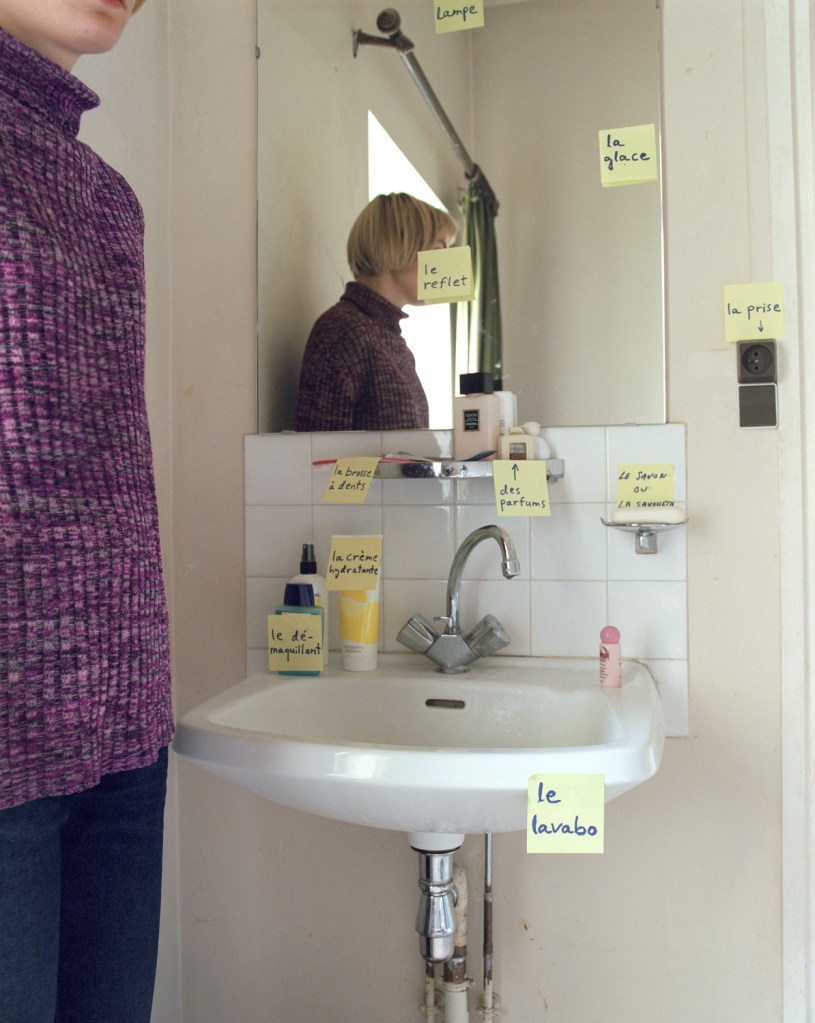
In terms of how groups are represented, we have looked at the works of artists who assumed a role in either their cultures or lives in a variety of different ways. When considering Nicky S Lee’s Projects series’ [1] where the artist took on the physical characteristics of a culture or age group and photographed herself in character, there are two arguments that can be made. The first is that imitation could be read as complimentary and ridiculing in equal measure. Certainly when Lee masqueraded as an elderly women and kept the truth from her ‘friends’, it could be said that there was a strong sense of mockery involved. The second is that as a South Korean woman, Lee was saying something about what it’s like to be different, but in the case of probably her most controversial series where she posed as a rap fan, she is potentially mocking the stereotype that they are all black and live in deprived inner city areas. In a way, the act of reinforcing stereotypes, which I think Lee did with that series, makes it harder to see that community as anything but intimidating and offensive. The truth is, of course that rap music is loved my millions of people across the whole spectrum of society. In this case, a true insider would need to contrast with that perception of the culture and represent it from a wider point of view. I believe that key to representation is the respectful way that a subject is treated. In the case of representing the middle aged, I would pay more attention to how they still drive the direction of technology and political fairness with positive examples as opposed to the traditional narrative that they are out of touch. More focus on the way that they embrace the modern world and its conservation as opposed to being somehow grumpy, irresponsible and uninterested would help support the new narrative also. In considering this exercise, I thought about Brotherus’ Suites Françaises and how it chronicles a blending of European cultures in a sympathetic way. Brotherus’ use of French words to describe individual items in her apartment not only reveals her challenges in grasping its complexity but also reveals the beauty of the language. Her later revisiting of the work includes long, triumphant texts that show that anything is possible with hard work. This representation is both respectful and insightful, without being obvious.
Make a list of some aspects of your personality that make you unique.
Start taking a few pictures that could begin to express this.
How could you develop this into a body of work?
My Characterstics
Loving – I care a great deal about my family, friends and the natural world.
Emotional – not someone who hides how they feel.
Dry – I make my friends laugh with this kind of humour
Disorganised – despite my working life, I’m not great at prioritising. I don’t make lists.
Anxious – I worry about pretty much everything
The Pictures
Humour
Loving
Anxious
Emotional
Sad
Humour
Disorganised
Anxious
Reflection
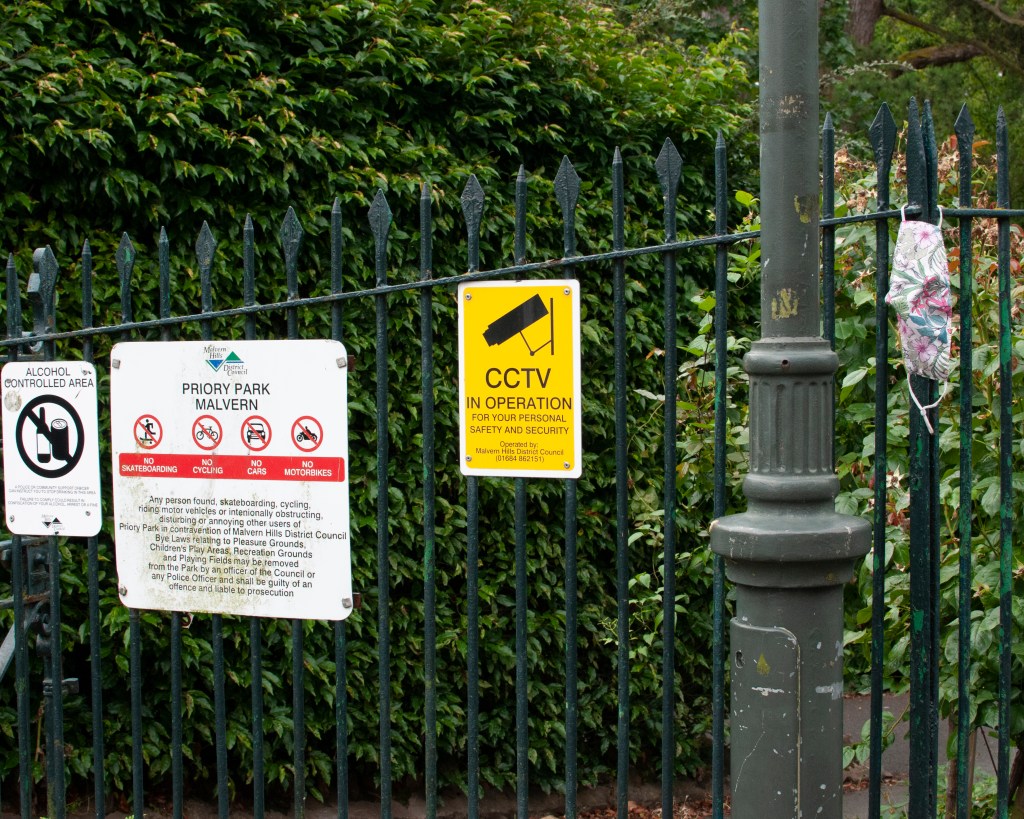
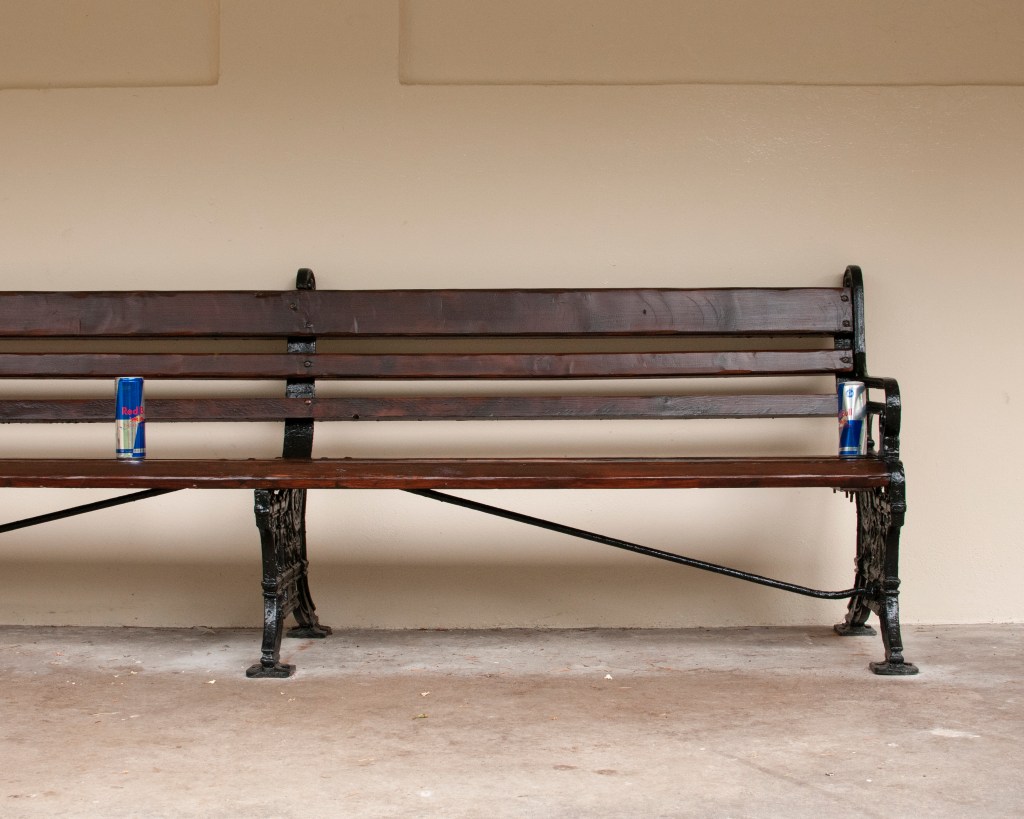
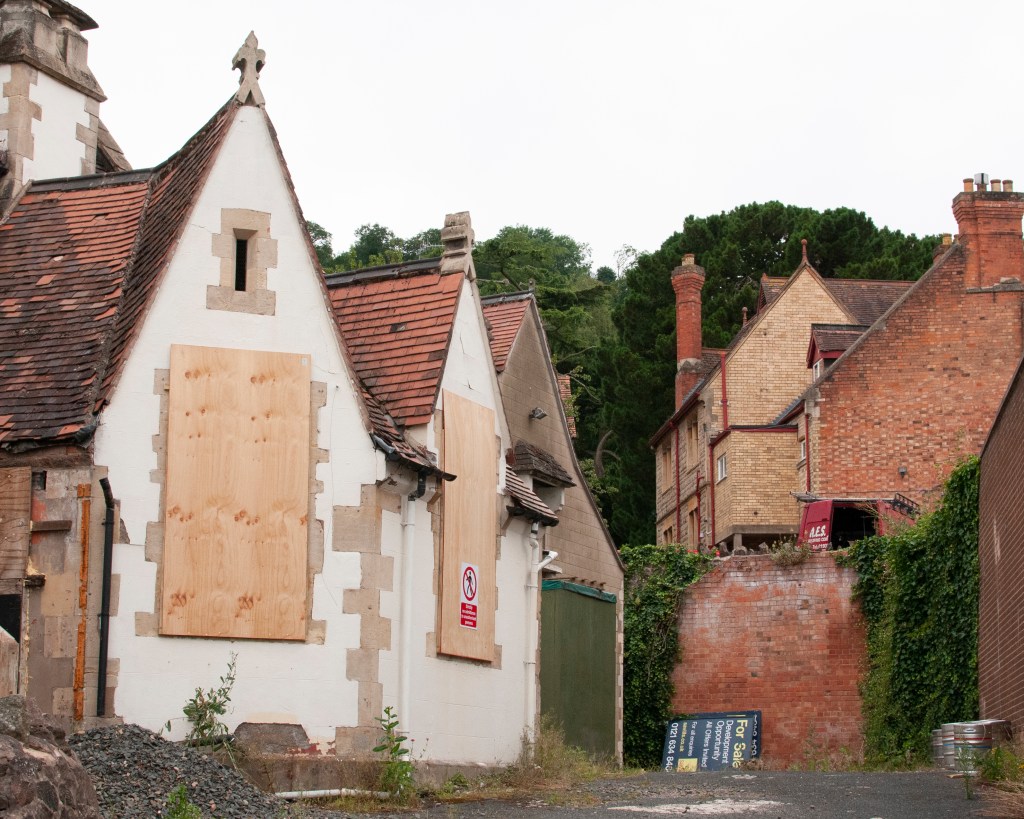
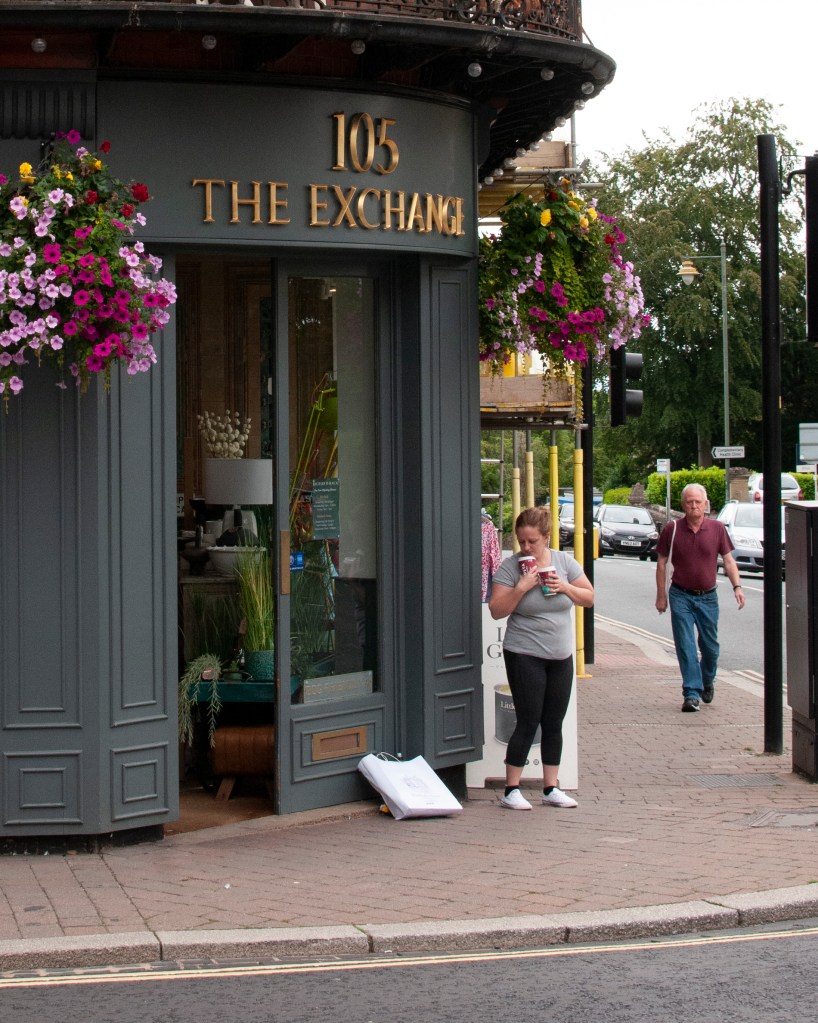
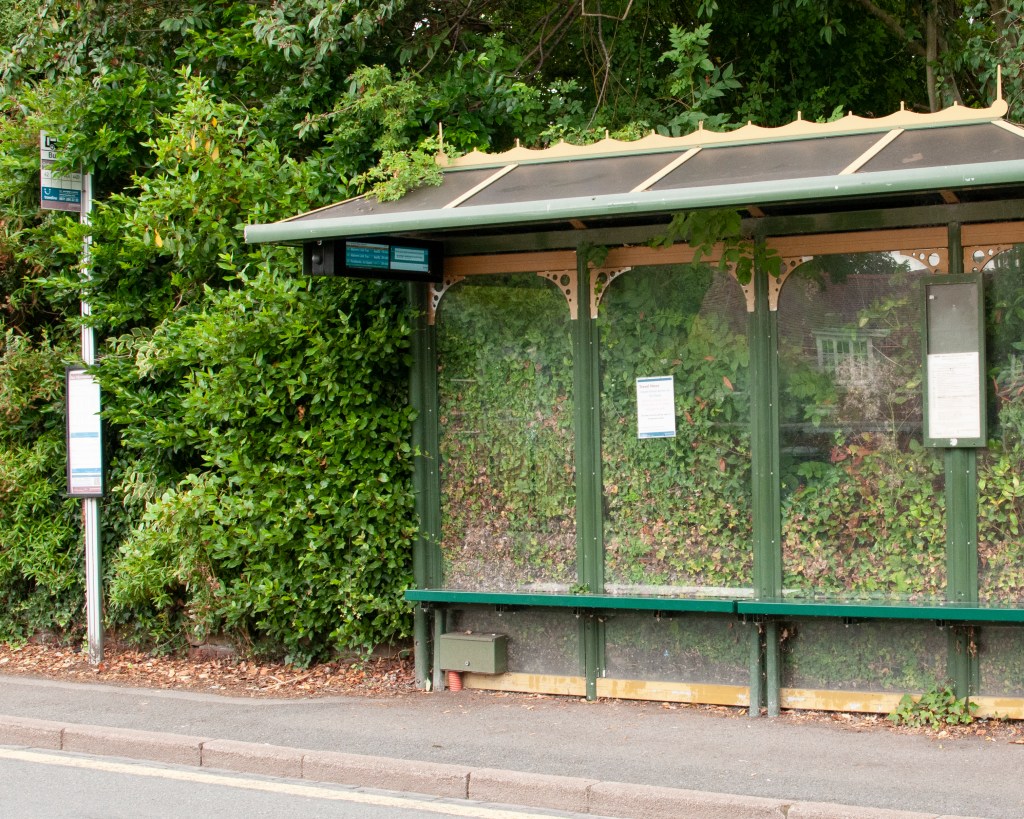
For these shots, I wanted to express my personality using metaphor rather than something physical that identified me. I wanted to represent my identity solely by shooting places. I didn’t have a plan for these as a series, instead looking for subjects that I felt represented some of my traits. Although not exhaustive, there were a few themes that presented themselves in these images. Humour and Anxiety feature more than the other traits. However, my sense of being outwardly emotional as well as loving/caring were conscious thoughts when I was looking for subjects. I think that most things fell into the categories of making me laugh (as with the picture of the Queen and the discarded mask amongst the prohibition signs) or making me think about how I feel most days, which is anxious or somehow affected by something emotionally. With Disorganised, I observed the woman struggling to balance her drinks and hang on to her shopping bag as humour before realising that it represented disorganisation. With Sad, I noticed for the first time that the building had been boarded up, which made me feel like there wasn’t a plan for it. The broken ‘For Sale’ sign further added to that feeling. The link to mirrors in all of the photographs is subtle and because I’m not in the shots, it’s very much my influence of the photographs that give meaning to them rather than being straight portraiture.
In terms of developing them as a series, I would consider choosing traits that I’m perhaps not so aware of. I’d ask my friends and family to help define them and try to limit the series to those rather than using my self-image. I’d choose this approach because I have a tendency to focus more on the things that I experience the most rather than being balanced in my thinking. I could make a series that represents my sense of humour through irony (instructions, human behaviours etc) – Ive always had a resentment for petty authority attitudes, e.g. over-zealous security guards. There could be an interesting series exploring my relationship with authority and how it changes when it becomes more serious. Despite my issues with petty authority, I have a great deal of respect for the law and the police. The series could ask the question about where I feel one ends and the other begins. For the series, I would definitely want to include other people as actors rather than the in absentia style as with Nigel Shafran’s work [1]. For me, the mirror still needs to be connected to the photographer in a way that can be read by the viewer. For example, although Mary Kelly’s work is not photographic in nature, she created work from her own personal notes and artefacts which not only reveals the subject of the series, but also the woman who created it. In Eijkelboom’s early work, he both appeared in person or as a facsimile through his clothing or even a print of his portrait. I feel that this direct connection however subtle, strengthens the subject with what the photographer is trying to say about themselves or their perspective.
This project deals with the idea of an artist’s work being a mirror for their experience or their influence over the narratives within the image or series.
Mary Kelly: Post-Partum Document (1973 to 79)
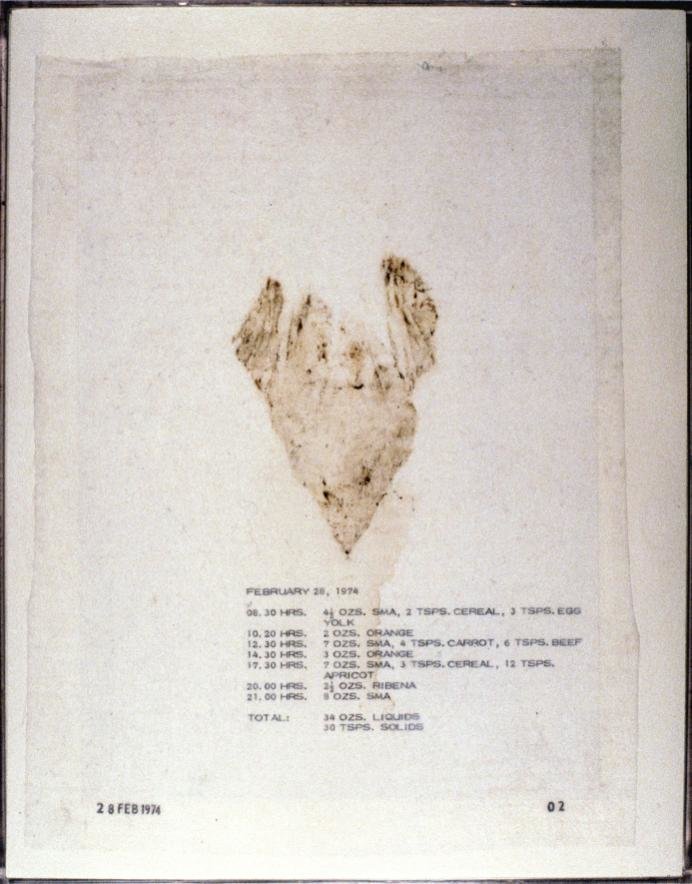
We are first introduced to American artist Mary Kelly, who created a documentary of the first 5 years of her son’s life in the early seventies. Kelly’s work is not photographic, instead using a variety of everyday items and transcripts of specific events to tell the story of early motherhood. Kelly’s intent for the work was to challenge the established idea of the ‘division of labour’ between the genders and she did this by representing a new mother dealing with the daily domestic activities with a young child. As Kelly was ‘post-partum’ herself, her work is told as a mirror of her own experiences. In an interview [1], Kelly said that she wanted the viewer to concentrate on the subject rather than focusing on the fact that a woman was telling it, so to me it was as much about getting the story told than it being about the artist. However, Kelly’s approach to the documentary is her own perspective on the day to day aspects of raising a child. Her work is almost scientific in approach, with meticulous notes and items included; the most infamous artefacts being her collection of nappy stains.
Nappy Stain and diary entry from Mary Kelly’s Post-partum Document (1973 to 79)[2]
Kelly used them alongside a diary entry for the food that her baby had consumed that particular day. Her view was that the best way to see the baby’s development was to measure the output for a given input. This reminds me not only of a scientific approach to a problem, but also the work of Gideon Mendel. His documentary series Dzhangal[3] arranges the possessions left behind by migrants when they left the holding camp at Calais. I looked at this work as part of Context and Narrative, but it is now that I understand Mendel’s work as a mirror. His parents were Jewish refugees who escaped the Holocaust, which Mendel used to tell the stories of the disposed from his own personal perspective. The items themselves were randomly discarded, but the artist’s arrangement of them in the work juxstaposes the mundane with the signs of the oppressive treatment the migrants suffered as they were held at the camp. Both Mendel and Kelly avoid the obvious in their representations but their experiences come through clearly in the work.
In a similar way to both Kelly and Brotherus, Esther Teichmann mixes a number of media to create her work. Her work first interested me because it is almost collage in nature, with the underlying photographic element being only one part of the creative process. If I reflect on my work on this course thus far, it’s easy to see how the act of photographing in the portrait genre limits my creativity. While I do think about what I’m trying to represent in the subject, the context, composition and lighting are prioritised to make an image. Teichmann, like the other artists, is exploring the relationships between subjects from her perspective and using whatever media helps her express herself.
Photography is always at the centre of my practice and was definitely my starting point. I think it’s such an elastic and physical medium, but fundamentally the thing that draws me in is the relationship between the real and the staged, the duality between the real and the constructed, the world that exists and the otherworldly. It’s this dynamic that keeps me wedded to the medium and continually excited by it.
Esther Teichmann in conversation with Emily Spicer of Studio International Magazine, 2020 [4]
The quote above makes the point that there is no reason for photography to remain in the real or documentary world. but instead can create a sense of the unbelievable. This makes perfect sense, of course but the learning for me is going to be how to embrace this as an idea in my own work.
Tecihmann’s work is clearly very personal and often evokes raw memories of her earlier life, of mourning and loss both as something that is experienced or anticipated. She makes an interesting point in the interview[4] about loss being both past and future where as a child we develop an understanding that we will inevitably lose something or someone and as we grow, we experience it. These experiences are inextricably linked but are also very different and are naturally unique to the sufferer. For me, this acknowledgement reveals why Teichmann’s work is so relatable despite her experiences being very different from mine. Her work is more impactful to me than Kelly’s because I have no relatable experiences in the case of the latter. Brotherus’ work creates a sense of empathy and recognisable heartache, but again I have little in terms of reference. Teichmann’s work, particularly Mythologies (2012 to 2014) evokes a sense of the sadness of isolation in what on the surface appears to be a bright, colourful and unnatural world.
Untitled, from the series Mythologies (2012 to 2014), by Esther Teichmann [5]
When we look closer, the beauty of the surroundings takes on a sinister feel with it’s unreal colouring and enclosed nature. Teichmann’s hand-colouring of the images is fairly obvious, but for me that introduces the mirror of her experiences into the image.
The course notes make a point about how we might approach a mirror work based on our own lives
“Using mirrors of the self does not have to result in highly personal, therapeutic work, although it might. Think carefully about the issues you want to avoid and what you’re willing to make public should you decide to take this route. There are sophisticated ways of portraying situations that don’t entail divulging everything”
Identity and Place course notes Part 3, page 6
This is an interesting point in terms of choosing what part of ourselves to put into our photographs. It could simply range from an opinion on a topic based on experience, as with diCorcia’s series Hustlers, to something much more personal. Although not a direct reference, diCorcia was inspired to shoot the series of portraits of male prostitutes following the death of his brother from AIDS. His pictures have many possible interpretations, but diCorcia’s experience of loss comes through in the sympathetic way he represents the subjects. In this case, the artist isn’t really revealing himself in the images, rather including his sadness and bewilderment at the struggles of gay men in sex industry during the AIDS epidemic. In representing them this way, he is remains safely detached from the subject. In my case, the recent feedback on Assignment 2 about my self-censorship leads me to consider my subject for Assignment 3 carefully. My ideas centre around my own struggles with recovering from depression which have included a spell in hospital, excessive drinking, inability to work etc. While I am not ashamed or embarrassed by it, I wonder if my internal censorship prevents me from being completely honest about it in my work. This is something I will have to decide upon as I start working on the assignment.
Hans Eijkelboom – With my Family (1973)
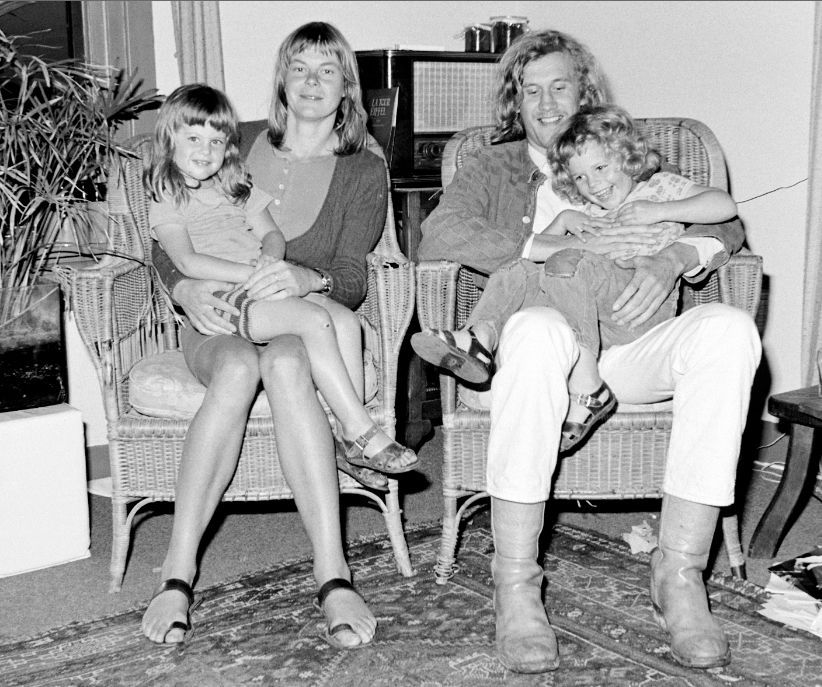
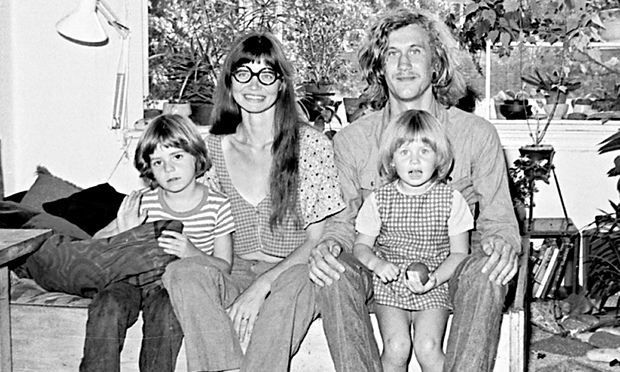
When I first saw this work, I was immediately reminded of Trish Morrissey’s Front (2005 – 2007) as the idea is similar. Eijkelboom pre-dates her work by 42 years but the similarities go further than the aesthetic. Eijkelboom waited for the men of the house to leave for work and knocked on the door [6], which seems like something we just wouldn’t do these days. Like Morrissey, he persuaded the mothers and their children to pose with him in what appears to be a completely natural scene. When viewed individually, there is nothing to reveal the deception but when the series is shown together, the viewer immediately asks how one man could have so many families. As well as the humorous aspects, the series is a commentary on the traditional ‘nuclear family’ with Eijkelboom at the centre of it.
From the series With My Family (1973) by ns Eijkelboom [7]
From the series With My Family (1973) by ns Eijkelboom [7]
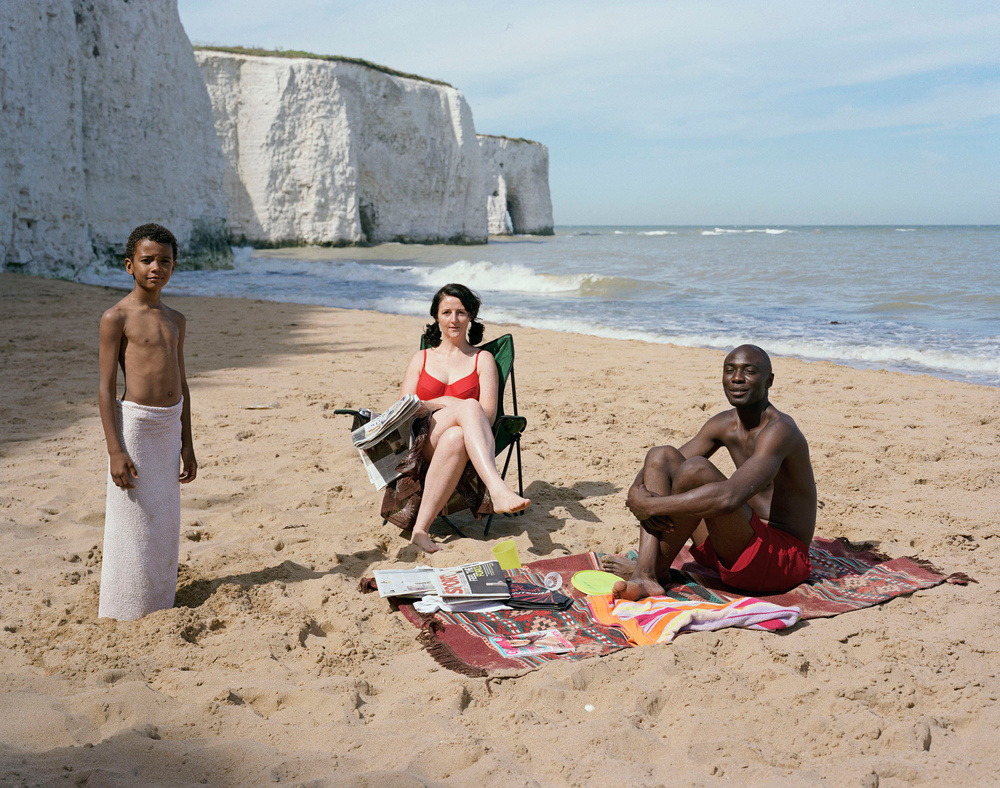
Eijkelboom shows us a blurring of artist and subject in the way the others in the frame interact with him to the extent that we are drawn to the dynamics of the fabricated families in an entirely relatable way. When Morrissey approached her subjects on the beach for Front, she went one step further. She asked to swap clothes with one of the women in the group as a way of replacing them in the scene. What we see when we look at that work is something clever but also subversive; Morrissey does nothing to blend in with her surroundings as Eijkelboom did. In addition, some of her compositions deliberately contrast her with her surroundings as in the example below.
From the series ‘Front’ (2005) by Trish Morrissey [8]
When we look at this image, the obvious thought is around whether Morrissey could be the mother of the child. Depending on how much or how little the viewer understands about racial genetics will determine how this photograph is interpreted. For me, the overwhelming message in the picture is the challenge to a ‘rush of judgement’ which is effectively provoked by the artist holding up a mirror to our view of the traditional concept of family. Like Eijkelboom, she succeeds in putting herself in the narrative I get a different sense of the mirror between the two artists; the former being a chameleon and the latter a cuckoo.
Hans Eijkelboom – Identities (1970 to 2017)
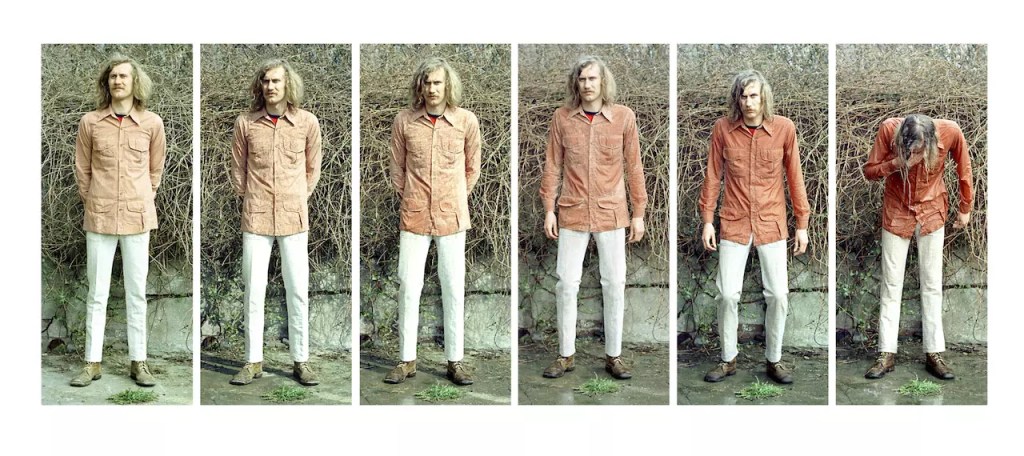
With Identities (1970 to 2017), the first thing that is apparent is that Eijkelboom has been exploring the ideas of what constitutes identity for many years. Not limiting himself to the basic constructs of age, race and gender, instead we have a series that looks at the more subtle elements such as interests, fashion, physical stature etc. Some of the photographs are of the artist himself, dressed in the same clothing from frame to frame but reacting to something that is happening around him. In the example below, a young Eijkelboom is seen standing in what we assume to be a rainstorm. Arranged linearly, the sequence shows him reacting to getting wetter as the rain intensifies. The clothing and the poses are largely the same with the exception of the final frame where he succumbs to the storm.
A Shower of Rain (1971), by Hans Eijkelboom [7]
My interpretation of this image is of a man who is defined, at least in the first instance, by his clothes and general appearance. As the environment around him changes, these identifying features subtly change with them, yet they remain familiar throughout. Our perspective is drawn to the repetition but also the way his personality responds to standing in the rain. There is a sense of humour with this image that we see elsewhere in this vast collection.
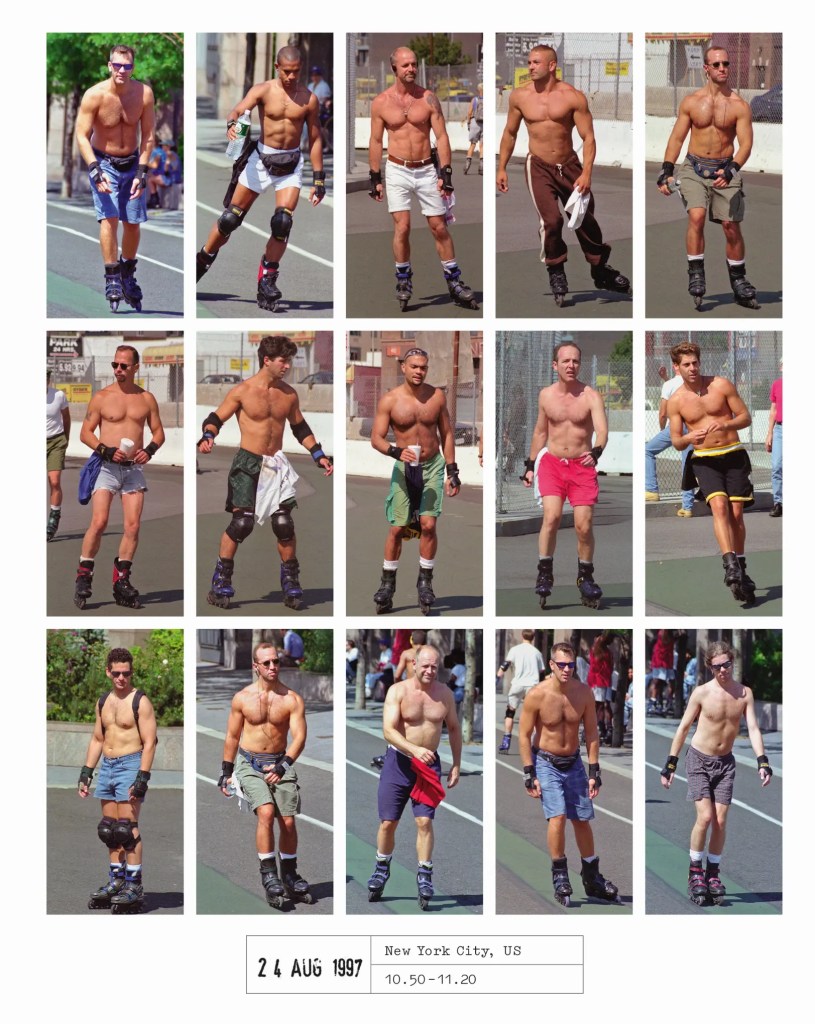
Another element that features heavily in his work is typology, which we covered in Part 1. Eijkelboom collects street typologies through shooting people who are unaware of his presence. In an interview with Phaidon about a later project ‘People of the Twenty First Century’, Eijkelboom describes his working with a camera around his neck, operating by a hidden trigger in a similar way to Evans [9] which resulted in a series of completely natural photographs of people in the street. In the example below, we see the relationship to the Bechers in his use of typology.
From the collection Identites (1970 to 2017), by Hans Eijkelboom [10]
Here we have a grid of photographs presented as a single document that forms part of the wider series. The typology is men rollerblading in the sunshine, which in a similar way to the Bechers’ water towers is a representation many subjects in almost identical situations. The key differences are what identifies each subject. They are all dressed differently, have different physiques, are facing and looking in different directions etc, which is what we are drawn to above the ‘normalised’ composition. Here Eijkelboom is showing us the commonality between people and their lives (in this case a leisure activity), while maintaining their own identity while doing it. Similar work in this series ‘collects’ people wearing the same clothing brand, style or colour which contrasts with the other photographs where Eijkelboom is the main subject.
Cindy Sherman and Nan Goldin
We are reintroduced to Sherman and Goldin as examples fo artists using the mirror as a way of presenting their perspective on a subject. Sherman’s Centrefolds (1981) challenges the impact of the sexualisation and often related victimisation of women through the aesthetic of print media. Her self-portraits photographs show the sinister side of what at first glance could pass as glossy glamour, the poses and haunting expressions being Sherman’s way of pointing out that this is not ok. Sherman wasn’t necessarily saying something about herself with this series, but expressing her opinion as a woman clearly horrified by the apparent acceptability of female exploitation. Goldin by contrast was an ‘insider’ in a part of New York society that was considered fringe by the majority of the population. The notes talk about Goldin challenging social acceptance of her and her friends, but as Goldin herself said
‘My work has always come from empathy and love’
Nan Goldin (2014) [11]
I would question whether Goldin was challenging the idea of acceptance, rather she was acutely aware of the difficulties in the lives of her friends and wanted to represent how important they were to her. Whatever her motives, Goldin uses the ‘mirror’ as an insider to the experience in way that makes us feel like we know her life through her work.
Conclusion
My main conclusion from this project has been the understanding that the mirror can be very personal to the photographer through their own experiences, but also can be a commentary on their perspective on a situation. We learned in a previous course that portraiture can be anything from a straight representation of the subject to not being about them at all. We can use other people to act out our life experiences as portraiture as well as not having a human subject in the frame at all. However in this unit, the concept is more of identity than portraiture. How do we say something about a subject whether physical or spiritual through photography? In the case of Kelly, she narrates the experience of women in the role of mother and carer through the use of very factual documentary using her own artefacts and experiences. She achieves a strong identity without having any portraiture as part of the series. In the case of Eijkelboom, he places himself in the roles of others to reveal something about their lives as well as collecting the many attributes of someone’s identity as seen by a casual observer, such as clothing, interests etc. The common theme through his work is his sense of humour, which I think is what makes the series a mirror of his personality. With Sherman there is strong storytelling with the artist playing a variety of parts. She is mirroring her views on the exploitation of women but not necessarily from a clear, personal experience. With Goldin, the work creates narratives from an insider perspective which gives it a greater authenticity than perhaps Sherman’s Centrefolds does. The Goldin work emphasises the personal nature of working in ‘mirror’ as there is little of her life that remains private.
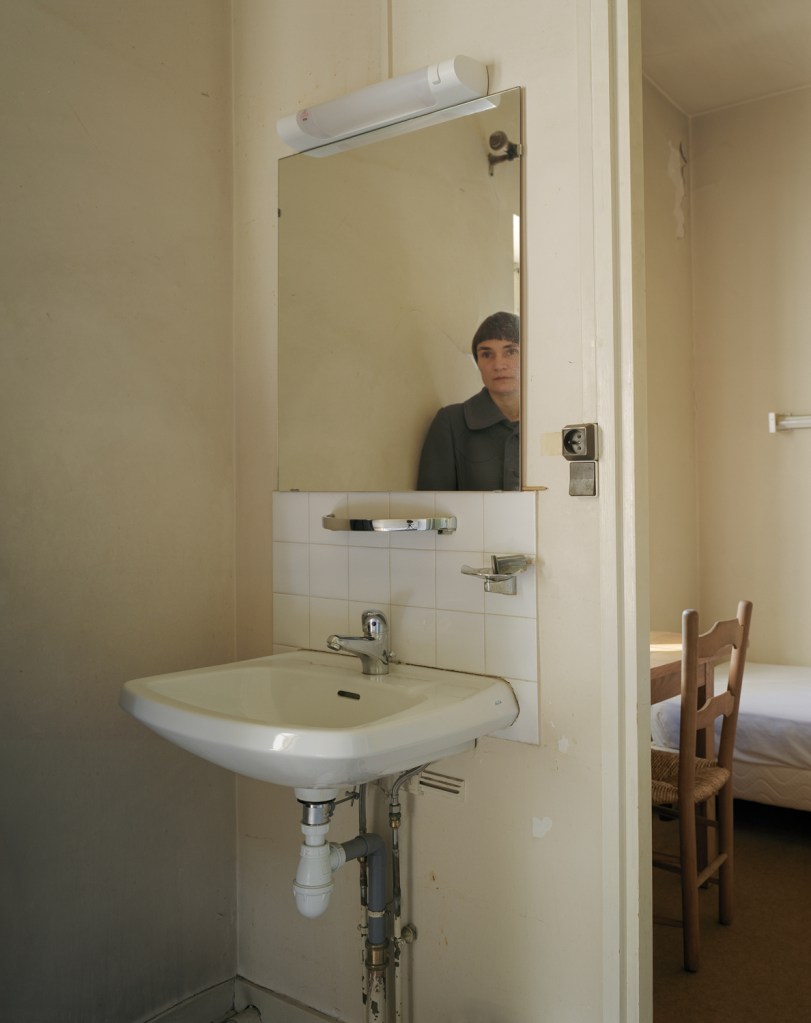
This video highlighted a couple of points for me around how Brotherus, an artist we first encountered in Context and Narrative, approaches her portraiture work. We know from the course notes that her series Suites Française was a documentary about her arriving in France without being able to speak the language and that her chosen process was to use Post-It notes as a learning aid. What I hadn’t realised was the use of film photography introduce the element of ‘random success’ when it came to Brotherus’s placement of herself in the image. For example, she highlights in the video that the placement of the post-it with Le Reflet (mirror) written on it was more luck than judgement. The way that the note covers her face is perhaps the strongest element in the image, even though the composition was intentionally representing the sense of isolation from the artist’s environment and language. Brotherus uses herself as the alien figure in the photograph and blends that emotion with the stark reality of the bathroom. The reason this was significant was that Brotherus made the point that she believed it to be better to work than overthink the idea. She suggested that the curation of a piece of work can be better achieved in review when the photographs are being selected and edited. Indeed, the Suites Française work was revisited many years later and culminated in the series 12 Ans Apres. As the title suggests, the series was revisited 12 years later when Brotherus returned to the location of her artist residency in France. The updated series now reflects on how different Brotherus’ life is in the same context as before. The labels have either been replaced by lengthy narratives in French or completely removed as in the case below.
Le Reflet, 1999 [1]
La Chambre 10 (le reflet), 2012 [1]
In the later version of Le Reflet, we see the same bathroom from a different perspective that shows a small area of the bedroom beyond the doorway. The sink is almost identical with the exception of the plumbing and taps and Brotherus is leaning against the same wall but this time looking at her reflection in the mirror. While there are many interpretations of these two images, Brotherus mentioned that she saw this work as a reflection of where she is now as a person against how she was when the original series. She went on to read one of the new Post-It notes that now contained what she calls a ‘position statement’. The statement reflected on how her life has turned out, both in terms of expectations that she met and things that didn’t go as expected. From what we know about Brotherus’ intervening work about her problems trying to have a family and her health issues that followed, this was a poignant statement that she made. Including it in the series as text further emphasises the mirror of her experiences. Later in the Q&A, she talked about using herself in landscape and the way that she wanted to invite the viewer to join her in appreciating the space. That shared experience is another example of the use of ‘mirror’ rather than a simple representation of what is present in the scene.
Conclusion
I enjoyed the video as it revealed these points that I had not really appreciated until recently. The act of shooting around an idea and being concerned with the way the series comes together afterwards is perhaps at odds with what we would expect. The idea of writing a position statement to establish what life is like in the present moment could be a useful tool when working on a series about myself. Assignment 3 may be a mirror so I will be looking into using it there. I’ve admired Brotherus’ work since we were introduced to her in the previous course, so listening to her talk about her creative process and using herself in the photographs is inspiring me to consider mirror as my answer to the brief for the next assignment.




 Richard Fletcher OCA Photography Blog