Introduction
During our most recent Identity and Place cohort meeting, we conducted our usual review of each member’s recent work collectively. I shared my images from Part 2, Exercises 1 and 2 for discussion, during which we spent some time on the following photograph.
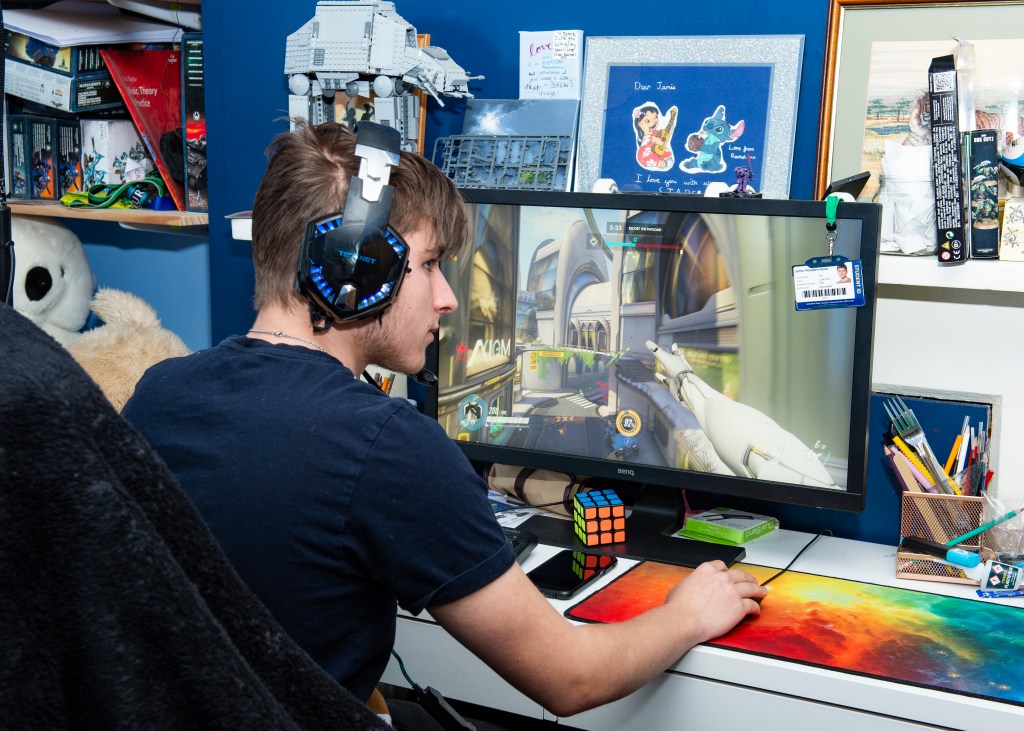
The photograph, from Exercise 1, is of my friends’ son Jamie in the place where he is at peace. We debated the concept of peace and tranquility because at first glance, this doesn’t look like something peaceful. Of course, the object of the exercise was to talk to our subjects to identify a place that they relate to in some way. As my series was about places where people feel at peace, this was the natural place for him to select. We all freely admitted that we weren’t able to relate because unlike the subject, we are not 17 years old. When we looked at this picture more closely, we started to discuss about the detail in the ‘place’ where I had shot him. I had elected not to ‘dress’ the setting because this wasn’t the point of the exercise. While I directed the subject’s pose and set the image up technically, I left the details of what Jamie described as “a typical teenager’s bedroom” as they were. When looking around this image, we see the mixture of teenager interests (the Star Wars models, the cluttered bookshelf etc), but we also see hints of his growing up (the stuffed toy and picture on the wall by his younger sister). The element that attracted my attention at the time was the fork in his pen holder. When I showed the picture to his mum, she laughed and said it was because he liked his “sneaky, late-night chips”.
When we discussed this as a cohort, I got to thinking about the tableau images we learned about in Context and Narrative where every detail of the image was stage-managed to tell a particular story. My photograph from Assignment 5 was an example of this (below).
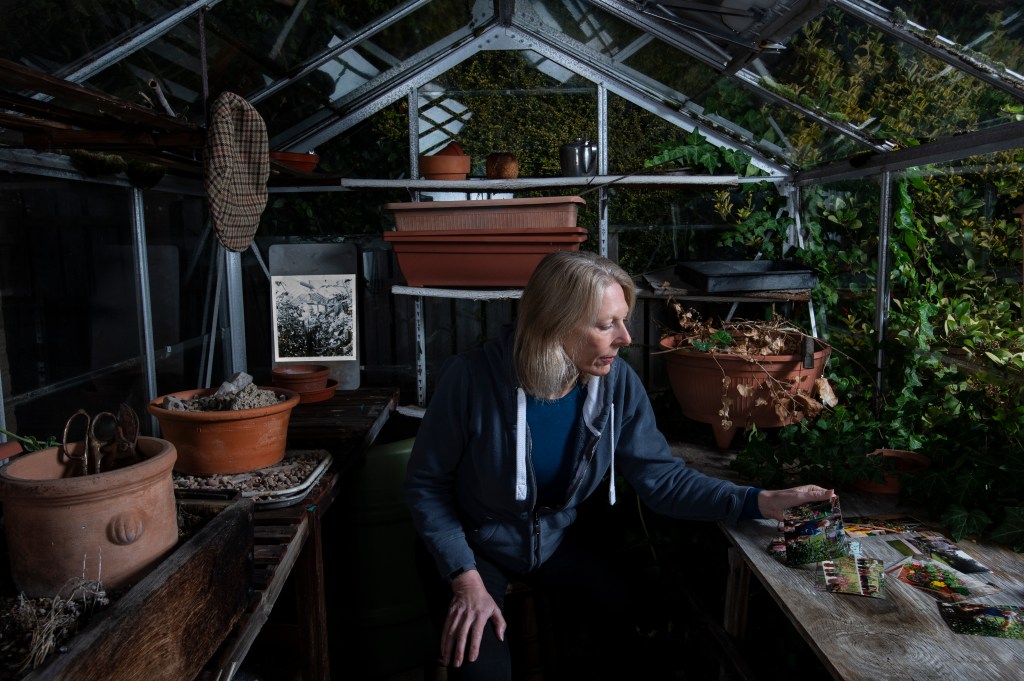
The difference as I saw it was that the image of Jamie was something that I saw as a more factual representation of him, while Assignment 5 was telling a story that was partly fictional. In both cases, it struck me that I could represent Jamie without him actually being there, in a similar way to Nigel Safran’s ‘in absentia’ portraiture in C&N.
Ashley Gilbertson – Bedrooms of the Fallen (2014)
After the call, one of the students forwarded me a link to Ashley Gilbertson’s work Bedrooms of the Fallen (2014). This very poignant work documents the rooms of soldiers from all over the world who have died during the recent wars in Afghanistan and Iraq. Gilbertson, a photographer who was on assignment in the Middle East, conceived the project as an alternative way to tell the stories of the soldiers who were lost. Over a period of 7 years, he researched the soldiers, contacted their families and photographed the bedrooms of their family homes. He made the conscious decision to shoot only those that had been left untouched or had little in the way of changes made to them so that the viewer can get the sense of the space being left behind.
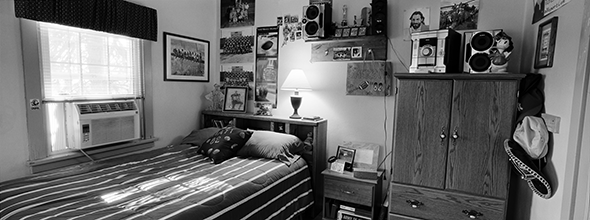
From the book “Bedrooms of the Fallen”, by Ashley Gilbertson (2014)[1]
In the example above, we see a bedroom that looks like it’s just been cleaned. This effect of looking like the occupant might be back at any time is core throughout the series. Each picture serves as a snapshot of the soldier’s life frozen at the time they last left home for war. It’s very difficult to age the scene as most of the features are fairly contemporary. When we look closely we see a mixture of contextual elements that we can seek meaning from. The stuffed toy on his pillow contrasts with the photographs of what we assume to be his regiment on the wall behind the bed. The shelf with his trophies is also juxtaposed with photographs and ornaments. The big shelf speakers that form part of his hifi system have the style of someone young, with one positioned next to a statue of Donald Duck. The whole room reminds me in many ways of Jamie’s in my photograph. The room is kept as it was by the soldier’s parents, but there is nothing that is constructed or staged about it. We can almost imagine what the young man was like who lived here, without actually being able to see him. Unlike Safran’s ‘in absentia’ portraits, there is no pattern of life being revealed here as such but some pointers as to the subject’s personality.
Conclusion
I found this series both interesting and moving. What interested me was the natural sense of identity contained within a place, where the photographer was really only responsible for arranging a composition and lighting that highlighted the details so that the viewer could explore the context. When I photographed Jamie for Exercise 1, I experimented with the direction of my flash so that there was a soft, even light across him and his space. Naturally the key thing was to reveal the computer game, which drove the decisions around exposure and fill light. Like Gilbertson I didn’t interfere with the ‘place’, but in my case I had to arrange my subject in a way that didn’t clash with his environment. With Bedrooms of the Fallen, we have a powerful narrative about war and loss, but also an emotional insight into the young men that war consumes. We know that young people fight wars – it’s been a common trait of the forces for centuries. That preconception is really supported by the details of the space when we look at what the soldiers left behind. It’s as if a ghost of their personality still lives there and even though we don’t know the subjects personally, we can derive an empathy towards them through their stuff. Another layer of the narrative is, of course the impact on their families. They had elected to keep the rooms as either a sort of shrine or perhaps just somewhere they don’t want to be but similarly cannot bear to part with. This extra layer to the photographs really anchors the whole series together.
References
[1] Chisholm C, 2014, “Bedrooms of the Fallen”, Columbia Journalism Review Archive, https://archives.cjr.org/on_the_job/bedrooms_of_the_fallen.php?page=all
 Richard Fletcher OCA Photography Blog