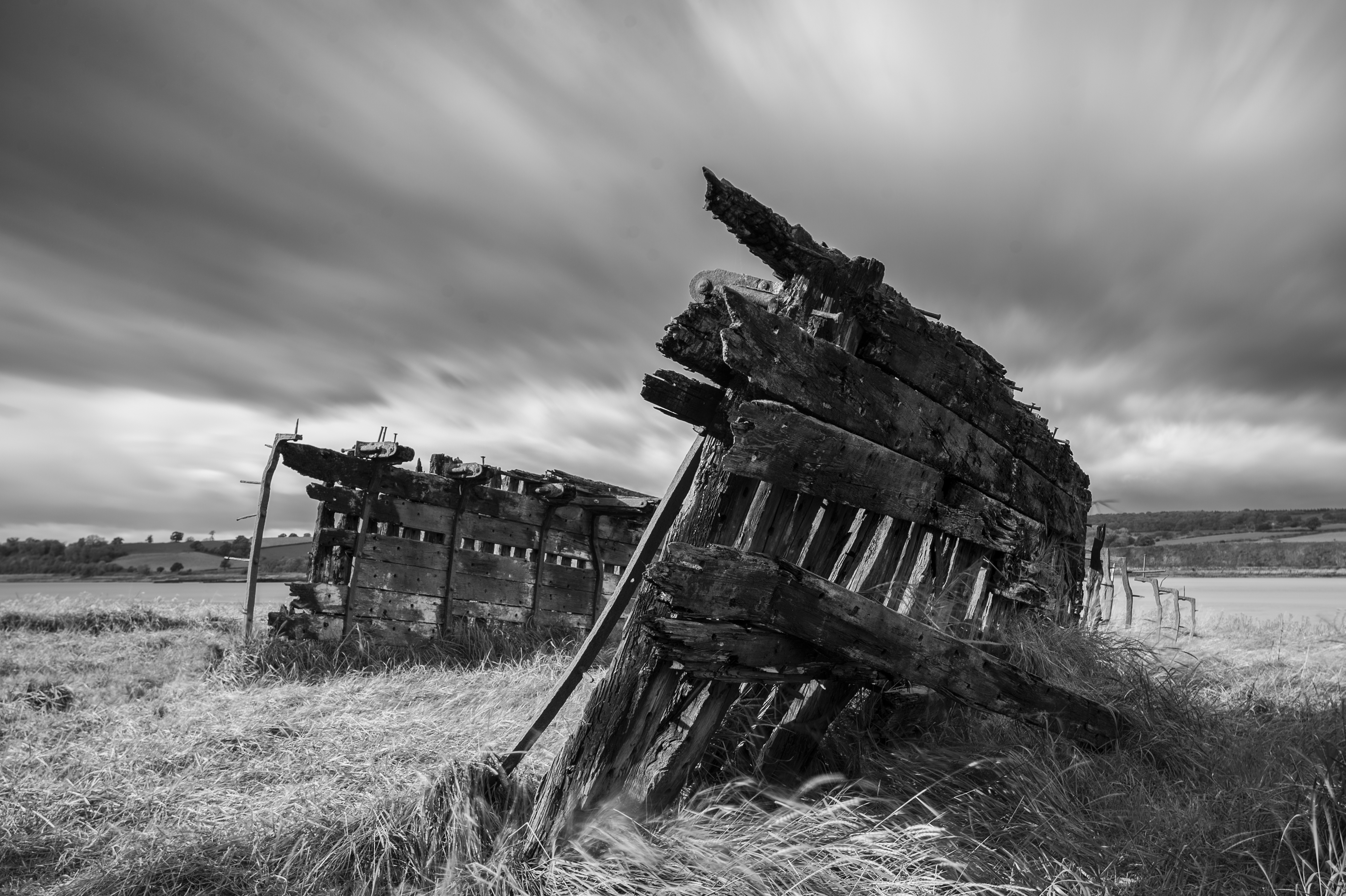
“Memories evoked by a photograph do not simply spring out of the image itself, but are generated in a network, an intertext, of discourses that shift between past and present, spectator and image, and between all these and cultural contexts, historical moments”
Kuhn, A. Family Secrets: Acts of Memory and Imagination (2002) London: Verso. Pg 09.
Look through your own family archive and try to discover a series of portraits (four or five) that have existed within this archive, but have never been placed together before. The portraits can contain individuals or even couples; they may span generations, or just be of the same person throughout the years (chronotype). Whichever way you wish to tackle this exercise, there must be a reason or justification for your choices. What message are you trying to get across about these portraits?
Through doing this exercise, you are physically bringing together portraits that have never been viewed as a series prior to your intervention. Therefore, you need to think really clearly about what your choices are and who you decide to select.
You can either make physical copies of the originals and work with these in your learning log, or re-photograph them digitally (or scan) and post them on your blog. Either way, your thoughts about these portraits will be the key to this exercise. Try to articulate what is happening when you bring these images together for the first time. Apart from the obvious – the subject, perhaps – is there anything else that links the imagery together? The location? Dates? Activities?
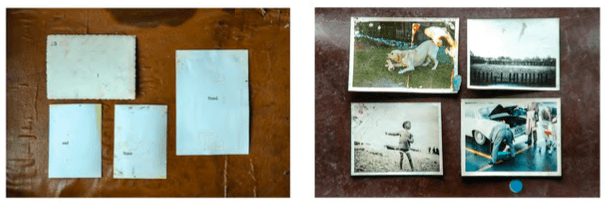
Moving back to Annette Kuhn again here, think about any inscriptions that might be made on the imagery, detailing whom these inscriptions might have been for, in terms of perhaps owning the memory evoked by the image. In relation to one of her own family portraits, Kuhn describes a caption written by her mother, stating:
“This power-play was an attempt by her mother to force other memories into line with her own. Her mother was pinning the moment the photograph was taken of her daughter to an event that had happened in her own life. Her mother thus literally ‘writes’ herself into the picture (although not being present in it literally), by trying to claim the right to define the memories evoked by it, she is thus attempting to dictate the memory to the viewer.”
Kuhn, A. Family Secrets: Acts of Memory and Imagination (2002) London: Verso. Pg 17-18.
Write 500–800 words reflecting on this exercise and include it in your learning log or blog.
Initial Thougths
My collection of images naturally fell into two types of portraiture; those that were posed and those that were ‘opportunist’. Within these were the sub groups of ‘photographs of one subject’ and ‘group shots’. I was interested in the latter as they revealed a great deal about the interplay between the subjects. In each group shot, there was a clear sense of love, generosity and support that I associate with my family. It goes beyond the simple idea that families are loving environments, instead more to generations providing protection as well as support.
Central Themes
From the initial idea that my family means ‘support, protection and love’ to me, the following central themes started to emerge. The first was that there was usually a subject more important than the others who acted a the focal point for the others in the image. This theme applied to the posed portraits, but also to the more natural shots, where an obvious sign of affection was being seen without interruption. The second theme was more about the common signs of affection in the family. In some cases, the support being given was physical and in others more a small gesture where the obvious size and age differences created the context that supported this particular narrative. The final theme was the familiarity between shots. In the much older photographs taken before I was born, I obviously could have no memory of the events. However, the physical similarities in facial features etc that are strong in my family invoke memories of similar events that I was around for.
The Selection
The Photographs
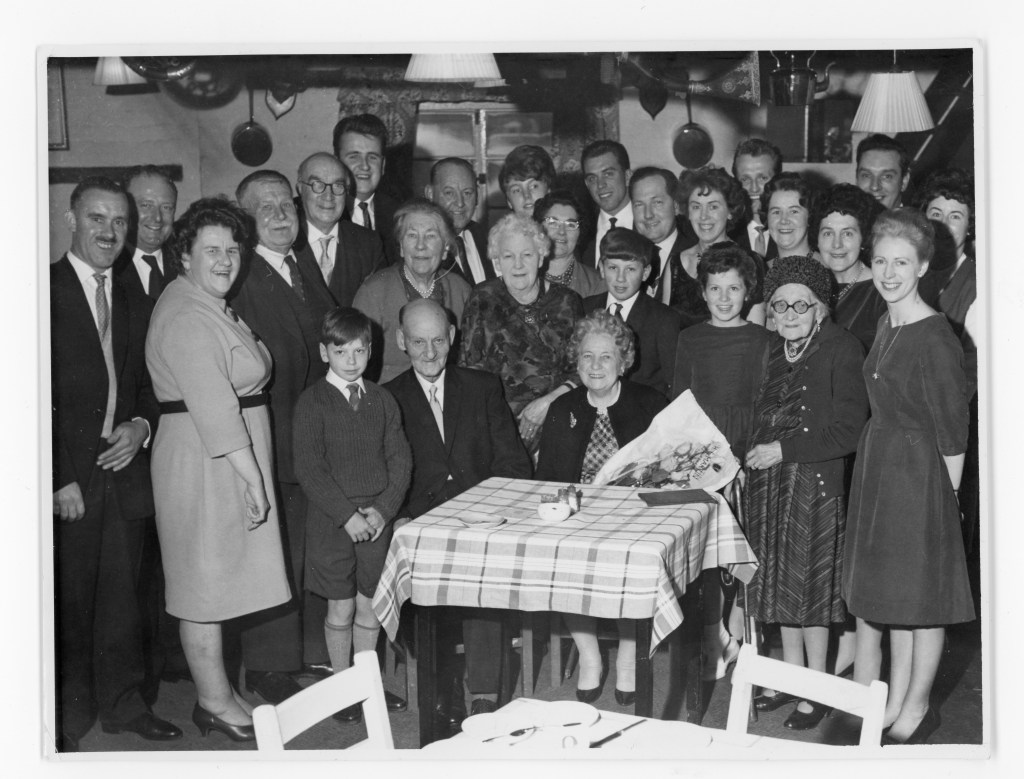
This photograph shows my family gathers in the 1960s for a celebration of my great grandparents, possibly a wedding anniversary. I chose this photograph because of its composition with the couple seated at a table, surrounded by circles of extended family members. The other connections that stand out personally for me are my grandmother (the only one dressed in light clothing), who was one of the most important people in my life growing up, and my Dad who is the tallest person in the room. When I look at pictures of my Dad when he was younger, I see myself.
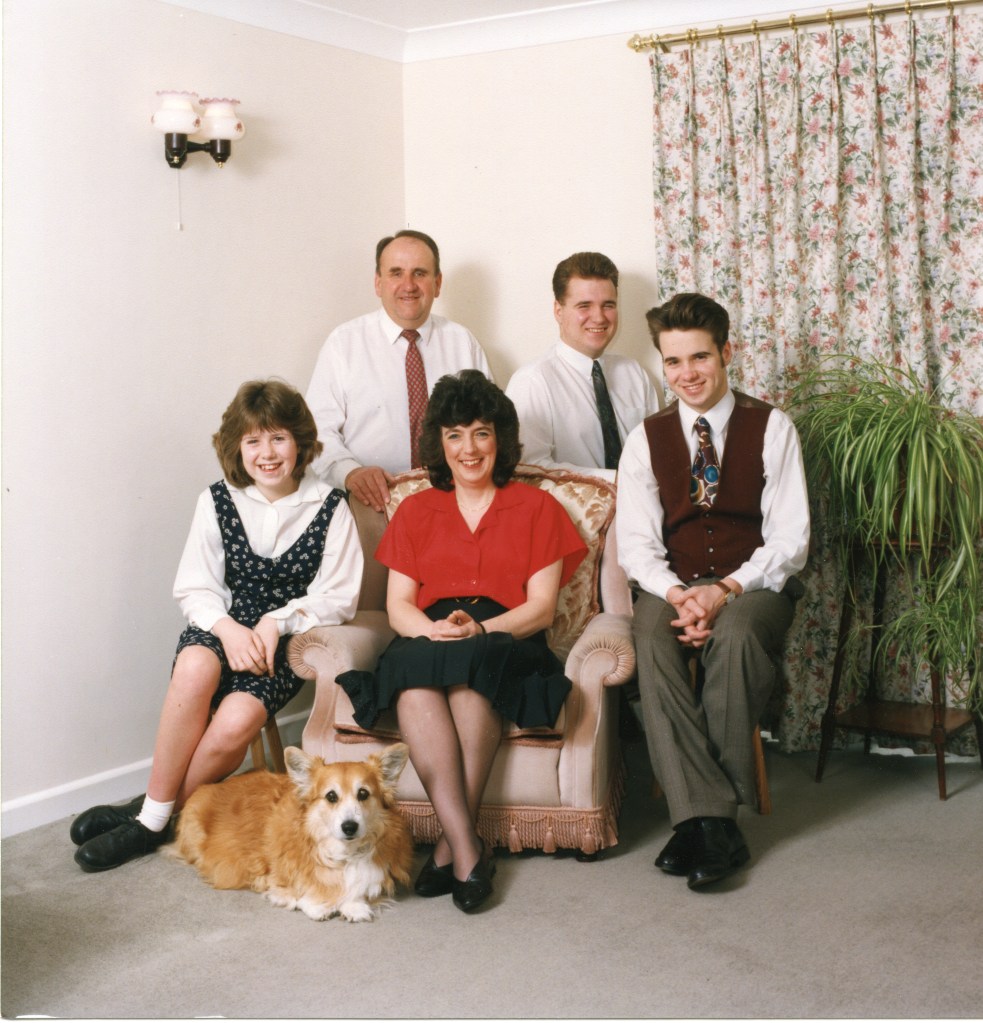
Fast forward to the early 1990s when this family portrait was taken. Here we see my mum sitting surrounded by her family. The family resemblance between the men in the picture is obvious, but for me link is stronger with Dad and I through 1). The supportive theme is strong in this image (my mum died only a few years after this was taken) with the family and the our dog all forming a bubble around my mother.

This shot is was taken a couple of years before 2. It’s B&W because by this time my Dad had become a professional photographer and was shooting, developing and printing at home. When I look at this photograph, I first see a happy representation of my mum and sister. However when I look closer, I notice the gestures of both. My sister’s hug is both affectionate and strong, while my mum’s hand is reassuringly placed around back. I know that this shot was taken on a hill walk where everyone was enjoying the outdoors, but when placed out of its original context and into this series, I believe the picture supports the protection narrative.
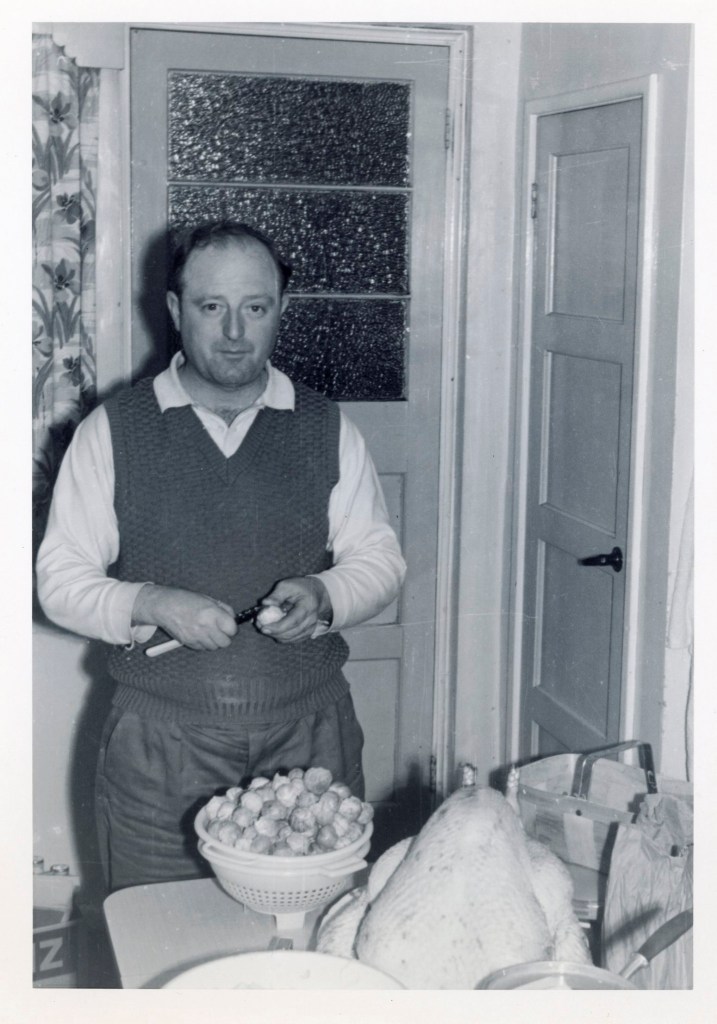
This photograph is deliberately unlike the rest of the series in that it only has one subject. I wanted to include it here because when in the context of the series, it supports the narrative. The photo is of my grandfather Charles who, like my grandmother was a huge influence over me growing up. To my generation they were particularly generous with their time and what money they had, always providing a wonderful environment for us whenever we visited. This shot though was taken well before I was born and shows my grandad in the kitchen preparing what looks like Christmas dinner. He was a very funny man with a wicked sense of humour, which doesn’t come through in this picture, perhaps because he had not long been part of his new family (he was my step-grandad), or maybe as a result of his continuing troubles with what he saw during his war service.

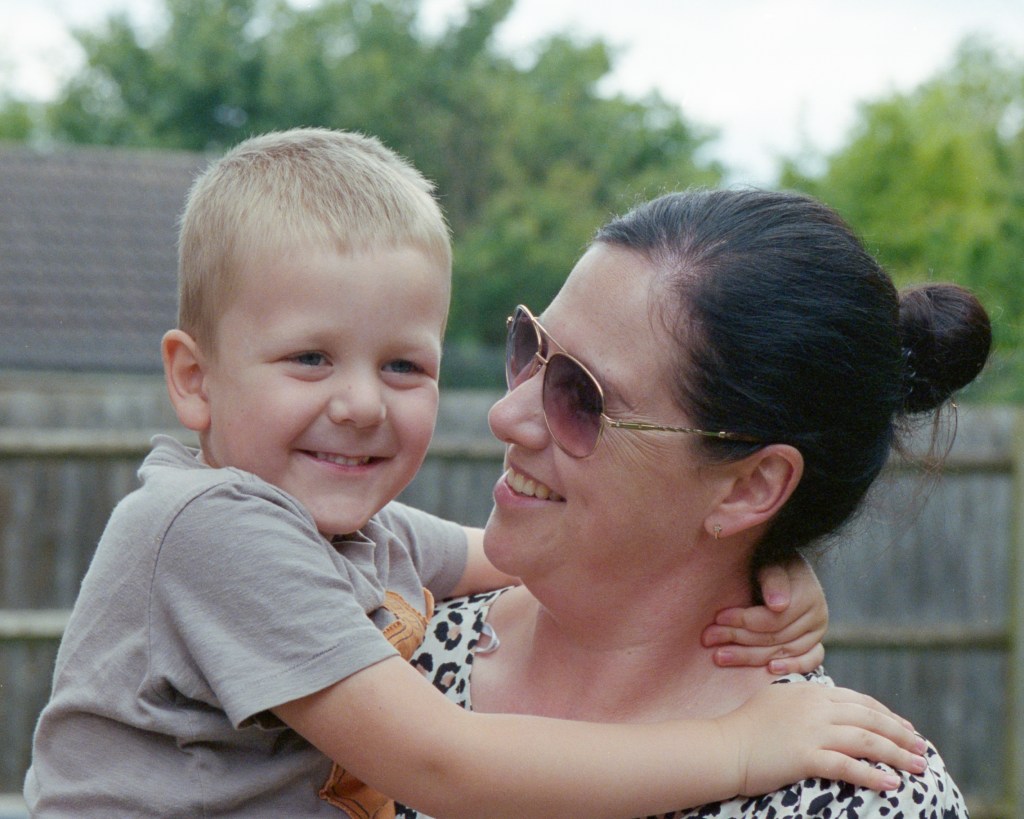
The final image is again one of my sister, taken on her 40th birthday last year, holding her son Charlie. What struck me about this photograph was the similarities between the way that he is holding on to her and the shot of his mum in 3.
Reflection
As with many exercises in this degree course, taking the time to observe and make connections between images is the key learning for me. My family archive is a mess, it’s too big and has no structure. However, looking through the shots with a theme in mind and recognising the contextual elements that lend themselves to that theme is an interesting and emotional experience.
 Richard Fletcher OCA Photography Blog
Pingback: Assignment One: The non-familiar | Richard Fletcher OCA Photography Blog