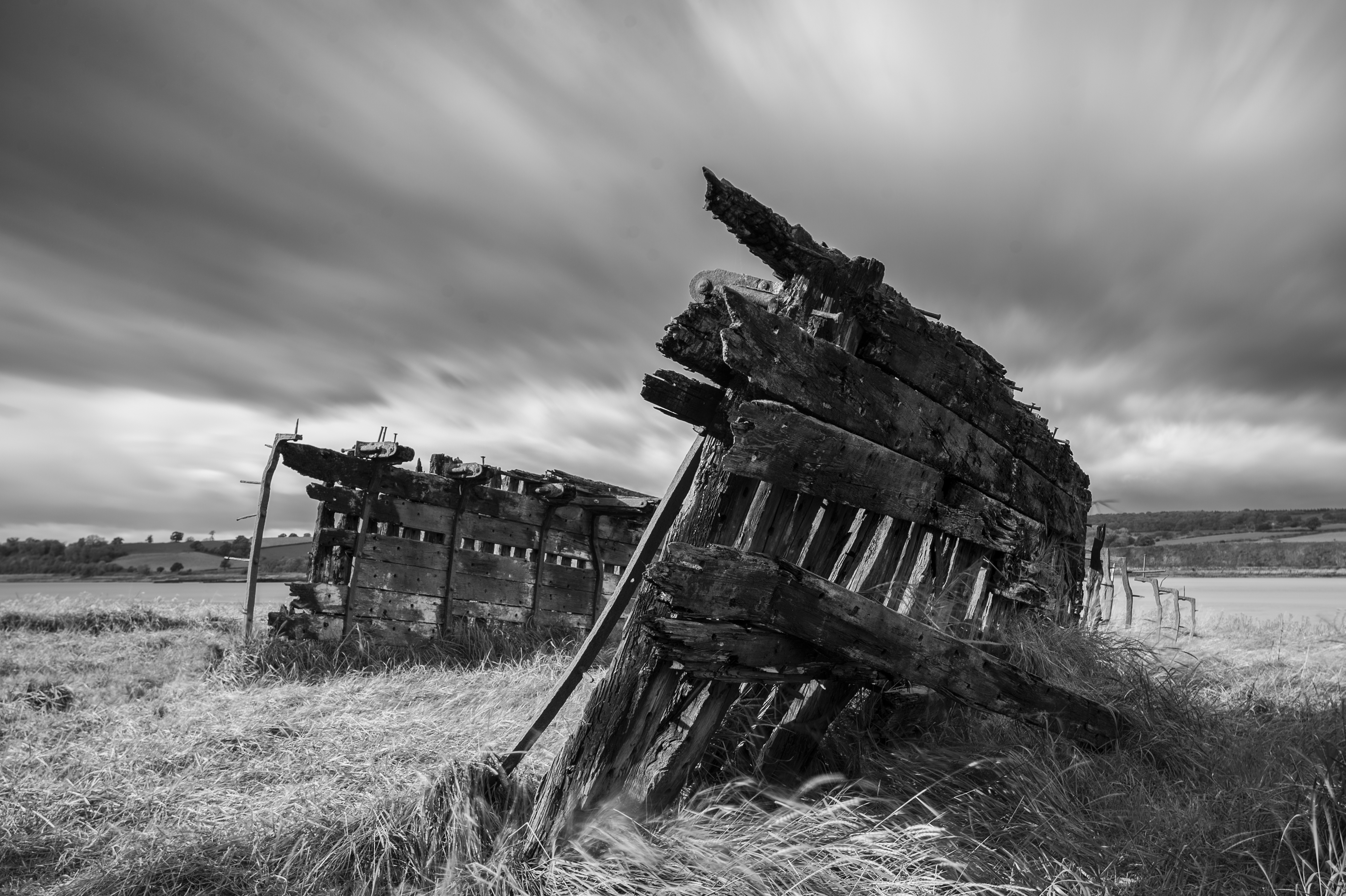
The Brief
The aim of this exercise (and Assignment 2) is to encourage you to develop metaphorical and visceral interpretations rather than obvious and literal ones, to give a sense of something rather than a record of it.
Choose a poem that resonates with you and then interpret it through photographs. Don’t attempt to describe the poem but instead give a sense of the feeling of the poem and the essence that it exudes. Start by reading the poem a few times (perhaps aloud) and making a note of the feelings and ideas it promotes, how you respond to it, what it means to you and the mental images it raises in your mind.
Next, think about how you’re going to interpret this visually and not down your ideas in your learning log.
You may choose to develop this idea into creating a short series of images reflecting your personal response to the poem (or another poem). Write some reflective notes about how you would move the above exercise on. The number of pictures you choose to produce for the exercises and assignments in the course, including this one, is up to you.Initial thoughts
The Exercise
Poetry isn’t an artistic medium that I’ve been interested in or appreciative of in the past. At school it felt like a chore rather than something to emotionally react to or enjoy in some way. Throughout my life, though there has been one poem that has resonated with me whenever I’ve heard it read aloud or seen it written down. That poem is ‘ Do Not go Gentle into that Good Night’ by Dylan Thomas. It has always provoked strong emotions and visuals in my interpretation, even if I’ve never really studied it. My first thought was to use this poem for the exercise.
The Poem
Do not go gentle into that good night,
Old age should burn and rave at close of day;
Rage, rage against the dying of the light.
Though wise men at their end know dark is right,
Because their words had forked no lightning they
Do not go gentle into that good night.
Good men, the last wave by, crying how bright
Their frail deeds might have danced in a green bay,
Rage, rage against the dying of the light.
Wild men who caught and sang the sun in flight,
And learn, too late, they grieved it on its way,
Do not go gentle into that good night.
Grave men, near death, who see with blinding sight
Blind eyes could blaze like meteors and be gay,
Rage, rage against the dying of the light.
And you, my father, there on the sad height,
Curse, bless, me now with your fierce tears, I pray.
Do not go gentle into that good night.
Rage, rage against the dying of the light.
The poem is written as a plea to Thomas’ dying father to not give up on his life and quietly accept death. The stanzas build by describing how men from all walks of life do not simply give up, irrespective of their achievements or character traits. Thomas’s final comment to his father is that he prays that he too will fight for every last moment of life before the inevitable happens.
When first reading the poem, the language used points to obvious emotions if interpreted literally. “Rage, rage against the dying of the light’ evokes the sense of anger at oncoming darkness. The pain of “Curse, bless, me now with your fierce tears, I pray” comes through clearly also, with the final plea suggesting that the end is near for his father. However, when I read the lines a few times, I got sense of Thomas comforting his father and found myself wondering which one of the men described in the stanzas he best identified with. Perhaps Thomas was trying to ease his father’s anxiety about dying by pointing out that it wasn’t his fault, but that he should hang on to every last moment of life and savour it. So, for me, the themes I believe I should pick out for my interpretation are as follows:
Anger – even disregarding the use of ‘rage’, there is a sense of frustration about the way the poem flows. When Dylan read the poem for a recording by the BBC [1] not long before his own death, his use of volume and pitch further emphasise the frustration that he shouldn’t really have to tell his father these things. Perhaps the anger element is something we all recognise as we get older and our parents become less the role models they once were.
Love – almost hand in hand with the anger is the clear love he had for his father. Thomas’ father had a great appreciation for his son’s poetry and regretted not having pursued the same sort of path in his own life[2]
Fight – the determination to not go quietly. The idea that we can stretch time to get the most from it through our own will. This is one of the reasons the poem resonates with me and is likely to be the subject of my Assignment 2. For many years I have suffered with my mental health and the determination to get better coupled with the support from my loved ones, gradually brought me out of the depression. The determination was to enjoy life rather than be afraid of it.
Time – the poem dwells on the end of a story, in this case the life of Thomas’ father. The sense of the passing of time is very evident in the build up of the stanzas with Thomas describing the lives of the different men, all with the end in common.
Potential Subjects and Ideas
For emotions, there are plenty of different subject types that I can include. During EYV there were a number of times where I looked to capture emotion but they were more literal than interpreted. For this exercise, I am considering the emotional trace left after an event in a similar way to the documentary work of Meyerowitz in Part 1. Subjects need not include people to convey emotion, so I will be looking at inanimate objects that evoke emotion as well as subjects that we project our emotional reactions onto, e.g. pets or family heirlooms.
Determination and fight are slightly different from Anger and Love as there is unseen intent to interpret with the photographs. Determination in a literal sense could be a visual involving a challenge such as sport or some form of competition. However, I want determination to be much more subtly implied in the pictures, so the struggle could be more cryptic in its representation, such as the struggle to overcome loss or economic problems.
For Time, I’m considering the how we react to how time passes, whether recognising it for what it is or trying to mitigate for the effects of it.
I’ve always thought that human beings express their emotions using certain body language. In Expressing Your Vision, I focused one of the assignments on the way that we read the expressions of eyes. I learned a lot about observation during that assignment as the photographs were shot as I talked to my subjects. In this series, I wanted to incorporate body language into the image in someway to help create the sense of emotion that the poem invokes. As we interact with world with our hands more than most other parts of the body, I chose to shoot use hands as a linking element in the set. The primary consideration was not to be too literal in my interpretation of the text.
The Images
One
Two

Three
Four
Five
Six
Seven
Analysis
With this set, I’ve been very conscious of not wanting to ‘read out the poem’ through the images themselves. This presented me with a really big challenge in the first instance because, while I’ve appreciate the metaphorical works of Seawright [3], Campbell [4] and Boothroyd [5], my natural instinct is to be literal. I think this explains my stopping at 7 photographs – it was more about struggling with inspiration than
My aims for this series were to portray the emotions that I encounter when reading Thomas’ poem through the use of hands. I wanted to avoid the series being sequential and ‘signposting’ the viewer to the story I was trying to tell. The following is an analysis of the themes I intended to get across for the poem and an appraisal of how successful I was through the questions posed in the course notes.
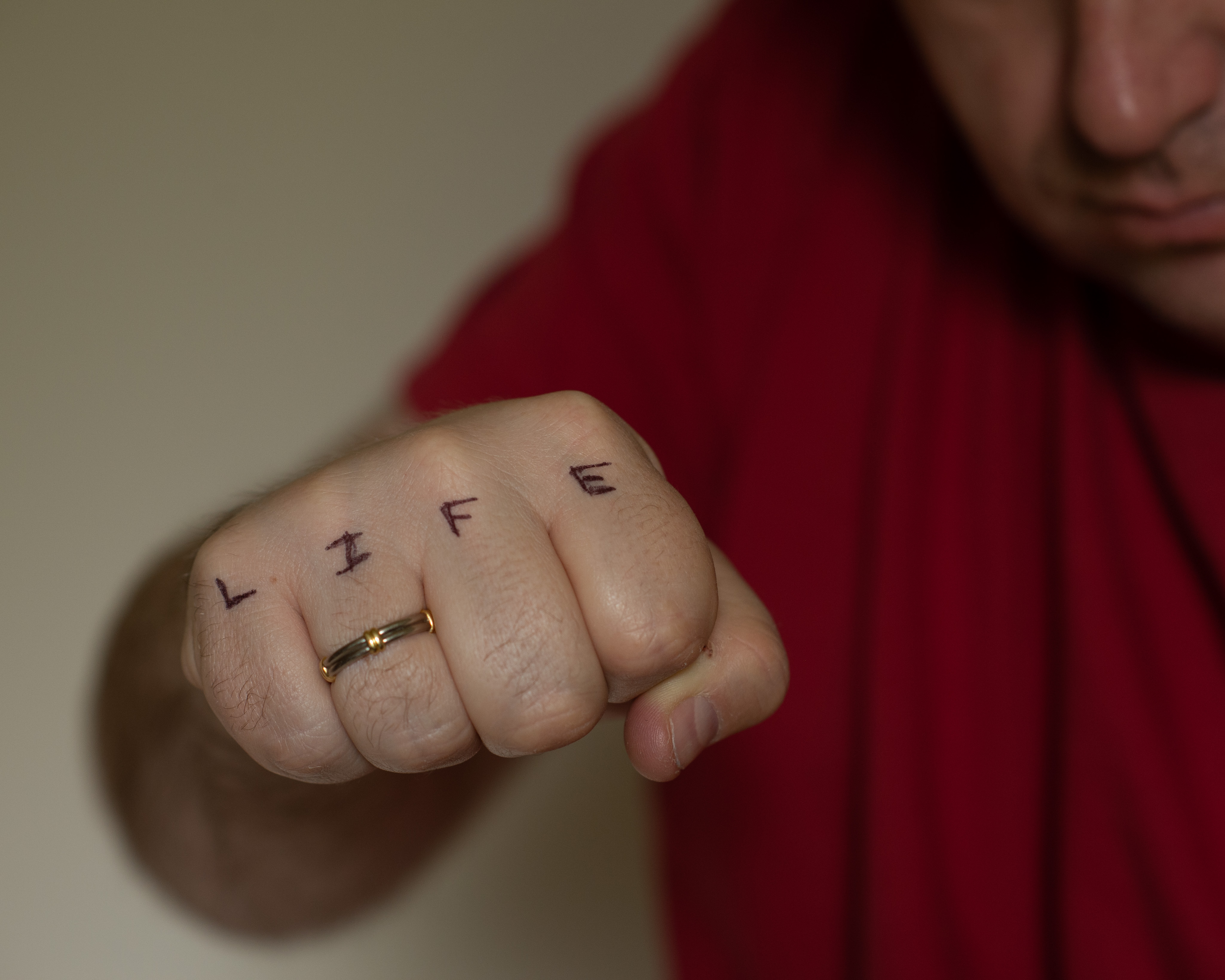
One
This image was intended to evoke the sense of fight, with the tattooed knuckles being traditionally associated with the punk era of the 1970s. In this case, the text is different, with ‘life’ being the fight instead of ‘love’ or ‘hate’ and the combination of the gesture of the hand, signals a focus of fighting an unseen assailant. The final element is the red shirt, which is intended to be one of rage or passion.
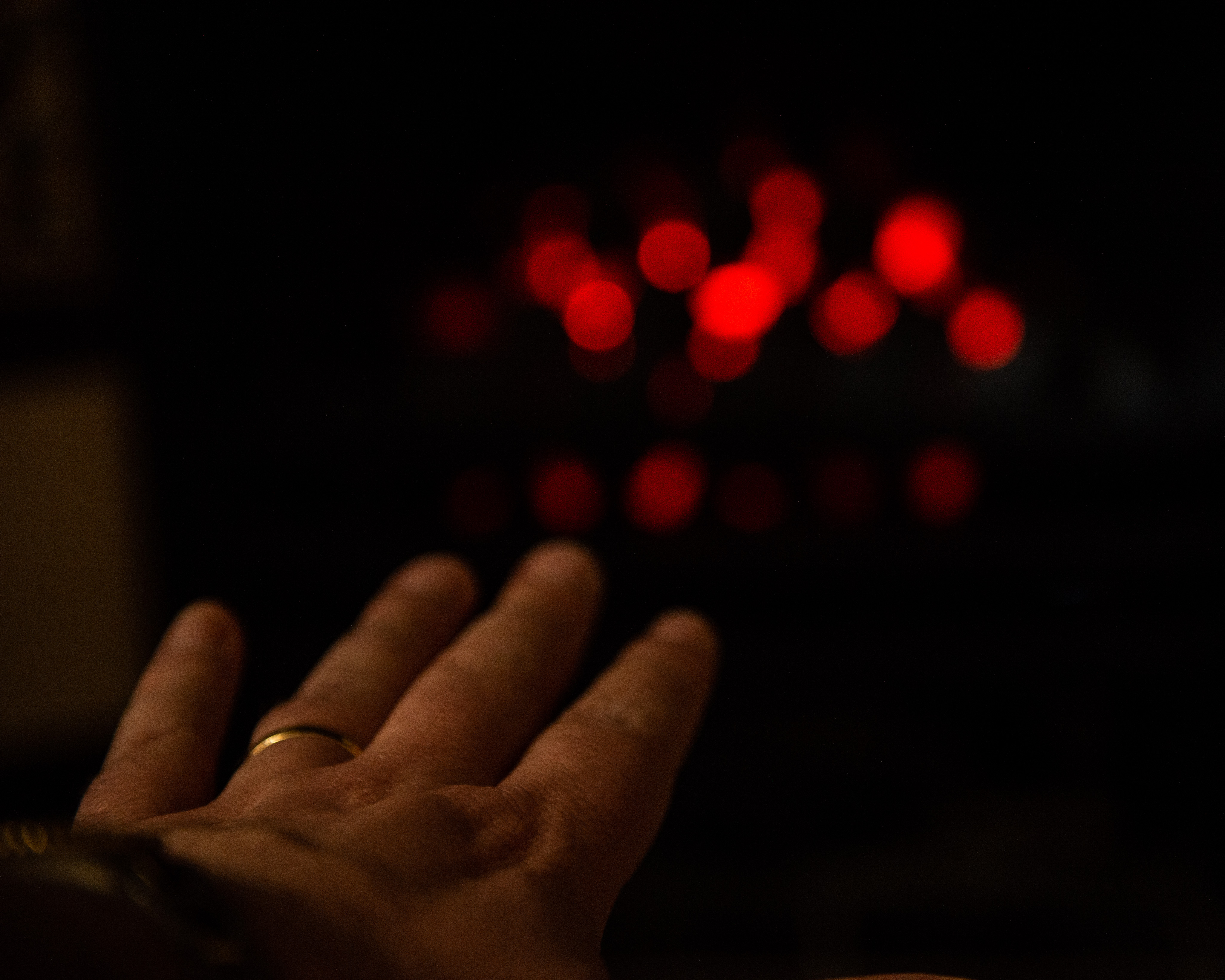
Two
This photograph was intended to be more representative of the feeling of a dying light in a more literal way. The dying embers of the fire are deliberately bokeh, while the hand is only lit by the dying light. The way the hand is stretching toward the light signifies the desire to have the light as it dies. Now, instead of the theme of raging against the light in the poem, the feeling is one of wanting to hang on.
Three
This image plays on the stanza that talks about wise men. The poem discusses the quiet nature of the contribution of wise men contrasted with the fact that they do not simply acquiesce to the end of their lives. What I tried to create here was the sense of the learned man, or writer. The pen gives the sense of success in life, but the word being written suggests ‘hold’. I used this word because of the many possibilities of what would follow it. Hold on, hold tight, hold together – any of these suggest the urge to simply stop something, perhaps worrying about life or perhaps an instruction to death to stay back. The use of the hashtag is intended to signify the wider reaches of whatever is being stopped, deliberately used because of its modern connotations.
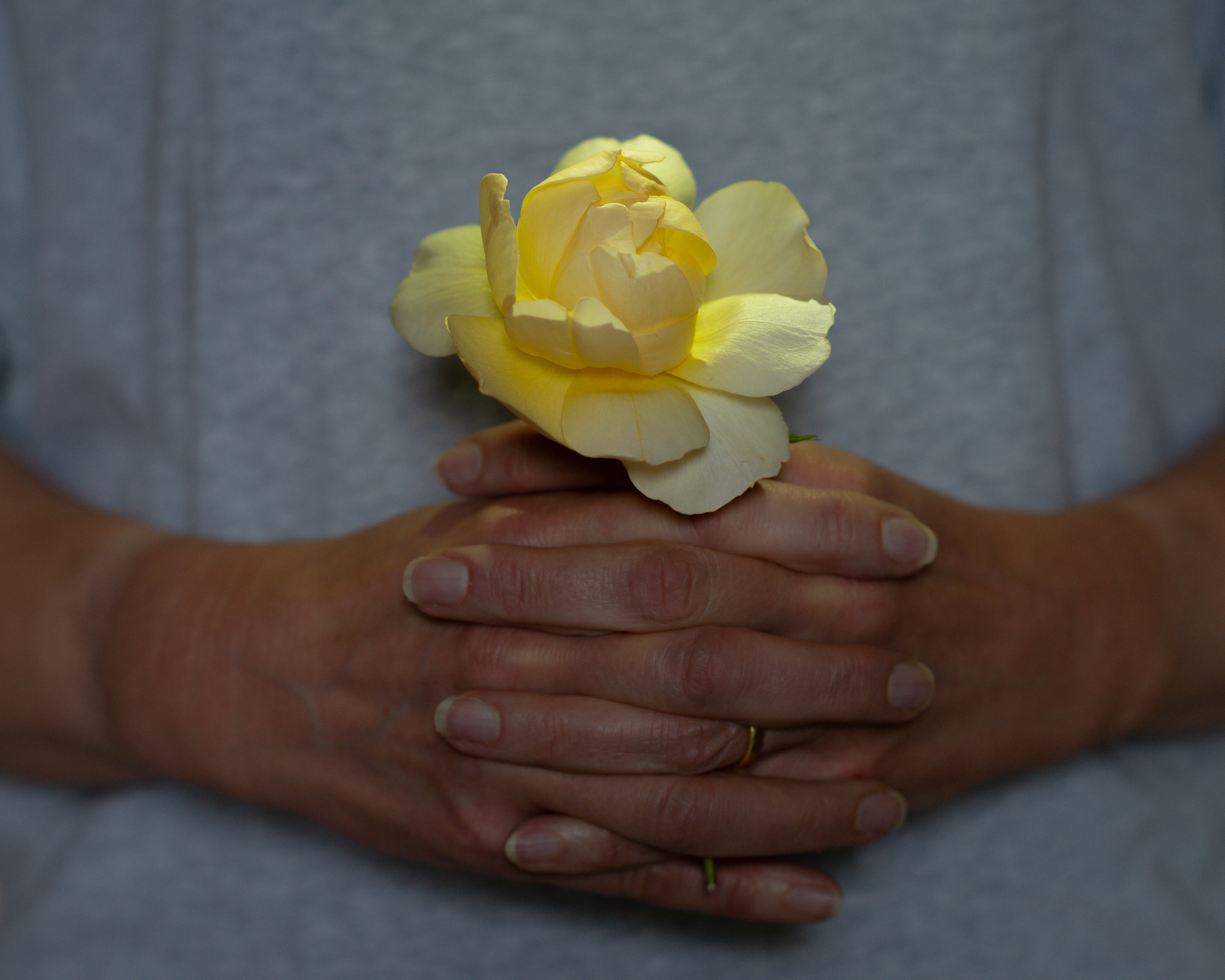
Four
This shot was intended to pick up on the theme of living, or burning and blazing as a repeated theme throughout the poem. I wanted to light the flower but not the hands to suggest that there is something burning what we should hold onto. The underexposure is deliberately forcing the viewer to look at the brightness of the flower. Set against a neutral grey background, the flower is the the focal point, but the shape of the hands in clasping prayer also signal the desire to hang on to the brightness.
Five
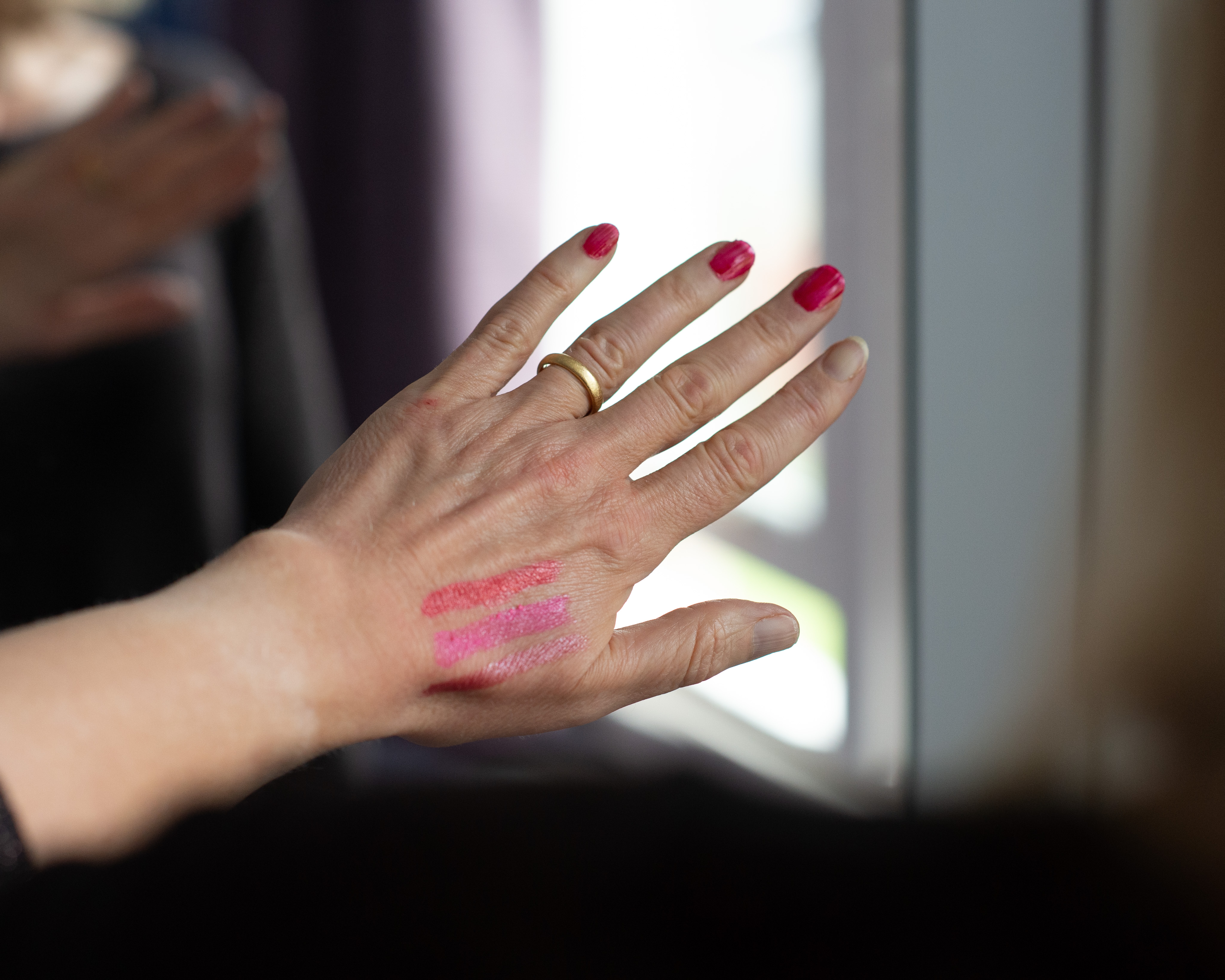
With this image, I was trying to emphasise the passing of time but also the feeling of not being finished. Thomas’ poem is written for his father at the end of his life, so I wanted to portray a sense of ageing while not being ready for the end. This image of my wife’s hand signifies the incomplete through the unfinished fingernails and the indecision in choosing a lipstick colour. The sense of not finished comes through against the feeling of applying makeup as being a cover-up, perhaps of ageing.
Six
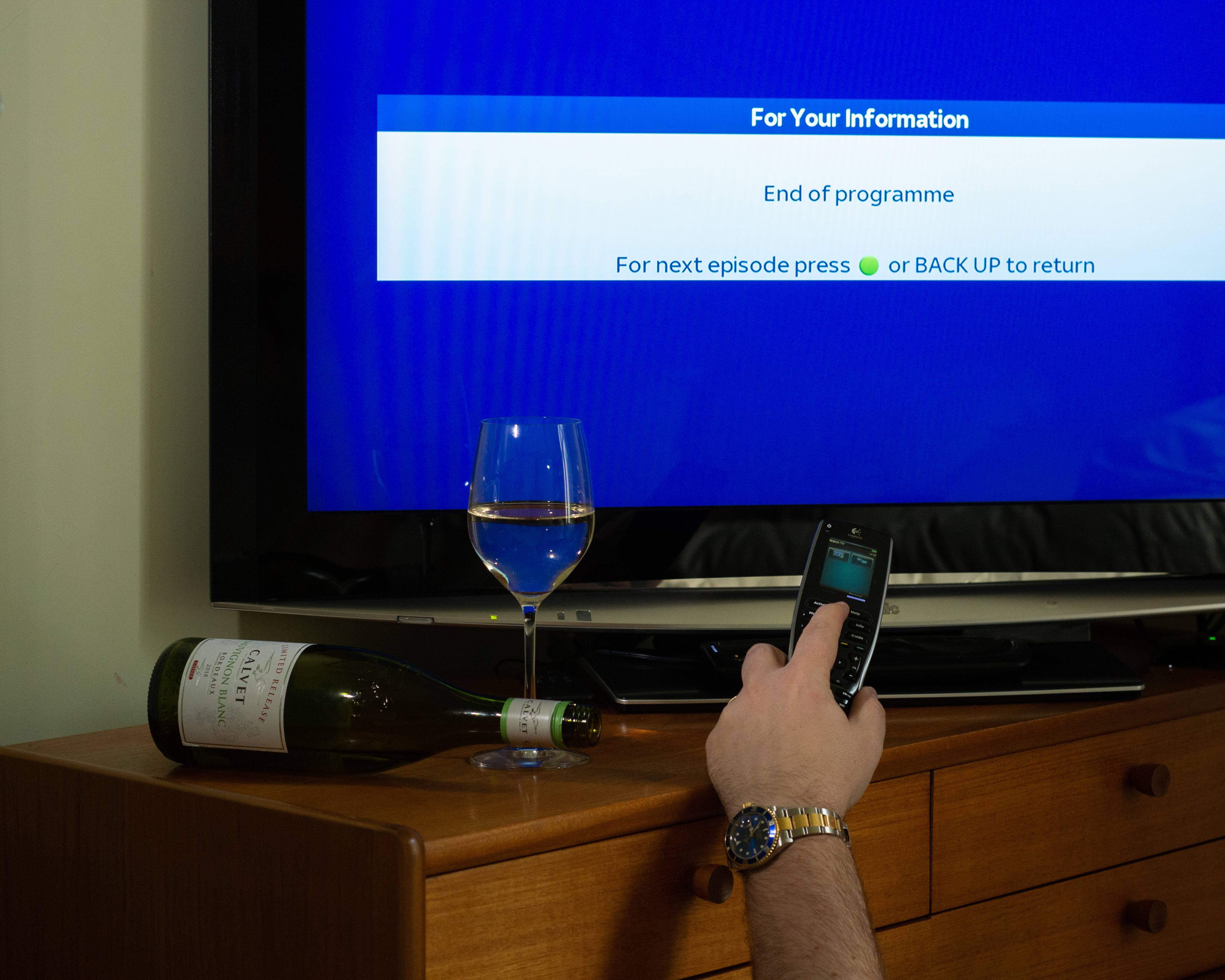
With this photograph, I wanted to play with the idea of wild behaviour as in the third stanza of the poem. The unfinished wine and position of the hand from the bottom part of the frame suggest some form of celebration or self destruction is taking place. The use of the television and its message suggests the party is over, but the determination of the hand reaching up with the remote control could suggest either acceptance of fate or the raging against the end of the programme. I only noticed after the shot that the additional choice on the screen of moving on or going back might suggest regret as well as acceptance of what comes next.
Seven
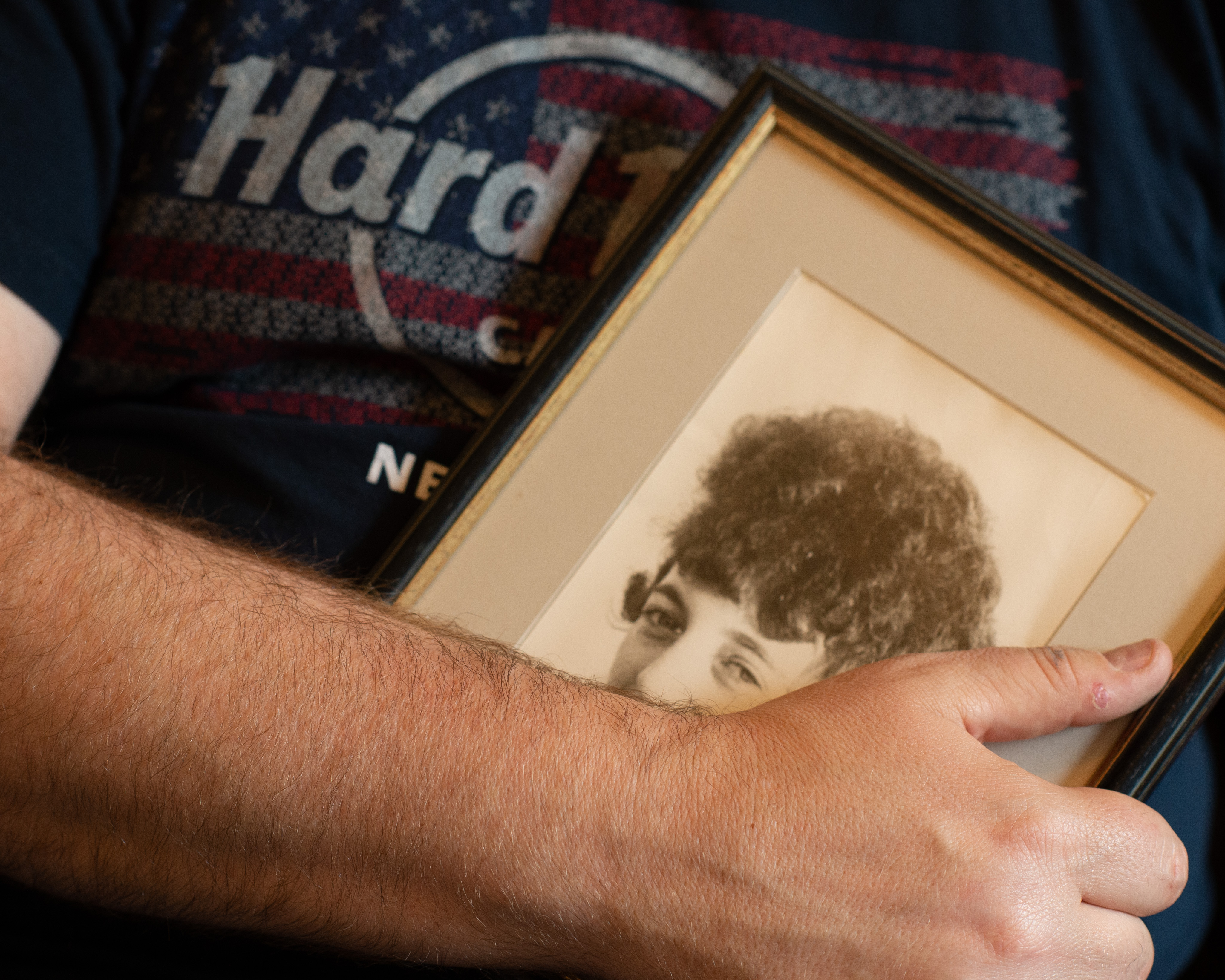
The final image in the series is supposed to convey love and the pain of loss. Where Thomas was speaking to his dying father, I am cradling a portrait of my late mother that was taken when she was a teenager. The pose and position of the portrait in the image is supposed to signify the love and longing I still have for my mother, despite it being a quarter of a century since I lost her. The juxtaposition with the text on the t-shirt is a little signposted, but further emphasises the power of loss. In the poem, Thomas pleads with his father not to go gently to his death, while my interpretation is more of past memory. They both have the strong emotion of love as the centre of their narrative.
Conclusion
My overall conclusion from this exercise is that telling the ‘story’ of something like a poem without actually re-telling the text is a real challenge to me. I don’t naturally think or speak in metaphor and it’s not really a language tool that I have used much in my career. Engineers tend to use simile much more in their explanation of a technical problem to a student or third party. In the case of the poem I chose, the photographs in the series do conjure the emotions and sentiments I was looking for.
In answer to the questions posed in the notes:-
- Are the images repeating themselves? Are there three versions of the same picture for example? Can you take two out?
- Does each image give a different point of view or emphasise a point you want to make?
- Do the images sit well together visually?
- Have you given the viewer enough information? Would another picture help?
The series doesn’t have any images that repeat themselves, probably because I had seen this question as part of the brief. I consciously avoid taking too many shots, which has been raised as part of the feedback to my recent Assignment 1. Perhaps if I had shot more from different perspectives, I would have had repeats. However, I had planned this exercise carefully around the themes mentioned previously, so that risk was reduced. I am happy that the images all convey differing points of view, although I am aware that the messages in the images are a little too obvious in places. Again, I recently received the feedback on Assignment 1 that my use of text was a little too prescriptive (anchor) than supportive (relay) and that the viewer is signposted to what the series is about. Although I haven’t included the poem text specifically with the images, I realise that the themes are probably a little too obvious as to be interesting.
Visually, I was trying something different. The images were simple in composition and clearly staged. However, I wanted them to have a certain feel of dimming light to them, which is why the exposures use soft natural light in addition to the LED key lighting that I’ve favoured over flash recently. I do believe that each image contains enough information in more layers than I am used to shooting, to get the messages across. However, I struggled for ideas by naturally limiting myself subconsciously to the more literal interpretation over the metaphorical. This resulted in my running out of ideas for the series sooner than I would have expected. Feedback on my first assignment pointed out that I hadn’t really experimented with the subject and composition, which has happened here also.
Key Learning Points
From this exercise, I’ve learned that I need to think more laterally than with the traditional subject portraying the message. The photographers I have studied thus far have been working metaphorically with text used to add context rather than lend weight to what is in front of the viewer. My mind works logically and sequentially, so this is a significant challenge for me ahead of Assignment 2.
In addition, I’ve subconsciously built in rules before I started the series (using hands, being too literal etc), which stifles the freedom to go with how the text makes me feel. My approach to the exercise was perhaps too robotic, which I think comes through in the images.
In conclusion, I think the timing of this exercise and the feedback I’ve received from my tutor means that I have something very different in mind for Assignment 2.
References
[1] 2011, “Dylan Thomas reads “Do Not Go Gentle Into That Good Night”, blogaboutpoetry, Youtube, https://www.youtube.com/watch?v=1mRec3VbH3w
[2] Robinson, A, 2019, “
[3] 2014, “Catalyst:Paul Seawright”, https://vimeo.com/76940827
[4] Campbell, B, 2011, “The Dad Project, Artist Website, http://www.brionycampbell.com/wp-content/uploads/2013/03/The_Dad_Project_Briony_Campbell.pdf
[5] Boothroyd, S, 2012, “Disrupted Vision”, Artist’s Website, http://sharonboothroyd.com/index.php?/disrupted-vision/
 Richard Fletcher OCA Photography Blog
Pingback: Reflecting on Assignment 3 Feedback | Richard Fletcher OCA Photography Blog