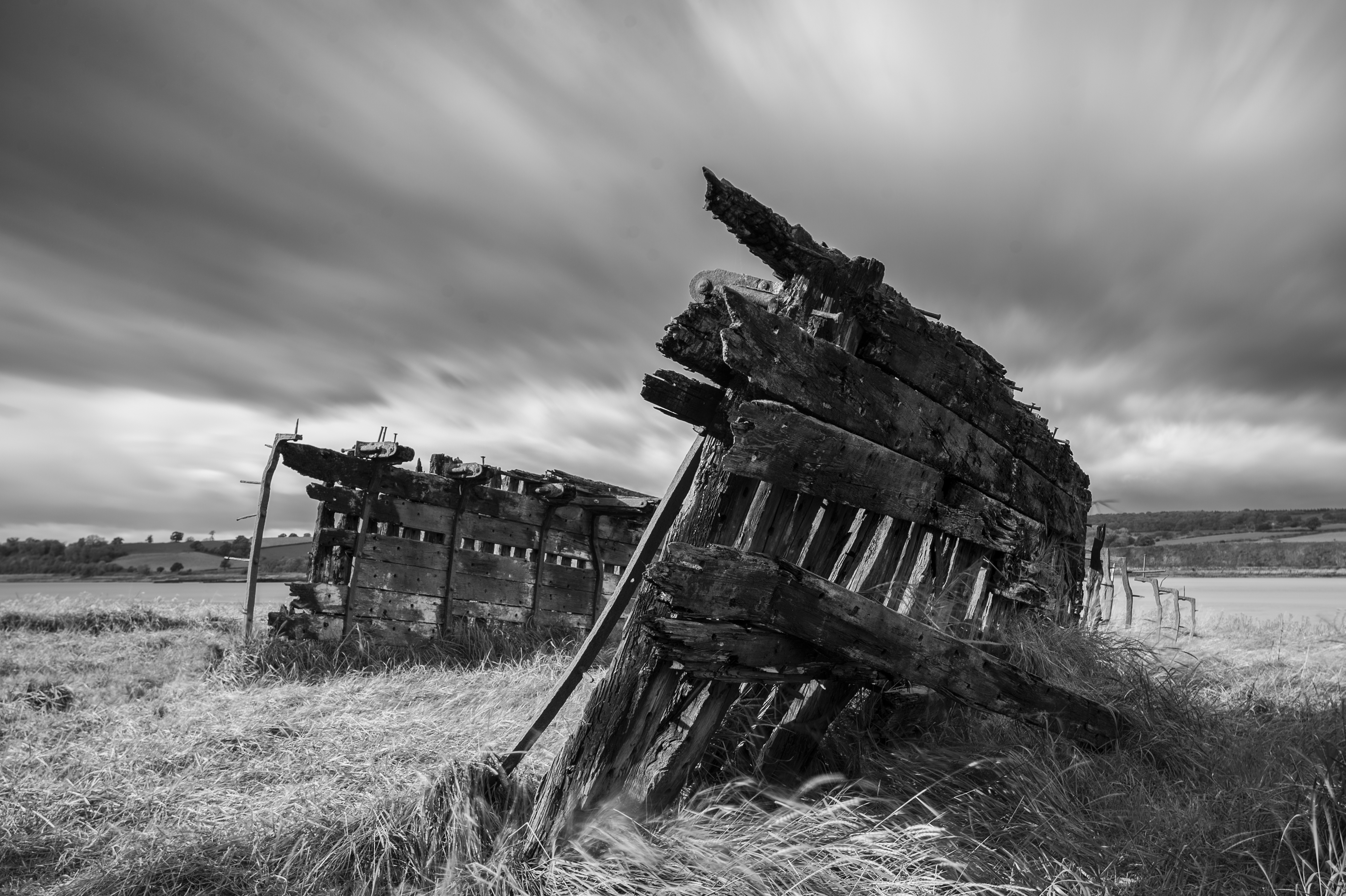
Research Task – Paul Seawright’s “Sectarian Murders”
Introduction
When first looking at the series Sectarion Murders, I naturally read the accompanying narratives taken from the press and then looked at the photographs. Seawright’s use of text taken from news reports of sectarian murders is powerful in its own right. He removed any reference to which side of the Northern Ireland conflict was being held responsible for the killings, instead leaving just the flat, sadness of the facts. With each image, the backdrop of the text is then used by the viewer to allow them to create their own narrative.
The first shot in the series has the text:
‘The sixteen year old youth was standing at the corner of Dandy Street talking, when a motorcycle with two youths on it drove by. The pillion passenger was carrying a Sterling sub-machine gun and opened fire on the group. The boy fell dying in a hail of bullets’
The text starts by factually reporting the incident as if it were a police record; the use of the word ‘youth’ and the detailed identification of the weapon used. Towards the end, the piece introduces the tragedy element with ‘the boy fell dying in a hail of bullets’. This single sentence introduces the more human element, connecting the age at the start of the piece with the fact that this was a 16 year old child. The extremely violent nature of his death is further emphasised by the ‘hail of bullets’. I found the building horror of the text to be interesting even before viewing Seawright’s accompanying picture.
The image itself depicts a street corner, assumed to be the place where the shooting took place. The bleak environment has a couple of streat signs and a small caravan parked on the corner. The image is shot with a flash that picks out the stop sign and a reflective stripe on the motorcyclist passing in the background. When I viewed the image, I was first struck by the emptiness of the frame which created a bleak view. The large areas of ground and sky have little interest in them beyond being either sunrise or sunset. The approaching bike is small in the frame and while the context is all about the murder being a drive-by shooting, it creates a sense of unseen and unexpected. I look at the small caravan and think ‘few witnesses, if any’. The final element of the bright ‘Stop’ sign is to me a narrative of the horror of the killing of a child, suggesting that this kind of act cannot continue. All of these narrative elements in my interpretation come from having read the contextual text first. Without it, the scene is an early morning or late evening bike ride at first glance. The context is critical to the narrative.
The Video Interview
In the video [1], Seawright comments on the extremes of having too loose a context and being too prescriptive, citing the former to be having little obvious meaning and the latter being journalistic. Looking at his series, I understand what he means here. The images themselves are interesting from a composition and lighting perspective but they only had an impact on me with the accompanying context. Seawright moves us away from the vague, but does not add so much context to make the image too easy to navigate. He talks about the viewer creating the narrative rather than him and that in order to do that, they need the space and time to do so. I was reminded of a previous piece of research that I did for EYV where Nan Goldin was talking to an audience about how she feels about the Instagram generation [2]. She talked about being in a conversation with a social media manager about some paintings that she had done. When that person looked at them on her phone, she swiped through the collection very quickly. Goldin challenged her that she hadn’t looked at them, only to be told “I saw them”. Goldin’s realisation that this is how the world looks at images led her to dislike the platform. The same is true here. As Seawright states that a journalistic image needs only the briefest of glances to understand what is going on, art needs space and time for the viewer to appreciate the image as they create the narrative internally. I agree with this sentiment as I’ve had feedback from people viewing my own photographs where I’ve not tried to be too vague or obvious about the meaning. In terms of whether we can re-classify documentary as a piece of art with or without changing the meaning, I believe that to be dependent on the image’s internal context. Looking at Seawright’s collection, there are no internal contexts that point to sectarian murder. In several of the images in the collection, Seawright draws us into the frame with traditional techniques and elements that are often playful and seemingly innocuous. He challenges the seemingly idyllic with the horror of the external context, leaving the viewer re-considering how they originally felt about the picture. For me, that challenge is very much key to art.
Sarah Pickering – Public Order (from Exercise 3)
Sarah Pickering’s series Public Order does something different again to Seawright’s. This time we are presented with images of a deserted town that could be anywhere. When I look at them, I am reminded of the run-down areas of industrial West Yorkshire, where my wife is from. Boarded up businesses and seedy looking night clubs like the one in the notes are commonplace. While areas of the town are recovering from the socio-economic problems related to the decline of the steel and textile industries, there are areas where those problems are still obvious. The collection moves through the desolate town-scape leaving me with a sense of sadness more than fear because of my relationship with those areas. I was actually disappointed at the feeling of being deceived as the collection becomes more obviously ‘not real’. The compositions themselves use leading lines, shapes and textures beautifully, but I couldn’t initially see what the artist was trying to say. While Flicks Night Club caused me to create a narrative about deserted streets, something very relevant to the current Coronavirus pandemic, the complementary image Behind Flicks Night Club says nothing to me apart from a pleasing matching of shape and colour. I started to think more about what Pickering was looking for when she shot the series and in a video interview with Aperture [3], she describes the relationship she has with rules and authority. She talks of her father being very much a fan of rules, so perhaps she was saying that beneath the surface there is a fabrication or fantasy. The pictures that contain evidence of the ‘riot’ damage caused by the police training that takes place in the town, suggest that it’s ok to rebel authority, real or otherwise.
For me, as an art collection Public Order works well as each image connects with the other sand they are aesthetically pleasing. However, unlike Seawright’s Sectarian Murder the context is all within the image i.e. without the key information that this is a police training ground, so the narrative is vague for me. I confess that I don’t personally like the work as much as Seawright’s as the impact is less powerful on me. Do I think it’s a misleading use of documentary? I would say that it’s not more misleading that any of the work I’ve looked at so far. The police do deal with riots and towns like this do exist, even if the details are embellished.
Assesandra Sanguinetti. The Adventures of Guille and Belinda and The Enigmatic Meaning of Their Dreams
Here we have a series about two young cousins growing up in rural Buenos Aires. Sanguinetti observed the clear differences in appearance between the two girls, one larger and more mature looking than the other. When set against the backdrop of their lives, the series could have simply documented their growing up within a particular way of life. Instead, Sanguinetti adds another layer to her work, by documenting the way the girls play. Their imaginations and depictions of events from dreams moves straight documentary with context, to something more impossible or fantastical. Consider the example below:
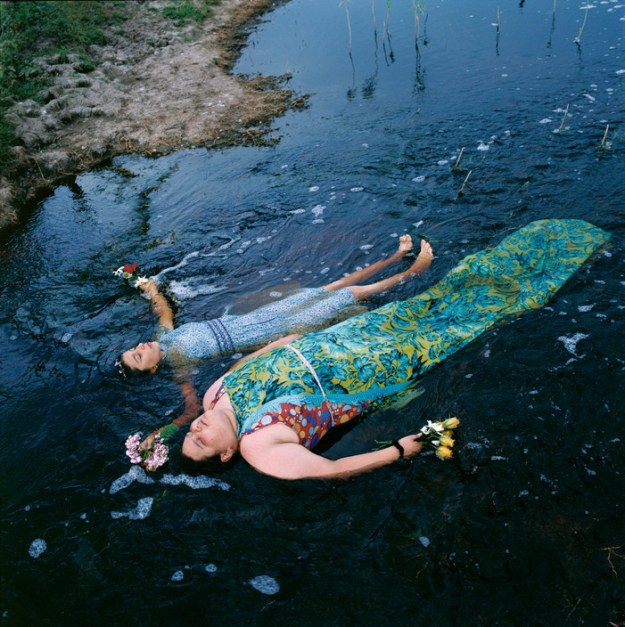
Ophelias, by Alessandra Sanguinetti, 2001[4]
For me, this sums up the variability of documentary photography and its intent. It can be both truth-teller and storyteller. It can describe factual events without actually showing them as well as associating patterns and textures with the mood of the photographer. Too prescriptive and it can be a brief news item and too vague leaves any interpretation possible. When I look at this series, I see a story built from many fantastical layers, with the only real ‘fact’ that is documented being two little girls who like dressing up. It’s a fascinating and compelling art collection.
References
[1] 2014, “Catalyst:Paul Seawright”, https://vimeo.com/76940827
[2] Tattersall, L, 2018, “Nan Goldin in Conversation with Lanka Tattersall”, MOCA, https://www.youtube.com/watch?v=b2XrWPdJIBg
[3] Aperture Foundation, 2018, “Sarah Pickering on Public Order & Explosion series Excerpt, https://www.youtube.com/watch?v=oQRAW_cPvfY&list=PLvAytXgNgEllIfZ7aw0pinYQjYVqqPDXq&index=34&t=0s
[4] Sanguinetti, A, 1999 -2001, “The Adventures of Guille and Belinda and the Enigmatic Meaning of their Dreams”. Magnum Photos Portfolio, https://pro.magnumphotos.com/C.aspx?VP3=SearchResult&ALID=2K7O3RHJ7TOL
 Richard Fletcher OCA Photography Blog
Pingback: Project 2: Image and Text | Richard Fletcher OCA Photography Blog
Pingback: Post-assignment 1 feedback | Richard Fletcher OCA Photography Blog