Introduction
This post is essentially a restructure of my thoughts and comments made immediately after I received the tutor feedback. In preparation for assessment, I’ve further expanded my reflection on this assignment, considering some of the areas where it could have been enhanced or developed further. This includes any additional research carried out and any re-working that I have done to improve the way the photographs meet the original brief. The overall learning points are also summarised in my final post “Reflecting on Expressing Your Vision” which can be found in my Learning Log.
At the time that I received feedback on Assignment 3, I did not write a formal response. The feedback had generally been positive about how I had approached the decisive moment, acknowledging my difficulties both with this genre of photography and my intention to include partial obscurity as a humorous element. The original series can be seen below:
-
- Photo 1
-
- Photo 2
-
- Photo 3
-
- Photo 4
-
- Photo 5
-
- Photo 6
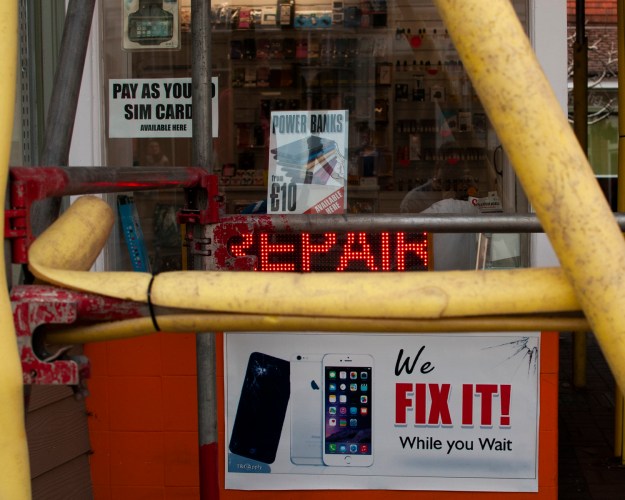
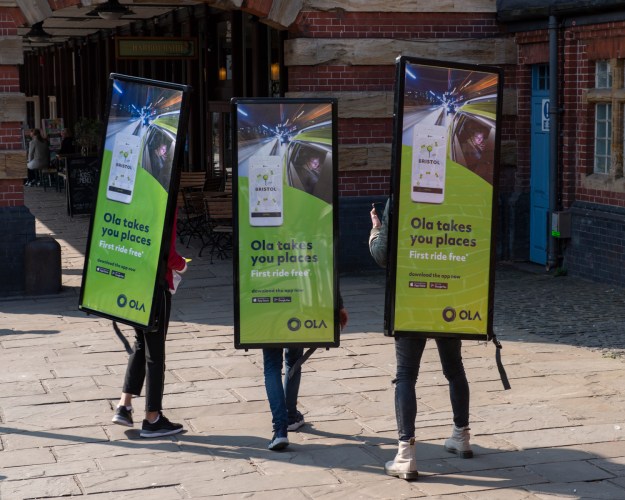
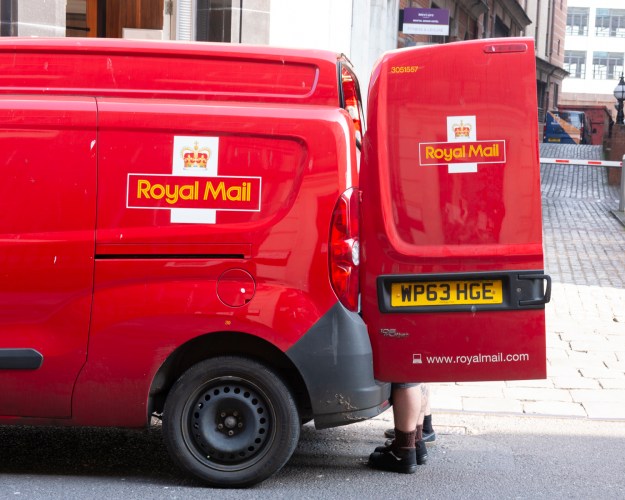
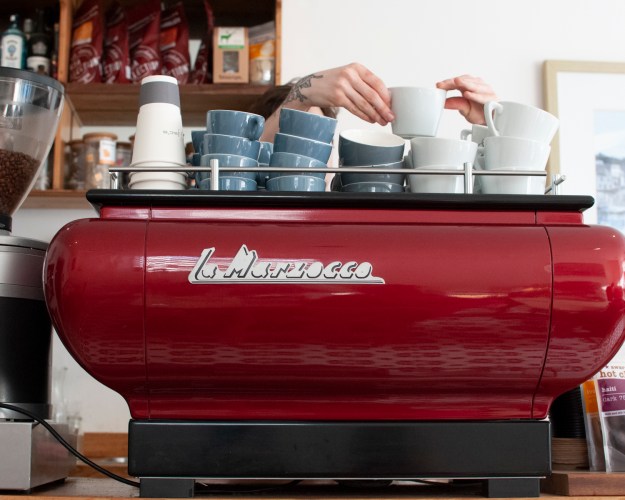
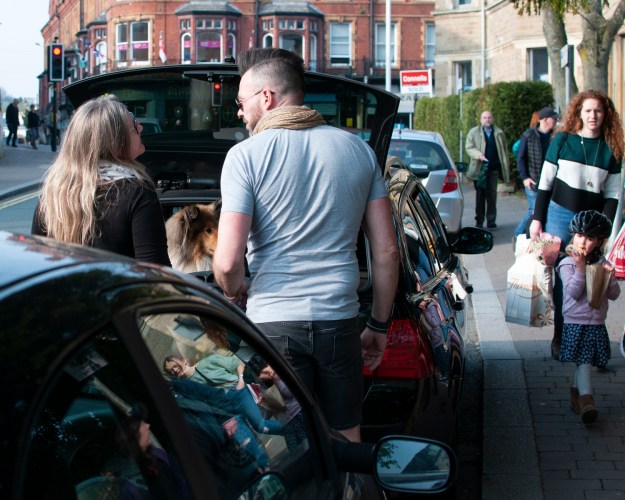
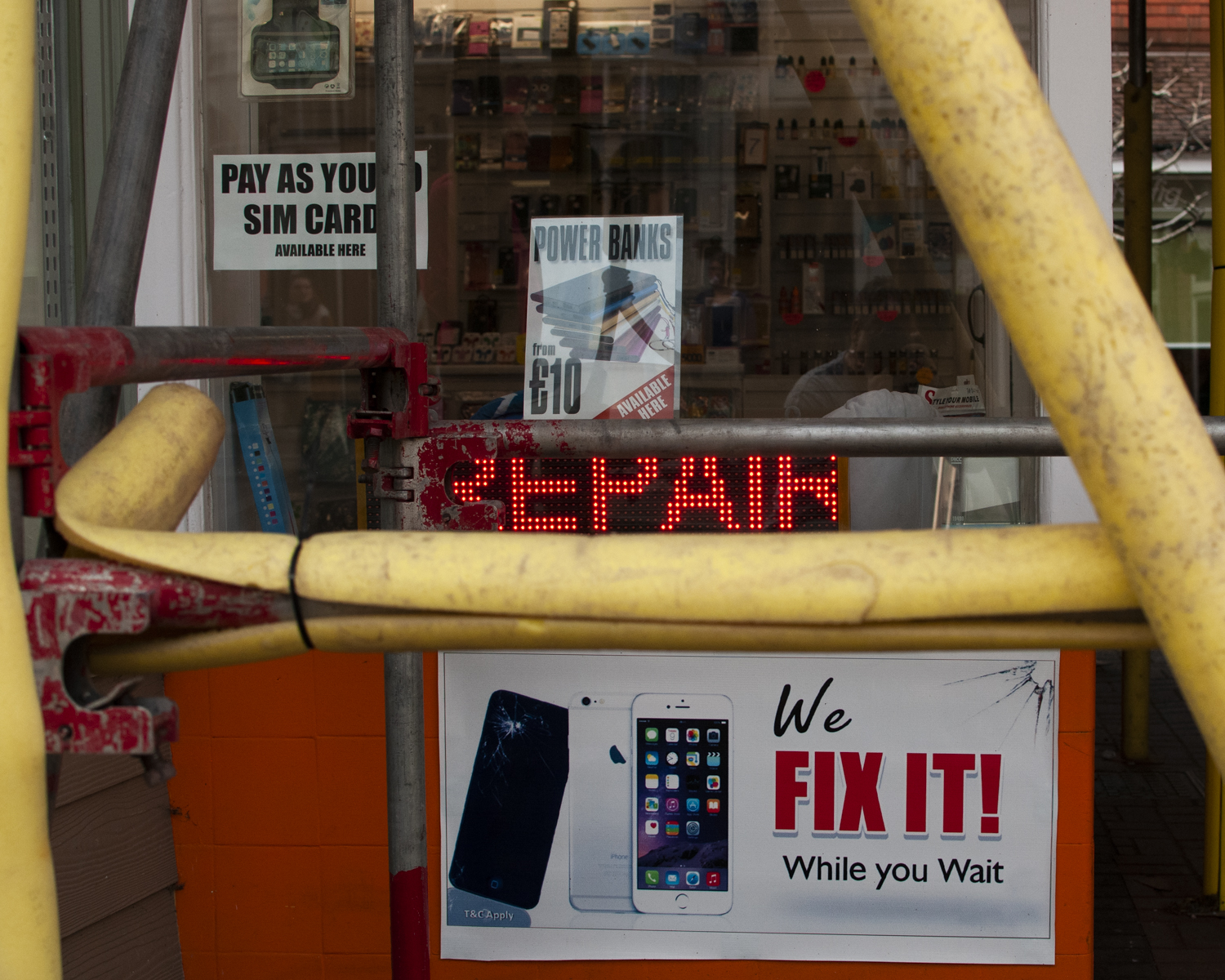
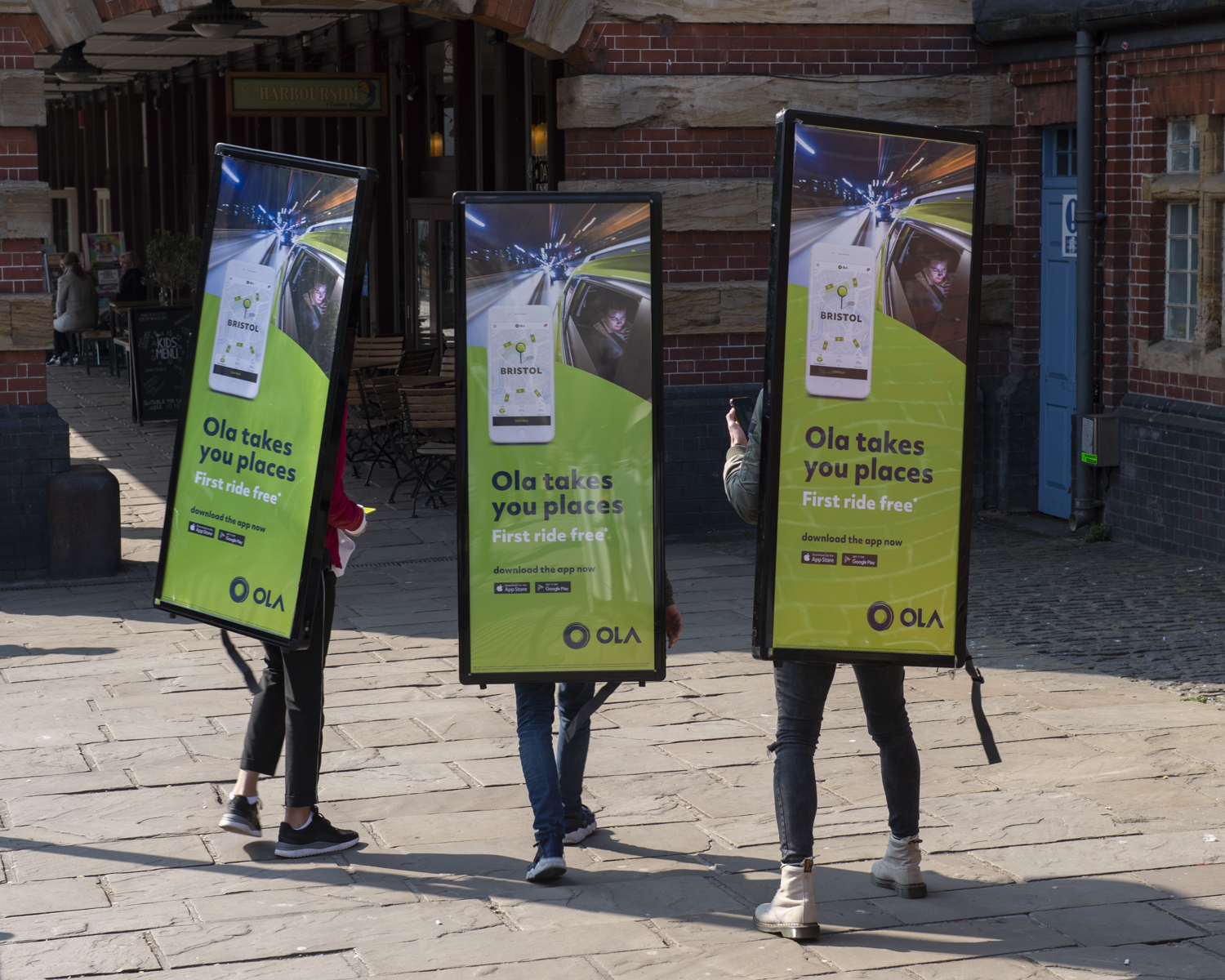
However, my overwhelming feeling from the feedback was that the series wasn’t particularly strong. My tutor stated that he liked Photo 1 because of the colours more than the moment. I was disappointed with as for me the ‘moment’ was the scrolling ‘repair’ sign and the humour came from the fact that the building is covered in scaffolding. Photos 2 and 5 were said to have worked in terms of the decisive moment, while 3 and 6 were said to be a little too busy to get the impact. I thought at the time that these comments were fair as both appeared to lack balance in the elements around the frame. Photo 4 was felt to be a little less interesting than it could have been. I didn’t agree with that as the postmen in the image were working quickly and only in that position for the briefest of moments. I do understand how that doesn’t come out in the image, however. Further reflection on Photo 6 and some feedback from Rob Bloomfield during our cohort video call, led me to a different conclusion about how well it works. I had just missed the moment I was looking for where the dog first emerged from the back of the car, but I’ve since noted the other moments that are going on in the photo. The conversation between the owners of the car and the reaction of the little girl on the right hand side of the frame point to another moment in the image; when she sees the dog. I always liked the balance of the image with the reflection of the rest of the girl’s family in the window of the car in the foreground. My tutor was right about the original moment being missed, but as Rob stated on the call, the image still had impact.
I elected to keep it as part of the series as a result, but also because I had to present at least 6 images. This was the overwhelming reaction to feedback on this assignment for me; the series was minimal in number and lacking in impact as a result. I considered how I might address this beyond the assignment and realised that in learning about the decisive moment, I had learned how to look. I rarely leave the house without a camera and had noticed since this series, that I was now looking for events unfolding in front of me more than I was before. I decided that if I saw further moments I would consider adding them to this series to strengthen the impact.
Re-working the Assignment
Photo 3
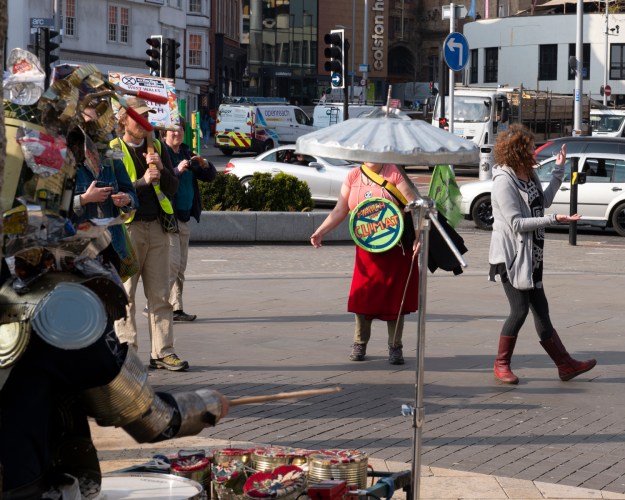
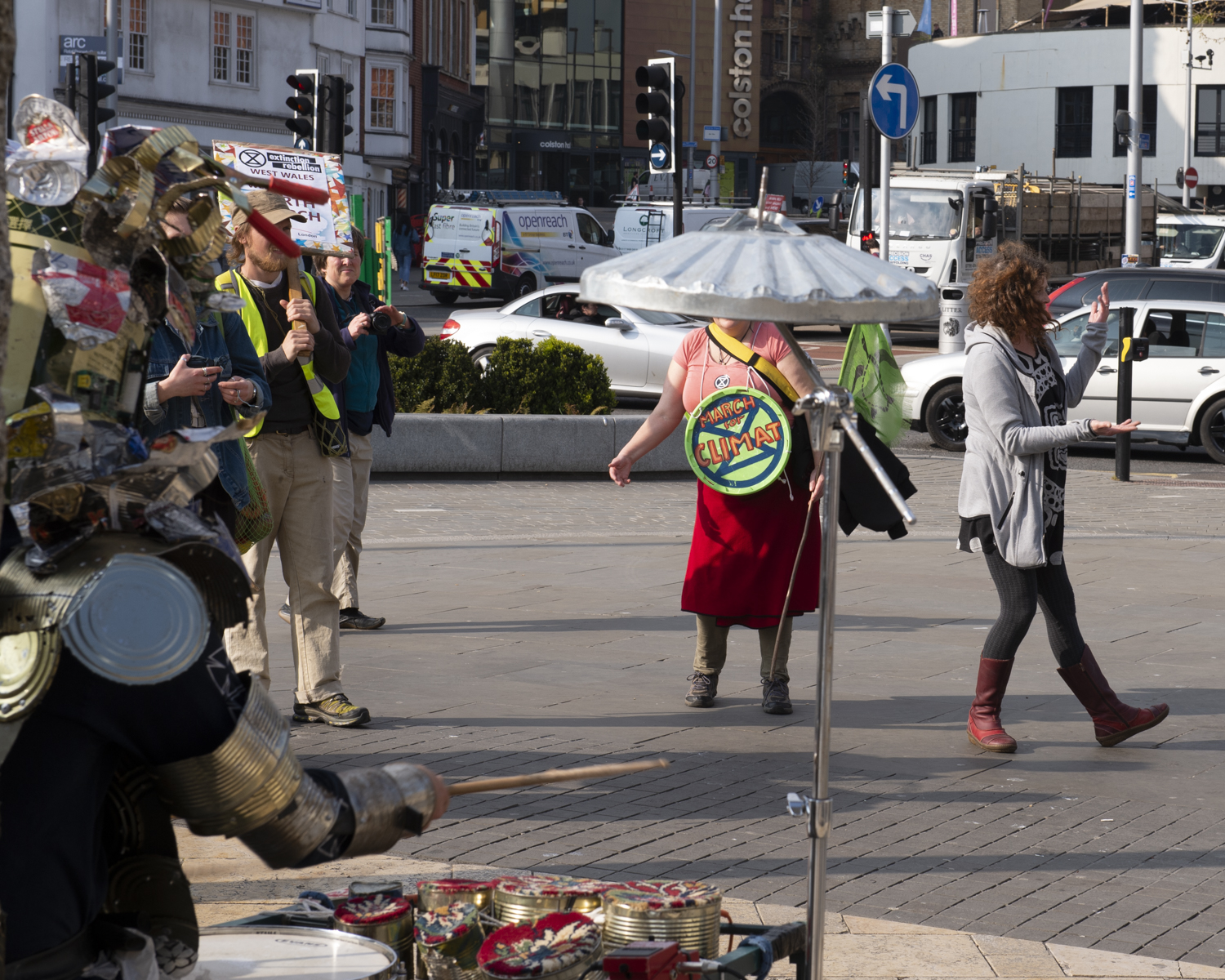
The first change I made to the series was a re-crop of Photo 3. This had been felt to be too busy, distracting from the main subject of the woman obscured by the makeshift cymbal. The original and revised can be seen below, with some adjustments to the colour temperature added, which are present in the final version for assessment:
-
- Photo 3
-

- Photo 3
I considered the balance of the frame, so I still needed the drummer and the small group of people cheering her on to be in the image. However, by reducing these elements, the main subject is now larger in the frame, which I think makes the picture more impactful.
Additions
During the months that followed, I continued to look for scenes that had both humour and the obscuring of the subject in the frame. While supporting my wife at a triathlon event in Spain, I captured two moments that I felt fitted this series well. These can be seen below.
-
- Photo 7
-
- Photo 8
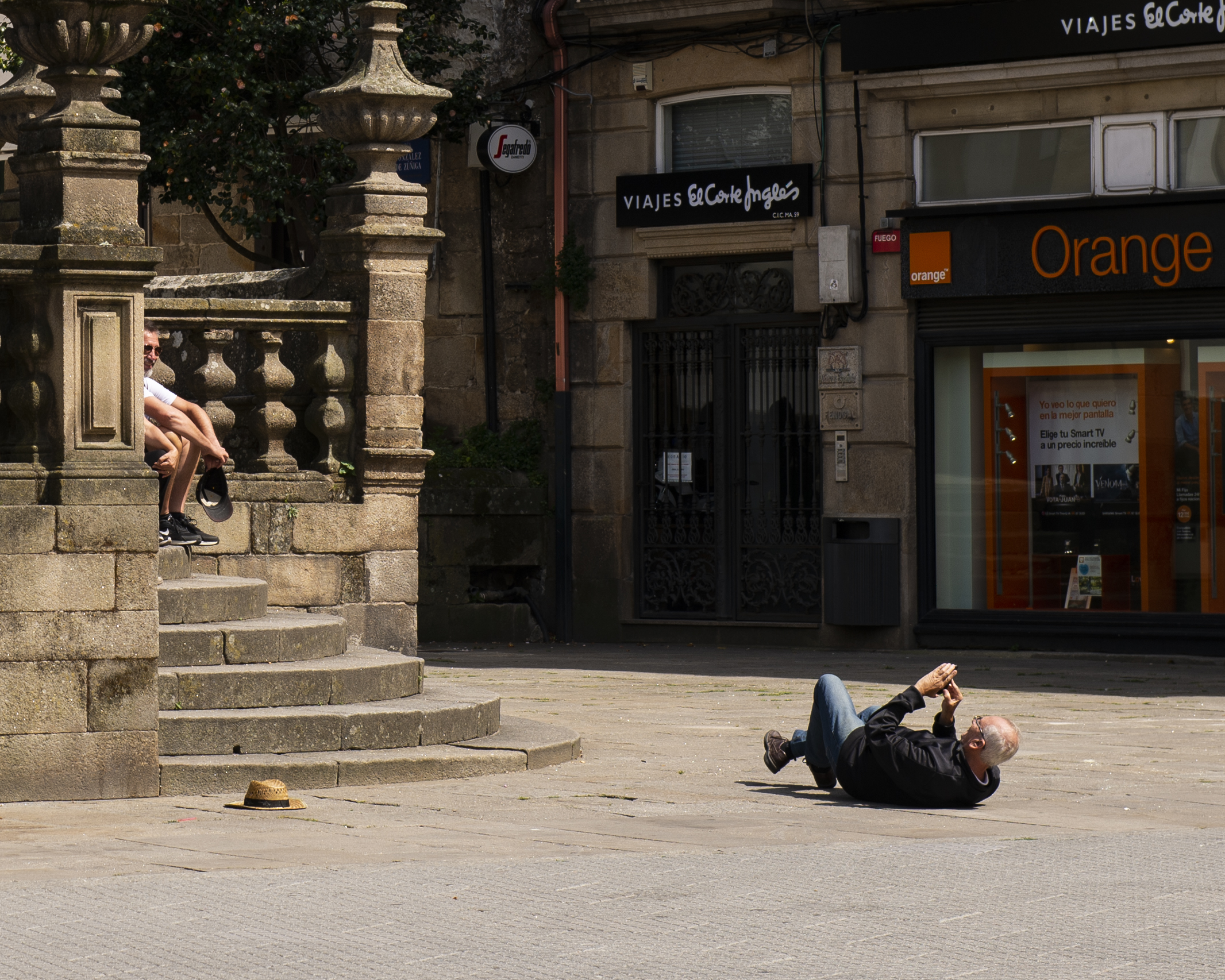
Photo 7 was an encounter in one of the town’s historical squares during the ‘rest day’ at the event. As we rounded the corner of the church, I saw the photographer roll onto his back to shoot his friends sitting on the steps. He’d thrown his straw hat nonchalantly on the ground before setting up to take the shot. It was a fleeting and amusing moment to me, made better by the fact that we can barely see his subjects behind the stonework.
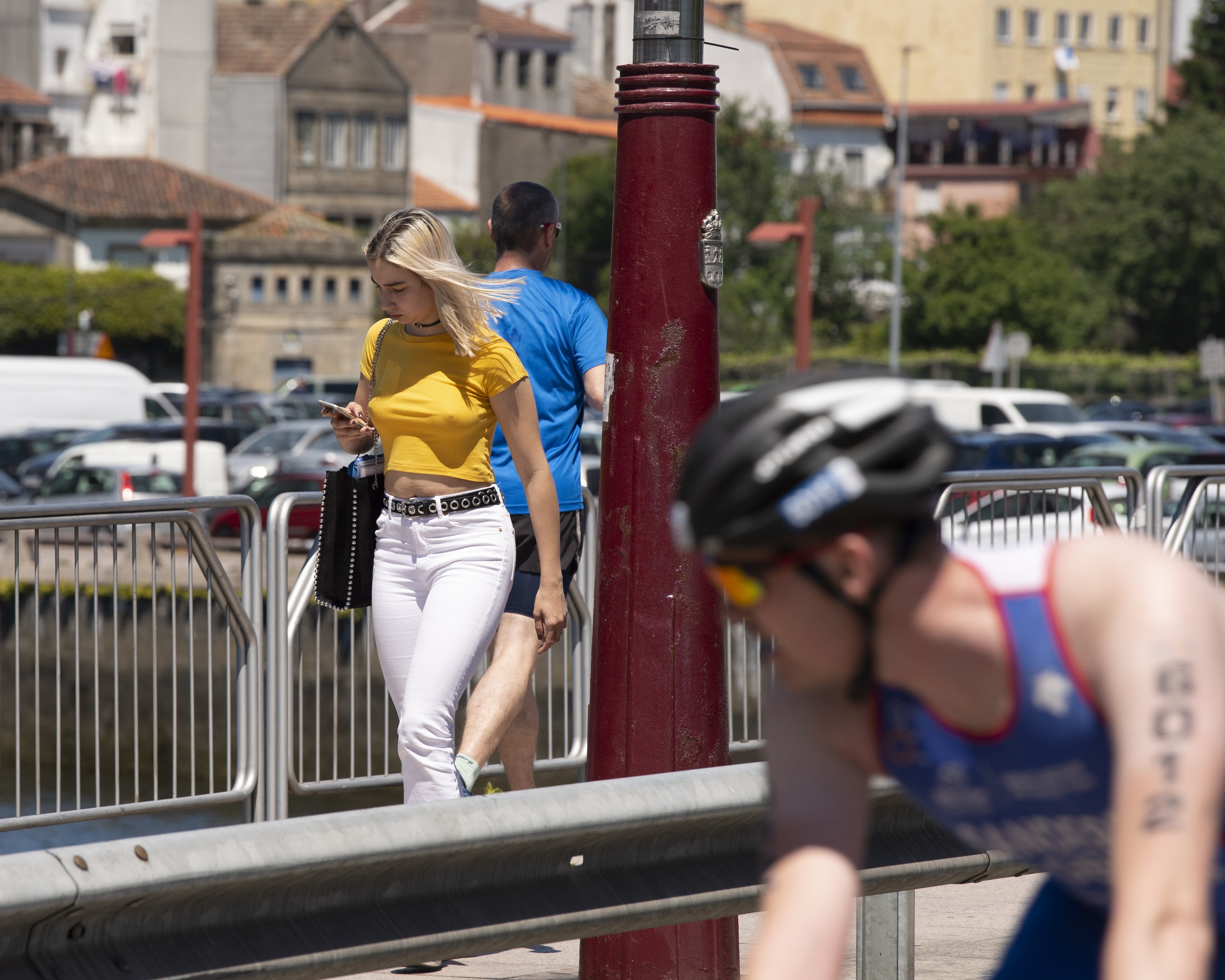
Photo 8 was a moment that I had time to get into position to capture. My friend who was shooting the race with me pointed out the young lady walking along the pavement from a distance. I took this shot as the cyclist came into view and it shows him looking to his right as he passes her. The bridge we were on was completely straight, so the cyclist had clearly started to look at her when she was obscured by the lamppost between them. I liked the way this moment was captured as the obscuration is between the two subjects in the frame rather than the subject and viewer.
With these two images added, the series was now presented as below.
-
- Photo 1
-
- Photo 2
-
- Photo 3
-
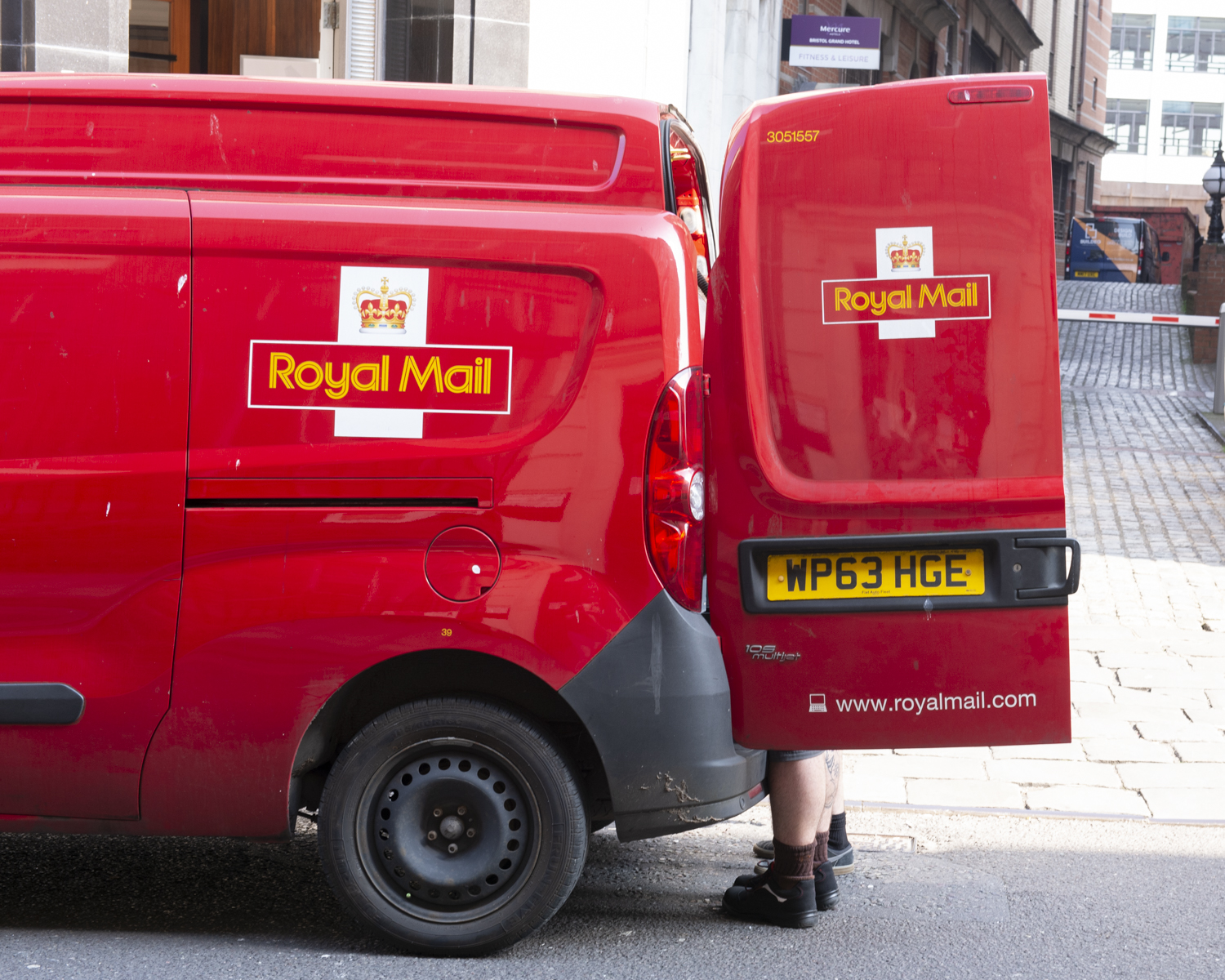
- Photo 4
-

- Photo 5
-
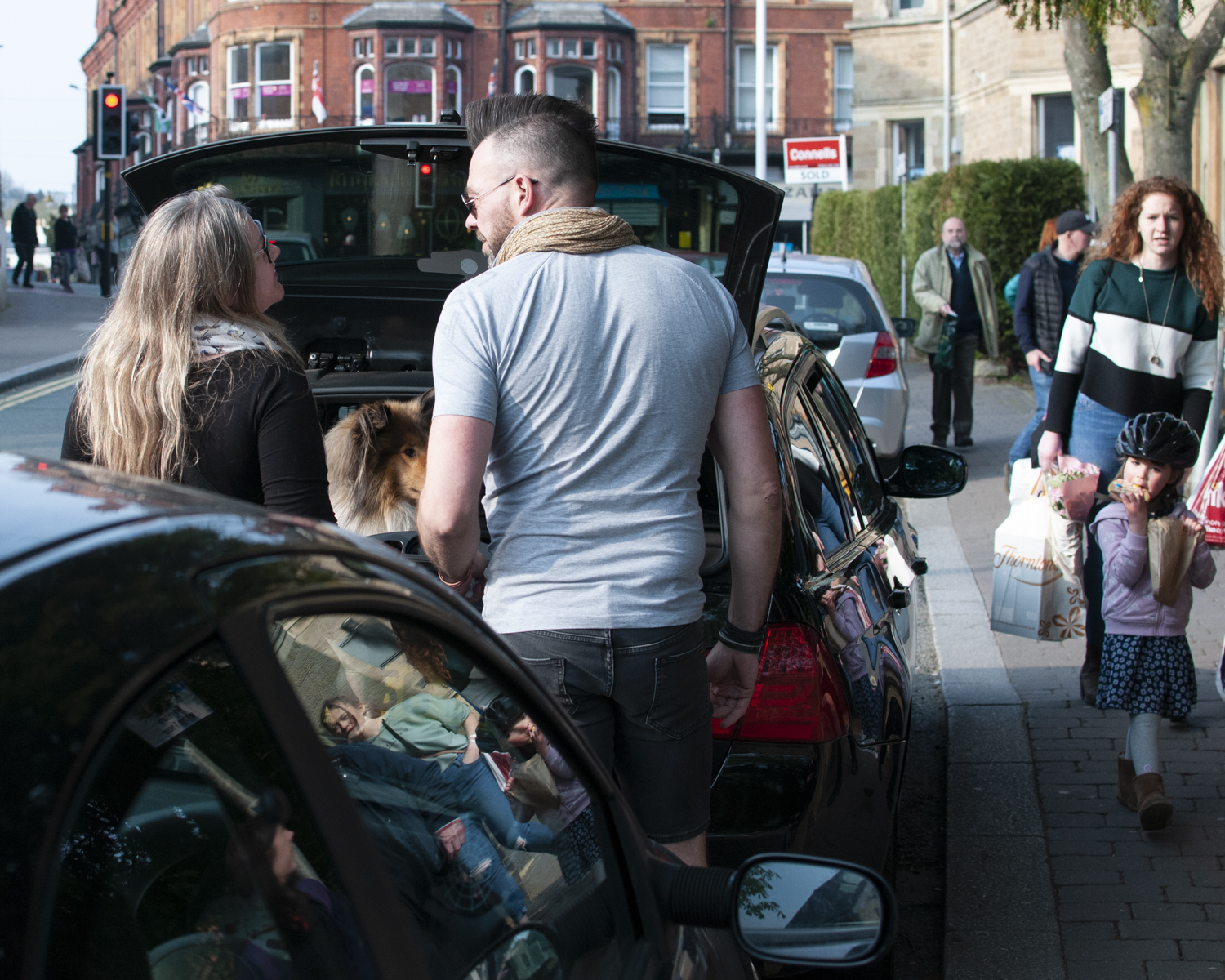
- Photo 6
-
- Photo 7
-
- Photo 8
Conclusion
After making the changes to the series, I was happy that it now had more impact. I was always uncomfortable with shooting this assignment because it involved photographing people without them knowing, required me to get closer than I would normally do and was made more difficult with my inclusion of the other themes. I don’t find this style of photography any easier for having done this assignment, but I did learn to keep looking even though the project was complete. I also learned that I overthink projects which effectively paralyses me in getting started; this assignment taking the longest to complete of the five during this course. What I should have done was more experimentation to try, and potentially dismiss anything that I didn’t feel worked on the fly. That way, I would have settled on the idea more quickly and completed the series without the self-imposed time pressure that I had experienced.
 Richard Fletcher OCA Photography Blog