The Brief
Use your camera as a measuring device. This doesn’t refer to the distance scale on the focus ring. Rather, find a subject that you have an empathy with and take a sequence of shots to ‘explore the distance between you’. Add the sequence to your learning log, indicating which is your ‘select’ – your best shot.
When you review the set to decide upon a ‘select’, don’t evaluate the shots just according to the idea you had when you took the photographs; instead evaluate it by what you discover within the frame (you’ve already done this in Exercise 1.4). In other words, be open to the unexpected. In conversation with the author, the photographer Alexia Clorinda expressed the idea in the following way:
Look critically at the work you did by including what you didn’t mean to do. Include the mistake, your unconscious, or whatever you want to call it, and analyse it not from the point of view of your intention, but because it is there.
The Idea
My idea for this exercise started with something that I have an emotional connection with, the slow demise of the ‘High Street’ in my town. Over the past few years, only the charity shops have thrived owing to heavily subsided rents. While nobody has a problem with these shops, other independent shops and buisnesses have struggled to cope with the financial demands of the local council. I have always felt like an observer in this story without any way of affecting it; in a similar way to Alexia Clorinda when shooting the protests in her series Morocco from Below. For this exercise I looked at how this slow-burning problem affects me and to use my camera to reflect where I am relative to it.
The Images
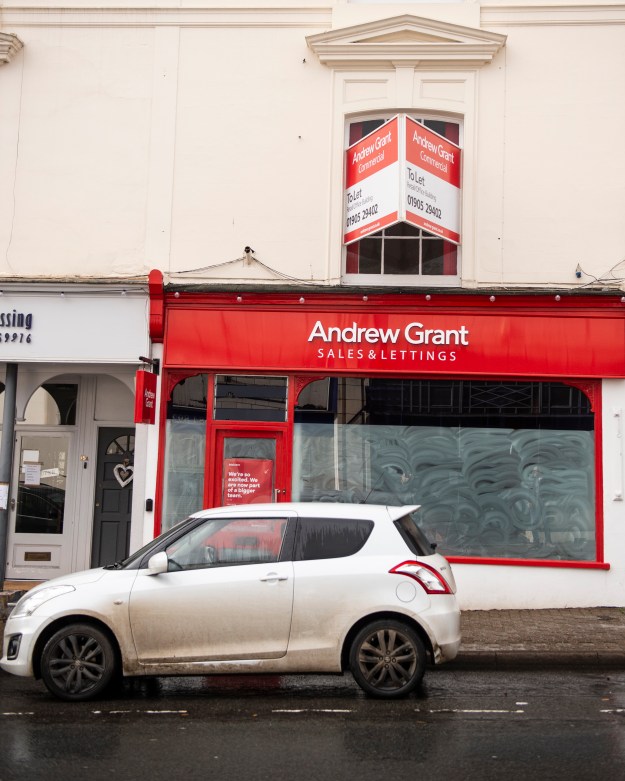
Photo 1
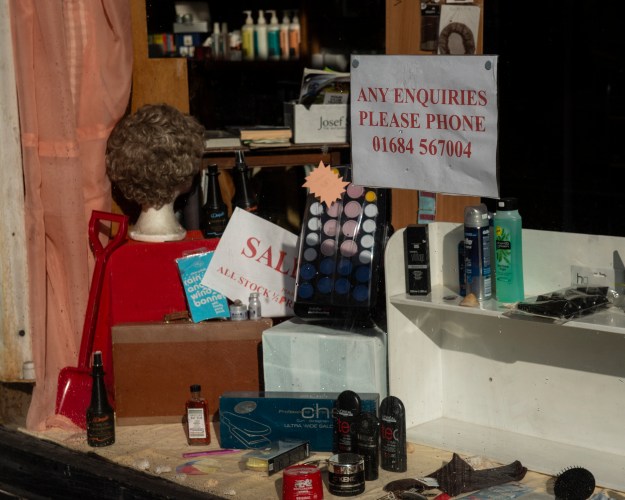
Photo 2
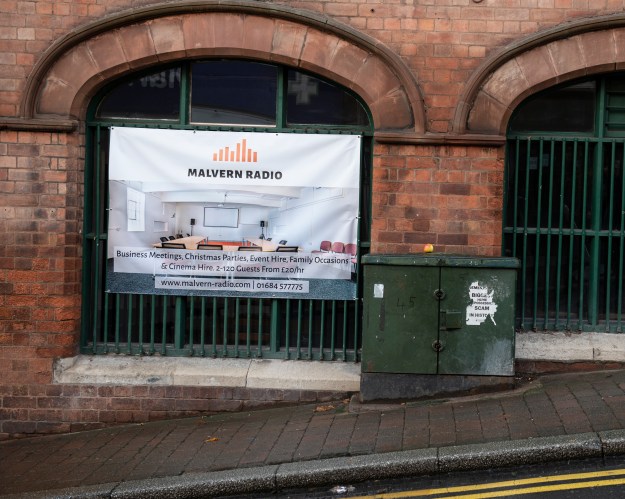
Photo 3
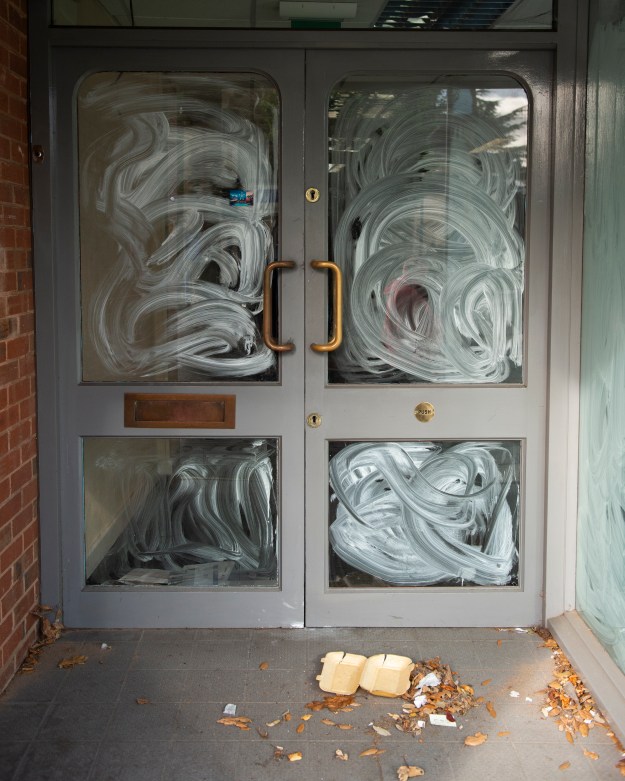
Photo 4
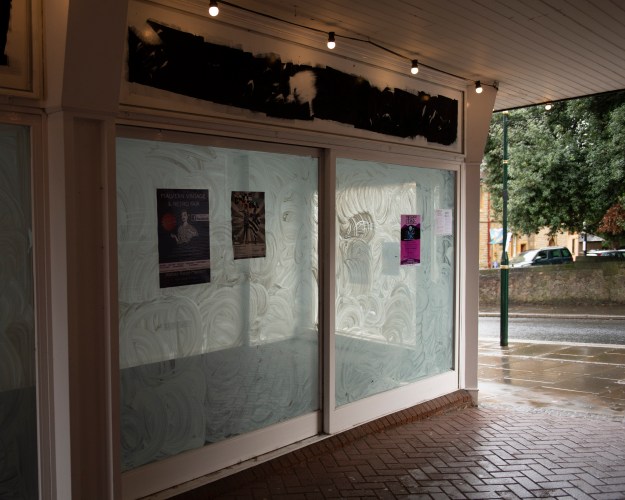
Photo 5
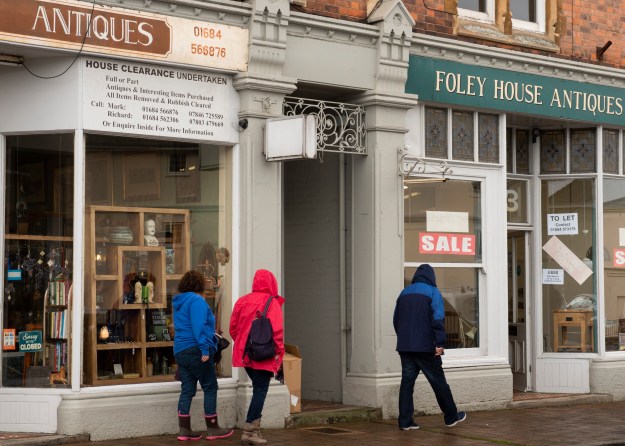
Photo 6

Photo 7
Review
This was an interesting exercise because I set out to use the camera to observe from a perspective; distant view of the demise of the high street and up close with the way that life carries on despite what is happening. What I learned, though is that I tend to look for the subject detail around which I can then compose my photographs and I don’t always then make best use of the connection with the viewer as I intended. Photo 3 is a good example of this. I knew of the recent opening of Malvern Radio through a mutual friend of the owner, but the element in the picture that I first noticed was the torn poster on the side of the telecom box. The poster was protesting the Conservative influence over the town; Malvern has a strong liberal community and its juxtaposition with the new business was my intended show of defiance. In the image, though this conflict isn’t all that strong, primarily as I couldn’t get close enough to the subject without being run over in the road.
The second learning, though was very much in line with Clorinda’s comment used in the brief. I had intentions for Photo 3 but didn’t notice the pharmacy sign reflected in the window of the building. As well as defiance, then the symbol of the healing of a new business adds to this picture. The same occurred in Photos 1 and 2. The former has the intended vision of the defunct estate agent being represented as a Let by itself, but what I did not notice was the way that the white car in the foreground was muddy. Its less than pristine appearance matches the messy way the window has been painted, common when a business closes. In Photo 2, I saw the sign advertising the building for rent and the last few items of the hairdresser’s behind the glass. However, I hadn’t notice the way the mannequin is facing away from the viewer, nor the use of the word ‘Any’ in the advertisement. In both examples, the impact of the images is enhanced by the accidents with the observational viewpoint of the camera stands out.
The Best Shot
Looking at the images individually and critically, I believe the best one is Photo 2, because of the elements that I didn’t see. The hairdresser that occupied this building had been there for 100 years and its large neon sign has been part of the town’s landscape for aa many years (see below). With Photo 2, the sadness of the largely empty window display and the way that the mannequin is looking away, perhaps in anger further adds to the sadness. The desperate tone of “Any Enquiries” speaks to a landlord that has not had to advertise for a long time. Photo 2 places the camera as very close observer and for me establishes contact with the subject.
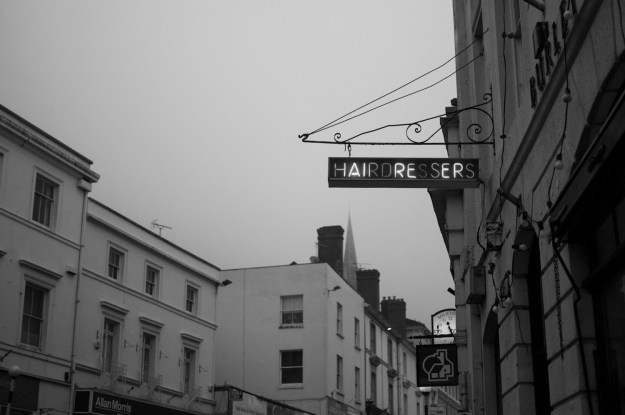
Burley’s Hairdresser, with its neon sign (from Exercise 1.4)
 Richard Fletcher OCA Photography Blog
Richard, a very thought provoking piece – I always buy my art supplies from local suppliers. I could buy cheaper on-line but I know they wont be there in a short time if everyone does that. We have teh same problem in Verwood with exorbitant rates driving out local businesses
LikeLike