The Brief
Taking the photography of Mann, Atget or Schmidt or a photographer of your own choosing as a starting point, shoot a number of photographs exploring the quality of natural light. The exercise should be done in manual mode and the important thing is to observe the light, not just photograph it. In your learning log and using the descriptions above as a starting point, try to describe the quality of the light in your photographs in own words
My Approach
From my research in Project 1, my inspiration for this exercise is Sally Mann, but not in particular her use of light in her Southern Landscape series, but her more intimate family portraits as her children were growing up. These images continue to cause controversy in the US because they predominately include nudity, but running throughout is how Mann uses light. Always shot in black and white, Mann’s photographs have the main subject picked out by soft, but bright light while the rest of the image is subdued by the contrasting shadow. An example of this can be seen below.
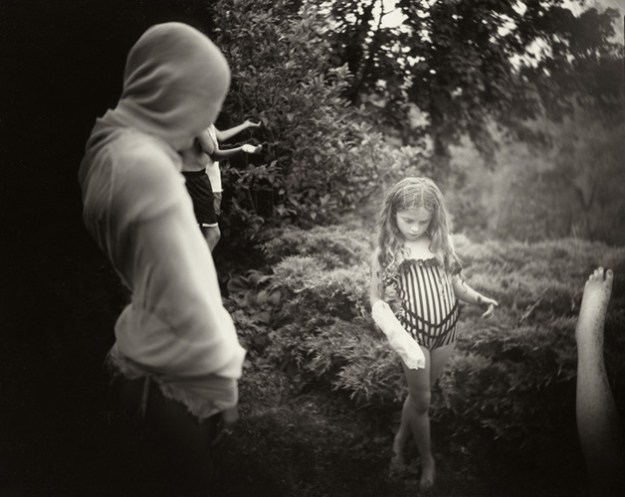
From Family Pictures, by Sally Mann [1]
In this image, we see Mann’s daughter lit by an almost ethereal light while the rest of the frame rolls off into vignette. Mann puts some of this down to her old large format film camera and its uncoated lens, but the effect is a constant in this body of work.
In my previous landscape photographs, I’ve tried to achieve a similar effect of picking out the subject with a ‘highlight’ against a contrasting background, so my first task was to review what I had done before. An example from my previous work can be seen below:
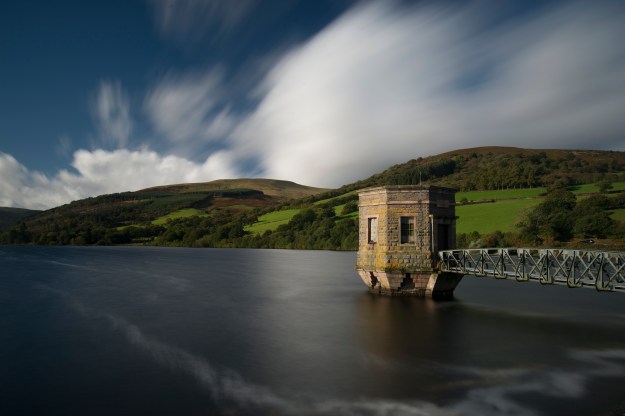
Tallybont Reservoir, 2016 by Richard Fletcher
This photograph was made using a 6 stop ND (neutral density) filter to achieve long exposure with the spot metering done from the grey cloud overhead. The weather was sunshine and cloud so it was a matter of waiting for the light to pick up the tower structure. Apart from the colour correction needed when using this type of filter (mine has a blue cast), the image has only had some contrast adjustment and a crop.
With this effect in mind, I looked for subjects and conditions to shoot. Since the images didn’t need to be a collection for this exercise, I took opportunities to shoot whenever I saw a subject under these conditions.
The Images
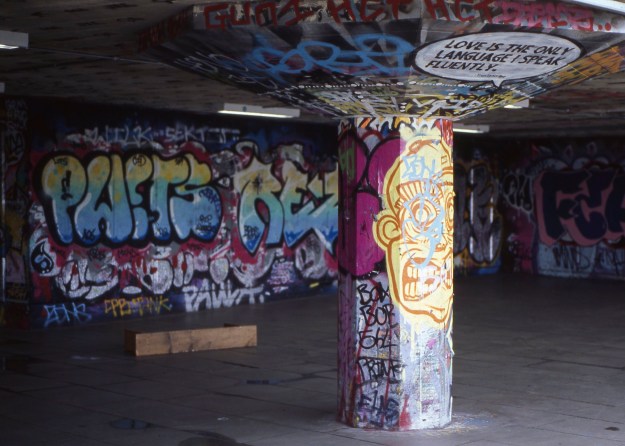
Skate Park, London 2019
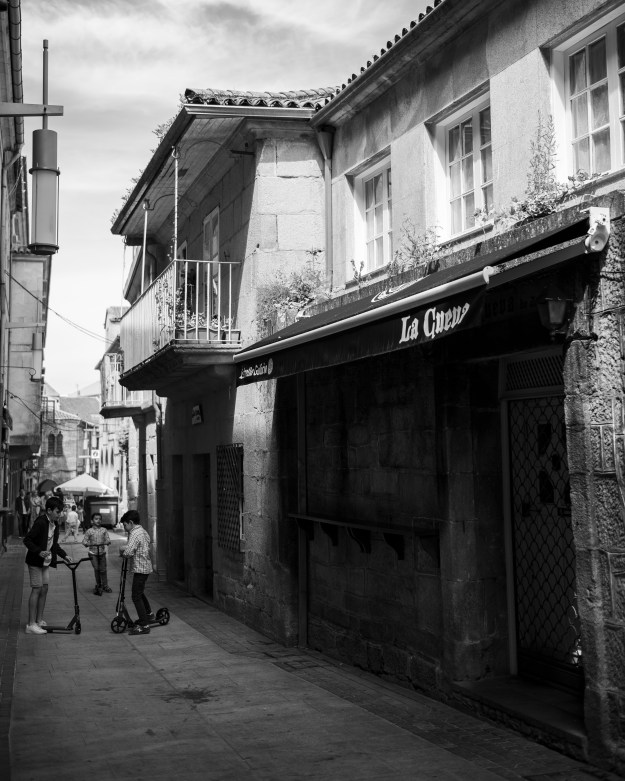
Scooters, Pontevedra 2019
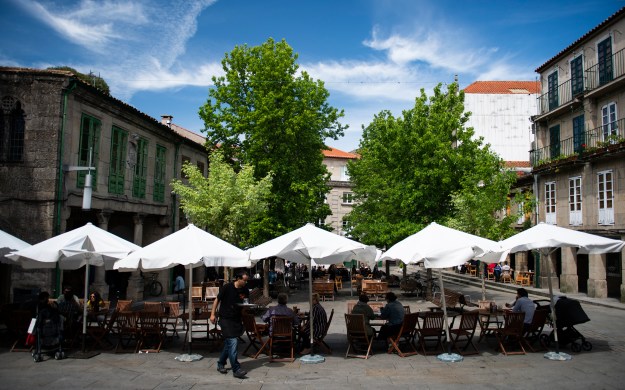
Waiter, Pontevedra 2019
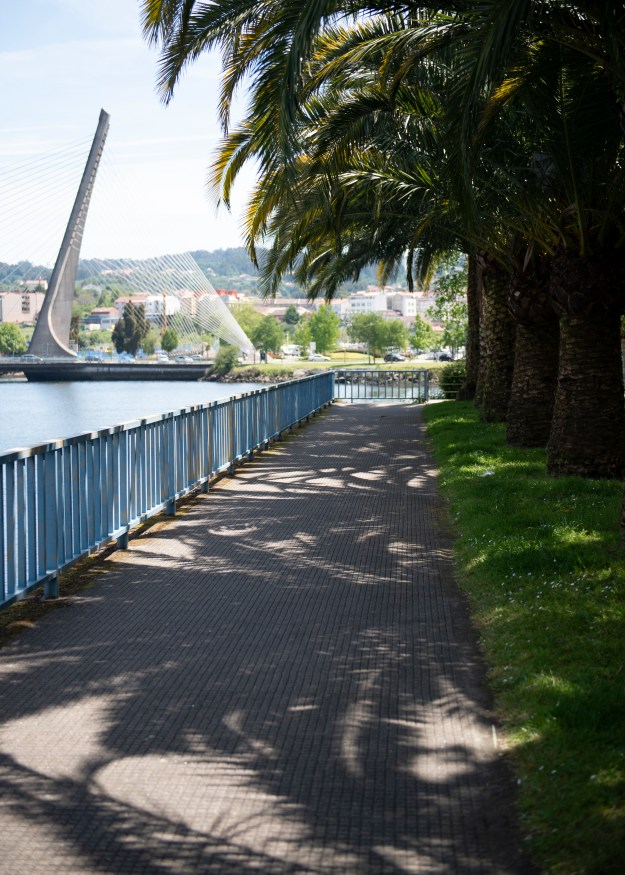
Palms, Pontevedra 2019
Review
Skate Park, London 2019 (Kodak Ekachrome 100, shot in a Leica M6, 50mm, 1/60th at f/2.8).
I was hoping to shoot the skaters that gather in this underpass on the embankment in London. It was a cold day, so I guess they had better things to do. However, as I looked a the graffiti which has become part of the vibe of this area, I noticed the message at the top of the pillar. I metered the scene, which was always going to be a challenge using slow slide film like Ektachrome, but was surprised to find the meter reading 1/125th at f/2.8 on the pillar itself. I decided to lift the exposure on the pillar to make the light more impactful and in an effort to get more detail in the shadowed graffiti in the background. 1 stop more exposure was given in shutter speed.
Scooters, Pontevedra 2019 (ISO100, f=45mm, 1/125th at f/2.8, black and white conversion)
My wife and I were in Spain for her multi-sport competition and visited the beautiful old town area of Pontevedra. I saw this scene in front of my and my intention was to pick out the sign on the cafe canopy. For this shot, I metered the shadows rather than the highlights as before. Adjusting down by 2 stops, I then noticed the boys entering the scene. They were not highlighted in the same way because of the shadow cast by the building to the left of the frame, but I like the way they are subtly lit. A happy accident.
Waiter, Pontevedra 2019 (ISO100, f=24, 1/640th at f/2.8, circular polarising filter)
The light was very bright when we entered this square. Using the polariser to reduce the harshness of the light reflected from the canopies and darken the sky, I decided to shoot wide open at f2/8. I then metered the shadow under the canopies where I could see the waiter serving. I reduced the exposure by 1 stop to 1/640th and waited for the waiter to emerge from the shadow. I like this photograph but believe that I was a split second too eager in taking it. The waiter is indeed picked out, but the impact could have been higher if I had waited. I included anyway, because I think it is a good example of reading the light, getting the camera ready and waiting for the action.
Palms, Pontevedra 2019 (ISO100, f=48, 1/25th at f2.8)
Walking along the river in Pontevedra, I spotted the light coming through the branches of the palm trees and casting the pattern on the pavement in front of us. Not strictly the same approach as before, but in this photograph I metered for the shadow on the floor and lowered by 1 stop to make them dark enough to have impact. The highlights above the bridge were a little brighter than I wanted, but they are not washed out so I left the exposure as is.
Conclusion
This exercise has been useful in two respects, metering for the light or shadow and placing it within the exposure to suit the intent and taking time to observe the light in the scene. The former is something I was already familiar with from working with film, but the latter requires more thought. Moving from shooting a photograph with reliance on one of the semi-automatic modes that all modern cameras have is a daunting prospect. Moving away from matrix metering brings with it another aspect that most are not used to. This greater control over how we want to the photograph to look is more akin to the representation of light that painters have been doing for centuries. The alteration of the light in Skate Park, London for example made the pillar more dramatic. To someone looking at that scene quickly the contrast between highlight and shadow would probably not be as obvious. I had time to view the light in the scene, so could make a decision as to what the photograph should look like. When this is achieved, we see how beautifully natural light plays on subjects, folding around surfaces and being reflected and filtered as it reaches our eye. My images here were not shot at different times of the day, something obvious from the challenges around Waiter. However, the variation of light is something I have observed in my earlier photography and in the research for Project 1 [2].
My main conclusion from this exercise is that we don’t always have time to shoot manually or to take time to evaluate light, but we should consider how any image should work in natural highlight and shadow.
References
[1] Image source, Sally Mann Selected Works, www.sallymann.com
[2] Part 4, Project 1 – “Layered, complex and mysterious”, https://wordpress.com/post/richardfletcherphotography.photo.blog/898
 Richard Fletcher OCA Photography Blog