Monthly Archives: May 2019

Assignment 5: Photography is Simple

The Brief

Take a series of 10 photographs of any subject of your choosing. Each photograph must be a unique view of the same subject; in other words, it must contain some ‘new information’ rather than repeat the information of the previous image. Pay attention to the order of the series: if you are submitting prints, number them on the back. There should be a clear sense of development through the sequence.

Initial Thoughts

Simple (adjective): Easily understood or done; presenting no difficulty – from Oxford English Dictionary

Throughout this course, I have resisted the temptation to read ahead as I wanted to progress my learning in a linear fashion. I guess my engineering background is probably the reason why I tend to look at things this way, however, I wrote this initial preparation paragraph while working through Part 4; following a recent course video conference with Robert Bloomfield. In that meeting, Assignment 5 was discussed at some length, in particular the fact that the open brief causes many students struggle with where to start.  To get a head start, the first section of this post outlines my initial thoughts on my subject and how it links to the brief.

Photography is simple? I must admit to never having seen it that way.  What I have observed is my continuing quest to make my photographs interesting, or at the very least not boring.  As a technical person, I’ve also observed the increasing complexity of the ‘process’ of photography, that is the way that camera evolution has almost made it easy to take the same photograph as the previous, or the next person.  When I started to ‘rebel’ against my DSLR a couple of years ago [1], I slowed things down and started shooting with all manual, film cameras to improve my technique.  This would allow me to focus on the look and feel of how I wanted the image to look, but ironically the technical rigour of film took my attention away from really looking at the scene.  During this course, my attention has shifted back towards the subject and what I’m trying to say about it. The discipline of creating a series of photographs has been a worthwhile change to my approach.

When starting to think about the assignment, I was drawn back to the research I did in Part 4 on how painters, in particular portrait painters, manipulated light. They are able to conjure light where it perhaps wasn’t previously present and interpret what is there  to create the shapes on a face or figure. Rembrandt was the master of this work and for this assignment, I wanted to play with some of the simple lighting arrangements that he was famous for.  For the subject, recalled Assignment 2 and how people reveal their emotions through the eye area of the face. I’m always fascinated by what makes us different and how we value that which we hold dear. My subject could therefore be the evolving way that people ‘cherish’ as they get older, which will provide the connection between what the brief describes as the information in the series.

I started to consider the concept of Window or Mirror, which was the topic addressed in the video call and a way of looking at how photography has evolved in its use.  The contrasting ideas of a photograph that reveals the subject in its truest form (the window) vs. the photographer’s perspective or views on it (the mirror), is a thesis well understood within the art.  Szarkowski’s book on the thesis [2] describes three significant photography releases during the 1950s; the first publishing of Aperture Magazine, the ‘Family of Man exhibition at MoMA and the publication of Robert Frank’s The Americans.  Each of these events had an impact on photography as a modern medium,  but for a variety of audiences and used photography in a different way from each other.  Aperture Magazine, although well known today reached a fairly limited audience at the time of its released.  This was considered to be because of the steady decline of the traditional photo magazine owing to their subject matter being more accessible to the public with advances in worldwide travel.  As with the publications it competed against, Aperture’s mission was to reproduce photographic works that revealed the subject in the best possible way (Szarkowski refers to the Adams and Weston ‘quest for the perfect negative’) and wasn’t really interested in anything more than documenting what was in front of the lens.   While influential to a whole raft of young photographers and of passing interest in magazine terms to a wider audience, Aperture’s initial impact was fairly limited.  By contrast, The Family of Man was a highly successful exhibition that revolved around the premise that all people were fundamentally the same although demonstrably not the case.  The photography for the exhibition was essentially curated to look the same from a technical perspective, while the subject matter varied considerably within the theme.  The people that saw the exhibition could relate to the familiarity and be challenged by the contrast.  Finally, The Americans looked at 1950s American life from the viewpoint of Frank.  The book highlights the social, political and racial tensions and contrasts the lives of members of the class systems in the US during a period of great change.   With these three events, we have windows and mirrors and a combination of both;  Aperture’s window on the world with its many different photographers revealing the subjects as best they can, Frank and his “searing personal view of this country the Eisenhower years”[2] mirroring his view of America into the public consciousness, and in the exhibition both cases.   The subject is revealed in a documentary style, but with the approach taken by MoMA to have consistency in the images themselves.  Here, the museum is forcing the perspective without necessarily changing the way we look at man, beyond the stark contrast of our similarities with differences.  For me, the categorisation of how photographers work with their art isn’t the important concept, but how simplicity of connection can make or break what the image means to the viewer.  I attribute this to the way I’ve historically looked at photographs, that is with much more bias toward the ‘window’.  When I first looked at The Americans, I struggled to make powerful connections between the images as to me, the seemed illogically ordered and often obscure in composition.  However, in progressing through the course, I’ve come to appreciate the visceral nature of Frank’s photographs as both a factual snapshot of 50s America, but also a bold statement of where the American dream had issues; something still very evident 60 years later.

Taking a Step Back

Following the completion of Assignment 4, I had a call with my tutor for feedback during which I asked how he thought I was doing so far.  My concern has been that I’m most comfortable with the technical aspects of photography than the artistic and I was keen to know from my previous work, what my tutor thought.  His feedback was that it was clear that I knew my way around a camera and the technical skills of shooting both digital and film.  However, these strong connections with the technical are evident in how I approach the work, often with the elements that link a series together being something to do with how the photograph was taken rather than intention.  The feedback was that I needed to look more closely at connecting the images with something more subtle, expanding more on the what I am trying to say about the subject and its context, than the technical achievement of shooting it.

At this point, I had a loose idea of shooting a subject with a single camera for my 10 images, but the idea revolved around the simplicity of the camera itself.  My medium-format pinhole camera is one of my favourites because of the unique look of the photographs it makes, but also the simplicity of its use.  For the assignment I planned to  shoot portraits of people with the theme of something they cherish or treasure with this camera and I went to the lengths of working out how long each exposure would be depending on the film, reciprocity failure etc etc.  This recent feedback, though had made me realise that once again, my ideas were technical; the camera is very simple to use, but the skill required to use it is much higher and I was drawn to how clever it would be.   I think this can be described as a ‘lightbulb’ moment which required me to reconsider this assignment; take a step back.

Ideas…Ideas…Ideas

With the objective now to connect to the subject in a way other than technical, I started to review the constant theme that has been running through my work on this course to date; revelation. As the brief calls for new information in each photograph in the series, my approach to composition or what is in the frame, would be similar to previous work. With regard to Window or Mirror, though how much would the subject reveal itself naturally and how much of my perspective would encourage the detail to be revealed?

I started with thinking about the things that inspire me and created a mind-map. Mind-mapping has been a useful tool that I have used in my professional career, so my thinking was that I could use this to help encourage inspiration for this assignment, My mind-map is shown below:
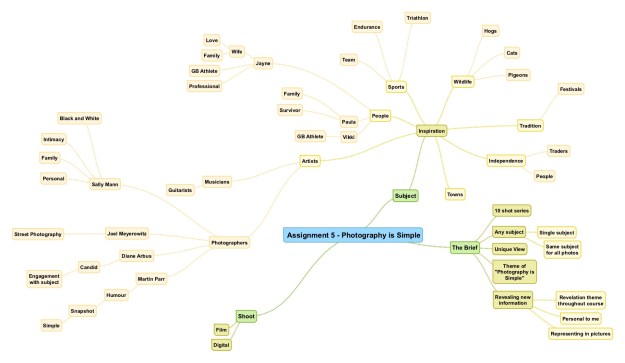
Assignment 5 - Photography is Simple

While I’ve been interested in architecture and landscape for many years, my studies have moved more towards shooting what I’ve referred to as ‘pattern of life’, most of which involves people being in the frame. Assignment 3 on The Decisive Moment was the most challenging so far because of how I find shooting people an uncomfortable experience. Not wanting to duplicate the classic street photography style, I came back to my original thoughts about portraiture, which left me unable to decide who my subject should be. Lots of people inspire me, from my Dad who was the person who introduced me to photography in the first place (and has encouraged me ever since), to my wife Jayne, who’s athletic achievements are a constant inspiration.  My friends, colleagues and family all impact on me in more that one way, so perhaps one of them could be my subject.   A few years ago, I had the idea of following a friend around during a typical day in their life, which was inspired by the diversity of my friends’ professions and interests. The challenge would be avoiding simple documentary shots with something that obviously points towards the interesting element, for example a racing driver sitting in a racing car.  I would need to combine context with perspective to reveal the detail without leading the viewer to the answer; in the same example a close-up of a helmet visor or item of race clothing could reveal the information on its own.

My Idea

The mind-map itself wasn’t all that helpful in selecting a single subject for this assignment, but combined with an important meeting at work, I eventually settled on what I wanted for the series. As I’ve mentioned previously, I work in engineering and am part of the leadership team for our business.  Following a recent number of changes to our organisation, we held a 2 day leadership meeting away from the office to work on our future strategy.  As part of our preparation for the event, we were asked to put together a single presentation slide called Who Am I?   The slide was to contain photographs only, as opposed to a written narrative, that we would talk through as an ice-breaker at the beginning of the meeting. I  have done many exercises like this one before, but the concept of describing myself with pictures alone was a challenge.  I started with my parents and family and moved through my work, marriage and interests. The challenge here was to find a single image that told as much as possible about me as space on the slide was limited. The finished version of the slide can be seen below.
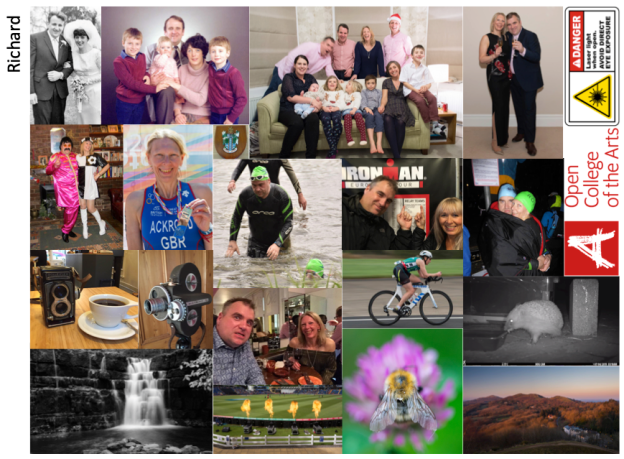
Screenshot 2019-09-18 at 09.01.42

Who am I? slide presented at a work meeting

In a sense, this was a revelation of the important things in my life and I was happy with the result. The main issue for me was that despite careful selection, I still managed to miss out some of the things I hold dear; my love of motorcycling, the arts and charity interests.  This realisation brought Szarkowski’s window and mirror thesis back into my thinking.  Photography that exhibited the former tended to be representative and documentary in nature and during the 1950s it became clear that photography was not able to describe the scale or impact of events.  Szarkowski refers to Don McCullin’s photographs of the Vietnam war as being powerful and impactful, but that they didn’t directly affect the way that people saw the conflict on a larger scale.  It would seem that the window being described is actually fairly small.  As Meyerowitz described the viewfinder as the limited view we have by comparison with the field of view of the human eye,  Szarkowski concluded that the singular window was not enough. When I was compiling this slide, I paid careful attention to the sequence with regard to logical flow; my parents wedding in the top left corner and my cameras and wildlife interests in the bottom right. In this sense, the slide is a mirror of how I want myself described. Fairly quickly, I settled on the idea form this assignment. My series of shots would be self-portraits that describe who I am.  The key differences in my concept would be that in most cases, I would be directing another person to shoot my picture, rather than the now-all-familiar selfie which has become part of our daily lives.  The series would be intended to both mirror my own views of who I am as well as show enough of my personality to create a narrative in the viewer.  I would bring the simplicity to the series through the composition but not the technical aspects of each photograph.

Influences

When I think of self portraits and their ability to both reveal and mystify, I think of Vivian Maier. Maier was an unknown photographer who was discovered by accident when boxes of her possessions came up for sale in an estate auction in the US. When the new owner started to look through the boxes, he found thousands of images in negatives and undeveloped film rolls. As he started to catalogue and scan the find, the quality of Maier’s work became clear and although the nature of the discovery and its subsequent exploitation divides opinion, she is now a highly regarded artist.

The mystery of Maier for me is that despite the efforts to understand her life and work by the owner of her work, later described in the documentary film Finding Vivian Maier, little is really known about her. This makes the self portraits she took with her trusted Rolleiflex TLR camera all the more alluring. She was noted to be a quiet person by those who knew her, so why would she peer into her own eyes with her camera reflected in the glass of a shop window? I took this as the basis for my series and the simplicity of photography that the brief was asking for.

Another portrait influence of mine has been David Bailey.  Famous for shooting the famous, Bailey’s portrait work has always appealed to me as his approach is to shoot the subject in an apparently simple, high-key light setup.  His most famous work was, of course shot on black and white film, which emphasised the range from highlight to shadow and for me, reveals the complexity behind the simplicity of his images.  The engagement between photographer and subject is clear, but we are not sure how much of it is Bailey trying to capture what we know or how much the subject wants to show us.  In the case of his portraits then, Bailey is both window and mirror, with the subject playing their part to a greater or lesser extent.  One of favourite shots was of Jack Nicholson in 1984 (shown below).  When I saw the Stardust exhibition[3], this image in particular made me smile as I instantly related it to another print of Nicholson that I own.  Here we have Nicholson in Bailey’s traditional setup, but with a very simple Rembrandt light which I’ve used previously with a single diffused strobe and reflector.  However, this photograph is all about Nicholson and his eccentric character.  The image works because he is showing us what we know about him, lifting the impact from a simply-lit actor in a contrived fashion pose, to a snapshot of a larger-than-life personality.    Like the Family of Man exhibition, here we have the familiar speaking for itself and more importantly, being similar yet very different from the rest of the collection of Bailey’s images.   The other image I referred to earlier is a film promotion shot by Herb Ritts of Nicholson in his Joker make-up from the film Batman (1989).  The similarity in what the photographs ‘reveal’ about the actor is clear, even though the lighting and composition of the images is different.
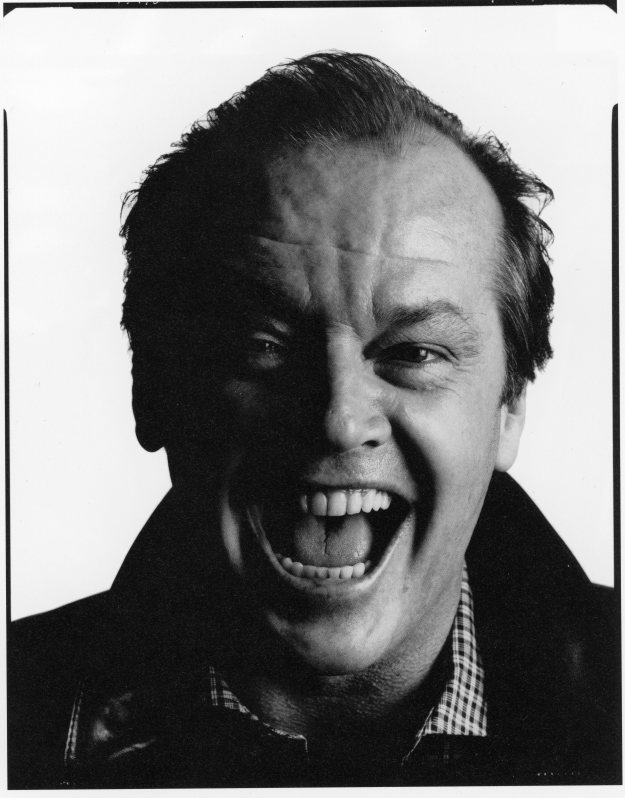
Bailey Nicholson001

Jack Nicholson (1984) by David Bailey from Bailey’s Stardust
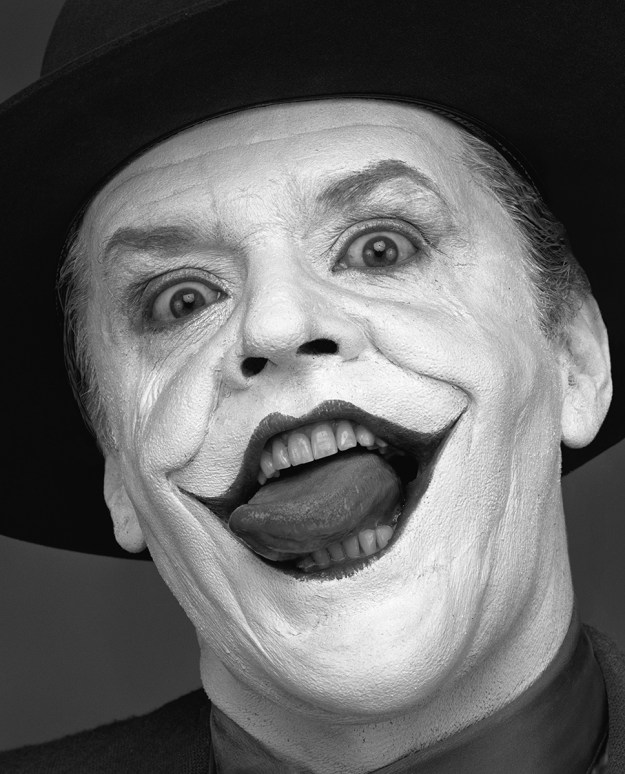
D-03-03

Jack Nicholson III (1988) by Herb Ritts []

The Shoot

The first aspect I settled on was the basic look of the images.  I’m a huge fan of black and white, mainly because of my passion  for film and driven the film stocks that are still available.   For this assignment, I wanted to combine digital and film if possible and with my favourite film cameras being 6x6cm medium format, decided that the series would be square crop black and white.

Beyond this decision, I wanted to limit my technical thinking and concentrate on the subject.   I’ll confess to being someone who does not enjoy having my photograph taken.  A friend recently pointed out that the images of me he has seen on social media were either with a serious expression or the extreme opposite ‘clowning around’, with very little in between.  This reminded me of my very first conversation with my tutor, where we discussed the importance of constructive feedback, no matter how uncomfortable.  I believe myself to have a good sense of humour and the ability to make my friends and loved ones laugh, but am also aware that it’s virtually impossible to switch this on and off.  Therefore, my images would reveal something about me in a completely natural expression, whatever that may be.

Equipment

I used two cameras for this shoot; my Nikon D4 DSLR with three lenses (24 to 70mm, 70 to 200mm and 200mm macro) and my Hasselblad 500cm with an 80mm prime lens.  The film used was Ilford HP5+, ISO400 stock, which I developed myself at home.  I used a variety of light sources, but mainly my Elinchrom studio strobes with soft boxes, grids and snoots.   The main addition during this shoot was the discovery of the tethered web-based control for the D4, which I hadn’t known about.  This program made setting up and shooting myself much easier for some of the shots.

The Images –  Pictures of You?

“I’ve been looking so long at this pictures of you, that I almost believed that they’re real”, Robert Smith, The Cure

Review

One
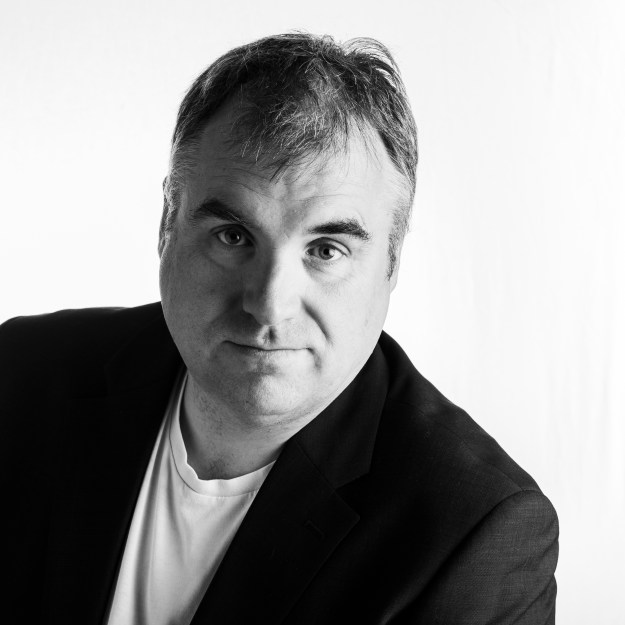
 

DSC_3801

This shot was inspired by Bailey and his high contrast black portraits and is essentially what many people see in me.  I’m a professional with a senior management position, in which I’m expected to fit a certain mould.  For the most part, this isn’t a challenge although I don’t wish to be seen as a stuffy guy by the people who work for me.  I wanted to express the formal an informal here through the clothes and pose, but maintain a level of focus with my eye contact with the camera.

Two
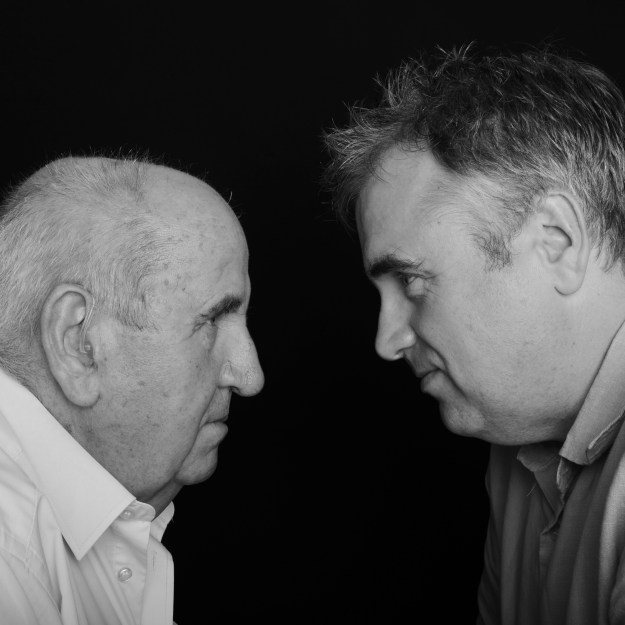
DSC_3554

My Dad and his wife came to dinner recently and he very kindly agreed to sit for this portrait of us both.  For most of my life, people have pointed out our family resemblance which actually happened when I talked through the Who Am I? slide at work; my colleagues wondering how I’d travelled back to the 1960s for the wedding photograph!  As we’ve grown older, the differences between how we look have joined those similarities; something I wanted to capture in this photograph.  The composition was inspired by Mel Smith and Gruff Rhys Jones’ head to head segments in their comedy show in the 1980s.  During this shoot, our inability to stop laughing resulted in a number of different versions.  I chose this one, because as well as appearance we are also very alike in personality, which has led to tension from time to time; I believe this image reveals these details in what is a simple composition.

Three
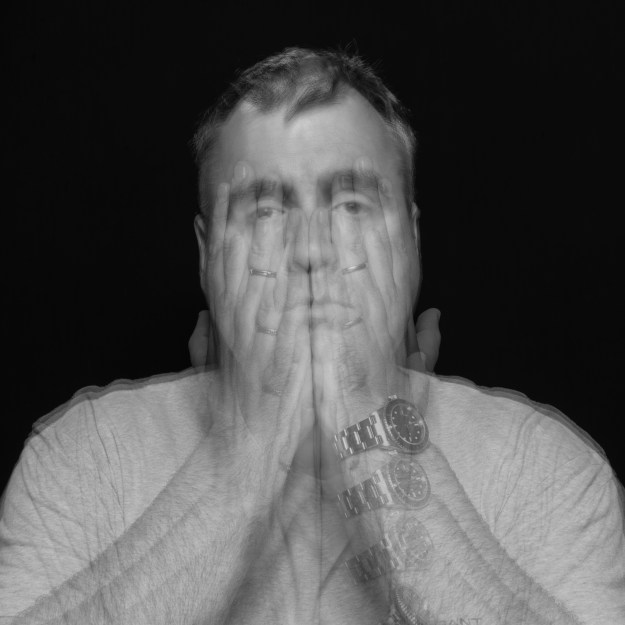
DSC_4145-merged

Following the death of my mother, I suffered from depression for over a decade which had a damaging affect on me and the people closest to me.  Apart from the classical symptoms, one of the noticeable issues was my desire to hide.  After many years of support, I started to venture out more both socially but also in terms of what made me happy.   Photography for me was one of the interests that came from that time and has been perhaps the most revealing part of who I am ever since.  It was my Dad that originally inspired me to pick up a camera, being a professional himself, so I feel this image naturally leads on from Two.  This picture is actually a digital ‘multiple exposure’ which was assembled in post-processing.

Four
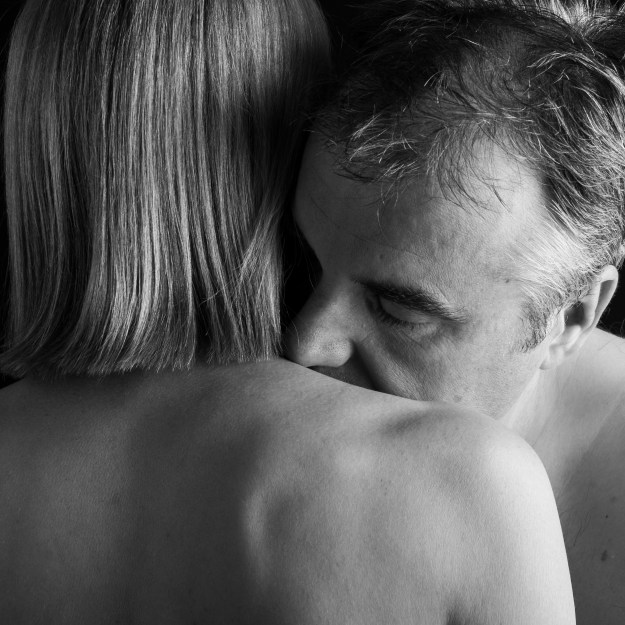
DSC_3696

With that period of my life came also my getting married.  My wife has always been a great source of strength and support from recovery to furthering my career and starting this course.  I wanted to show my relationship with Jayne as naturally affectionate, but also completely open with the contrast of order and chaos; her straight blonde hair and perfect figure against my dishevelled hair and creased complexion.  I emphasised the closeness with the tightness of the crop and softness of light and shadow.

Five
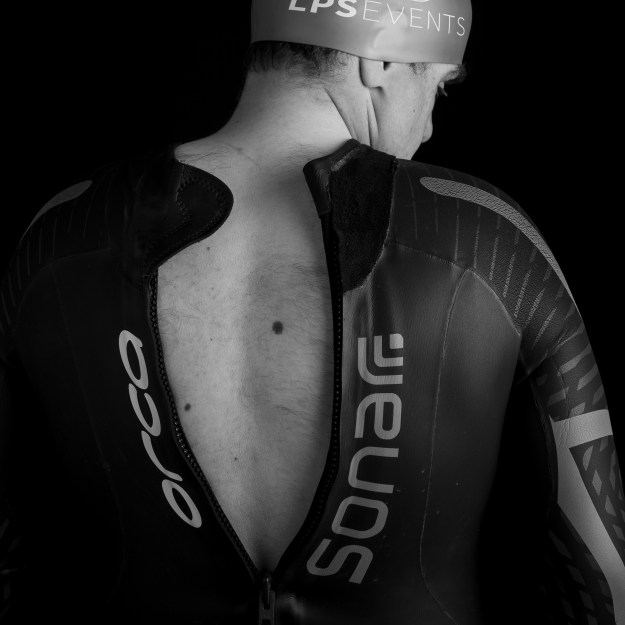
DSC_3712

From relationships to interests and what links them.  I’m not a natural athlete, but after a long distance open-water charity swim in honour of my late mum, I became hooked.  The concept behind this shot was to show the vulnerable guy in Four in a more statuesque pose akin to an athlete.  The wetsuit being partly zipped up was to symbolise the transformation from being the slightly overweight forty-something to athlete, inspired by the myriad of superhero movies that surround us today.  The biggest challenge with this shot was not overheating as the outfit isn’t designed for the photographic studio.

Six
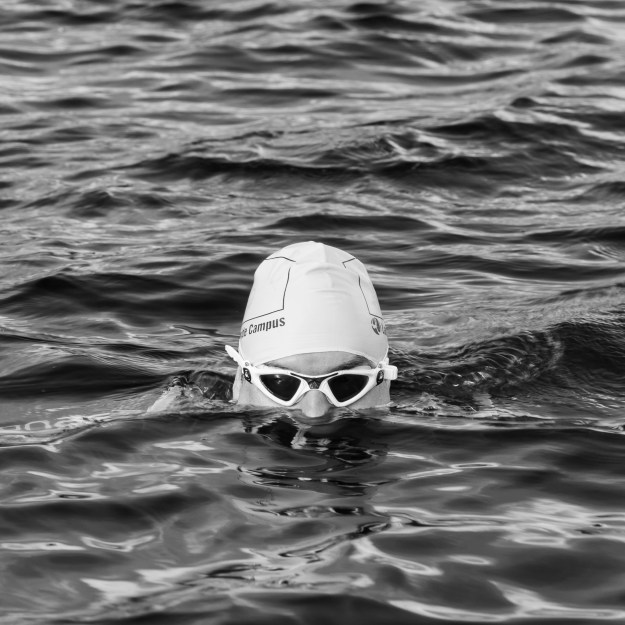
DSC_3518

Leading on from Five is the sense of enjoyment and, more importantly peace that I get from swimming outside.  While I swim with others and compete in races, I see swimming as a solitary relaxation where problems can be worked through or let go of.  The composition is intended to reveal this, while, my partial obscuration (inspired by the Martin Parr work that I researched when shooting Assignment 3) shows the privacy of being alone in my thoughts.

Seven
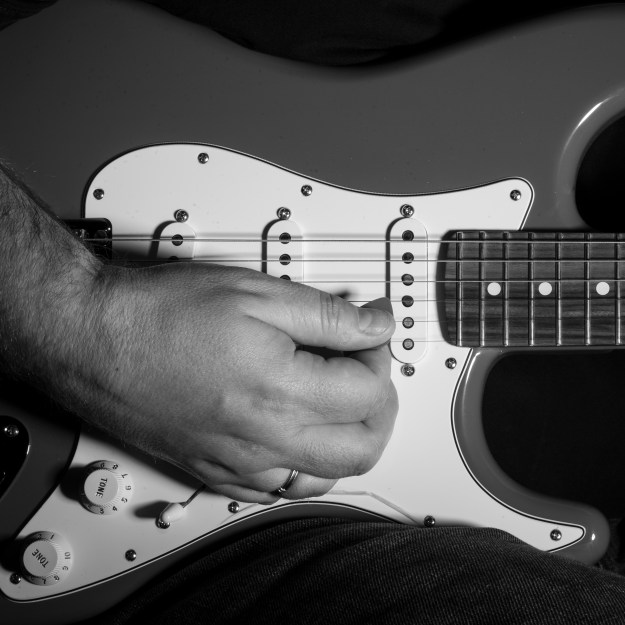
DSC_4043

Another way that I relax is through my hobbies, in this case the guitar.  For this image, I wanted to avoid showing me playing the guitar as I’m very much a beginner.  The composition here is intended to show affection for the peace the guitar offers me.  My arm and hand are relaxed on the body of the instrument, almost cradling it.  I shot this without noticing my hand obscuring the volume control, but revealing the word Tone on the other control knobs.  In reviewing this photograph, the absence of volume actually describes how much the guitar relaxes my busy mind.

Eight
DSC_3871

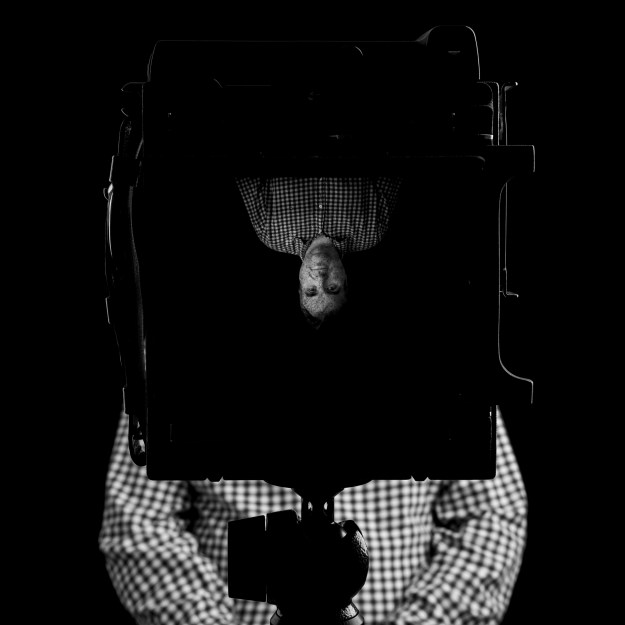
Photography is my main passion and more recently, my enjoyment of using film has led to a substantial collection of beautiful old cameras.  What I wanted to reveal here is my love of the technical with the aesthetic of the camera as an instrument in a more fun way than simply documenting me with one of them.  This shot came about after previous attempt at combining these elements (see Reflection).  I wanted something that wasn’t ordinary but that was still a portrait of me, which led to my using my Graflex Crown Graphic.  The inverted image of my head and shoulders connects back to the camera obscura, the most simple camera there is, while the rest of by body appears where it should.  I saw this as being the way my life has changed, almost turned upside-down by my passion for photography.   I used additional lighting to pick out the edges of the Graflex as its shape is unlike most common cameras.

Nine
Hassie 002

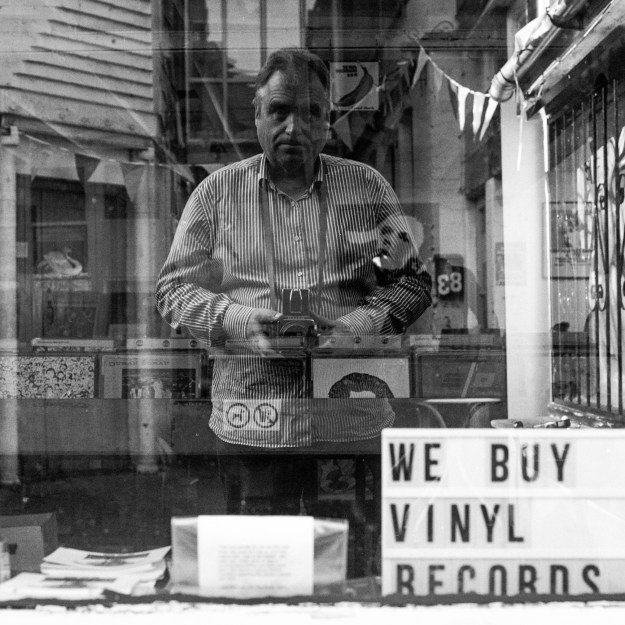
As well as a passion for photography, I’ve also loved music my whole life, even though I’ve not really played an instrument until my recent venture into the guitar.  I’m fortunate to live in a town with its own independent vinyl record shop where I can sometimes be found indulging my interest in both music and the artistic marvels of the vinyl album cover.  Inspired by Vivian Maier’s self portraits reflected in shop windows, I wanted to connect these two passions and emphasis my love for film cameras.  This image was shot with the Hasselblad in the image, was developed by me at home and led to a more traditional selection process based on a contact print (achieved using Lightroom).

Ten
DSC_4002

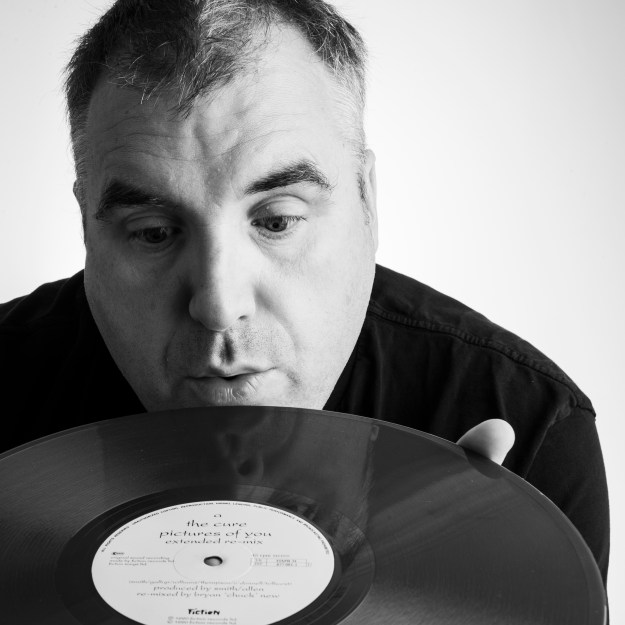
This final image came about following a visit to Carnival Records in my home town.  I’d purchased a rare 12 inch vinyl copy of the single Pictures of You, by The Cure.  Having been Cure fan since my teens, this single is one of my favourites and it was made more special by the fact that the vinyl itself is red rather than black.  I wanted to use this image to both provide a theme for the series but also to tie it up visually by returning to high-key lighting.  As I mentioned previously, I struggle to smile on demand, so in order to create a more relaxed view of me, I decided to blow imaginary dust from the record surface.

Reflection

When I first thought about Who Am I? as a concept, the first things that sprung to mind were the obvious.  The slide I had produced for work took significant time to assemble from the many photographs of me within the context of my life.  However, when I look at them, they are an almost ‘social media’ view of me, as opposed to something revealing.  What I mean be this statement is that by looking at what I choose to share willingly, it is easy to see what is important to me.  What it does not achieve is any sense of context. For example, many of my acquaintances see a confident man, while those who know me really well know that the opposite is often the case.  Many people know how unwell I was, but very few saw the struggle to return to whatever normality is.  In this series of photographs, I have sought to reveal the things that people don’t see through imagery that on the face of it is fairly self explanatory.  In terms of the Window vs. Mirror, I would say that I am completely in control of that revelation; that there is no documentary visual associated with the way I’ve shot this assignment.

For the first time since beginning this course, I’ve left my technical head behind and focused entirely on what I’m trying to say.  Even so, the technical elements have been highly complicated in creating these pictures, even though the subject and composition is simple enough.  That was only the most recent piece of advice from the many helpful critiques by my tutor throughout this course.  Following Assignment 1, it was about keeping the theme focused, resisting the temptation to expand the concept to something that could actually fill many themes.  With Assignment 2 it was getting that broad feedback and being prepared to change, should that feedback not align with what I’m trying to say.  After Assignment 3, I was encouraged to push myself outside of my comfort zone; accepting the difficulty that brings and finally Assigment 4 was about looking for deeper connections that just clever use of technique.  I feel with this assignment that I’ve taken these points on board and that the series is the most successful I have been at expressing my vision so far.

What Went Well

As with Assignment 4, I found that I had to stop myself from trying too hard to come up with a theme.  The open nature of the brief made this particularly difficult and I found I continually in danger of the huge potential scope problem that I had in Assignment 1.  Interestingly, it was an alternative thought about portraiture and turning the camera on myself that started this series.  In seeking to reveal myself, I tried lots of things; some working and some not. I’m very happy that each of the photographs leads on from the previous and in some cases refers back to others.  Some of the smaller details included in the shots, e.g. the use of contrasting stripes and checks of my shirts in the ‘photography’ pictures were intended to subtly reinforce the subject, in a similar way to Frank’s use of windows and flags in Frank’s The Americans.  Above all, I was able to see the images for what they mean rather than how well they were shot.  A good example of this is Two, where the reactions of my Dad and I were so different.  Dad was a professional portfolio and wedding photographer so was predictably concerned with the composition; me being higher in the frame etc.  I agreed that the composition probably wasn’t perfect, but the effect was what I was looking for.  I guess, like me, there will also be some element for him of not liking oneself in photographs at play too.

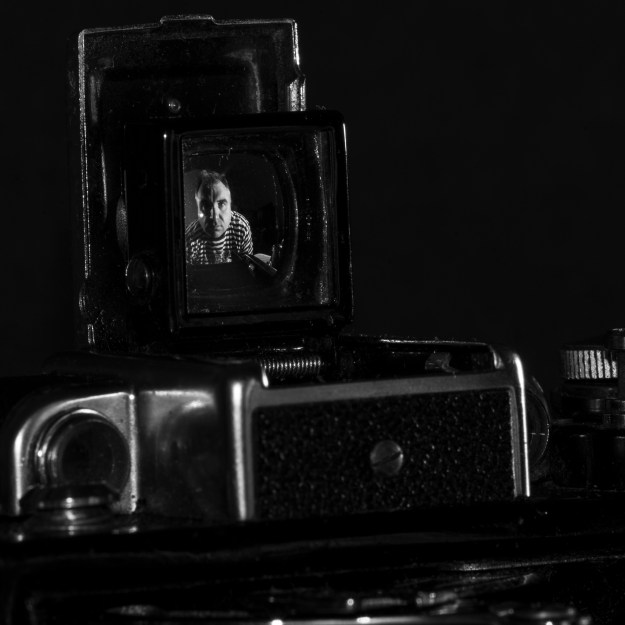
When it came to the strength of what I was trying to say, I concluded that two of my original set were not strong enough and needed to be re-shot.  The first (below) was the original concept for Eight.
DSC_3572

Rejected candidate for Eight

The rangefinder on my 1936 Zeiss Super Ikonta has a highly reflective mirror that I thought I could shoot my portrait reflected in.  The result was fine, but the use of a macro lens to get the portrait left too much of the camera out of the shot, which I felt didn’t do it justice.  I also realised that it meant that there were two very similar techniques in Eight and Nine if I included the shot in the series.  Replacing Eight with the Graflex brings balance to the series and improves the way the theme flows.

The second image (below) was a candidate for Ten.  My concept was to include a ‘happy’ version of me enjoying the record.  However, as I indicated previously my discomfort with being in photographs means that I can’t really create a false smile.  Every attempt a this shot looked artificial compared to the other photographs in the series.  I also realised that the record sleeve wasn’t actually that obvious either, instead potentially looking like a magazine or photograph.  I then decided to use the vinyl record itself, knowing that the red colour would present as a lighter tone than black in the final image.  By blowing the dust away from the record, I achieved a more natural look.
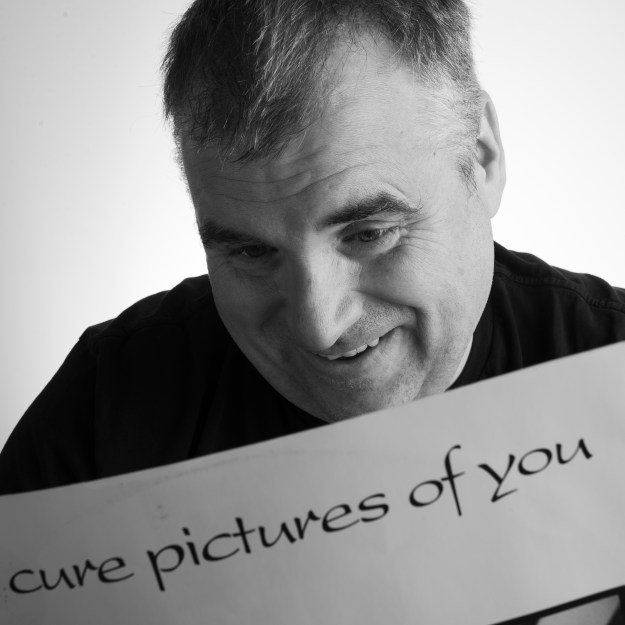
DSC_3960

Rejected candidate for Ten

In terms of the individual photographs, the most powerful for me is the one with Jayne.  I had the idea from a picture that I shot of our friends Janet and Bill at the end of Janet’s return to competition following her recovery from cancer[5].  That image was very powerful as although she was the subject of the picture, she wasn’t the only one in the frame.  With Four, I sought to show me in the context of the importance of my relationship with my wife.  The shot took some patience and careful setup, but both of us reacted the same way to the finished image.

What Could be Better

In this assignment, there weren’t really any significant things I would have done differently.  I was challenged to overcome my discomfort with being the subject, which I did through concentrating on what I wanted to say.  Arguably I still over-analysed my ideas and tried to force a theme, but quickly remembered my experience with Assignment 4 where I just went out and shot artificial lights to begin with.

In terms of the series, I think the one that doesn’t fit as clearly as the others is Seven, because although it fitted my narrative of the things that give me peace, I couldn’t find another composition that said that without cliché.  I’ve seen may close-up photographs of guitars and guitarists using shallow depth of focus to create a surreal effect, but that wasn’t what my connection with the instrument was about.  Having settled on the candidate for Seven, I struggled to find another that would work better in the series than the other 8 images.  That said, I’m happy with how the image itself turned out. My original idea was to capture my heart-rate monitor reading on my wrist, but the challenges became purely technical and I quickly concluded I was tying too hard to be clever.

Photography is Simple?

This was the theme for the assignment and it became a question for me.  As the subject for the assignment, I’m both cooperative and resistive which in any other case would mean that a photographer could let me speak for myself.  However, as the photographer as well, I was trying to tell the story of the subject from my own point of view.  If my points of view are from the same personality, I am both mirror and window with neither being necessarily the stronger approach.  Winnogrand said that he took photographs to see what things looked like when photographed,  going on to say that he had a burning desire to see how things looked like when they are photographed by him.  These are the classic window and mirror existing at the same time.  How can photography be simple in its representation of a subject when this is the case?  The answer to the question from my perspective is that the photograph is simply a connection between the viewer and the seemingly familiar.  We can limit our vision to the elements in the photograph while simultaneously looking for meaning in the things that are not in the frame. The complexity that makes that connection is the artistry of the photographer.  Photography itself is simple, but it has little meaning unless those relationships between photographer, camera and view are in harmony with each other.

Testing the Water

There was one question remaining as I completed this assignment, which was regarding how my personal voice has developed.  I was happy that the selection of images revealed what I intended, but as part of the write-up I naturally added external contextual information to each shot.  We know from Part 5 that context can be manipulated by factors within and outside of the photograph, so how would the set be received by people without the accompanying narrative?  I answered this question by showing the images to  my friends, family and colleagues, all of whom know me in different ways.  Their reaction was a rewarding experience as each saw the pictures very differently, but understood they connected as a set.  The image that provoked the most significant reaction was Four.  People saw affection and vulnerability, but also reluctance and distance.  The latter pointed to dominance and chauvinism, which couldn’t be further from reality.  I concluded that this image in particular created the improbability that we discussed in Project 2 by allowing the viewer to interpret a number different contexts from the composition alone.   I’m happy that the assignment meets the brief, but also that my approach expressed my vision as intended.

References

[1] Fletcher, R, October 2018, Learning Log Article “Always Meet your Heroes”, https://richardfletcherphotography.photo.blog/2018/10/26/always-meet-your-heroes/

[2] Szarkowski, J, 1978, “Mirrors and windows : American photography since 1960″ – page 16, MoMA. https://www.moma.org/documents/moma_catalogue_2347_300062558.pdf

[3] Bailey, D, 2014, “Bailey’s Stardust”, National Portrait Gallery Exhibition Catalogue

[4] Ritts, H, 1988 “Jack Nicholson III” – http://www.herbritts.com/archive/photo/jack-nicholson-iii-london-1988/

[5] Fletcher R, 2019 “Project 3 – What Matters is to Look”, https://wordpress.com/post/richardfletcherphotography.photo.blog/782


Acknowledgements

Thanks to my wonderfully patient wife for modelling, shooting and offering feedback when I needed to hear it.  To my Dad also, who started all this and to Chris Heard at Carnival Records for letting me shoot his shop window.
Light Meters

Introduction

Part 4 of Expressing Your Vision looks in detail at light both natural and artificial, and how it is the most obvious, yet vitally important element in photography.  Before understanding how light in the scene impacts how we see the subject or creates our aesthetic vision of what is before us, we need to understand how the camera sees light and how it differs hugely from the human eye.   This research post looks at my learning about light measurement prior to starting the course and the pitfalls I’ve encountered in achieving an exposure that represents my intent.  I’ve mentioned previously that I have a large collection of film cameras and was encouraged to shoot the medium in order to better understand how photography works at a technical level.  Most of my cameras are over 40 years old and as a consequence of their age, have no electronic light meters built in.   When presented with what is essentially a mechanical shutter and aperture that is only slightly more sophisticated than a camera obscura, the need to understand light meters becomes a priority.  The need to meter for film is further emphasised by the fact that every shot costs money, which nobody looks to waste.

The Eye vs Machine

The first thing to consider is the miracle that is the human eye and its processor, better known as the brain.  The eye itself is made up of the sorts of components we are familiar with in photograph; a lens, aperture (pupil) and a light sensor (retina).  The retina is actually an extension of the brain itself [1] which creates a high-speed communication channel from the eye to its control system.  The arrangement of muscles in the eye structure allow the lens to dynamically adjust focus and the pupil to open and close quickly when the light level changes.  The retina has a cone and rod structure [2] that react to differing wavelengths of light, the former sending messages to the brain that are interpreted as colour.

While the eye is incredible, it is the speed of this dynamic adjustment that is the most remarkable of its abilities.  If we look at a scene that is both bright and dark, i.e. containing highlight and shadow, the brain makes many adjustments to the pupil in an indistinguishably short timescale that the we don’t even notice.  If the eye moves around the scene, the continual adjustment means that we see a perfectly ‘exposed’ scene in its entirety, all of the time.

Now consider the camera.  It has an aperture that is either under our control or, in the case of automatic modes, its electronic system.  Either way, the aperture is set for a single light level and must be altered by us every time the light level changes.  If the scene has a strong mixture of light and dark regions, the aperture will only be ‘appropriate’ for one of them.  Modern evaluative meters are able to average the light in scene, but the result is still the same; a single aperture setting.  For a given aperture and light sensitivity, the camera can determine the corresponding time for the aperture to be open (the shutter speed) for that setting.  However, if the light changes or the camera changes viewpoint, resulting in a different range of light levels, the settings are no longer valid and potentially render an over or underexposed photograph.   The final drawback of the camera’s measurement of light is the fact that it is doing this electronically.  As the course notes explain, the camera measures reflected light from the subject, which it must refer to a calibration reflectance of mid-grey (18% grey as defined by the Eastman Kodak company).

Reflective Light Metering

All cameras with built-in meters measure reflected light, that is the light reflected towards the camera from the subject, much like the eye/brain combination.  The amount of light that is reflected from the subject is dependent on the amount of light falling on it and the reflectance of its surface.  If we consider a polished mirror with light falling on it, the reflectance of the surface is very high which means that a large amount of light is reflected.  This subject is said to have high luminance.  However, if we think of a black cloth, the amount of light reflected is much lower due to its poor reflectance so we have a subject of low luminance.  Colours, textures and surface finishes all affect the reflectance of the subject, which means that the camera would need intelligence (as the brain has) about the subject to meter it correctly this way.  As the camera’s meter has no intelligence about the subject, it must make a measurement assuming a reflective reference of mid-grey.  When it does this, a high reflectance subject becomes darker and a low reflectance subject becomes lighter.   For example, if we photograph (in auto or semi-auto mode) a snow scene using our DSLR’s reflective meter, the snow appears grey in the image.  This is because the camera measures the high reflectance snow against its reference of mid grey and underexposes.  Similarly, if we meter someone’s dark jumper with little else in the scene, the result is an overexposed dark grey jumper.   The extent of the under and overexposure is then determined by the amount of light falling on the subject in the first instance.

Placing the Tones

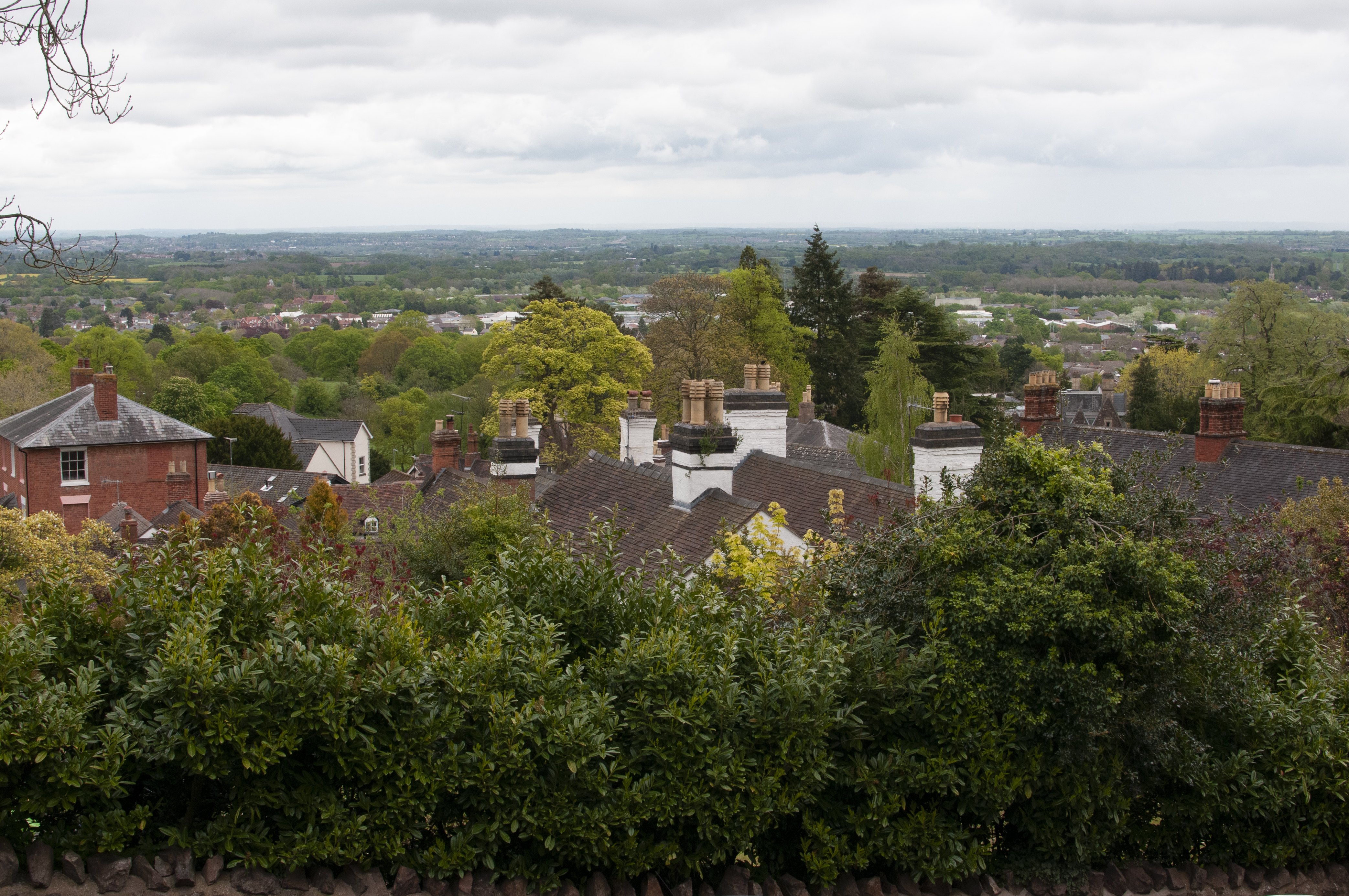
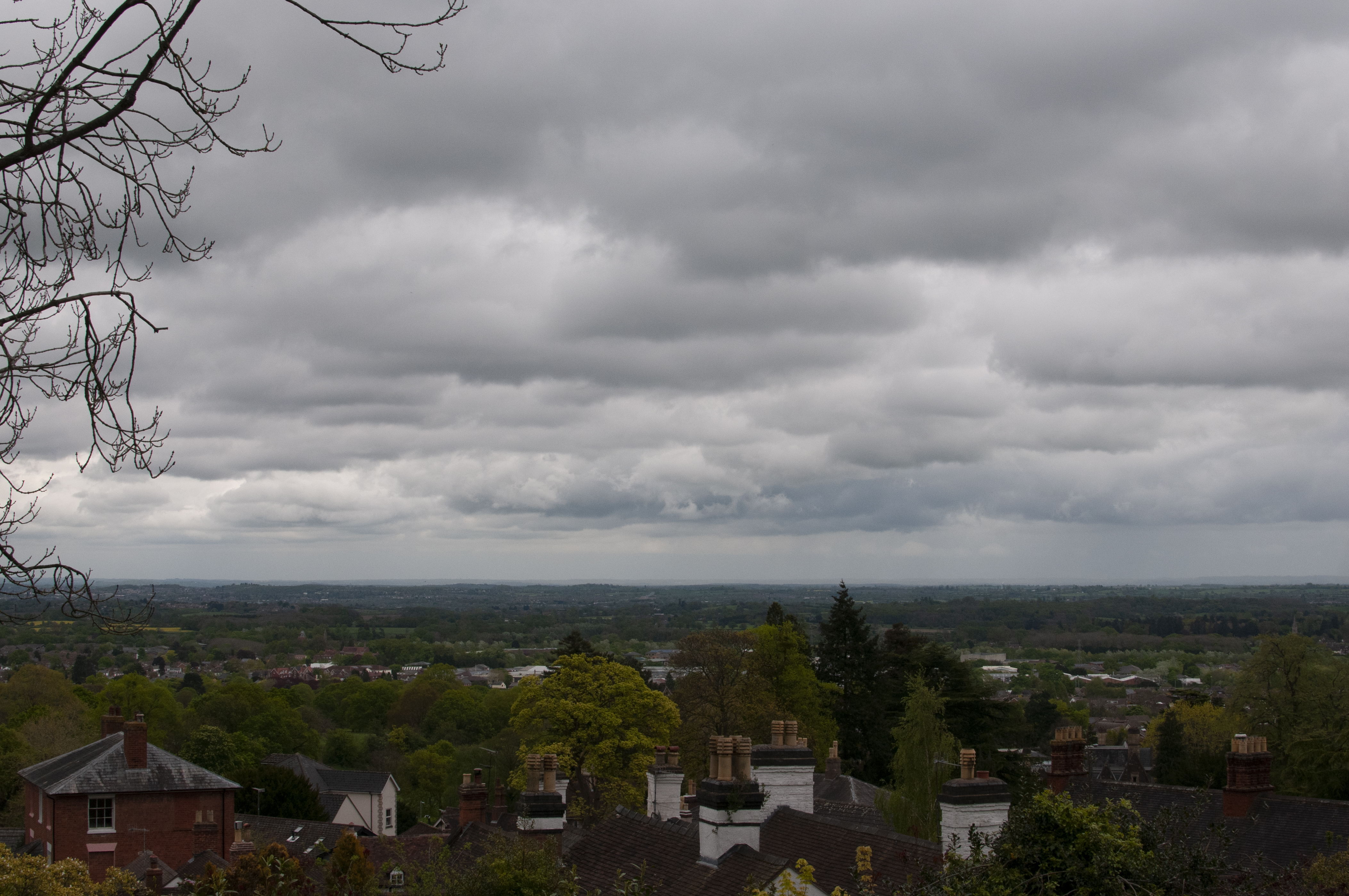
If a reflective meter always measures against the mid-tone reference, where do we need to be metering?  A scene or subject won’t necessarily contain an obvious mid-grey to take the measurement from and it’s not always possible to place a ‘grey card’ in the scene to make things easier.  Most cameras have an evaluative metering mode, which takes the average across the frame and selects what the camera believes to be the optimum reading for the photograph.  An average reading for the whole range of reflectances in the scene is essentially a pseudo mid-tone so, as far as the meter is concerned the measurement is straightforward.  However, if we shoot a landscape scene where the lower third of the image is land and the upper two thirds are sky, the evaluative meter is averaging a frame that is dominated by hightlight.  In order to correct for this, the camera automatically reduces the exposure for the sky region, which in turn underexposes the land in the lower third.    If we move position and make the scene dominated by the land and only have a small regiod of sky, the camera will compensate for the darker region.  The effect would be an overexposure of the sky.  In short, the evaluative meter is great for scenes without extremes in reflected light, but struggles when presented with a high dynamic-range, complex scenes.  An example of this can be seen below.

The two photographs were taken with the camera set to evaluative metering, where the whole scene is averaged.  Photo 1 has the rooftops making up most of the image with only a small band of sky a the top of the frame.  The result is a well exposed image with the rooftops and trees in balance and a small amount of detail in the sky.  However, when point the camera upwards so the sky dominates the frame, the result is very different.  This time, the camera has exposed for the sky, which to the eye did have a great amount of cloud detail.  The shutter speed in Photo 2 has been increased to 1/640th which is a reduction of approximately 1.5 stops as the camera compensates for the bright sky.

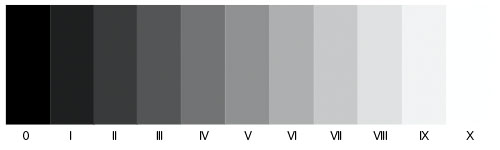
Fortunately, there is a way of placing the tones where we want them to be and it evolved from work by Ansel Adams and Fred Archer in 1940.  The Zone System was a practical way of ensuring that regions of highlight and shadow were represented accurately when the film was exposed.  The concept was that the dynamic range of light ran from pitch black (Zone 0) to brilliant white (Zone X), with discrete tones in between.  Each zone represents a single ‘stop’ of exposure, that is a doubling or halving of light hitting the film or sensor.  A graphical representation of the zones can be seen below.

zone_system

The Zone System (A Adams and F Archer, 1940)

Adams asserted that the relationship between the mid-grey reference used in metering and its corresponding tone in a finished print on ‘normal’ contrast paper, meant that the zone system could be used to both place highlight and shadow in zones as well as see there they naturally fall.

“Since this relationship between the indicated exposure and resulting print value is known and predictable, we use it do define the midpoint of the image-value scale:  a middle-gray print value that matches 18 percent reflectance gray card is designated Value V”.   Ansel Adams, from his book The Negative

Film development was well understood at this point and the zone system was particularly useful in determining how much control was needed during processing.  Development time could now be used to expand or compress the dynamic range of the scene to match the film or paper being used.

Although there is naturally no chemical development in digital photography, the concept of placing metered luminance into zones still applies.  We can meter a dark shadow and place it in a zone lower than V by underexposing by the corresponding number of stops, e.g, Zone V to Zone III is two stops under-exposure for the reading.   To move from Zone V to Zone VII would be two stops over-exposure.

Incident Light Metering

The other type of light meter is an indecent meter.  This time, instead of measuring the reflected light from the subject the meter is placed in the scene itself and measures light falling onto the subject directly.   With these measurements, the light that gets back to the camera is still reflected by the subject in the same way as before, this time the camera is set to receive the amount of light illuminating the subject.   Favoured by wedding photographers, an incident light reading from a bride in white will result in the true representation of the reflected light from her dress in the camera as opposed to an adjusted exposure in reference to light grey.  The main drawbacks of using incident metering is the need to meter within the scene and the position of the meter on the subject to measure the light correctly; place the meter in dark shadow and you’re not getting the light falling on the subject.  In addition, it’s not always possible to enter the scene to meter incident light.

When I bought my first film camera, I also had to invest in a light meter.  I find that most of the time, I will meter in the same way as my DSLR with a small ‘spot’ measuring reflected light.  Whenever I am photographing people, I try to use incident metering to get a more accurate reading for their skin, with all of the shadows and low reflectance areas proportionately in place.

The Exercise

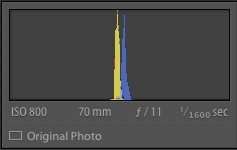
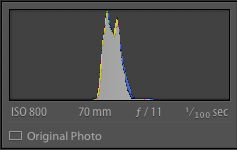
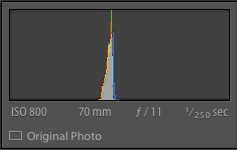
The course notes include a simple exercise to demonstrate how metering in a camera works in auto and semi-auto modes.  Step one is to photograph a predominately dark tone filling the frame.  Then, repeat with a mid-grey tone and finally a light tone.  Compare all three histograms.

For this exercise, I used two pieces of cardboard, one white and one black.  I also had a Sekonic mid-grey target which I’ve used for portrait photography previously.   I shot all three with an ISO of 800, aperture f/11 in Aperture Priority mode.

It can be seen from the histograms that the camera does its best to put the exposure in the centre of the camera’s dynamic range, no matter what the reflectance of the material being used.  We can tell that the cards are not perfect in their reflectivity as each contains clear colour and shape in the images and their corresponding histograms.

When the camera was presented with the white card, it chose a shutter speed of 1/1600th of a second to set the exposure to mid-grey.   The black card caused a change in shutter speed corresponding to 4 stops over-exposure.  The grey card resulted in a shutter speed of 1/250th which is in the middle of the two extremes.

The second part of the exercise was to repeat but with the camera on manual and adjusting for an exposure that places the dark and light regions in the correct areas of the histogram, that is toward the left and right respectively.    Instead of shooting the same cards, I chose more complex scenes.

DSC_2082

Photo 3

DSC_2084

Photo 4

DSC_2090

Photo 5

The Images

Photo 3

For this image, I noted the couple on the bench in an area being subtly highlighted by the sun.  The weather at the time was fast moving cloud that meant that the light level in the frame fluctuated over a a timeframe of a few 10s of seconds.  I chose to photograph the scene to demonstrate how useful the Zone System can be, but also how it’s not the answer to every situation.   The couple were only sitting on the bench for a few minutes, long enough to take some selfies as in this shot, so I had to quickly determine a metering setting that would work for when the time and light were right.  For this shot, I set the camera to manual, with spot metering.  I then metered a region not greatly affected by the changing light, which was the area in shadow under the tree on the left.   This put the shadow in Zone 5, so I reduced the exposure by 2 stops and waited for the couple to take their selfie.  The resulting image is ‘stable’ as the shadow should always be in its corresponding zone, so everything else in the image is in theory in balance.   We can see by the image that the faces and the woman’s hat are perfectly exposed.  However, the overall light dynamic range of the scene means that the rest of the frame is a little dark in comparison, even though the shadow under the tree is anchored to Zone 3.  For this image, I am happy that the subject stands out but if I wanted to make the image more about the rest of the frame, I would need to add some exposure.   What this shows, though is a way of mitigating fluctuating light levels by planning ahead, something that was very important when shooting film.

Photo 4

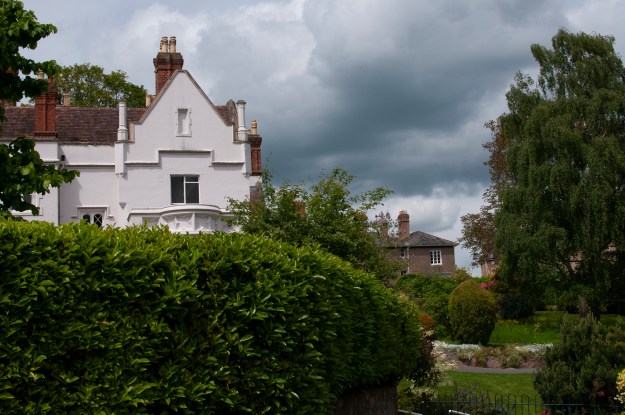
While in the same park, I noted the highlight and cloud in this image.  In the same way, I wanted to preserve the balance of the image, i.e the highlight on the building without losing the cloud detail.  This is a scene that matrix metering would struggle with.   I metered on the building highlight and increased by 1 stop to Zone 6 to preserve its impact without overexposing.  The result is a shot where the subject stands out without losing the other detail.

Photo 3

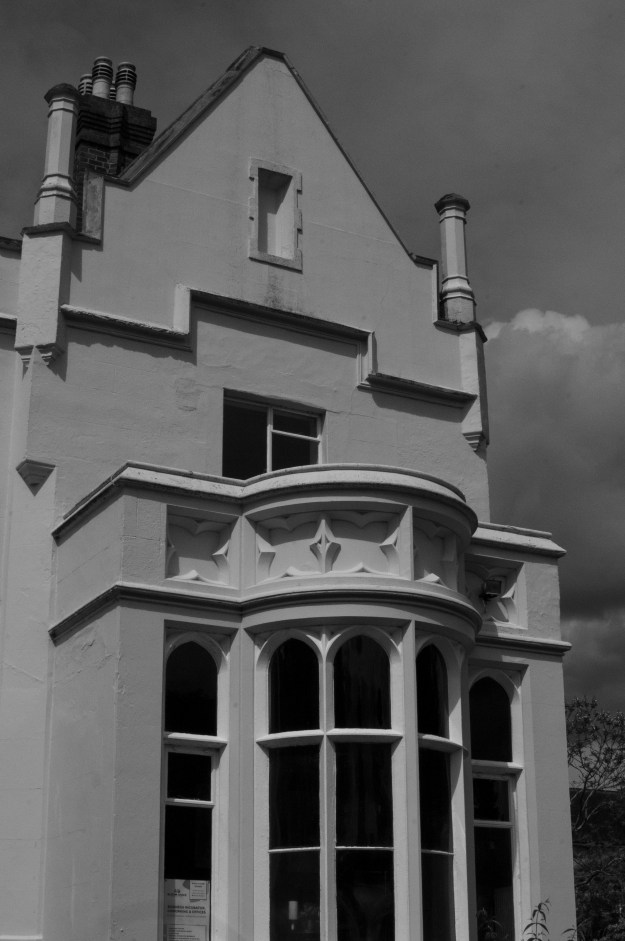
This final image of the same building was shot in high contrast light.  In this case, I wanted to highlight the ornate stonework around the windows and wasn’t particularly interested in the rest of the frame.  I metered the shadow on the detailing above the window and reduced exposure by 1 stop to Zone 4.  The result is an image where the extreme highlight is brought under control by the shadow placement.  The conversion to black and white gives the photograph an infrared feel, which I wasn’t intending but I believe it works.

Conclusion

The electronics in our cameras do what they can to represent the light reflected from the subjects in the frame.  The calibration to mid-grey will render an image faithfully if the subject and light are fairly flat.  However, with a complex scene comprising highlight and shadow, the camera is unable cope automatically.  By using simple placement of the light and dark regions with spot metering , the camera can produce a more faithful image or be used more creatively because of the extra level of control available.  I’ve been shooting film for a number of years now, so these principles were already known to me.  However, the main lesson here is that metering and exposing will only be as good as the effort put in to getting it right.

References

[1] HealthEngineBlog, 2007, “Vision and the Eye’s Anatomy”, https://healthengine.com.au/info/the-eye-and-vision, accessed May 2019

[2] The Physics Classroom, “Visible Light and the Eye’s Response”, https://www.physicsclassroom.com/class/light/Lesson-2/Visible-Light-and-the-Eye-s-Response, accessed May 2019

Exercise 4.1: Daylight

The Brief

Taking the photography of Mann, Atget or Schmidt or a photographer of your own choosing as a starting point, shoot a number of photographs exploring the quality of natural light.  The exercise should be done in manual mode and the important thing is to observe the light, not just photograph it.  In your learning log and using the descriptions above as a starting point, try to describe the quality of the light in your photographs in own words

My Approach

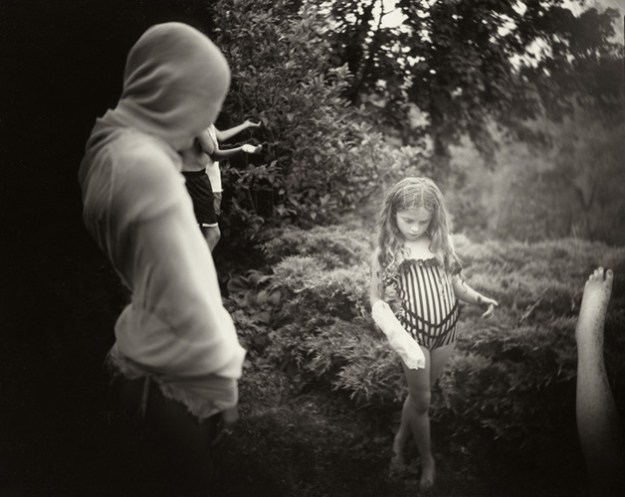
From my research in Project 1, my inspiration for this exercise is Sally Mann, but not in particular her use of light in her Southern Landscape series, but her more intimate family portraits as her children were growing up.  These images continue to cause controversy in the US because they predominately include nudity, but running throughout is how Mann uses light.  Always shot in black and white, Mann’s photographs have the main subject picked out by soft, but bright light while the rest of the image is subdued by the contrasting shadow.  An example of this can be seen below.

From Family Pictures, by Sally Mann [1]

In this image, we see Mann’s daughter lit by an almost ethereal light while the rest of the frame rolls off into vignette.  Mann puts some of this down to her old large format film camera and its uncoated lens, but the effect is a constant in this body of work.

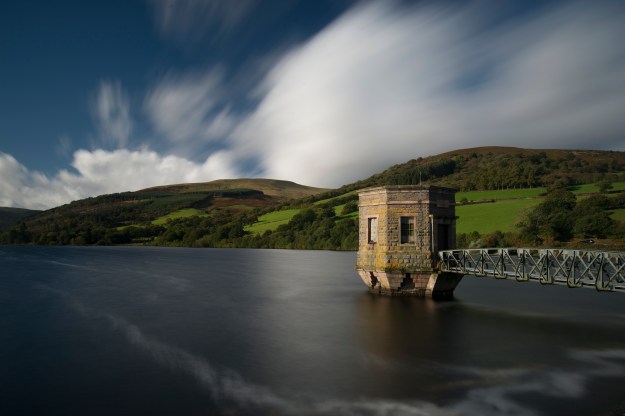
In my previous landscape photographs, I’ve tried to achieve a similar effect of picking out the subject with a ‘highlight’ against a contrasting background, so my first task was to review what I had done before.   An example from my previous work can be seen below:

Tallybont Reservoir, 2016 by Richard Fletcher

This photograph was made using a 6 stop ND (neutral density) filter to achieve long exposure with the spot metering done from the grey cloud overhead.  The weather was sunshine and cloud so it was a matter of waiting for the light to pick up the tower structure.  Apart from the colour correction needed when using this type of filter (mine has a blue cast), the image has only had some contrast adjustment and a crop.

With this effect in mind, I looked for subjects and conditions to shoot.  Since the images didn’t need to be a collection for this exercise, I took opportunities to shoot whenever I saw a subject under these conditions.

The Images

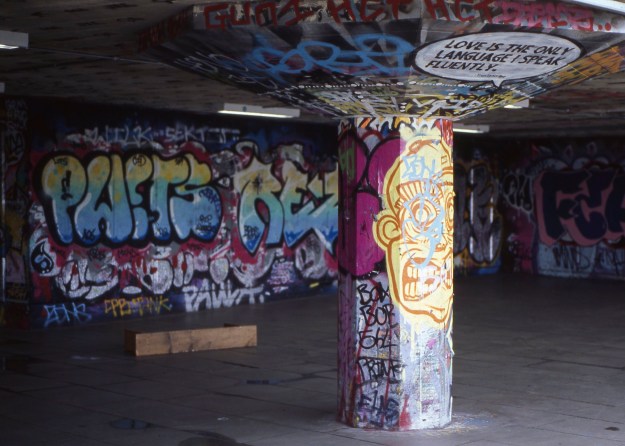
Leica 100519006

Skate Park, London 2019

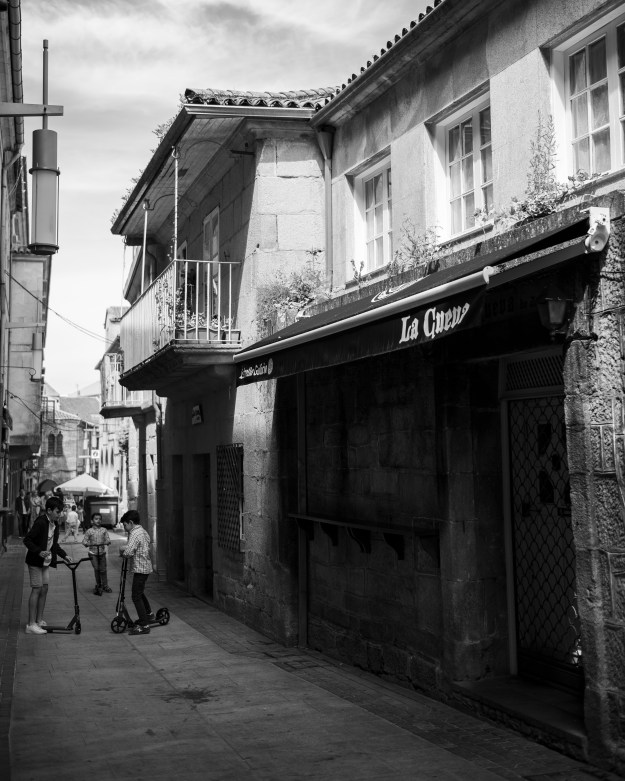
DSC_2779

Scooters, Pontevedra 2019

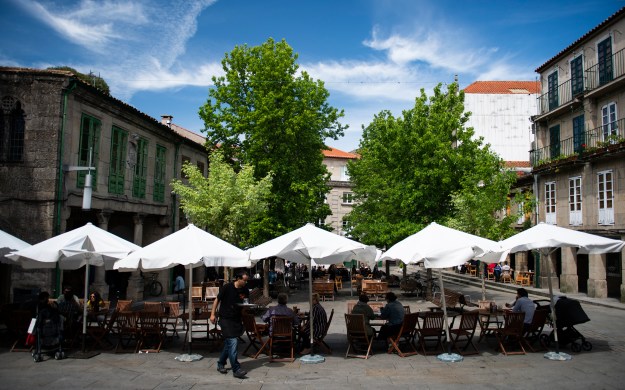
DSC_2780

Waiter, Pontevedra 2019

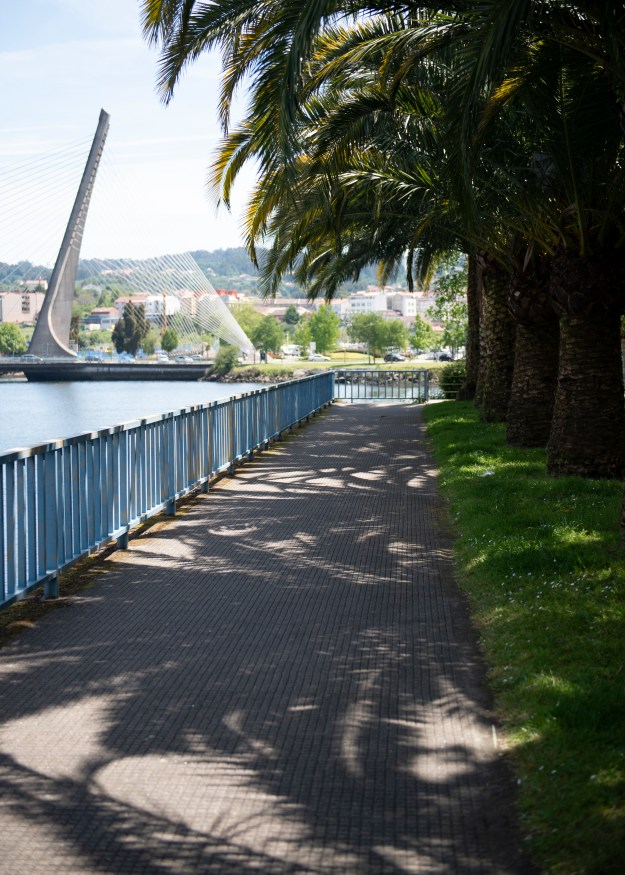
DSC_2749

Palms, Pontevedra 2019

Review

Skate Park, London 2019 (Kodak Ekachrome 100, shot in a Leica M6, 50mm, 1/60th at f/2.8).

I was hoping to shoot the skaters that gather in this underpass on the embankment in London.  It was a cold day, so I guess they had better things to do.  However, as I looked a the graffiti which has become part of the vibe of this area, I noticed the message at the top of the pillar.   I metered the scene, which was always going to be a challenge using slow slide film like Ektachrome, but was surprised to find the meter reading 1/125th at f/2.8 on the pillar itself.    I decided to lift the exposure on the pillar to make the light more impactful and in an effort to get more detail in the shadowed graffiti in the background.  1 stop more exposure was given in shutter speed.

Scooters, Pontevedra 2019 (ISO100, f=45mm, 1/125th at f/2.8, black and white conversion)

My wife and I were in Spain for her multi-sport competition and visited the beautiful old town area of Pontevedra.  I saw this scene in front of my and my intention was to pick out the sign on the cafe canopy.  For this shot, I metered the shadows rather than the highlights as before.  Adjusting down by 2 stops, I then noticed the boys entering the scene.  They were not highlighted in the same way because of the shadow cast by the building to the left of the frame, but I like the way they are subtly lit.  A happy accident.

Waiter, Pontevedra 2019 (ISO100, f=24, 1/640th at f/2.8, circular polarising filter)

The light was very bright when we entered this square.  Using the polariser to reduce the harshness of the light reflected from the canopies and darken the sky, I decided to shoot wide open at f2/8.  I then metered the shadow under the canopies where I could see the waiter serving.  I reduced the exposure by 1 stop to 1/640th and waited for the waiter to emerge from the shadow.  I like this photograph but believe that I was a split second too eager in taking it.  The waiter is indeed picked out, but the impact could have been higher if I had waited.  I included anyway, because I think it is a good example of reading the light, getting the camera ready and waiting for the action.

Palms, Pontevedra 2019 (ISO100, f=48, 1/25th at f2.8)

Walking along the river in Pontevedra, I spotted the light coming through the branches of the palm trees and casting the pattern on the pavement in front of us.  Not strictly the same approach as before, but in this photograph I metered for the shadow on the floor and lowered by 1 stop to make them dark enough to have impact.  The highlights above the bridge were a little brighter than I wanted, but they are not washed out so I left the exposure as is.

Conclusion

This exercise has been useful in two respects, metering for the light or shadow and placing it within the exposure to suit the intent and taking time to observe the light in the scene.   The former is something I was already familiar with from working with film, but the latter requires more thought.  Moving from shooting a photograph with reliance on one of the semi-automatic modes that all modern cameras have is a daunting prospect.  Moving away from matrix metering brings with it another aspect that most are not used to.  This greater control over how we want to the photograph to look is more akin to the representation of light that painters have been doing for centuries.  The alteration of the light in Skate Park, London for example made the pillar more dramatic.  To someone looking at that scene quickly the contrast between highlight and shadow would probably not be as obvious. I had time to view the light in the scene, so could make a decision as to what the photograph should look like.  When this is achieved, we see how beautifully natural light plays on subjects, folding around surfaces and being reflected and filtered as it reaches our eye.  My images here were not shot at different times of the day, something obvious from the challenges around Waiter.  However, the variation of light is something I have observed in my earlier photography and in the research for Project 1 [2].

My main conclusion from this exercise is that we don’t always have time to shoot manually or to take time to evaluate light, but we should consider how any image should work in natural highlight and shadow.

References

[1] Image source, Sally Mann Selected Works, www.sallymann.com

[2] Part 4, Project 1 – “Layered, complex and mysterious”, https://wordpress.com/post/richardfletcherphotography.photo.blog/898

4) Project 1 – ‘Layered, complex and mysterious’


Let there be Light

The introduction to this project provided in the course notes, calls out our experiences where our images don’t match our expectations.  “Why did that photograph end up under-exposed? Is there something wrong with my camera?”.  While this happens to everybody from time to time, my earliest recollection of the phenomenon was a defeating experience.   My first camera was 110 Voightländer Vitoret that my father loaned me while I saved for my own.  This was a typically simple camera, with zone focusing and autoexposure.   I recall shooting my first few cartridges of 110 film with that camera and getting the results back from the local chemist.  Some of the frames were ok, but most had the dreaded sticker applied to the print, informing me of what I got wrong.  Under or over-exposed was the most commonly suggested by the developer, although a small boy would also get his thumb in front of the lens.   Forty years later and with lots of other photographic experiences behind me, the natural conclusion would be that I knew nothing about light, or how the camera would attempt to represent it on the film.  Light for me was just a judgement in determining the selection of film speed for my camera.

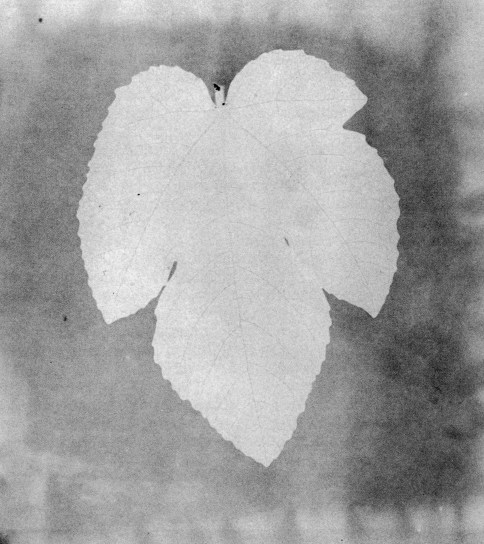
In beginning research for this project, I wanted to understand the different ways light had been manipulated by photographers; strong and diffuse, natural and artificial, highlight and shadow.  In the earliest period of modern photography, light was used to create images for contrast, where a subject’s obscuring of light against the blankness of the paper was the effect being sought.  William Henry Fox Talbot, who is credited with the invention of the photographic paper process created a number of photogenic drawings by placing leaves on photo paper and exposing them to sunlight (below).  The resulting negative prints show the detail of the leaf structure captured as the light is passed, obscured and partially obscured as it travels to the paper.  These early prints were subsequently used by botanists in their research of plant structures.  However, in the photographic sense, light was merely the tool to create a drawing [1]; something that Fox Talbot admitted to being poor at.

whft066.jpg

Photogenic Drawing of a Leaf by William Henry Fox Talbot, c 1839

The technique naturally became the method for making contact prints by placing negatives onto photographic paper to create a positive, but artists continued to create surreal pieces using the original idea, e.g the film strip images by Man Ray [2].

The evolution of the use of light to simply get an exposure continued through the Victorian era with the light being created by exploding magnesium powder.  This use of artificially-created light might seem at first glance, but the quality of the exposure could be surprisingly good with its ethereal tones [3].  Victorian photographers experimented with multiple lights, double exposures that led to the infamous paranormal photography craze and was ultimately succeeded by the precision flash tubes of the early 20th Century.

Representation vs Capture

The etymology of the word photography can be traced back to the mid 19th Century coined by Hercule Florence in 1833 [4].  Florence was a draftsman working  in a team of sketch artists in Brazil with a botany expedition.   Fox Talbot contacted Florence’s employer to pitch his idea of using photogenics for examining the structures of plant life (the image above).  He didn’t realise that Florence had already worked out his own method for capturing ‘drawings’ using photosensitive materials, coinciding with both Fox Talbot’s work with silver-salt negatives and Louis Deguerre’s wet ‘tin type’ method.  Unlike his more famous European peers in the field, Florence is credited with the first use of the term photographie, literally translated as light drawing in his native French. Although drawing with light was the principle of faithfully reproducing what would have been a sketch of a subject as opposed to art, photography offered some ability to be creative in the early days.  However, it would some years until the idea of visualising light and representing it would be part of photography in stark contrast to the painters and sketch artists from history.   Their genre required carefully looking at the light on their subject and determining the most impactful way of representing it in the picture.   Two renowned painters famous for their mastery of visualising light and representing it on canvass were J.M.W. Turner and Rembrandt Harmenszoon van Rijn.

Turner was known for his dramatic landscapes depicting dramatic scenes set against the backdrop of turbulent weather and the violence of the natural world.  To create impact, he was known to experiment with colourisation elements of his paintings, creating a sense of the surreal while maintaining enough realism to the subject.  He famous work Rain, Steam and Speed – The Great Western Railway, 1844 demonstrates Turner’s manipulation of light to suit the drama of a scene.

Turner_-_Rain,_Steam_and_Speed_-_National_Gallery_file

Rain, Steam and Speed – The Great Western Railway, J.M.W. Turner, 1844

The scene depicts a steam train racing over a viaduct on a stormy day.  In this image, Turner take what would have been largely defuse light experienced in heavy rain and cloud and creates a complex luminance to the scene.  When I first saw this painting many years ago, I asked myself “Where is the light coming from?”.  At first glance is is not the obvious but the light under the main and left viaduct suggests the light is coming from the right of the painting.  The shadows on the viaduct support also support this assertion.  However, the lighting and contrast of the train itself suggests some artist licence to give a sense of thundering movement toward the viewer.  Turner’s use of ambiguous colour for both the landscape and cloud suggests chaos in the weather and while there is not clarity in the rain itself, the mood of the sky and blurring of the foreground detail points to a train battling through very bad weather.   This painting clearly could not have been painted in real-time, but Turner was able to place the dramatic subject in his equally dramatic landscape and create the impact by manipulating light and colour to great effect.

By contrast, Rembrandt was known predominantly as a portrait painter whose fascination with studying people either singularly or as part of a scene comprising multiple subjects.  Rather than create an impressionist aesthetic, Rembrandt wanted to best convey the natural complexity of the subject’s face and expression to allow the viewer to draw conclusions about what is happening for the subject.   Rembrandt painted many self-portraits over his later life, documenting the changes in his own physical form.

“Life etches itself onto our faces as we grow older, showing our violence, excesses or kindnesses.”  Rembrandt van Rijn

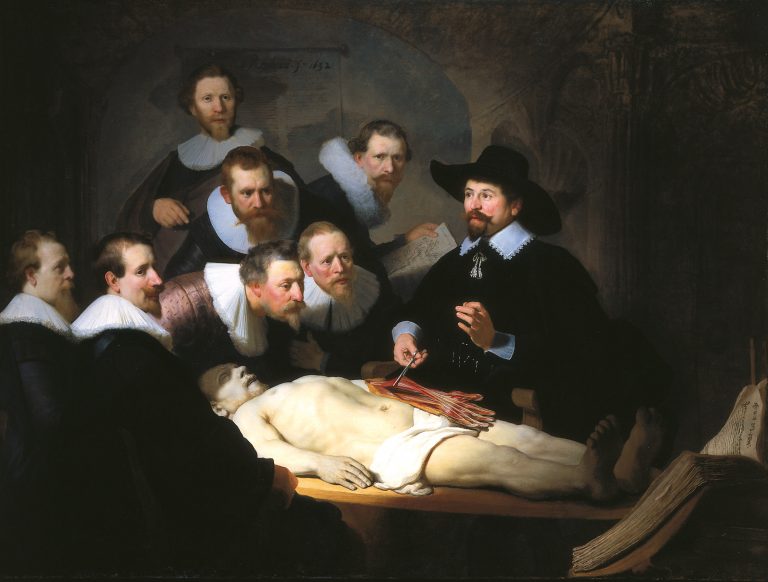
In his famous painting The Anatomy Lesson of Dr Nicolaes Tulp, we see a human dissection taking place in front of a group of students.  This painting, regarded as one of Rembrandt’s early masterpieces as it was a commission when Rembrandt was just 26 years old.  As well as being a technically detailed work with a realistic representation of the dissection and the expressions of onlookers, it is a great example of Rembrandt’s use of light.  The scene is tightly lit from the left of the painting but some unseen source, but presented in a way that reflects the needs of the work being done in the scene.  The light rolls away from the centre of the painting so that there are few distractions at the edges of the scene and while the corpse is the brightest element, its face is partially obscured by shadow so as to avoid distracting from Tulp working on the arm.  What’s most interesting, though is the lighting of the faces of Tulp’s students.  This is an example of Rembrandt’s technique that inspired the well-known Rembrandt Lighting that is used in modern portrait photography.


The close-up view shows two of the students with similar lighting on their faces.  The left side of the face is lit brightly, but the nose casts a shadow onto the right side of the face which results in a partial eclipse effect, apart from a small triangle of light that folds around the bridge of the nose.  This effect was used in many of Rembrandt’s paintings to accentuate the details of the face and its expression.  It is used as a staple setup in modern studio portrait photography as shown in the photograph below.

For me, Rembrandt was someone who observed the light play on his subjects in almost micro-detail, and as a result his work has an almost photorealistic quality to it.  The skill applying natural light in oil paint is essentially hidden from the viewer as they are left to study the subject without distraction.  In The Anatomy Lesson of Dr Nicolaes, the first thing that strikes me is the highlighting of the procedure taking place, which points to the importance of the relatively new science of anatomy.  The students themselves are not traditional youth, but scholarly middle-aged gentlemen who themselves are already presumably of well regard.  When attention is drawn to the dissection itself, the ‘reality’ of the painting comes back into focus.  The arm with its musculature and vessels prompts the question “How is this level of detail possible?”.  The answer, according a medical paper by the University Medical Center Groningen in the Netherlands [5], is takes us back to the idea of representation rather than capture.  

A public anatomic lesson in the 17th century usu- ally started with dissecting the perishable organs of the abdomen and thorax; the extremities were the last to be dissected.1–3 In Rembrandt’s painting, how- ever, the forearm already has been dissected whereas the rest of the body still is intact. This is another reason to believe that Rembrandt’s painting does not record the real situation of Dr. Tulp’s dissection but rather represents a symbolic interpretation.

The Anatomy Lesson of Dr. Nicolaes Tulp by Rembrandt (1632): A Comparison of the Painting With a Dissected Left Forearm of a Dutch Male Cadaver

The paper asserts that the anatomical realism created by Rembrandt is so inaccurate that the artist couldn’t have been in the room, even to sketch the scene.


A portrait painter’s success depended heavily on his skills to produce an acceptable likeness of his sitters following existing visual conventions,37 but did Rembrandt record an exact representation of the public anatomic lesson held on January 31, 1632? None of the anatomy paintings of the Amsterdam Guild of Surgeons display an exact representation of an anatomic lesson  They are all group portraits and commemorate the tenure of a Praelector Anatomiae or membership of the Amsterdam Guild of Surgeons.  Rembrandt seems to have painted a realistic reproduction of an anatomy lesson.

Middelkoop N, Noble P, Wadum J, Broos B. Rembrandt under the scalpel. The Anatomy Lesson of Dr Nicolaes Tulp dissected

What is clear is that Rembrandt created his masterpiece using some unconfirmed prior medical knowledge or research and painted and idealistic representation of the marvel of modern medicine; a propaganda piece for Dr Tulp.  His command of light and its natural ‘behaviour’ allows him to draw the viewer to the action whilst maintaining a sense of gravitas in the subjects themselves.  The painting’s accuracy and artistic merit have been debated for over 350 years, which points to the impact of the work.Rembrandt’s lesser known work confirms his abilities with representing natural light.  In The Rich Fool, 1632 (below), Rembrandt’s single light source is a candle directly in front of the subject’s face.

Rembrandt_-_The_Parable_of_the_Rich_Fool

The Rich Fool, Rembrandt van Rijn, 1632


When we examine the painting, the first thing we notice is the softness of the candlelight as it rolls off in luminance. We cannot see the flame as the subject’s hand is shielding it, but the light is spread across the the area of the desk and gloomily reveals some detail in the room behind.  Shadows are where we would expect them to be on the books and the subject’s face.  The artist reveals only the details that support the meaning of the image; the parable of the rich fool from the Bible.   The story of the man whose selfish amassing of possession to guarantee his future is shown represented by what the light falls on; the vast ledgers and legal documents, the coins and man’s fine clothes coupled with his pained but determined expression are what Rembrandt uses to press home the need to not be selfish.

The Photographers

The course notes point to three very different photographers in Sally Mann, Michael Schmidt and Eugene Atget.   The work of each demonstrates the observing and capturing of light in a way that best enhances their subject.

In the interview “The Touch of an Angel” [6], Mann refers to the translucency and fragility of light, in particular the way that it is affected by location; drawing a distinction between the light in the North and South of the US.   As photographers, we all observe the difference is in spring/summer vs. autumn/winter light quality and the variations throughout the day.  The more interesting thing about her work in ‘Southern Landcapes’ though, is how Mann uses light to convey a sense of feeling in her photographs.  The emphasis of the series of pictures isn’t the interest in the subject matter or the precision of composition and focus.  Instead, she uses light and shadow to describe the environment she is in.  We can get a sense of the weather, the season and even the temperature from what is essentially a series of monochrome images.  She admits in the interview that light is softer owing to the lack of coating on the lens, which enhances the dreamy feel of her pictures.  I’ve discovered over the past few years that the age of the lens, coupled with the type of film emulsion used, can create a photograph that has an antique look to it.  By making her images more about her observation of the luminance in the scene rather than the technicality of exposure, Mann creates a series that could have been shot 100 years before.

Using what at first looks like boring, flat light, Michael Schmidt’s series Waffenruhe has a ‘what you see is what you get’ feel to them.  Simple compositions with the eye drawn to the subjects using depth of focus etc… all things we have learned here already.

‘The viewer must allow the objects portrayed in the photograph to take their effect upon him without being distracted by shadow or other mood effects’ – Michael Schmidt

Waffenruhe-by-Michael-Schmidt-Tipibookshop-15-450x450

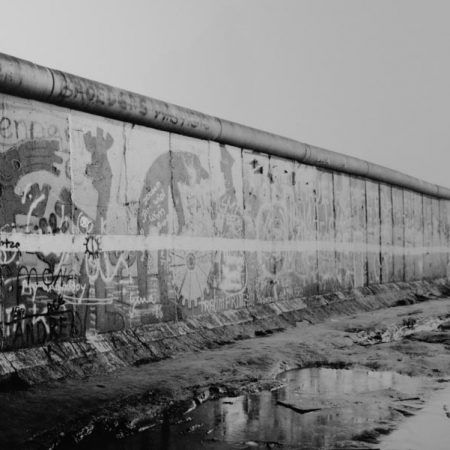
Waffenruhe, Michael Schmidt, 1987


In the photograph from he series, the Berlin Wall can be seen leading away from left to right.  The first thing we see is the walls set against a plain sky, which suggests a dull, overcast day where the light is flat.  The subject itself has little shadow which reveals the details of the graffiti along its length.  The one area of shadowsw and highlight in the photograph is the wasteland area in front of the wall, but there is little to distract from the main subject as described by Schmidt in his quote.  In a video documentary [7], Gabriele Franziska Götz, who was involved in printing Schmidt’s book Berlin-Wedding, described printing ‘as grey as possible’, likening the overall effect to being that of a photocopy.   By his admission [8], black and white photography also “guarantees the viewer a maximum amount of neutrality within the limits of the medium. It reduces and neutralizes the coloured world to a finely nuanced range of greys, thus precluding an individual way of seeing (personal colour tastes) by the viewer”.

This flatness of exposure can be seen in Eugene Atget’s Documents pour Artistes, the factual, documentary photographs that Atget made his living creating [9].   As he didn’t see himself as an artist in his early years, nor did he care much about the conditions of the light.  The film he was using was not particularly sensitive to the blue region of the spectrum, so the skies in many of his photographs were plain white, with no cloud detail.  Little is known about his workflow, but at some point he must have realised that the softness and even angular quality of light varies during different parts of the day.  Two of Atget’s contrasting works can be seen below.

The first is an image of the Paris Atget was trying to preserve in his documents.  Shot with minimal variation in lighting, apart from the rooftops of the buildings.  The image is precise in how it reveals the architecture of the city but there is little to describe what it was like to live there.  The second image by contrast is from his Parc de Sceaux series and it is immediately clear what the differences are.  This photograph uses highlight and shadow to create an ethereal view; the biblical stature looking into the distance where the contrast fades with the luminance of the horizon.  This image as a factual document is not as useful as the first in that only the details that create the mood can are revealed by Atget.

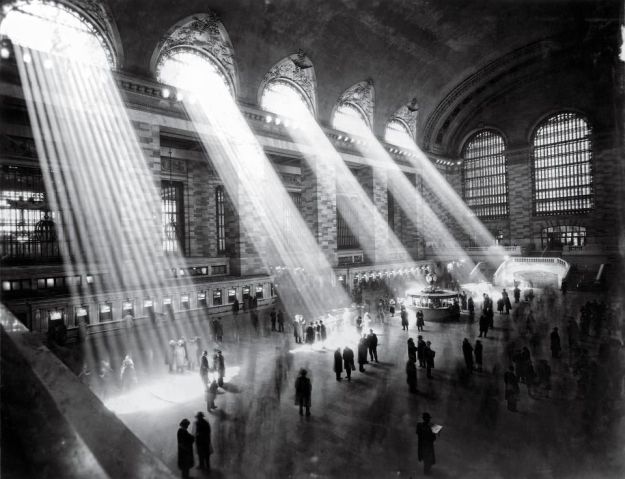
Perhaps the best way to see how Atget developed his approach, without knowing a great deal about the man, is to look at the work of his mentee and champion of his work, Berenice Abbott.  Abbott was hugely influenced by Atget, so it isn’t a surprise that when documenting the urban development of New York City that she uses light in a dramatic way.  The photograph below shows one of Abbott’s New York scenes; Grand Central Terminus.

Bernice+Abbott

Portrait of New York 5, Berenice Abbott, 1929

Conclusion

This project interested me as someone who, like many was taught to use light in a composition without the emphasis being on really observing its behaviour.  For me, light has just been a tool for the medium, much like the Fox-Talbot photogenics where it is used to reveal something else.  Reviewing Sally Mann’s work and how she uses the light’s own subtle beauty to create a mood, made me realise that looking at a scene was far more than just how to focus, compose and what shutter speed to use.  Her emotive landscapes as well as her more controversial portraits of her family, share the use of light to draw more attention from the viewer.   Looking at Rembrandt’s mastery of imagining and representing light led me down a different way of thinking, more akin to artificial light and deliberately controlling the aesthetic.  In stark contrast to both Mann and Rembrandt, the notion of simply documenting the scene without using light and shadow is also intriguing, particularly as most photographers are taught effectively not to do this.  Schmidt’s approach forces us to appreciate the flatly lit detail of each scene, to appreciate the interest in the subject chosen as opposed to any mood it might create.   One thing is certain, light whether observed, captured or represented is a complex element to photography and its many uses offer huge diversity in photography.

References

[1] Fleury P, 2015, Salt and Silver, Tate Britain Exhibition, MACK Books

[2] Radnitzky E, 1923, Rayograph, Museum of Modern Art (MOMA), https://www.moma.org/collection/works/46483?artist_id=3716&locale=en&page=1&sov_referrer=artist, accessed May 2019

[3] Cangemi M, 2017, My/AP Workshop Ep4 – Magnesium Flash Photography video, https://www.youtube.com/watch?v=zbAcOL4oR7M, accessed May 2019

[4] Brizuela N, 2014, Light Writing in the Tropics, The Story of Hercule Florence, Aperture. https://aperture.org/blog/light-writing-tropics/, accessed May 2019

[5] Frank F et al, 2006, The Anatomy Lesson of Dr. Nicolaes Tulp by Rembrandt (1632): A Comparison of the Painting With a Dissected Left Forearm of a Dutch Male Cadaver, https://web.archive.org/web/20070926154457/http://www.handsurg.eu/resources/rembrandt_en.pdf. Accessed May 2019

[6] Rong J, 2010, An Exclusive Interview with Sally Mann – “The Touch of an Angel” (2010), https://www.americansuburbx.com/2013/01/interview-sally-mann-the-touch-of-an-angel-2010.html.  Accessed May 2019

[7] Langfeld A & Paulsen S, 2016, Werkstatt für Photographie: 1976-1986. Micheal Schmidt. Teil 4, https://www.youtube.com/watch?v=4m4Fc1UPUd8. Accessed May 2019

[8] Schmidt M, 1979, “Thoughts About My Way of Working” (1979), https://www.americansuburbx.com/2010/10/michael-schmidt-thoughts-about-my-way-of-working-1979.html.  Accessed May 2019

[9] Dupêcher N, 2017, Eugene Atget, French 1857-1927 – Museum of Modern Art (MOMA), https://www.moma.org/artists/229, accessed May 2019