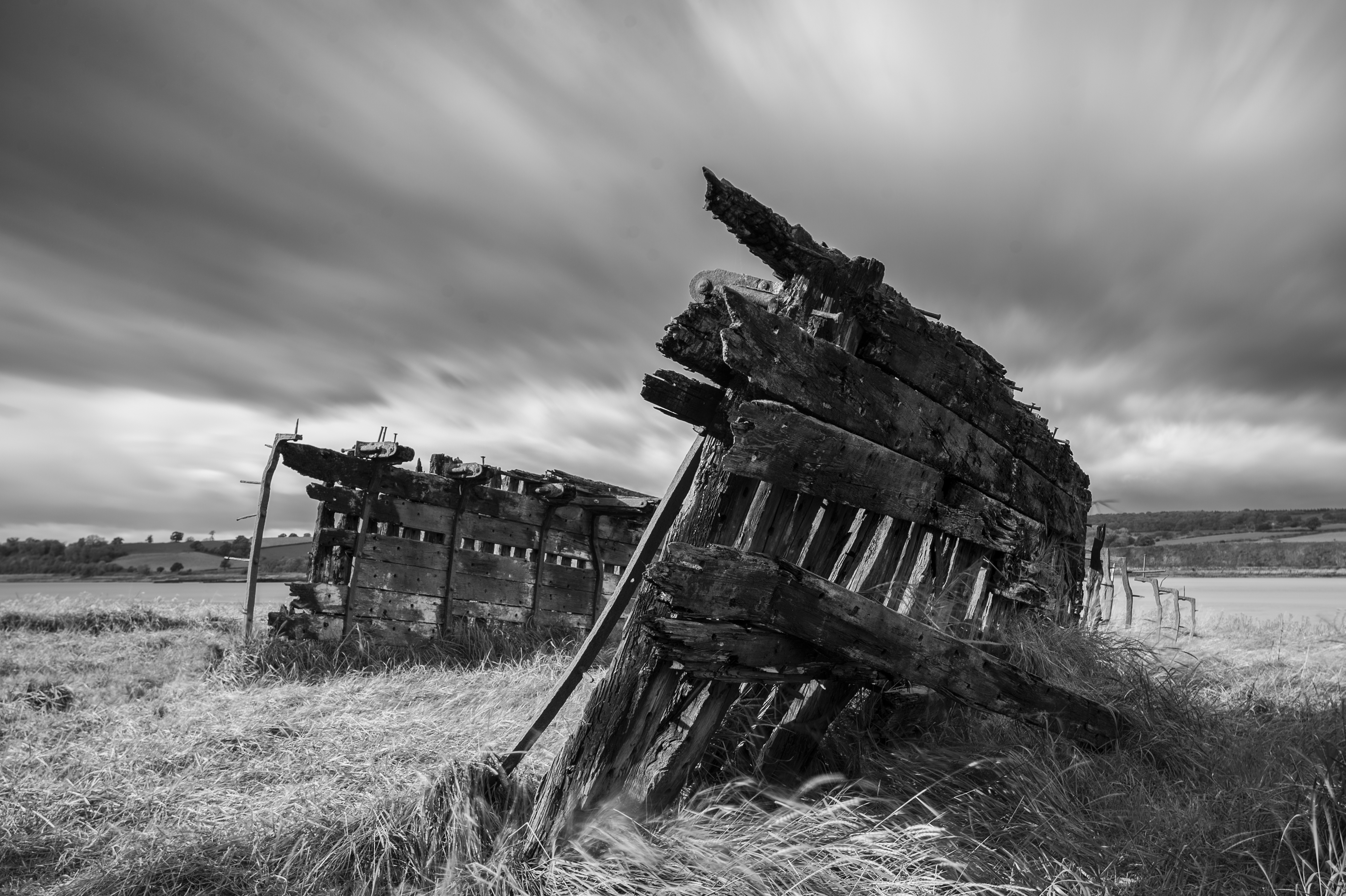
The Brief
Start doing your own research into some of the artists discussed above. Then, using slow shutter speeds, ,multiple exposure function, or another technique inspired by the examples above, try to record the trace of movement within the frame. You can be as experimental as you like. Add a selection of shots together with relevant shooting data and description of process (how you captured the shots) to your learning log.
My inspiration
Prior to starting part 3, I had already become familiar with the use of shutter speed to record or freeze time. Over the past few years, my two most common types of photography have been shooting sporting events and landscape. In the former, the freezing of time is generally used to show the action, where a technique commonly used in the latter incorporates capturing movement of clouds, water etc through the use of slow shutter speeds. What I learned in part 3 was that the movement within the frame is the third dimension to the image, whether it is time between events or simply relative movement between the camera or the subject. The impression of speed of the subject can be created by using a slow speed to capture motion blur, while the same effect can be used to express chaos and panic by capturing the camera movement. In an artistic sense, it doesn’t matter which tool is used to create the effect as long as the photograph works. My research into the decisive moment (Project 3) led me to examine the works of highly creative artists such as Aïm Deüelle Lüski, who uses both long and multiple exposures combined to produce ethereal, semi-realistic images with the camera as part of the scene. As a film shooter, I was also aware of the classic technique of multiple short exposure of single frames of film to create the effect of a long exposure, the motivation being to retain texture and avoid issues with reciprocity failure of slow films.
Last year, I purchases a long focal length macro lens for my D4. At 200mm, it offers both the very short focus distance and telephoto magnification, which has allowed me to capture very small subjects such as bees with high precision. I’ve grown to love the details this lens reveals, so my starting point for this exercise was small movement in the frame.
The images
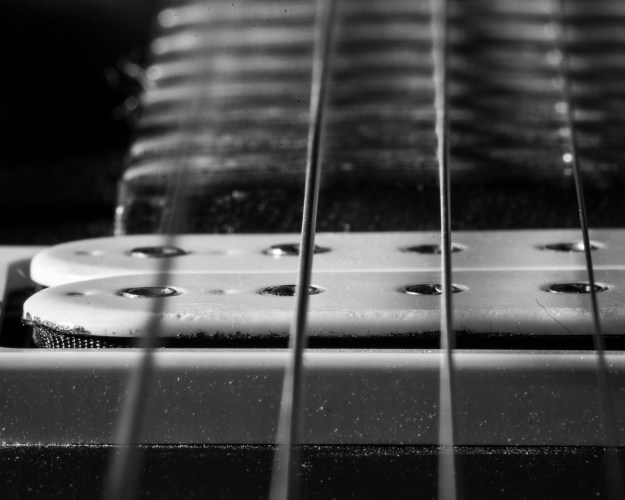
The E String (3s at f/40, ISO 800)
This first image was inspired by my renewed interest in the guitar and the memory of a late friend once trying to teach me, to no avail. I borrowed an electric 6 string guitar from a colleague so that I could capture the tiny movements in a string when it is plucked; in this case, the E string. My first attempt at this shot was ruined by my being too heavy-handed with the string. The vibrations induced into the rest of the guitar made all of the strings move. Eventually, my plucking of the string was gentle enough to keep everything else still. I used a continuous LED light from the left of the frame to light the strings and pickup.
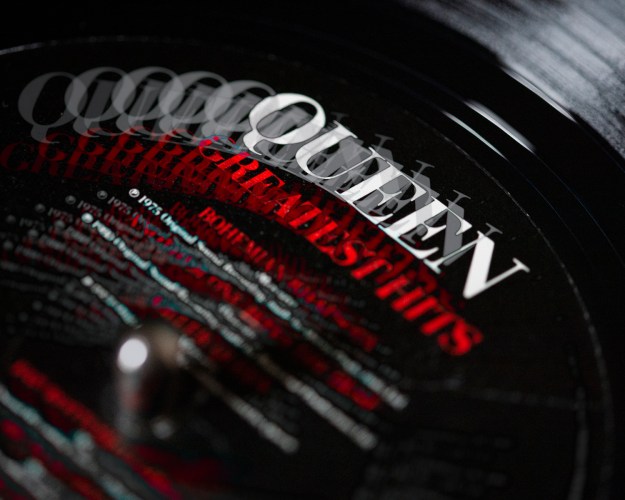
Vinyl Queen (composite of 6 frames all 1/400th at f4.8, ISO6400)
This image was inspired by my recent rediscovery of vinyl records and of the band Queen, following the recent film biopic Bohemian Rhapsody. I started listening to vinyl again because of the tactile nature of the medium, which has been lost in the digital era. For this image, I shot the record label with the camera on a tripod and the shutter release set to High Speed Continuous. With the same LED light at 45 degrees from the lens, I shot 6 frames as the turntable rotated. In Photoshop, I combined the images as layers with increasing opacity up to the final frame. This is essentially the equivalent to shooting multiple exposures of a single frame as one would in film, the key difference being that there is always only one photograph in that medium. As I’ve progressed as a photographer, I’ve moved away from using digital manipulation in Photoshop and Lightroom. However, the effect is what I was looking for and as the man said:
“The negative is the score, and the print is the performance.” – Ansel Adams
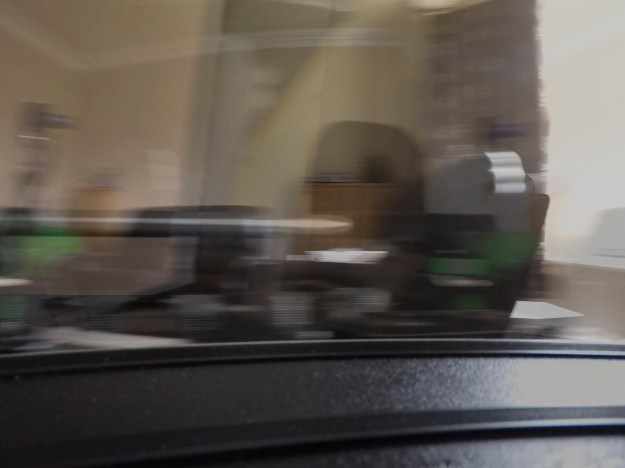
View from the Deck (GoPro at 30fps, combined in Photoshop)
For my final shot, I was inspired by the works of Lüski I placed a GoPro camera on the turntable of my record player, facing outwards. With the camera set to 30pfs burst photo mode, I rotated the turntable and shot a 360 degree panorama of the room. I used the same process of layering different opacity frames in Photoshop to create one image.
Reflection
I enjoyed shooting for this exercise as I was able to try three different techniques to capture movement within the frame. The first image showcases macro photography and in particular how it reveals detail that the eye struggles to see. The use of traditional slow shutter speed captures the difference between the strings well and the composition is clearly of a guitar pickup and fret board. The second image is more technical, post-processing than photography, but it is a variation of a classical approach to slow speed film photography. I like the way that the text is still legible this way, as with simple long exposure the effect is not as easily achieved. The final image was my tribute to Lüski. I loved the concept of the camera being part of the image rather than a tool for capturing what’s in front of it. In this image, we can see all of the elements that make up the scene, from the record player’s tonearm and bright green cartridge to the ceiling cornicing, sofas and even my camera on its tripod. The camera appears twice as it is also reflected from the inside of the record-player’s perspex lid. I love the way that the only stationary element is the turntable mat in front of the camera and the way that the finished image is lo-fi, in a similar way to Lüski’s pinhole shots.
 Richard Fletcher OCA Photography Blog