Monthly Archives: Mar 2019

Assignment 3 – The (in)decisive moment

The Brief

Create a set of between six and ten finished images on the theme of the decisive moment.  You may chose to create imagery that supports the tradition of the ‘decisive moment’ or you may to question or invert the concept by presenting a series of ‘indecisive moments’. Your aim isn’t the tell a story, but in order to work naturally as a series there should be a linking theme, whether it is a location, event or particular period of time.

Include a written introduction to your work of between 500 and 1000 words outlining your initial ideas and subsequent development.  You’ll need to contextualise your response with photographers that you have looked at and don’t forget to reference the reading that you have done.

Initial Thoughts

The photographer’s eye is perpetually evaluating. A photographer can bring coincidence of line simply by moving his head a fraction of a millimeter. He can modify perspectives by a slight bending of the knees. By placing the camera closer to or farther from the subject, he draws a detail – and it can be subordinated, or it can be tyrannized by it. But he composes a picture in very nearly the same amount of time it takes to click the shutter, at the speed of a reflex action.

Sometimes it happens that you stall, delay, wait for something to happen. Sometimes you have the feeling that here are all the makings of a picture – except for just one thing that seems to be missing. But what one thing? Perhaps someone suddenly walks into your range of view. You follow his progress through the viewfinder. You wait and wait, and then finally you press the button – and you depart with the feeling (though you don’t know why) that you’ve really got something. Later, to substantiate this, you can take a print of this picture, trace it on the geometric figures which come up under analysis, and you’ll observe that, if the shutter was released at the decisive moment, you have instinctively fixed a geometric pattern without which the photograph would have been both formless and lifeless.  – Henri Cartier-Bresson, The Decisive Moment, p.8.

When beginning this assignment, I was already aware that this is a brief that causes some difficulty among students.  Following on from “Collecting” where the objective was to create a strong theme throughout that links the photographs, we are now presented with the additional challenge of supporting or inverting a concept by one of the most influential photographers of the 20th Century.  The decisive moment has had its supporters, adopters, doubters and opponents over the past 80 years, so how do we identify with one of these groups while putting our own interpretation into them.

‘The decisive moment is not a dramatic climax, but a visual one: the result is not a story but a picture’  – Szarkowski, 2007, p.5

Szarkowski’s assertion about the decisive moment is a good starting point as with most of his book [1].  Like most people, my early photography was snapping pictures of whatever was in front of me without any planning or understanding of what I was trying to get across.  Storytelling or a visual climax that has the view asking questions about what the photograph might mean, didn’t enter my ‘process’ of taking the picture.  As I progressed in confidence, my thoughts moved towards creating something that was pleasing to look at, which in turn drove me to photographing landscapes.  However, I was still trying to simply please the viewer rather than present them with a photograph that revealed the subject or, heaven forbid told a story.    The idea of some order to the photograph that includes visual and contextual balance along with inviting the viewer to create their own accompanying narrative, appeals to me.  However, I also see value in the counter-argument that the decisive moment does not describe the events prior to, or  following the moment the image is made.  To truly reveal what is going on with the passing of time needs more context, such as in the work of Graham and Luski [2].  While I admire the counters to the decisive moment, I am more interested in my own interpretation of the concept as defined by Cartier-Bresson.  As someone who has struggled to shoot this way, I wanted to shoot this assignment in tribute to it, as I believe it still has relevance today in its challenging the viewer to internally narrate what they see.

There were a two elements of research during Project 3 [2] that captured my interest.  The first being the admission by Cartier-Bresson that luck played a major part in one of his iconic decisive moments and the idea contrasted with really looking at the scene.  The second being the idea that a decisive moment cannot be forced or brought into being by the photographer.  I concluded from this that a plan is not a bad thing, thinking in particular about Cartier-Bresson’s Hyères, 1932 [3] but that in preparation for a photographs like that, the photographer has some element of control over when the decisive moment occurs.  In addition, one can work the subjects in the frame to gain the best chance of capturing the moment, by altering perspective or viewpoint and waiting for the rest of the picture to present itself.  The quotation from his book, The Decisive Moment places a great importance on the decision by the photographer to take the picture in addition to seeing the moment itself either instantaneously occurring or evolving in front of them.

Why have I struggled with this?

Simply put, my original interpretation of the decisive moment was being able to observe, identify and capture the moment instinctively and with alacrity.  Street photography that involves people forming part of the subject matter has always been a difficulty to me, owing in part to my lack of confidence in shooting discreet pictures of people.  However, knowing that I can set some parameters to the image before the moment occurs, gave me the inspiration to try street photography again during a recent trip to London.  An example of my work from that trip can be seen below.

Southbank, London 2019 by Richard Fletcher

I saw the man sat on one of the brightly coloured benches outside the Southbank Centre with his dog.  It was clear from his behaviour that he was waiting for someone to arrive. I was shooting with my Leica M6 with a 50mm lens mounted, which offers a very discreet shooting experience because of its quiet shutter but having a focal length that required me to be close to the subject.  I positioned myself where I could see the dog clearly and some contextual background in the canopies and the pathway that had many people walking along.   To be even more discreet, I asked my wife to sit just outside the frame on the right hand side so that it looked like I was photographing her.  When the woman appeared and greeted the dog, I shot two frames.  The luck element in this composition was the casual observer behind the subjects, which for me makes for the decisive moment.  My input to it was different to previous street photography experiences where I wandered around trying to will a picture into being by observation only.  My lack of speed with a camera as old as the Leica meant that I had previously missed many intended decisive moments.  Armed with this approach, I began researching the photographers that inspire me.

My Research

I’ve previously stated that the work of Joel Meyerowitz has inspired me a great deal in my photography over recent years.  My favourite photograph in any genre is one of his early colour street photographs that is a great example of the decisive moment (below).  This fleeting moment with its huge visual impact and potential for narrative captures my attention every time I look at it.  It’s not a surprise that his body of work contains many classical decisive moments.
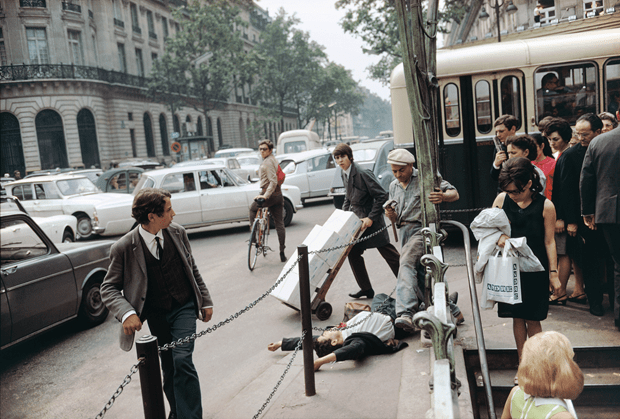
Paris, France, 1967 by Joel Meyerowitz (from Taking My Time, Phaidon)

“A young man lies on the sidewalk with his arms outstretched. A workman with a hammer casually steps over his fallen body. A crowd stands at the entrance to the métro, stunned by curiosity into inaction. A cyclist and a pedestrian each turn over their shoulders to catch a last glimpse, while around them the traffic glides by. Which is the greater drama of life in the city: the fictitious clash between two figures that is implied, or the indifference of the one to the other that is actual? A photograph allows such contradictions to exist in everyday life; more than that, it encourages them. Photography is about being exquisitely present.” – Joel Meyerowitz talking about Paris, 1967 in 2014[4]

While I wanted to pay tribute to the decisive moment and this image in particular, I wanted to look at how the photographer’s decision can be brought directly into the image, using either subtle or exaggerated ‘working of the subject’ within the composition.  Reviewing Meyerowitz collective works book [5], one photograph struck me as an example of the photographer’s ‘decisive moment’.  This image can be seen below.
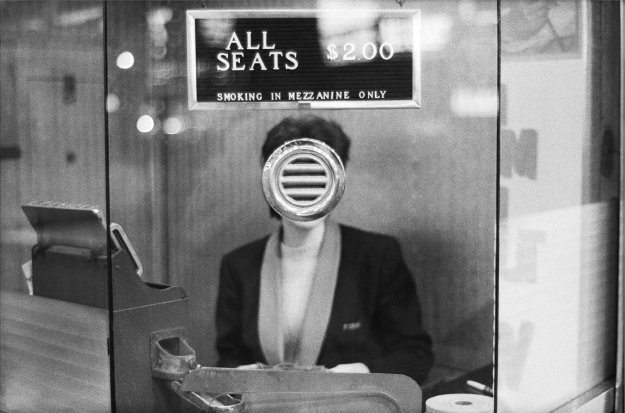
New York City, 1963 by Joel Meyerowitz

Here we are a lady in a ticket booth looking toward the photographer but her face is completely obscured by the microphone grille in the glass in front of her.  She is not in the plane of focus, instead Meyerowitz draws the attention to the glass screen and the information on the sign attached to it.  My initial reaction was to question whether it’s a decisive moment at all, but noticed that I was narrating what was occurring in the image.  I then realised that the moment is the photographer’s as a booth like this is intended for as brief an engagement as possible.  Meyerowitz had to see the juxtaposition of the woman and the grille, the frame created by the glass and the balance between in focus and out of focus elements, all presumably before holding up the line to the booth or being noticed by the subject herself.  For me, a decisive moment driven by perspective and deliberate obscuring of the main subject both spatially and in focally.

I recently had the opportunity to view exhibitions by Diane Arbus and Martin Parr; two photographers with very different styles.  In both collections, I saw images that follow similar lines to the above, placing the subject either in partial or full obscurity while having the impact of a fleeting moment.  The first, from Arbus’ exhibition at the Hayward Gallery in Southbank, London is a shot of a scene from the motion picture Baby Doll taken in 1956 in New York.

NYR_3408_0023

The scene is a a kiss, but the two people in the shot are almost completely lost in the way the photograph was exposed.  The lighting in the film was clearly to emphasise the female character’s eyes, which reminded me of my second assignment [6], but Arbus also underexposed the photograph in a way that preserved the few highlights while the boundaries of the composition are lost in darkening shadow.  The effect is that the image clearly shows the fleeting moment of the kiss in the linear timeline of the film, but Arbus creates the visual impact by obscuring any detail or distraction from the frame.  I don’t personally know the film, so the context of the scene invites speculation as opposed to the picture telling a story in its own right.

By contrast, the image using this approach that struck me from Martin Parr’s exhibition at The National Portrait Gallery [7] is a fun affair.  I’m a fan of Parr’s lighthearted perspective on life and social class, brought to life in almost over-saturated pictures.  They remind me of holiday snaps at first glance, but Parr’s technique is  to distract from clear photographic skill, leaving the subjects and settings to speak for themselves.  For his collection A Day at the Races, Parr took the photograph below using obscurity to emphasise the moment.

The Derby, Epsom, Surrey, England 2004 by Martin Parr

In this photograph, the conversation between the two main subjects is clearly cordial, but that’s about all we can see.  The man’s face is almost completely obscured by the hat and drink, which, along with the couple in them background set the context of the moment.  Unlike Arbus’ image, with this photograph Parr doesn’t take things too seriously and as with much of his work, the use of flash and the heavy saturation tend to polarise the public and critics alike.  However, the element of fun in this composition is something I intend to introduce to my collection for this assignment.

The final photographer I researched in preparation of this assignment was Garry Winogrand.  Winogrand was a photographer who didn’t approach his work with over-complexity or the need for a narrative.   In an interview towards the end of his life [8] he said

“A picture is about what’s photographed and how that exists in the photograph – so that’s what we’re talking about. What can happen in a frame? Because photographing something changes it. It’s interesting, I don’t have to have any storytelling responsibility to what I’m photographing. I have a responsibility to describe well.”  

What he was saying here is that a subject undergoes a change from the perspective of the viewer and the photographer is responsible for how it is presented, not what it might mean; very much in line with the devolved sentiments around the decisive moment.

While he photographed many subjects, he was known for challenging compositions that often caused controversy, for example his photograph of a young mixed-race couple carrying chimpanzees at Central Park Zoo [9].  The photograph was has a naturally balanced composition with the couple merely walking along, completely relaxed.  It was interpreted by a shocked America as a suggestion of what might happen if a mixed race couple were to have children.  Winogrand saw the likely problem at the time but asserted no responsibility for how others would interpret it.   The same drawing of conclusions beyond what is in the photograph as experienced in a decisive moment.

He took his documentary style of wanting to see how things looked then photographed [8] through a number of subject matters.  One of the first of Winogrand’s images that I saw was from his collection The Animals (below)
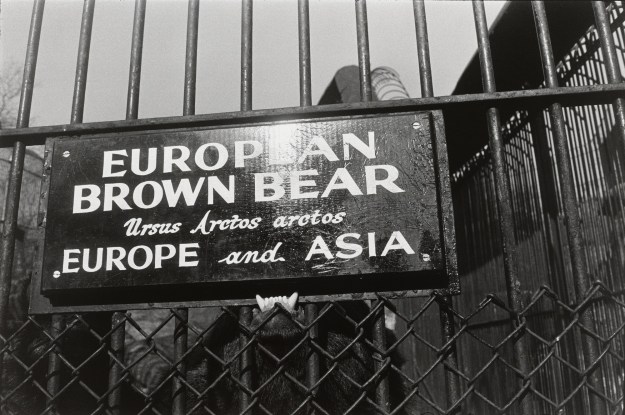
Central Park Zoo, New York City, 1962 by Garry Winogrand

Here we see a simple composition of a sign describing the occupant of the enclosure.  Only on closer inspection, we can see the moment where the bear’s jaw, its face obscured by the sign.  The image is devoid of clutter and the subjects within the frame all relate to each other. However, the brief moment of contact with bear indicates captivity, which can be interpreted a variety of different ways.  The convergence of the teeth and the cage sign occurs at the decisive moment, but the visual climax is made by how much of the bear we do not actually see.

My Idea

The works of these 4 photographers are different from each other in so many ways, but the common thread of these images is that they are a series of decisive moments, driven more by the photographer’s decision to release the shutter more than a specific action taking place.  Each has a planned feel to it, with the subject being worked to an extent before the moment that the photographer is trying to catch is committed as an image.  The missing elements caused by obscuring part of the subject causes the stand-alone visual climax that Swarkowski was referring to as well as promoting the narrative that might the reason behind the photograph.  Each photographer went about it in different ways and with different styles but reached the same outcome.

My series of photographs will be on the theme of unconventional perspectives on a moment that I decide to shoot, using some playful juxtaposition of subjects being partially obscured.

 Some Thoughts on Styles and Subjects

My first requirement was to try to emulate Parr’s sense of fun.  The subject must be in plain sight but not necessarily obvious as with Winogrand’s bear and there must be some context to where the subjects are within the frame.  Decisive moment may not tell a story, but the image must be in balance.  Street scenes were the obvious choice as there are people and situations that they find themselves in, no matter how mundane.  As well as partially obscured faces, I was looking for an obvious human form, but only part visible to the viewer to create a disembodiment, e.g limbs without bodies, floating heads etc.  The decisive moment still needed to be captured too, so staging images beyond the level that Cartier-Bresson did was something I would not do.  

I also wanted the images to be colour to connect with Parr’s style, but although dominant, vibrant colours would be an option, I did not want to limit the set by copying Parr.  Another consideration was a recent EYV video conference where the question of ‘what makes a collection?’ was discussed.  Among ideas such as similarity of subject, environment and light, we discussed the use of aspect ratio and adopting either ‘all colour’ or ‘all black and white’.  The latter could be an option for this assignment but I concluded quickly that it was a lazy way of connecting the images together.  During the days of black and white film, there was no choice in the matter but with colour, the opportunities to link bold colours or subtle background tones were open to me.

The Images

Photo 1

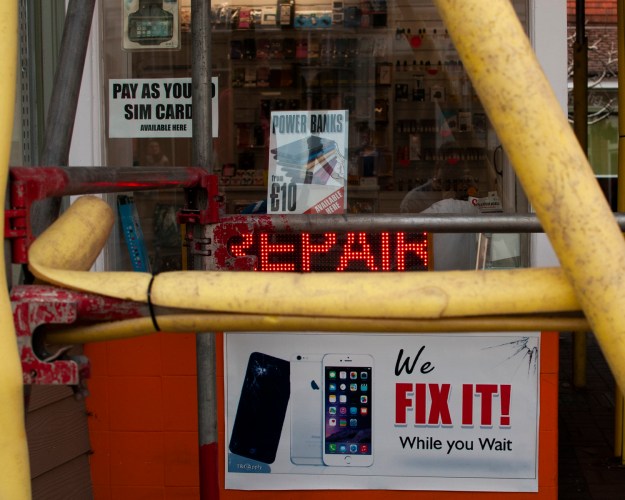
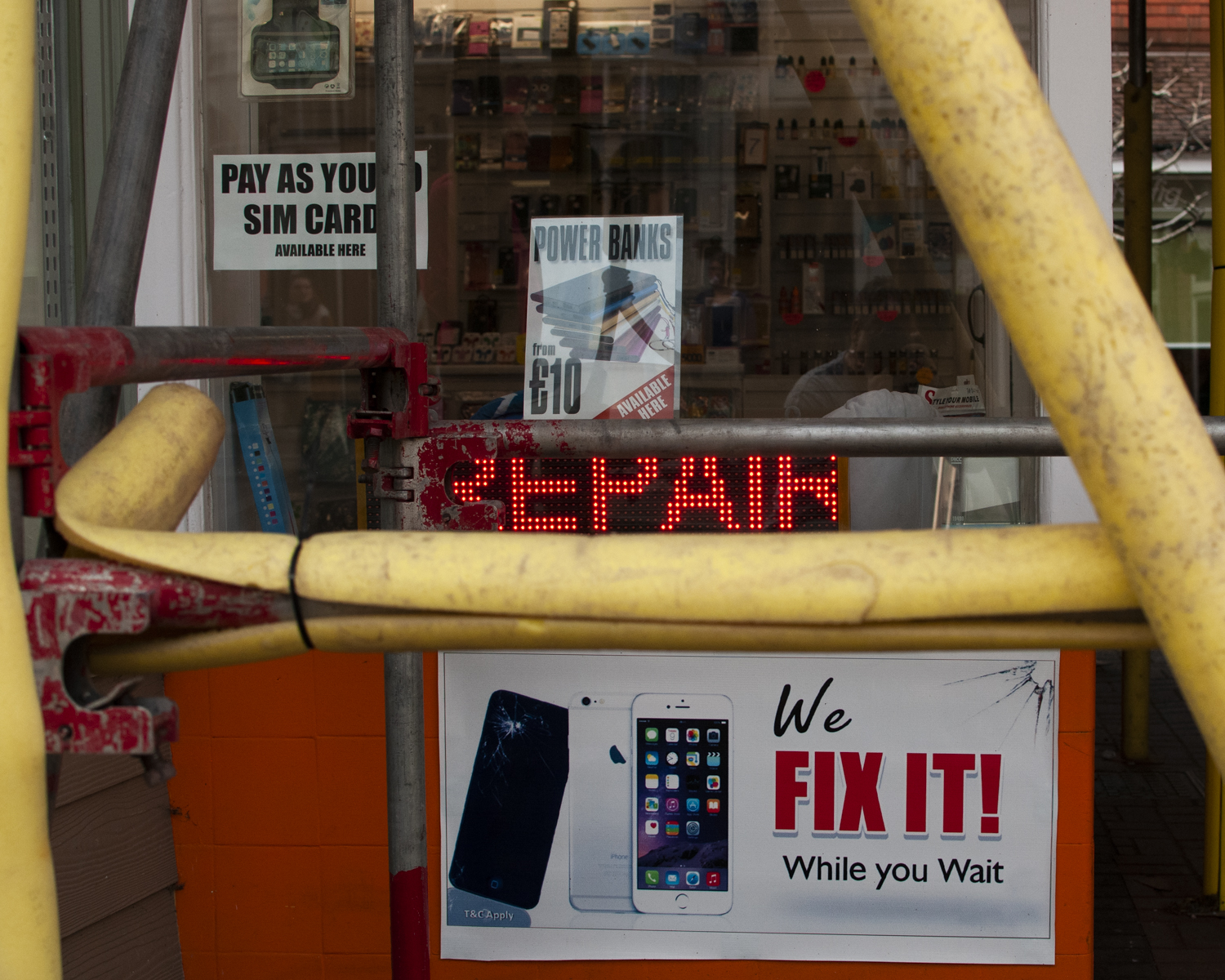
It occurred to me that the decisive moment didn’t have to be something organic, that it could also include repeating, fleeting moments as with Arbus’ Baby Doll image which was itself a frame on a piece of film.  I spotted this mobile phone shot covered in scaffolding and the rolling neon sign promising repairs inside.  The irony reminded me of Parr’s recent collection ‘Britain at the time of Brexit’ where confusion is represented both literally and metaphorically.

Photo 2

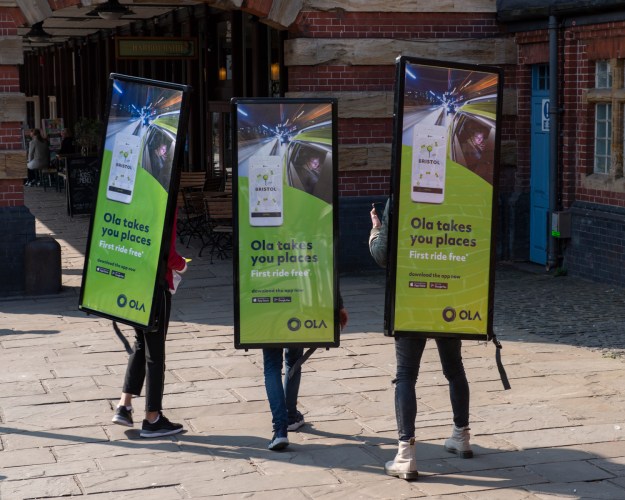
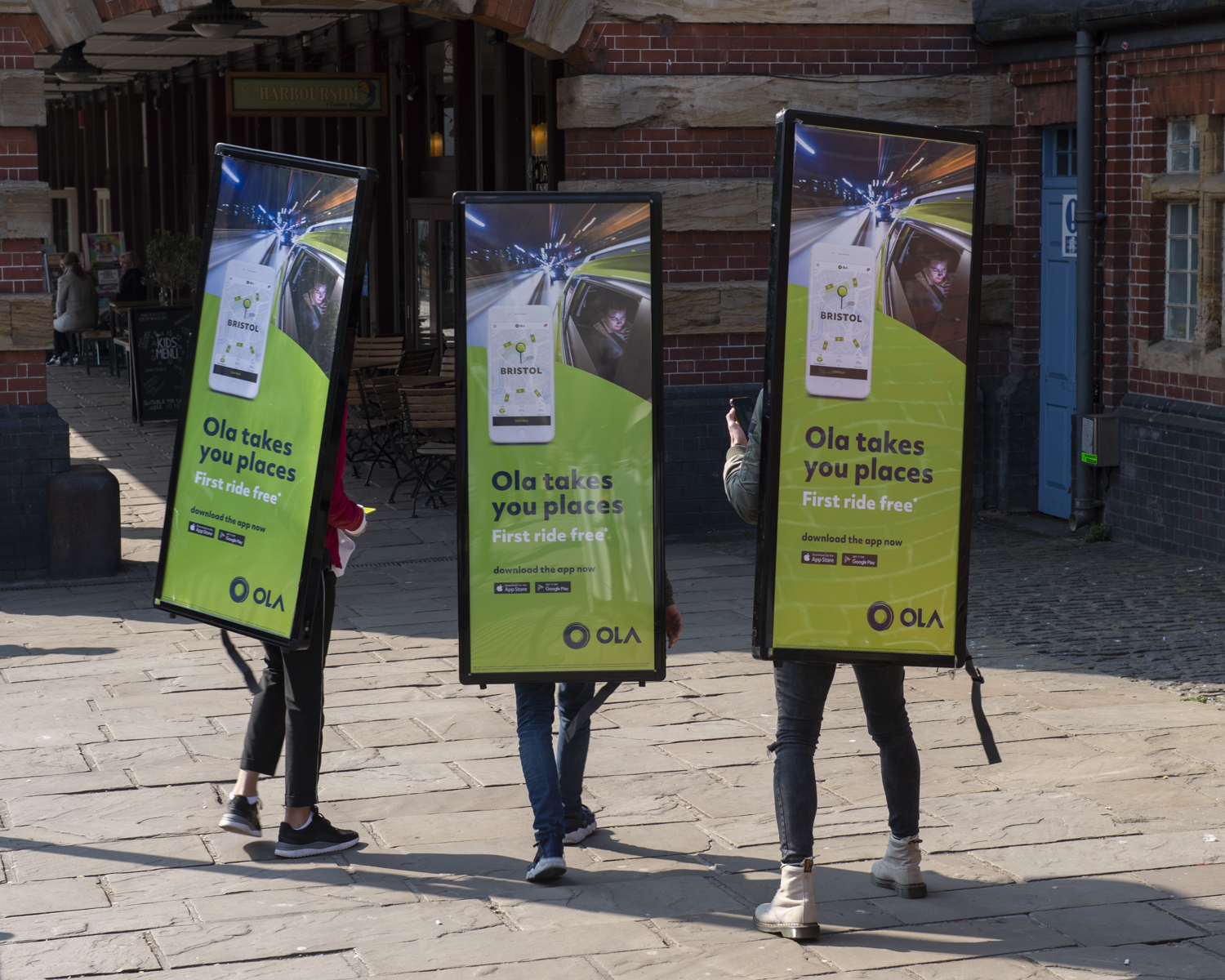
Walking around Bristol, I encountered people wearing huge billboards on their backs, which obscured all but their limbs from some angles.  I followed these on their mission to offer cheap bus rides to passing visitors.  It was difficult to shoot as they would quickly turn to look out for the rest of their group who had scattered around the square.

Photo 3 

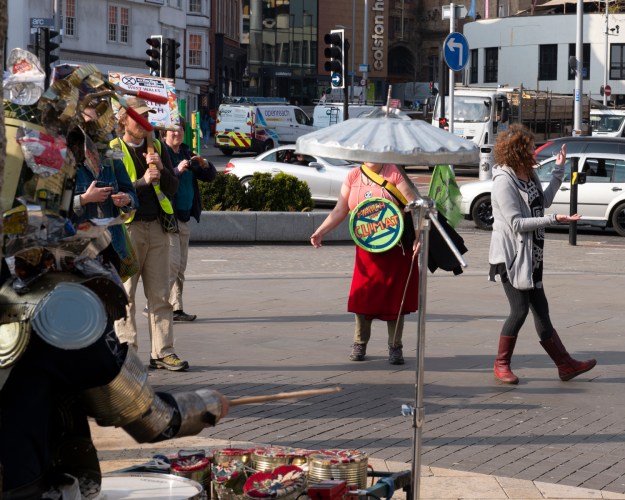
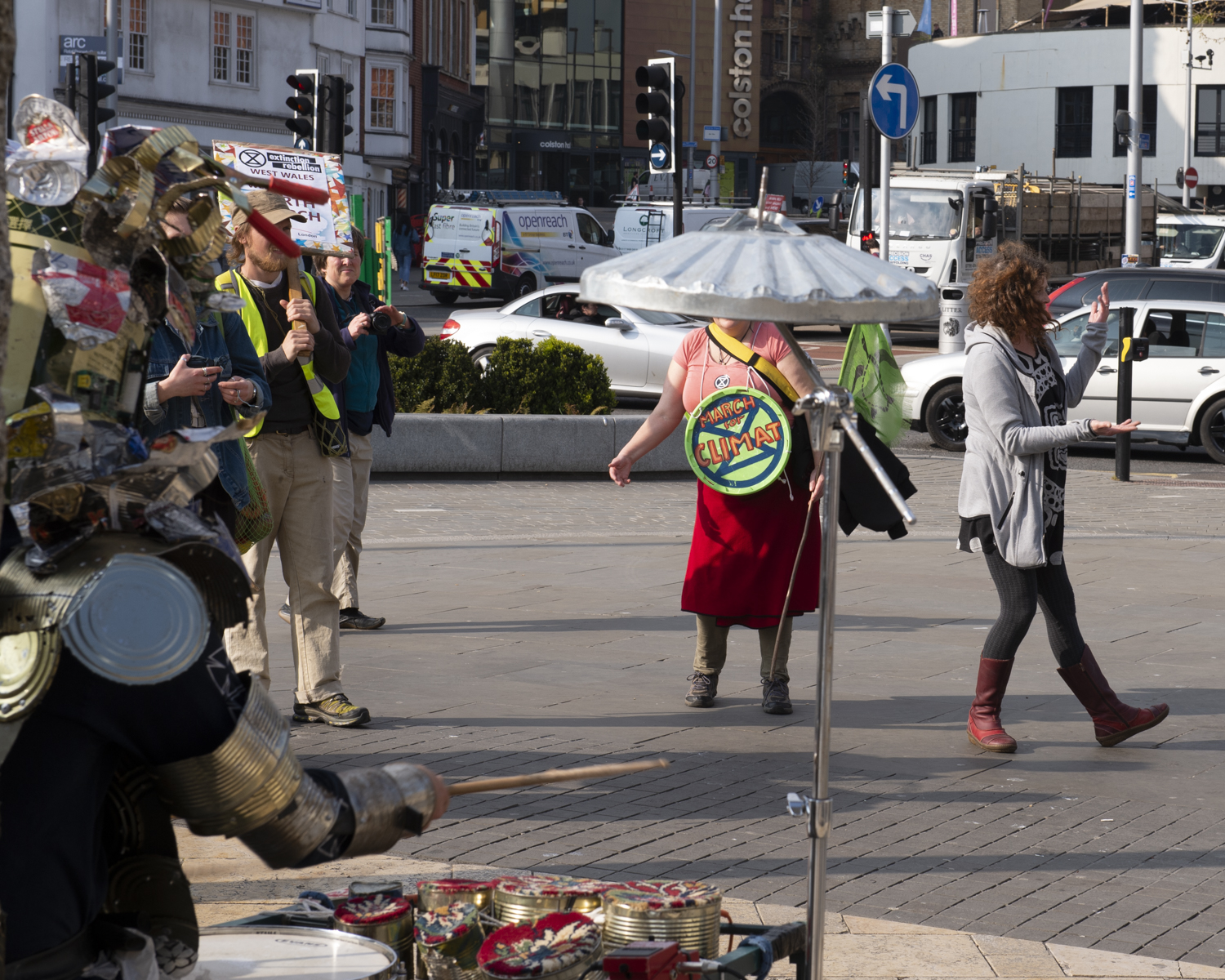
A well known busker in Bristol, Junkoactive Wasteman captured the attention of some climate change campaigners.  This shot was fairly straight forward in that once the dustbin lid cymbal was positioned with respect to the subject, it was a matter of waiting for the dancing.

Photo 4

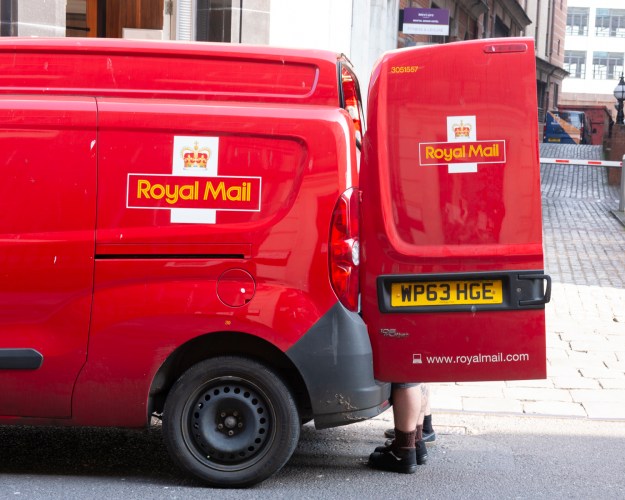
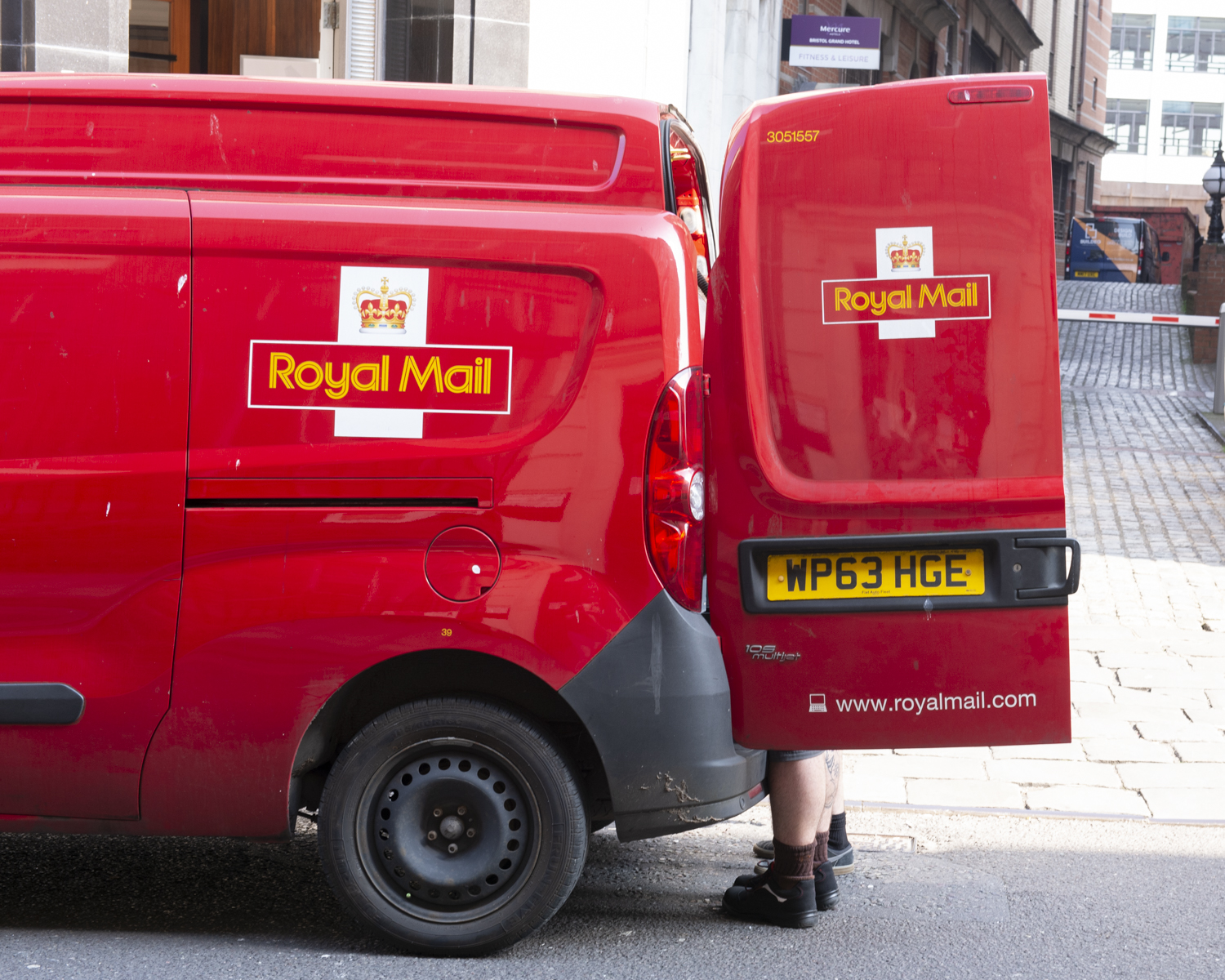
I noticed two postal workers carrying a parcel to their van and noticed the brief moment where they were completely obscured.  I wanted this to be a simple composition, so positioned the van to dominate the frame with the subject on the right hand third line.

Photo 5

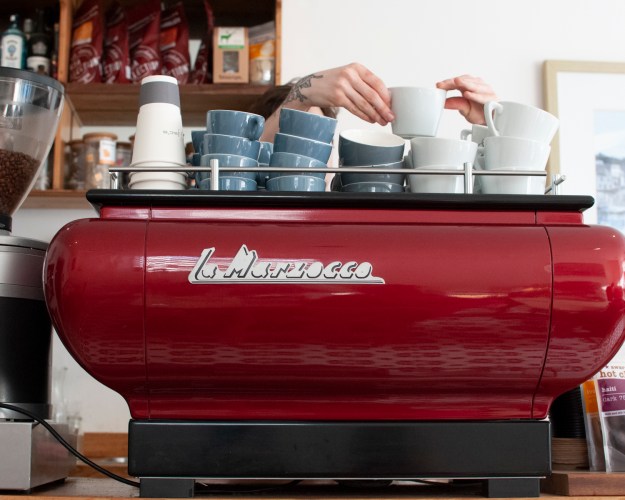
A coffee shop in Malvern that piles the cups high.  I noticed that the only member of staff who regularly made coffee was the tallest one.  I shot several photographs trying to capture him using the milk steamer.  The decisive moment I ended up with was him reaching for a cup from the stack.

Photo 6

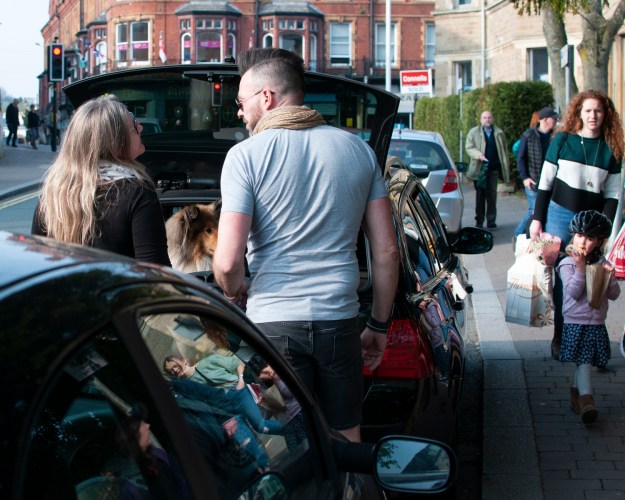
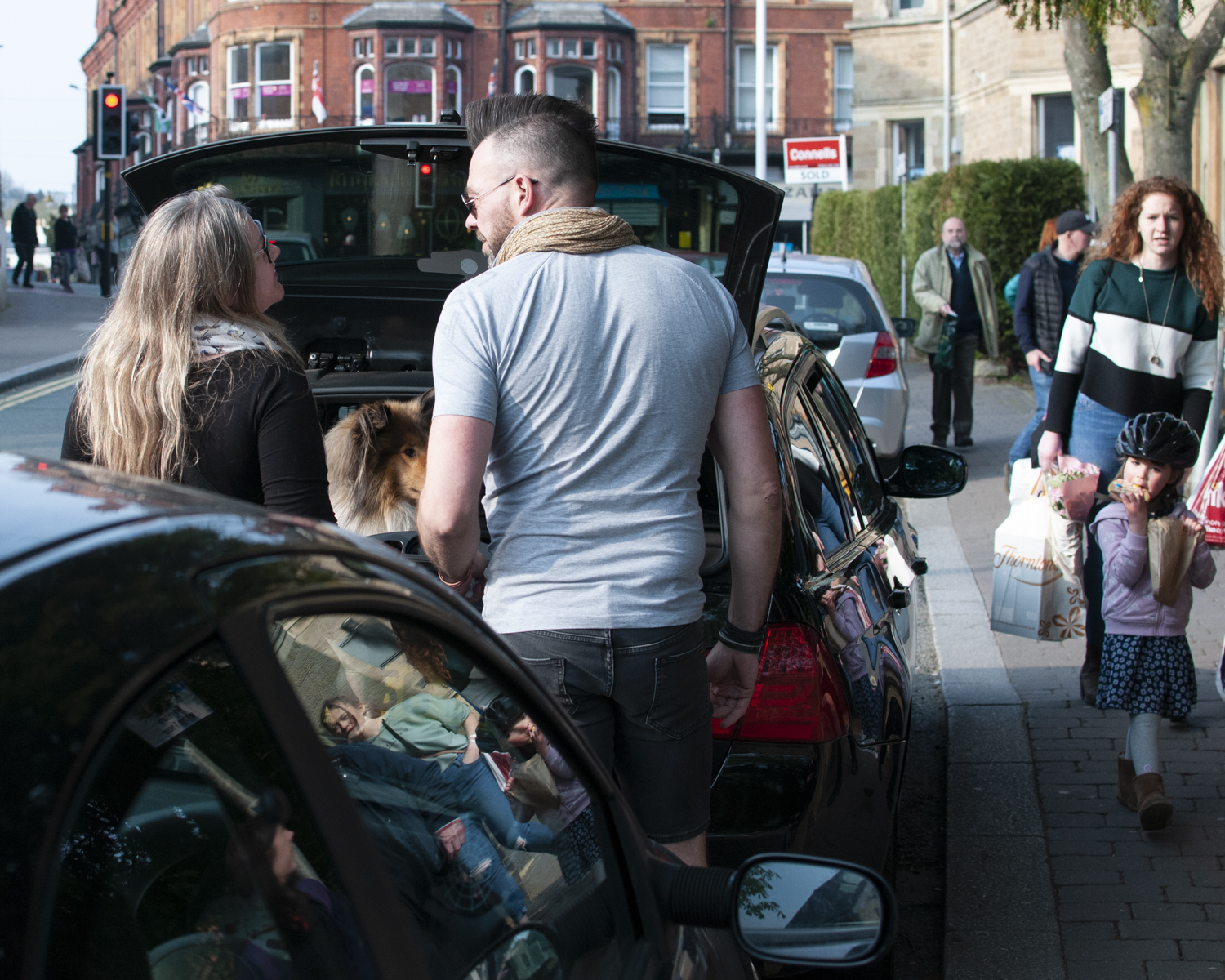
Is saw this scene unfold as the pavement narrows near where the couple had parked their car.  In trying to navigate through the people, I spotted the dog’s head above the line of the car boot.  I shot two frames as the moment passed very quickly.  As with Cartier-Bresson’s luck, only when I downloaded to the computer did I notice the family reflected in the glass of the car behind.

Reflection

This assignment was a huge challenge for a photographer not comfortable with street shooting.  When researching the decisive moment for Project 3, I decided that for this assignment I would try to make things easier for myself.  I wanted to work with the concept as I believe it to be an important cornerstone to photography revealing a subject as it is impacted by what is happening around it.  However, I wanted to show that the decisive moment was as much about the decision to release the shutter as the moment itself, something that Cartier-Bresson mentioned in the quote earlier, but seemingly left out of many analyses of his work.   The more I looked at this element of the decisive moment, the more I realised that it can be found everywhere.  The irony here is that in consciously adding the photographer’s influence in this way, I actually made the whole assignment much harder.  I’ve never been an instinctive photographer, preferring instead to carefully compose and choose the look and feel of the image before pressing the shutter button.  There is no room for it in this work, which pushed me further than previous exercises and assignments had done.

For me, the strongest image is Photo 6 as it combines my viewpoint and the decisive moment itself in one photograph.  The equipment frustrations that I had all the way through this work was more evident in this shot than the others.  I have perfect street cameras in the Leicas but they are both film and my skills with them are not as advanced as when using my DLSRs.  However, in the event that the subject has seen me raise my camera to my eye I may as well be pointing a Howitzer at them.  If they hadn’t seen me, the noise from the mirror slap is enough to attract attention.  In the case of Photo 6, I managed to get all elements to work together.   I noticed that one of the elements that connects the images together are the colours red and green.  In some cases, they are dominant and in others subtle.  The only photograph that doesn’t follow the theme is Photo 1.  I like the irony of the composition which isn’t part of the rest of the set, but don’t feel like this image is as strong as the others.   However, given the difficulty that I had shooting for this assignment, I elected to include Photo 1 as it points to the in-organic decisive moment where the others rely on a brief slice of time related to life.

Overall, I am happy with the collection.  Each image achieves the obscured feel that the photographers worked with, as well as a decisive moment playing out in front of the lens.  I believe the decision to shoot is strong in each, which is what I set out to explain with the collection.  I would improve the strength of the collection by seeking to improve my street photography, which is largely through building confidence with practice.

References

[1] Szarkowski, J, 2007 edition, “The Photographer’s Eye”, The Museum of Modern Art.

[2] Fletcher, R, 2019, “Project 3 – What Matters is to Look”, http://www.richardfletcherphotography.photo.blog, accessed March 2019

[3] Goldschmidt, M, 2014, Artist Entry, Tate Museum, https://www.tate.org.uk/art/artworks/cartier-bresson-hyeres-france-p13112, accessed March 2019

[4] Phaidon Publishing, 2014, “Why Joel Meyerowitz thinks this is his best photo”, https://uk.phaidon.com/agenda/photography/articles/2014/september/03/why-joel-meyerowitz-thinks-this-is-his-best-photo/, accessed March 2019

[5] Meyerowitz, J, 2012, “Taking my Time”, Phaidon Publishing

[6] Fletcher R, 2019, “Assignment 3 – Collecting”, http://www.richardfletcherphotography.photo.blog, accessed March 2019

[7] Parr, M, 2019, “Only Human – Exhibition Catalogue, National Portrait Gallery

[8] Moyers, B, 1982, “Garry Winogrand is interviewed by Bill Moyers, https://www.americansuburbx.com/2009/06/interview-garry-winogrand-excerpts-with.html, accessed March 2019

[9] Winogrand G, 1967, “About a Photograph”, https://journals.openedition.org/transatlantica/7084, accessed March 2019
3) Project 3 – ‘What Matters is to Look’

Henri Cartier-Bresson and Le Moment Décisif

Anyone who has the remotest interest in the history of photography has heard of Henri Cartier-Bresson.  Legendary French photographer, co-founder of Magnum Photo and the man who coined The Decisive Moment, Cartier-Bresson’s images from the early 20th Century are well known.  He was known for shooting 35mm cameras with 50mm lenses and using high speed film for capturing fleeting moments in on film.  Although he was highly skilled with a camera, his most iconic photographs didn’t rely on rich tonal range or sharpness to carry the subject; often the image has an almost lo-fi feel to it.

It is, of course his idea of The Decisive Moment that interests most photographers and has been taught and copied for the past 80 years.  But, what exactly is it?  Simply put, the decisive moment is a fleeting moment in time where the relationship between the subjects, background and with the photographer coalesce in a way that establishes the photograph.  Each element in image must have balance in terms of composition and while the ‘rules’ don’t need to be followed rigidly, the image should have visual tension between subjects.  Such a photograph requires a great deal of skill in observing the scene, being instinctive with the camera and pressing the button at precisely the right moment.

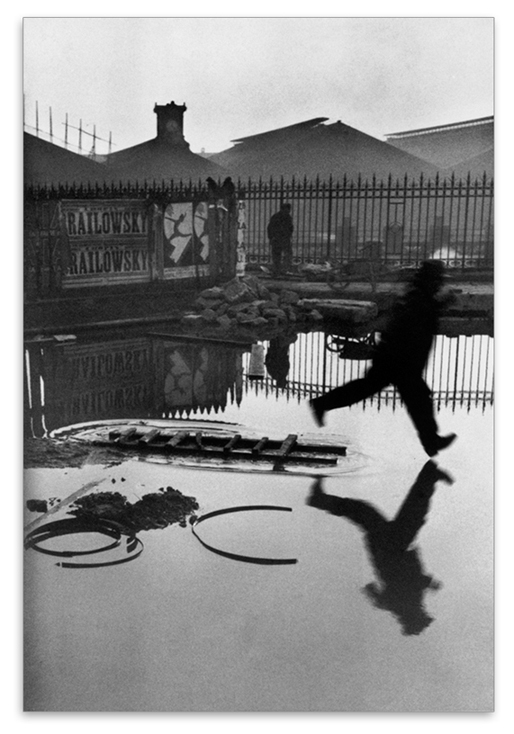
The iconic example of Cartier-Bresson’s viewpoint, “Behind the Gare Saint-Lazaire”, shows the decisive moment in action.

Henri Cartier-Bresson's Behind the Gare Saint Lazare, 1932.

Henri Cartier-Bresson’s Behind the Gare Saint Lazare, 1932.

Cartier-Bresson was shooting a rangefinder Leica at the time, which requires the photographer to look through a viewfinder that is offset from the axis of the lens.  Cameras of this type are a little more tricky to compose and focus (I have two of them and the experience is quite different from using an SLR), so when Cartier-Bresson was composing this shot, it is difficult to know what he was trying to shoot.  By his admission in the documentary interview [2], he poked the lens through the railings to get a view of the train yard and didn’t see the figure leaping the large puddle in the foreground.  Perhaps the image he had in mind was more about the reflections of the buildings in the water and the debris that is partially submerged.  The photograph comes alive because of the leaping man.  He is about to hit the water despite having left the relative dryness of the timber and Cartier-Bresson has captured both the moment and the motion of the action.

Cartier-Bresson’s admission that the picture was an accident means that luck and lack of intent are equally as valid as careful planning and execution of a photograph.  I’m reminded of the image ‘Hyères, France 1932’ [1], where a man cycles through the composition.  In this photograph, Cartier-Bresson composed the shot and waited for a subject to enter the frame at the right time and position to make the image work.  The planning ensured that the leading lines of the staircase and its railings were as he wanted and when the cyclist appeared in the top left of the frame, the photograph could be made.

Really Looking

These examples of his work definitely achieve ‘le moment décisif’ but with different approaches.  What they do have in common, though is the skill of really looking at what is going on.    In the interview ‘L’amour de court'[2], Cartier-Bresson asserts that the decisive moment cannot be willed into being, that a photographer cannot force the photograph, but must instead look intensely at the emerging action in the scene.  The skill of looking is closely coupled with the need to be ready to shoot, which means that being skilled in using the camera is also an important element to this style of photography.  What is interesting about Cartier-Bresson’s practice of looking is that it completely consumed him while he was working as a photographer.  When he took up drawing and painting in later life, he saw it as a way of returning to normality.  I concluded that this is because a decisive moment doesn’t really exist in that genre of art; the painter can create them at will and take as long as they like in doing so.  Cartier-Bresson was looking for peace when he transitioned to drawing.

The Impact and Legacy of The Decisive Moment

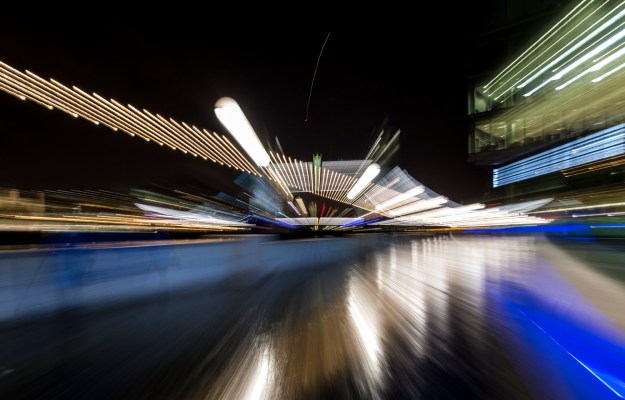
Like all innovators, Cartier-Bresson’s concept has been interpreted and re-interpreted over the many years since he first postulated it.  For many years, the idea of the decisive moment was used to describe real life in documentary terms.  The normality of routine in the case of street photography and the hell of war as shot by the famous correspondents of the time.  It has resulted in many derivative art works too, which while flattering to history have led to it being considered to be cliched.  A parallel example for me occurred a few years ago in London.  I was attending a photographic course where an interesting technique was introduced for night photography called ‘zoom burst’.  The idea was that with the camera mounted securely on a tripod with a zoom lens fitted, a long exposure would be taken, during which the lens was extended slowly over its range of focal lengths.   The resulting image would have a ‘hyperspace’ feel to it and was particularly effective if the subject was recognisable to begin with.  An example of one of my zoom burst photographs of the recognisable Tower Bridge can be seen below. The tutor for the course said that once his students had discovered this technique, they would latch onto it for the rest of the session, describing it as the ‘crack cocaine of the night shoot’.

Example of a zoom burst, Tower Bridge, London, 2017

The Decisive Moment has suffered the same kind of issue.  Capturing a perfectly balanced slice of time and declaring it to be a moment in life is now considered somewhat narrow.   As Liz Wells’ article suggests, these tiny fragments do not really tell as story or give an insight into some bigger meaning by themselves.  So, in the case of documentary photography, the viewer insinuates the bigger picture, largely owing to their knowledge or experiences.  In the case of the famous war photographers, the sentiment that war is hell is re-enforced not informed by the images themselves.

The further criticism that the decisive moment does not lead the viewer to some conclusion or photographic climax, but simply captures a potentially contextless moment in time was demonstrated by Paul Graham in his book The Present[3] Here, the photographer captures two or three moments, one immediately after the other using a similar composition.  Between shots, he makes small adjustments to position, viewpoint and point of focus to create what at first glance, look like the same frame duplicated. However, the effect of doing this is to show the real dynamic of the subjects in the frame.  In some cases, their gestures and interactions with each other have changed in a variety of ways and in some, they have left the frame altogether.   An example of this can be seen below.

Delancy Street by Paul Graham from his book The Present[4]

In these photographs, the recognisable elements such as the crossing, buildings etc. are still there, but the framing is subtly different and the fast pace of time means that none of the vehicles remain in the picture from one to the other.  What stands out when looking carefully is the presence of more pedestrians and the clear change to the background with the obscuring of the Empire State Building by the truck.  What Graham was doing here was to achieve the opposite of Cartier-Bresson’s decisive moment; to show the significance of more than one moment in revealing the ‘flux of life’ [4].  However, the result is less ‘spot the difference’ and more a lingering visual tension to reveal what is in front of us.

A more extreme approach to the antithesis of the decisive moment is the work of Aïm Deüelle Lüski [5][6], a photographer who wanted to re-examine the roles of the photographer and the camera in capturing real life. Lüski rallied against the simple capturing of a moment in front of the camera being directed by the photographer’s eye.  His idea was to remove the influence of the photographer altogether, placing the camera within the scene rather than simply observing.   As part of his work, Lüski built his own multi-aperture cameras, often with formal and random fields-of-view to create images that capture what is within and outside of the viewer’s perspective.  The resulting photographs have an aesthetic feel that maintain a level of ‘realism’; an example of which can be seen below.

Lüski’s NSEW camera shown above is essentially a box with pinhole apertures in each side panel.  The apertures are arranged in the four compass bearings that give it its name and the negative mounted internally alone the diagonal.  Light enters from each pinhole and exposes the emulsion face and through the film sheet, creating a blend of each viewpoint in a single image.  What Lüski was trying to do was to let the camera participate in the scene and capture an image that describes life at that moment.  The single slice of time is obviously common to both Lüski’s work and the concept of a single decisive moment, but he, like Paul Graham expressed life through more than one view of that moment.   It can clearly be seen, though that Lüski’s work is not of a documentary style, but of an aesthetic quality.   Breaking the hegemonic or dominant trend in photography shows us how there are many different ways of capturing what is presented to us in life.  I find both Graham’s and Lüski’s work fascinating and challenging because they break the conventions.

Of the viewpoints on the decisive moment raised in the course notes, Zouhair Ghazzal’s is of most interest to me [7].  Far from taking a stance that dismisses the concept like Graham and Lüski, Ghazzal points to the significance of the way a photograph is composed and what is both said and unsaid by the image.

In other words, the decisive moment works best when the sudden cut in time and space that the photograph operates through the release of the shutter is meaningful, as it narrates to us in a single frame the before and after; while other photographs of the decisive type remain anecdotal, with no precise meaning, or with no meaning at all, relying instead on the juxtaposition of bodily gestures with symmetries created by light and space. Hence that sudden urge, when confronted with a Cartier-Bresson image, to narrate it—even though the photographer himself would feel indifferent to such a task. An image does not narrate: it rather creates an unbridgeable abyss between itself-as-frame and the rest of the unframed world—comparable to Sartre’s “existential hole,” which is only conscious of the absurdity of its own existence, or, more commonly, to a one-night-stand, as something that is given, but with no connection to anything else—in time and space, which pushes a hapless and confused imagination for a narrative – Zouhair Ghazzal – The indecisiveness of the decisive moment [7].

This quotation resonated with me as in looking for the decisive moment in photographs as part of this study.  I recently read a very caustic comment on Joel Meyerowitz’ Instagram page in response to a picture he had shared from a recent trip to London.  The image was a street scene with a number of people going about their business, not interacting with each other in any apparent way.  The person making the comment could see no merit in the photograph, claiming that Meyerowitz could effectively get away with anything by being a famous photographer.  My reaction to the photograph was the opposite.  I looked carefully at what was going on with the people in the photograph and found myself narrating the story that was unfolding before me.  The people were all avoiding colliding with each other and the one static element, a lamppost in the centre of the composition.  They were doing this instinctively, without looking around them as many do in modern society with the advent of the smartphone.  While I am certain that the photographer had seen this playing out before him, my imaginative narrative is my own and overlooks the actual moment that has been captured in search of its context in time and space.   What I am also certain of, is that my ability to really look at what is going on around me would have most likely missed this moment.

In Ghazzal’s appraisal that the contemporary urban landscape is too monotonous and dull for the decisive moment, I find that I completely disagree.  I believe the urban environment to have continuously evolved both as a result of its inhabitants and in conjunction with shaping the fashions and attitudes of them too.  The same observation could have been made during the early days of street photography, by Cartier-Bresson or by those who followed such as Evans, Winnogrand and Meyerowitz.   I am reminded of a recent conversation with a colleague who had returned from a diving holiday in Israel.  During her visit, she stayed in a hotel called ‘The Walled Off Hotel’, in Bethlehem, built by the graffiti artist Banksy.  Its amusing play on words from the famous Waldorf Hotel is contrasted with it’s location next to the huge security wall separating Israel from Palestine.  Her review of the hotel was interesting enough but it was her assessment of how things had changed in the region with the introduction of the wall and the people’s reaction to it that fascinated me.  Such a hotel would not have been possible when the wall was originally built, so how had the environment and the populous adapted over time?   Such changes, no matter how significant or obscure are rich in decisive moments.

Conclusion

I’m led to believe that many students on this course struggle with The Decisive Moment and its importance and relevance to photography today.  I am no exception.  For me, Cartier-Bresson was saying that the decisive moment was a harmonisation of the elements in the composition and their relationship to each other.  On the other hand, he said that luck was a factor, in particular with his famous work examine earlier.  So, if luck can determine the outcome, we should just snap everything on the off chance?  Moving away from that way of working was, for me the motivation for learning and improving in photography, so that cannot be the case.  What I believe he was saying was the we need to really look at what is in front of us.  If we see something that we determine is a moment we want to capture, luck in the composition can help make the picture, but it cannot be the only aspect.  Cartier-Bresson’s Behind the Gare Saint Lazaire would have been a good composition without the man leaping, but it’s the lucky element that brings out the moment that will never be repeated.  Listening to Cartier-Bresson talk about looking in the video [2], what interested me was the idea that looking is a state of mind that photographers need to enter; in his case something that he recognised once he stopped doing it.  My issue with street photography is that I lack the confidence to photograph people at fairly close range (my camera of choice is not unlike Cartier-Bresson’s; a Leica M with 50mm lens) for fear of intrusion or reaction.  However, my biggest issue is actually more that I try hard to make a photograph happen, consequently missing the moment when something does actually happen.  Cartier-Bresson made it clear in his interview that the photographer can only observe and capture, not force the image to come to life.   In a video interview with Joel Meyerowitz [8], he discusses what we choose to include in the frame and what we choose to leave out.  Rather than just a comment on composition, Meyerowitz states that it is important not to overlook the things that are continuing to unfold outside of our frame.  To that end, the decisive moment for me is not simply what is happening in front of the lens, but the photographer’s decision to include it in a single moment, committed to a photograph.  That decision to press the button is as much decisive as the moment itself.

The reaction and treatment of the decisive moment in the context of modern photography is interesting.  Of the photographers and commentators researched as part of this project, I tend to agree with Ghazzal’s supposition that there doesn’t necessarily have to be a decisive moment that reveals what is going on in the frame.  The observation of the subject is vital to the success of the image.  The viewer draws their own conclusion about what’s there and what it might mean, which for me is the enduring appeal of capturing a fleeting moment that will never be seen again.

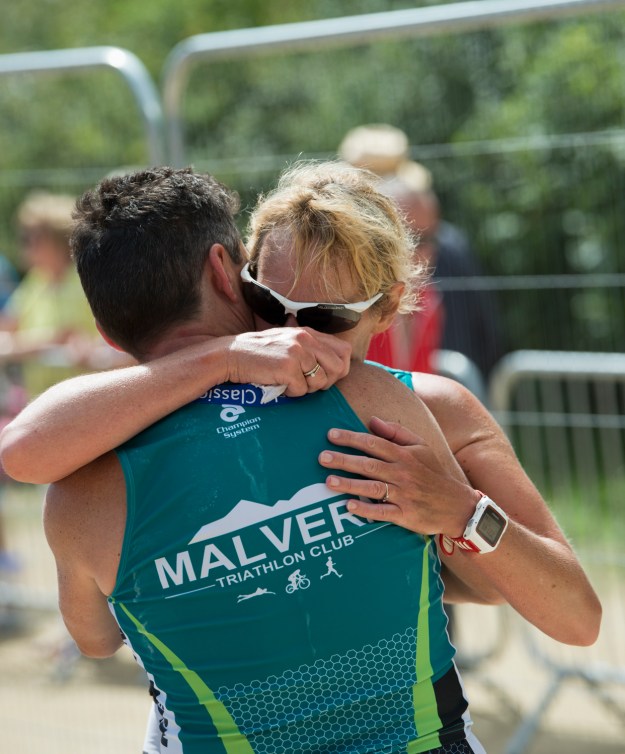
Reviewing some of my own work, I found a good example of a decisive moment that I would probably not previously have considered as such.  I was shooting at a long distance triathlon event that my wife was competing in a couple of years ago.  Among the competitors were a number of friends of ours, one of which had been through a serious illness the year before.  She entered the race to prove to herself that she had recovered from treatment and could once again take part in the sport that she was keen on before she became ill.   I was standing at the finish line when she came into view.  One of our friends said to me “this is gonna be emotional, Rich” as she crossed the line to be met by her husband who had finished earlier.  I shot this photograph of them at the moment they embraced and although the scene evolved over several seconds, this was the point at which all that emotion was revealed in both of them.   Luck played its part with the heads-up I’d been given, but the reaction to this photograph from all who have seen it has been greater than any other image I’ve shot in recent years.

Jan & Bill

Finish Line, by Richard Fletcher, 2017


References

[1] Tate Britain Exhibition Catalogue, https://www.tate.org.uk/art/artworks/cartier-bresson-hyeres-france-p13112 (accessed March 2019)

[2] L’amour de Court,  2001, https://vimeo.com/106009378 (accessed March 2019)

[3] Pantall, Colin, 2012 – The Present, https://www.photoeye.com/magazine/reviews/2012/05_17_The_Present.cfm?

[4] Jobey, Liz, 2012 – Paul Graham: ‘The Present’ https://www.ft.com/content/f97e3a3a-5206-11e1-a30c-00144feabdc0 (accessed March 2019)

[5] Van Gilder, Hilda, 2012, ‘Still Searching:  Photography and Humanity’, https://www.fotomuseum.ch/en/explore/still-searching/articles/26928_photography_and_humanity (accessed March 2019)

[6] Azoulay, Ariella, 2014, ‘Aïm Deüelle Lüski: Horizontal Photography’, http://moby.org.il/en/exhibition/aim-deuelle-luski/ (accessed March 2019)

[7] Ghazzal, Zouhair, 2004, ‘The Indecisiveness of The Decisive Moment”, http://zouhairghazzal.com/photos/aleppo/cartier-bresson (accessed March 2019)

[8] Phaidon, 2012, “Joel Meyerowitz – What You Put in the Frame Determines the Photograph”, https://www.youtube.com/watch?v=Xumo7_JUeMo (accessed March 2019)


In thinking about The (in)Decisive Moment

Fresh from my tutor’s feedback on Assignment 2 and with the next set of exercises underway, I’ve started to think about Assignment 3. Regarded by many fellow OCA students as a significant challenge in ‘Expressing Your Vision’, the assignment introduces the concept of perfect timing.

The Decisive Moment was a concept developed by the legendary Henri Cartier-Bresson in 1952 and discusses the photograph as an instant in time that represents both a moment unfolding for the subject and a decision by the photographer to freeze it permanently. In postulating this concept and demonstrating it through his, now famous photographs, Bresson cemented himself in history as the father of Street Photography genre.  While the concept has been argued, dismissed as old fashioned by some and interpreted in multiple different ways, most street photographers roam around looking for that moment to shoot.

Sadly, for me Street Photography has been something that I’ve never been comfortable doing, to the extent that I will imagine myself walking the streets and then totally bottling the actual taking of a photograph. My problem is not uncommon; I am reluctant to invade people’s space when they are going about their daily business. Pointing the camera at them and, heaven forbid they actually see me do it, leaves me anxious about the whole idea. It’s further exacerbated by the fact that I can’t really blame a lack of equipment. I routinely shoot two Leica M film cameras, an M3 and an M6., These are regarded by many as the perfect street camera, discreet, quiet and styled in the opposite fashion to the modern DSLR. The Leicas look less like a rocket launcher and so, if the subject of the photograph were to look in my direction, it probably wouldn’t even register that I was shooting them.

I was asked by a friend whether it was really an issue for people, having their photograph taken. I told them the story of Philip-Lorca Di Corcia as discussed in Project 2 and how he was sued by one of the subjects of his Heads series. The gentleman he photographed objected to the invasion of his privacy and use of his image by the photographer and although the subsequent court case was not found, it was clearly a difficult time for the artist. The modern age is one of suspicion and concern for anything that stands out; a result of terror activities and acts of violence widely reported across the world. So, if street photography was a daunting subject to begin with, the fear of being confronted by an angry subject makes me very reluctant to give it a go.

When thinking about the previous assignments, my sense of discomfort was present throughout both. In Assignment 2, I wondered all the way through the research, shoot and write-up whether I had done ‘the right thing’ in my choice of subject and approach to the series.  Even though I ultimately concluded that this was more about my lack of experience creating photographic series, it remained a challenge to think about how I might approach Assignment 3.  The brief calls for a series in support of or counter to the concept of the decisive moment.  Whatever I shoot would have to have my perspective on this well known area of photography.

The Setup

I mentioned that I shoot a pair of Leica Ms. In fact, I have a large collection of cameras, most of which are film with only 2 digital DSLRs. Which kit should I choose? The Leicas both use a 50mm f/2 lens, which is excellent for general work as on a 35mm camera they are considered a ‘normal’ lens.   Cartier-Bresson shot an earlier Leica with the same focal length and established the 50mm as being a good street lens.  However, the modern view is that a wider angle lens such as a 35mm or 28mm is more usable. Whatever the preference, primes are always more popular than zooms for this kind of work owing to their sharpness, speed and simplicity of use.

However, the main consideration in selecting focal length appears to be both how close one wants to get to the subject and how easy it is to focus.  The shorter focal lengths require the photographer to be closer to the subject to fill the frame compared to the longer 50mm.  Once in place, the photographer cannot waste time focusing the shot because they may miss the moment and draw attention to themselves.  If the lens is autofocus, the subject may actually hear the sound of the motor as it focuses.  To combat this, street photographers practice a technique called zone focusing, which allows for a photograph to be shot quickly.  Zone focusing uses a combination of focal length (the lens), focal distance (the range to the subject) and the aperture to set the lens so that it doesn’t need to be adjusted prior to the shot being taken. Once focused, an area of sharpness exists in front of, and behind the point of focus which is considered ‘acceptable’.  See the example below:-

DSC_1654

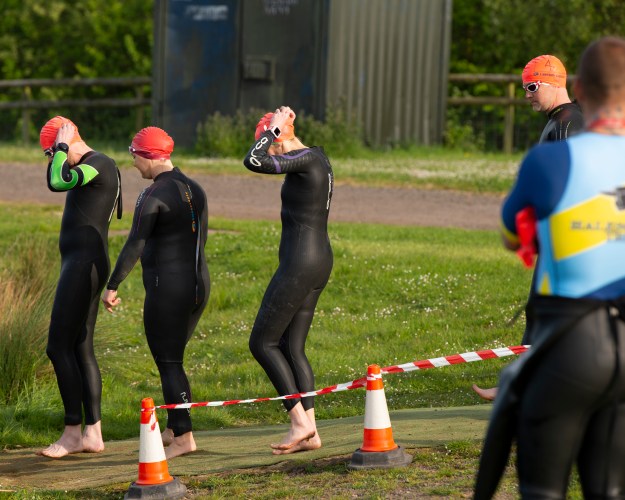
Swimmers lining up for the race. Shot at f5 at around 10 metres with a focal length of 200mm

In the example above, the swimmers are in a narrow field of sharpness because of the relatively wide aperture, distance and the telephoto lens.  The swimmers and the traffic cones in the foreground are within the region of sharpness, while the trees in the background are out of focus.

In a street photography example, for a lens of 35mm on a full frame camera, if the aperture is set to f/11 and focused at a distance of 6ft, the acceptable sharpness range (or Zone) is 3ft to 12ft.  So, if a subject is anywhere in this range, they will be sharp. Knowing this, means that street photographers can pre-select the focus distance and aperture and know that they don’t have to touch either to shoot a subject in that zone. The benefits of that are pretty obvious.

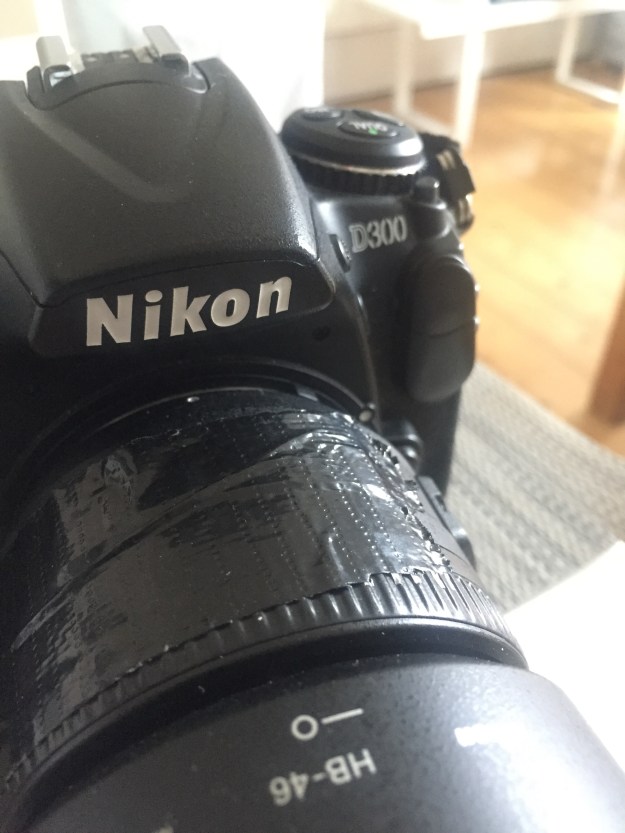
I have a 50mm lens, which is harder to zone focus than a 35mm which isn’t a great start. The longer focal length leads to a shallower region of acceptable focus for the same aperture in the 35mm example.  The cameras are also film, so there is no easy option for compensating a drop in light level when the aperture is fixed as part of the arrangement by adjusting the ISO.  I could ‘push process’ the film afterwards to achieve a pseudo increase in its sensitivity but that would affect all of the frames on the roll.  Whatever film is in the camera is pretty much the ISO available for that roll.  At this point, I started to look at my DSLRs.  Both have good noise performance at higher ISOs and can be set to automatic. Problem here is that the 35mm lens I have for the smaller camera has no focus distance numbers on the barrel, which means that in order to pre-focus, I would have to measure or estimate the distance…or use autofocus.   I tried experimenting with my D300 by pre-focusing the lens and taping the barrel to stop the focus from being accidentally adjusted (see photo).  With the focus mode set to manual, the camera would effectively be zone focused.

IMG_0679

Some modern consumer lenses have no focus distance markings or aperture rings to reduce cost

The experiment worked, but the  other key drawback of the DSLR is that they have an internal mirror that, like all conventional DSLRS has to move from in front of the sensor before the shutter fires. This makes them very noisy, compared to the mirrorless, rangefinder Leicas.  At this point, it’s not looking good.  All of this is before I’ve actually decided how I want to interpret the brief. Perhaps an alternative to street photography is needed here.

I ultimately chose to stick to street photography and use both of my DSLRs.  However, I used a much longer focal length zoom lens for most of the shots to avoid close contact with my subject.  This was an early learning point for me as photography has always previously been a comfortable experience owing to my interest in landscapes, architecture and shooting portraits when I know the subject is happy to sit for them.  It’s clear that discomfort is part of the development of my artistic vision, so I am preparing for more of it.