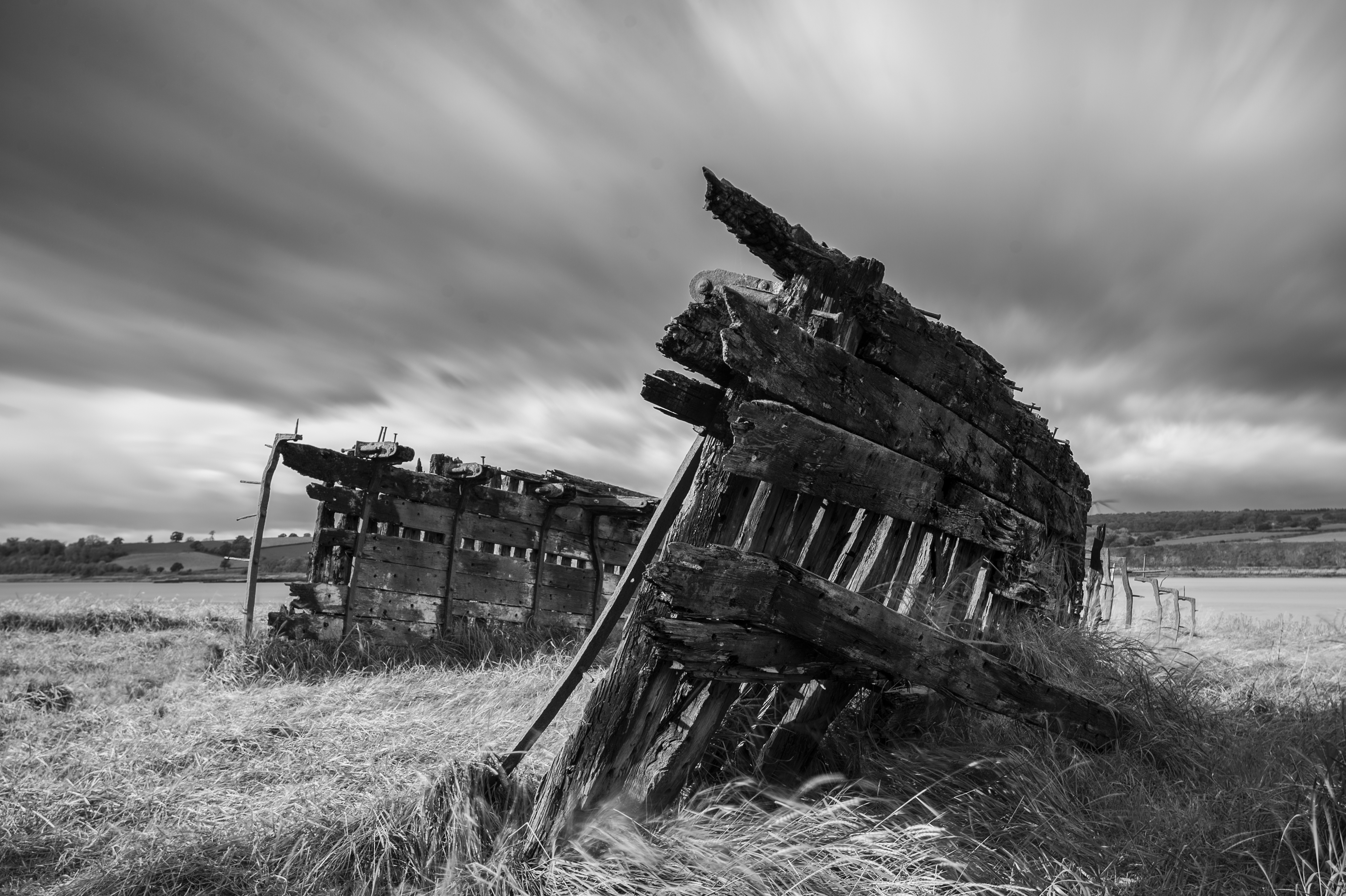
Depth of Field and the Realism of Photography
When I first started taking photographs as a child, my keenness to operate the camera correctly far outweighed my concentration on what I was pointing it at. If a photograph was, albeit it accidentally, exposed correctly then the result would be straight representation of what I was looking at. Needing no skill beyond pressing a button and waiting for the film to be processed, this child-like documentary vision was easy to achieve and its importance as a piece of work, fairly trivial. I was listening to a podcast recently where one of the hosts talked about ‘found film’; that is film left in cameras that he had purchased in a thrift store or flea market. He was routinely processing these rolls and in many cases finding photographs that were like my early efforts. What was interesting was that many of these fairly uninteresting photographs were shot over 50 years ago. The fact that they were straight documentary wasn’t interesting but the clear view of how the world and subjects had changed over that time, elevated the images to art.
“Deep focus gives the eye autonomy to roam over the picture space so that the viewer is at least given the opportunity to edit the scene himself, to select the aspects of it to which he will attend” (Bazin, 1948).
The Bazin quote rings true in the above case because as the eye wanders the frame, the passing of the time since the photograph provokes either a feeling of unknown (if the viewer has no memory of the time) or the familiar in the case of the older generation.
Ansel Adams is one of my favourite landscape photographers but although I’ve marvelled at his famous works like most others, his main influence has been technical. Through his collection of books: The Camera, The Negative and The Print, I’ve sought to improve my technical skills in both film and digital photography.
In his early years as a photographer, he used technical skill to enhance or emphasise beauty in an image, to move away from the mechanical representation of the subject. The more pictorial style [4] was still very evident in photography during the early 20th Century, so it was a natural reaction to want to embellish the image to stand out from the crowd. When Adams encountered Edward Weston and Dorothea Lange and went on to form the f64 group, his view had changed dramatically to using photography to reveal what is already there, concluding that there was beauty to be found in the subject already and that it was the job of the photographer to bring it out. Small apertures were the way to achieve this. Weston said his own work “Such prints retain most of the original negative quality. Subterfuge becomes impossible. Every defect is exposed, all weakness equally with strength. I want the sharp beauty a lens can so exactly render,” [1]
Adams went on to demonstrate the power of this approach to landscape photography to influence the politics around nature, wilderness and the environment; most notably in putting the case for the Kings Canyon National Part in Sierra Nevada. The staggering detail and beauty of his work proved persuasive in the argument being put to the National Park Service.[1]
What I find interesting about this approach is that the need for strong composition, light and being able to see the moment are even more important if the photographer wants to convey beauty than if lens distortion is being used to focus awareness on a particular element in the scene. In the case of the photograph in the course notes by Fay Godwin (below), the subjects and their relationships to each other already have the potential to tell their story. Careful composition and large depth of field avoid tricking the eye with perspective and exaggerated depth or space.

Fay Godwin, Night Guard, Stonehenge
In this image, the large rock anchors the sense of space and points to natural history, while the ancient monument of Stonehenge invites the eye into the frame. The difference in size of the structures asks questions about whether the large rock is a natural occurrence and whether it is dominating the impact of man. The final element in the frame is the closing off of the subject. The fence and its clear guard measures deliberately prevent the viewer from investigating the subject further. This photograph holds attention because everything is sharp and while wide angle, the perspective doesn’t create a sense of unreality.
By stark contrast, the work of Gianluca-cosci adopts extreme shallow depth of field to lead the viewer to the obscure but recognisable. In his collection ‘Panem et Circenses’, he often uses the camera on the ground to create a large textured out-of-focus region to exaggerate the perspective. Interestingly, not all of the sharp subjects are actually sharp which is as if the photographer wants the view to decide as opposed to automatically seeking out that point. The lessons from the Woodpecker exercise are evident here, with the view appreciating the soft, texture and colour of the bokeh without it being a distraction. For me, the choice of subjects for the collection don’t work on a personal level in the same way as with Mona Kuhn, the other photographer mentioned in the course notes as while I appreciate their aesthetic qualities I find it difficult to connect with what they mean as an intimate collection.
Mona Kuhn’s collection ‘Evidence’ takes the very familiar subject of the naked body and creates a strikingly intimate aesthetic. The achievement through her approach is to reveal beauty, ask questions using what isn’t in the frame and keep the viewer’s attention through the interest in the out-of-focus regions. A good example from that collection can be seen below.
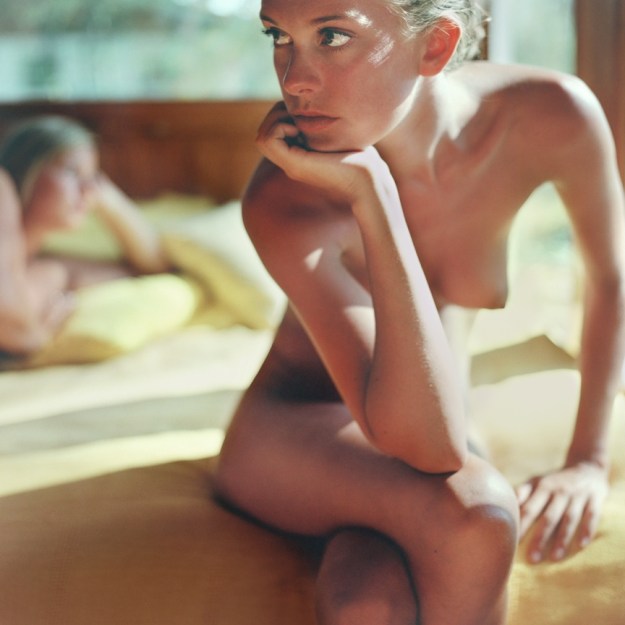
Fatale, Mona Kuhn, from the series ‘Evidence’
What we see here is a beautiful woman sitting on the end of a bed that has another girl on it. The point of focus is the eyes which are looking out of the frame at something unknown. The fact that both subjects are nude suggests an intimate moment, but steers away from the overtly sexual. The demeanour of both women is ambiguous and more thoughtful than passionate, so what is going on here? Are they lovers who have had a disagreement or are they sharing a daydream moment together? The title of the photograph suggests danger or seduction, so why the separation. I really like this photograph because it doesn’t conform to the rules of composition and majors on an aesthetic that could only really work with a shallow depth of field; the impact and mystery would have been reduced if any of the other detail in the frame was embellished in any way.
The conclusion of the exercises in Part 2 refers back to how photographers have forged their own way in expressing their vision. Looking at my own historical work, I’m honestly unaware of any conscious decision to use depth of focus in the ways described here. However, when I moved on from the style, or lack thereof, I had when I was a child, I have tried to keep composition simple and used both perspective and depth of field to steer the viewer to the heart of the photograph. Of the works that I’ve looked at in this project, it’s Mona Kuhn’s collection that is most powerful to me, which isn’t a surprise when shallow depth of field has been a tool I’ve used many times in my photographs. What is different here is it’s use to create an aesthetic.
My image

Confidence, R Fletcher, 2017
I shot this photograph of my friend Clive about to take part in a long distance triathlon a couple of years ago. The first discipline in the race is an open water swim, which well known to be the least enjoyable event for him. Using a long telephoto lens at f2.8, I wanted to isolate Clive from the rest of the swim pack and with the early morning sunlight, I really liked this image. I’ve called it ‘Confidence’ as with the Kuhn photo above, there is not obvious story here. In actual fact, he is looking at the lady in front of him who is his wife. They frequently take part in events together and when I look at this image, his expression points to looking for a sign that the race will be ok.
References
[1] Robert Turnage, The Living Wilderness, reprinted by The Ansel Adams Gallery
[2] Gianluca-cosci, Panem Et Circense, http://www.gianluca-cosci.com
[3] Mona Kuhn, ‘Artworks’, accessed via http://www.mona-kuhn.com
[4]. The Art Story, ‘Pictoralism Movement’, https://www.theartstory.org/movement-pictorialism.htm
 Richard Fletcher OCA Photography Blog