Monthly Archives: Dec 2018

Exercise 2.4 – Woodpecker

The Brief

Find a subject in front of a background with depth.  Take a very close viewpoint and zoom in; you’ll need to be aware of the minimum focusing distance of your lens.  Focus on the subject and take a single shot.  Then, without changing the focal length or framing, set your focus to infinity and tone a second shot.

Without moving the camera, select a very small aperture and find a point of

 My Approach

Using the same camera setup as the previous exercise, I found an old wrought iron gate at the end of a pathway to shoot.


My first attempt at this exercise wasn’t all that successful as I made a simple error that is common with modern zoom lenses such as my 70 to 200mm.  The lens has a manual override of the auto-focus function which means that if a subject is locked in focus, the photographer can manual adjust the focus to something different simply by grabbing the focus ring.  I always shoot with a single, central focusing point because of my enthusiasm for old film cameras which often don’t have a fancy autofocus system.  When I reviewed these images, it was clear that I must have momentarily let go of the shutter release button between frames which allowed the camera to do the focussing for me.  In Photo 2, the sign is sharp but beyond that point the effect of using f8 is seen with the railing and dust losing sharpness.  I concluded from this that the camera was not focused at infinity.

Second Attempt

This time, I shot through the railings of the bandstand in the Winter Gardens park.  In these two photographs, the focus was achieved as directed in the brief.


Reviewing the Images

The effect of leading the eye to the area or subject that is sharp is clear in all 4 photographs.  This effect was first highlighted to me long before starting this course, however.  During some previous learning it was suggested that I watch a drama programme on television and pay attention to scenes where multiple characters in dialogue with each other.  When the subjects are in the frame together, i.e not in individual close-up shots, the camera operator shifts focus between the characters when they speak.  The connection between the dialogue (sound) and the action (vision) is made by exploiting the left hemisphere of the brain’s need to look at the subject that is sharp.  Throughout the scene, the viewer is aware of the other characters and their surroundings, but don’t consciously look at them until the camera focus changes.  This is what this exercise reminds me of and indeed was the most significant shift in my early photography away from simply documenting what I see as ‘photorealistic’.  Looking at Photo 3, the detail in the railing really stands out because it is sharp and the shapes lead the eye around the detail of the ironwork.  However, the depth of the image is something that the viewer is aware of;  there is clearly a path leading off into the distance and some kind of staircase in the distance. The sign on the right only becomes clear when the focus shifts, though.  In Photo 1, the viewer can see the detail of the wrought iron and if looking carefully, the tiny lights that are around it.  However, the effect of shifting focus in the composition in Photo 2 creates the bokeh effect on one of the lights, which now becomes something the viewer is aware of, even though the subject that is sharp is the sign in the background.


For the third image, I had to return to the subject some time after the original shots. I set the camera to 200mm and selected the smallest aperture possible, which was f22. In order to get a decent exposure, I had to increase the ISO to 3200 to accommodate the low, overcast light. Photo 4 was shot with the foreground in sharp focus, but the background can be resolved easily when looking around the frame. Photo 5 shows the inverse with the focus set to infinity and the detail in the close-up subject being easy to see despite not being the point of focus.

Exercise 2.2 – Viewpoint

The Brief

Does zooming in from a fixed viewpoint change the appearance of things?  If you enlarge and compare individual elements within the first and last shots of the last exercise you can see that their ‘perspective geometry’ is exactly the same.   To change the way things actually appear, a change of focal length needs to be combined with a change in viewpoint.

Select your longest focal length and compose a portrait shot fairly tightly within the frame in front of a background with depth.  Take one photograph.  Then walk towards your subject while zooming out to your shortest focal length.  Take care to frame the subject precisely the same way in the viewfinder and take a second shot.  Compare the images and make notes in your learning log.

My Approach

My approach to this exercise was largely driven by the subject, or lack thereof.  Instead of a portrait of a person as in both the brief and other student work on this exercise, I elected instead to demonstrate the same effect with an inanimate subject while out walking.    I used my Nikon D4 with 70 to 200mm f2.8 lens which combines the ability to zoom over the most generally usable focal lengths and open to a very wide aperture.  For this exercise, however I would need a fairly small to medium aperture in order to preserve background detail in both shots, particularly the one a the longest focal length.  In this case, when the subject is significantly separated from the background the details are lost when the aperture is too wide resulting in the effect the Japanese call ‘bokeh’.

It was an overcast winter day, so the ISO selected was 800 and both photographs were shot at f8 in Aperture Priority Mode.   The subject I settled on was one of Malvern’s Victorian gas lamps.

The Images


Reviewing the images

The first challenge with this exercise was finding a subject that had sufficient room in front of it to allow me to move from the 200mm composition to the 70mm.  This lamp is situated on a terrace that provided this distance and also position the subject on a similar plane to my elevation.  However, it’s immediately noticeable that the angle changes that are produced by changing focal length and position when recomposing, causes the lamp to appear elevated in the 70mm image.  This is most noticeable looking at the top cover of the lamp in the 70mm shot, which looks a little compressed.  While the subjects in both photographs look the same, they do have slight differences like this one.

Looking at the background, it is clear the apparent distance to the next pair of lampposts has increased with the shorter focal length and that the tree behind now dominates the background.    An expected consequence of using this subject with the sky behind it is the change in exposure between the two images.  My camera was set to evaluative matrix metering which takes an average across the whole frame.  With the increase in sky behind the subject, the camera’s response was to close down 1 stop to 1/320th second to keep the sky within an acceptable exposure.  The result, of course is the subject being underexposed, but I think the perspective demonstration is effective.

In conclusion, I looked at a number of my own photographs using my collection of lenses for the D4.  I have previously used lens distortion effectively in landscapes to give depth and portraits to present a pleasing representation of the face, but hadn’t noticed the way the a background changes when the subject is maintained ‘close to normal’.

Assignment 2 – Collecting

The Brief

Create a series of between 6 and 10 photographs on one of the following subjects:

  • Things
  • Views
  • Heads

Some Thoughts on This Brief

The theme for this assignment is Collecting, which breaks down into three potential subject areas: Things, Views and Heads.   One of the first things that sprang to mind was something that actually could fit into any of the three areas, but was best classed as ‘Things’.  The more I consider my idea, the more I realise that it both challenges my photography in terms of technical and artistic perspective.

My Idea

 Ut imago est animi voltus sic indices oculi’ (The face is a picture of the mind as the eyes are its interpreter),  Cicero (106-43 B.C.)

A few weeks ago, I was off sick from work with the usual bout of winter flu-like illness that goes around a large office like mine.   Not being able to do much, I watched a procession of films on the TV in between naps, not really paying much attention to what was happening on the screen.  One of the films I watched that week was the 1991 film The Addams Family, which is enjoyable but not a particular favourite.  However, I noticed during the film the interesting lighting arrangement for Anjelica Huston, who played the family matriarch, Morticia.  The cinematographer had chosen to light her in just a very small region around her eyes to create a ghostly glow [1].  The effect is most noticeable when the character is in a low light scene, which is pretty much the whole film.


My curiosity led to some research into how this effect was created, but more importantly, I studied Huston’s face in photographs more closely in doing so.  One of her characteristic features is her seemingly large eyes that are not easy to miss because of the way they dominate her facial expressions. In order to enhance the drama of Huston’s expression, the make-up artists added fillers to her eyelids to make them appear more wide and narrow.

Naturally, as an actress Huston uses her eyes more to express her emotions than the rest of her face, which is something not uncommon in the profession.  The cinematographer had decided that in order to see the real Morticia as a ghost-like, mysterious character, the audience need only to focus their attention on her eyes [1].  I found this to be very effective when watching this film.

I also got to thinking about a photograph I took in Marrakech a few years ago. I was walking down a street in a beautiful city where I had had problems with the locals because of my camera. The Muslim faith sees photography as a stealing of the soul and as such many people in Marrakech are often hostile when confronted with a photographer. On this particular day however, I stopped to give a homeless lady some money. She had caught my attention because, in spite of her obvious predicament she was wearing very brightly coloured clothing.  When I gave her the money, I asked her for a portrait which, to my surprise she agreed to.   When I reviewed the photograph, I was struck by a couple of elements, namely the expression in her eyes [2] and the fact that only on close inspection do we see how young she is.  When I shot her, I believed her to be elderly as her face was almost completely obscured.  Her eyes were what reinforced my initial thought as they have a sad, resigned look to them; for me someone who had been in this state for a long time and was just used to it.  At the time, I called this picture “Dignity”

Dignity

The next step in the development of my concept came through a conversation with a friend of mine who pointed out that people with autism struggle to read emotions on the faces of others [3].  Further research revealed that indeed, autistic children become adept at reading people’s whole body languages [4] with time and teaching, but struggle with combinations of facial expressions that they haven’t seen before.  When limited to just being able to see the eyes, an autistic child struggles even more, lacking the experience or ‘database’ to recognise what they have seen.  It’s a bigger challenge to them as eye contact with others is difficult for them to begin with.  As human beings, we express our emotions with our faces subconsciously but can also consciously change how we want them to be revealed.  For example, a sarcastic person can pull an expression with the lower part of their face to hide whatever underpinning emotion (perhaps hurt or sadness) is being expressed by the eyes.  An autistic child would struggle to read the two together, which causes them difficulty in how to behave in response.  More information to corroborate a conclusion, like the whole body language, helps overcome missing these subtleties.  Of course, reading body language is a complex skill that would be a strength in anyone in later life.

My idea for this assignment grew from there.   Could I collect emotions through photographing the eyes of my subjects?  Specifically ignoring most of the face, the eyes would raised questions in the mind of the viewer.  The photographs would be similar yet provoke a different response in the viewer.  The ‘collection’ would also need to stand on its own with each photograph having a place in the set with the others and demonstrate my learning from Parts 1 and 2 thus far.

Initial thoughts and questions

I decided early on that my research needed to take in the works of photographers and painters in equal measure as the latter created ways of guiding the viewer to the the context of their work without any ‘equipment’ constraints. The painters I would look at would be Da Vinci and Margaret Keane, all of which achieved emotion through concentrating on the eyes.

Firstly, I looked at the material supplied with the brief.   On the subject of ‘things’, we are presented with different ways of achieving the sense of collecting.  In both Ishiuchi Miyako and Andrew Langford’s work, the way each photograph is shot is pretty much the same, the former favouring a light table and the latter a high contrast low key look.  In both cases, each image has a consistent arrangement that doesn’t depart much from the previous image in the collection and the subjects are allowed to speak for themselves, very much as Albert Renger-Patzsch achieved with his book “The World is Beautiful”.  In contrast, Ed Ruscha’s 26 Gasoline Stations mixes both the aesthetic and the pictorial, with each viewpoint, perspective and time of day being different and seemingly disconnected.  As a collection, it reminds me of Walker Evan’s ‘American Photographs’ in that the viewer knows there is a collection here, but the interpretation is left to them to decide.  The obvious connections in both works with the American way of life stands out after some time lingering on each photograph, which for me moves away from the specific detail of the subjects themselves.  The gas stations paint a picture of rural America and its sprawling frontier-like towns.  One thing that definitely stood out for me was that I wasn’t interested in how the photographs were made, either technically or from a composition point of view.  Ruscha’s photographs just drew me in.

In conclusion, I decided  that I would work in the way that Miyako and Langford had; keeping the lighting and broad composition similar for the collection.  I would also strive to make the photographs in a way that raised questions about their connection rather than how they had been shot, taking both Evan’s and Ruscha’s works as inspiration.  I also decided early on that although initially inspired by the lighting in The Addams Family, I would not try to copy the effect used on Anjelica Huston. I wanted to make how I show my subject’s eyes to be personal and intimate.  This led me to look at the painters.

We are all familiar with Da Vinci’s famous most famous painting, The Mona Lisa [5] and in particular with the enigmatic smile.  The eyes have long been the subject of debate, not for emotional revelation but with the idea that Da Vinci painted them in such a way that they follow the viewer around the room; an idea that while mysterious, is dismissed by many.
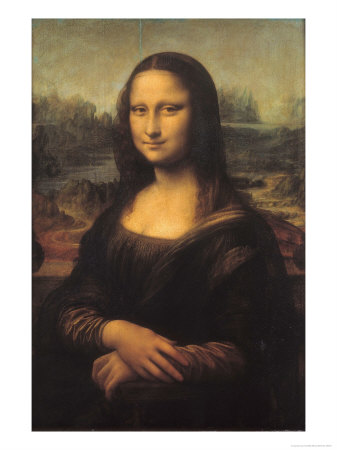
vnzbf00z

The Mona Lisa, Leonardo Da Vinci, 1503-1517

What is clear from the Mona Lisa is the skill with which Da Vinci creates duplicity in the painting.  The image of the young woman who is calm, but distracted, serene but but with a piercing gaze.  She looks toward the painter, yet appears to be looking through him.  The mythology around the painting has only added to the fascination we have with it.  To try to read something new into the image would be a little clichéd.  Instead, I decided to look a Da Vinci work that is still a famous work, but in the shadow of the Mona Lisa.
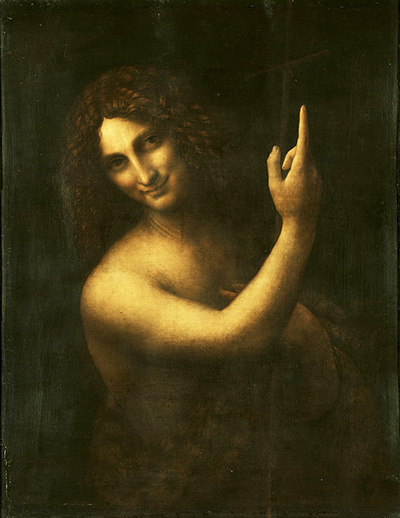
st john the baptist leonardo da vinci

St John the Baptist, Leonardo Da Vinci, 1513 to 1519

St John the Baptist, by Da Vinci again shows the painter’s skill but also emphasises my thoughts as eyes as expressions of emotion [6].  Here, the subject is a famous religious figure, known for the pain and suffering he endured for his beliefs that ultimately led in his execution.  Yet here is an image of man reassuring the viewer that all will be well, set against a minimal backdrop which contains only a feint image of a crucifix; a reminder of how much sacrifice supports his belief.  Da Vinci drives home this reassuring, almost playful-looking saint by what he does with his eyes.  Far from being sad, pensive or passionate, all of which might have worked in this painting, they say “Trust me”.

The other painter I became interested in was Margaret Keane.  This artist was part of a huge art fraud in the 1960s when her husband claimed the credit for her bizarre paintings of people with oversized eyes.  What interested me about her was not the scandal, her popularity in the face of the critics or her the fact that her work is now being reassessed.  What appealed me was the fact that her work is the complete opposite of what I wanted to achieve with this exercise.

In both of these paintings, Keane’s style of creating large, empty gazes on two children drew heavy criticism in the art world.  When it was rejected from The World’s Fair [7] in 1964, New York Times’ art critic John Canaday concurred with the decision.

“Mr. Keane is the painter who enjoys international cele­bration for grinding out form­ula pictures of wide‐eyed children of such appalling sentimentality that his product has become synonymous among critics with the very definition of tasteless hack work.”

John Canaday (incorrectly referring  to Walter Keane at the time), 1964

For me, both paintings simply ascribe a miserable demeanour on the faces of the children, despite them being set in seemingly happy scenes.  The eyes themselves have an empty, zombie-like appearance which gives the viewer nowhere to go beyond the conclusion that something is very wrong.   While there is an aesthetic quality and questions raised by having to look carefully at the whole image, the eyes are such a dominant part of the paintings, that one cannot help but stare at them.

Preparing my Collection

The questions I tried to answer in preparing my idea were as described below:

  • How many eyes do I need?

Sounds like a strange question, but I wanted to consider whether I needed subjects with two eyes shown or can the same be achieved with only one eye in the shot.  I then thought that a subject with only had one eye or even someone with partial blindness would add interest to the set.  Other ideas included eyes of different age-groups and ethnicities.  However I quickly discounted these in line with feedback that I received for Assignment 1 that said I needed to keep the subject matter more simple and focused.  I also needed to decide how many people I would shoot.  For a set of 9 photographs, I would shoot three subjects to keep the set balanced in arrangement.

  • How much of the face do I need to tell their story?

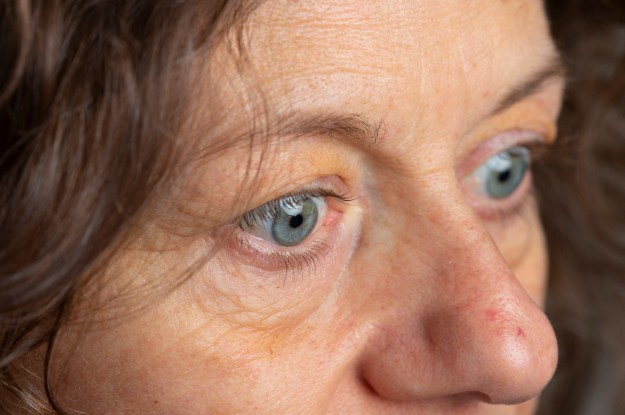
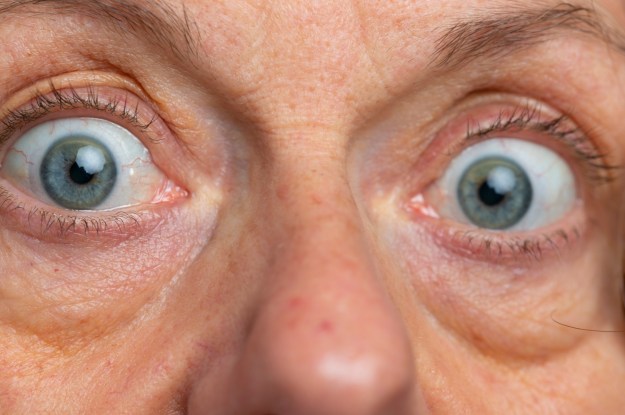
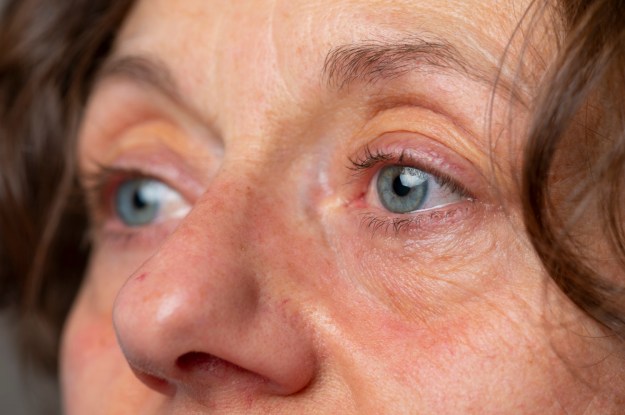
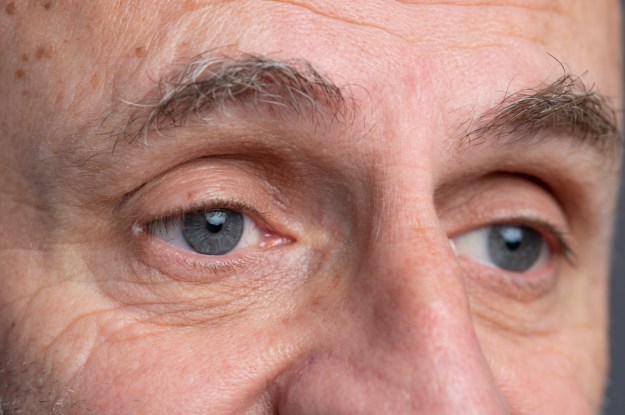
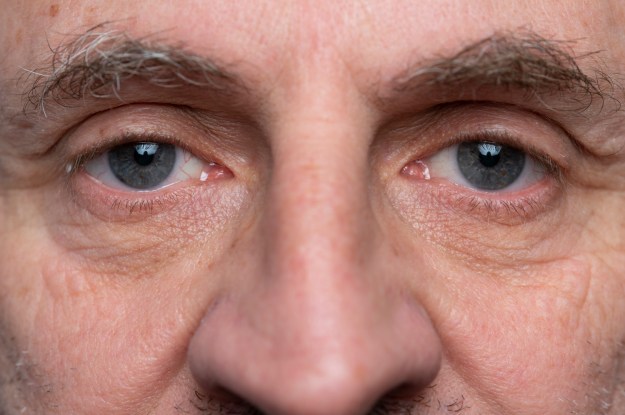
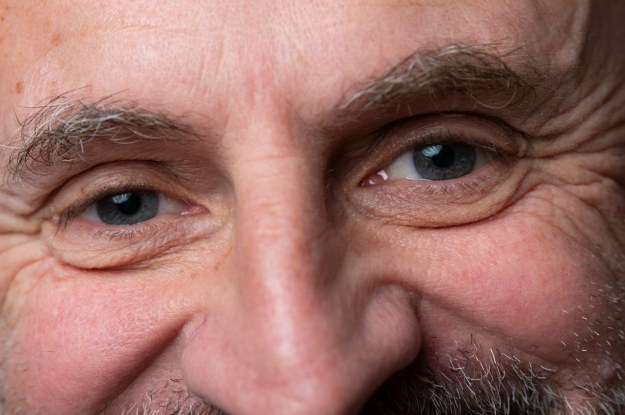
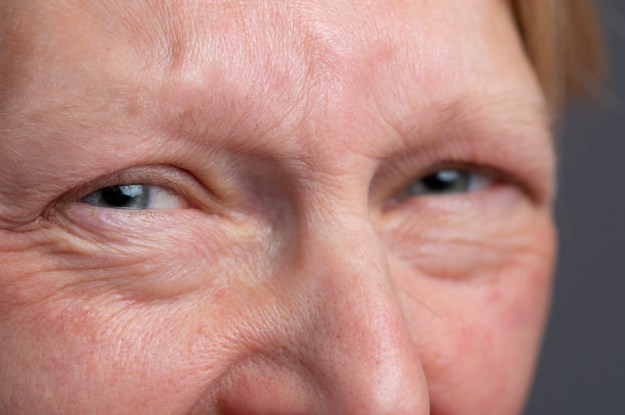
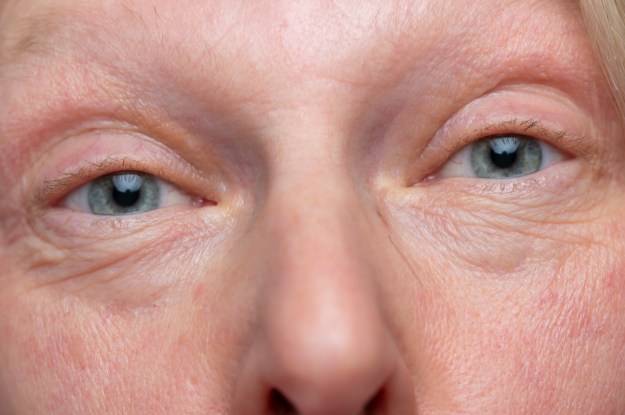
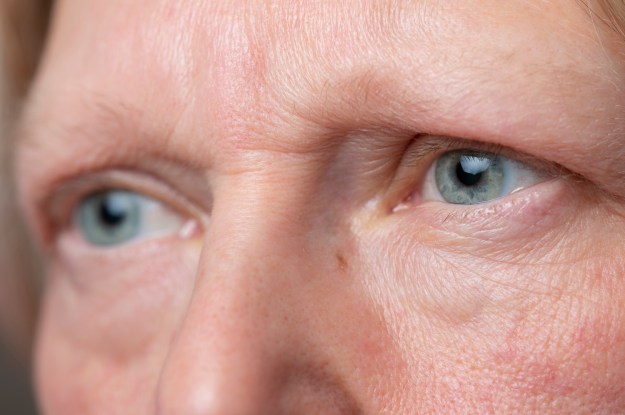
I wanted to capture emotion with the minimum distractions, but that doesn’t mean that I wanted 9 images that looked like an advertisement for an optician. Simply shooting the eyes would not be enough. So the question is in respect to how much of the rest of the face is needed to convey what how the subject feels?  If, for example I shot a woman wearing a full niqab, the whole of their face is covered with the exception of the eyes. It’s a very private and guarded item of clothing, but can you see what she feels just by looking at her eyes?  My starting point would be the region between the forehead and end of the subject’s nose as shown in the photograph below.  I would vary the composition to remove the risk of repetition and avoid a very mechanical set of photographs.
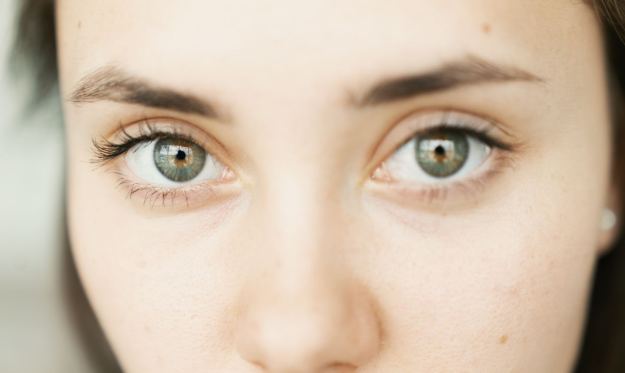
© JC Gellidon/Unsplash from MyBluPrint.com

  • How would I shoot for emotions?

For this idea, I would need to identify and then capture the emotion of the subject.  Would this be naturally occurring or would I seek to create that emotion in them somehow?  A friend of mine is an actor, which got me thinking that I could mix the two approaches to create a set.  According to psychologist Robert Plutchik [8], there are 8 basic emotions with further variations that can be derived from them.

plutchik's wheel

Visualisation of Emotion, Robert Plutchik 1980 [8]

From Plutchik’s emotion wheel, the strength of emotion in the second ring from the centre could be captured in this collection.  My intention for the collection was to describe the human experience in 9 photographs, combining the obvious and hidden interpretations based on how the series was shot.

  •  How to shoot it?

The best way to reliably capture what I’m looking for is to create a small studio environment. A simple set-up where I can control the environment and light around the subject.  One of the most important things when shooting eyes in a portrait is to create some form of highlight, called a ‘catch light’ to make them stand out from the background [2].  A studio strobe-light setup would make this easier to achieve than attempting the same shoot with natural light.  For each photograph, I would work with a plain background with a single soft-box with reflectors to fill any harsh shadow [2].  My setup is shown below.  The first step was to create a workable environment, meter a subject and set the flash power to achieve correct exposure.  My first experiments with the rig used a 70 to 200mm lens with an aperture of f8.  The mid-range aperture would ensure that the subject would be isolated from the background while keeping flexibility in the flash power and distance between the subject and the light source.  The main issue was that at 200mm, the lens would not focus close enough to fill the frame with the eye region only.  In order to overcome this, I changed to a 200mm macro lens, which can focus much closer.  Eventually, the setup was suitable for the shoot.
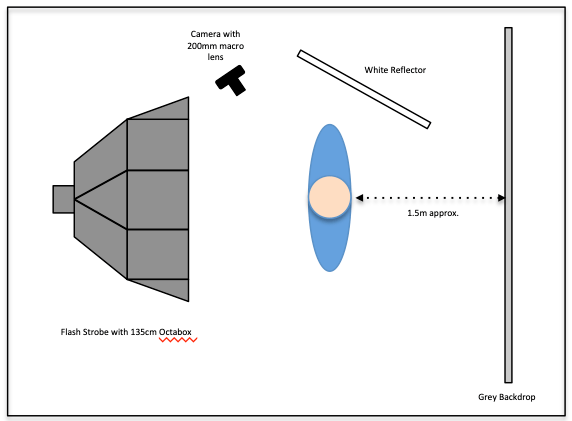
The setup using a studio flash strobe and octabox for soft, even light


The Shoot

I asked some friends Vikki and Ron to model for this assignment, along with my wife Jayne.  By shooting close friends, I could focus on capturing completely natural expressions, something I had concluded was important for my collection.  One of the challenges in this shoot would be capturing natural emotions instead of faked ones.  Ron is a professional actor, which meant that he was aware of what his face was doing during each emotion as well as be able to mimic if necessary.    I achieved natural emotion by giving each model time to relax and almost forget about the camera.  The rawness of the emotions was maintained by not having any of them in make-up, which would normally be a consideration for studio work.  Once we started, I asked one of the other models to start a conversation that would naturally provoke a reaction in the model being photographed.  I shot around 300 images as each conversation progressed.  As the models became acclimatised to the flash, they relaxed into the shoot.  It proved to be a difficult shoot for us all as when, for example the topic became sad it would impact everyone in the room.

When reviewing the 300 images, I made my selection based upon two elements: the images that provoked the strongest response in me as a viewer, and those that best told the whole story of the shoot as a human experience.  As the shoot progressed, the stories being told took the models down a number of different emotional paths which was something I wanted to use to join the collection together.

The Photographs

I decided to present the 9 images in a 3 x 3 grid in a similar way to Exercise 1.4.  I wanted them to be viewed both individually and as a complete set with some visual balance.  With the lighting and camera settings being consistent throughout, the only variables were the angle from the camera to model and the expressions themselves.  In arranging them in the grid below, I intended the keep the models on their own row and for the central images of each to be with the eyes looking directly into the lens.   In each row, the model experiences a range of emotions, both positive and negative.

Reflection

My Thoughts

This assignment has been hugely challenging and enjoyable.  The subject matter evolved as a result of a single inspiration and developed through conversation and research.  As a result, I find myself studying people’s expressions by paying particular attention to their eyes.  When I was considering a subject for this assignment, I wanted to do something different from photographing something physical.  What I learned from Parts 1 and 2 was that expression of vision should not be restrained by so-called rules, that the aesthetic is more valuable in art than the formal, which is something I’ve never really considered prior to joining this course.  However, I would need to work with people as the subject, carefully select the lens and the lighting in order to capture what I was intending to with this collection.  The shoot was tough, particularly when trying to provoke the negative emotions such as anger and sadness.  One notable moment was during a conversation about Vikki’s late father, which resulted in ‘Vikki 3’.

This assignment has pushed me to look carefully at how I react to that initial inspiration; in this case a chance encounter with a film I hadn’t seen in years.  My instinct has always been to force a photograph to show it’s quality through composition and technical achievement, but for this assignment I moved completely away from that notion.  Throughout working on this collection, I have questioned whether it was ‘the right subject’. and whether I could make it work.   It was only when assembling the collection that I finally stopped worrying about it.  This demonstrates how uncomfortable this assignment has, even if the result is something that I am happy with.

What worked

Reviewing the images, the stand out ones for me are how powerful the negative emotions are.  ‘Vikki 3’ and ‘Ron 2’ were intended to be sadness and anger respectively.  However, emotions can be combinations of feelings as postulated in Plutchik’s work, e.g. Awe can be a mix of fear and surprise, terror and amazement with the main difference being the relative intensity of the component parts.  In the case of these two images, there is a mystery surrounding whether it’s sadness or remorse, anger or contempt.  Without being in the room, the viewer has to reach their own conclusions.

What didn’t work as well

My only concerns about the collection stems from the decision to not make up the models.  Each has a different skin tone and while the temperature of the light was taken from the specification of the strobe and adjustments made in Lightroom, I think the results are too varied.  As a set, this isn’t a problem as each model has 3 photographs across the horizontal of the grid, creating balance.  I’m not convinced that they work as well individually in terms of skin tone.  When assembling the set I created a printed contact sheet so that I could arrange them in the order that worked best.  In an effort to address skin tone, I printed a black & white version of the sheet.  However, in those images, the impact of eye colour was lost, so ultimately I selected colour instead.

The other reservation comes from a question raised by Rob Bloomfield during our student video conference as to whether a series or collection can sustain losing an image, particularly a ‘strong’ one.  In this regard, I believe that as in the case of a jigsaw puzzle a single piece removed would still reveal the overall image.  In the case of this collection, I believe the stronger images would be missed if removed.

Meeting the Brief

In terms of the original brief, I believe I have created as series that meets it.  The ‘things’ in this case are Emotions.

“Fragments of a vessel which are to be glued together must match one another in the smallest details although they need not be like one another”  Walter Benjamin, 1936″

With regard to Benjamin’s quotation, I believe that I’ve kept that consideration in mind throughout the assignment.  I kept the technical setup and the basic composition of the images the same, I changed position for each shot and mixed the direction that the model was looking.  As the macro lens has a very shallow range of focus at all apertures, the shots where the model is looking away has the nearest eye to the camera sharp and the other rolling off out of focus with the rest of the face.  Only when the model looks directly in the camera are both eyes sharp, which works for the emotions I was looking for in those images.  The ‘vessel’ in this case is the human experience. By taking the models through a number of conversation topics, their experience of the shoot was happy, sad, angry etc as it progressed.   As individual images, each has an initial impressions but raises questions about what the subject is thinking about – ‘what could have happened in that room to make them feel that way?’  I was reminded of my conversation with my colleague about children who could not interpret emotions from the eyes and face alone and how difficult it must be to guess what is going on.

References

[1] Holben J, 2018, “Eye Lights”, The American Society of Cinematographer, https://ascmag.com/blog/shot-craft/eye-lights

[2] Silverman R, 2016, “A Photographer’s Eye”, The New York Times, https://lens.blogs.nytimes.com/2016/06/08/the-photographers-eye-nicholas-nixon/

[3] Brewer R & Murphy J, 2016,  “People with Autism Can Read Emotions, Feel Empathy”, Spectrum, http://www.scientificamerican.com

[4] Fessenden M, 2015, “Kids with Autism Can Read Emotions Through Body Language”, http://www.smithsonianmag.com

[5] “The Mona Lisa – by Leonardo Da Vinci,” https://www.leonardodavinci.net/the-mona-lisa.jsp, accessed December 2018.

[6] “St John the Baptist – by Leonardo Da Vinci”, http://www.leonardo-da-vinci.net/st-john-the-baptist/ accessed December 2018

[7] Queens History blog post, 2014, “Robert Moses rejected this terrifying Margaret Keane Painting from Hanging at the 1964-65 Worlds Fair”, The Bowery Boys http://www.boweryboyshistory.com/2014/11/robert-moses-rejected-this-terrifying.html

[8] Burton N, 2016, “What are Basic Emotions?”, Psychology Today, http://www.phsychologytoday.com

Tutor Feedback on Assignment 2

I’ve received my tutor’s feedback for this assignment recently.  It was very positive about my approach to my collection, starting with my initial inspiration and progressing through my research.  The variety of my research including Plutchik’s work on visualisation of emotions was highlighted in the feedback as well as the breadth of research into the painters.

The areas that were suggested to progress the assignment revolved around viewer response.  Although my tutor stated that the images worked as a set, he suggested that feedback from others would give me sense of whether I had achieved what I set out to.   I have since asked a number of people to read this blog post and they all confirm that what I described as my idea, works in the photographs.

I had another suggestion from my tutor to look more closely at the lighting effect used in the film that inspired me at the beginning.  The use of the technique was used in early cinema to increase the mystery of the character.

On the whole, I’m very happy with how this assignment went and the reaction of everyone that has read the blog post so far.
Exercise 2.1 – Zoom

The Brief

Find a scene that has depth.  From a fixed position, take a sequence of five or six shots at different focal lengths without changing your viewpoint. (You might want to use the specific focal length indicated on the lens barrel).  As you page through the shots on the preview screen if feels as though you are moving through the scene.

Research

The course notes make reference to Ridley’ Scott’s Blade Runner, which is one of my favourite science fiction films.  I have been a fan in large part because of the close relationship between what could be real science or engineering, and the fiction that the film envelops it in.  Growing up, the predictions of this century were all around voice control, self-driving flying cars and artificial intelligence.  While cars don’t fly, the rest is pretty much here including the ability to resolve images in ultra-high resolution.  Deckard’s scanner is almost real, only separated from reality by the 3D exploration of a 2D image.  We can, however forgive that level of artistic licence.  In reviewing Google’s gigapixel work, it’s clear that the technology is hugely impressive but the real interest is in what the extreme zoom capability reveals that could be missed from the more distant viewpoint.  The painting that caught my eye was Vermeer’s “Girl with the Pearl Earring”, a very famous, and often copied image.  I’ve always been superficially impressed by it, but with the gigapixel, the ability to explore the micro detail of the painting gave me a new appreciation of it.


The original canvass is only 17.5 inches by 15 inches in size, which makes the detail of the painting closeup extraordinary.  Looking at the eyeball itself, we can see subtle shadowing near the lower eyelid and both colour and texture in the cornea.  Vermeer painted this with attention to these details as well as the subtle highlight and shadow detail around the face and was known to use a camera obscure to accurately assess the way that light was falling on the subject [2].  To think he did this in the 17th Century with whatever light was available and his own imagination, I find remarkable.   Except for the fact that there are many painters of this era who were achieve similar feats.  What surprised me is how the technology of the modern digital camera provides us with these insights.

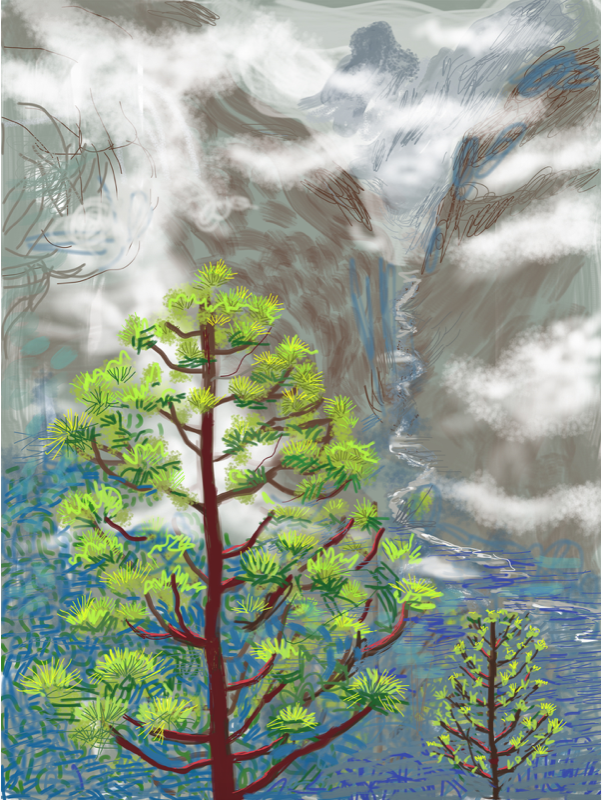
This reminded me of one of my favourite artists, David Hockney who presented an exhibition of his work at the Royal Academy of Art in 2012 [1].  I went to this exhibition and the paintings that struck me the most were a series called Yosemite.  Hockney had created artworks that were 365.8 cm by 274.3 cm made up from an assembly of 6 prints made on dibond paper.  This in itself wasn’t the unusual aspect, because Hockney had ‘painted’ each panel on an Apple iPad.   In the reverse situation to Deckard’s extreme blow-up of a small print, Hockney achieved a huge painting by working at the micro level first.   The effects were a series of beautiful paintings as digital prints as shown below.

Yosemite 1, David Hockney, 2011


My plan

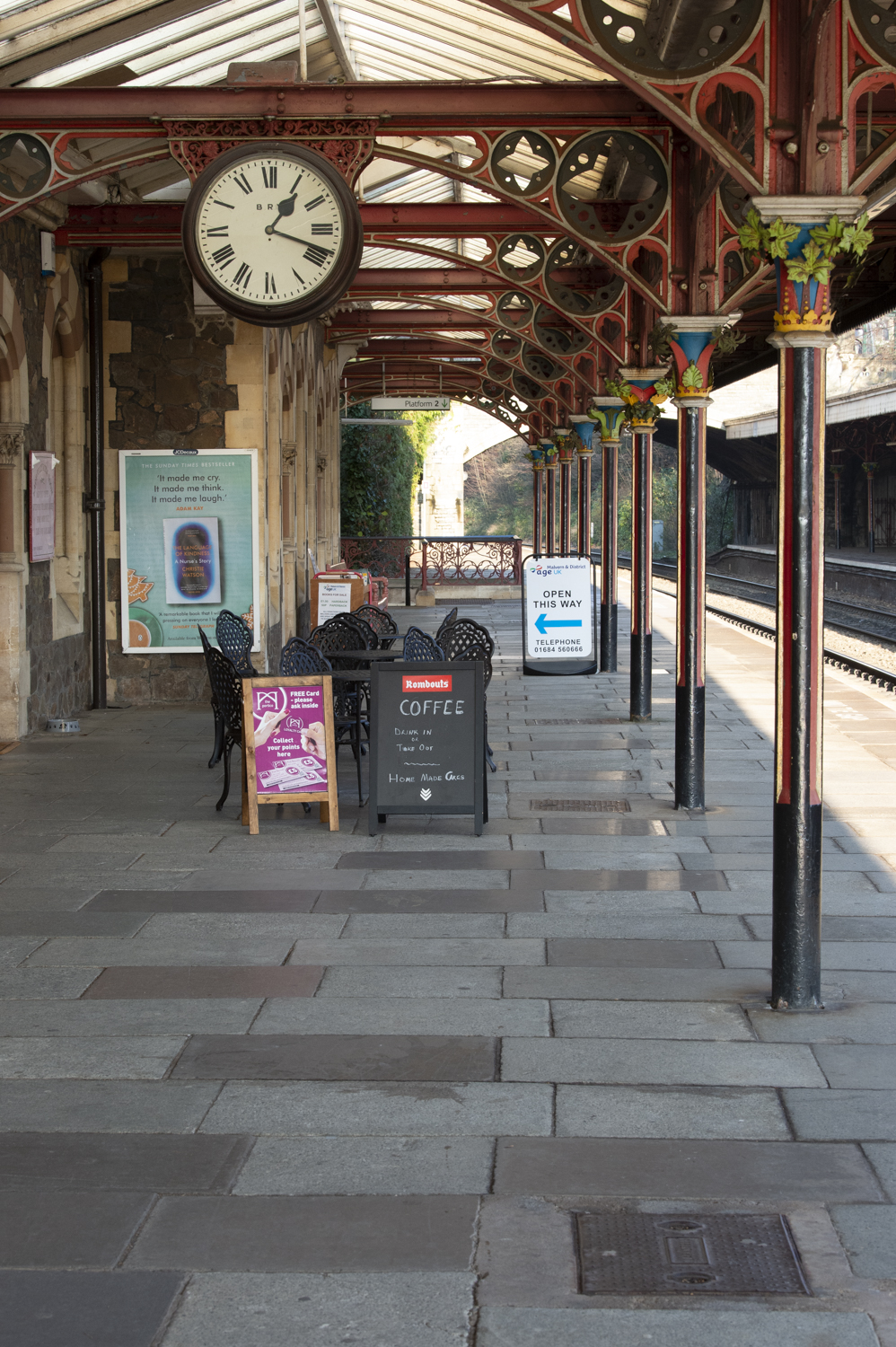
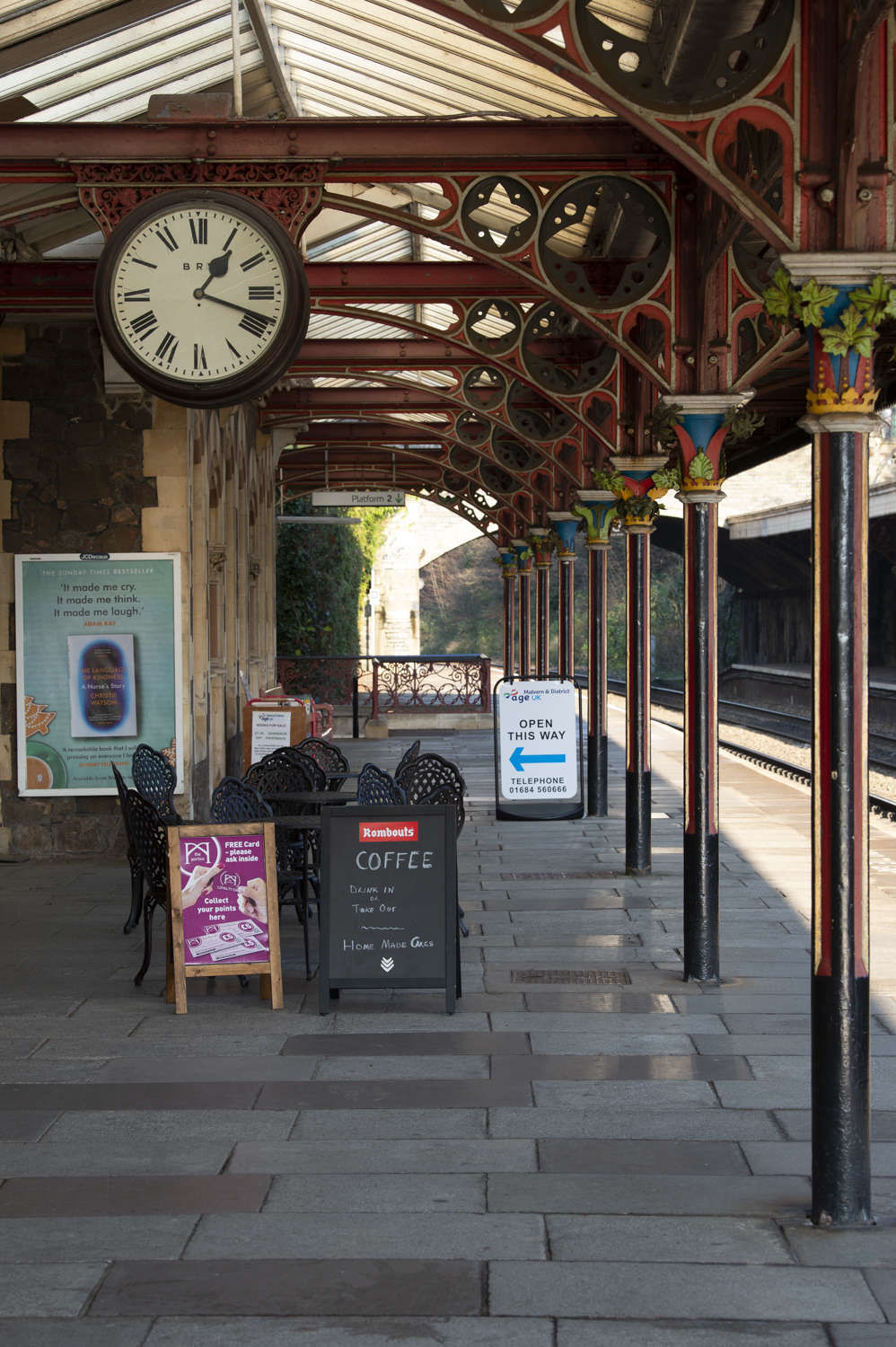
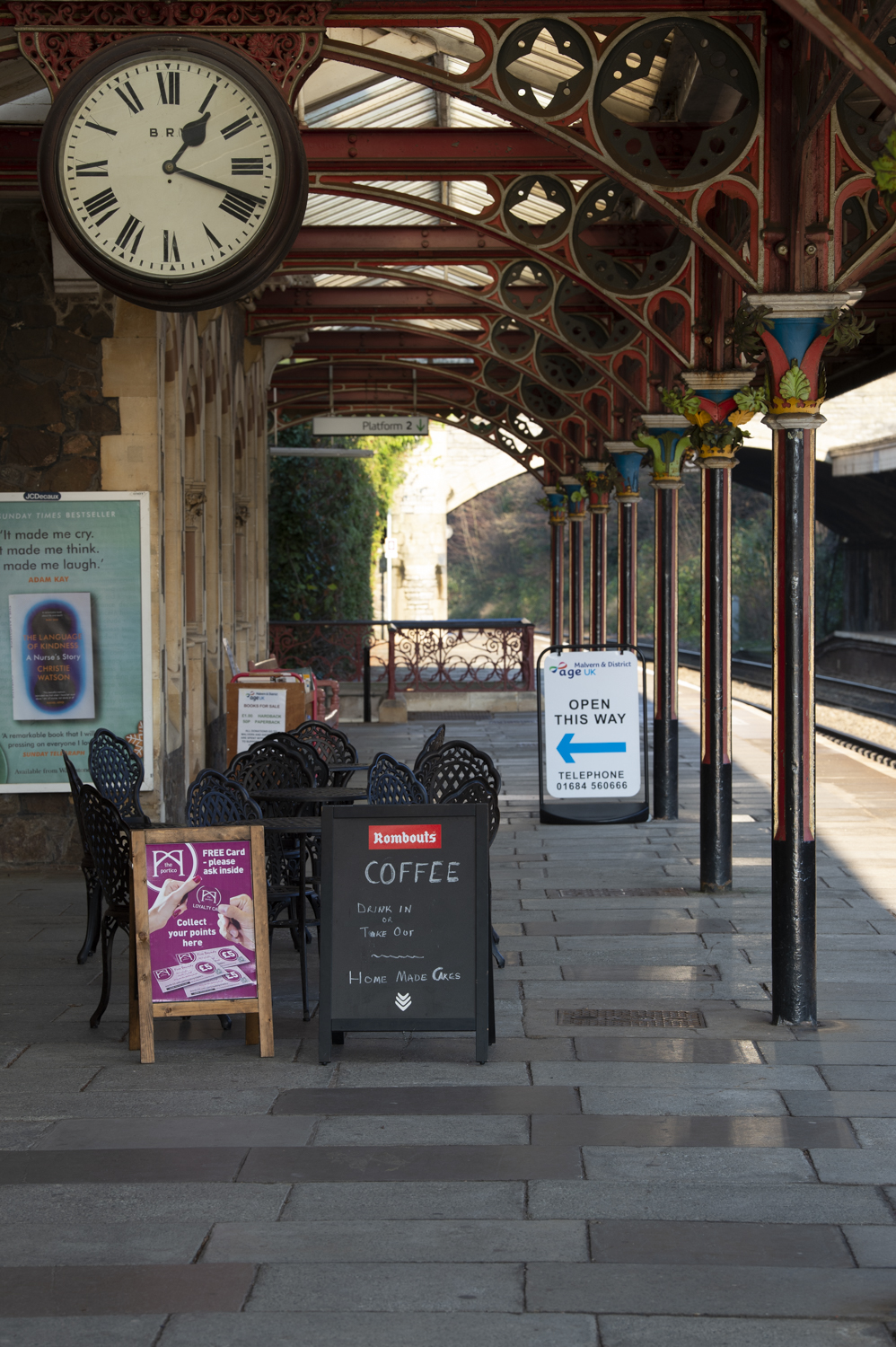
I have a mix of lenses for my DSLRs that include fixed focal length, or prime lenses, wide angle and telephoto zoom lenses.  For this exercise I decided to use the Nikon 70 to 200mm f2.8 lens as it offers the longest range of focal lengths and has very high quality glass elements.   For the location, I chose Great Malvern’s railway station platform, which is a typical example found in a Victorian town.

When I arrived I realised, quite reasonably that the railway station did not allow tripods.  For my set, I was going to have to hand hold so I went with the following settings.

  1. Aperture Priority set at f11.
  2. ISO200.
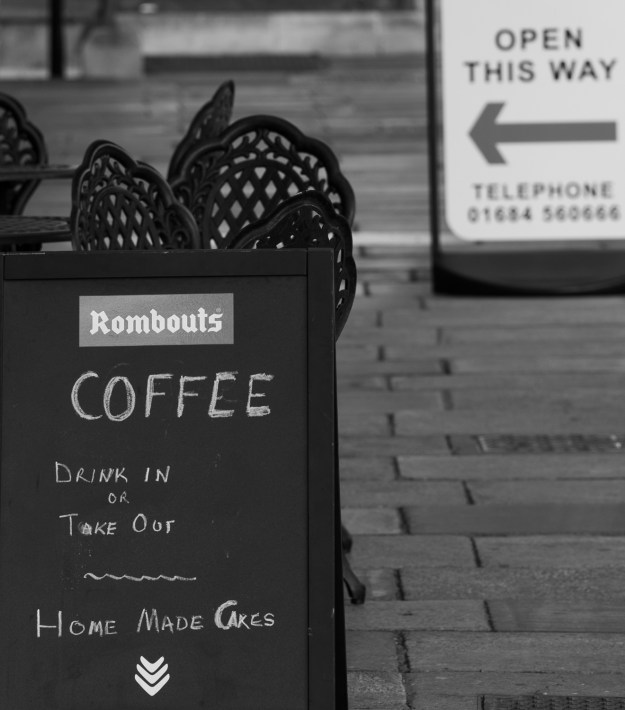
  3. Manual focus –  to begin with, I did not want to re-focus and re-meter between shots.  I picked the coffee sign as the point of focus.
  4. Setting 70, 85, 105, 135 and 200mm as per the lens barrel markings.

My Images

The first noticeable issue is that reading the focal length markings on such a large lens while handheld is a major challenge.  It’s particularly noticeable between 70 and 85mm, where although my position and viewpoint haven’t changed, the position of the clock in the scene is slightly higher than it should be.

Nevertheless, scrolling through the images, one gets the sense of walking along the station platform toward the cafe. The subjects within the composition exit the frame with increased zoom and the effect of the image depth being reduced is clear as the focal length approaches 200mm – note the apparent reduction in distance between the rail at the end of the platform and the white sign.  By using a smaller aperture, the signs and clock are acceptably sharp (while not totally so).

Reflection

A tripod would have improved the accuracy of the zoom, but that wasn’t the point of this exercise.  What I’ve got from it, and by recalling and reviewing the film references in the brief, is that the image can start with one viewpoint and change to another through using zoom.  As with Deckard viewing the photographs in Bladerunner, everything that is of less interest falls outside of the frame, leaving a narrow window on the subject.  If used in a composition without changing viewpoint, the subject itself can be completely different.  In my case, I looked at the images I shot for this exercise and saw something that amused me; the way the signs direct the viewer.  For my final shot for the set, I took P4 and used a tight crop, effectively throwing away most of the frame.  The subjects are now isolated from the railway platform; no longer obvious where the photograph was taken and they stand on their own in relation to each other.

DSC_1102

What I have learned from this exercise is that although I already knew that a longer focal length creates a narrower field of view than a shorter one, zooms can be used to creatively alter what we want the image to say.

References

  1. Hockney, David 2012 – A Bigger Picture Exhibition Book, Royal Academy of Arts
  2. Johannes Vermeer and his Paintings, http://www.johannes-vermeer.org, accessed 14th December 2018


Surface and Depth Revisited

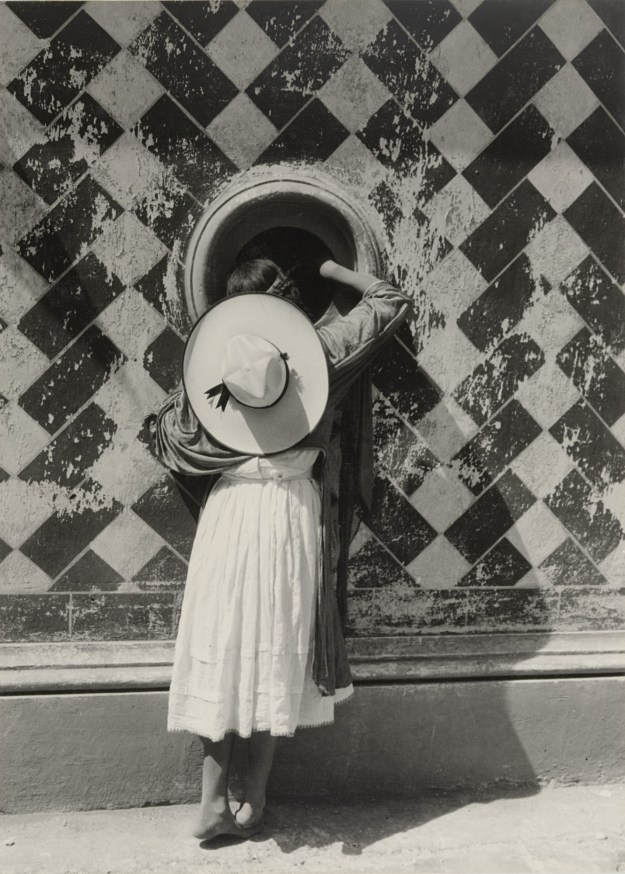
This is about seeing and not seeing, about the hole in the wall acting as a round lens letting light into a dark camera interior, about framing of vision, oppositions of dark and light, the curiosity of looking into a dark space, and about the figure caught between two objects that capture her image, the hole – her face – and the camera – her body.’ – Leonard Folgarit

The Daughter of the Dancers, by Manuel Álvarez Bravo, 1933

This was Leonard Folgarit’s review of The Daughter of the Dancers, by Manuel Àlveres Bravo that was quoted at the start of this Project.  The concept being established in this section of EYV was of The Aesthetic.  According to the Stanford Lexicon, “the term ‘aesthetic’ has come to be used to designate, among other things, a kind of object, a kind of judgment, a kind of attitude, a kind of experience, and a kind of value”.  In the context of this course and, more importantly my approach to photography, the concept of a picture having any of these elements to it is a further departure from what I am used to.  Sure, I have been told about a photograph telling a story and having meaning, but my reaction has been to carefully place subjects in the frame to create an interesting composition.  Any emotion or judgement or value attached to the image would be fortunate at best and accidental at worst.

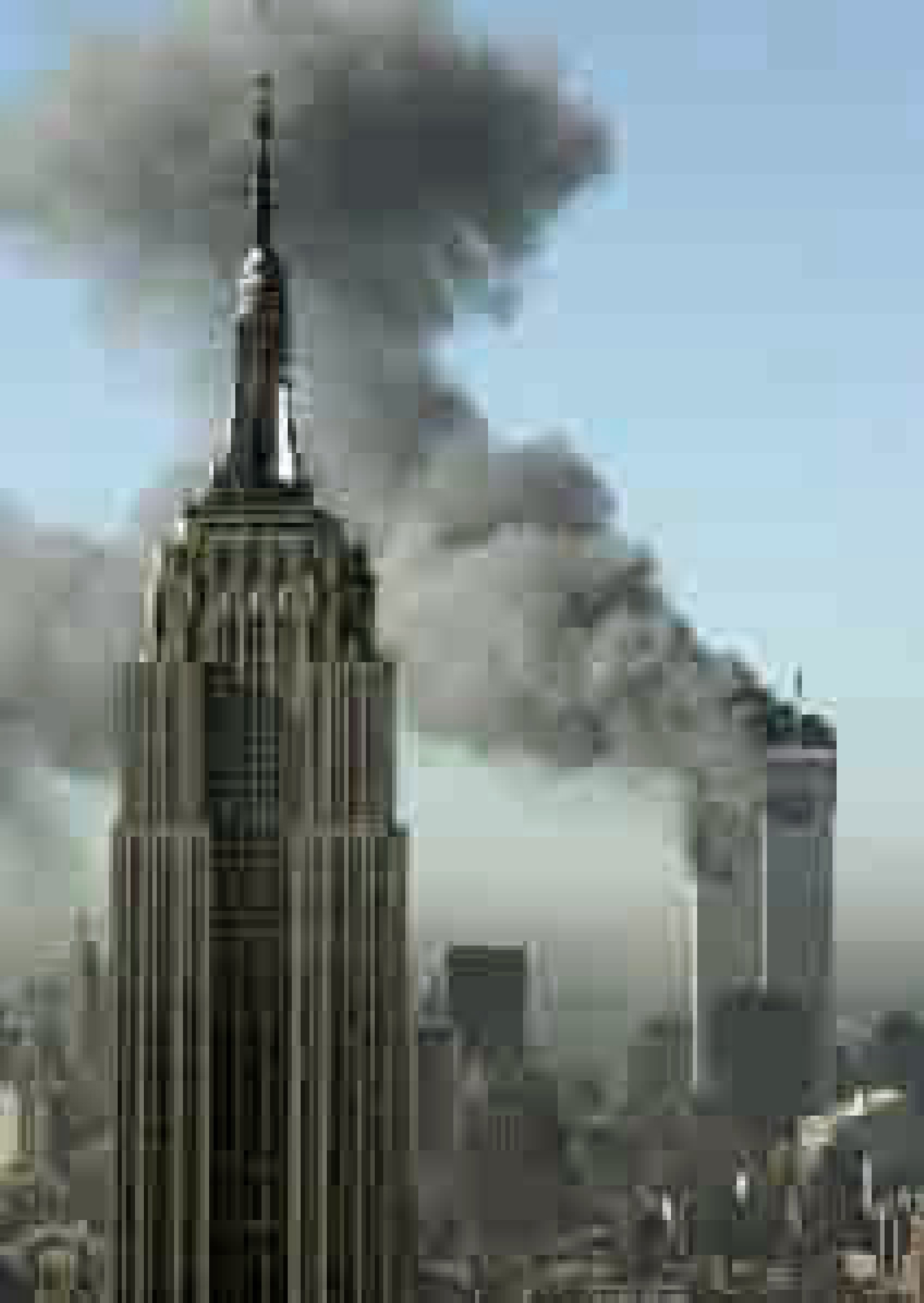
The review of Thomas Ruff’s work interested me, not because of the visual tension his images created when viewed, but the increased sense of what was happening in the picture, enhanced by having all the technical detail stripped away.  My only issue really being that his use of other people’s photographs moved him away from ‘photographer’ in my mind and towards ‘artist’.  I was discussing his work with a colleague today, who is also a photographer.  When I explained the story of Ruff’s ruined images of the 911 attacks and his subsequent downloading of low-resolution versions of other people’s work, he was horrified.  “Can you even do that?”

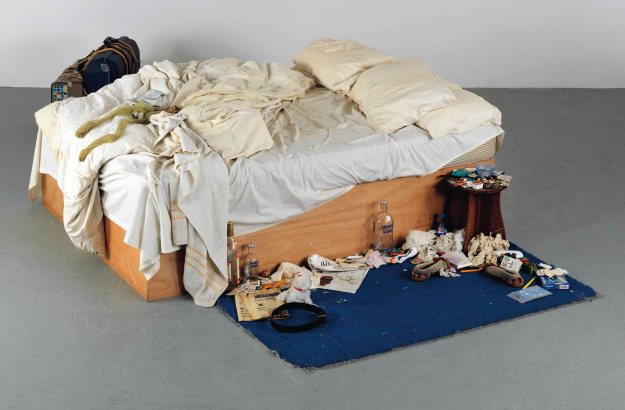
I got to thinking about the work of modern artists such as Tracey Emin and Damien Hirst.   Like all artists who create art from seemingly ordinary objects or collages of images, they are effectively not something they own.  Emin’s bed, for example is at face value (Surface) as being simply the creation of any teenager, but when asking questions about how the individual elements came to be there can easily lead to the artist’s narrative.  However,  many people including myself saw what was in front of them and the judgement of it being a wasteful, almost narcissistic statement by someone with clear issues now appears to be as valid as the emotions Emin was trying to convey about a dark time in her life.   Everyone will have a different view.  What makes the difference to me is, like The Daughter of the Dancers, the viewer cannot see what is going on beyond the obvious ‘surface’.  What is happening deeper in this picture?  How did the owner of the bed get both it (and presumably themselves) into such as state?

My Bed by Tracey Emin, 1998

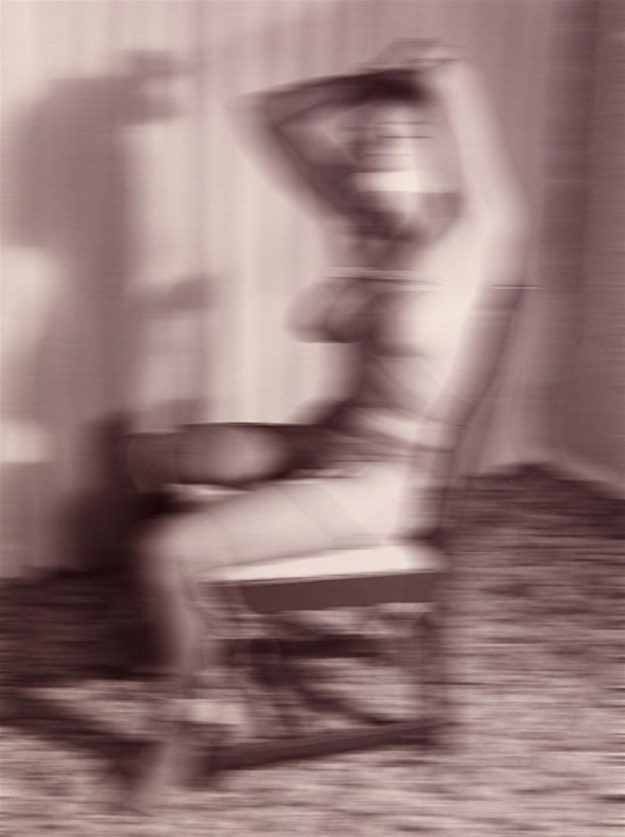
Coming back to Ruff’s work, I decided to look at other examples of his work and found a collection he created in the early part of this century called Nudes.  Like jpegs, Nudes is a seemingly obvious subject that achieves an aesthetic when a level of distortion is applied.  However, in this case Ruff downloaded pornographic images from the internet to make his art.  What reaction do these photographs create?  For me, initially shock followed by a softer appraisal of what could easily be a classical art nude, with all its potential beauty.  But it’s still porn at the heart of it.

From the collection ‘Nudes’ by Thomas Ruff, 2000

The difference between my predecessors and me is that they believed to have captured reality and I believe to have created a picture. We all lost, bit by bit, the belief in this so-called objective capturing of real reality.

Each of my series has a visual idea behind it, which I develop during my research. Sometimes the development follows a straight line from A to B; sometimes something completely new and interesting shows up, which makes me leave the straight path and follow a more indirect one with new rules.
—Thomas Ruff

Reflection on my Work

With the distinction between the concepts of formal and aesthetic better understood, I reviewed some photographs from a recent test of an old Olympus XA film camera I had picked up on eBay.  This was a few rolls just seeing how it performed as an instrument and I was shooting them during a visit to London on holiday.  One image in particular stood out as demonstrating both the formal and the aesthetic which can be seen below.

Retrochrome004

The photograph was made using an expired Kodak Ektachrome slide film, a characteristic of which is a colour shift caused by age.  This was simply a test of the camera’s ability to meter the scene (no evaluative metering on a camera from 1979!).  The dominant light from a very sunny day and the composition with the subject on the right hand third line was all planned.  However, in review there are aesthetic questions that arise.  We cannot see what the gentleman is doing.  Is he reading a phone while waiting for someone or is this quiet cafe a regular haunt for him?  I was hoping for more detail in what was beyond the cafe’s window, but the fact that there isn’t asks what would people see if they looked in at this man?    I was surprised to realise that the image, while a simple and seemingly boring test of an old camera and film actually asks more questions than it answers.  For me, not dissimilar to my reaction when I saw Bravo’s photograph.

Ever the engineer, I wanted to look at this further with another recent photograph.  This time, I had shot a performance of The Ladykillers by a local theatre company for their publicity and personal use.  This one photograph illustrates for me the difference between creating an aesthetic and a formal composition.

The Ladykillers, 2018

In this scene, the lead character looks under the cover over a bird cage.  While his reaction to the horror within is clear, the only aesthetic is not being able to see the bird.  From the formal composition, it is clear how the two subjects are interacting and obvious that the cage contains some kind of bird or animal.  For me, the photograph works well as a composition but doesn’t provoke any real emotion or judgement.

In conclusion, I found this Project fascinating as it reveals what can be achieved without the necessity to be obvious, technically accurate or abiding by the rules.

1) Project 3 – Surface and Depth

The Brief

Read the reviews by Campany and Colberg (of Thomas Ruff’s Jpegs Series) and, if you haven’t already done so, use them to begin the Research section of your learning log.  Try to pick out the key points made by each writer.  Write about 300 words.

My Analysis of the Reviews

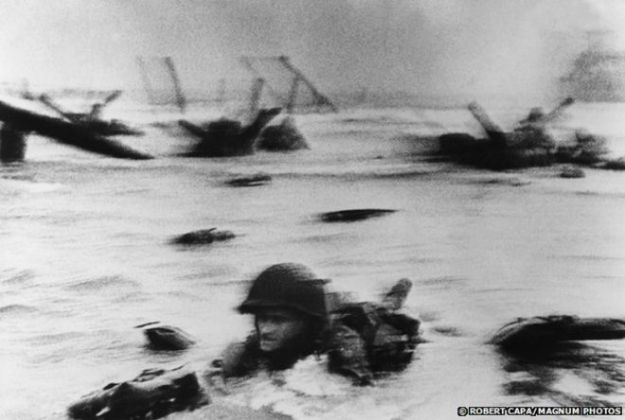
What immediately struck me from reading these reviews was the difference in the writers’ appraisal of Ruff’s art.  Both draw on the aesthetic appeal of his images and highlight the almost accidental nature of them coming into being.  Campany draws our attention to the fact that the aesthetic of the imperfection of a photograph can ask questions about how the image was created, and indeed looking at the Capa example from the Omaha Beach landings, it is easy to get a sense of panic and haste; the environment not being conducive to formality in composition nor technical accuracy.  The fact that the effect was accidentally achieved by mistakes in the darkroom later is less important, almost irrelevant to the viewer.  Campany’s paper also highlights that while Ruff’s approach  to create art could be compared to the use of large grain by film artists, it speaks to the nature of the modern age; ordered and ‘digital’.  Our daily lives are dominated by electronic representations of photographs, a point emphasised at the beginning of this course with the ‘ccamera’ app, which I personally found to be both impressive and shocking in its scale.  Both writers highlight Ruff’s use of other people’s images to create his art, beginning with his failed attempt to photograph the events of 911 (Photo 1).  For me, the idea of creating art from other’s photographs where I have failed, is completely alien.  It begs the question ‘Why?’ even if the results are aesthetically pleasing.  Campany goes on to highlight Jpegs and similar work are part of a gradual shift in how we see digital pixels.  Far from being simply logical, mathematically derived arrangements in an image, they can convey a completely different perspective depending on the subject.  I look to explore this in my conclusions.  However, Colberg’s review of Jpegs seems a lot less forgiving of the use of pixels, suggesting that while clever and beautiful, the creative effect appears shallow and almost too easy to achieve.

Ruff’s Images

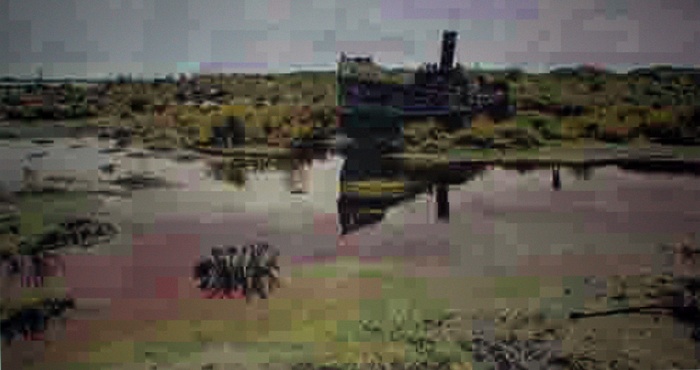
I’ve chosen two of Ruff’s images, one from Jpegsand the other from a later series called Jpegs II to try to describe how I interpret this style of art.  The first is from the original photographs of 911 and is in itself an incredibly moving image.  The pixilation of Ruff’s version for me offers a modern filter of ‘order’ through which the chaos of the events are witnessed.  The beauty of the familiar shapes of the New York skyline appear shuffled from what is expected but the eye lingers to try to make sense of something that doesn’t make sense.   The second image of a stranded boat on a low tide doesn’t work for me in the same intense way.  The pixels order nature, which emphasises the beauty of the light as well as the formality of the composition, but the impact is not as great as the first image as it lends itself more to impressionist art as an aesthetic.   I conclude from how this makes me feel, that I am more in agreement with Colberg than Campany; the technique is very dependent on what is happening in the photograph and loses its impact if the subject does not support it.  In the case of the above, both have clear ‘formal quality’ to begin with, but in applying the same technique to both, the aesthetic is very different.  I would be interested to see an image where the effect was planned when shot, rather than as a retrospective action.

My images, in the style of Ruff

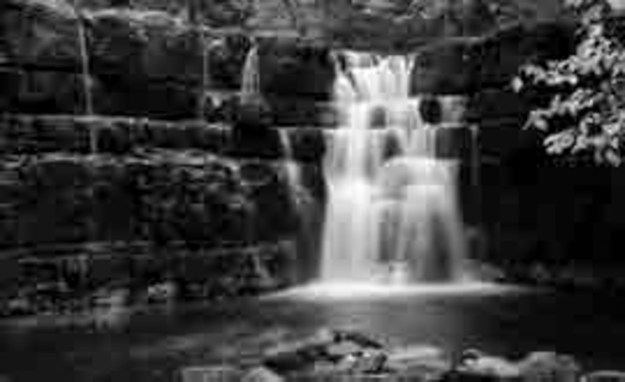
I selected the above photographs to try to validate my interpretation of pixels as an aesthetic.  The first is from Exercise 1.4, a neon sign in my home town.  The second is a waterfall I shot on holiday in North Yorkshire recently.  In the Photo 1, the lines and squares in the image are softened by the pixellation, but the sign is still readable.  The sky, which was fairly neutral now has texture akin to daubs of paint one might find in an impressionist painting.  The problem for me is that the effect is wasted on this image as there is no drama in the subject.  When reviewing Photo 2, the subject has drama in the long exposure of the water falling over the rocks.  The rocks themselves are a structure of blocks owing to many years of erosion.  The pixellation of the image applies some order to a naturally disordered scene, which has a similar effect on me as the 911 photo by Ruff.

When I think of the Capa example in Campany’s review (Photo 3), the subject is greatly enhanced by the visual effect of blur, but the drama is already in the frame – imagine how it would have looked had the darkroom assistant not hurried the film’s development.

Photo 3 – © Robert Capa

Like all aspects of art and in particular photography, the aesthetic is subjective.  I like what I’ve seen of Ruff’s work, but believe it to be an approach that emphasises the need to relate to the subject and composition of the frame.