Monthly Archives: Oct 2018

Exercise 1.3 – Line

The Brief

Take a number of shots using lines to create a sense of depth.  Shooting with a wide-angle lens (zooming in and out) strengthens a diagonal line by giving it more length within the frame.  The effect is dramatically accentuated if you choose a viewpoint close to the line.

This exercise is divided into two parts, the first being the use of leading lines to create depth and the second being the counter to this; using the lines to remove depth and create an abstract photograph.

Part 1

For Part 1, the works of Eugene Atget are referred to as examples of using lines in make the photograph three dimensional.  At first glance, his ‘documents pour artistes’, shot in Paris in the early part of the 20th Century, we see a seemingly ordinary set of documentary images.  Atget had indeed set out to simply document the changing face of Paris through its architecture.  Unlike the street photographers that followed him, Atget used people and way of life to supplement his commentary on Paris rather than how the city had influenced its people.   What he developed during this exploration of his home, was a style of photography that makes the viewer forget that this is a flat, two-dimensional image.   He influenced a great many photographers posthumously, but none more than Berenice Abbott.  She discovered his work fairly late in his life and went about purchasing as many negatives as possible.  After his death, Abbott published much of Atget’s work, establishing him firmly in the photography greats.  While interesting enough, it’s the influence on Abbott that appeals to me as I became familiar with her work a few years ago when we purchased a print of her 1932 photograph ‘Oyster Houses, South Street and Pike Slip’, shown below.  She had met Atget through Man Ray, whom she was working for as an assistant at the time.  Her photography was itself in its infancy, so it should be of little surprise that Atget’s work should be such an influence on her.
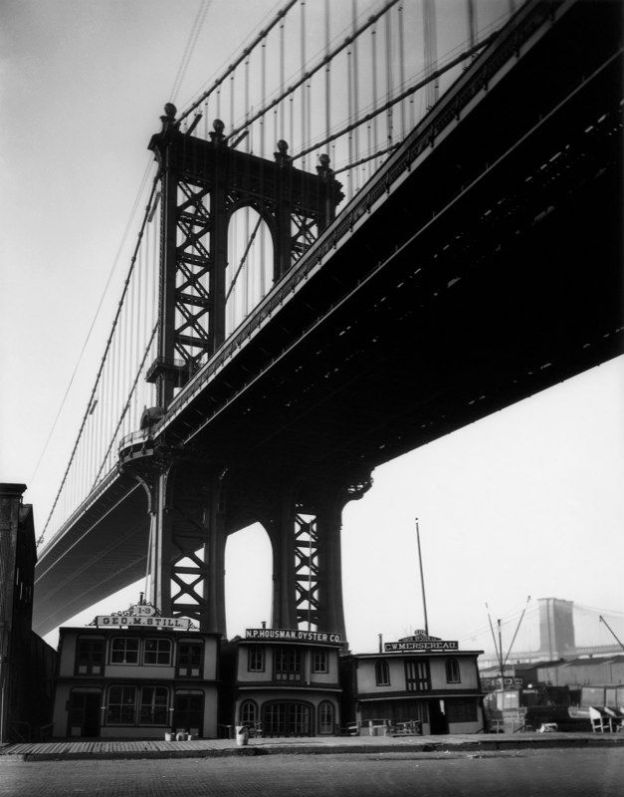
Berenice Abbott Oyster Houses 1932

Oyster Houses, South Street and Pike Slip 1931-32, Berenice Abbott [1]

When I first saw this photograph, my emotional response was the awe at the sense of scale between the fairly substantial ‘houses’  set against the massive Manhattan Bridge in New York City.  The next was a sadness that these houses, which were in fact floating barges on the East River, had all but disappeared save for the odd museum piece.  The mighty bridge spans an entirely different shoreline now.   I had not considered how Abbott creates the sense of scale that initially grabbed me prior to look into Atget’s work.  In reviewing again, the dominant span of the bridge gives a sense of depth and width even thought the image is a portrait orientation.  The depth is further emphasised by the track of the Brooklyn Bridge to the right.  If the barges were not breaking the line created by it, the viewer can picture the intersection of the two bridges in the distance off the left-hand side of the frame.  In addition to the depth the two subjects create, Abbott further emphasises the scale by introducing the height of the bridge, which is a vertical line that stretches into the sky.  The cables of the bridge lead to this point from the left and right of the frame where the top of the bridge and it’s architectural detail are found. They in turn sit on the ‘left third’ line in the picture.  Finally, the use of the bridge span to frame the oyster barges in the lower part of the image creates the visual tension where the eye is left to explore the rest of the frame.    For me, a beautiful image but more importantly a technique the Abbott used in a great number of her New York street photographs in the 1930s, a fairly short time after Aget’s death in 1927.  Some other examples of her work that demonstrate a similar vision are shown below.

Abbott was a great technical photographer and later became a teacher at the New School for Social Research [1].  Although she taught photography, she combined her experience of surrealism gained with photographers such as Man Ray, with an interest in the sciences.  She photographed a number of physics phenomena after leaving the school, most notable being the tracing of light rays.  Some of these images link directly to the Part 2 of this exercise.

My approach

The three things I wanted to explore with leading lines were the effects of focal length, aperture and crop on the sense of depth created.   I already appreciated the difference that focal length can have on perspective as I’ve shot many landscapes in my time as a photographer.  Short focal length lenses offer wide angles, long distances between near and far subjects, but introduce distortion depending on the angle that the lens is to the subject.  It’s particularly noticeable at short distances on vertical lines, such as tall buildings.   Perspective distortion can be an interesting effect but can be a problem if the intent is to create something that maintains a sense of reality about it.  Long focal lengths, by contrast have the effect of shortening the perceived distance between near and far objects but give little sense of depth or distortion.  Larger apertures offer the ability to pick out a subject by intensifying the out-of-focus regions, dependent on the focal length and relative distances of between subjects and the background.  Smaller apertures have the inverse effect.  Add the crop ratio of the image, do these factors change the way the depth or scale of the image appears when leading lines are involved?

Reviewing the images by Berenice Abbott, the effect of the out of focus areas in the image accentuate the sense of depth, particularly in the Manhattan Bridge image.    The final aspect is crop.  Does a tighter crop impact the effect caused by the combination of the other techniques?

My images

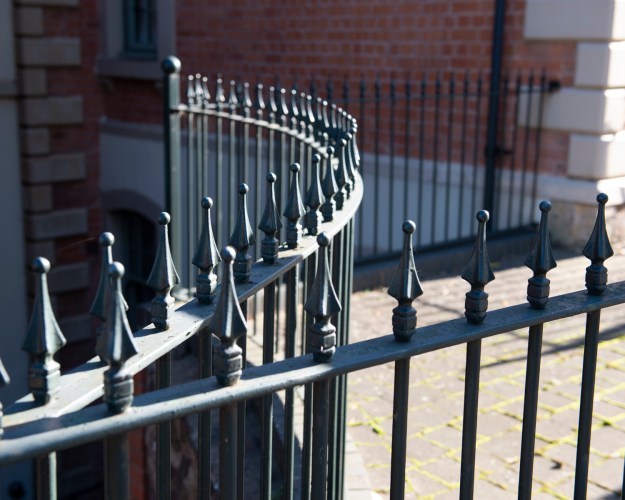
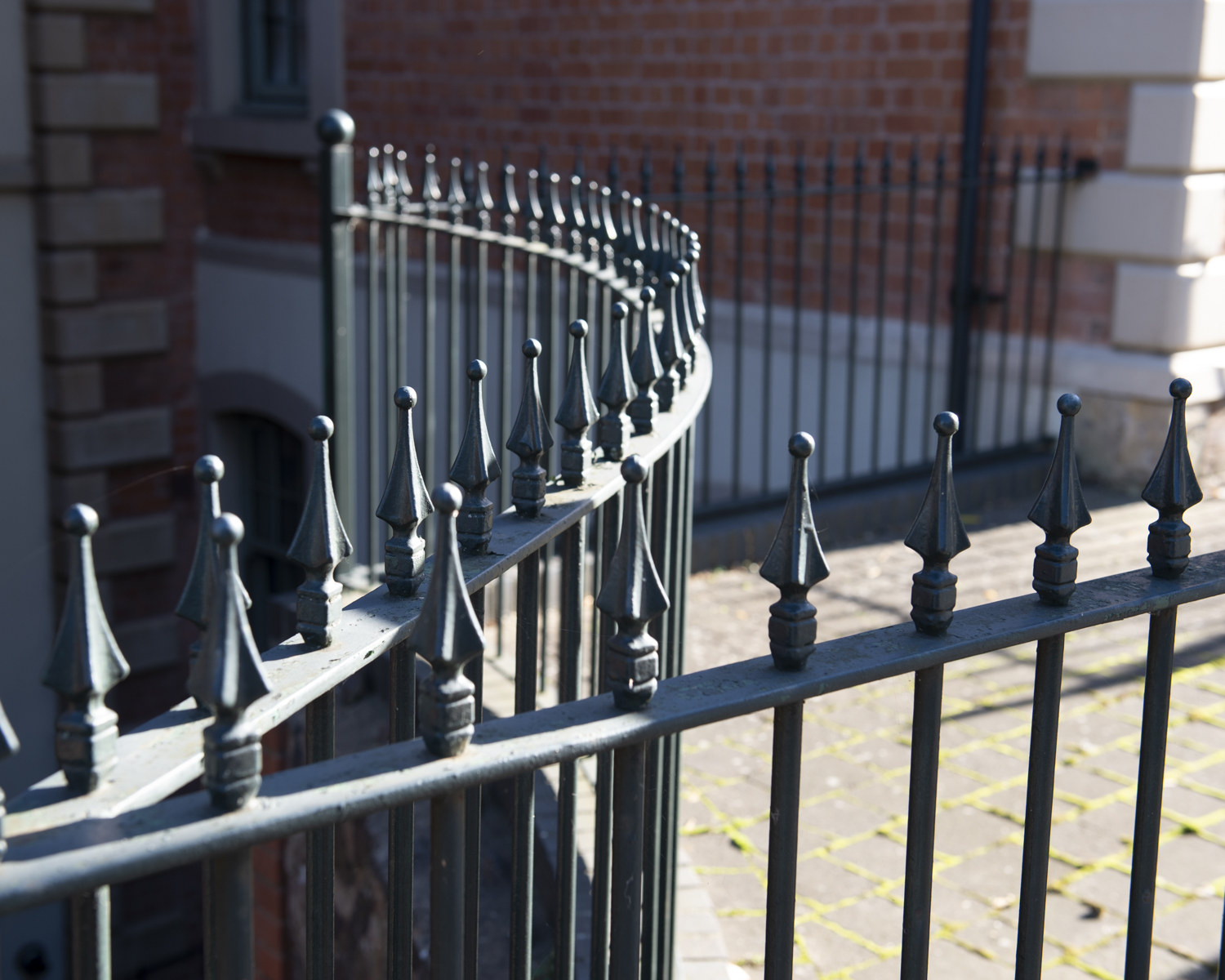
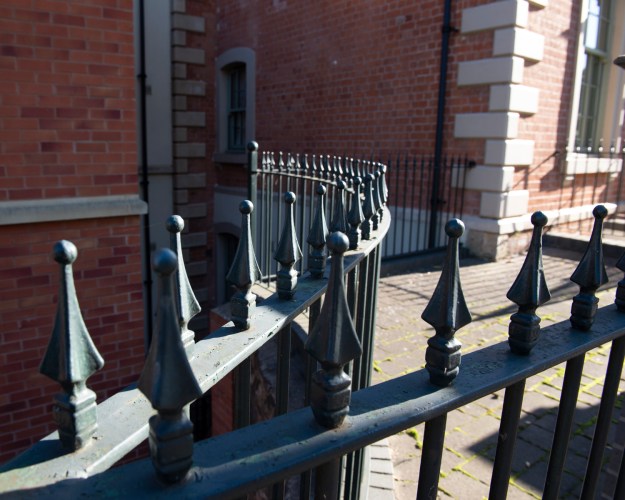
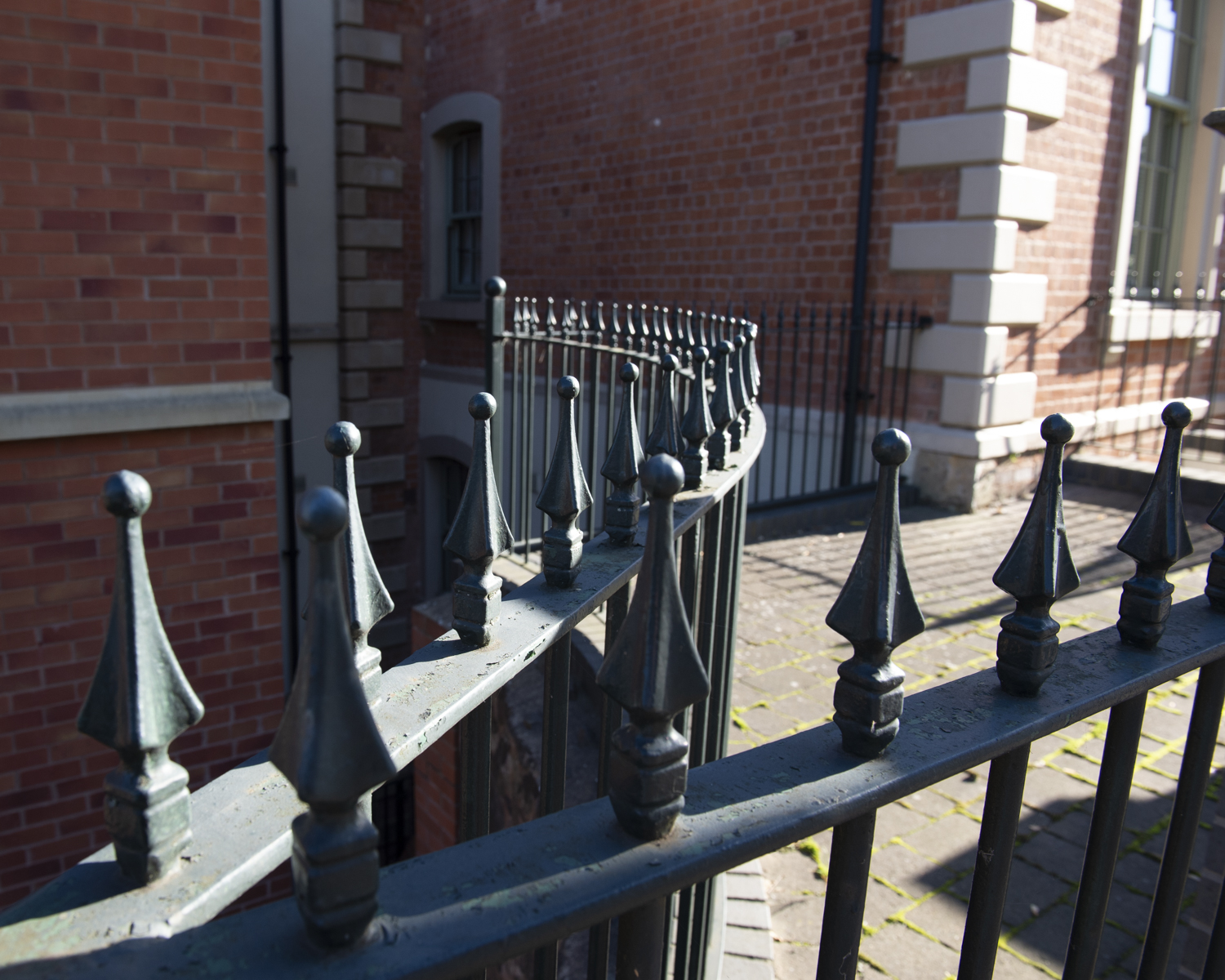
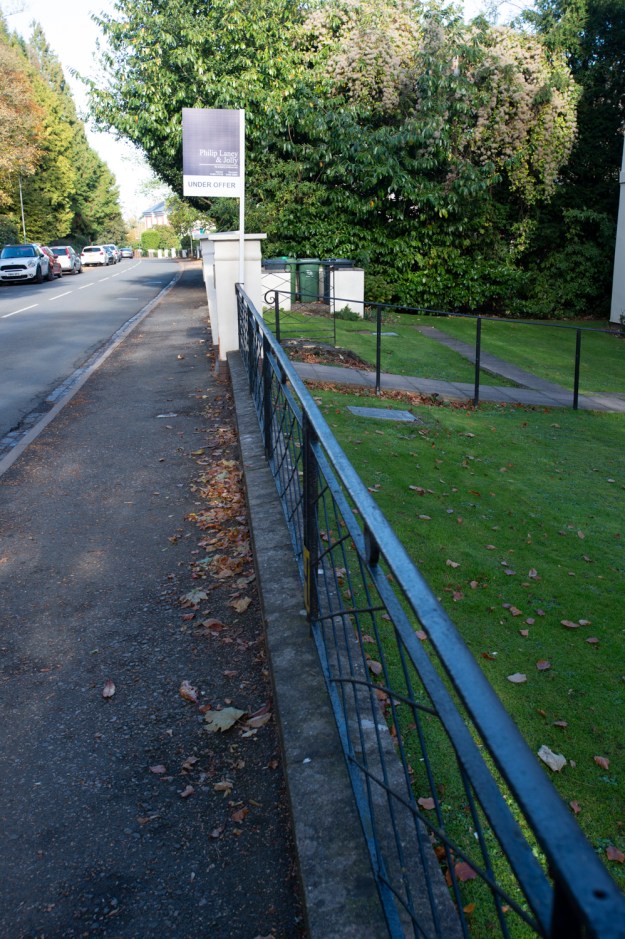
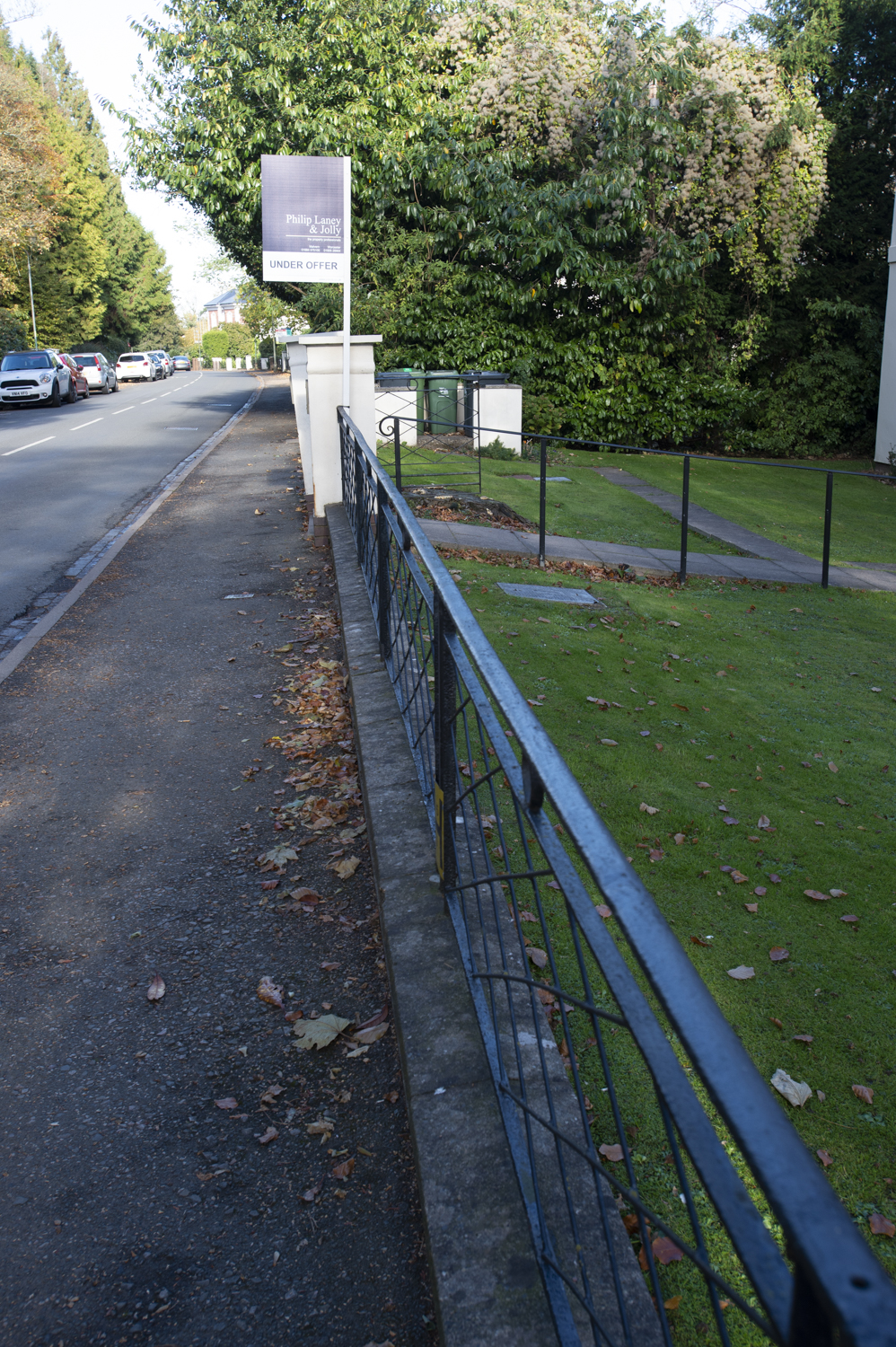
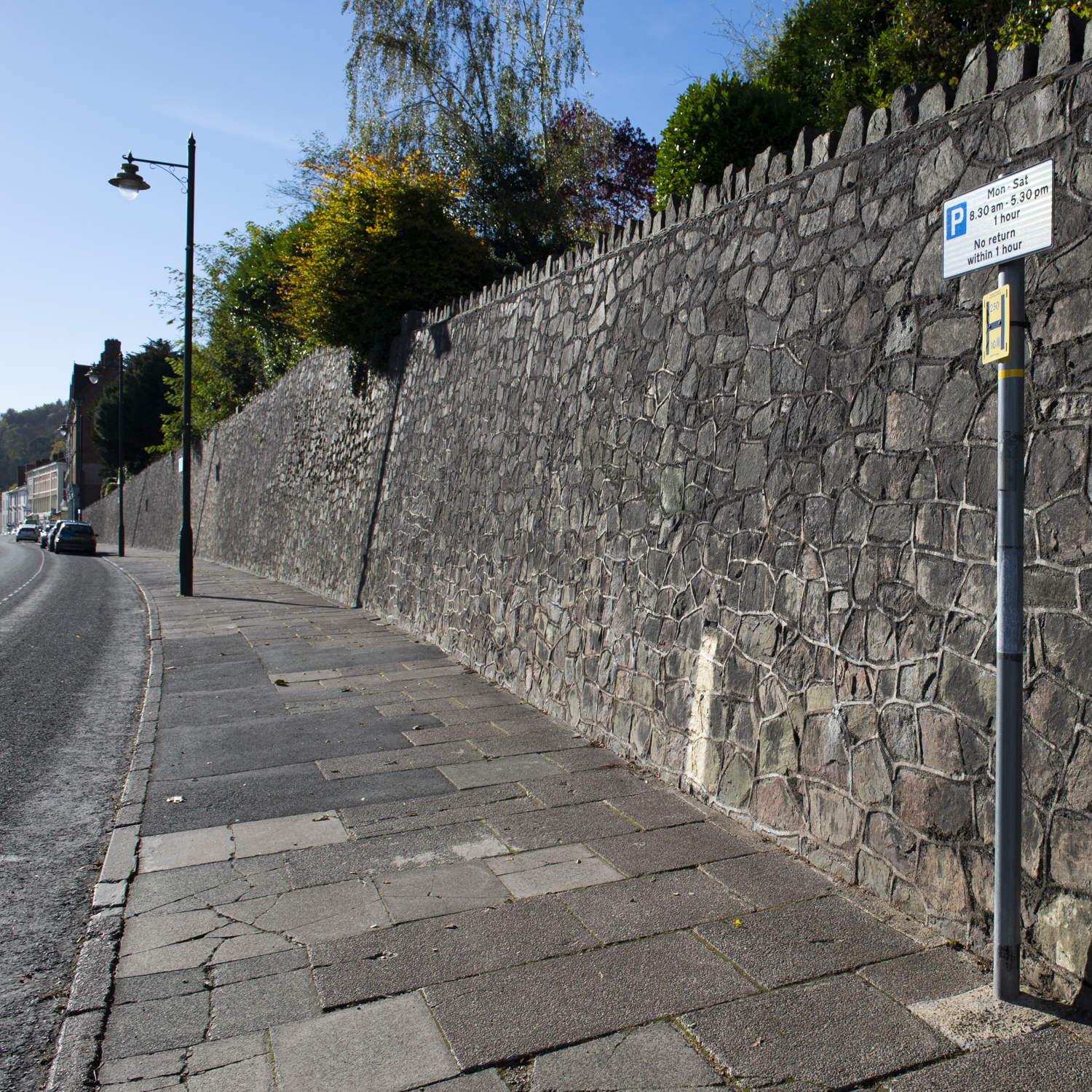
In the above shots, the end of the railing appears closer to the viewer in Photo 1 than Photo 2.  The shots are not taken from precisely the same position but the curvature of the rail as it leads into the photographs have very different perspectives.

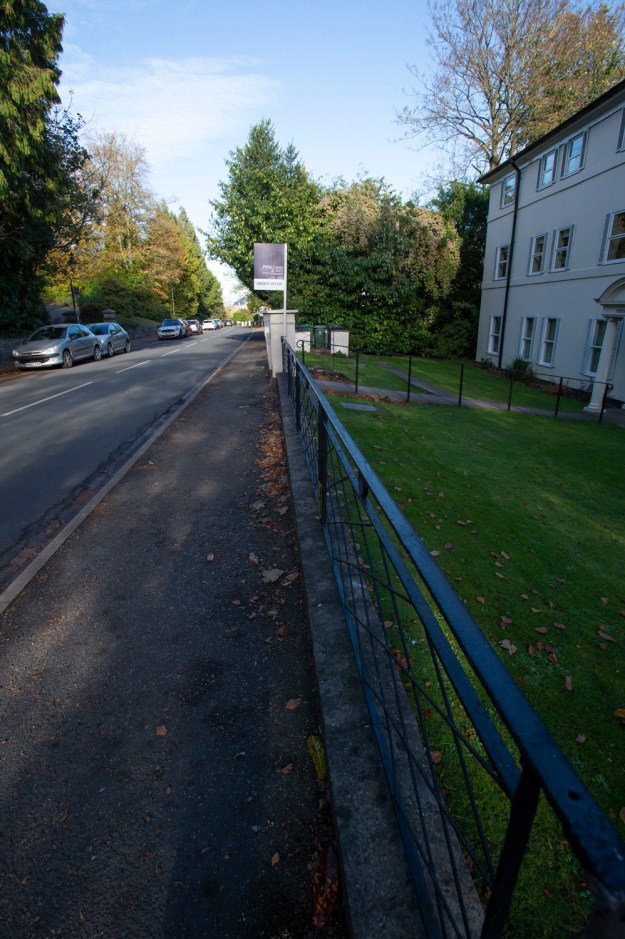
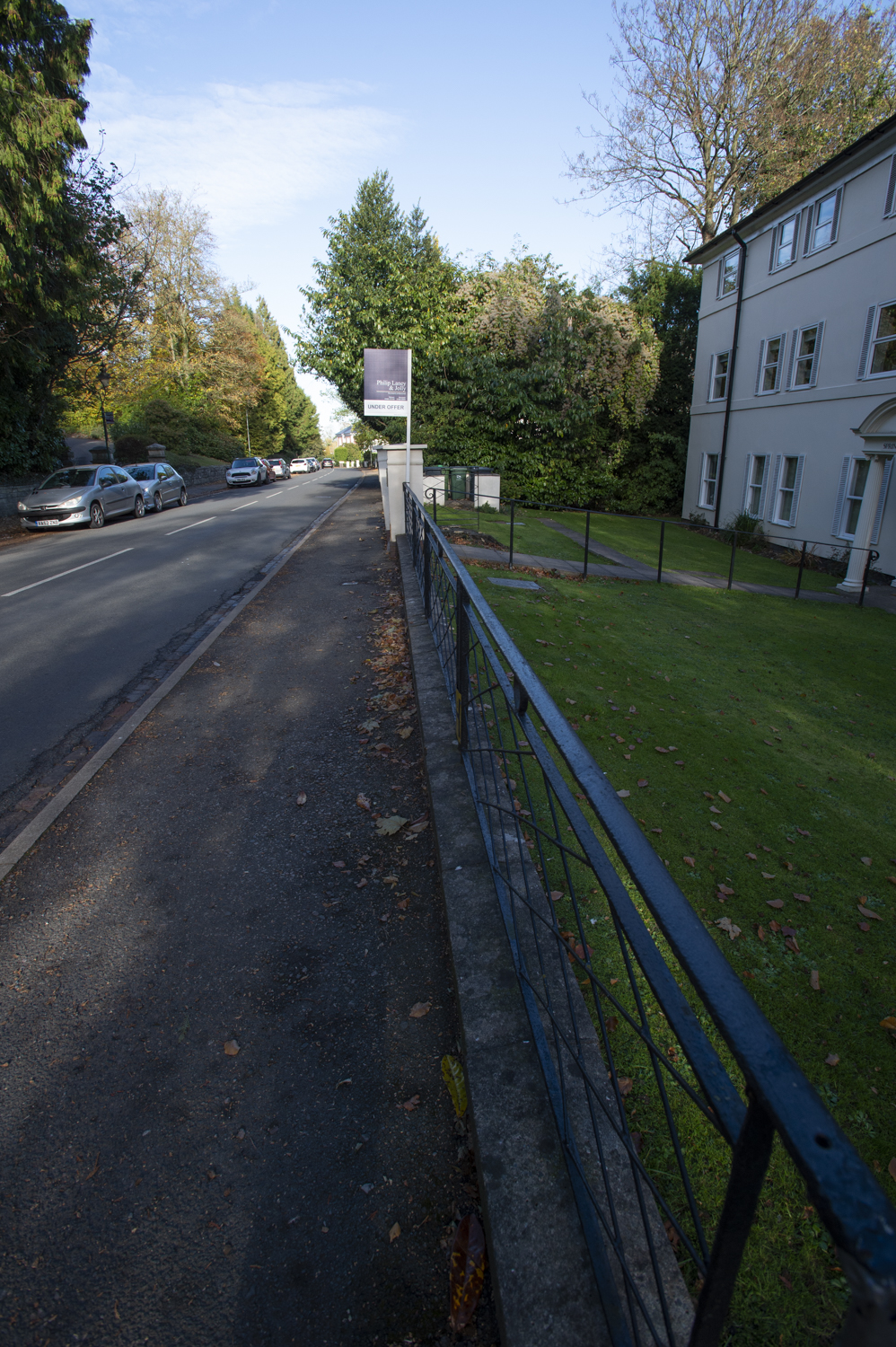
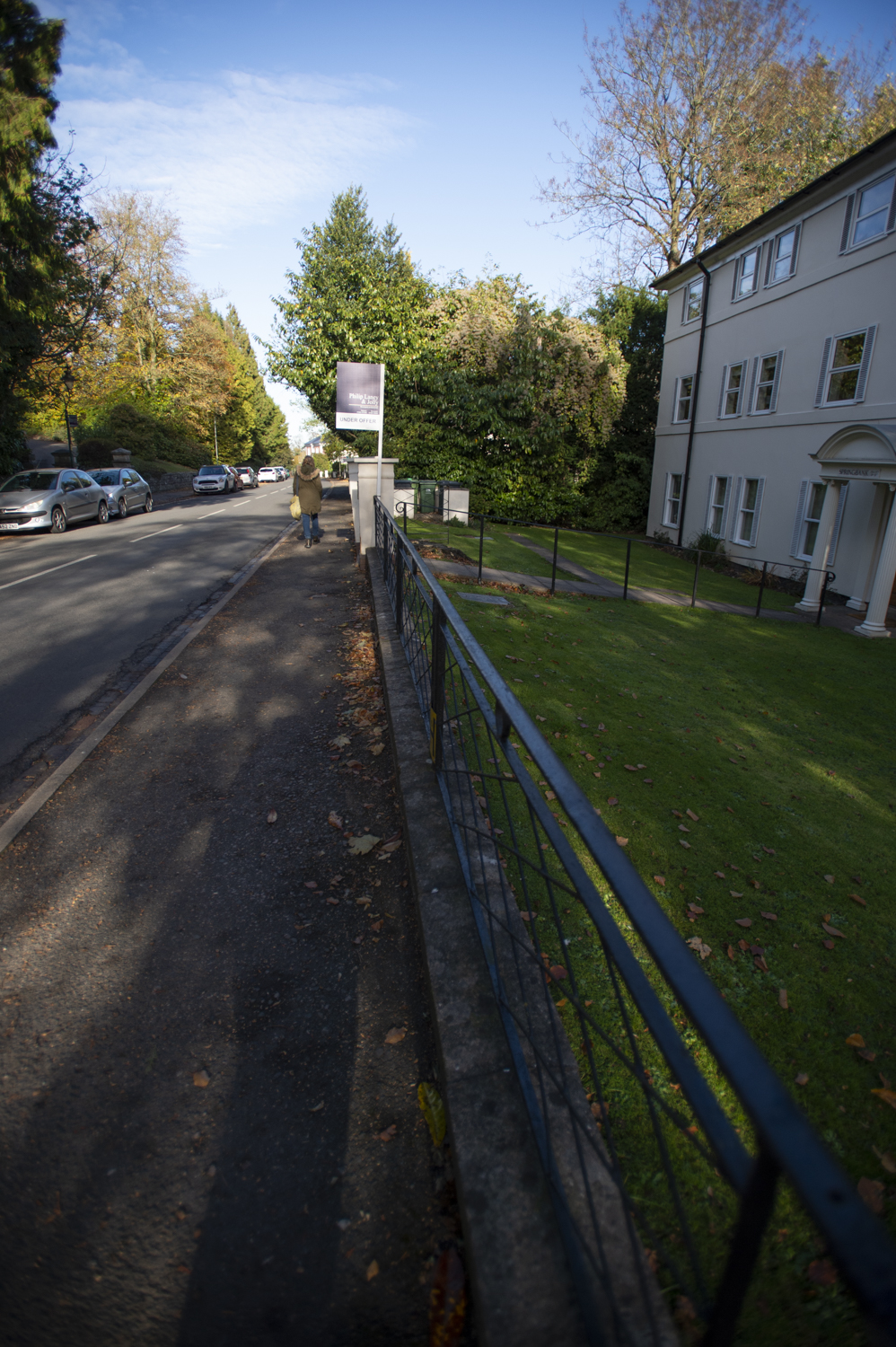
In the photographs above, the difference is again very noticeable.  In the case of Photo 4, the very wide angle lens at 17mm creates a sense of the For Sale sign being much further away than in Photo 3.  The inclusion of the building and parked cars owing to the increased field of view, adds to the depth of the image.

Now with the addition of increased aperture from f8 to f2.8 (the focal point still being the signpost), the negligible difference between the far-field, out-of-focus elements in Photos 4 and 5 is barely noticeable.   The same cannot be said for the near-field, where the railing is more blurred in Photo 5.  We’d expect this for such a short focal length, but what it also shows is no discernible difference in the sense of depth of the photograph.   Note: Photo 5 is a slightly different composition and exposure as I had to move out of the way of the lady who walked past.  This doesn’t change the point being made, however.  Reviewing Abbott’s Manhattan Bridge photograph again, the effect that makes the difference is actually more likely haze from pollution in the city.  It certainly adds to the drama of the image.

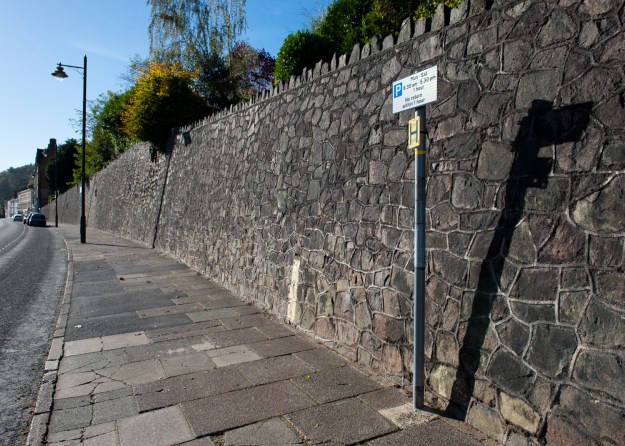
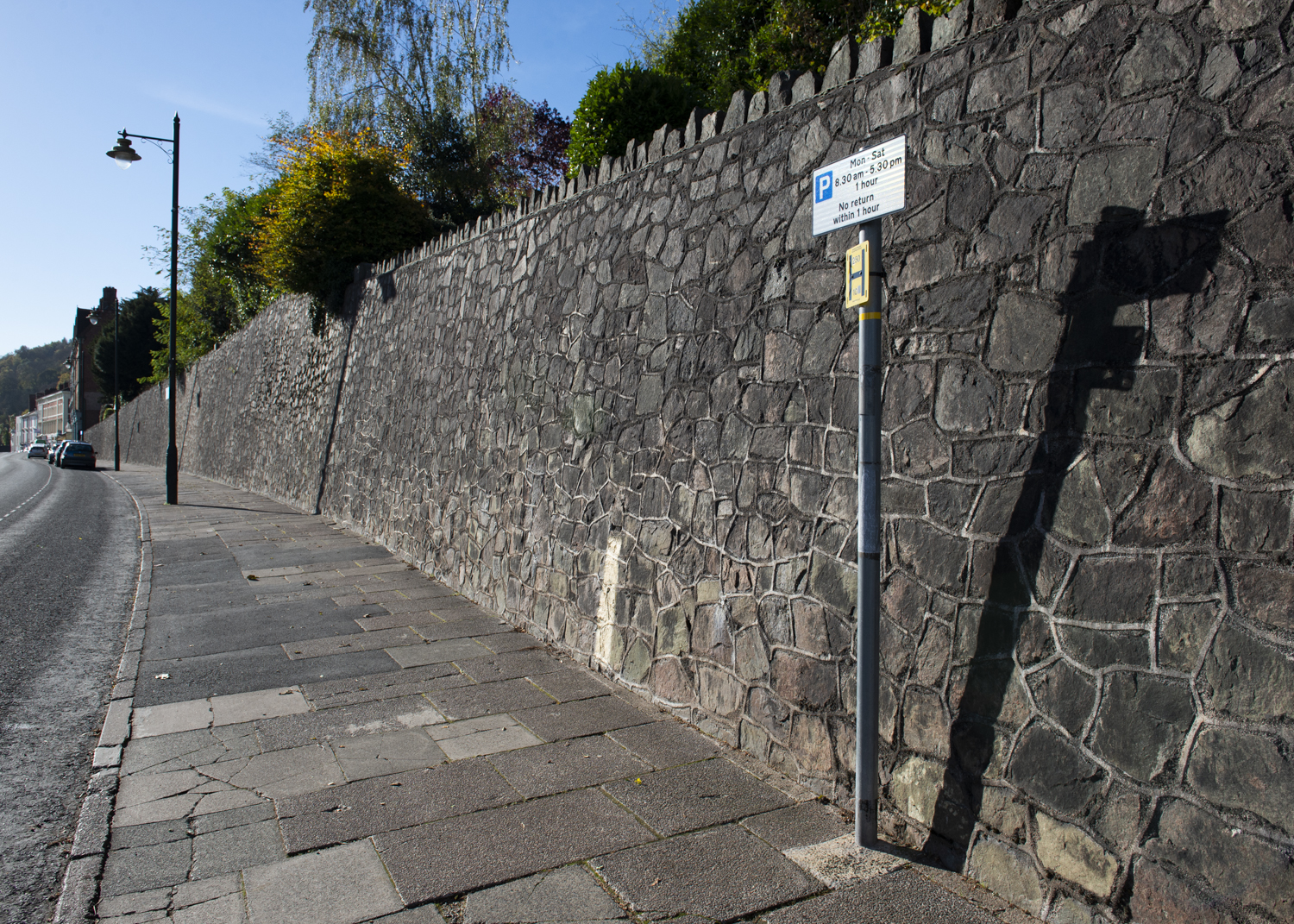
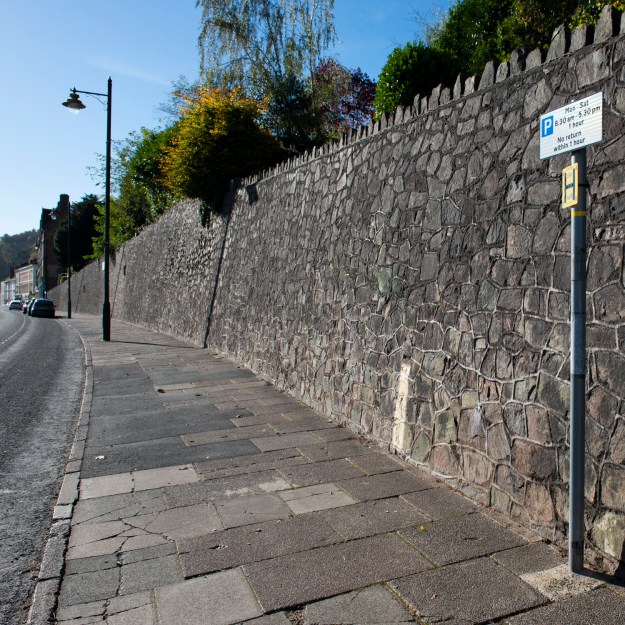
The final element I wanted to look into was the effect of cropping.  Photos 6 and 7 are the same shot, cropped differently, 5×7 and 1×1 (Square) respectively.

Naturally, cropping changes the composition and arguably, the square now doesn’t work as the signpost is too close to the right-hand edge.  However, the depth of the image doesn’t really change.  What I conclude from this is that as long as the line suits the composition, in this case leading the eye along the Malvern stone wall to the edge of the town, the same approach applies regardless of the crop.

Other Leading Line Images

I took many photographs during this exercise, with a few of them shown below.

Review

Photo 8

The lines on the road are as clear direction as the eye needs, but the building also adds it’s own depth, broken only by the cafe sign.

Photo 9

This stairway alongside a hotel in town tracks the contour of the hillside.  I tried to trick the eye with a distorted railing in the near-field, but the overwhelming leading line is seemingly unbroken as it leads away.

Photo 10

Inspired by Cartier-Bresson’s  Hyeres, France, 1932, that I used in Exercise 1.2, this shot of the staircase demonstrates depth in following the line towards the figure at the bottom of the stairs.  It was captured quickly, which didn’t give the opportunity to remove the leaf from the steps, which unfortunately acts as a distraction.

Part 2

Now take a number of shots using lines to flatten the pictorial space.  To avoid the effects of perspective, the sensor/film plane should be parallel to the subject and you may like to try a high viewpoint (i.e. looking down).  Modern architecture offers strong lines and dynamic diagonals, and zooming in can help to create simpler, more abstract compositions.

Research

Having looked at the concepts of leading the eye around the photograph as a pleasurable experience, this part of the exercise pushes the viewer to suspend their immediate assumptions about the subject matter.  The brief material mentions Bauhaus, a design school in Germany that was open throughout the 1920s and closed in 1933 with the rise of the Nazi party.  Bauhaus was intended to bring the two seemingly different fields together, applied art and manufacturing [2].  At first glance, it would be difficult to see a direct link between them.  However the guiding principles about simplicity in design, that is the removal of the extraneous, leaving something that doesn’t overcomplicate when viewed, yet appreciated for its execution.  In manufacturing, a product is easier, more cost effective to produce if the design is simple to begin with.  Bauhaus artists produced modern designs for furniture that minimised both the aesthetic qualities of the finished article, but reduced the production to only the material and assembly the was more important.  An example of this is their famous use of tubular metal in a, now common, office chair design (below).  This simplicity in turn gave the artists more scope for experimentation with materials that had fewer considerations when incorporated into a product, for example the fixing of the covers of the chair being incorporated as ties in the covers themselves.
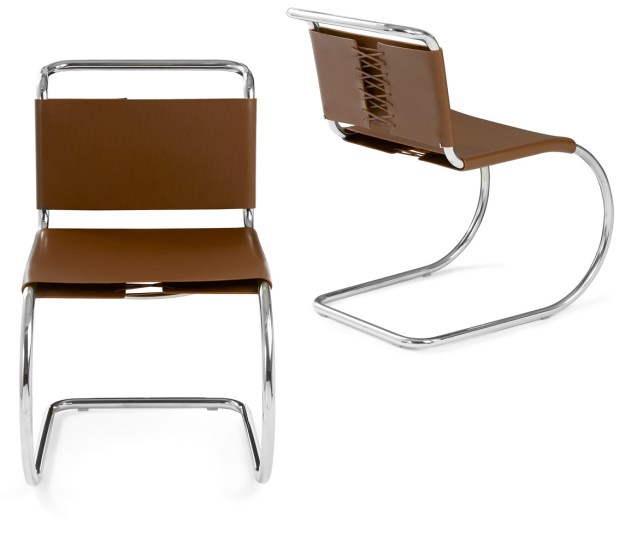
mies-van-der-rohe-mr-chair-furniture-bauhaus_dezeen_1704_col_4-1

The Mies van der Rohe office chair (courtesy of dezeen.com)[2]

As indicated in the brief, one of the influential teachers at the school was Laszlo Moholy-Hagy, a painter from Hungary.  In reviewing his photograph Boats, Marseille, 1927 (as provided in the brief), the first impression is one of order.  The boats are  lined up along both diagonals, suggesting careful placement.  Yet, in the frame the placement is not symmetrical, nor do either diagonal lines lead the viewer to a point in the photograph.  The boats themselves are at first glance similar, but when looking closer, they are all unique.  The visual tension in the photograph comes from the need to understand what is going on in the frame.  The lines themselves are somewhat uncomfortable to glance at as they do not lead the eye.  The brief for this exercise refers to a rule in photography where lines must lead somewhere.  This rule in effect makes a photograph easier to look at, but doesn’t make it necessarily more interesting.  My own reaction to Boats, Marseille is one of ‘what is it?’, followed by ‘how clever’ followed by how visually striking it is.

My Abstract Lines

In shooting my abstract lines, I changed direction from the guidance in the brief.  One of my favourite forms of photography where unusual forms appear in seemingly mundane subjects is ‘macro’.  Instead of looking for distant subjects, I opted instead for very close up with my Nikon 200mm f/4 macro lens.

Review

Abstract 1

With the idea of ‘similar, but not identical’, I made this photograph by taping two pieces of 35mm film to my phone screen  The black and white film was overlaid on the colour and its sprocket holes deliberately mis-aligned to achieve the asymmetry.  The text along the edge helps explain what the subject is.   I like this photograph, because the viewer is looking along the off-horizontal lines that lead to the edges of the frame, but can quickly establish what the subject is by reading the text.

Abstract 2

When I was growing up, barcodes seemed new and hi-tech.  The lines in this frame lead nowhere and intersect the numerical code that runs vertically in the photograph.  Again, the eye has no direction around the photograph, and similarly while the subject is recognisable, what does the code mean?  I lit this with a green gel to convey the classical view of modern computing, the green displays of my childhood.

Abstract 3

I tested this photograph on my friends and colleagues.  Those old enough to be familiar with vinyl records instantly recognised it as an album track.  Interestingly, while the grooves lead nowhere, the colour fringes that were caused by the angle of the LED light to the lens and the surface resulted in a less uncomfortable image to look at.  I put this down to the softness of the light and interesting colours.  In comparison, when the image is converted to black & white, the image becomes harder on the eye as shown below.


Abstract 4

This shot of a rendered wall in Malvern was made in bright sunlight with a 50mm lens.  The lines of the plasterwork are both complimented and a contrasted with the shadow.  While I was trying to create the flat abstract effect, the shadow reveals the 3D nature of the wall.  In addition, the remains of the spider’s web in the centre distracts from the lines in the frame.  I like this photograph but it doesn’t demonstrate the effect that I was after.  However, this does highlight the subtlety of how light affects a composition.

Further Reading and Reflection

‘forces a concentration on the picture edge…and on the shapes that are created by it’.  

The section of The Photographer’s Eye [3] that this quote comes from ties together the challenge of frame that a photographer has over a classical painter.  The notion that photographers were driven to fill the frame with as much of the desired detail as possible for economic reasons, seems an old-fashioned principle in today’s digital age.  However, I can identify with that sentiment as someone who has re-discovered film photography.   If I were to create an analog print without an enlarger, the physical cropping and wasting of paper wouldn’t occur to me.  While I shoot film, my post process workflow is entirely digital, from scanning, to dust removal to printing.  In reality, I am still very much a digital photographer which has allowed me to be less mindful on where the edges of the frame are.   For this reason I will use the crop after the fact.  A good example in the previous exercise is the spider’s spinneret.  I wanted the subject in the frame with it’s web, understood that the relationship between them could be placed on the frame thirds, but was happy to shoot many and crop what worked.  I think that the combination of using a manually-focussed macro lens and the speed which which the spider was moving around, meant that this approach would yield a successful image and I am happy with how the photograph ended up…but I didn’t consider the rest of the composition.

In his book Taking My Time [4], Meyerowitz explains the virtue of being able to look beyond the frame for the anything that looks like it may form some relationship with your subject, surmising that our vision is so wide in all directions that if we concentrate entirely on the small viewfinder window of a camera, we could miss the greater narrative of a picture we think we understand.   He exalts the use of his rangefinder camera with the frame effectively being composed at one edge of the camera (as opposed to the central position of a conventional SLR).  By using both eyes, one to frame the photo and one to look past the camera at the scene, Meyerowitz describes looking for a magnetism between what’s in and currently out.   What is out, might just enter the frame and, better still change the meaning behind the photograph.  What I have learned from both books is to increase my awareness from the basic rules of photographic composition, which I believe I knew to some extent, to making better use of the frame.

References

[1] “Berenice Abbott’, Beetles & Huxley Catalogue, 2015

[2] “Dezeen’s Guide to Bauhaus Design”, Owen Hopkins,  Web Article https://www.dezeen.com/2018/11/01/bauhaus-100-guide-architecture-design/, 2018

[3] “An Introduction – The Photographer’s Eye”, John Szarkowski, MoMA, 2007

[4] “Taking My Time”, Joel Meyerowitz, 2012

Always Meet Your Heroes

What the…?

I mean it.  Always meet your heroes.

In my case, I don’t have many really as I’ve never aspired to be like someone else, well known or otherwise.  I’ve greatly admired the achievements of many people over the years and continue to be inspired by the works of others, but ‘hero’ is a peculiar word to use in this context unless you can identify something that has changed as a result of their direct impact upon you.

My photographic ‘hero’ over the past several years has been the American street photographer, Joel Meyerowitz.  I first encountered his work in a clip from the BBC documentary ‘The Genius of Photography’ back in 2007.  I’d only seen a brief clip of him as at that point I had not seen the whole series.   Then, in 2013 I saw it again when attending a course in London run by my now good friend, Nigel Wilson.  His enthusiasm for Meyerowitz got me thinking about this highly respected photographer’s work and so began my becoming a fan.  Meyerowitz was one of a number of street photographers in the 1960s who made their art on the busy, diverse streets of New York.  What set his work aside from many of his peers was his exploration of street photography in colour, where traditional Black & White had been the norm.  Instead of being a distraction, colour became another element to bring the picture together.  A good example is shown below:

9055344_orig

Untitled, New York City 1975, by Joel Meyerowitz

This photograph is interesting enough in its composition.  A lady on crutches coming face to face with a giant pair of shoes and dances with them.  However, for me it is the colour of the shoes that make them stand out and be more obvious to the viewer.  The contrasting tone and shade of the background also makes the subjects more vivid in the frame.

By 2013 I had started to take my photography more seriously rather than shooting interesting record shots from my holidays, which is why I was on that course in the first place.  I learned how to use my digital camera properly, the aspects of exposure that were under my control etc.  My photographs became a little more interesting and technically better as time and study progressed.  However, I was still looking at the process of taking a photograph as just that…’taking’.  Digital cameras offer a great level of control, but also a comfort in the ability to shoot something quickly, while being confident that the image will be alright.  I had been introduced to the concept of ‘making’ a photograph, which rather than simply being a quaint historical reference to the early days of photography, actually meant showing meaning in the picture.  If you asked yourself what the photograph was intended to mean, you would then go on to produce something with meaning. A piece of art, essentially.    Being an engineer by profession though, meant that this was a concept that I would continue to struggle with.

Then, in 2015 I purchased a beautiful original print by another American photographer, called Berenice Abbott, from a gallery in London.  We’d been collecting paintings by a few artists over recent years, but this was our first photograph.  After that of course, the gallery would periodically send me invitations to shows and lectures they were hosting and so, in January 2016 I received one for an exhibition of Joel Meyerowitz’s Cape Light photographs.   These photographs were made in Cape Cod with an 8×10 inch field camera.  To get a sense of how big the camera was, you had to appreciate the concept of a single frame negative 8 inches by 10 inches in comparison to the much smaller 35mm frame.  Joel carried this camera around the Cape and spent a great deal of time setting up and shooting each picture.  The resulting images with their space, light and window on life in the vibrant, party town of Provincetown in the 1970s are remarkable.  I naturally jumped at the chance to see the exhibition and hear the man speak.

When I arrived at the gallery, I was stunned to find Joel chatting casually about his photography with the guests and with the advice ‘never meet your heroes’, went over for a chat.   What followed was a fairly awkward exchange; one guy struggling to ask a host of questions and the artist politely answering them.  Then came some advice that changed the way I would engage with photography forever.  He said to slow everything down and use time to really appreciate what you’re looking at and get into the moment with the subject.  He said that using the 8×10 in Cape Cod forced him to really look, take time and care (the film was costly even back then) and ‘make’ the photograph he visualised.  The time taken to set the camera up meant that it the ‘process’ could not be rushed.

What changed for me after that conversation was that as soon as I returned from London, I bought the first of many film cameras.  I believed that by shooting film, I could do just what he said; take my time, take care not to waste the film and think about the image I want to make.  I started to shoot film regularly and taught myself how to calculate the exposure for my camera, which had no electronics, metering or compensation; basically a shutter that opens and closes.  I feel that I have improved those skills just by getting into the spirit  of what Joel said that evening and I enjoy the slower pace of making a film photograph more than the digital alternative.  A few examples of my film work are shown below:

Aside from a bad case of collecting classic cameras (I’m now on 18, but I do shoot them all), understanding exposure and specifically how film stocks react to light, has continued to stretch my technical approach to photography.  However, the development of my creative voice and composition skills haven’t really progressed.  This is why I’m now here, studying with the OCA.

All prompted by a brief, chance meeting with Joel Meyerowitz.  Always meet your heroes; you never know what might happen.

Exercise 1.2 – Point
The Brief

Take three or four photographs in which a single point is placed in different parts of the frame.  When composing the shots use these three rules: the place of the point shouldn’t be too obvious (such as right in the middle); the composition should hold visual tension and be balanced (the golden section or rule of thirds) and the point should be easy to see.  Evaluate the shots according to these rules and select which one you think works best.

Then take a few more shots without any rules, just being aware of the relationship of the point to the frame.  Without the rules, how can you evaluate the shots?

Initial Thoughts and Research

When first looking at this exercise, I thought yes, I know about the rule of thirds. It was one of the first things I learned when I first picked up my digital camera in 2010 as a way of taking photographs that looked better than my previous ‘snaps’.  The concept of dividing the frame into a 3×3 grid and placing the subject on one of the intersections, made sense and certainly meant for a more appealing image than a subject dominating the centre of a frame.

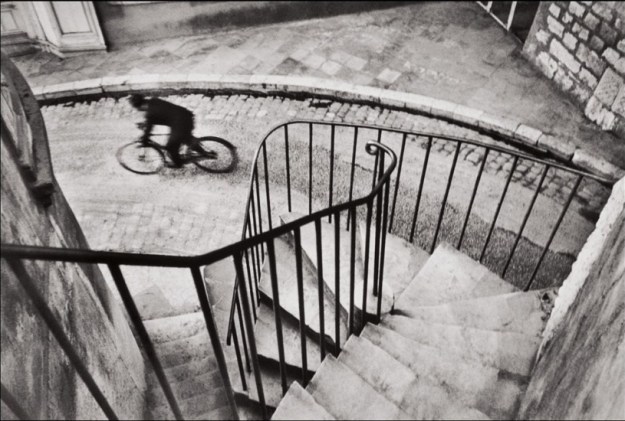
What was perhaps not as obvious was the concept of holding tension in a photograph.  This is the approach of making the viewer see the elements that make up the image by leading them around the frame.  Sounds easy enough, but the viewer has the ability to conclude at a glance what the photograph is about, naturally gravitates to the sharpest object first, followed by anything that the brain instantly recognises.  A good example of the latter is when the sun or moon are recognisable in the frame; even if out of focus, we cannot help but look at them.  If a photograph is composed in such a way that the viewer can quickly assess and, in some cases dismiss the rest of the image, it doesn’t matter how good the photograph is technically.  However, if the image is ‘designed’ to grab the viewer’s attention, we have a stand out image.   We can achieve visual tension by utilising techniques such as the rule of thirds, but also leading lines, contrast, tone/colour etc.   A good example of visual tension can be seen below by Henri Cartier-Bresson.

Henri Cartier-Bresson's Man Cycling Down the Street, 1932

Henri Cartier-Bresson’s Man Cycling Down the Street, 1932

When I look at this image, my eye is drawn to the end of the railing going into the frame as it is sharp. I then find myself drawing back to the steps and then following the curve of them down to the street where I find the subject of the photograph, the cyclist.  Although he is not in focus, the fact that he is slightly blurred gives the sense of movement. Bresson adopted a predatory style in approaching a photograph, in this case positioning himself at the top of the stairs, composing the static elements of the composition and waiting to ‘trap life’ when the cyclist appeared [2].

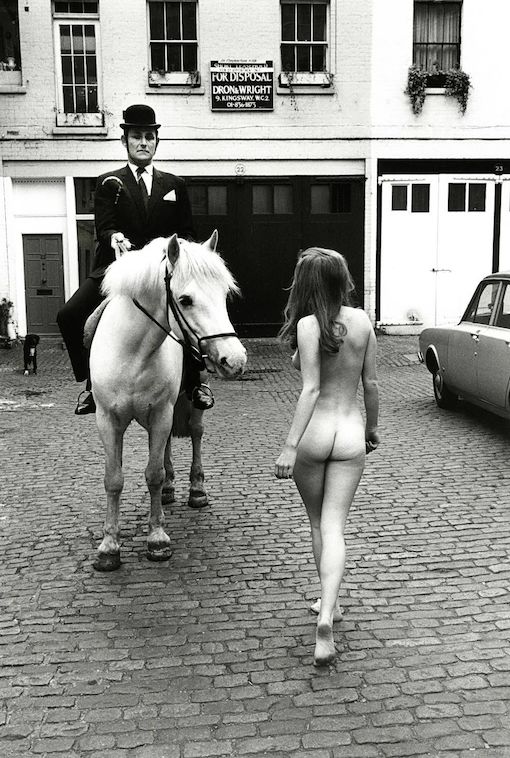
I’m fortunate enough to own an edition print of the photograph by Frank Habicht, from his series Permissive London, which hangs in my bedroom.  When thinking about visual tension, I looked at this picture again with the rule of thirds in mind.

Bare Essentials, Frank Habicht 1969

Bare Essentials, Frank Habicht 1969. From the collection ‘London Permissive Sixties’

When I look at this photograph, I’m obviously drawn to the two subjects, the nude girl and the horse and rider.  They are placed on the grid of thirds and loosely where the grid intersects.  The image is a humorous composition, with the horse looking at the girl while the seemingly stiff city gentleman on its back disapproves of her and her lack of clothes [3].  What interested me in viewing this image again though, was the surroundings.  The subjects are not particularly picked out from the background, so the photographer has included just enough detail to describe the setting the two subjects find themselves in, but not cluttering with the unnecessary.   In my research [1], I noted the jarring effect of placing the subject too close to the edge of the frame.  True, in this case we are directed to look at the subjects in the ‘thirds’, but the fairly sharp background elements achieve a balance that to me, prevents that uncomfortable view.  The building’s windows and the car are on the edge of the frame and the chained dog, close to.  However, they add to the visual setting and don’t distract from the main subjects.  I believe this is largely down to the visual impact of the contrasting subjects and their positions in the photograph, but the clever use of background in this case keeps the eye on the photograph, which creates the visual tension.  I prepared to explore the position of ‘other elements’ in my photographs of point subjects.

My Photographs

Evaluation

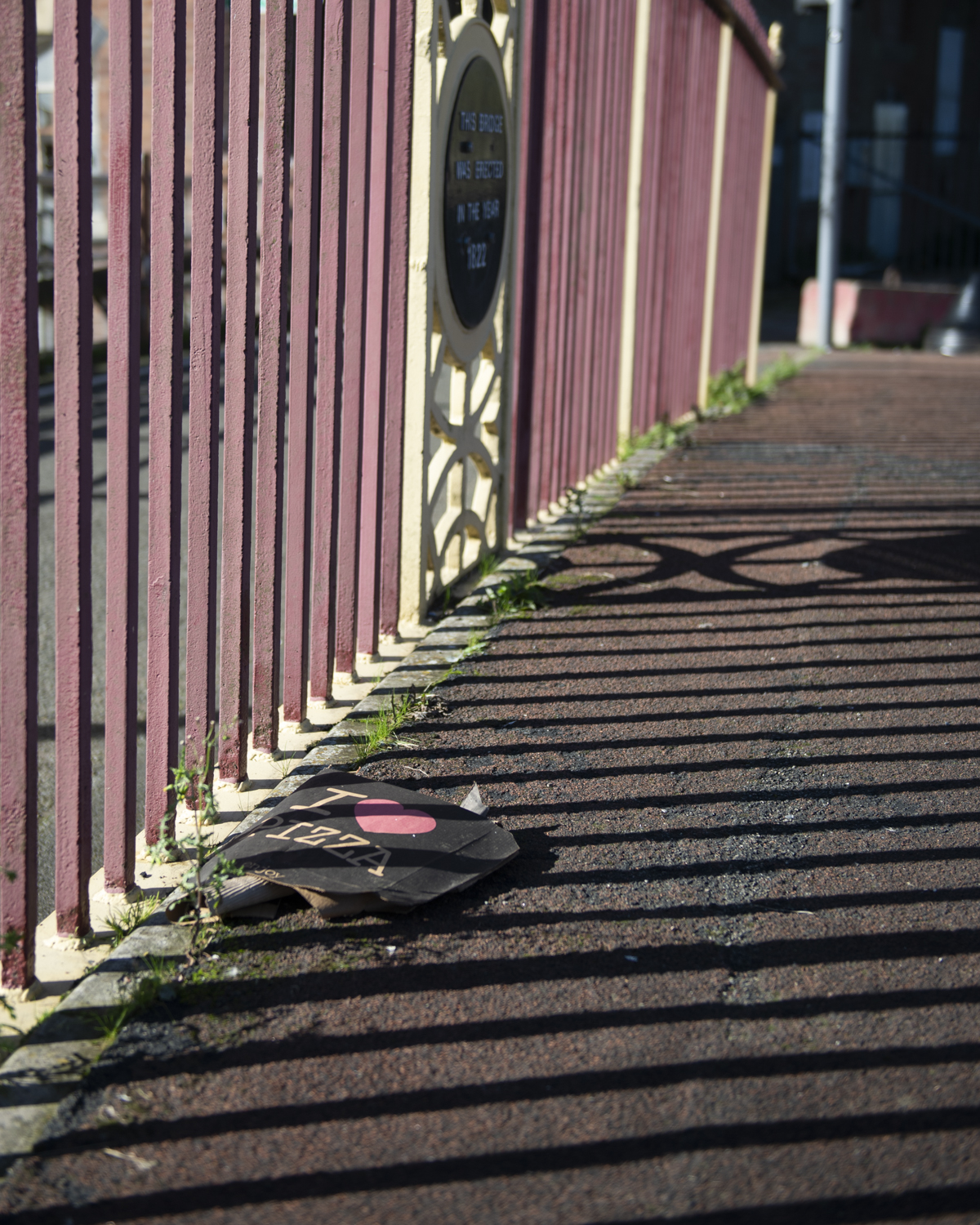
Photo 1

This image was trying to show the clash between the historical bridge and the discarded pizza box, despite the latter blending in to some extent with a colour matching the railings.  Placing the box in the lower left and the shadow from the ornate railing on the tarmac on the right, I think there is interest in the image.  I aimed to reduce the impact of the distant railing and signpost by shooting wide open at f2.8.  On reflection, I could keep the attention on the subjects by moving back and shooting a longer focal length to increase the bokeh and shorten the depth of the image.

Photo 2

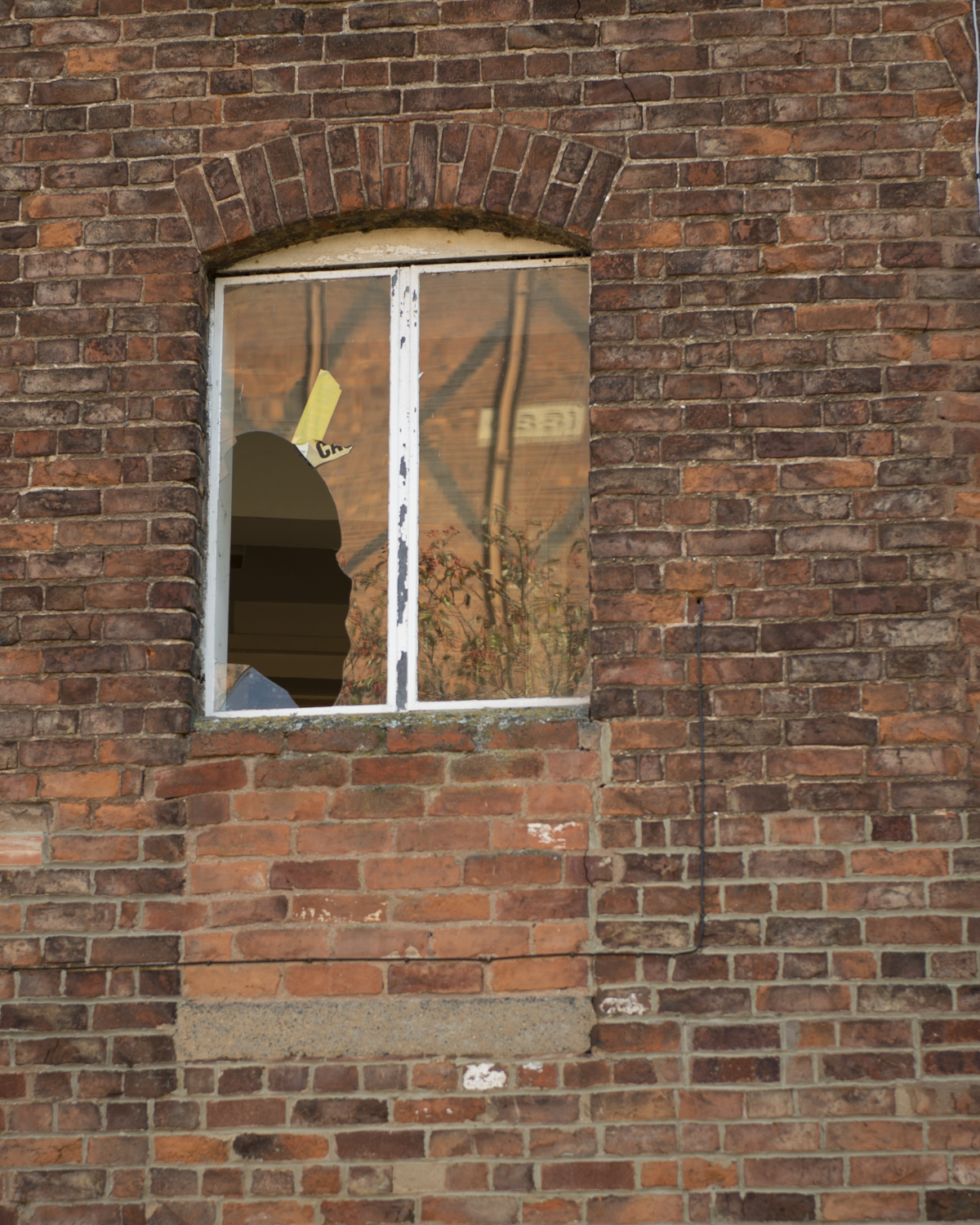
The point that leapt out was the remains of the caution tape on a broken window.  The tape is apparently made redundant by the extent of the broken window.  I liked the contrast in colour to the rest of the brick wall.   The reflection of the building opposite in the window glass isn’t a problem, but may be a little distracting from the point itself.

Photo 3

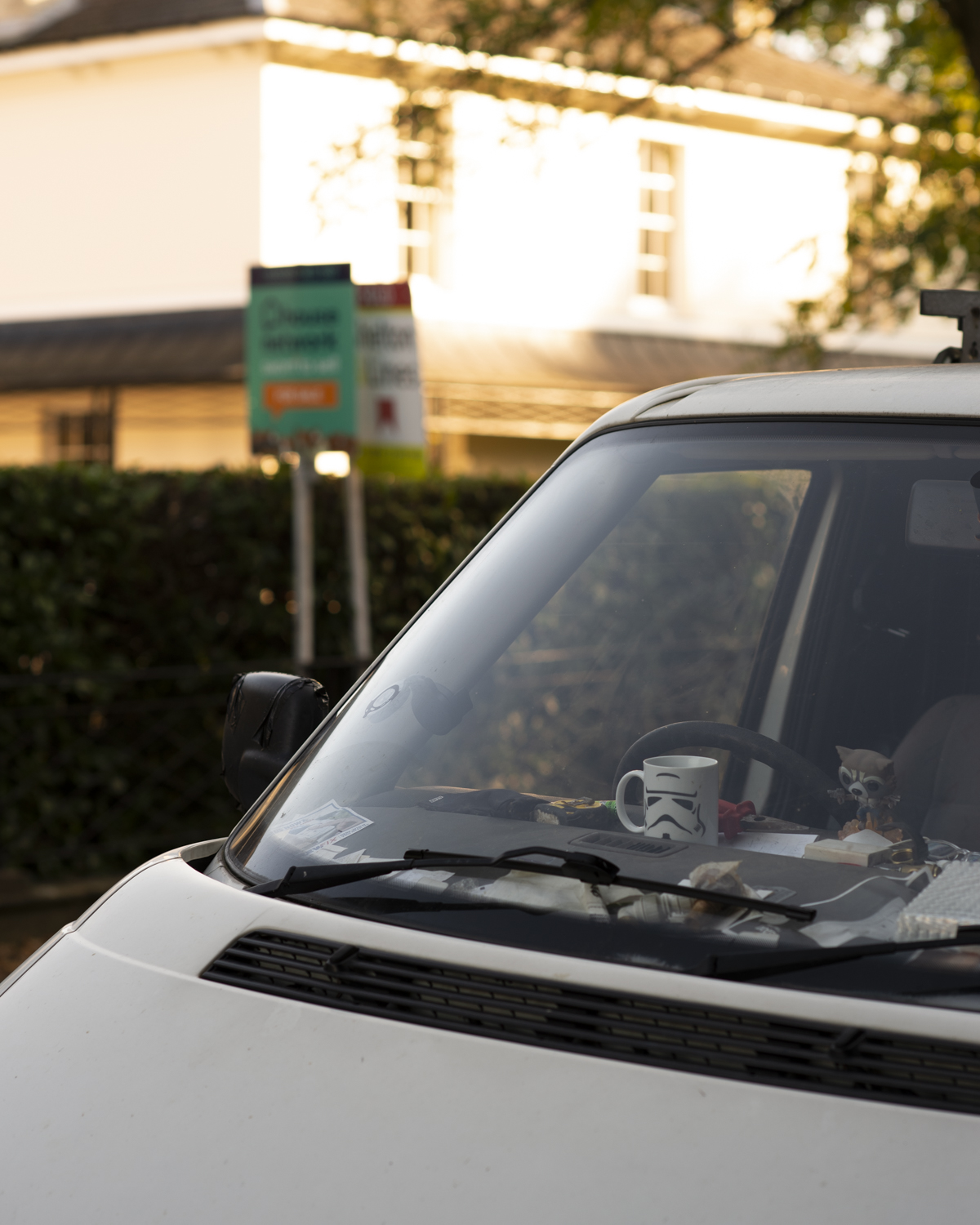
The mug on the dashboard struck me as I passed the van.  I think the image creates a story as it’s clearly a workman’s van with messy dashboard and the house behind is for sale.  Is the van part of it?  Occupants moving in or out?   I put them on diagonally opposing thirds to use more of the frame.  What was a challenge with this image was exposure.  I used spot metering on the mug itself, which overexposed the highlights on the house.  I think the image works, though and as with Photo 1, I was drawn to the common colours in the image; white in this case.

Photo 4

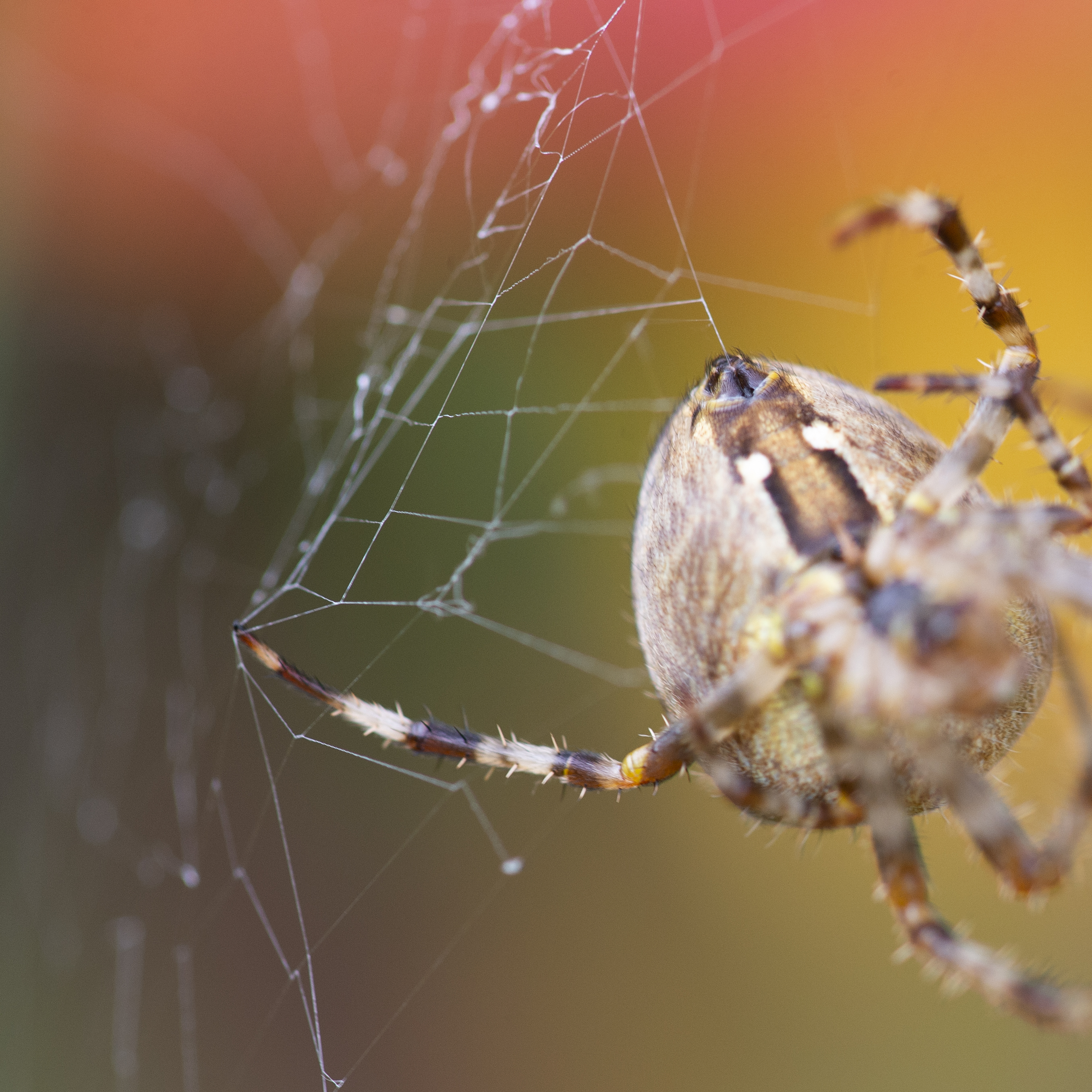
This macro photograph of a spider in one of the trees in my garden is an example of creating an interesting composition using cropping.  The spider was very industrious and maintaining the focus on it was a challenge.  When I reviewed the images, I realised that I had a shot with the spider’s spinneret in sharp focus which was in the same plane as one of its legs, balancing on the web.  I placed the spinneret in the top right intersection of the thirds to create the interest.  The spider itself is on the edge of the frame, but as it’s out of focus there is no real distraction.   What I learned from editing this ‘accidental’ shot was that a square crop can create an image that maximises the use of the space in the frame when the rule of thirds is applied.  The original to this photograph had space to the left of the web that was wasted.  I’m really happy with how this turned out.

Breaking the Rules

The second part of the exercise was to shoot without rules, but being aware of the relationships between the point and the rest of the frame.  I shot the following photographs:

Review – How I evaluate them

Photo 5

I positioned the sign near the lower edge of the frame and waited for some customers to come out.  With a low shutter speed of 1/13th at f8 (camera braced against the wall), I managed to get movement in the people.  While not obeying the rule of thirds, I think this image is still balanced as the alleyway to the shop and it’s straight, brightly coloured roof provide a frame to the photograph.  The sign itself is angled away from the camera toward the people coming out of the doorway, so making best use of the space within the frame.  The light from the uncovered part of the alleyway in front of the shop highlights the secondary subject, while the sign has sufficient contrast to stand out while in shadow.

Photo 6

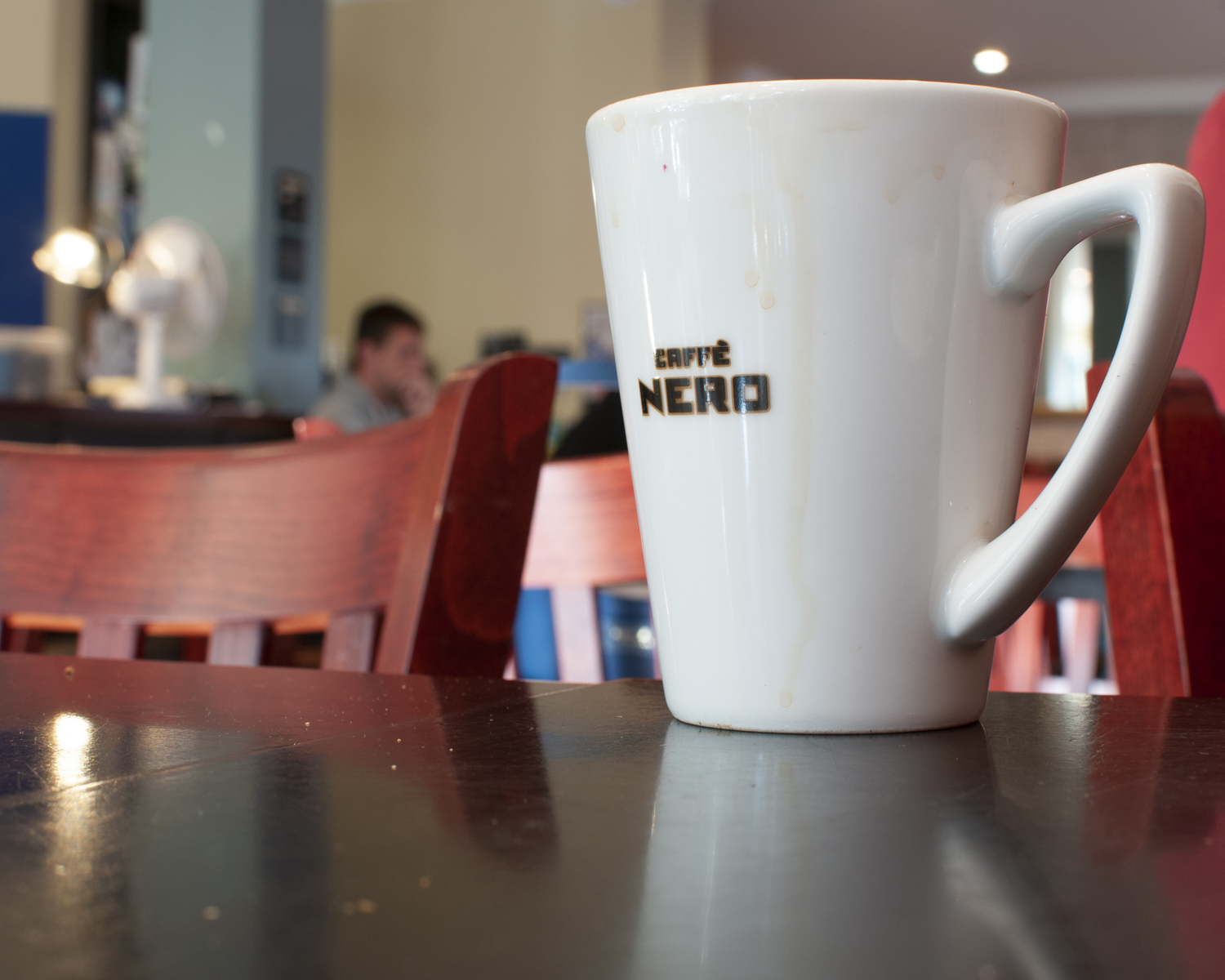
The in this photo appears to be huge in the frame, but the point of focus is the logo on the side of the mug.  I’ve tried to balance the rest of the image with enough detail to show that it is a table in a cafe, but with sufficient separation of the subject from the background using aperture of f8.  For me it works technically, but on a creative level the dominance mug is distracting and masks detail like the coffee stains on it’s surface and the crumbs on the table.   In retrospect, a less bold tone for the mug may have worked better in this composition as long as there was still enough contrast with the logo to bring out the ‘point’

Photo 7

The position of the point in this image is a little confusing as it the balloon face is surrounded by other balloons and the sign it’s mounted on.  It is balanced by the chapel building behind while maintaining the contrast between church and halloween, but it subconsciously obeys the rule of thirds.  In evaluating it, the image jars slightly by having the subject at the edge of the frame, but is offset by the other details.  I shot another of the same subject lower in the frame and it instantly became visually difficult.

Photo 8

I shot this picture to deliberately clash two composition rules, just to see the effect.  As well as the rule of thirds, which the point does not fit within, I composed with the rule of symmetry in mind.  The image instantly has a problem because the symmetry of the railings is clear and the sign is in the centre.  Coupled with it being close to the top of the frame, this image is visually difficult.

Conclusions

My main conclusion from this exercise is that while technically it is good to have rules to follow to get a ‘nice’ photograph, creatively it is more important to place the subject or point in a balanced frame.  As long as there is some form of relationship between the subject and the other elements in the photo, the rules can be broken effectively.  Placing subjects without visual tension too close to the frame or amongst clutter doesn’t work as well as drawing out the relationship and using the background to enhance the picture’s context as in Bare Essentials.  When reflecting on my own photographs here, the first four were easy, where the second four took more effort in trying to make work creatively, with very mixed results.

I also learned that even if the in-camera composition doesn’t work, a good crop can bring a photograph into balance.  With Photo 4, my uncooperative subject and relative inexperience with a macro lens meant that cropping was the only way to achieve the image that I wanted; I’m happy with how that photograph looks.

References

[1] Photography Composition- Creating Visual Tension with 2 Subjects, Joshua Cripps, 2015, Youtube media, https://www.youtube.com/watch?v=v-G3Yrupg0Y

[2]  Henri Cartier-Bresson Most Important Art, Analysis piece, TheArtStory.org, https://www.theartstory.org/artist-cartier-bresson-henri-artworks.htm

[3] Frank Habicht Bio, Huxley Parlour Gallery website, https://huxleyparlour.com/artists/frank-habicht/


Exercise 1.1 – The Instrument

Brief

Take three or four exposures of the same scene.  Don’t change anything on the camera and keep the framing the same.

Preview the shots on the LCD screen.  At first glance they look the same, but are they? Perhaps a leaf moved with the wind, the light changed subtly or the framing changed almost imperceptibly to include one seemingly insignificant object and exclude another. Time flows, the moment of each frame is different and, as the saying goes, ‘you can’t step into the same river twice’.

Now bring up the histogram on the preview screen.  The histogram is a graphical representation of the exposure – the camera’s sensitivity to light.  As you page through the images you can see small variations in the histograms.  Even though the pictures look the same, the histogram data shows that in a matter of seconds, the world changes, and these subtle differences are recorded by the camera.  If you refine the test conditions, shooting on a tripod to fix the framing, moving indoors and closing the curtains to exclude daylight, still the histogram changes.  Probably, some fo the changes are within the camera itself, still, the camera is a sensitive enough instrument to record them.

How I approached this exercise

I fitted an 85mm f1.4 prime lens to the D4 and ventured out on a wet, windy day.  I selected the prime to eliminate any risk of change in focal length that would be introduced by using a zoom.  The camera was set to ISO800 and set to (P) Program.   I started by thinking about what might change.  If handheld, the frame would indeed be as steady as I can hold it, which in turn would be dependent on the weather conditions.  The other obvious variable is time.  My camera shutter release modes: Single, Continuous Low and Continuous High.  The latter two set the camera to capture frames as a burst and the D4 is capable of 11 frames per second if required.  For this exercise, I elected to start with Single and pause for a second or so.

First four frames

I ventured out into the wet and windy weather to shoot 4 frames, which can be seen below:

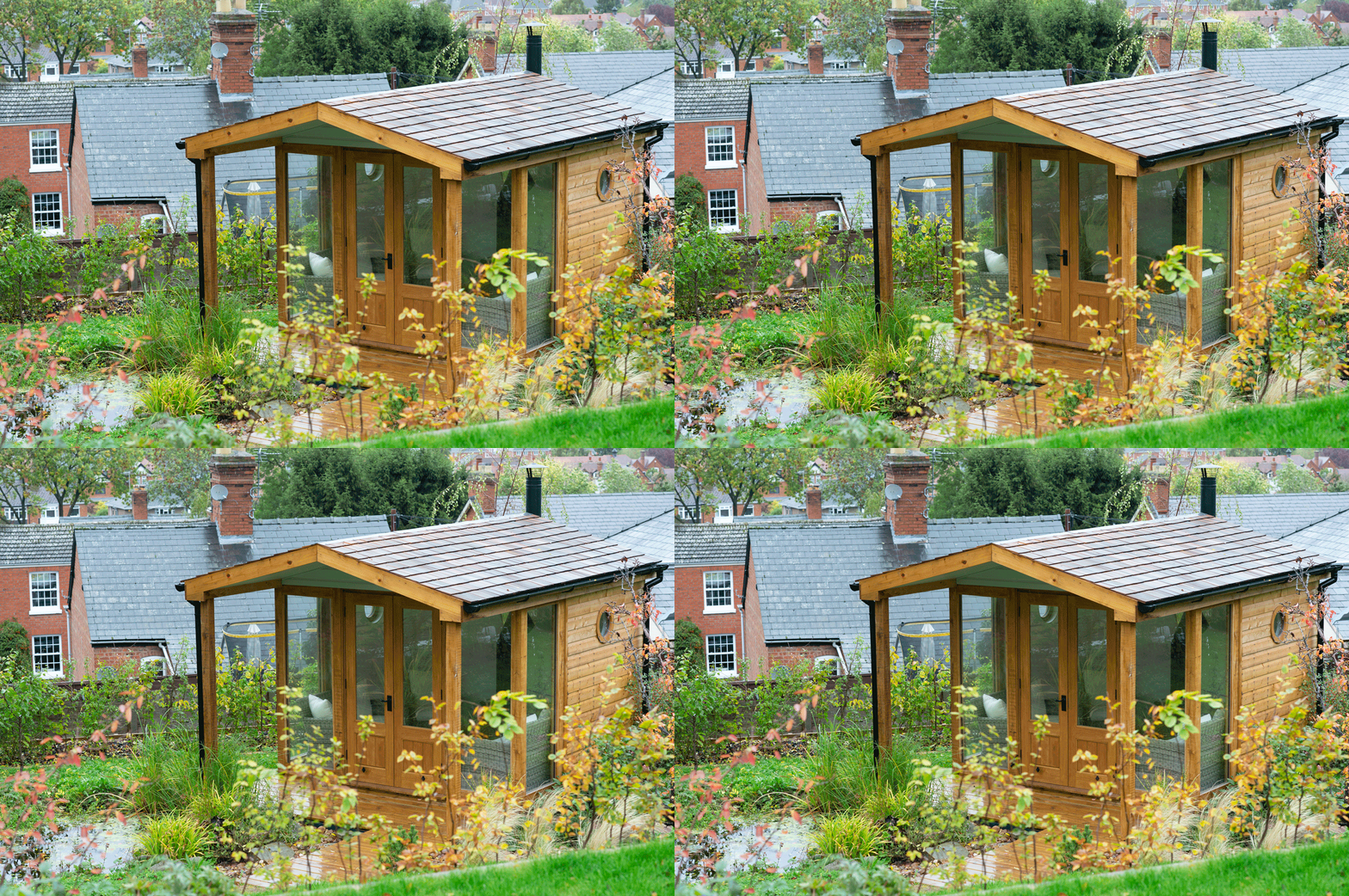
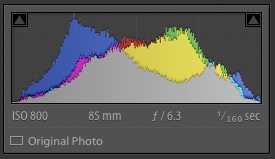
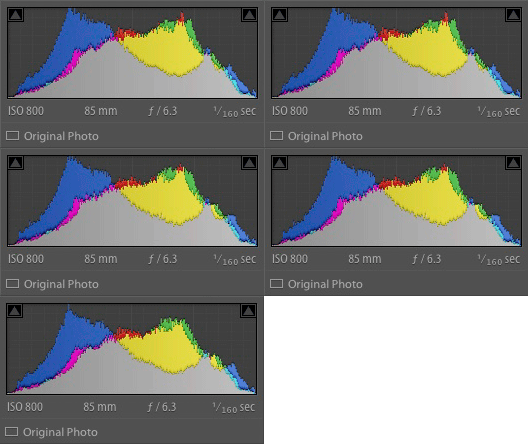
The exposures were all recorded as 1/160th at f6.3.  Not surprisingly, hand holding was never going to be easy in these conditions, but in order to highlight the change in framing and the movement within the frame, I created the animation below.

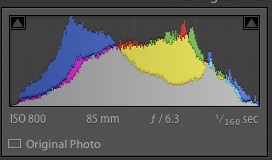
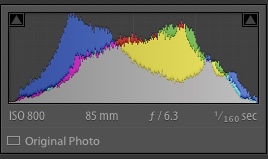
I was shocked at the variation between frames, with only approximately 1s between each shot.  When added to the trees and branches moving in the strong winds, the changes in the histogram were significant also.  The four histograms can be seen below:

How is the Histogram Changing?

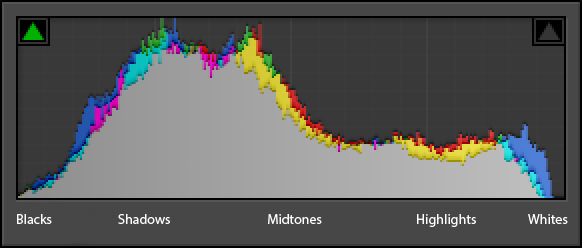
In order to examine the changes in the histogram, I needed to understand how they work.  I already knew that histograms are effectively maps of exposure, showing black to white along the x axis and spectral intensity in the y axis.  The basic layout is shown in the diagram below [1]

How-to-Understand-Histogram

The spectrum of exposure runs from left to right, complete black to complete white.  The regions in-between break up into areas of shadow (darker tones), mid-tones (self explanatory) and highlights (lighter tones).  The shape of the histogram is determined by the intensity distribution of the whole of the digital image as recorded by the sensor.  In the example above the main shape of the histogram is biased toward the mid and shadow tones with lower intensity in the highlights regions.  This diagram is from an article and I do not have the original image.  However, a similar photograph that I made is shown below.

While they are not the same, there are clearly lots of midtones and shadows in the photograph, with the only major highlights being the lady’s hat and the sky coming into the top right-hand corner.

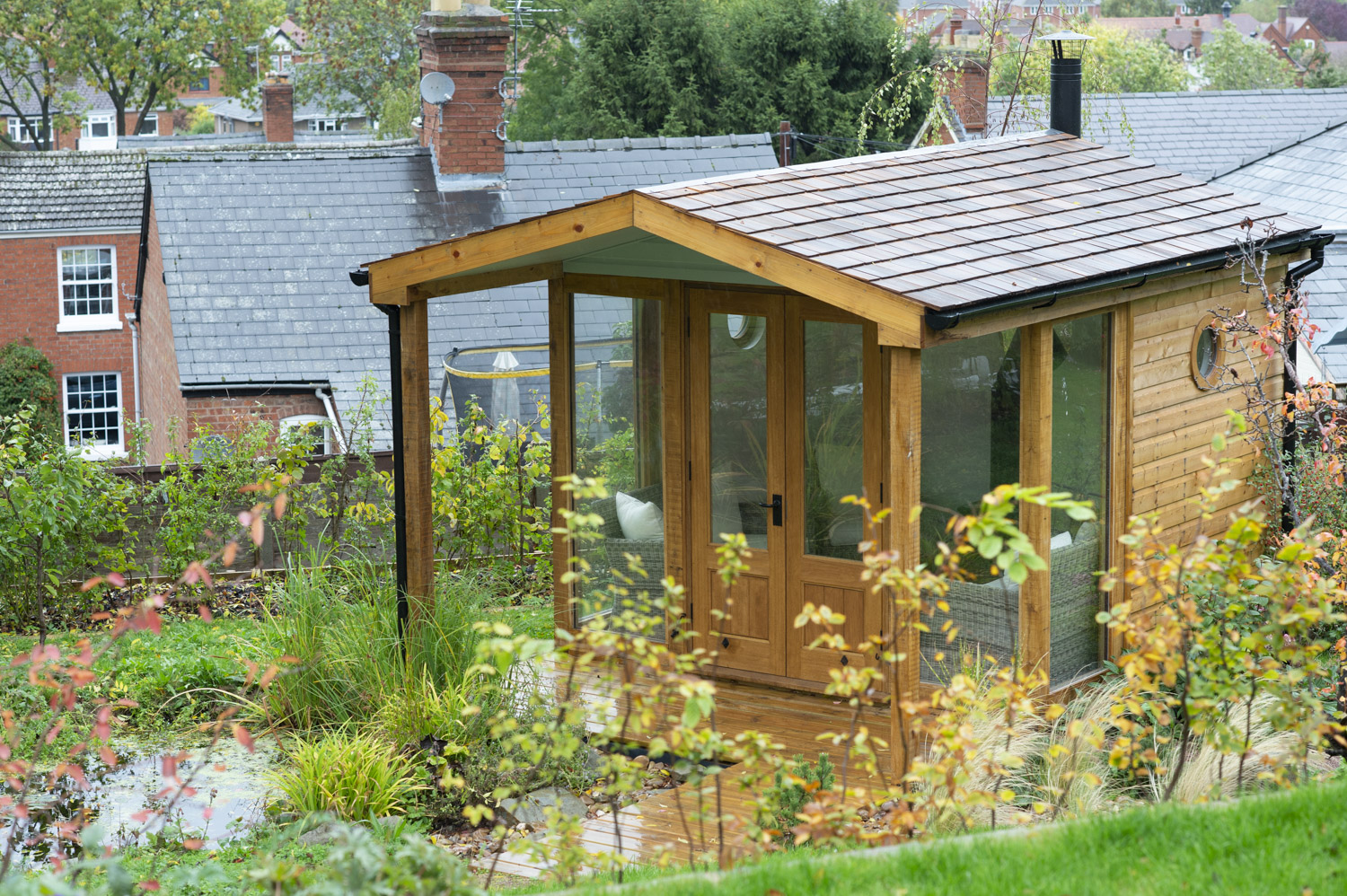
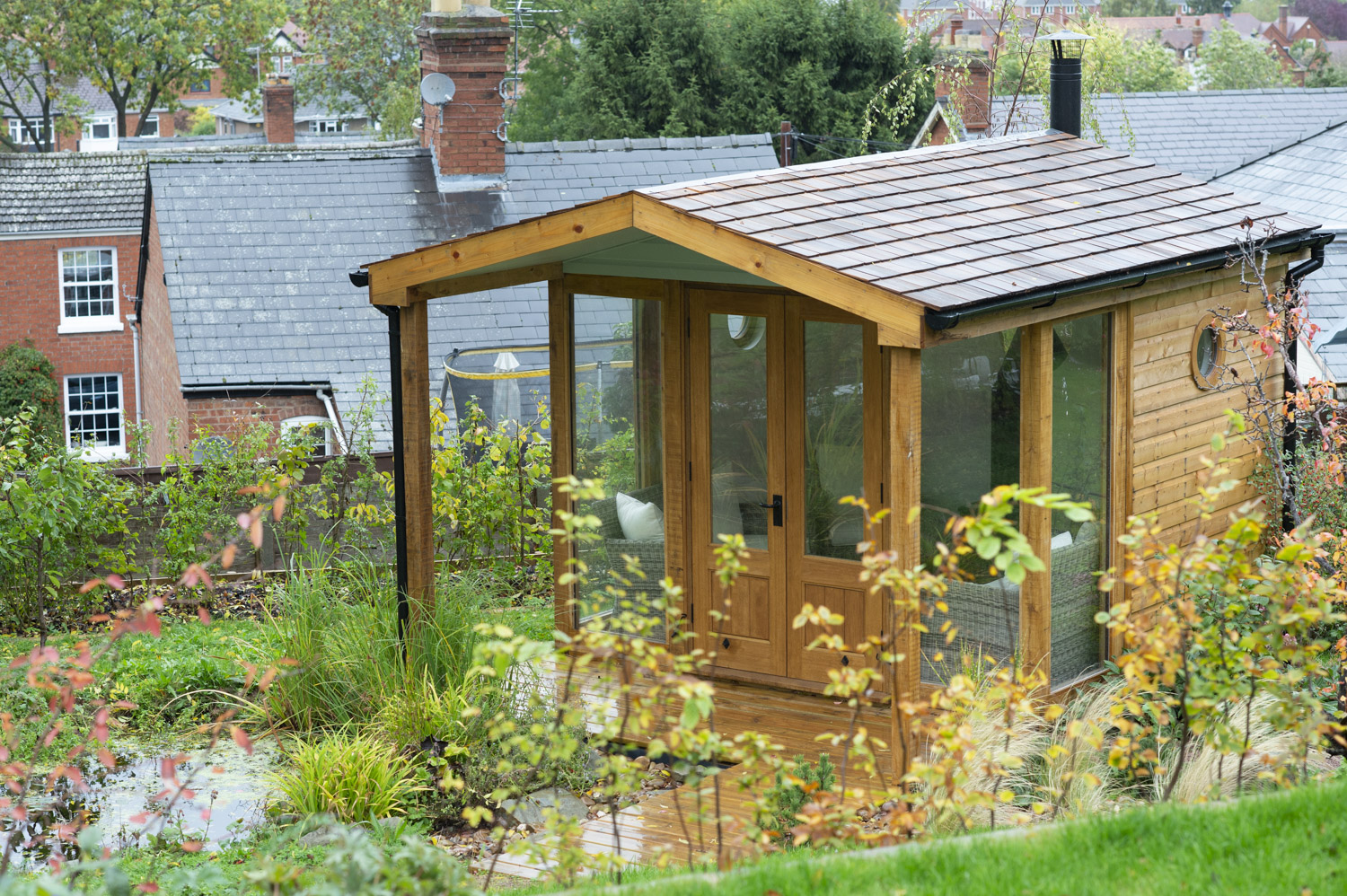
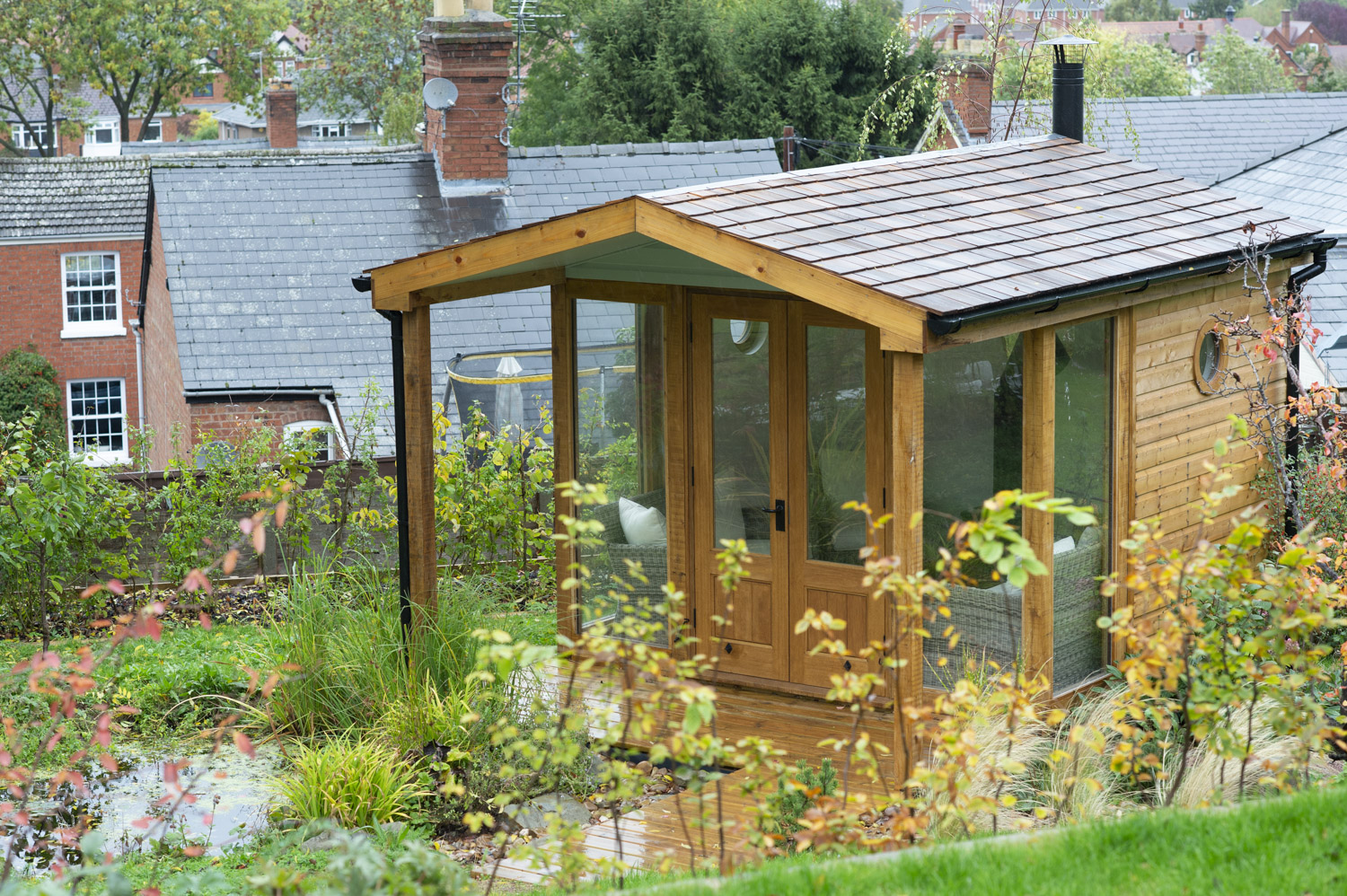
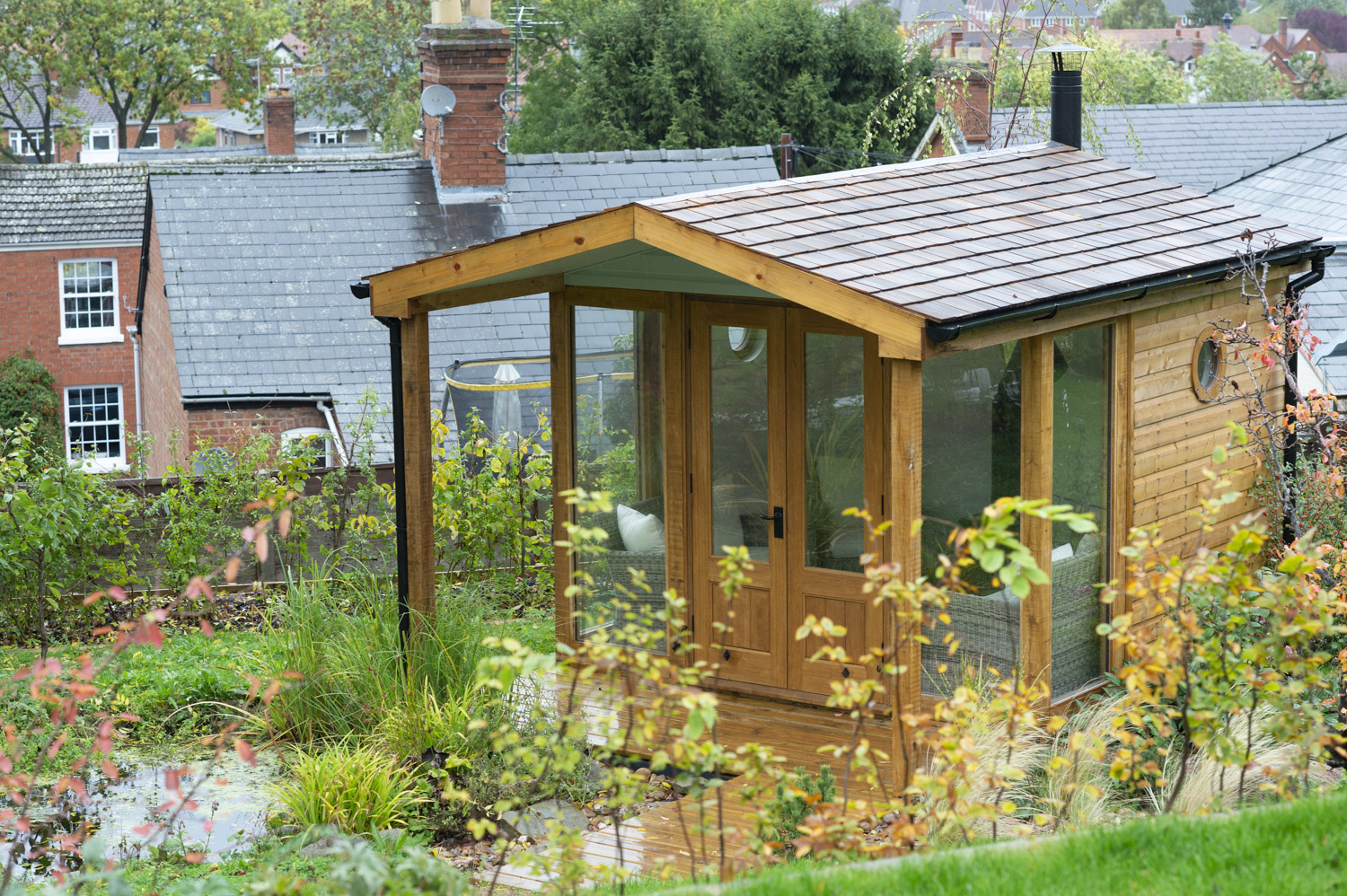
Going back to the example ‘Summerhouse’, each photograph is essentially the same, so the shape of the histogram distribution doesn’t change much from frame to frame.  However, my poor stability in hand-holding the camera means that the intensity distribution of the shadows, mid-tones and highlights would light reflected from subjects in frame are moving.  When we look at the colour distributions that are also shown in the histogram, they are also clearly changing in magnitude and position in the tonal spectrum.  This is because the light is being reflected into the camera by surfaces that are stronger or weaker in each colour band, e.g. green grass is reflecting strongly in the green region, which is why we see it as green with the human eye.

With regard to the original statement made in the brief ‘you can’t step into the same river twice’, I think this series of photographs demonstrate this clearly.   The wind is blowing the trees and around the summerhouse and each frame is clearly different.  Add this to each frame being ‘composed’ slightly differently, it is little wonder the the histogram is wandering around.

Second four frames

For the second four frames of this exercise, I set up a simple composition in a fairly dark room with a single continuous LED light source on the subject.  The camera was had the same exposure settings as before, with the exception of it being on a tripod.  For this exercise, I wanted to eliminate as many potential differences as possible; I’d considered the following:-

  1. External light changes.  The room was darkened but I was unable to make it completely blacked out.
  2. Composition movement.  The tripod would work to reduce this but is was on a carpeted floor, so as long as I kept still during the experiment, it should be fine.  I used a remote trigger to eliminate any camera shake through the button being pressed.
  3. Camera re-focus and re-meter.  I eliminated the re-focus by putting the camera in manual focus mode.  As the camera is in Program, it will automatically re-meter between frames.
  4. Camera mirror.  The mirror momentarily disturbs the camera as it flips up out of the way.  I put the camera into mirror-up mode to reduce this.

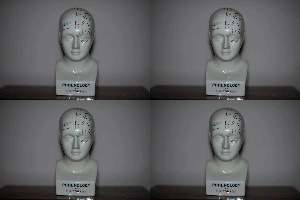
The images can be seen below.

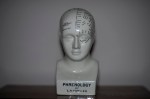
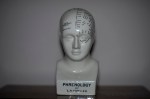
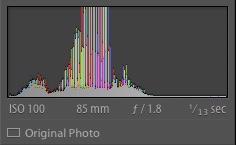
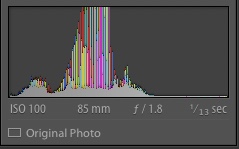
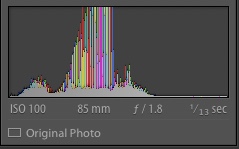
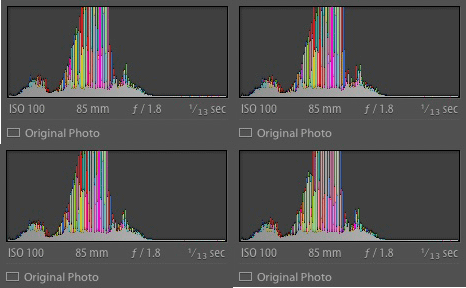
This set of photographs of a Phrenology Head contain very little colour to distract.  When looking at the animation (Head GIF), you can see a very slight variation in the exposure, even though the factors were largely controlled.  The exposures were all recorded the same (1/13th at f1.8).  The variations in composition are now negligible owing to the tripod and use of the remote shutter release.  Nothing is moving in the image itself, which is shown in the animation.  The histograms are shown below:

The variations in the histograms are quite clear.  A modulation of intensity in the mid-tones that makes sense given the slight fluctuation in the exposures from Head 1 to 4.  Also, the image is not monochromatic, so the colours are shown in the histogram.  These too are fluctuating across the four images.

Conclusion

I concluded from this exercise that the the camera is indeed a more sensitive measuring device than I had previously believed.  Sure, the modern DSLR is a sophisticated piece of electronics and because it is digital, it would be easy to think that the data produced by even the most tightly controlled setup and composition would be the same across a small range of images.   It’s production should be a linear process. and as an engineer, I would naturally assume this.  However, it is clear to me that there are variables in camera that affect the way the photograph is made before even considering the subject of the composition itself.

Over the past few years, I have been shooting a lot of analogue film as I knew the simplicity of the excellent but predominantly manual equipment available would help me to learn and improve my knowledge of exposure.  However, the appeal was also the non-linearity, and often unpredictability of film as a creative medium.  Practicing shooting and developing my own film was aimed at improving my skills to a point where that unpredictability could be tamed as much as possible.  What I’ve learned from this exercise is that not only is one moment very different from another, digital photography has a level of susceptibility to external influences that I’d not considered before, which ultimately give the photographer that same experience as film.

Research and References:

[1] – “Understanding the Histogram”, Romanas Naryškin, Photography Life 2017. https://photographylife.com/understanding-histograms-in-photography

[2] – “Seeing in Colour: How Our Eyes Sense and Cameras Record”, Dawn Oosterhoff 2015https://photography.tutsplus.com/articles/seeing-in-colour-how-our-eyes-sense-and-cameras-record–cms-24916